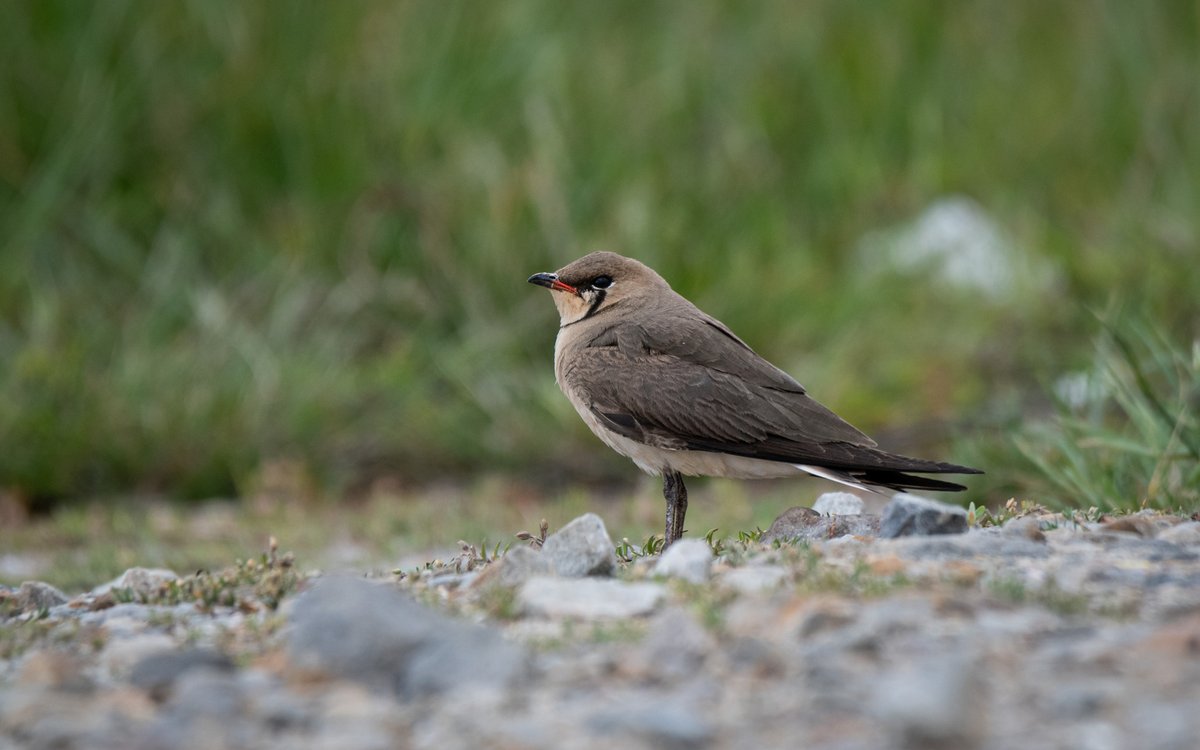
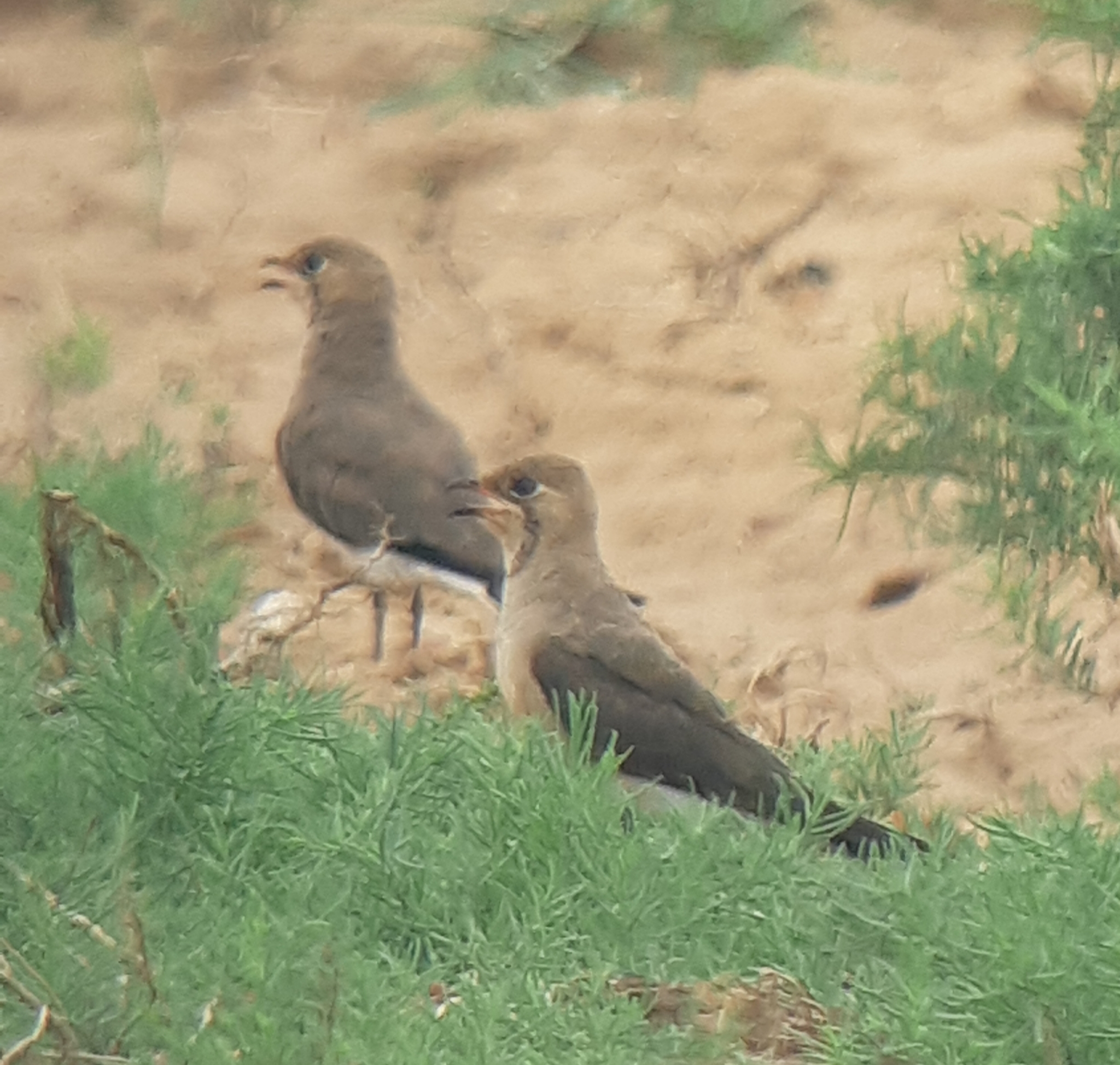
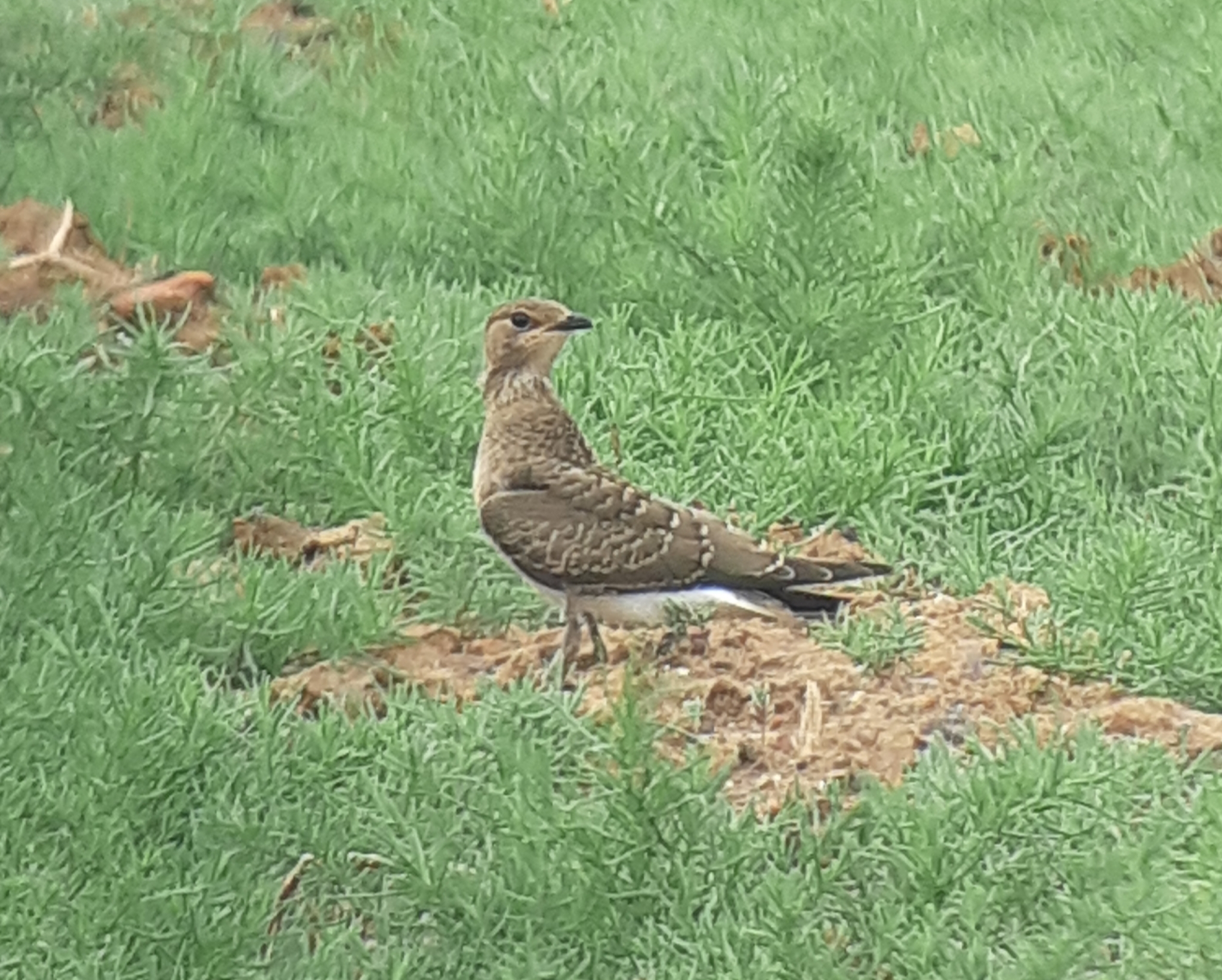

Oriental Pratincole
Glareola maldivarum
普通燕鸻
Introduction
A wader in the pratincole family (Glareolidae). Native to Asia, breeding from North Pakistan and Kashmir region, sporadically southwards to the Maldives, Sri Lanka, Indochina, eastern China, Manchuria, and the Philippines. Migratory, wintering throughout the Indomalayan realm and northern Australia. Despite being classified as waders, these birds hunt insect prey on the wing like swallows, though they can also feed on the ground. They inhabit open country and are often seen near water in the evenings hawking for insects.
Description
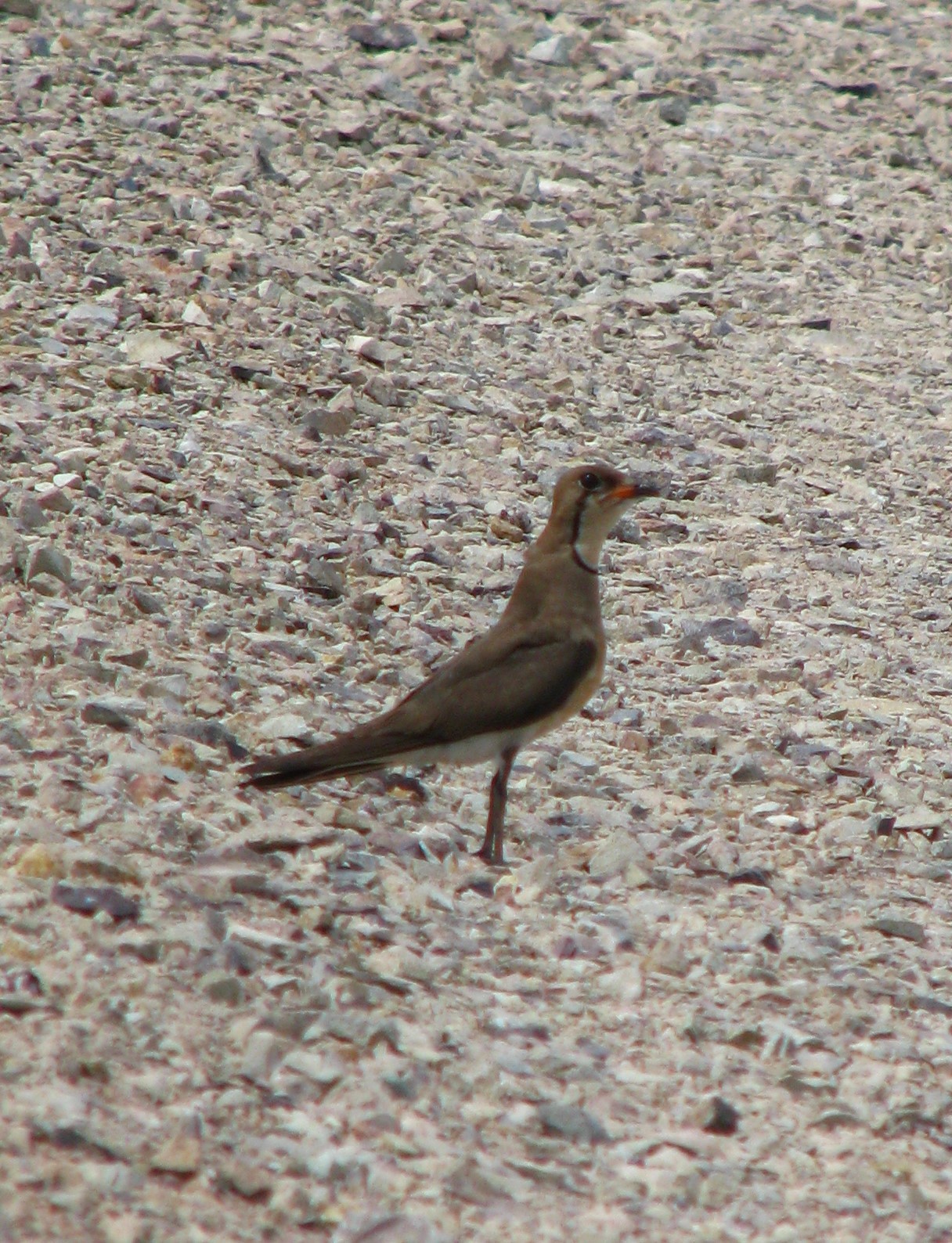
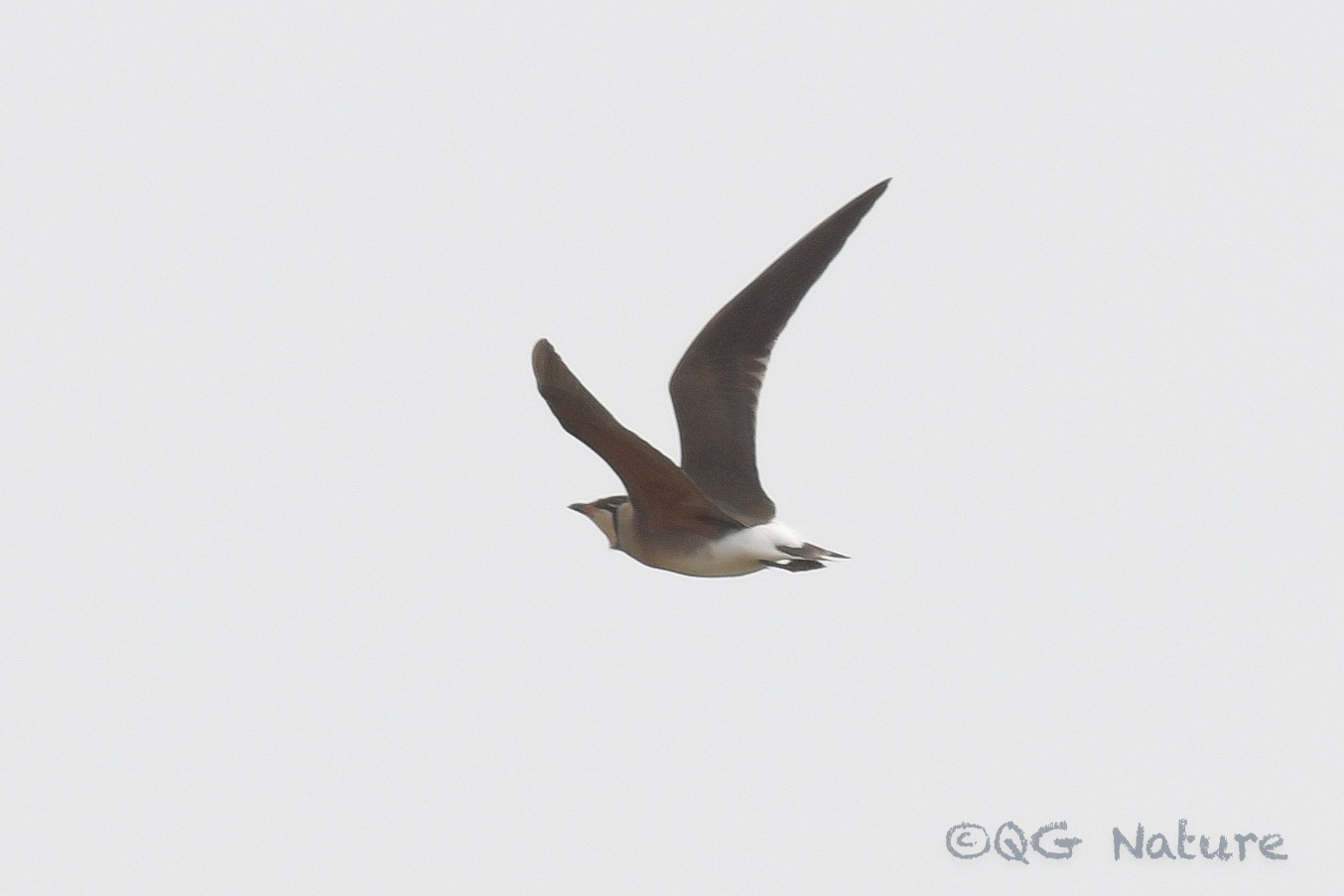
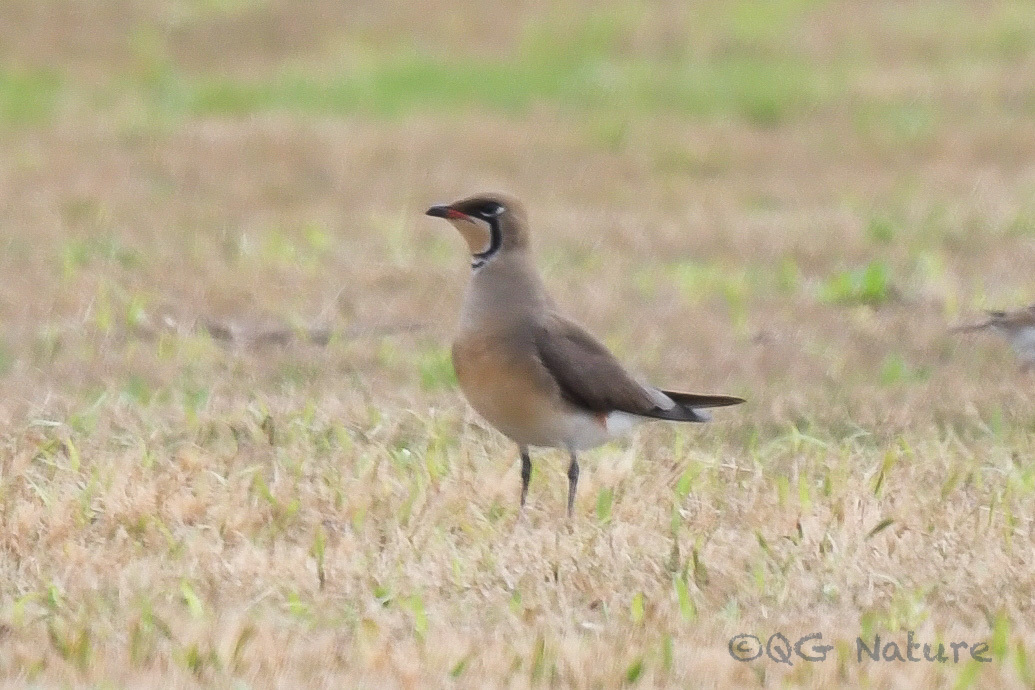
A slender wader with short legs, long pointed wings, and a long forked tail. The bill is short, an adaptation to aerial feeding. The back and head are brown, while the wings are brown with black flight feathers. The belly is white and the underwings are chestnut in color. No specific measurements are provided in the source.
Identification
Very good views are required to distinguish this species from similar pratincoles. The collared pratincole is very similar and also has chestnut underwings. The black-winged pratincole shares black upperwing flight feathers but lacks the white trailing edge to the wing. The chestnut underwing can appear black unless excellent views are obtained, making field identification challenging.
Distribution & Habitat
Breeds across Asia from North Pakistan and Kashmir through to eastern China, Manchuria, and the Philippines, with some populations extending south to the Maldives and Sri Lanka. Migratory, spending winters in the Indomalayan region and northern Australia. A rare vagrant west and north of the breeding range; first Western Palearctic record was in Suffolk, England in June 1981. Exceptional concentrations occur: 2.5 million birds were recorded at Eighty Mile Beach, Australia on February 7, 2004.
Behavior & Ecology
An aerial insectivore that catches prey on the wing in swallow-like fashion, though it also forages on the ground. Inhabits open country and frequently appears near water at dusk hawking for insects. Nests on the ground, laying 2-3 eggs. Social behavior includes gathering in large flocks, as evidenced by the extraordinary concentration of 2.5 million birds recorded at a single Australian site.
Source: Wikipedia · CC BY-SA 3.0
Taxonomy
- Order
- Charadriiformes
- Family
- Glareolidae
- Genus
- Glareola
- eBird Code
- oripra
Distribution
breeds patchily in grassland near water from western India and Sri Lanka eastward to southeastern Siberia and southward to Philippines; winters grassy fields of islands of northern Indian Ocean and Indian Peninsula eastward through northern Australia and western Micronesia
Vocalizations
Data Sources
Species description from Wikipedia, licensed under CC BY-SA 3.0.
Bird images and sounds sourced from GBIF, contributed by citizen scientists worldwide under Creative Commons licenses.
Taxonomy data from AviList 2025.