Siberian Thrush
Geokichla sibirica
白眉地鸫
Introduction
This member of the thrush family breeds in the taiga forests of Siberia and migrates to southeastern Asia for winter. It inhabits dense forest understory and occurs in open areas rarely. The species has a medium-sized thrush profile similar to the song thrush. Its diet consists of insects, earthworms, and berries, varying seasonally.
Description
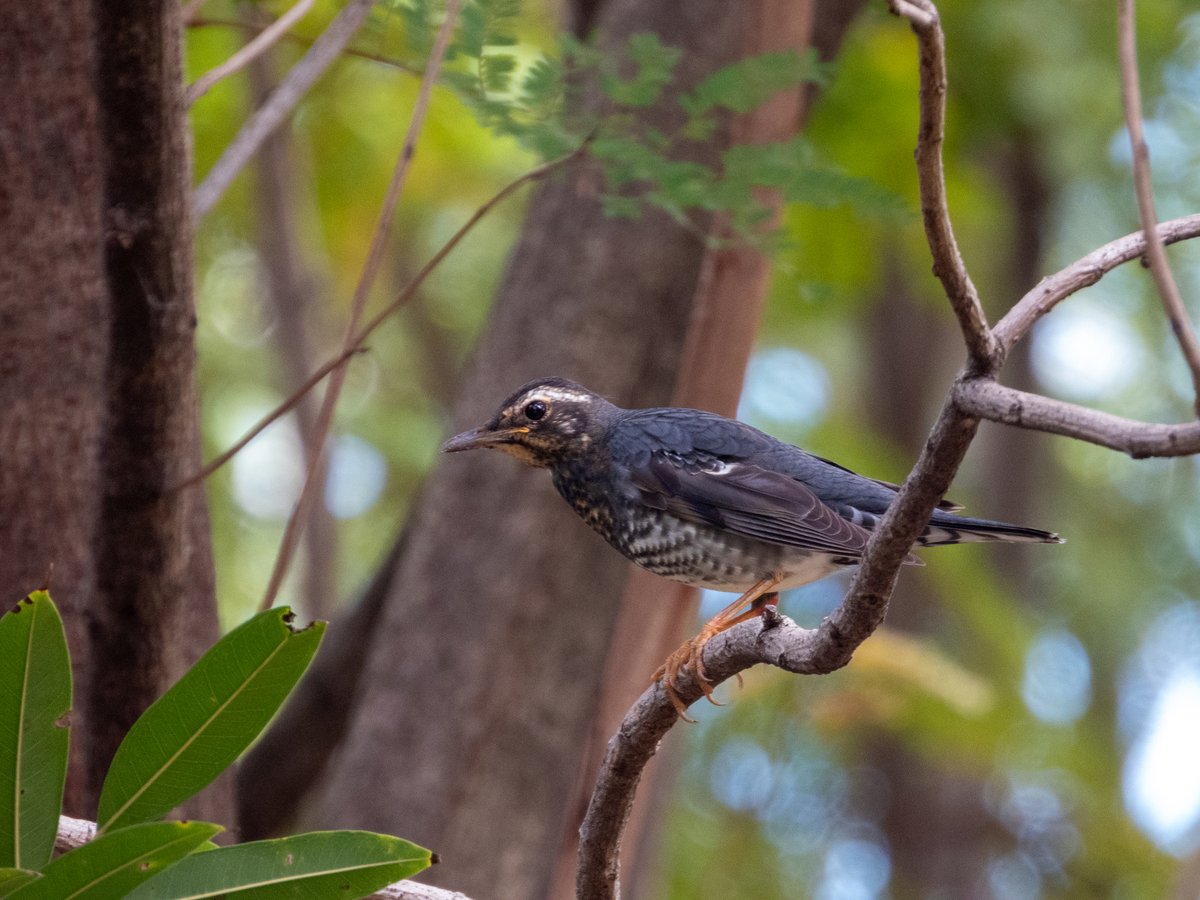
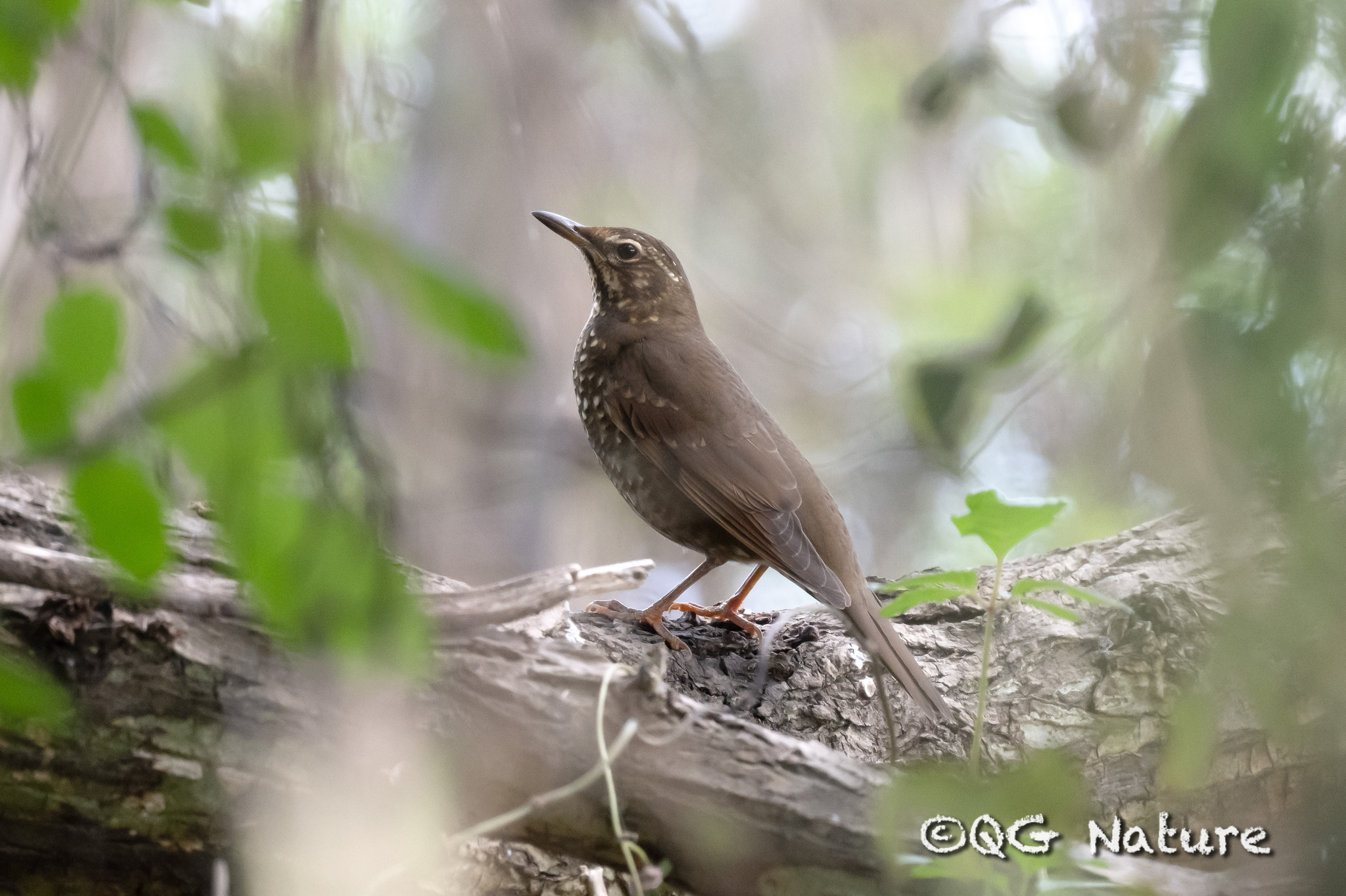
A medium-sized thrush matching the dimensions of the song thrush, this species presents distinctly different plumage between sexes. The male exhibits a striking uniform dark blue-grey coloration across both upperparts and underparts, creating a rather dark overall impression. A prominent white stripe runs above the eye, providing excellent contrast against the dark head. The lower belly and flanks are white, breaking up the otherwise dark underparts. The female presents a more subdued appearance, being predominantly brown overall with a buff-colored stripe above the eye rather than white. Both sexes share a relatively compact thrush shape with a typical thrush-like bill structure suited to their varied diet.
Identification
The most distinctive identification feature for both sexes becomes apparent in flight: a striking black band contrasting against the otherwise white underwings. This field mark is particularly useful when individuals are disturbed and flush from cover. The same underwing pattern is shared with the scaly thrush, which can cause confusion where their ranges overlap. The male's overall dark blue-grey coloration and white eye stripe help distinguish it from other thrush species, while the female's brown plumage with buff eye stripe requires careful attention to detail. The combination of size, underwing pattern, and the specific eye stripe pattern provides the best identification clues for birdwatchers encountering this species.
Distribution & Habitat
This species breeds throughout the taiga zones of Siberia, occupying coniferous and mixed forest habitats during the summer breeding season. As autumn arrives, it undertakes a strong migratory movement southeastward to wintering grounds in southeastern Asia. The migration route takes it through appropriate habitat corridors, though specific wintering areas are concentrated in regions including parts of China, Southeast Asia, and nearby territories. Vagrancy events occasionally carry individuals far west of their expected range, with western European countries recording very rare sightings. These accidental occurrences typically happen during autumn migration periods, making any western European record a significant event for the local birding community.
Behavior & Ecology
Secretive habits define this thrush's behavioral pattern, with individuals typically remaining hidden within dense forest undergrowth and rarely exposing themselves in open areas. Its omnivorous diet provides dietary flexibility throughout the annual cycle, consisting of various insects, earthworms, and seasonally available berries. This varied diet supports energy demands during both the demanding breeding season and the rigors of migration. The species tends to occur singly or in pairs during the breeding season, though wintering birds may aggregate in areas with abundant food resources. While detailed breeding information is limited due to the species' secretive nature and remote habitat, it constructs nests in typical thrush fashion within forest understory vegetation.
Source: Wikipedia · CC BY-SA 3.0
Taxonomy
- Order
- Passeriformes
- Family
- Turdidae
- Genus
- Geokichla
- eBird Code
- sibthr1
Subspecies (2)
-
Geokichla sibirica davisoni
breeds Sakhalin Island and northern Japan; winters to southern China, southeastern Asia, and Sumatra
-
Geokichla sibirica sibirica
breeds northeastern Asia; winters to southeastern Asia, Sumatra, and Java
Data Sources
Species description from Wikipedia, licensed under CC BY-SA 3.0.
Bird images and sounds sourced from GBIF, contributed by citizen scientists worldwide under Creative Commons licenses.
Taxonomy data from AviList 2025.