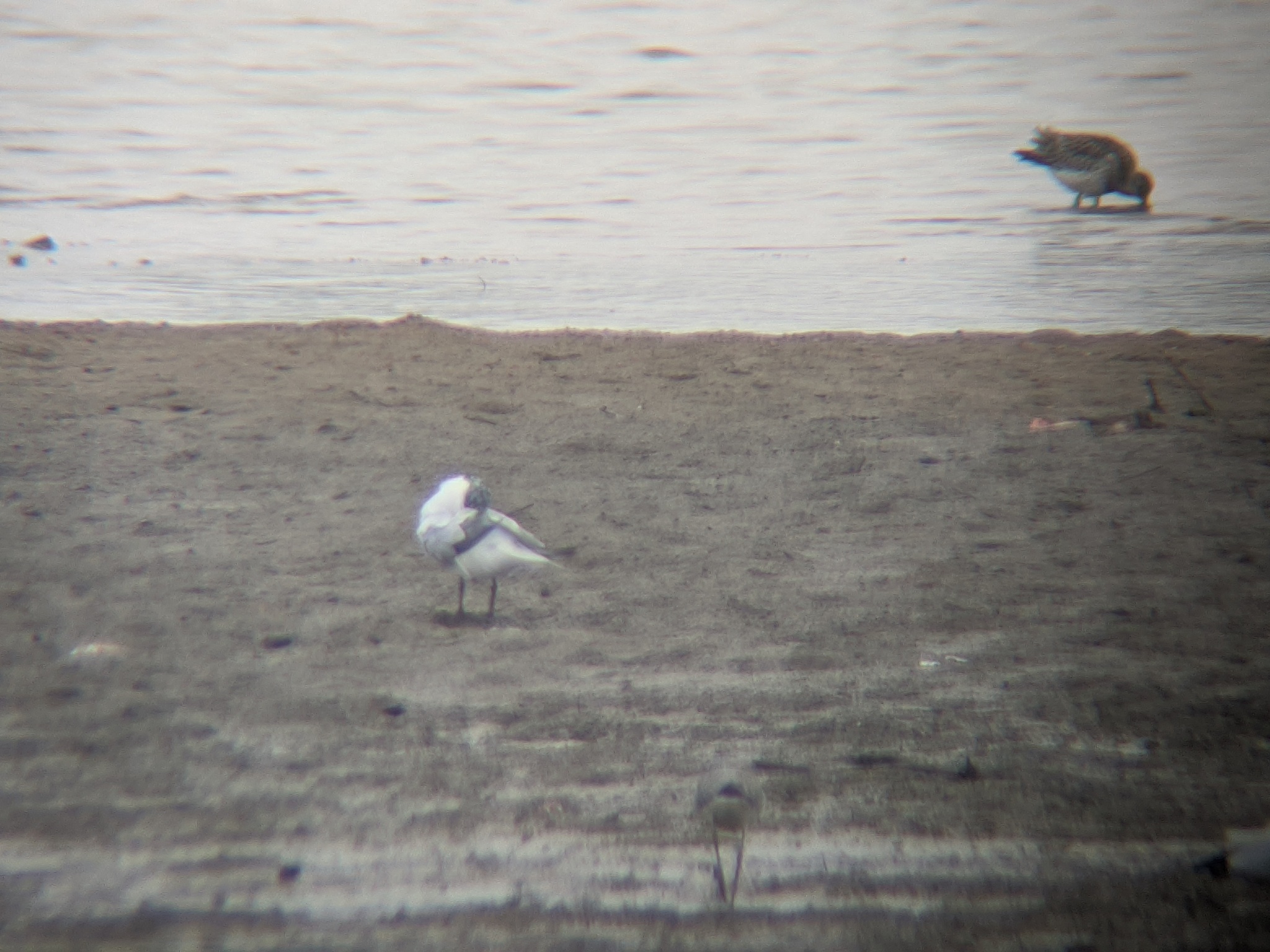
Gull-billed Tern
Gelochelidon nilotica
鸥嘴噪鸥
Introduction
The gull-billed tern (Gelochelidon nilotica) is a coastal species with five subspecies distributed across four continents. Unlike other terns that dive for fish, it forages by taking prey from the ground or water surface. It has a robust build, broad wings, and a thick, gull-like bill. The species produces a distinctive 'ker-wik' call and breeds in coastal wetlands and margins. Colonies are typically site-faithful.
Description
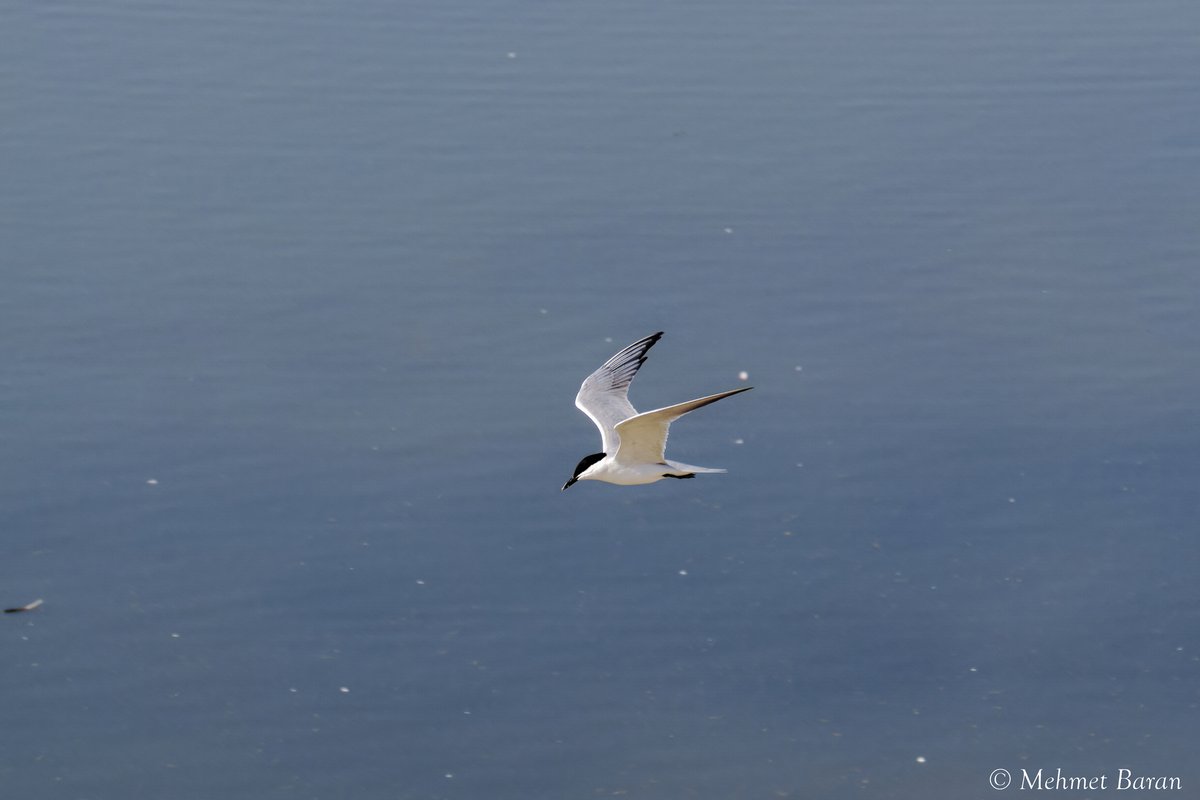
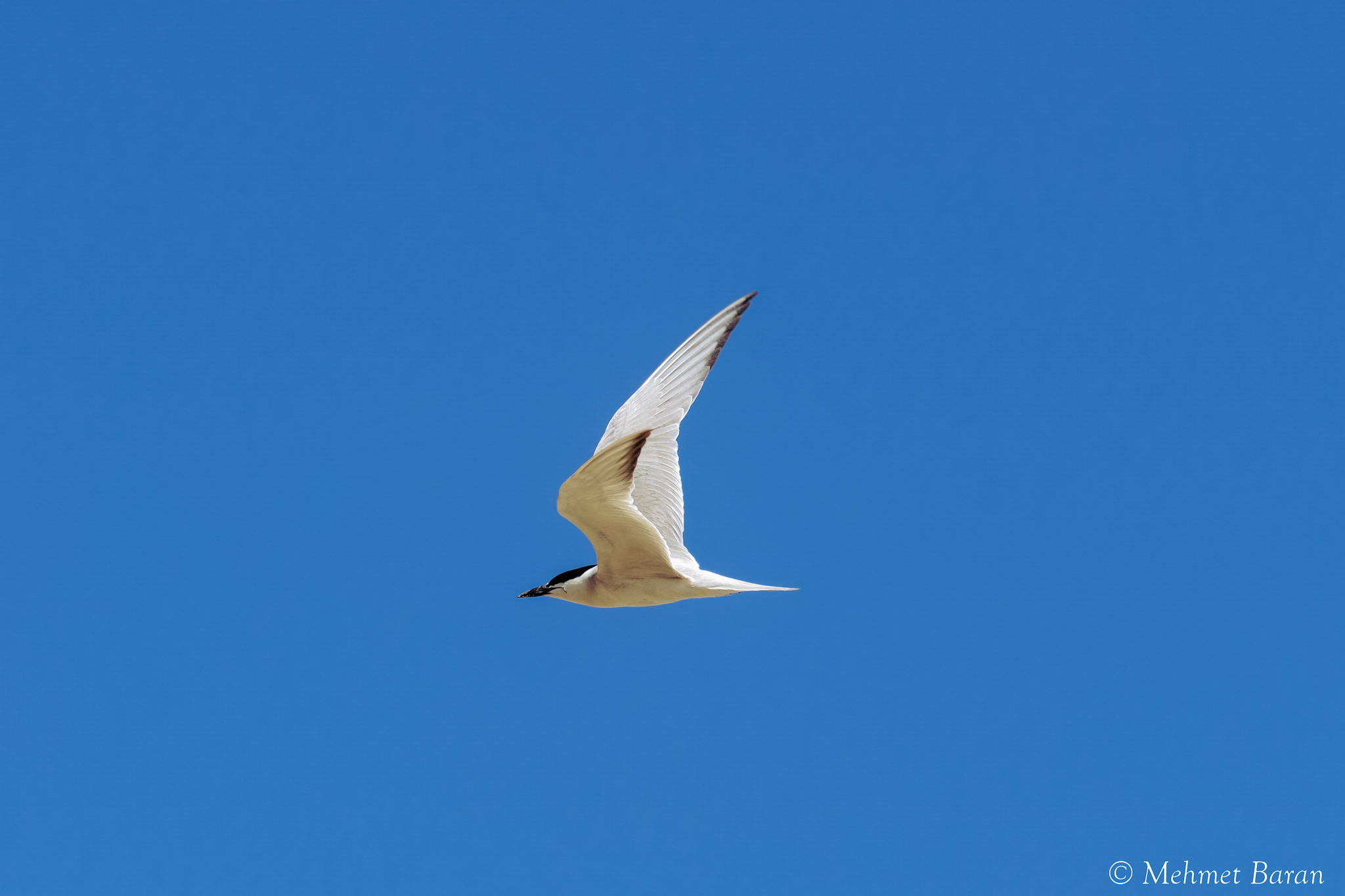
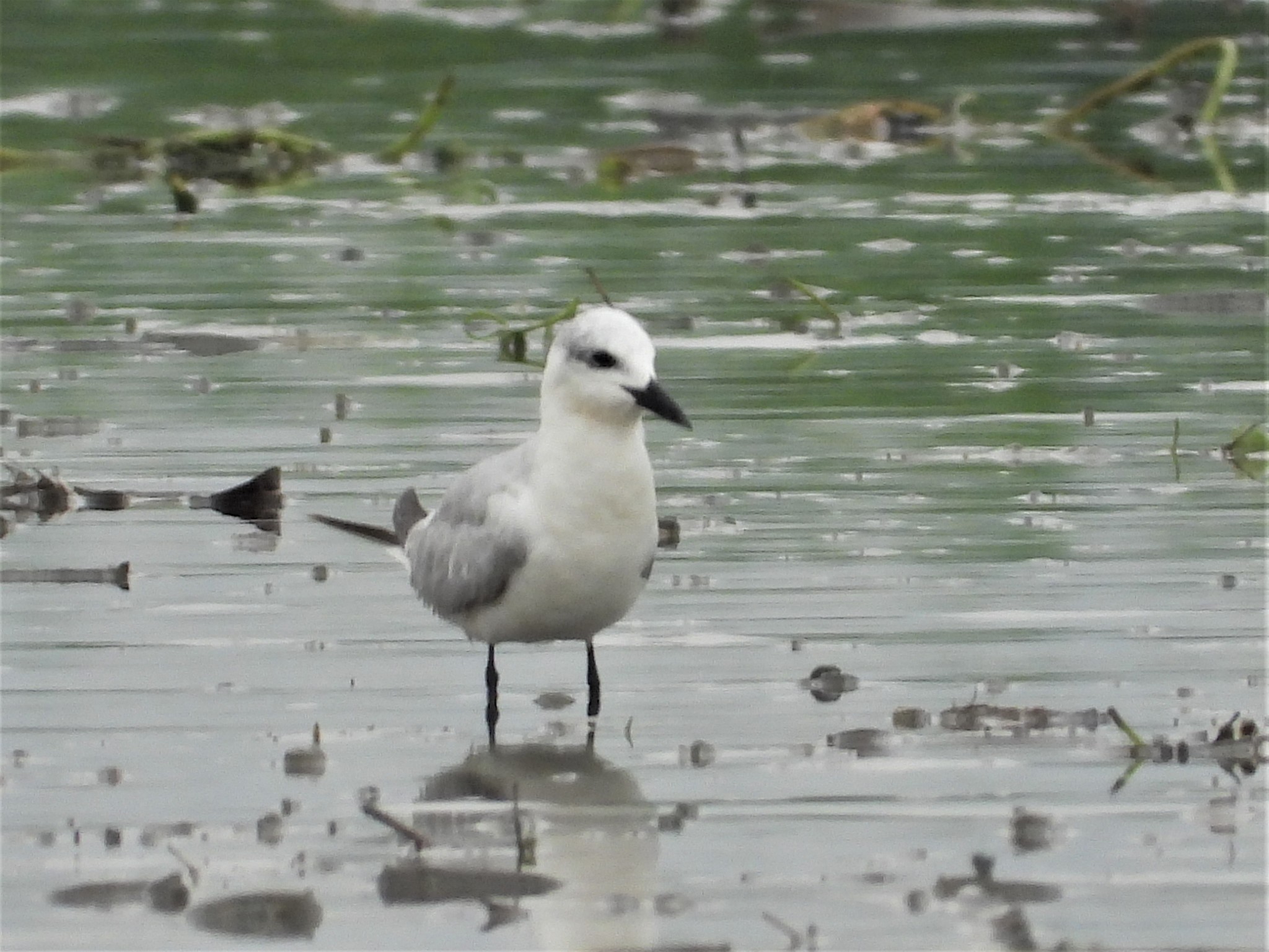
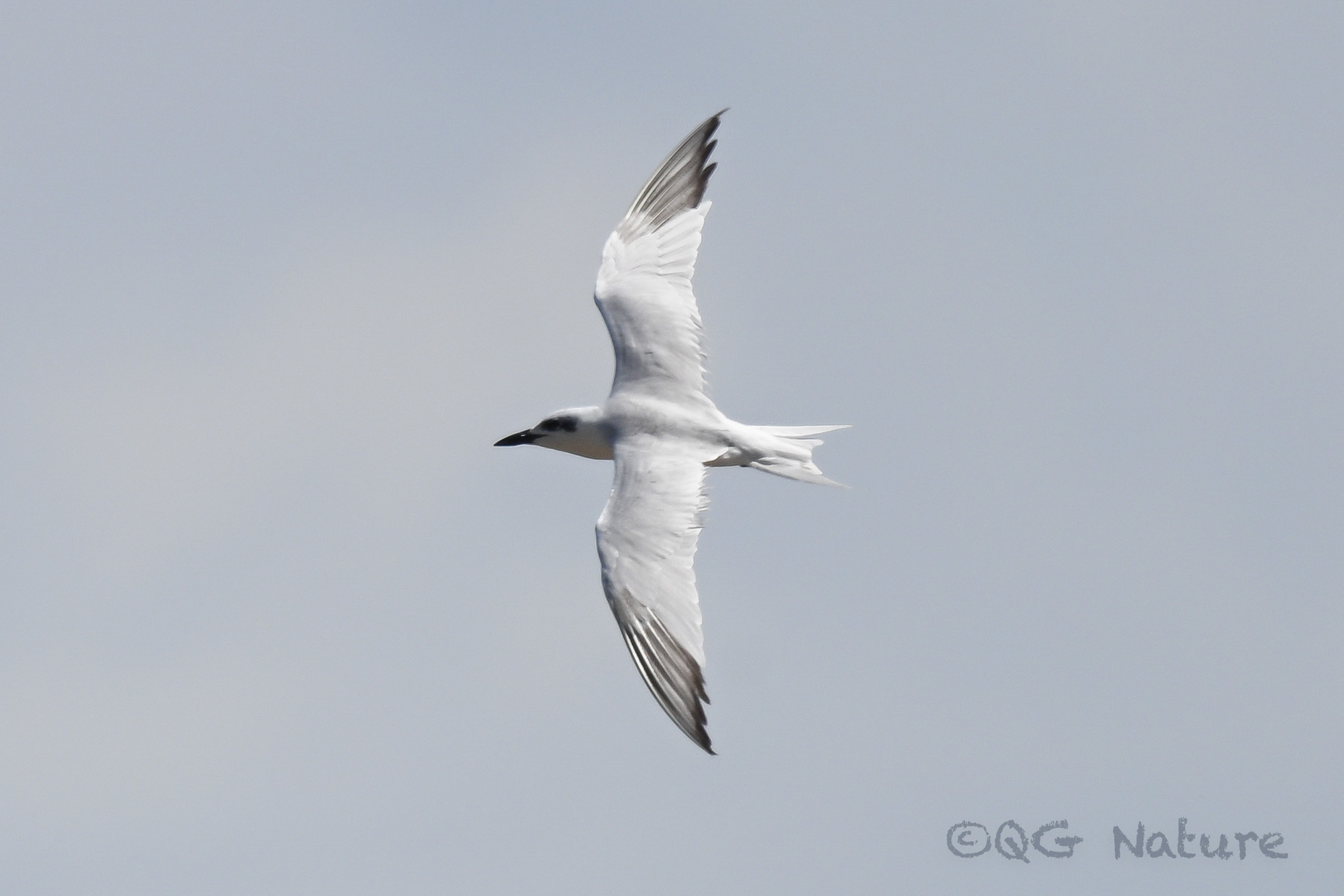
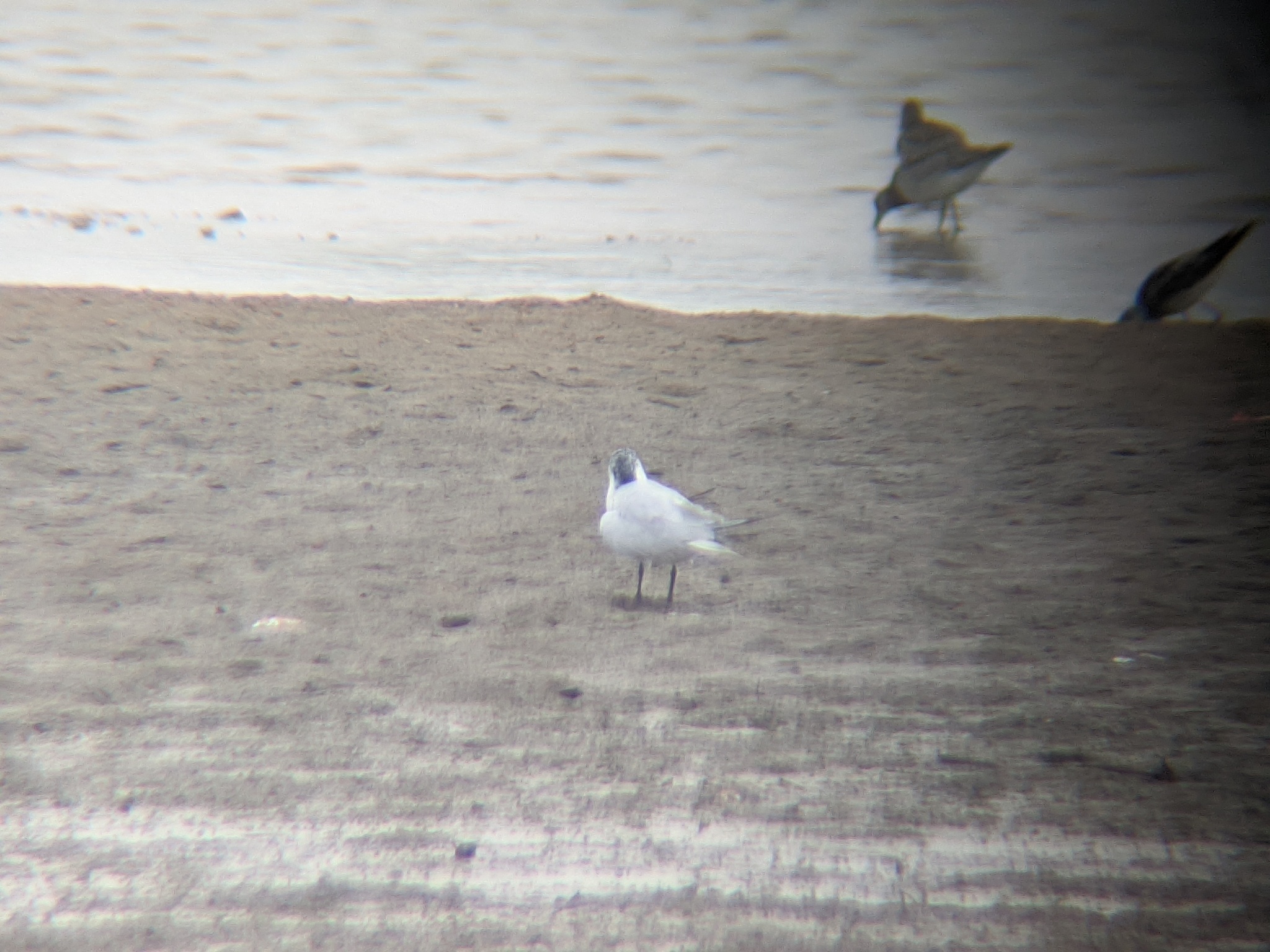
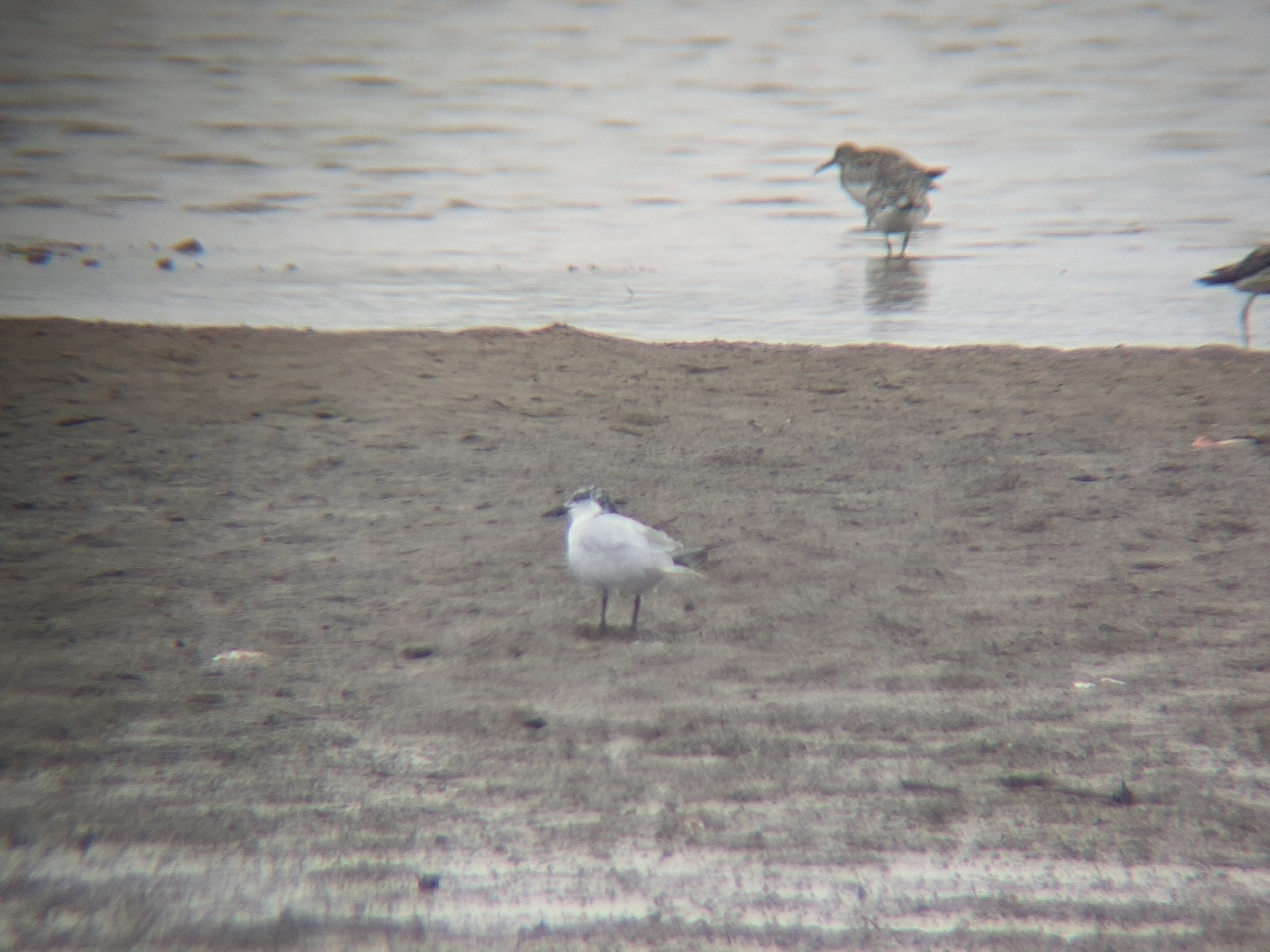
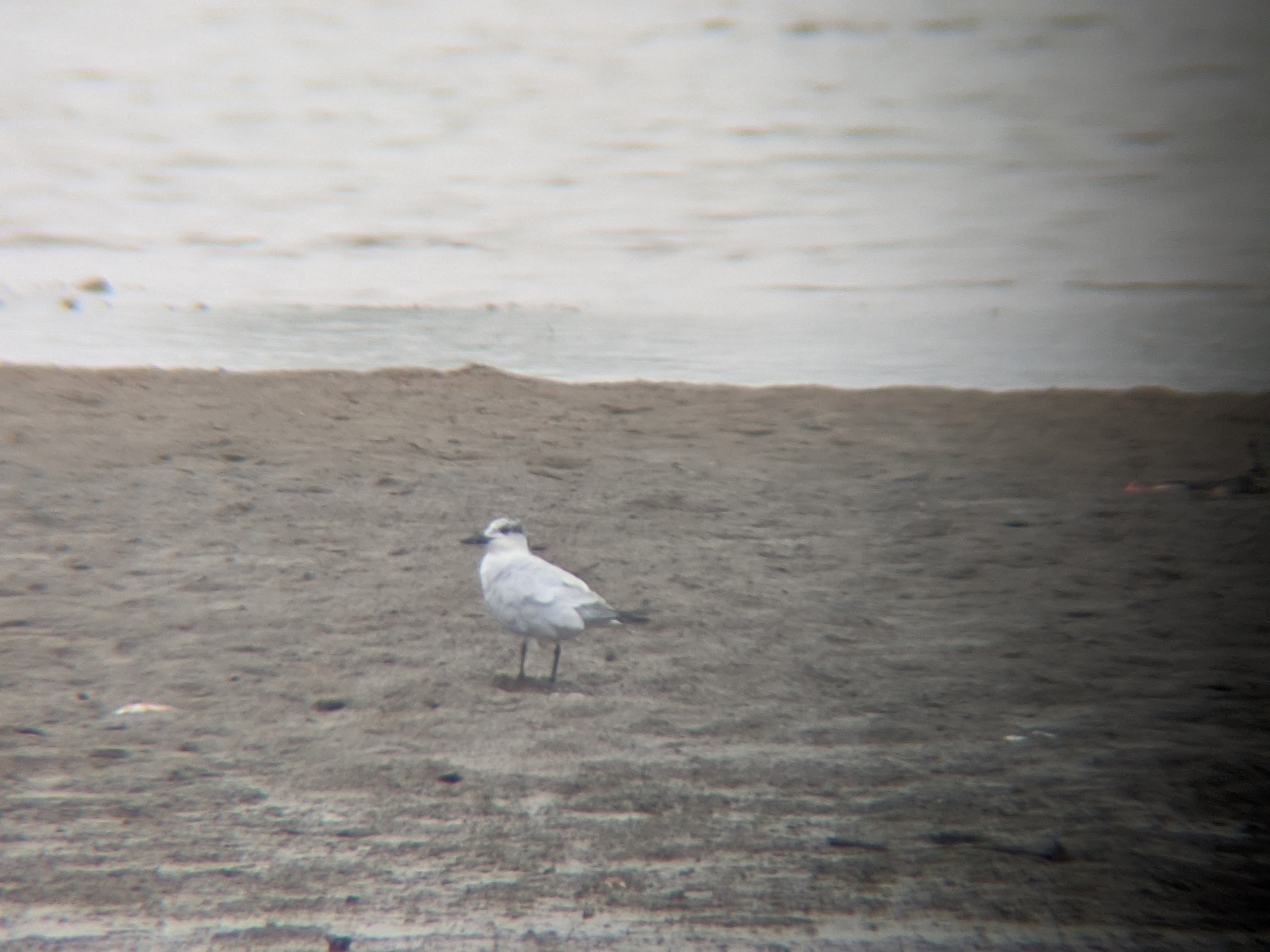
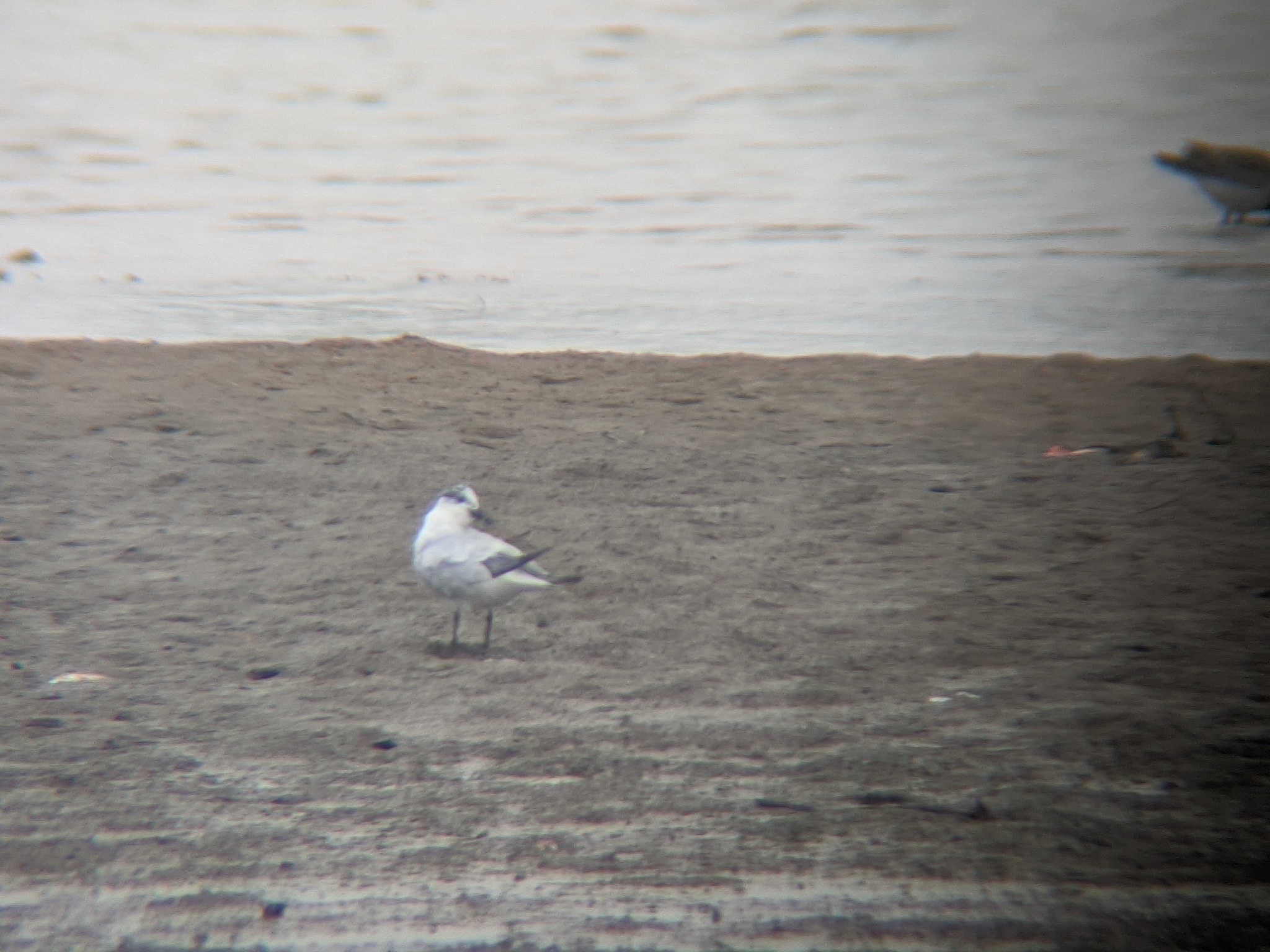
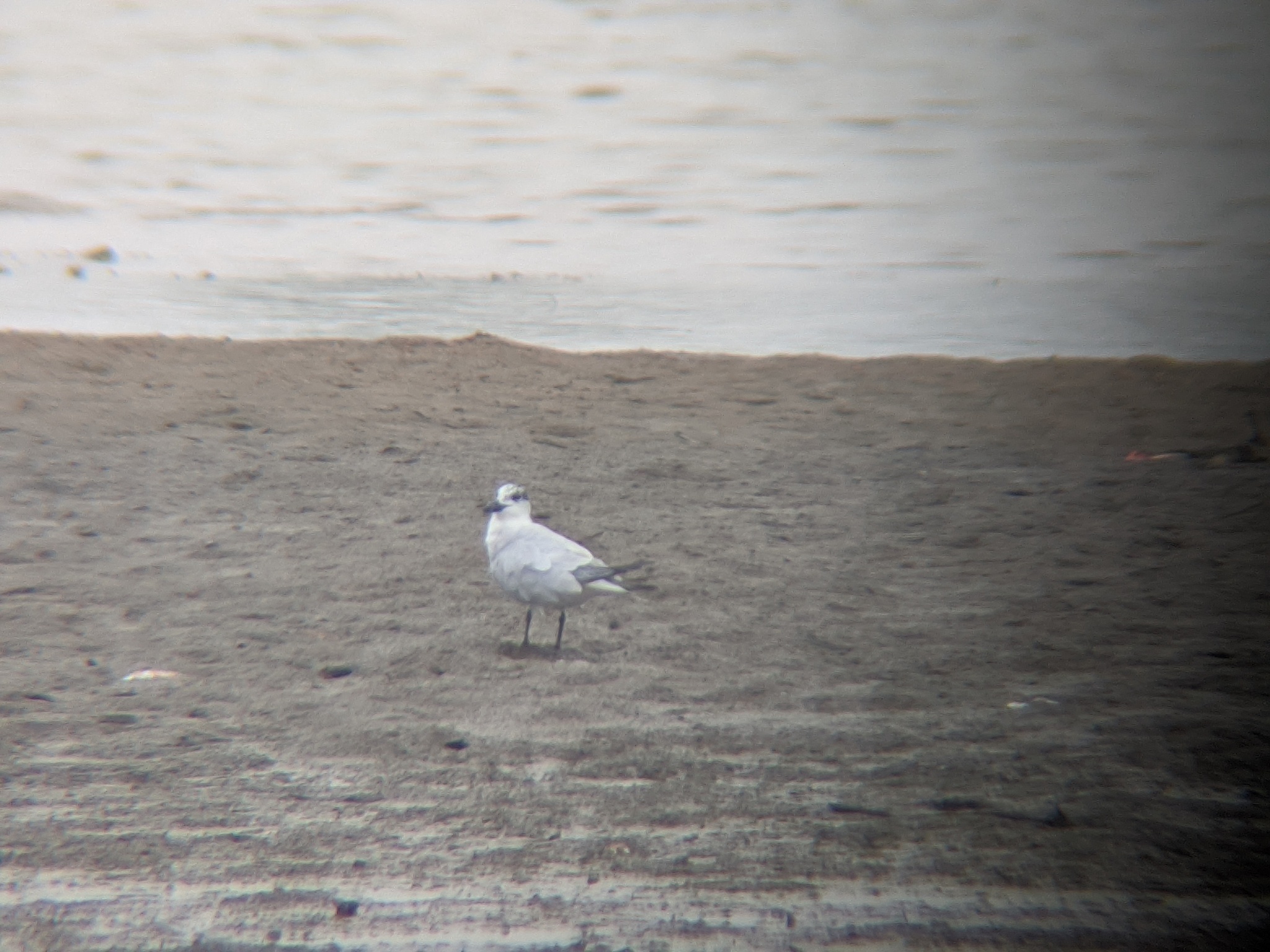
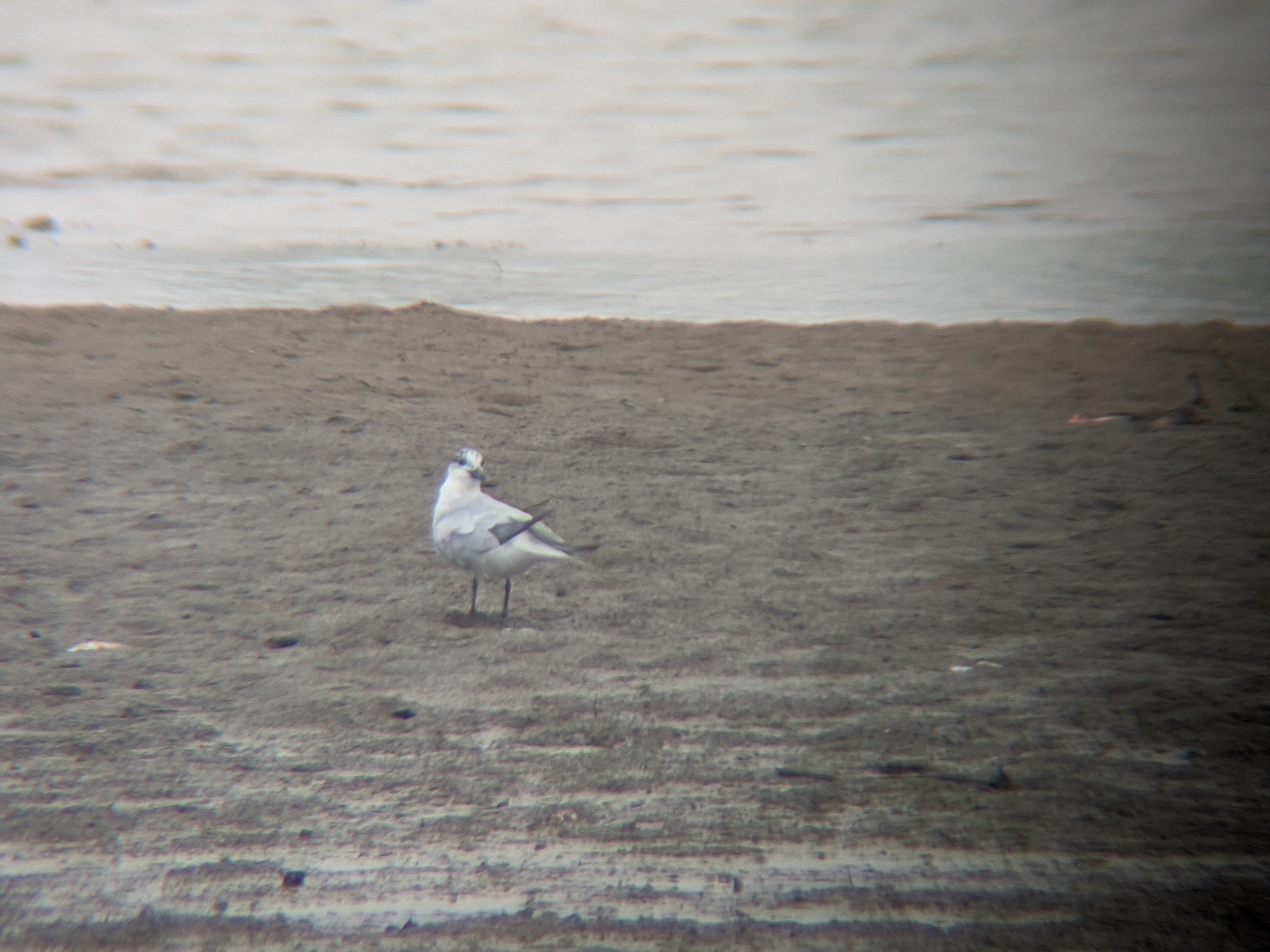
This is a fairly large and powerful tern, measuring 33-42 cm in length with a substantial wingspan of 76-91 cm. The body mass ranges from 150-292 g. The most distinctive feature is the short, thick gull-like bill, which immediately separates it from the slender-billed terns. In breeding plumage, the adult displays grey upperparts, clean white underparts, a striking black cap, a strong black bill, and black legs. The broad wings and long legs contribute to its robust appearance. Winter plumage is subtler, with the cap lost and replaced by a dark patch through the eye, resembling Forster's tern or a Mediterranean gull in this regard. Juveniles show a fainter mask but otherwise closely resemble winter adults.
Identification
The combination of size, short thick gull-like bill, broad wings, long legs, and robust body makes this species distinctive once seen well. It most closely resembles the Sandwich tern but can be separated by the bill shape and structure. Of particular identification challenge are juvenile Sandwich terns, which have a short bill and are frequently mistaken for gull-billed terns where the latter is uncommon, such as along North Sea coasts. The winter plumage with its dark eye patch can cause confusion with Forster's terns and Mediterranean gulls, though the gull-billed tern's overall structure and behavior remain distinctive. The characteristic 'ker-wik' call is a reliable identification aid.
Distribution & Habitat
This species breeds across a broad global range including southern Europe, temperate and eastern Asia, both coasts of North America, and eastern South America. Multiple geographical races exist, differing primarily in size and minor plumage details. The northernmost breeders are strongly migratory, moving south to wintering grounds that include Africa, the Caribbean, northern South America, southern Asia, and New Zealand. All populations show some post-breeding dispersal. The species breeds in scattered localities across its range, favoring wetlands including lakes, marshes, and coastal areas. It is one of the species covered by the Agreement on the Conservation of African-Eurasian Migratory Waterbirds.
Behavior & Ecology
Breeding occurs in colonies on lakes, marshes, and coasts, with the nest being a simple ground scrape containing two to five eggs. While Eurasian populations frequently use freshwater areas, North American birds are almost exclusively associated with saltwater coastal environments. Feeding behavior diverges notably from other 'white' terns. Rather than plunge-diving for fish, this species captures insects in flight and often hunts over wet fields and even brushy areas to take amphibians and small mammals. It demonstrates opportunistic feeding habits, including observations of picking up dead dragonflies from roads. The diet more closely resembles that of marsh terns in the genus Chlidonias than typical Sterna terns.
Conservation
The gull-billed tern is not globally threatened, though populations face localized pressures from habitat loss and degradation of wetland breeding sites. Its scattered distribution across multiple continents provides some resilience against widespread threats. The species benefits from protection under AEWA, which covers its African-Eurasian range. Coastal development and water pollution remain concerns in parts of its range, and drainage of wetlands for agriculture or development continues to impact breeding habitat. Monitoring of colony sites is recommended given the species' patchy distribution.
Culture
No significant cultural traditions, folklore, or symbolic associations with this species were found in available sources.
Source: Wikipedia · CC BY-SA 3.0
Taxonomy
- Order
- Charadriiformes
- Family
- Laridae
- Genus
- Gelochelidon
- eBird Code
- gubter2
Vocalizations
Subspecies (5)
-
Gelochelidon nilotica affinis
breeds from southeastern Siberia southward to eastern and southeastern China (Bohai Gulf to Guangdong); winters mainly in southeastern Asia, some reaching the Indian subcontinent and northern Australia
-
Gelochelidon nilotica aranea
breeds coastal New England southward to southeastern Mexico, Greater Antilles, and Virgin Islands; winters Central America to Peru and Brazil
-
Gelochelidon nilotica gronvoldi
breeds patchily coasts and rivers from Ecuador and French Guiana southward to northeastern Argentina
-
Gelochelidon nilotica nilotica
breeds inland southern Europe and northern Africa eastward through the Middle East to Inner Mongolia (northeastern China) and southward to Indus Valley (Pakistan); winters tropical Africa and Persian Gulf to India
-
Gelochelidon nilotica vanrossemi
breeds California to northern Baja California and Sinaloa northwestern Mexico; winters to Ecuador
Data Sources
Species description from Wikipedia, licensed under CC BY-SA 3.0.
Bird images and sounds sourced from GBIF, contributed by citizen scientists worldwide under Creative Commons licenses.
Taxonomy data from AviList 2025.