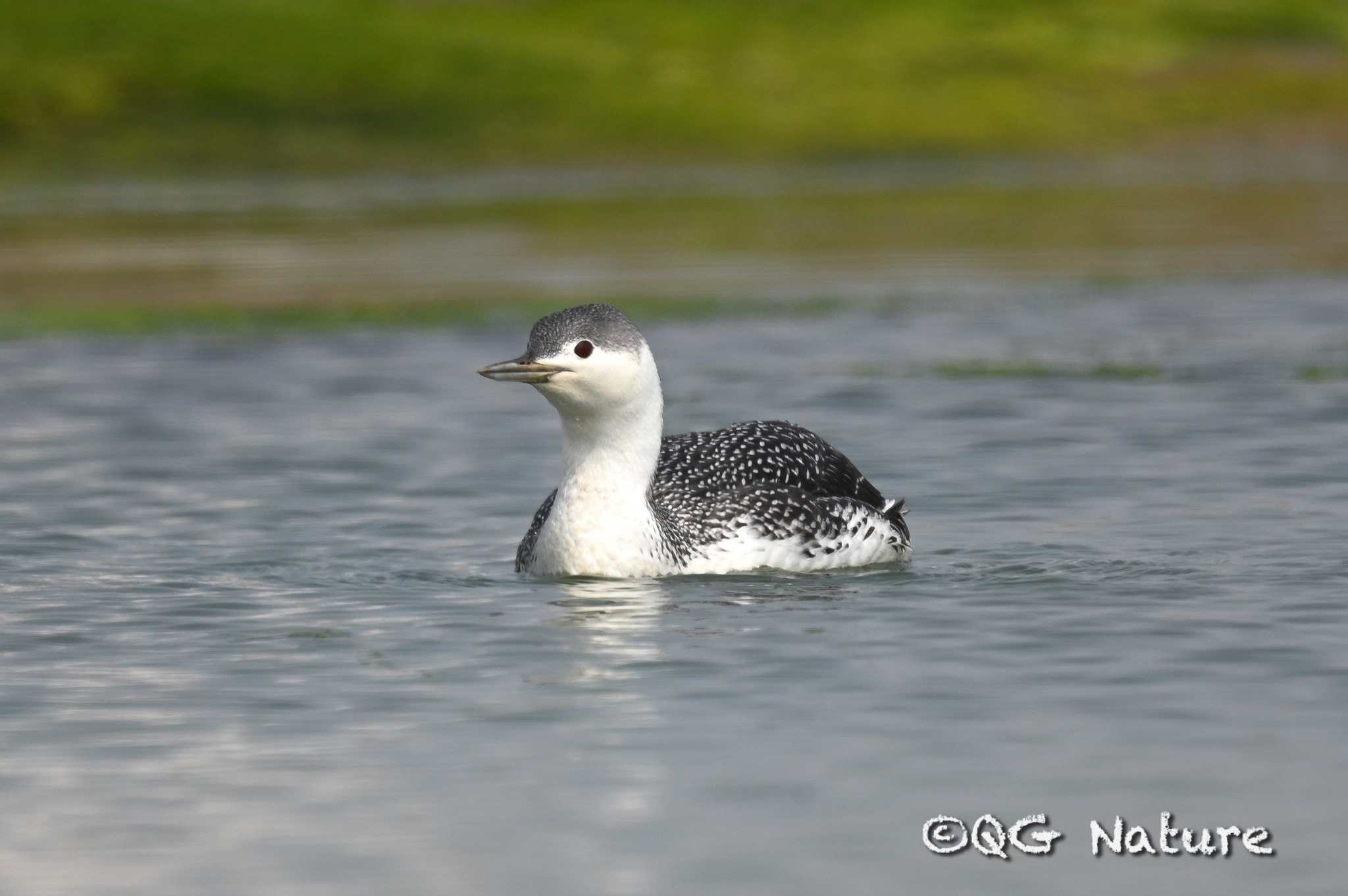
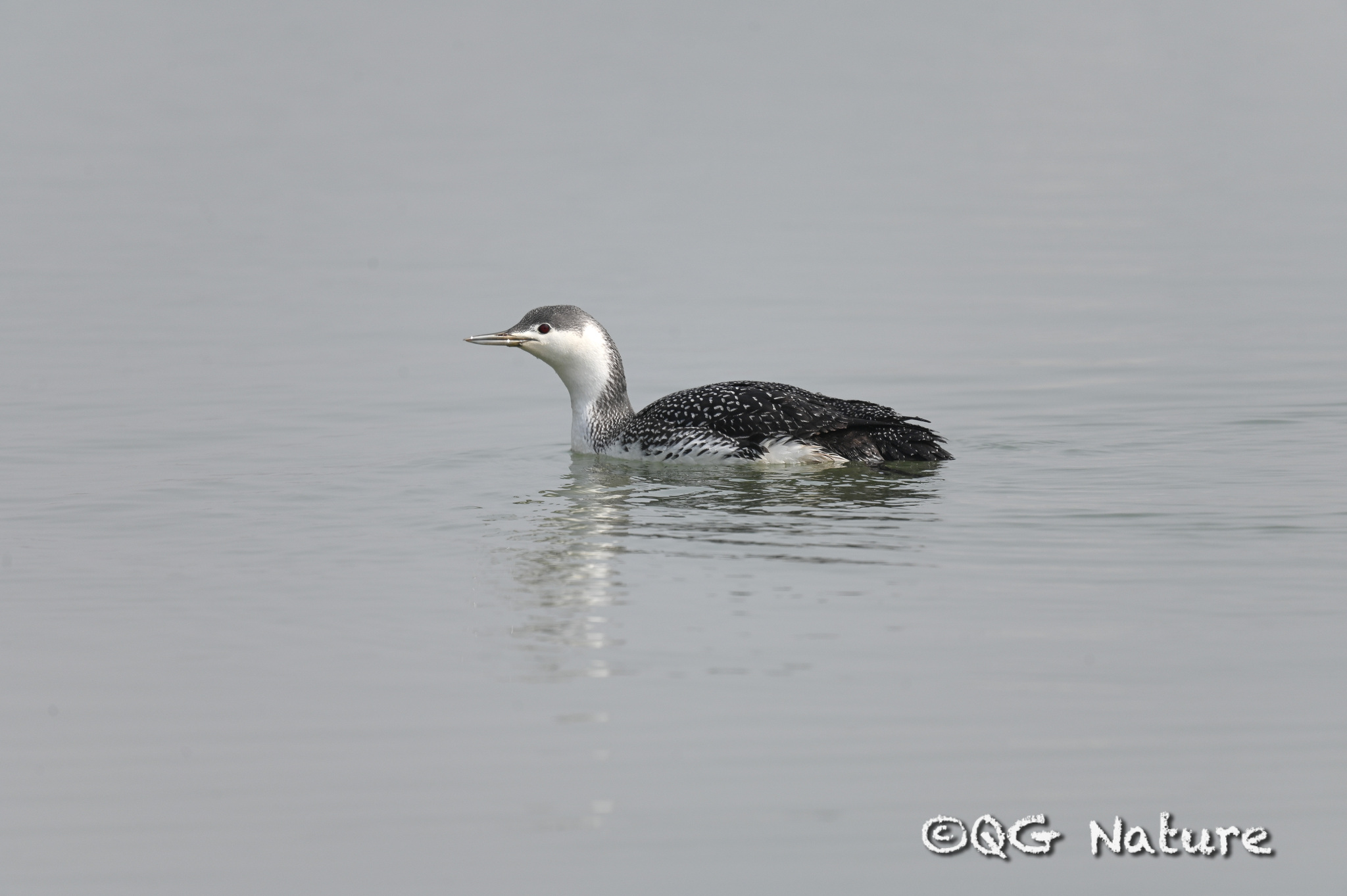
Red-throated Loon
Gavia stellata
红喉潜鸟
Introduction
A migratory aquatic bird of the loon/diver family (Gaviidae), the most widely distributed member of its group. Breeds primarily in Arctic regions of northern Eurasia and North America (generally north of 50°N latitude), and winters in northern coastal waters. Unlike other loons, it regularly uses very small freshwater lakes as breeding sites but feeds primarily in larger lakes or the sea. The smallest and lightest of the world's loon species, ranging from 55 to 67 centimeters in length. During breeding season, it acquires a distinctive reddish throat patch. Though it has a large global population and significant range, some populations are declining. Major threats include oil spills, habitat degradation, pollution, and fishing nets.
Description
The smallest and lightest loon species, measuring 53-69 cm in length with a 91-120 cm wingspan and weighing 1-2.7 kg. Long-bodied and short-necked with legs set far back on the body. Sexes appear similar, though males are slightly larger. In breeding plumage: dark grey head and neck with narrow black and white stripes on the back, triangular red throat patch, white underparts, and dark grey-brown mantle. It is the only loon with an all-dark back in breeding plumage. Non-breeding plumage is drabber with chin, foreneck, and much of face white, grey on top of head and back of neck, and white speckling on the dark mantle. Iris is carmine-red to burgundy. Legs are black on the outer half and pale on the inner half. The thin, straight, sharp bill is often held at an uptilted angle, changing from black in summer to pale grey in winter.
Identification
At medium to close range, adults in either plumage are usually easily recognized. However, in certain light conditions or at greater distances, it may be mistaken for the black-throated loon or occasionally the great crested grebe. Compared to the black-throated loon, it shows more white on the head and neck, and typically more white on the flanks when not sitting low in the water. When sitting low, the white on the flanks is reduced to a patch on the rear flank that tends to be less clearly defined than the comparable patch on the black-throated loon. In flight, the small feet do not project far past the body, the head and neck droop below horizontal giving a hunchbacked shape, and the thin wings are angled back with a quicker, deeper wingbeat than other loons.
Distribution & Habitat
Breeds primarily in Arctic regions of northern Eurasia and North America, generally north of 50°N latitude. In North America, winters along both coasts from Baja California and the Gulf of California southward. In Europe, breeds in Iceland, northern Scotland, northwestern Ireland, Scandinavia, and northern Russia, wintering along coasts as far south as Spain and regularly occurring on major inland waterways including the Mediterranean, Aegean, and Black Seas. In Asia, breeds in northern Siberia and winters along the Pacific coast as far south as China, Japan, and Taiwan. A diurnal migrant traveling singly or in loose groups, often high above water. Some populations migrate hundreds of miles over land.
Behavior & Ecology
Primarily a fish-eater, though also consumes molluscs, crustaceans, frogs, aquatic invertebrates, insects, fish spawn, and plant material. Prey is seized underwater rather than speared; pursuit dives range from 2-9 meters in depth with an average underwater time of about a minute. Monogamous with long-term pair bonds. Both parents build a shallow scrape nest lined with vegetation, placed within 0.5 meters of a small pond edge. Clutch size is typically two eggs, incubated for 24-29 days. Young are precocial and fed by both parents for 38-48 days. Vocalizations include a series of rapid goose-like cackles in flight, a warning croaking bark, a low-pitched moaning contact call, a musical wailing call, and a harsh pulsed cooing 'long call' often given in duet. Capable of taking off directly from land, unlike other loons.
Conservation
Classified as Least Concern globally with an estimated population of 490,000 to 1,500,000 individuals, though some populations are declining. U.S. surveys in Alaska showed a 53% population decline between 1971 and 1993, and counts have dropped in continental Europe. Major threats include oil spills, habitat degradation, fishing nets, and wind farm construction near migration routes. High mercury levels have caused reproductive failures in some areas, and acidification of lakes reduces fish prey availability. Predators include Arctic and red foxes (eggs), and great skuas, Arctic skuas, and Larus gulls (eggs and young). Susceptible to avian influenza, Type E botulism, and neurotoxins from red tide algal blooms. Protected under AEWA and the Migratory Bird Treaty Act.
Culture
Used as a food source since prehistoric times and still hunted by indigenous peoples in some regions. On Canada's Igloolik Island, 73% of eggs were collected by indigenous inhabitants during a two-season study. In parts of Russia, traditional uses included making caps and clothing decorations from skins. Central to creation mythologies of indigenous groups throughout the Holarctic, where the loon was asked by a shaman to bring up earth from the sea to create dry land. Historically used for weather prediction: birds flying inland or giving short cries predicted good weather, while those flying out to sea or giving long wailing cries predicted rain. Still known as the 'rain goose' in Orkney and Shetland islands. Featured on stamps by Bhutan, Japan, Åland, and the Union of Comoros.
Source: Wikipedia · CC BY-SA 3.0
Taxonomy
- Order
- Gaviiformes
- Family
- Gaviidae
- Genus
- Gavia
- eBird Code
- retloo
Distribution
breeds across the northern Holarctic region; winters coastally in the north Pacific Ocean from the Kamchatka Peninsula to the Yellow Sea, and from southern Alaska to northwestern Mexico; and in the northern Atlantic Ocean from the Maritime Provinces (Canada) to the southeastern USA, from Scandinavia south to the Mediterranean, and the Black and Caspian seas
Data Sources
Species description from Wikipedia, licensed under CC BY-SA 3.0.
Bird images and sounds sourced from GBIF, contributed by citizen scientists worldwide under Creative Commons licenses.
Taxonomy data from AviList 2025.