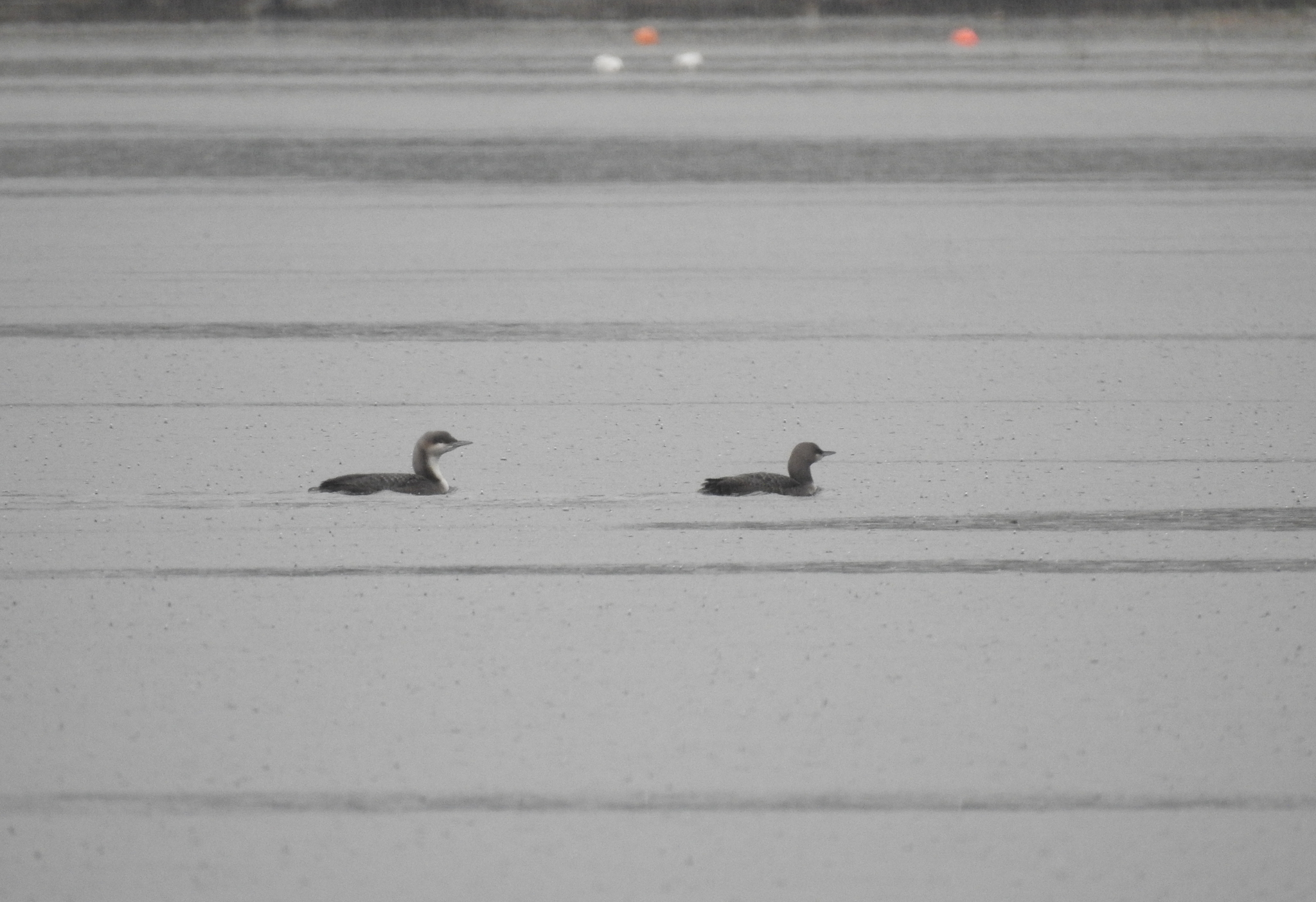
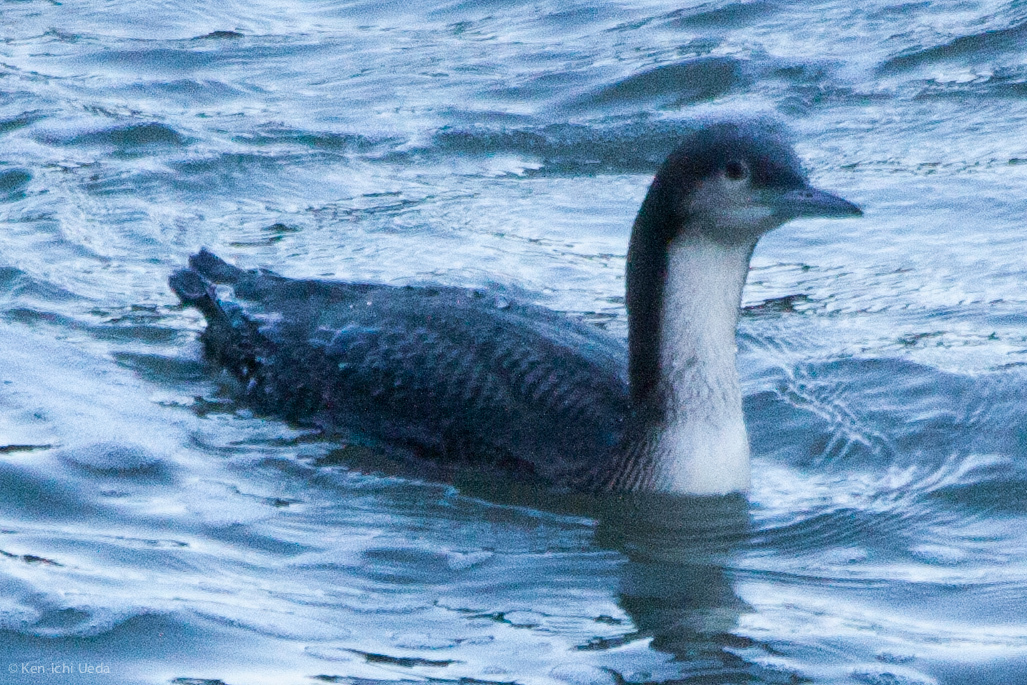
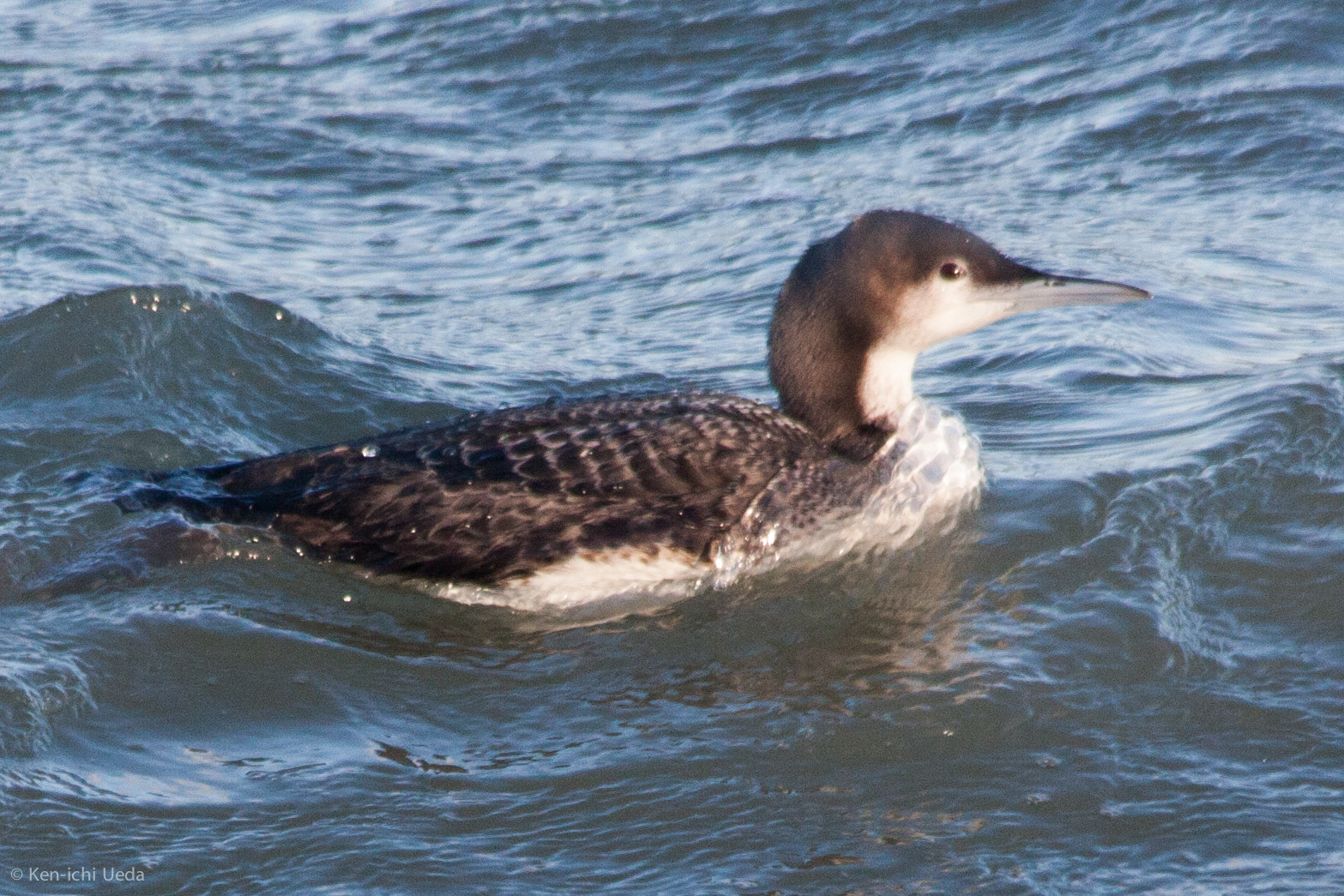
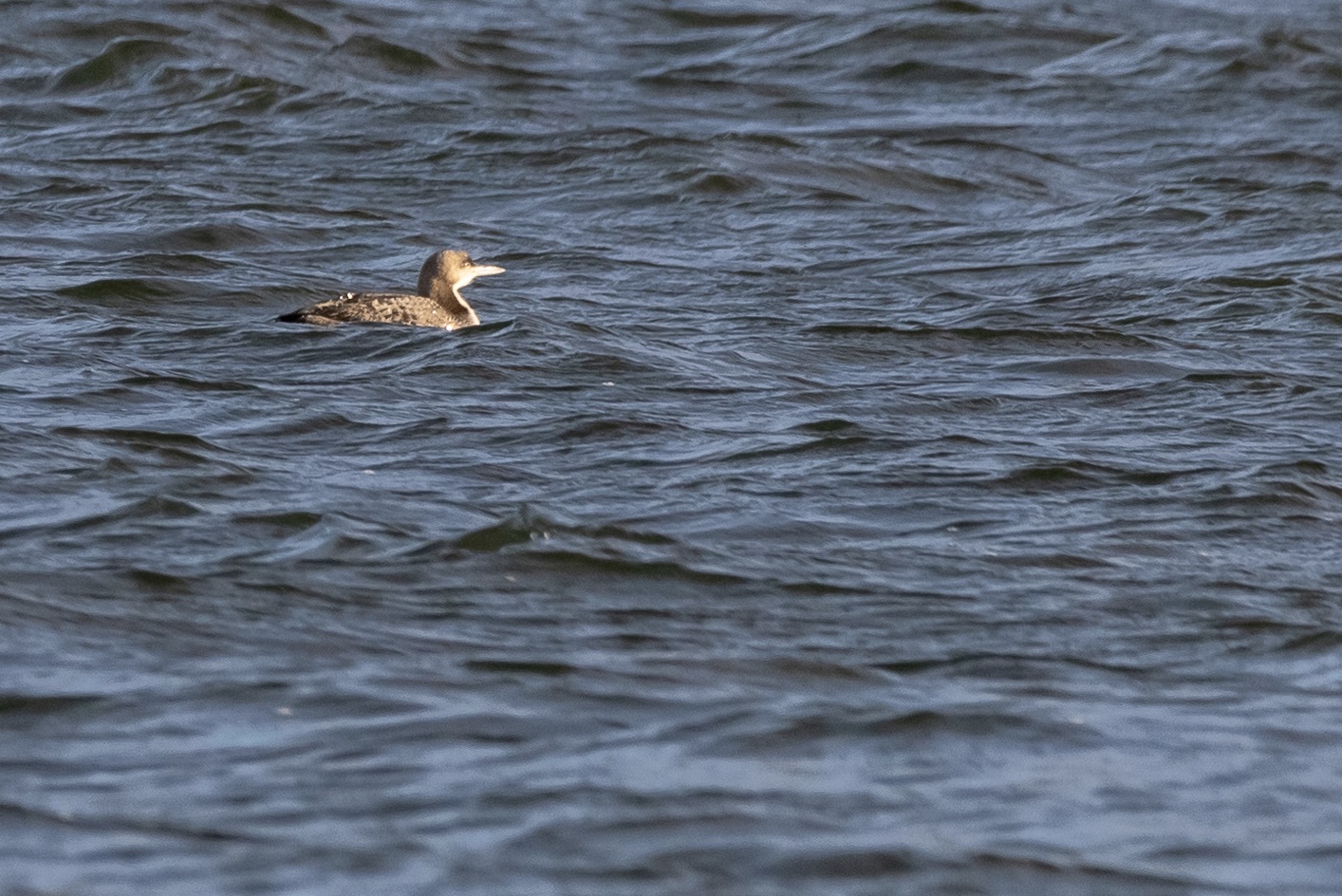
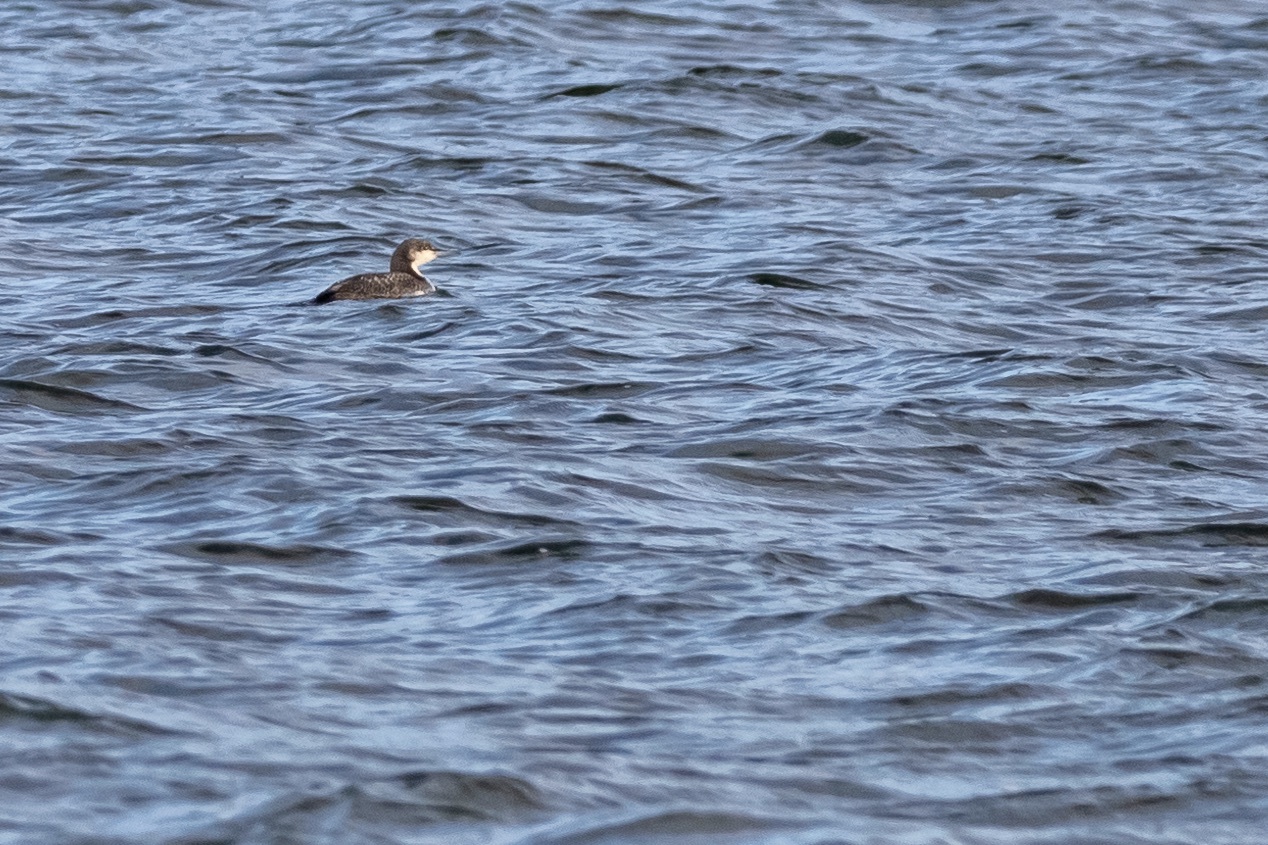
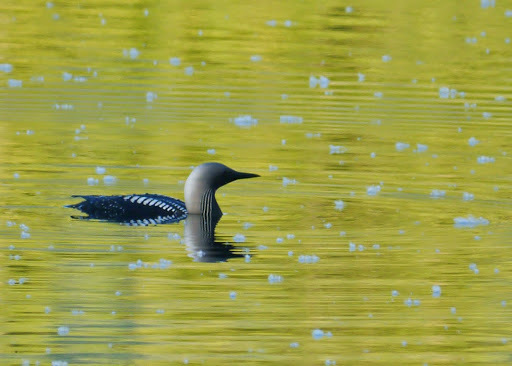
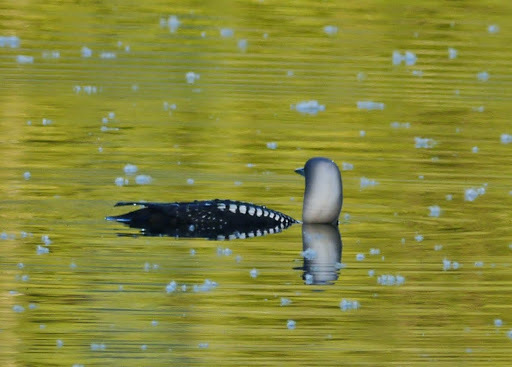
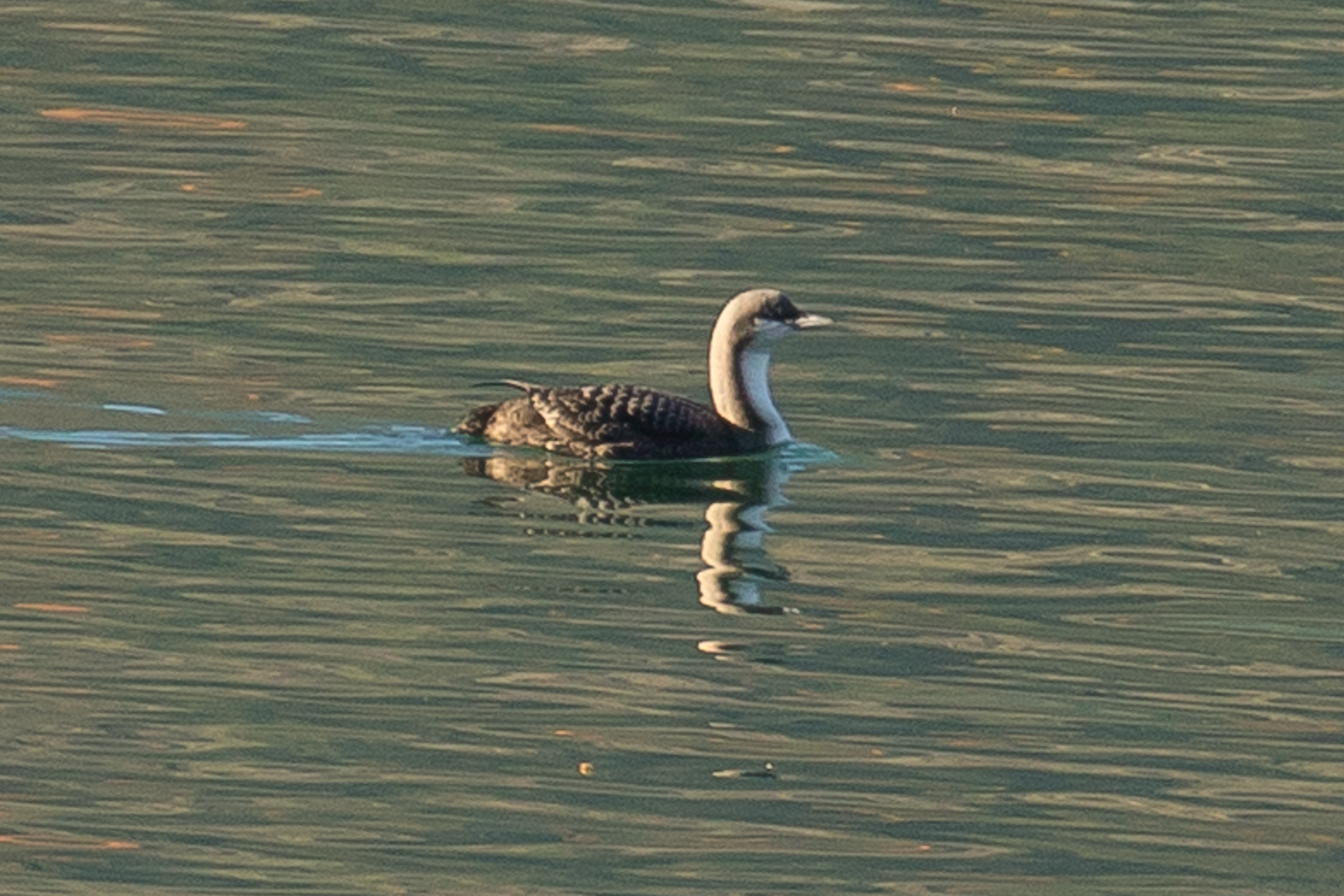
Pacific Loon
Gavia pacifica
太平洋潜鸟
Introduction
Medium-sized member of the loon/diver family (Gaviidae). Previously considered conspecific with the black-throated loon until classified as a separate species in 1985. Breeds on tundra lakes in northern Canada and eastern Siberia; winters along the Pacific coast of North America and on large inland waters across East Asia. Distinctive among loons for migrating in flocks rather than singly. Known for highly aggressive territorial behavior, including attacks on intruders and even passing aircraft. Population is increasing across a wide range of approximately 15,700,000 square kilometers.
Description
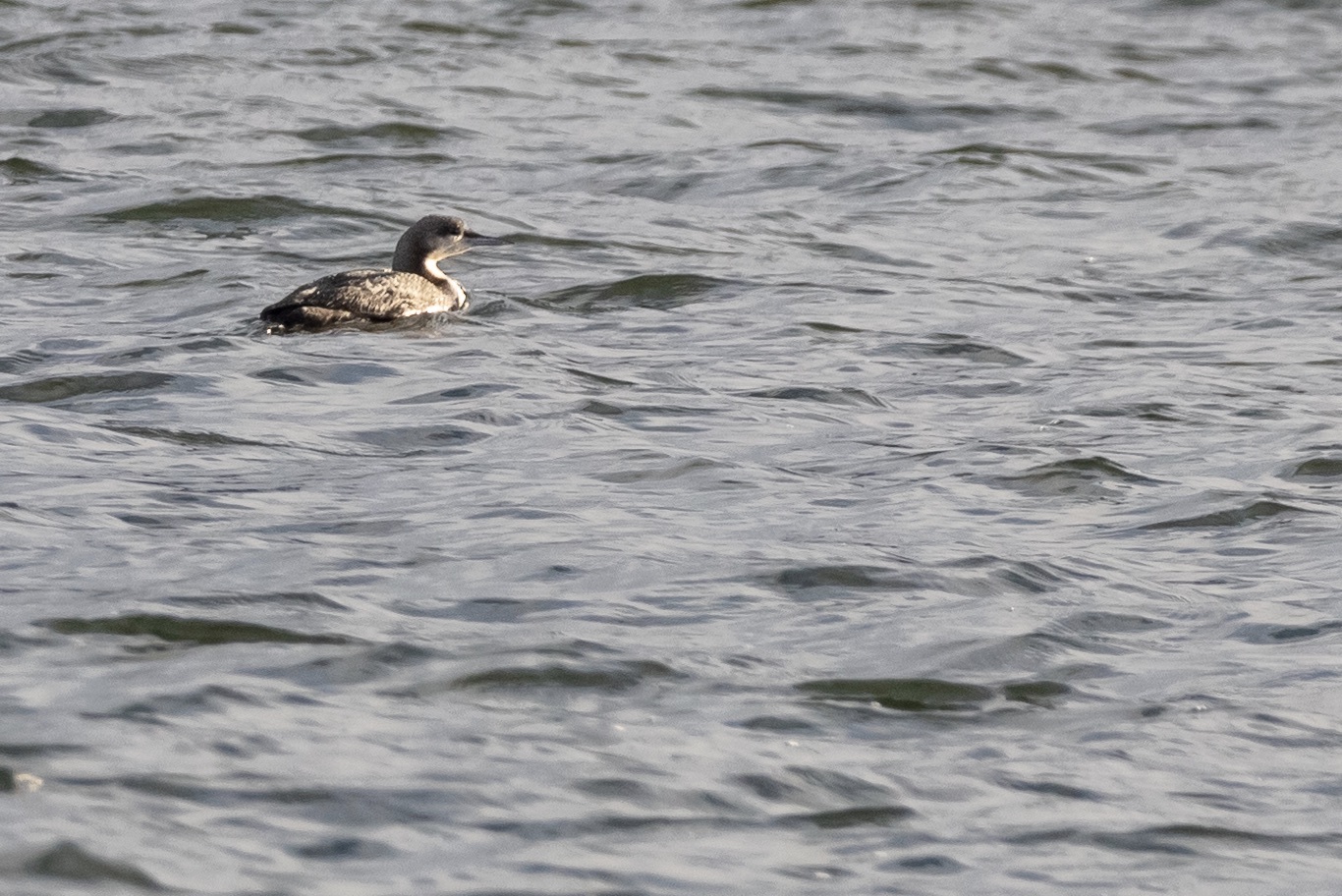
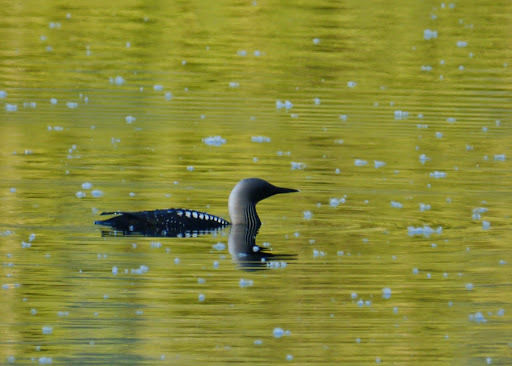
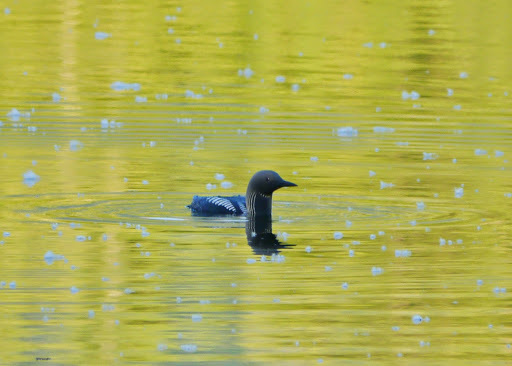
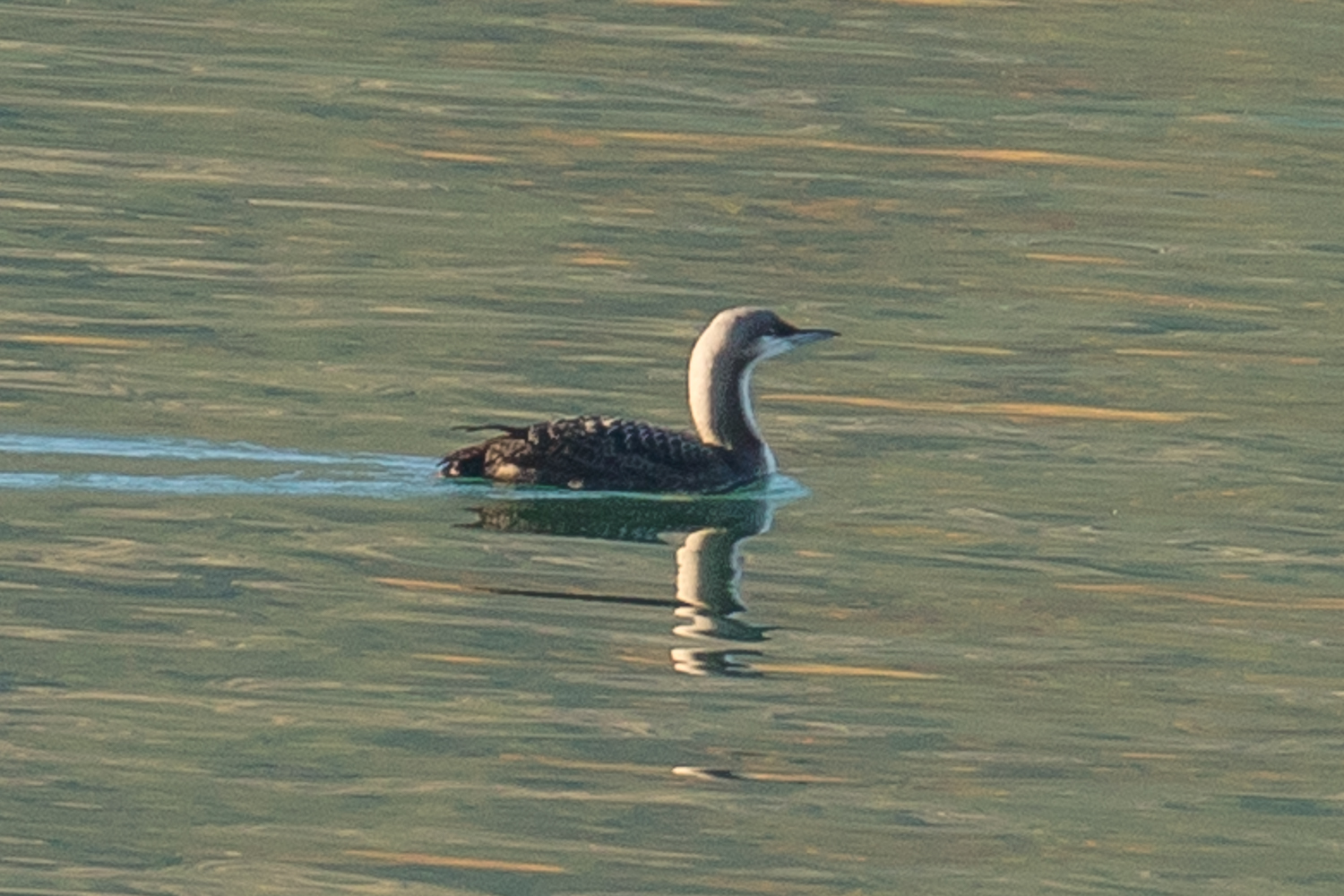
A smaller, sleeker version of the common loon. Body length 58-74 cm, wingspan 110-128 cm, weight 1-2.5 kg. Breeding plumage features a grey head, black throat with purple reflections, white underparts, and chequered black-and-white mantle. Non-breeding plumage is drabber with white chin and foreneck. Bill is grey or whitish and dagger-shaped. Legs are positioned toward the back of the body, making walking difficult but aiding underwater foraging. Requires 27-46 meters of water to take off.
Identification
Lacks the white flank patch present in the otherwise similar black-throated loon, the key distinguishing feature across all plumages. Differs from red-throated loon in winter plumage by its more contrasting appearance between crown/hindneck and throat, and by its straight dagger-shaped bill versus the upturned bill of the red-throated loon.
Distribution & Habitat
Breeds on tundra lakes across northern Canada and eastern Siberia. Winters along the Pacific coast of North America from Alaska to Baja California, and on large inland lakes throughout China, Japan, and the Korean Peninsula. Unlike other loons, may winter on large lakes far from coastlines. Has occurred as a vagrant to Greenland, Hong Kong, Great Britain, Spain, Finland, and Switzerland.
Behavior & Ecology
Specialist fish-eater that catches prey underwater, often foraging in groups by herding fish toward the surface. Feeds closer to shore than other loon species. Breeding occurs in spring and summer; pairs are socially monogamous and may remain together for life. Nests are constructed on lake shorelines using vegetation and mud, containing 1-2 eggs measuring 76 by 47 mm. Incubation lasts 23-25 days. Chicks are dependent for approximately 8 weeks and are carried on parents' backs. Vocalizations include an 'ark'-like call when feeding, and a loud wail or yodel during breeding season.
Conservation
IUCN status not specified, but population is increasing across a 15,700,000 square kilometer range. A recent study found the Western Alaskan Arctic population is 1.5-2 times larger than previously estimated. Threats include potential encroachment on breeding habitat by oil and gas development in Alaska's National Petroleum Reserve, mercury contamination from legacy mining operations, and plastic pollution. Human disturbance during research activities significantly reduces egg survival rates. Climate change poses a threat through habitat water loss at breeding lakes.
Culture
No cultural information available.
Source: Wikipedia · CC BY-SA 3.0
Taxonomy
- Order
- Gaviiformes
- Family
- Gaviidae
- Genus
- Gavia
- eBird Code
- pacloo
Distribution
breeds coastal eastern Siberia and northern North America eastward through northern Canada to Baffin Island and James Bay (eastern Canada); winters to Japan and southern Baja California
Data Sources
Species description from Wikipedia, licensed under CC BY-SA 3.0.
Bird images and sounds sourced from GBIF, contributed by citizen scientists worldwide under Creative Commons licenses.
Taxonomy data from AviList 2025.