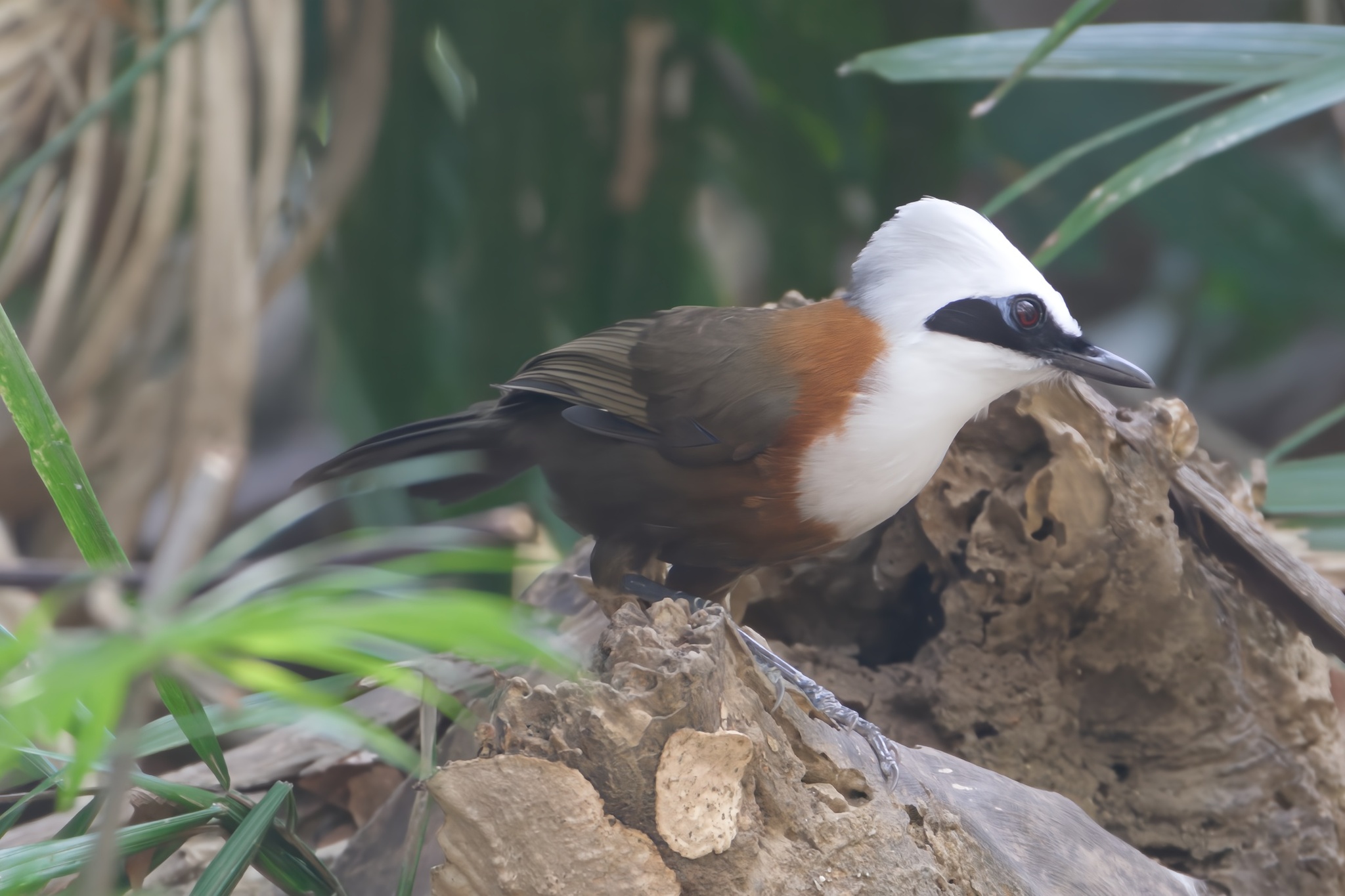
White-crested Laughingthrush
Garrulax leucolophus
白冠噪鹛
Introduction
A member of the family Leiothrichidae, recently split from the Old World babbler family Timaliidae. Native to forest and scrub from the Himalayan foothills through Southeast Asia, including India, Bangladesh, Nepal, Bhutan, Cambodia, Myanmar, Laos, China, Vietnam, and Thailand. Highly social and vocal, typically found in flocks of 6-12 individuals (up to 40), known for loud cackling outbursts that give the group its common name. Inhabits foothill forests up to 1600m elevation, favoring dense moist thickets, scrub, and the understory of broadleaved secondary forests. Four subspecies are recognized with subtle plumage variations. Introduced populations established in Malaysia and Singapore during the 1970s-1980s, likely from escaped or released cage birds. Due to its extensive native range, it is assessed at minimal risk of extinction.
Description
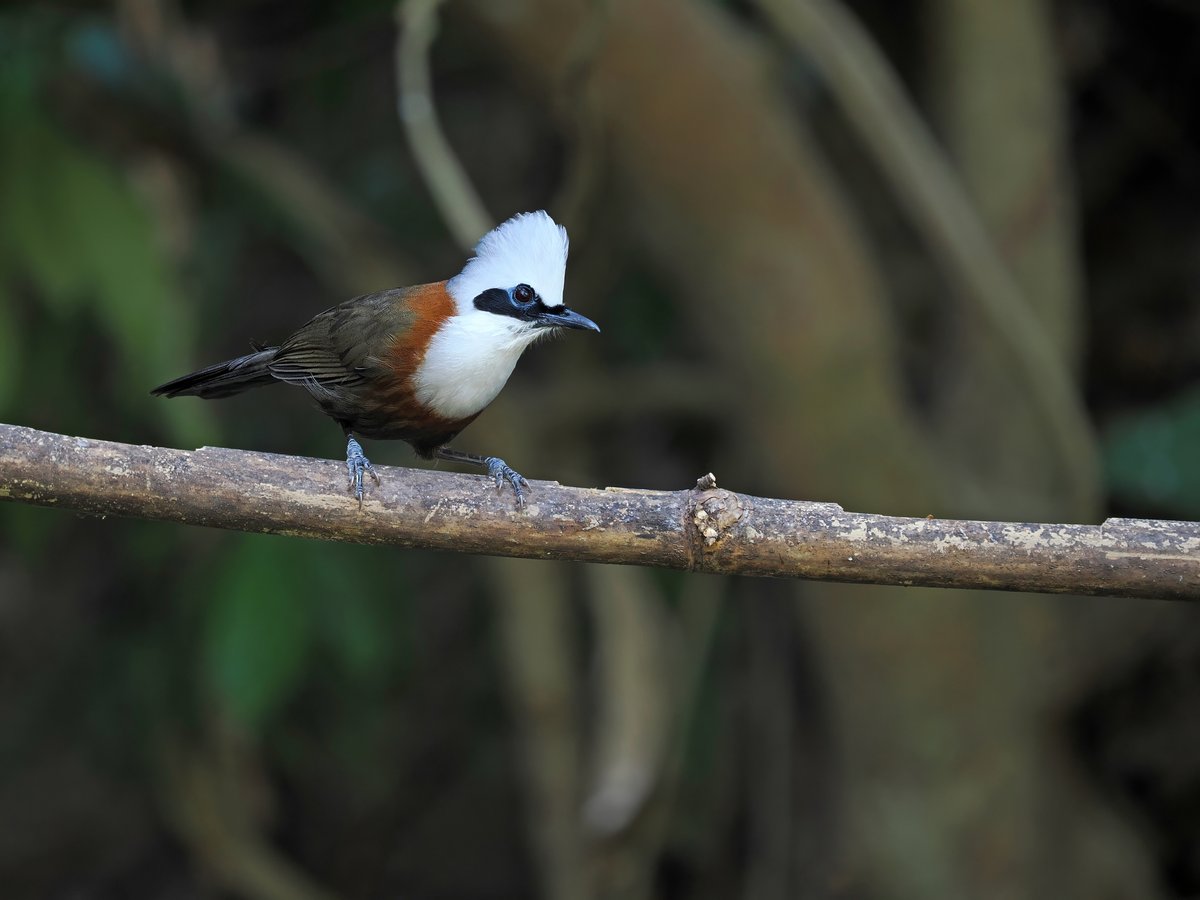
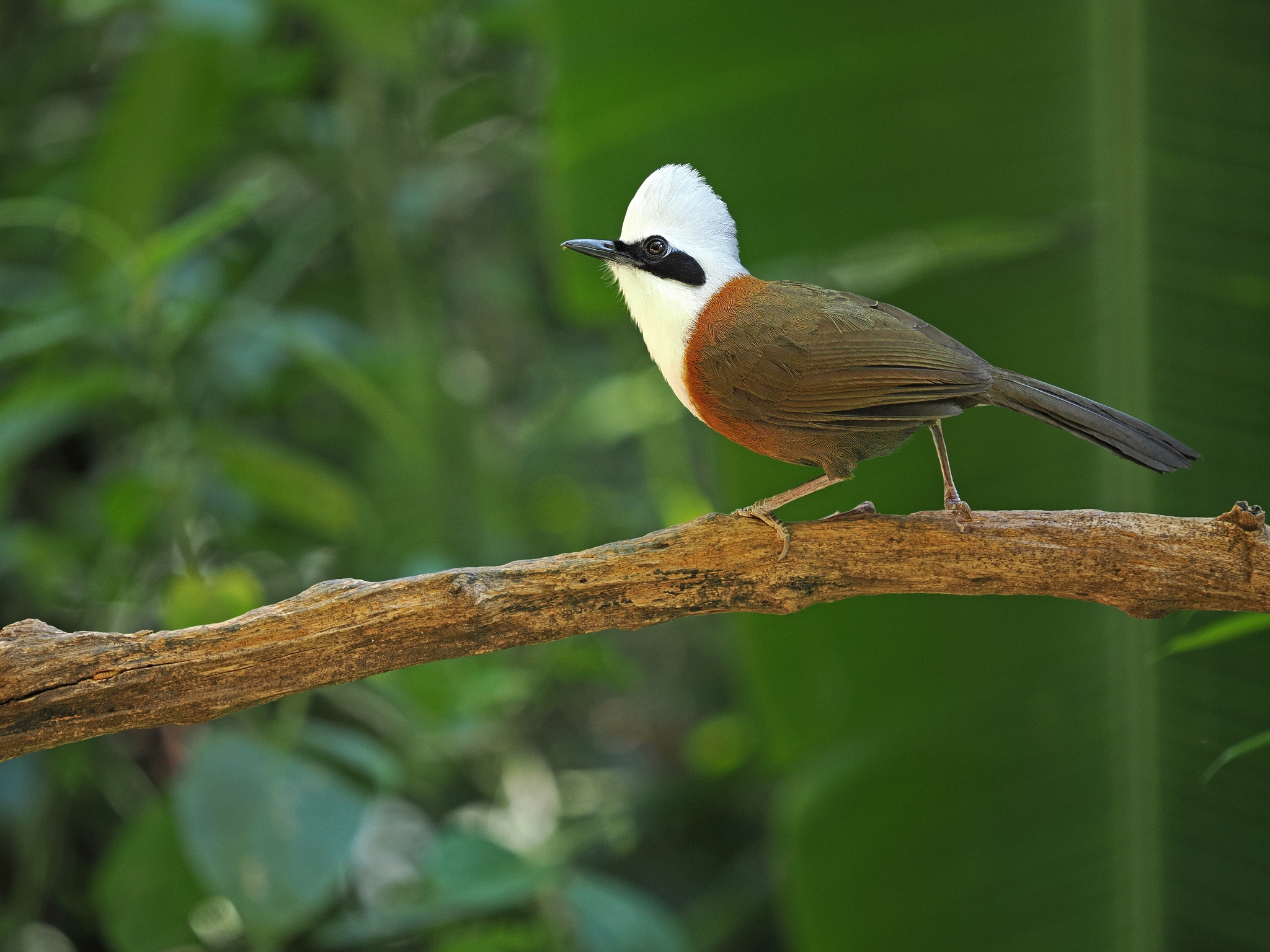
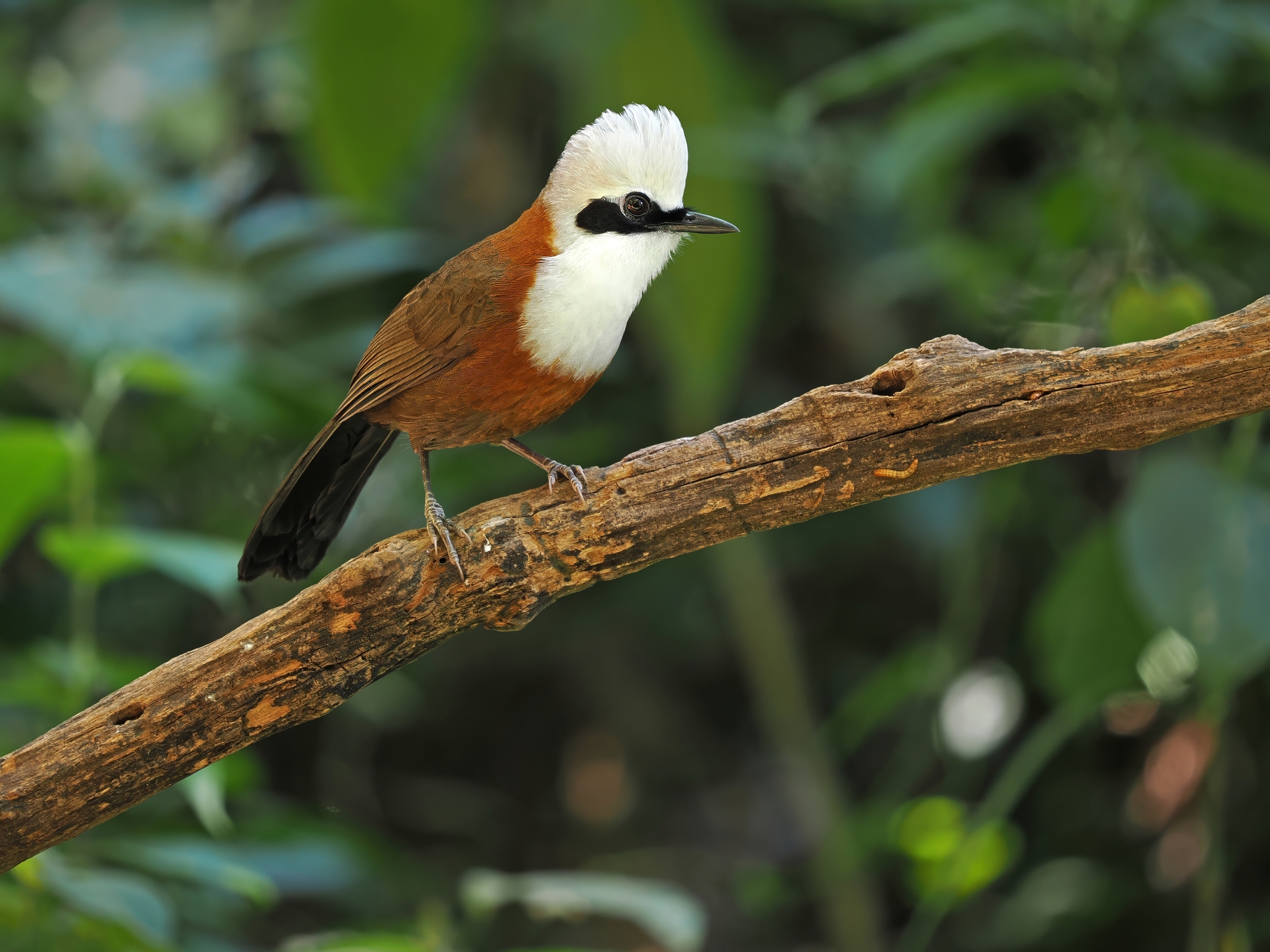
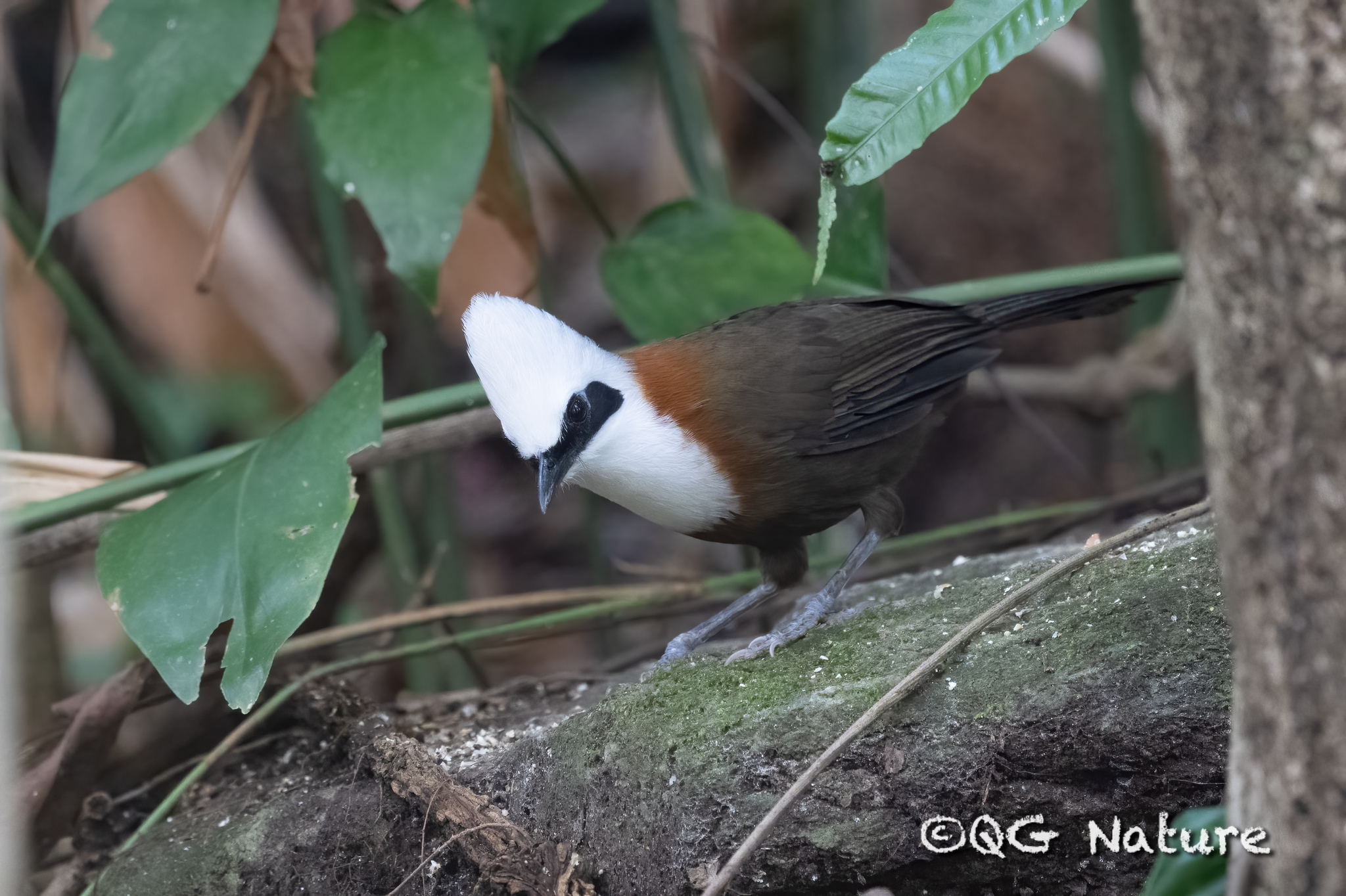
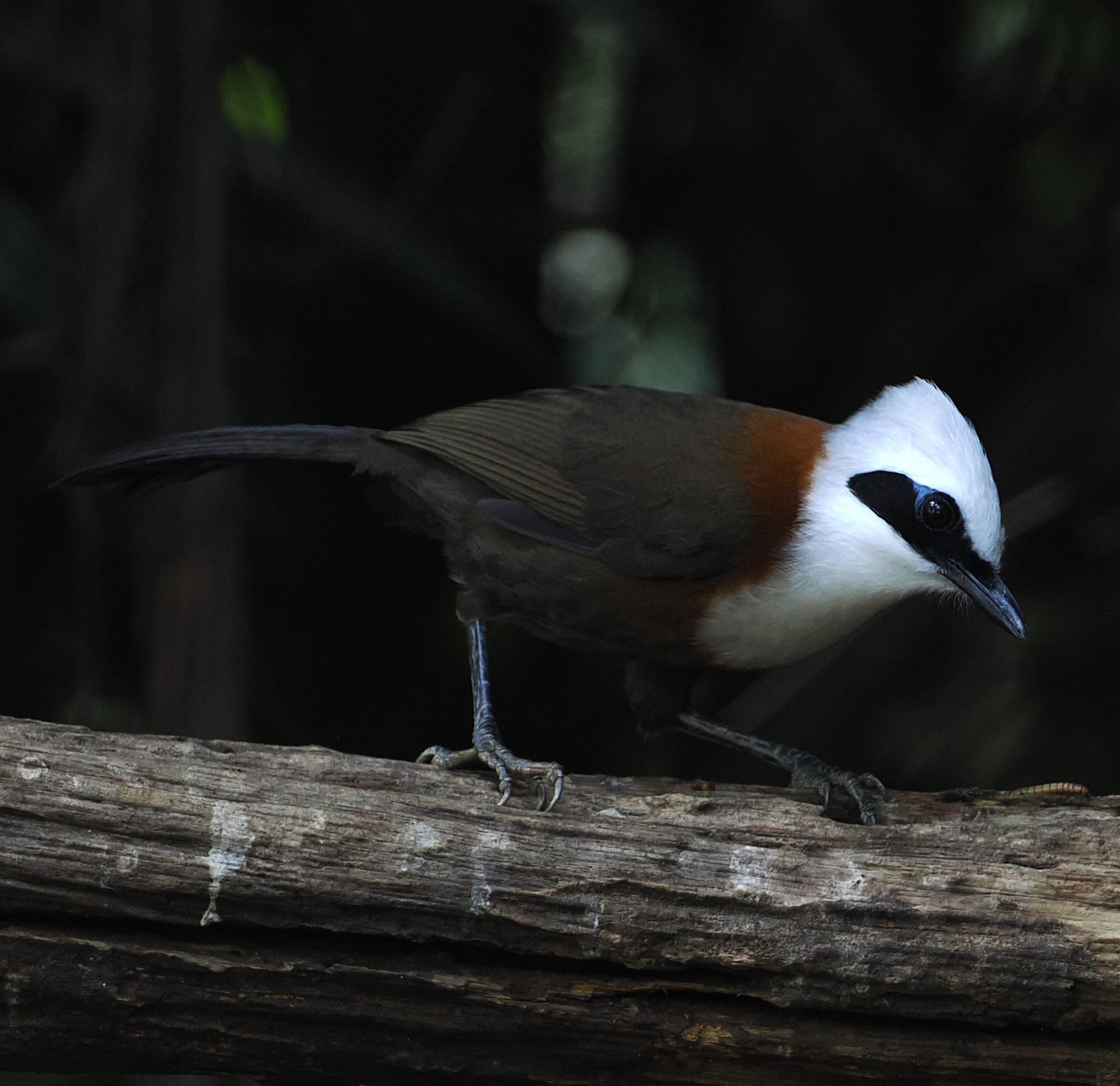
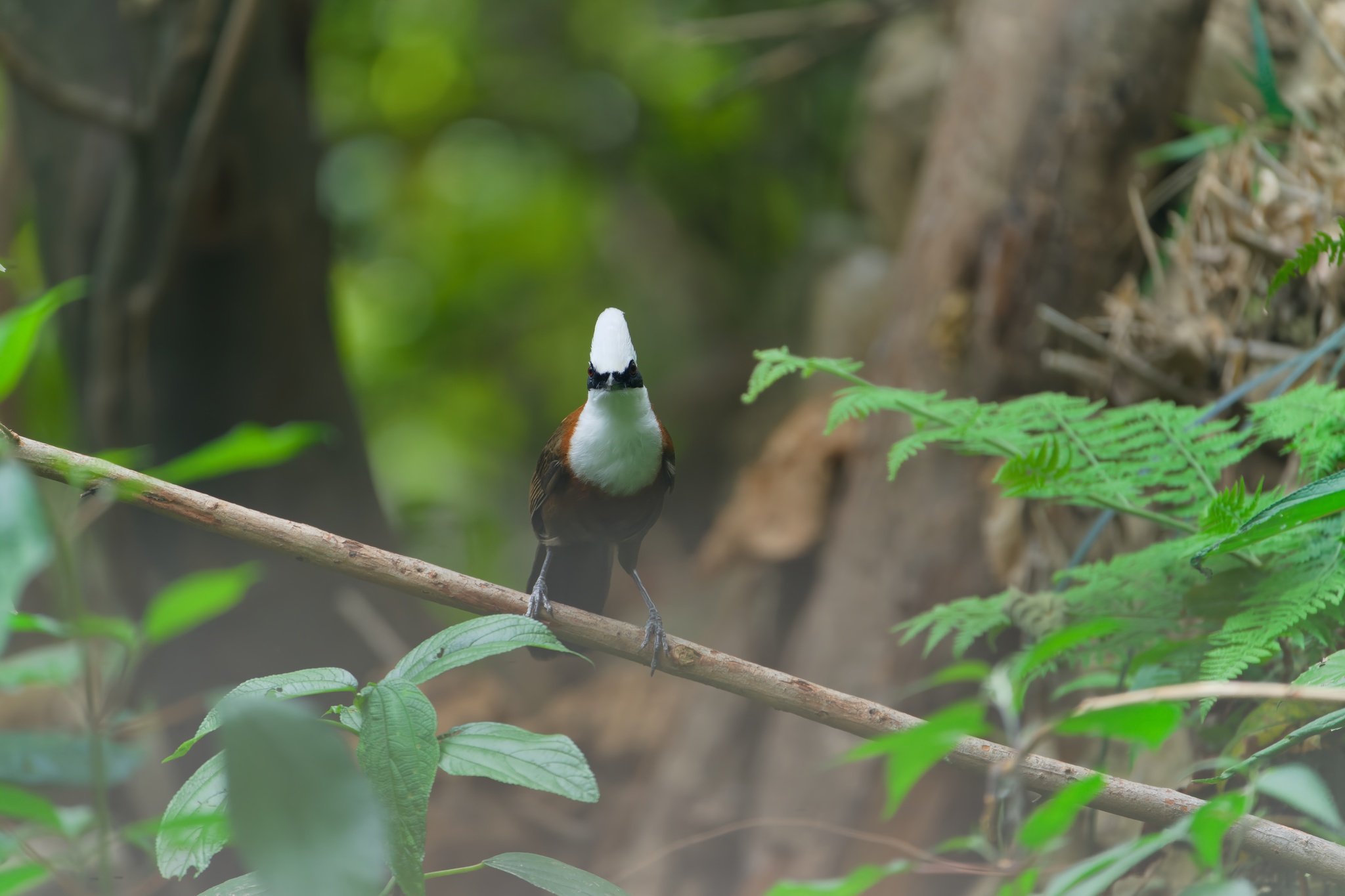
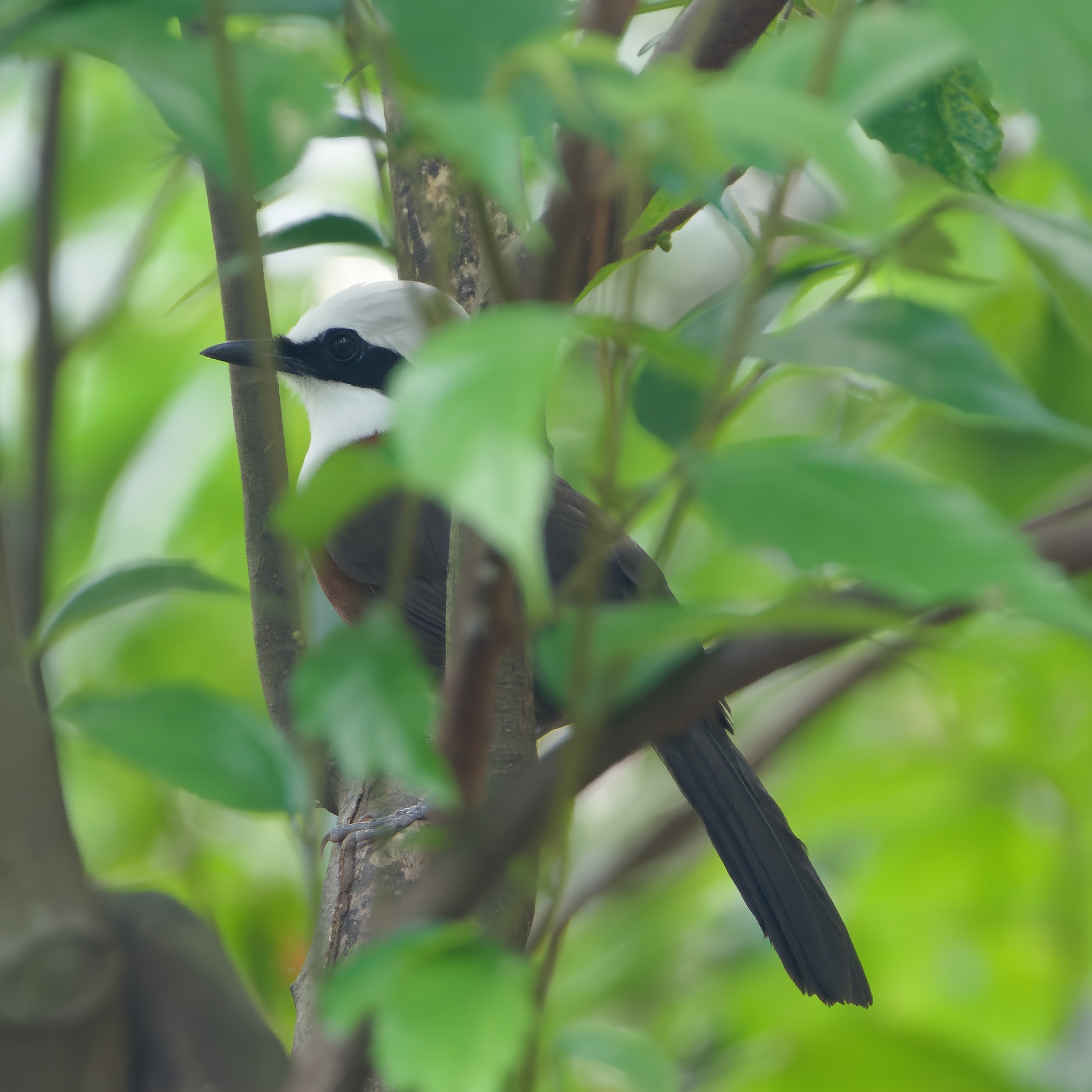
A stocky babbler with strong blackish legs and bill, rounded tail, and voluminous plumage. Average body length is 30 cm with a tail measuring 13-15 cm. The most distinctive feature is the white hood and raised crest, complemented by a broad, elongated black eye-mask. The mantle, back, and underparts from the lower breast down are rufescent, contrasting sharply with the white head, throat, and upper chest. The tail and upper wings fade to darker olive-brown. The nape is light gray. Females appear nearly identical but have a smaller crest, duller mantle, and slightly more gray on the nape. Juveniles show a shorter crest and tail, paler mask, brownish nape, and brighter mantle. Subspecies vary subtly in mantle coloration and the extent of white on the underparts.
Identification
The striking white head with prominent crest combined with a broad black eye-mask makes this species unmistakable within its range. The rufescent body contrasting with the white head and throat is diagnostic. Similar laughingthrush species lack the extensive white hood and crest. The Sumatran laughingthrush was formerly classified as a subspecies but differs in lacking the characteristic rufous plumage and having a different face pattern. The white-crested laughingthrush also differs in having a longer tail. Sexes are similar, though females have smaller crests and duller upperparts. Juveniles show reduced crest development and brownish nape coloration.
Distribution & Habitat
Native across the Himalayan foothills and Southeast Asia, with one of the widest ranges among laughingthrushes. Four subspecies occupy different regions: G. l. leucolophus in northern India, Nepal, Bhutan, and southern Tibet; G. l. patkaicus in northeastern India, Bangladesh, Myanmar, and southern Yunnan; G. l. belangeri in Myanmar and Thailand; and G. l. diardi in Myanmar, Thailand, Laos, Cambodia, Vietnam, and southern Yunnan. Introduced populations of G. l. diardi established in Malaysia and Singapore during the 1970s-1980s, where the species has become well-established in Singapore. Inhabits moist subtropical forests up to 1600m elevation, favoring dense thickets, secondary forest edges, and understories.
Behavior & Ecology
Omnivorous and opportunistic forager, feeding primarily on invertebrates including beetles, spiders, flies, caterpillars, snails, and leeches. Also consumes fruits, seeds, nectar, and occasionally small reptiles and amphibians. Forages on the ground in small parties, hopping through leaf litter and tossing debris aside with the beak to uncover prey. Highly gregarious, typically found in flocks of 6-12 individuals. Vocalizations include short calls (ow, u'ow, u'ah) that trigger choruses from the group, loud cackling outbursts, and softer chatter (kerWICKerWICK, nYUKoop nYUKoop). Four types of vocalizations exist in increasing complexity. Begins breeding in the second year, with multiple broods between February and September. Nests are shallow cups placed 2-6m high in shrubs and trees. Lays 2-6 pure white eggs (approximately 6.5g each), incubated for 13-17 days. Cooperative breeder with multiple adults sharing incubation and chick-rearing duties.
Conservation
IUCN Red List assessment is Least Concern due to its extremely extensive range and large population. No range-wide declines have been documented. However, introduced populations in Singapore may be displacing native ground-foraging birds such as Abbott's babbler, which faces threats from habitat fragmentation. In Malaysia, the introduced population remains small due to trapping pressure. As an invasive species, it benefits from social cooperative behavior, high flock densities, and adaptability to various habitats including parks, gardens, and degraded forest. The species' success in new environments is attributed to these traits combined with its varied diet and breeding flexibility.
Culture
The white-crested laughingthrush is a popular cage bird species throughout its range. In Southeast Asia, individuals have been intentionally released or escaped during religious practices, contributing to the expansion of the species into Malaysia and Singapore. This religious release practice is noted as a pathway for the establishment of introduced populations. The bird trade has also brought the species to the United Kingdom and United States, though no wild populations have established there.
Source: Wikipedia · CC BY-SA 3.0
Taxonomy
- Order
- Passeriformes
- Family
- Leiothrichidae
- Genus
- Garrulax
- eBird Code
- whclau2
Subspecies (4)
-
Garrulax leucolophus belangeri
southern Myanmar and southwestern Thailand (valley of Mekong River)
-
Garrulax leucolophus diardi
southeastern Myanmar to southwestern Yunnan, peninsular Thailand, and Indochina
-
Garrulax leucolophus leucolophus
western Himalayas to Nepal, Sikkim, Bhutan, and Assam (Mishmi Hills)
-
Garrulax leucolophus patkaicus
southern Assam (south of the Brahmaputra) to northern Myanmar and northwestern Yunnan
Data Sources
Species description from Wikipedia, licensed under CC BY-SA 3.0.
Bird images and sounds sourced from GBIF, contributed by citizen scientists worldwide under Creative Commons licenses.
Taxonomy data from AviList 2025.