Pin-tailed Snipe
Gallinago stenura
针尾沙锥
Introduction
Arctic-breeding wader. Breeds in northern Russia and winters across southern Asia from the Indian subcontinent to Southeast Asia. Inhabits various wetland habitats during non-breeding season, including drier areas avoided by common snipe. Produces whistling sound from stiff, pin-like outer tail feathers during territorial display flights. Display call is a repetitive "tcheka" with a crescendo.
Description
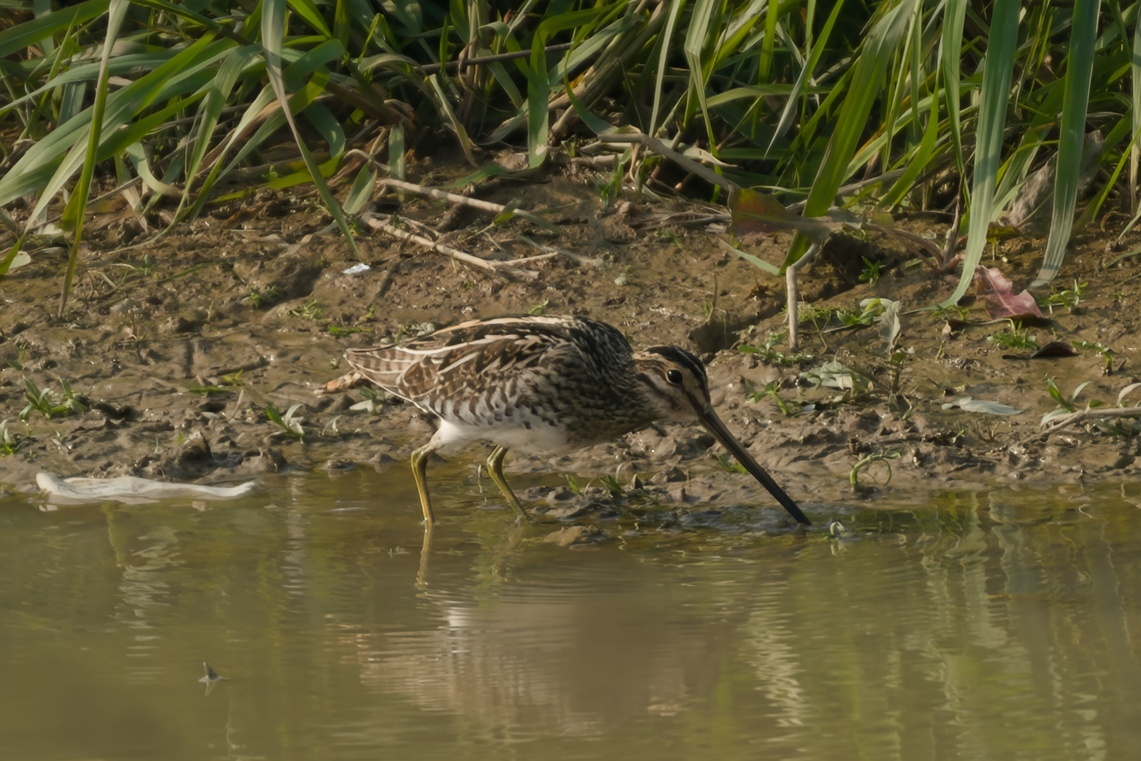
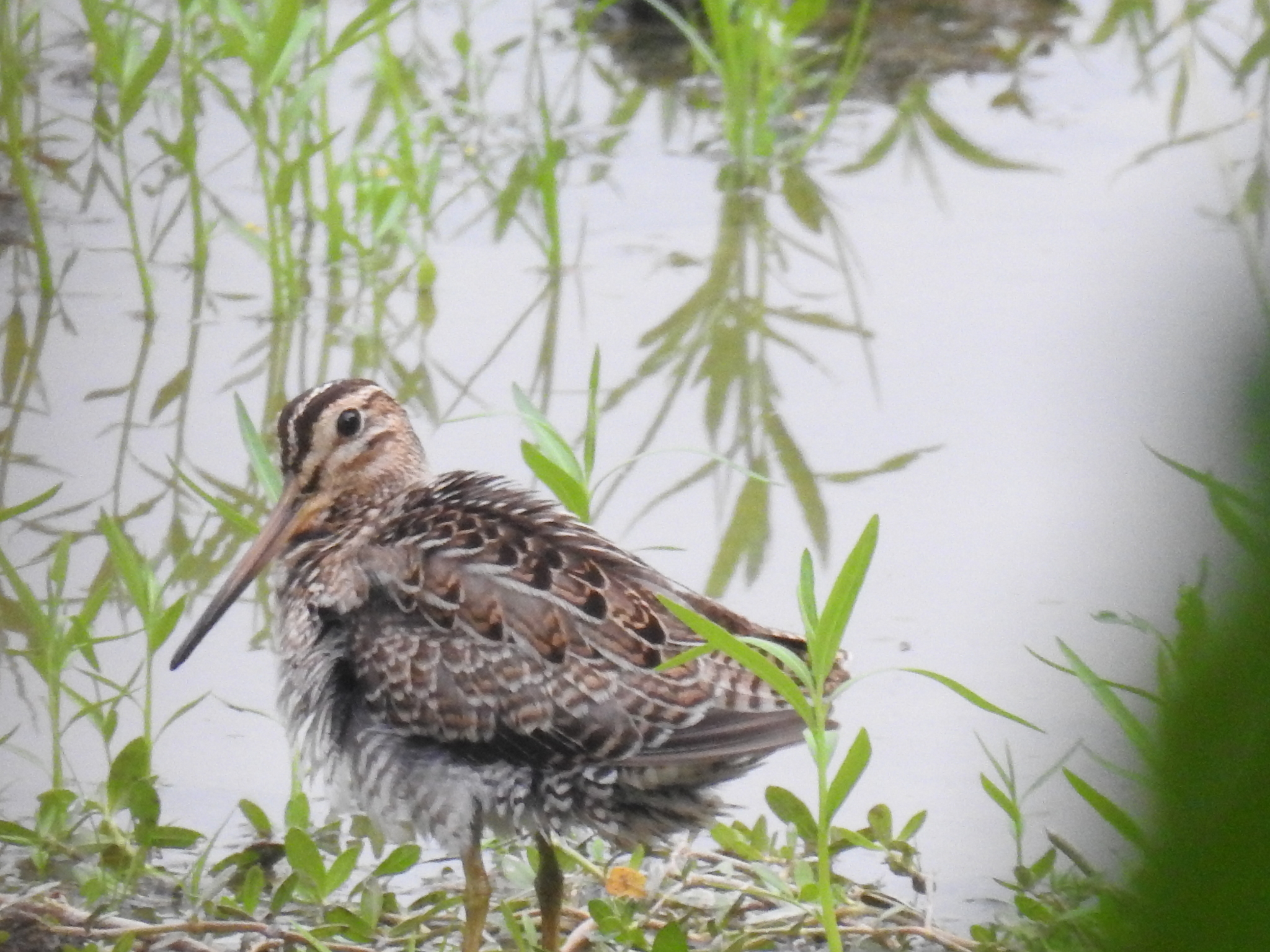
This compact wader measures 25-27 cm in length with a silhouette broadly similar to the common snipe but appearing slightly longer-tailed in direct comparison. The legs are short and greenish-grey, supporting a characteristically long, straight dark bill used for probing soft substrates. The upperparts display intricate mottled brown patterning accented by cream-colored lines running along the back. Underparts are pale with a streaked buff breast contrasting against a white belly. The face pattern features a bold dark stripe through the eye bordered by lighter stripes above and below. Sexes appear virtually identical, with immature birds differing only in subtle plumage details that require close examination to discern.
Identification
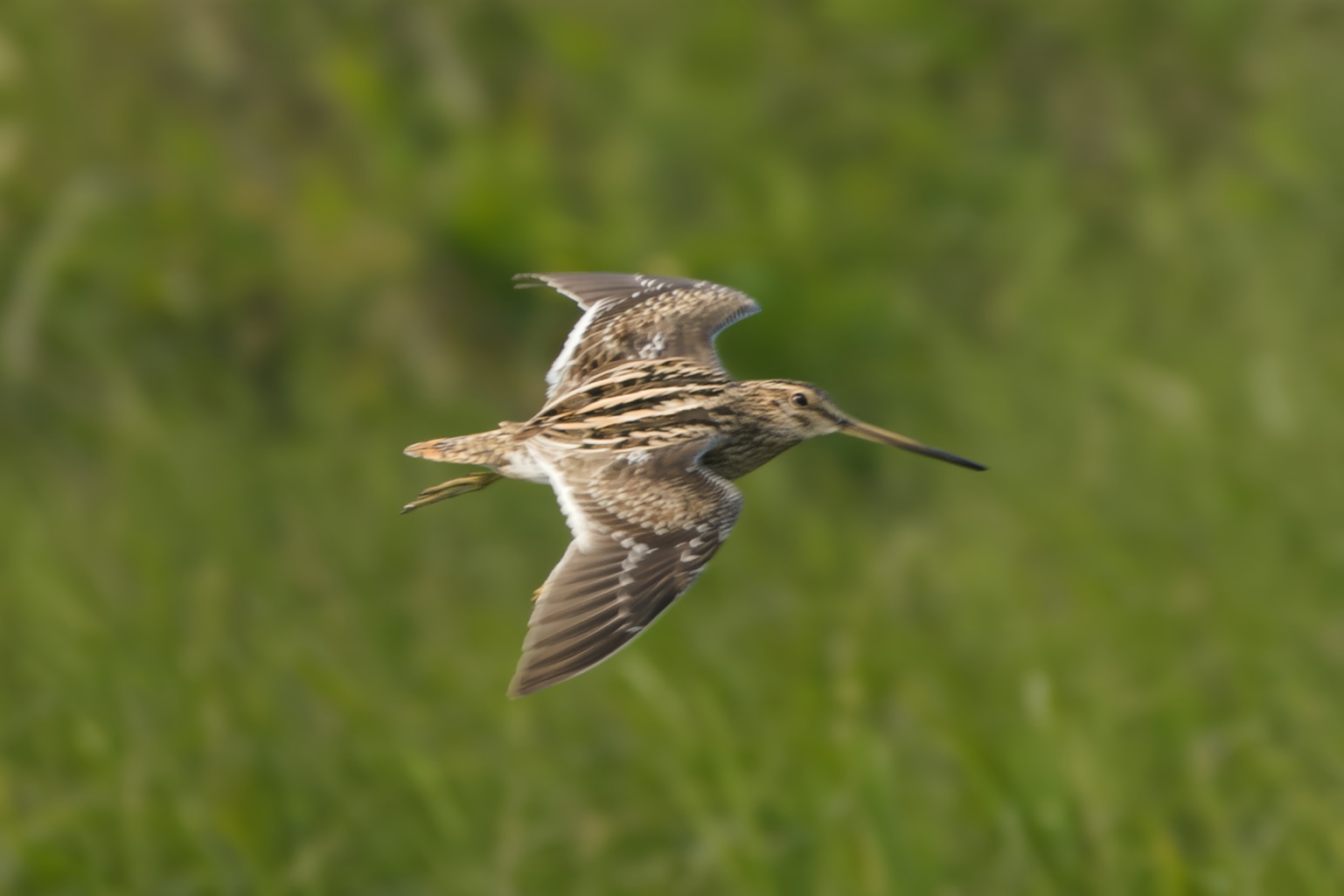
The most reliable field characters separate this species from the common snipe. The wings appear noticeably less pointed and lack the prominent white trailing edge visible on common snipe in flight. When flushed, the shorter tail and distinctly flatter flight path provide additional identification clues—the bird doesn't exhibit the explosive zigzag departure typical of common snipe. The whistling sound produced by specialized outer tail feathers during display flights is diagnostic, as is the species' tendency to begin displaying earlier in the evening than common snipe. Careful observation of wing shape and behavior, rather than plumage alone, offers the most reliable means of distinction in the field.
Distribution & Habitat
The breeding range centers on damp marshes and tundra habitats across Arctic and boreal regions of northern Russia. Upon completing the breeding season, birds migrate south to spend the non-breeding period throughout southern Asia, from Pakistan east through India, Sri Lanka, and Southeast Asia to Indonesia. This species constitutes the most common migrant snipe in southern India, Sri Lanka, and much of Southeast Asia. Occasional vagrant records exist from northwestern and northern Australia, as well as Kenya in East Africa. During winter, the species utilizes a diverse array of wetland habitats, often occurring alongside common snipe but showing greater tolerance for drier wetland margins.
Behavior & Ecology
Foraging occurs in mud or soft soil where birds either probe deeply with their bills or pick items up by sight. The diet consists primarily of insects and earthworms, supplemented by occasional plant material. During the breeding season, males perform elaborate group displays characterized by a loud, repetitive tcheka song that builds to a crescendo of fizzing and buzzing sounds. These displays incorporate whistling noises produced by the specialized outer tail feathers cutting through the air—a feature that inspired the species' English name. The normal call note is a weak squik. Nests are constructed as well-hidden scrapes on the ground among vegetation.
Culture
This article does not contain relevant cultural information.
Source: Wikipedia · CC BY-SA 3.0
Taxonomy
- Order
- Charadriiformes
- Family
- Scolopacidae
- Genus
- Gallinago
- eBird Code
- pitsni
Distribution
breeds low Arctic tundra to temperate montane meadows from northwestern Siberia and northeastern Kazakhstan eastward to Sea of Okhotsk (eastern Siberia); winters inland wetlands from southern Arabian Peninsula eastward through southern Asia to Ryukyu Islands (southern Japan) and southward to Taiwan and Greater Sundas
Data Sources
Species description from Wikipedia, licensed under CC BY-SA 3.0.
Bird images and sounds sourced from GBIF, contributed by citizen scientists worldwide under Creative Commons licenses.
Taxonomy data from AviList 2025.