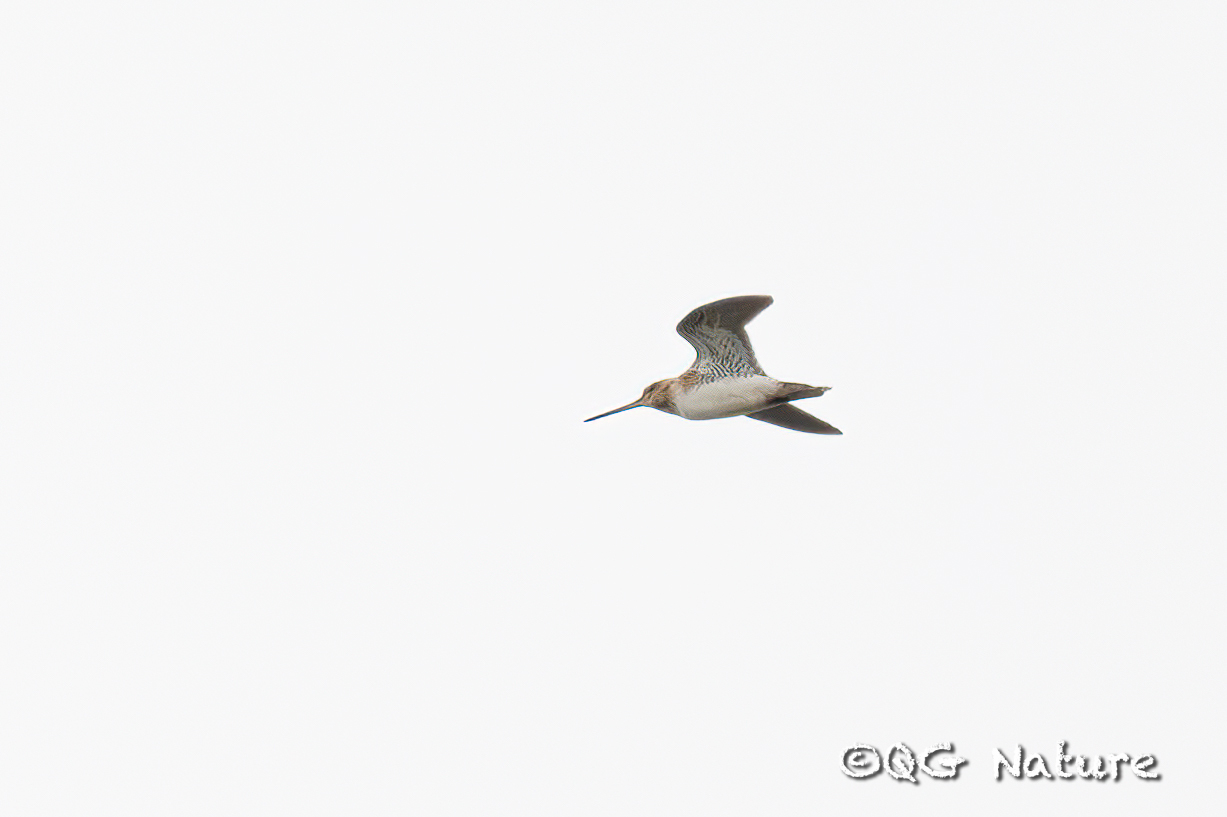
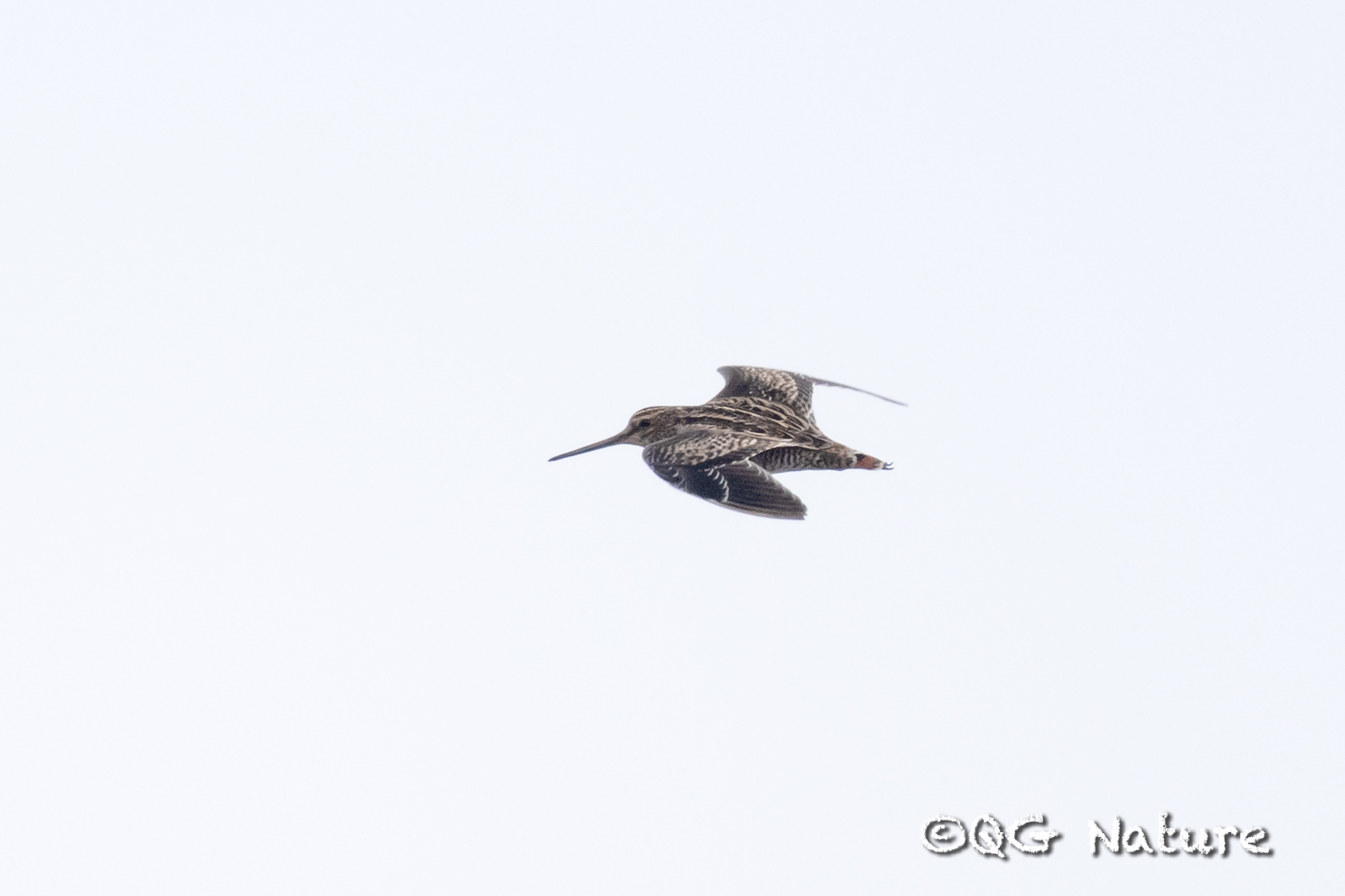
Swinhoe's Snipe
Gallinago megala
大沙锥
Introduction
A medium-sized migratory wader (Gallinago megala) belonging to the family Scolopacidae. It measures 27–29 cm in length with a wingspan of 38–44 cm and weighs approximately 120 g. The species breeds primarily in central and southern Siberia and Mongolia, occupying forest glades and meadows. The entire population migrates, spending the non-breeding season in eastern and southern India, Sri Lanka, south-eastern China, South-East Asia, and New Guinea, where it inhabits shallow freshwater wetlands including paddy fields and sewage farms. It is distinguished by its extremely long, straight bill and cryptic plumage pattern. Conservation assessment: Least Concern due to its wide range and no evidence of significant population decline.
Description
A medium-sized snipe with a very long, straight bill and compact body. The plumage is cryptically patterned in black, brown, buff, and white, typical of the Gallinago genus, providing excellent camouflage in wetland habitats. The wings are relatively broad and pointed, and the legs are relatively short for a wader.
Identification
Identifiable as a Gallinago snipe by its characteristic cryptic plumage pattern and very long bill. However, it is extremely difficult to distinguish from Latham's snipe (Gallinago hardwickii) and pin-tailed snipe (Gallinago stenura) in the field, as these species share similar plumage and structure. Identification often requires detailed examination of flight patterns, tail feather arrangement, or vocalizations.
Distribution & Habitat
Breeds in central and southern Siberia and Mongolia. The entire population is migratory. Non-breeding range includes eastern and southern India, Sri Lanka, south-eastern China, South-East Asia, and New Guinea. On migration, it is recorded in eastern China and occasionally in Japan. Australian records are mainly from the Top End of the Northern Territory and from north-western Western Australia.
Behavior & Ecology
Feeds mainly on small invertebrates including earthworms, mollusks, and insects, typically in shallow water or on bare mud near wetland margins. Non-breeding habitat consists of shallow freshwater wetlands with bare mud or shallow water for feeding and nearby vegetation cover. During breeding season, males perform display flights and produce characteristic drumming sounds.
Conservation
IUCN Red List assessment: Least Concern. The species has a very wide range and current population data indicates no significant decline, supporting its status as not threatened. However, wetland habitat degradation across its range remains a potential long-term concern.
Culture
Known locally as 'cho suekyung' in South Korea. No significant folklore or cultural traditions associated with this species have been documented.
Source: Wikipedia · CC BY-SA 3.0
Taxonomy
- Order
- Charadriiformes
- Family
- Scolopacidae
- Genus
- Gallinago
- eBird Code
- swisni1
Distribution
breeds wooded wetlands of south-central Siberia and northeastern Kazakhstan eastward to Amurland (southeastern Russia); winters wetland edge from east-central China, Taiwan, Philippines, and Malay Peninsula eastward through New Guinea, Melanesia, and Micronesia
Vocalizations
Data Sources
Species description from Wikipedia, licensed under CC BY-SA 3.0.
Bird images and sounds sourced from GBIF, contributed by citizen scientists worldwide under Creative Commons licenses.
Taxonomy data from AviList 2025.