
Great Frigatebird
Fregata minor
黑腹军舰鸟
Introduction
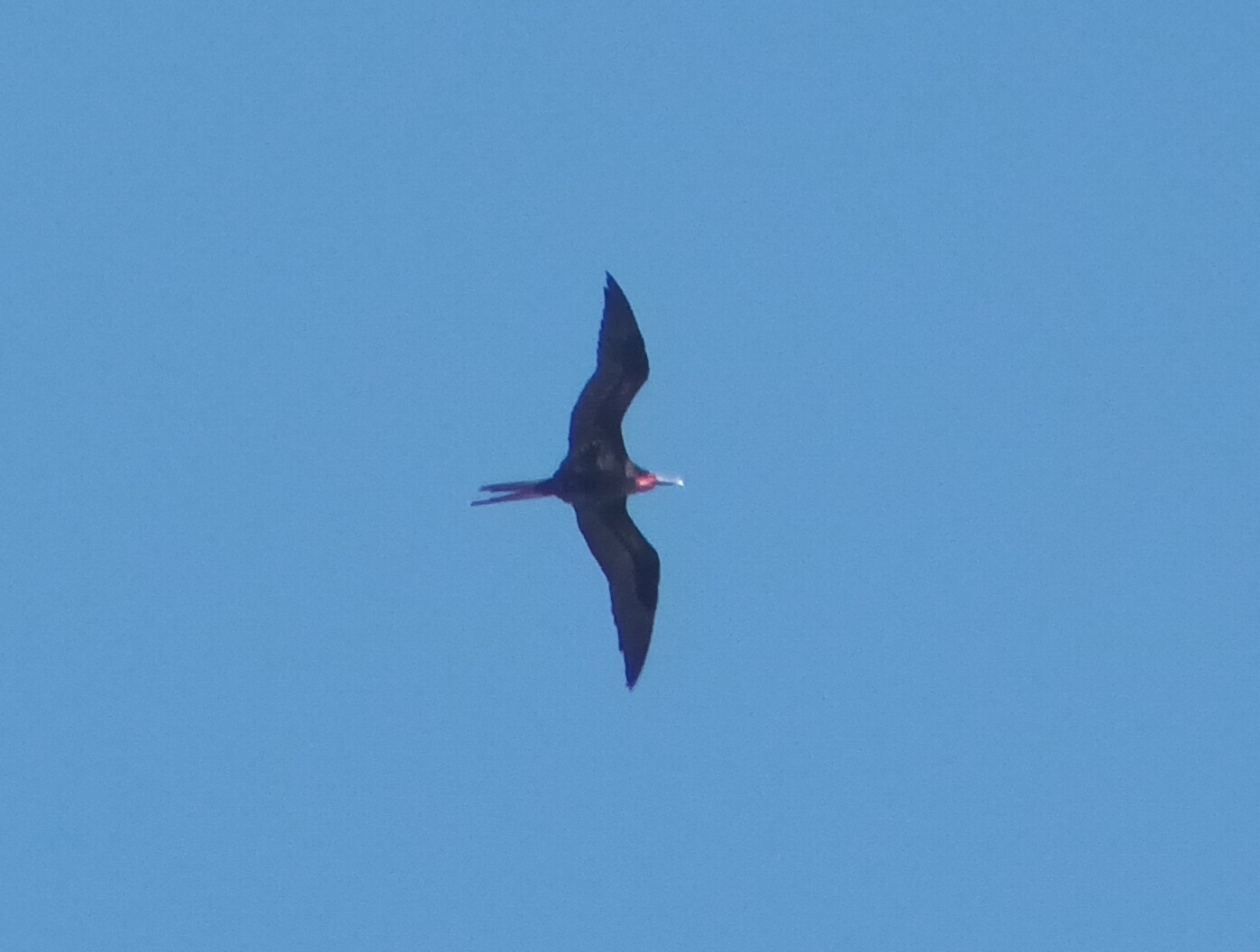
Great frigatebirds (Fregata minor) are large seabirds found in tropical oceans worldwide. With a body length of 85-100 cm and wingspan of 205-230 cm, they are among the largest frigatebird species. They possess forked tails and angular wings creating a distinctive silhouette. Males display during courtship by inflating red gular sacs while calling. Unlike most seabirds, they never land on water and remain aloft for months at a time over tropical oceans. They feed by harassing other seabirds to steal food. They are present year-round in many tropical regions but individuals frequently wander outside normal ranges.
Description
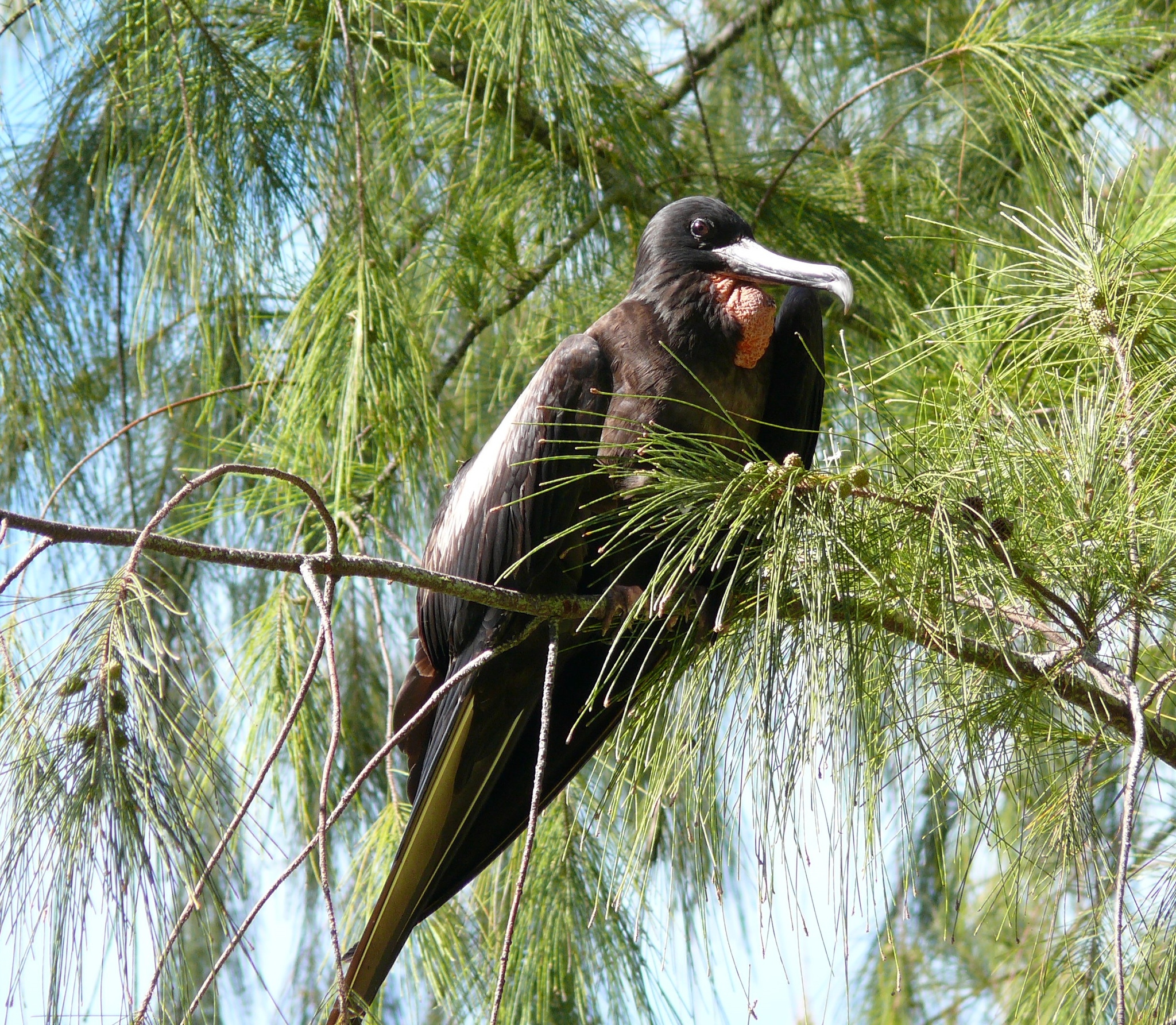
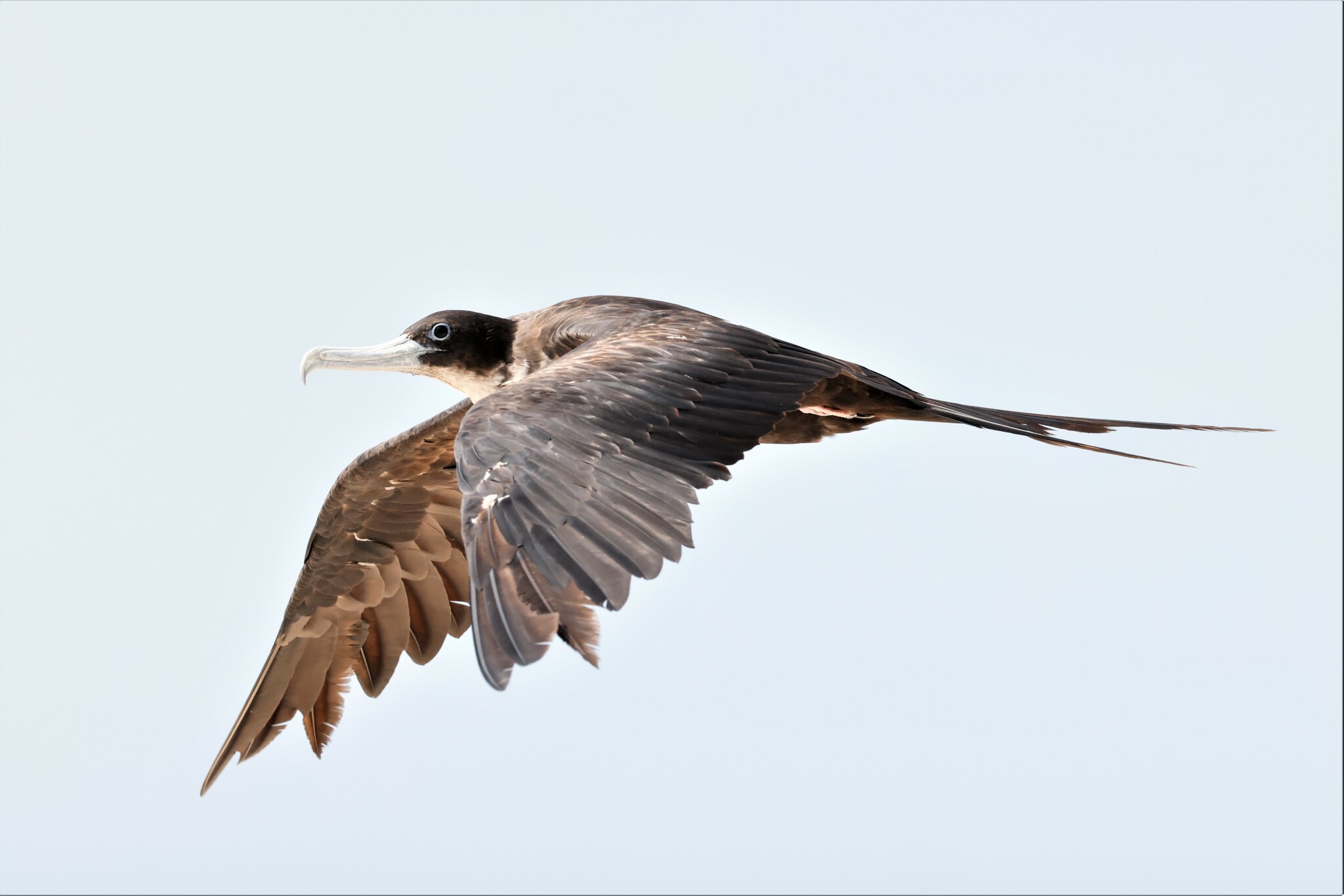
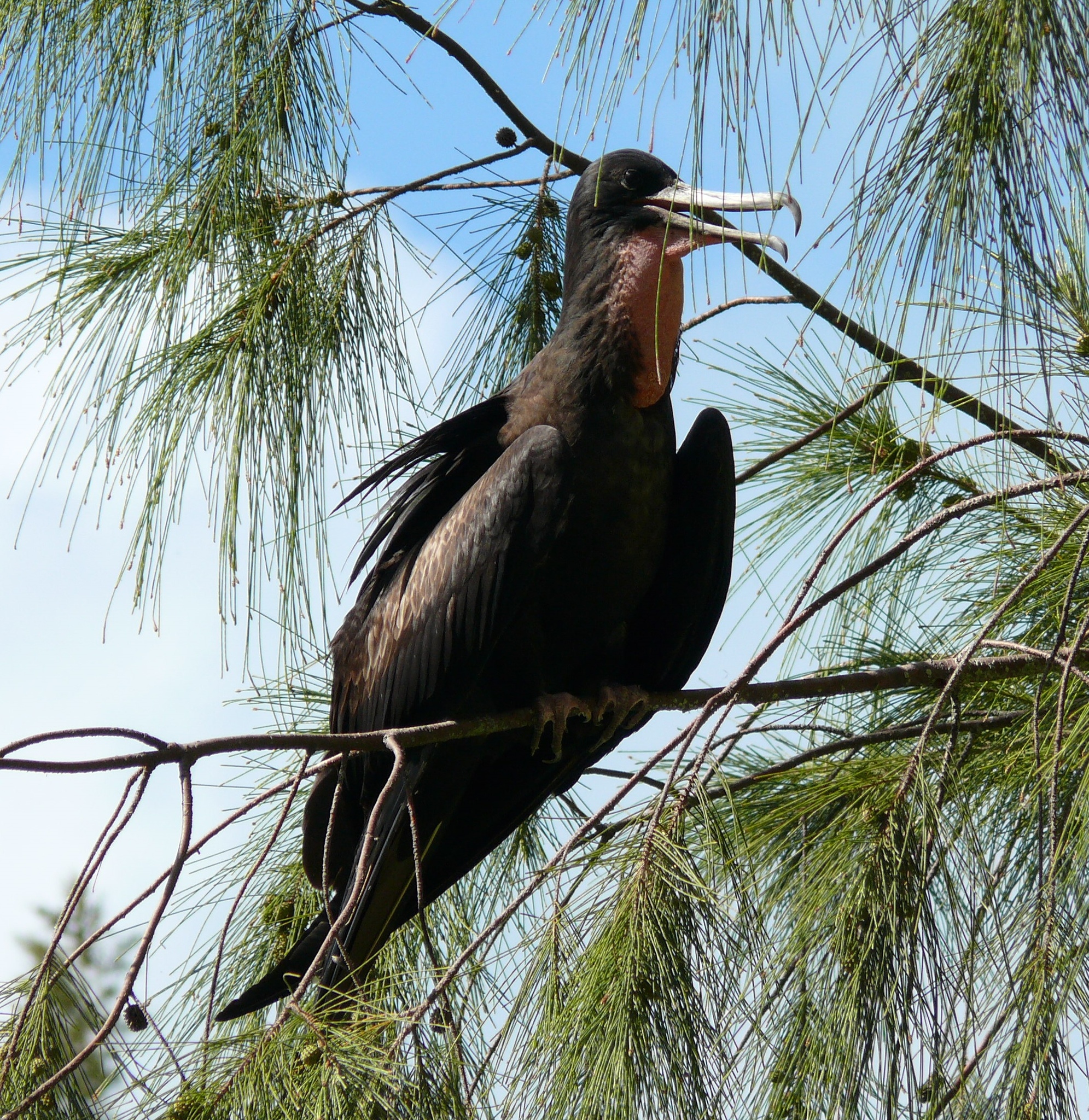
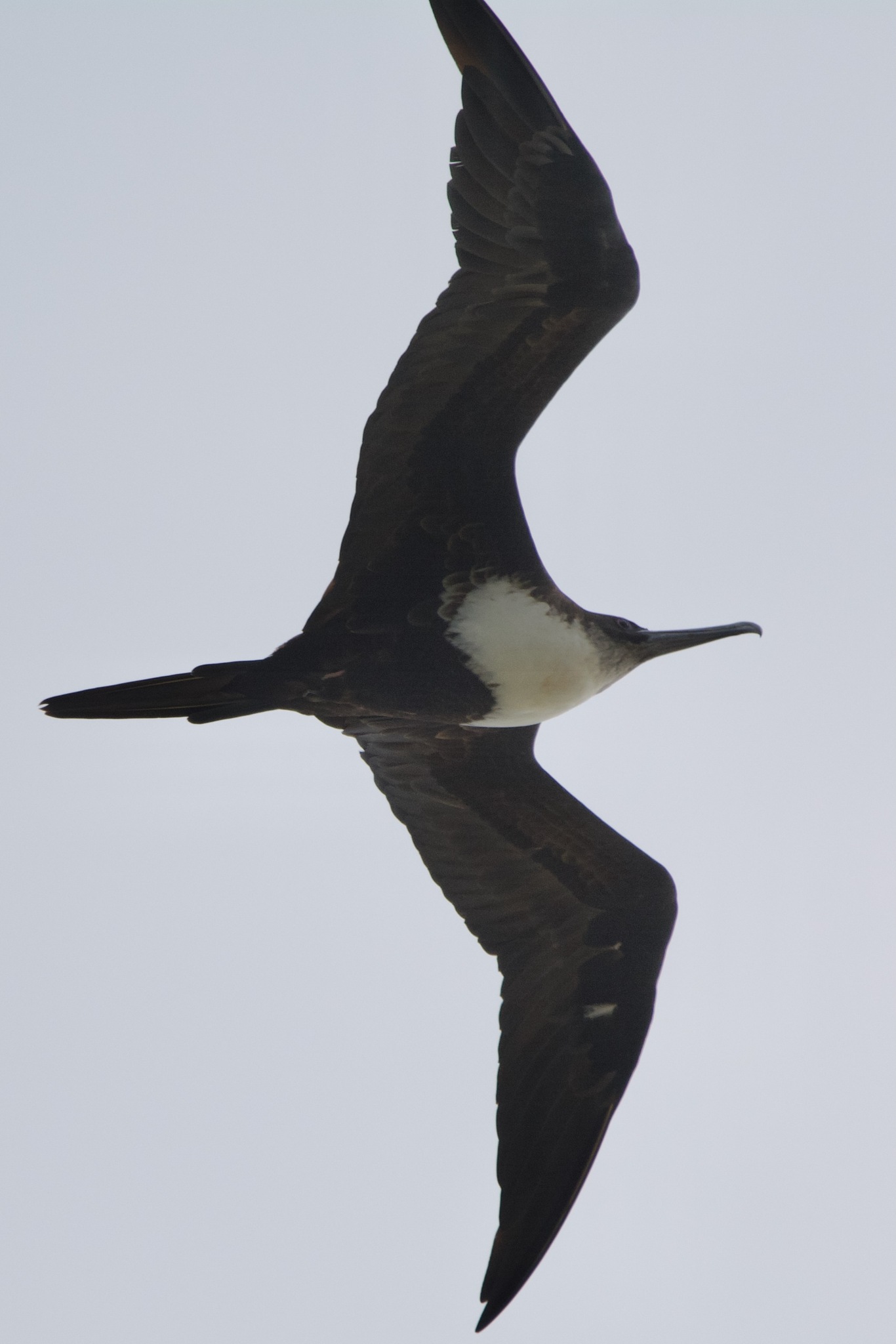
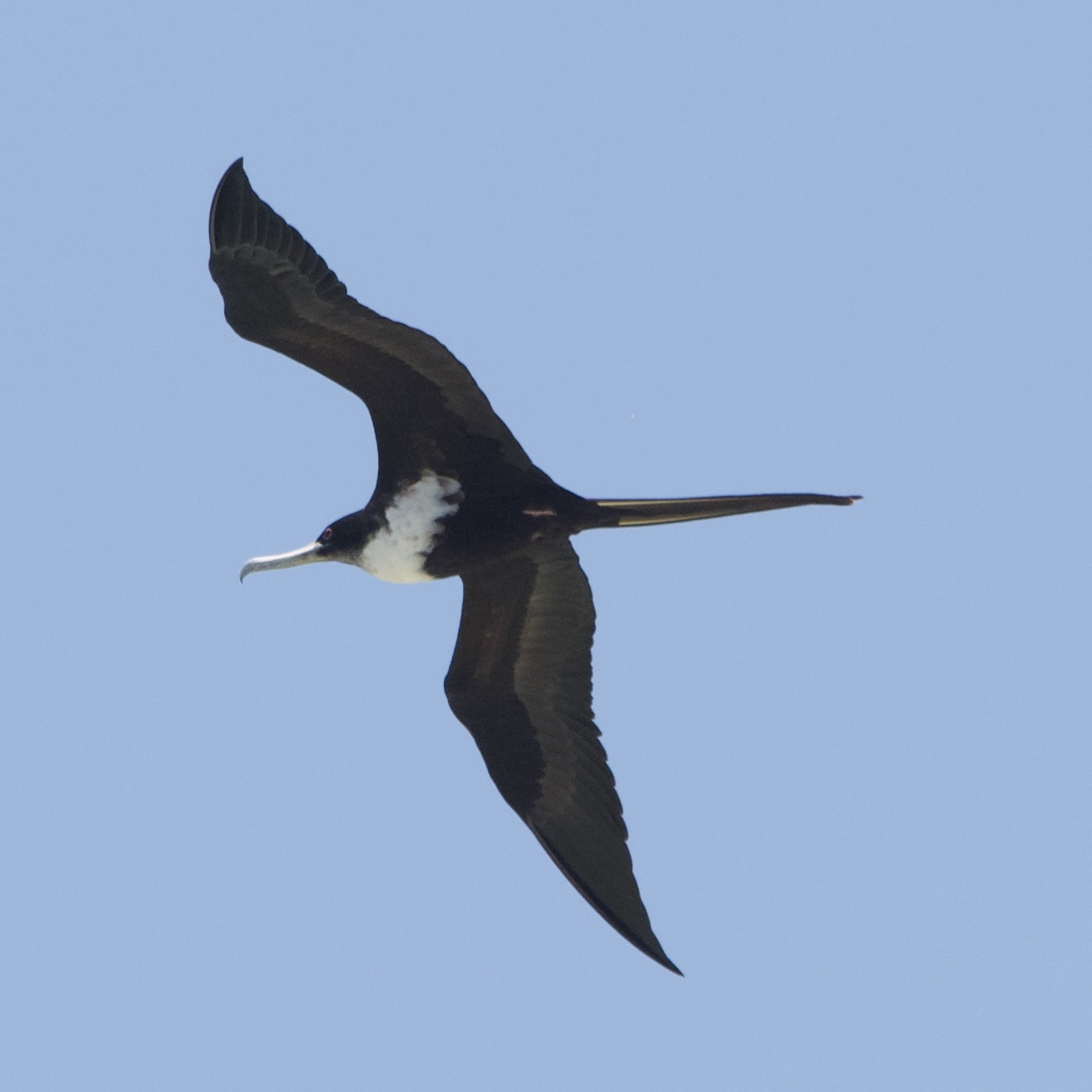
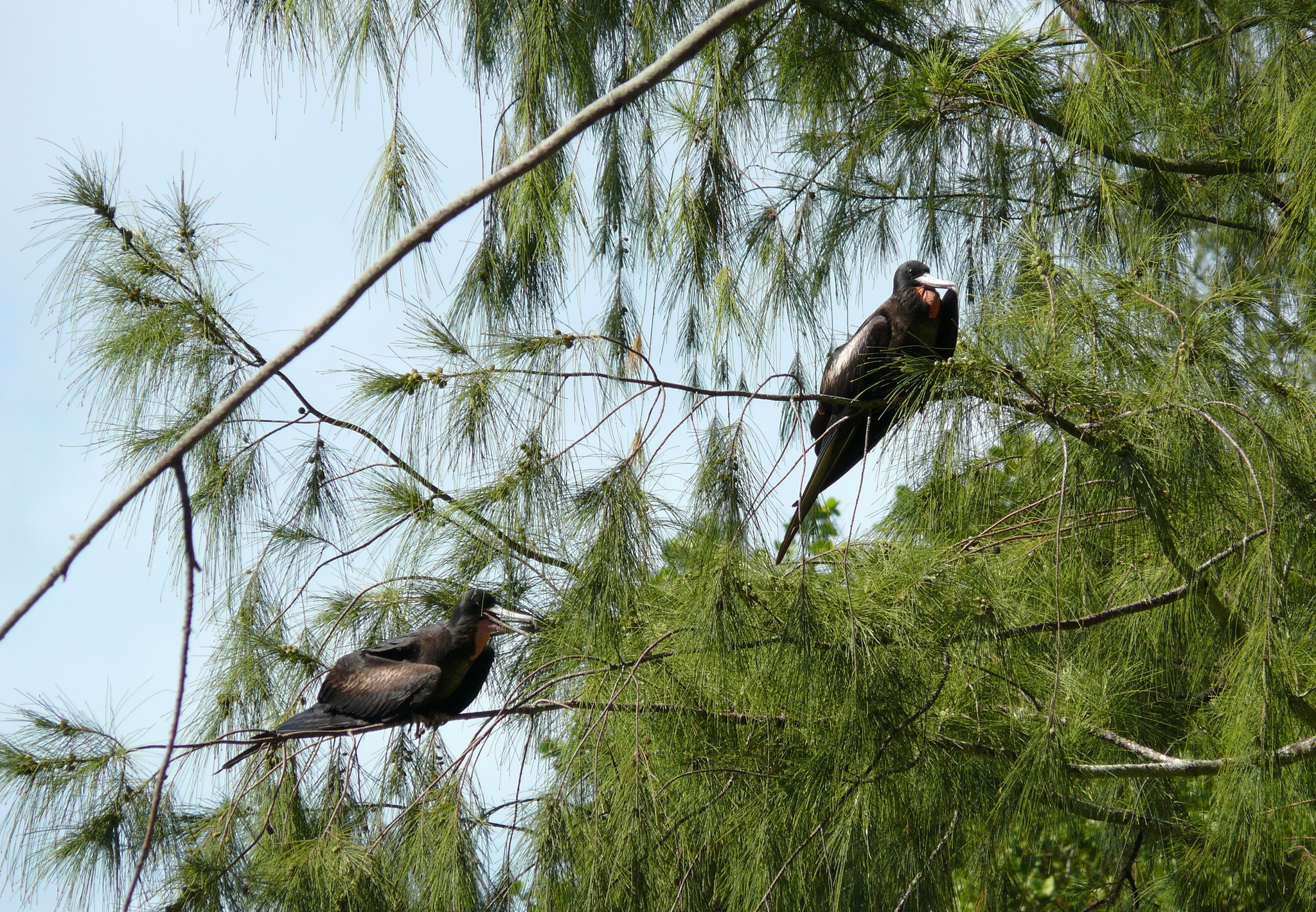
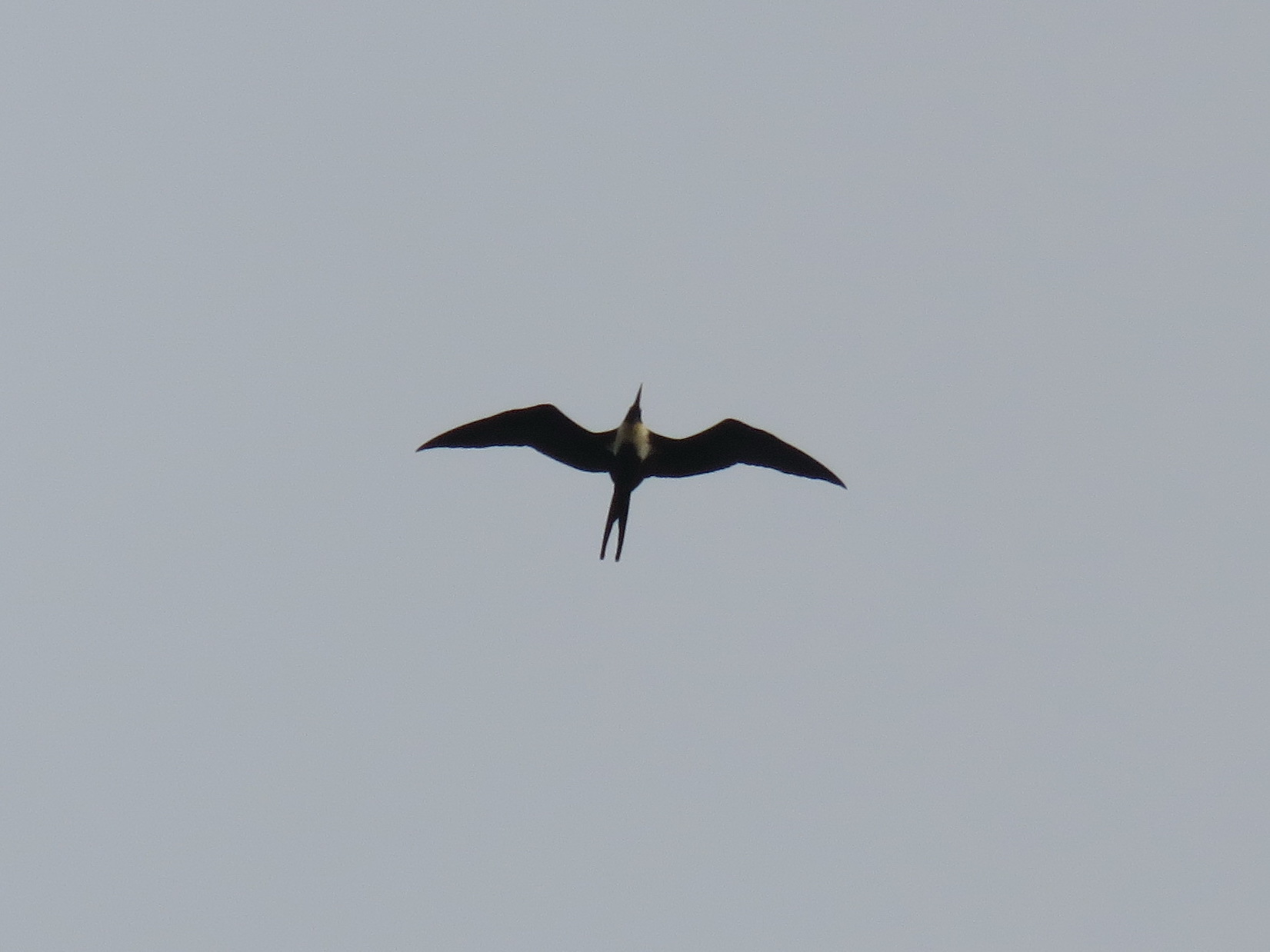
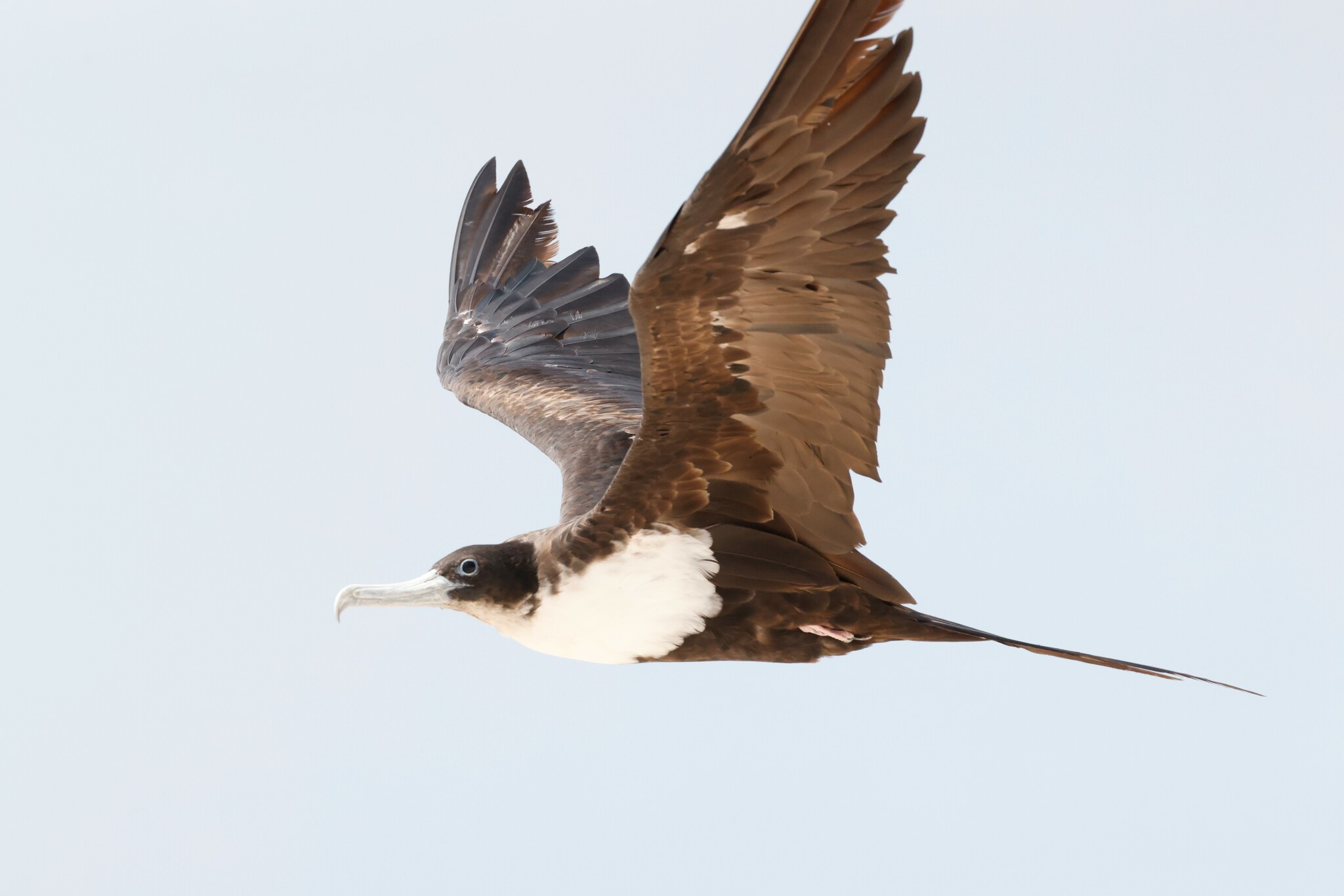
This large seabird reaches 85-105 cm in length with an impressive wingspan of 205-230 cm, yet weighs remarkably little given its size. The plumage is predominantly black, though the species shows striking sexual dimorphism. Males are smaller than females and display scapular feathers with an iridescent green sheen when catching sunlight. Their most distinctive feature is the red gular sac, which inflates into a showy balloon during courtship. Females are larger and distinguished by their black upperparts, white throat and breast, and a conspicuous red eye ring. Juveniles appear quite different, with black plumage accented by rust-tinged white on the face, head, and throat. The anatomy is highly specialized: extremely long, narrow, pointed wings and a deeply forked tail give the highest wing-area-to-body-mass ratio and lowest wing loading of any bird.
Identification
In the field, this species is identified by its black plumage, angular silhouette, and habit of soaring on stiff wings. Males are distinguished by the red gular sac during breeding season and green sheen on the scapulars. Females show the diagnostic white throat and breast. Juveniles can be recognized by the characteristic rust-tinged white head pattern. At a distance, the deep forked tail and hovering flight style help distinguish frigatebirds from other large tropical seabirds. The great frigatebird is larger than the lesser frigatebird, though size can be difficult to judge in flight.
Distribution & Habitat
This species has a widespread distribution throughout the world's tropical oceans. In the Pacific, populations nest in the Hawaiian Islands, Galápagos, and numerous island groups from Wake Island to New Caledonia. Indian Ocean colonies include the Seychelles, Christmas Island, Maldives, and Mauritius. A tiny isolated population exists in the South Atlantic, restricted to Ascension Island, St. Helena, and the Brazilian islands of Trindade and Martin Vaz. The species feeds in pelagic waters within 80 km of breeding colonies and roosting areas. Birds are highly mobile, with individuals regularly traveling hundreds of kilometers, though they show strong philopatry to their natal colonies for breeding.
Behavior & Ecology
Foraging takes place over pelagic waters, where flying fish comprise the primary diet. Prey is snatched from the surface or in mid-air, and frigatebirds often exploit predatory tuna and dolphin pods that drive fish upward. They rarely land on water and cannot take off easily if they do. Soaring in mixed-species flocks is common, particularly with sooty terns and wedge-tailed shearwaters. Breeding occurs seasonally in colonies of up to several thousand pairs, where males inflate their red gular sacs and perform elaborate courtship displays. Nesting material is gathered by males and constructed by females into large platforms. A single egg is incubated by both parents for about 55 days. Parental care extends remarkably, with fledglings receiving support for 150-428 days—the longest post-fledging care of any bird. Sexual maturity is reached at 8-11 years.
Conservation
The species holds a Least Concern status due to its large global population and extensive range. However, the South Atlantic subspecies faces serious challenges: in Brazil, F. m. nicolli is classified as critically endangered. This population once bred on Saint Helena and Trindade but has disappeared from the main island of Trindade, with only small numbers remaining. Habitat destruction from introduced goats and predation by feral cats devastated ground-nesting birds before cat eradication in 1998. The Trindade population persists only in a restricted military area with limited access.
Culture
No specific cultural significance or folklore is documented for this species.
Source: Wikipedia · CC BY-SA 3.0
Taxonomy
- Order
- Suliformes
- Family
- Fregatidae
- Genus
- Fregata
- eBird Code
- grefri
Subspecies (5)
-
Fregata minor aldabrensis
breeds western Indian Ocean islands on Europa (Mozambique Channel), Aldabra and Cosmoledo (Seychelles), and St. Brandon (Mascarenes)
-
Fregata minor minor
breeds Chagos, Cocos (Keeling), and Christmas islands (east-central Indian Ocean), Flores and Banda Sea islands (southern Indonesia), Paracel Islands (South China Sea, Ashmore Reef (Australia), and other islands off northern Australia
-
Fregata minor nicolli
breeds Trindade and Martím Vaz islands (off eastern Brazil); ranges to Brazil
-
Fregata minor palmerstoni
breeds islands in western and central Pacific, from Gulf of Carpentaria, Great Barrier Reef, and Coral Sea islands (northeast of Australia) and north-central Bismarck Archipelago eastward through Northwestern Hawaiian Islands and Pitcairn group
-
Fregata minor ridgwayi
breeds far eastern Pacific islands on Revillagigedo, Cocos, Galapagos, and islands just off Ecuadorian coast
Data Sources
CBR Notes: 中文名由大军舰鸟改为黑腹军舰鸟
Species description from Wikipedia, licensed under CC BY-SA 3.0.
Bird images and sounds sourced from GBIF, contributed by citizen scientists worldwide under Creative Commons licenses.
Taxonomy data from AviList 2025.