

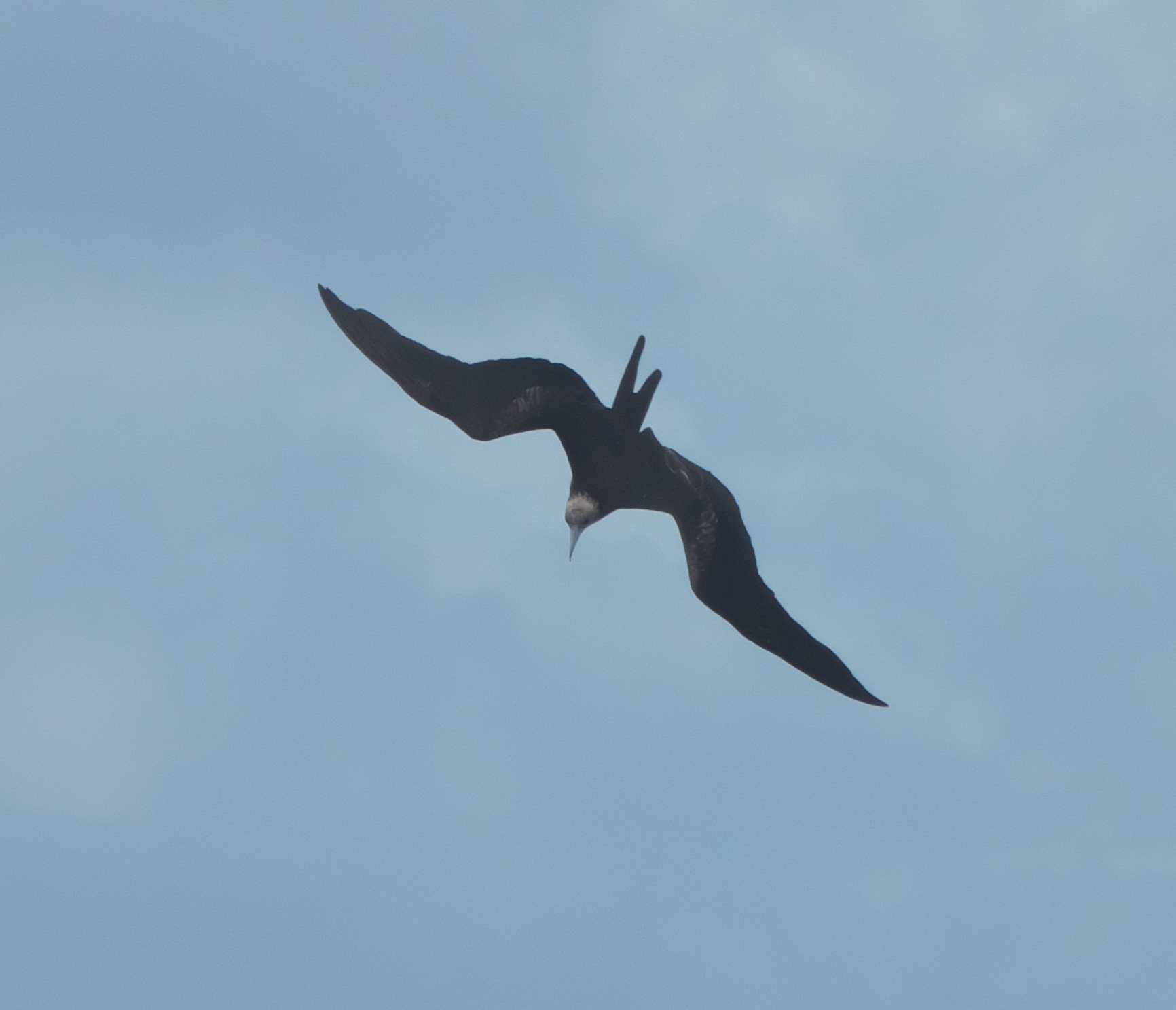
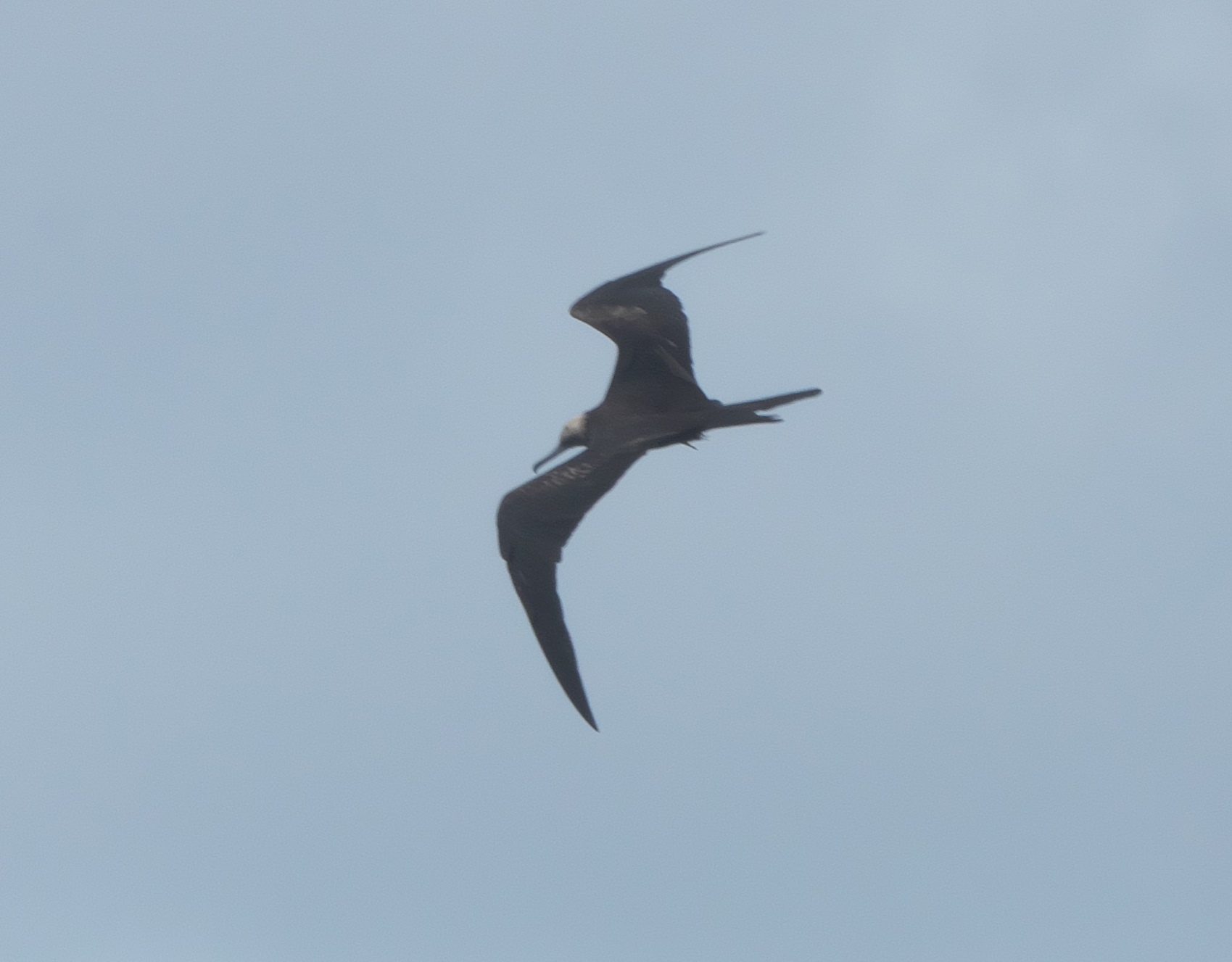
Lesser Frigatebird
Fregata ariel
白斑军舰鸟
Introduction
The Lesser Frigatebird is the smallest species in the frigatebird family. It occurs across tropical and subtropical waters of the Indian and Pacific Oceans, with an isolated population off the Atlantic coast of South America. This species inhabits remote island breeding colonies and forages over tropical waters. It spends most of its life in flight, rarely swims, and cannot walk well but can climb through vegetation. Identification features include long, slender wings held in a V-shape and a deeply forked tail. It is kleptoparasitic, harassing other seabirds such as boobies and tropicbirds to steal their catches mid-air; however, this behavior constitutes only a small portion of its diet, which consists mainly of squid and flying fish taken from the ocean surface.
Description
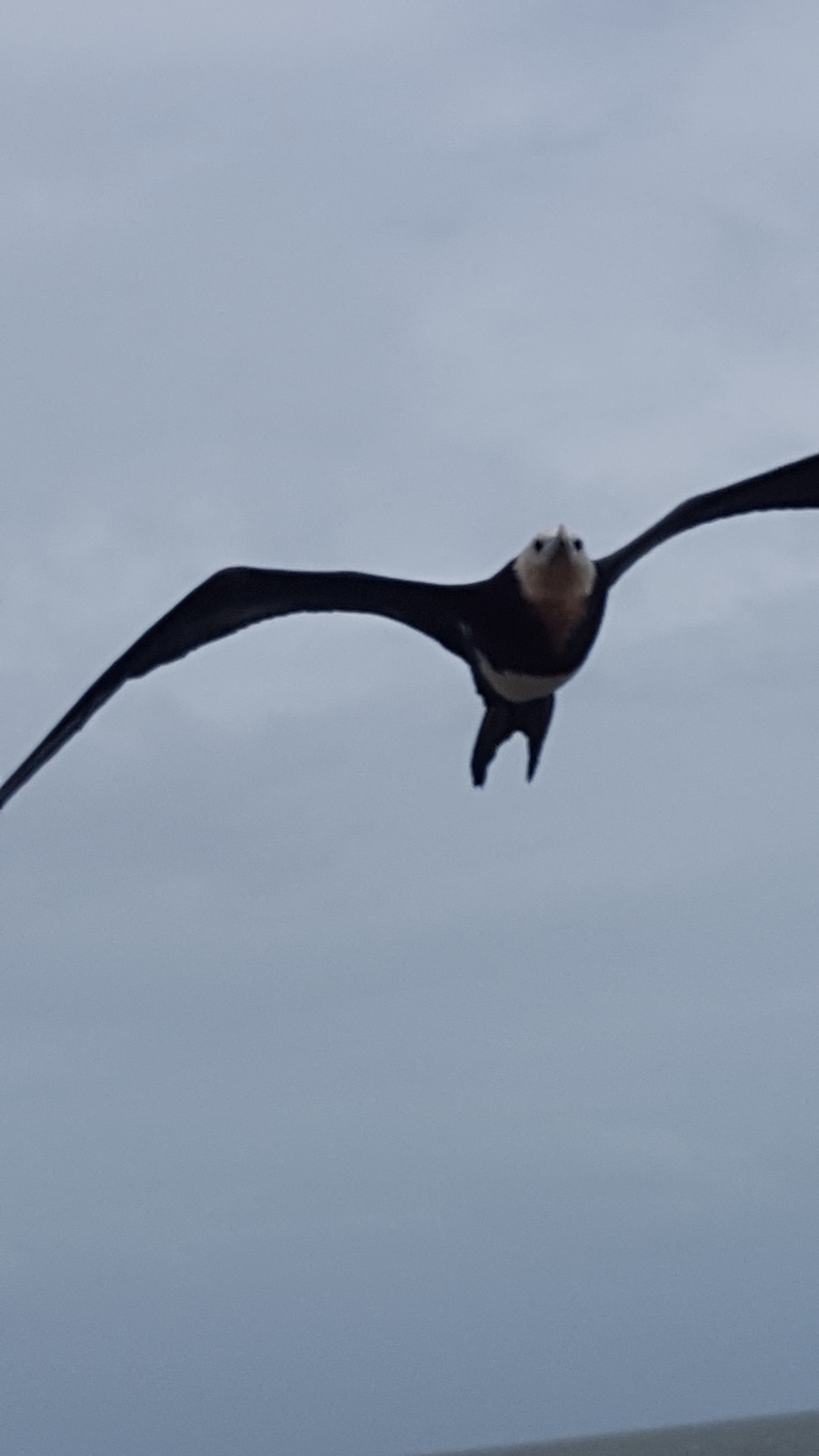
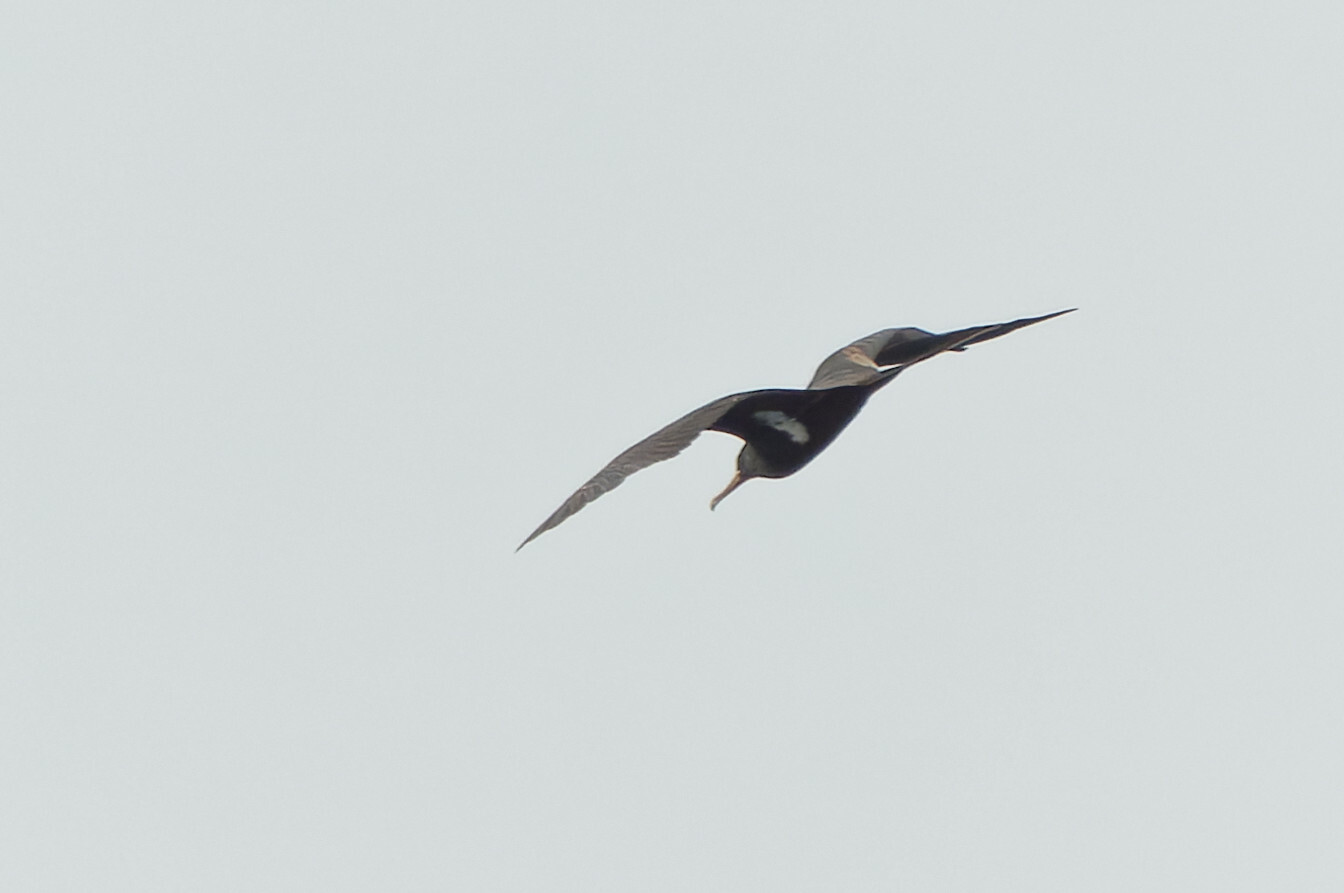
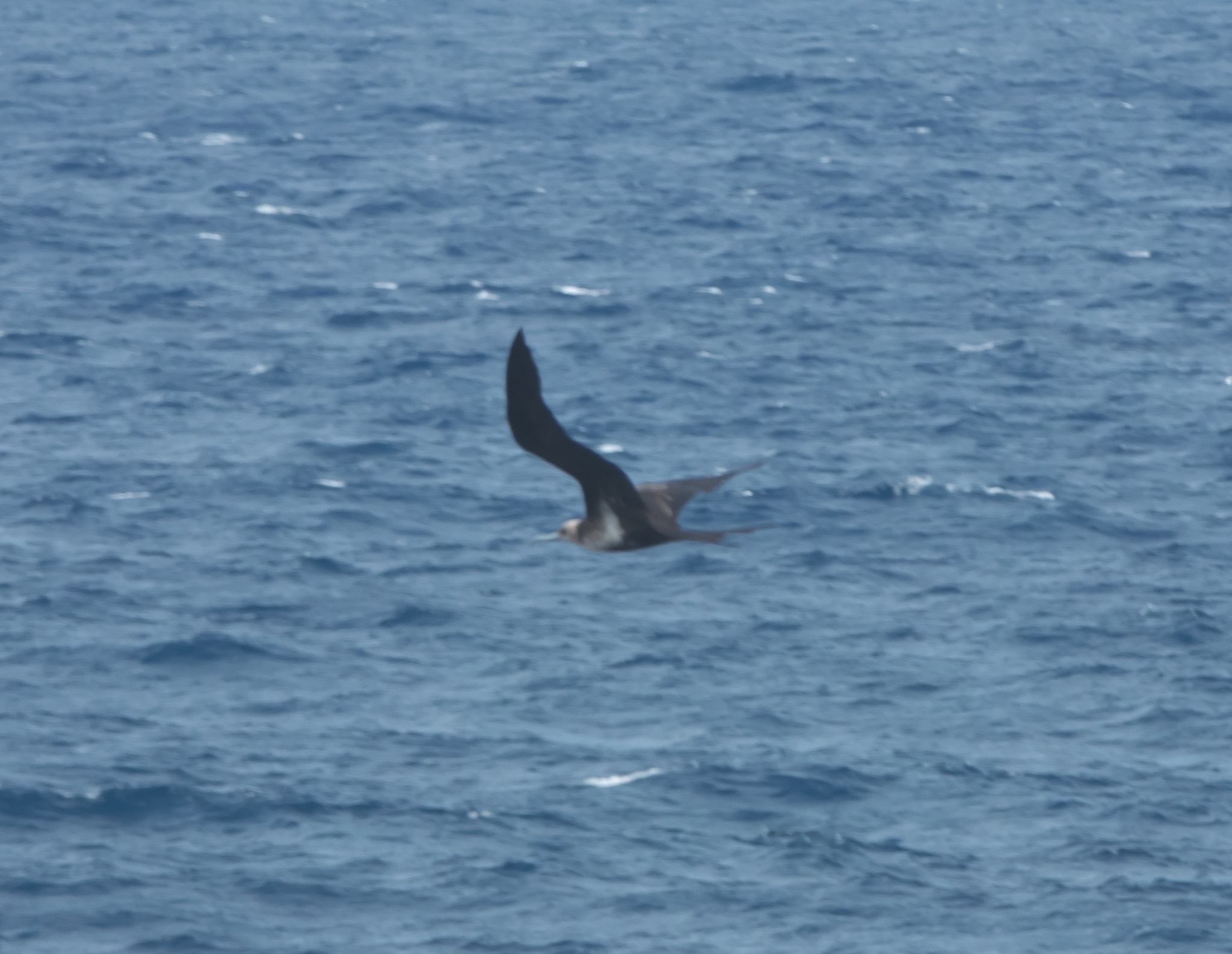
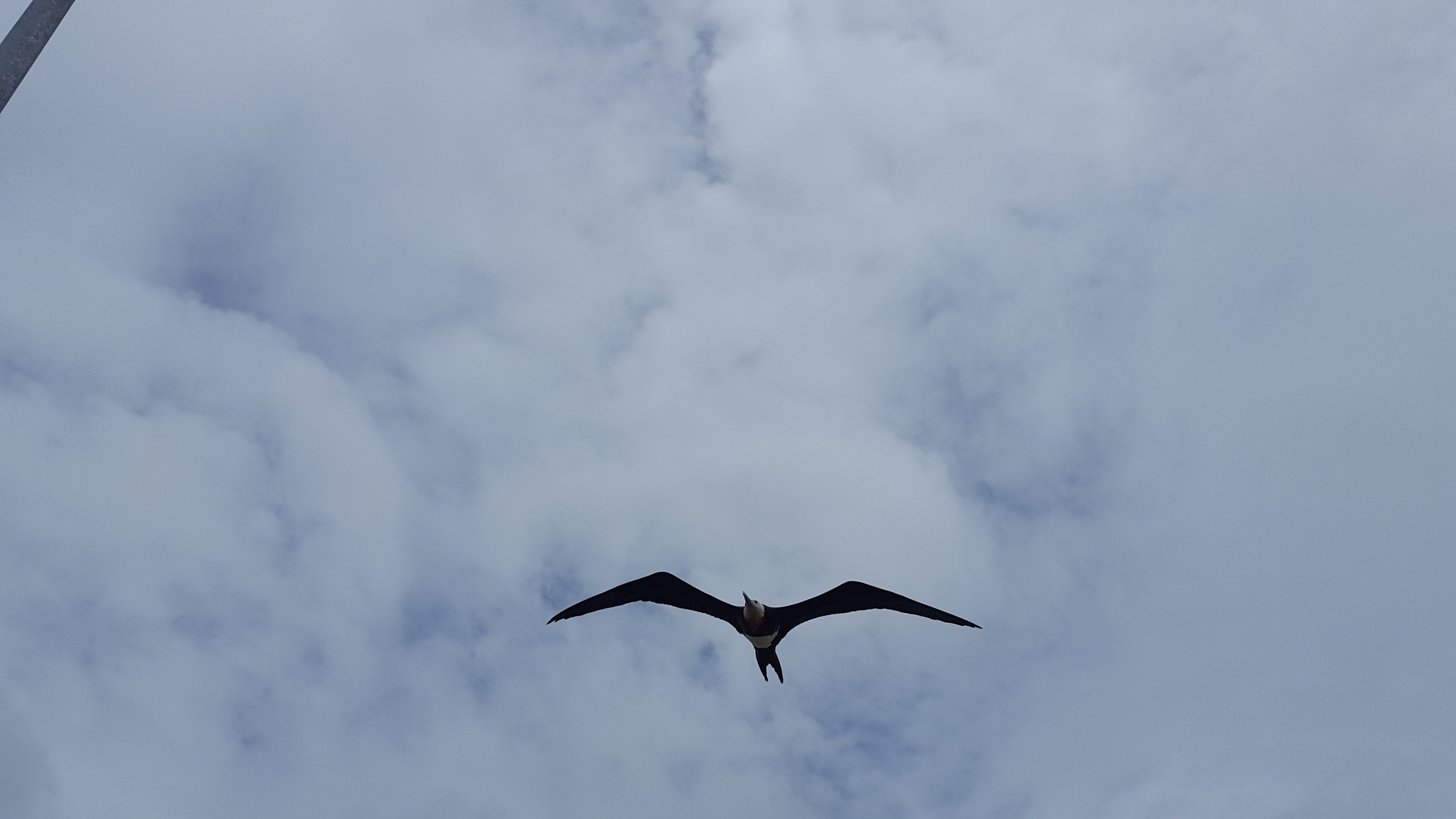
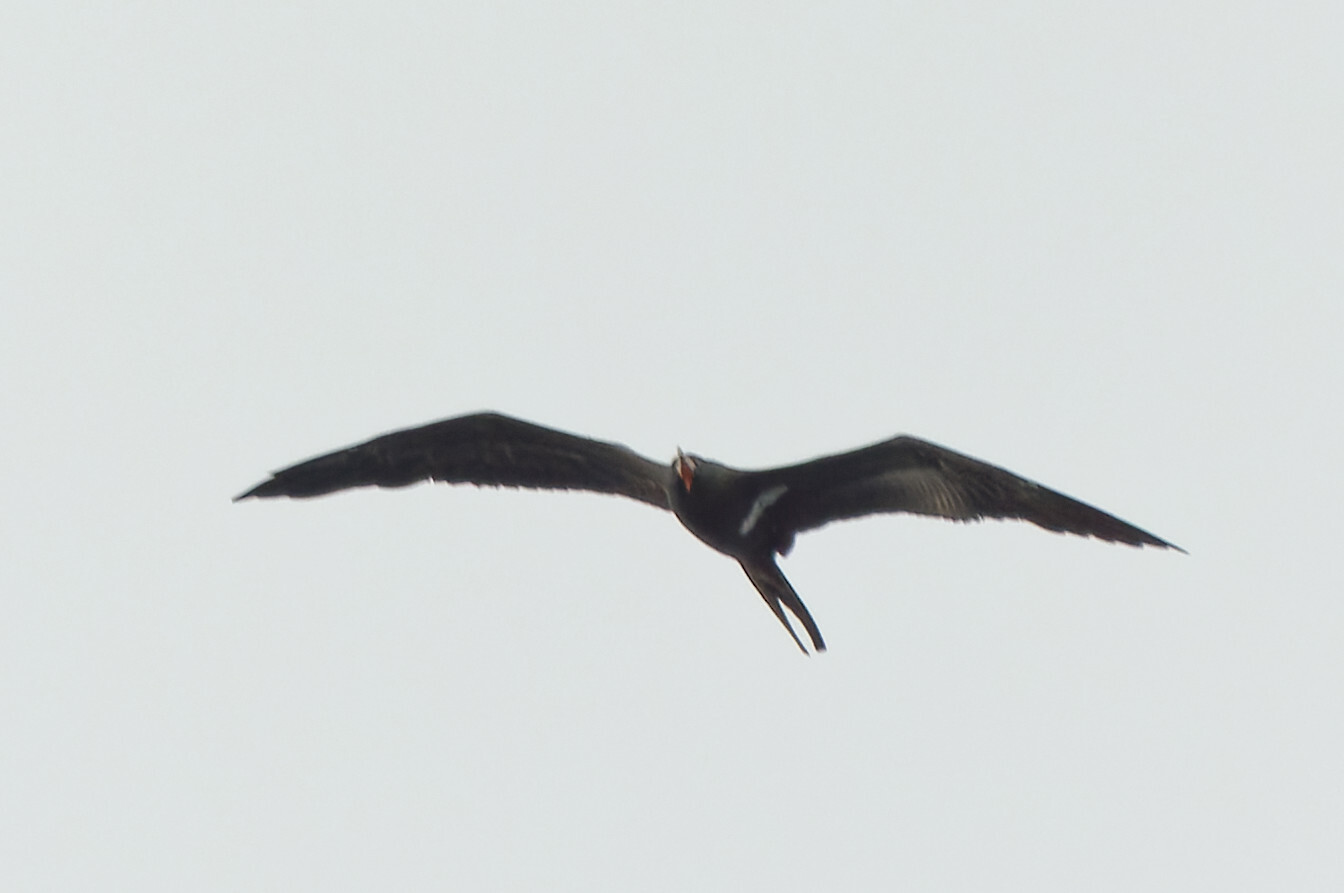
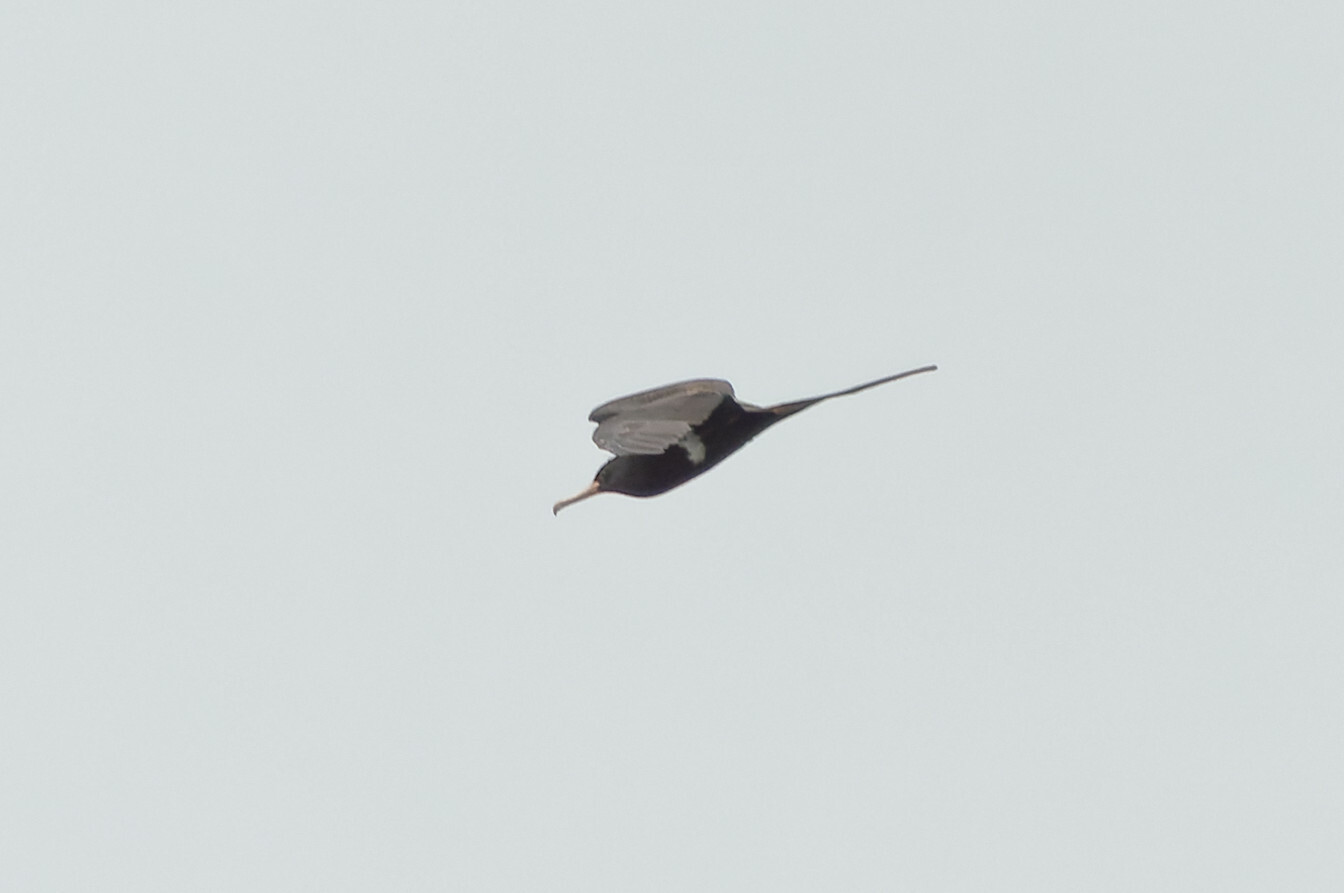
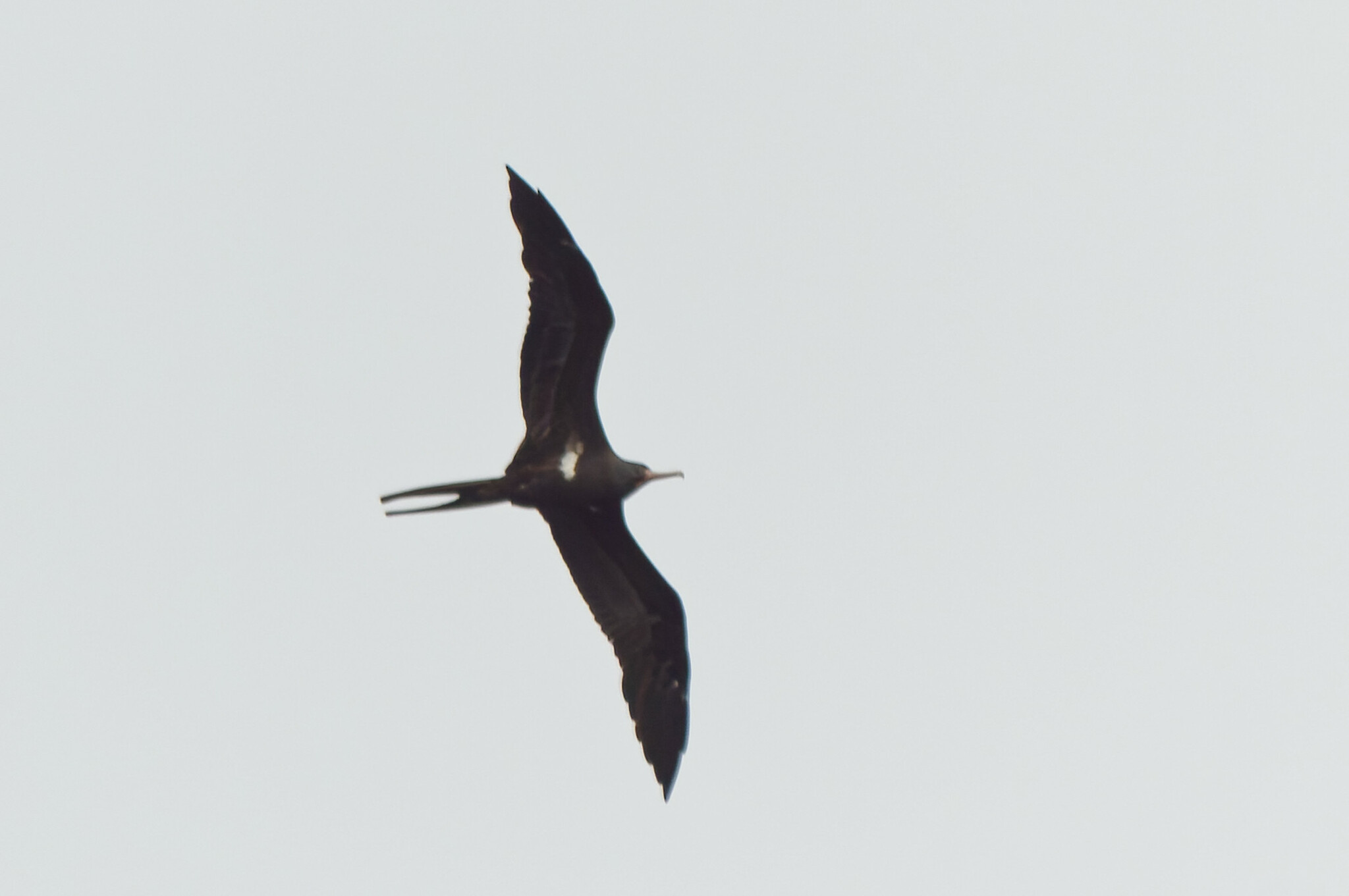
The smallest frigatebird species, this bird measures 66-81 centimeters in length with an impressive wingspan of 155-193 centimeters. The body is lightly built with extremely light bones, long narrow wings, and a distinctly forked tail that helps identify it in flight. Males weigh 625-875 grams and appear almost entirely black with a striking red throat sac inflated during courtship displays. A white patch on the flank extends as a distinctive spur onto the underwing, and males also show a pale bar on the upper wing. Females are slightly heavier at 760-955 grams and display a black head and neck with a white collar and breast, a narrow red eye ring, and a similar underwing spur pattern. Juveniles and immature birds are more challenging to identify but share the characteristic white spur in the armpit region.
Identification
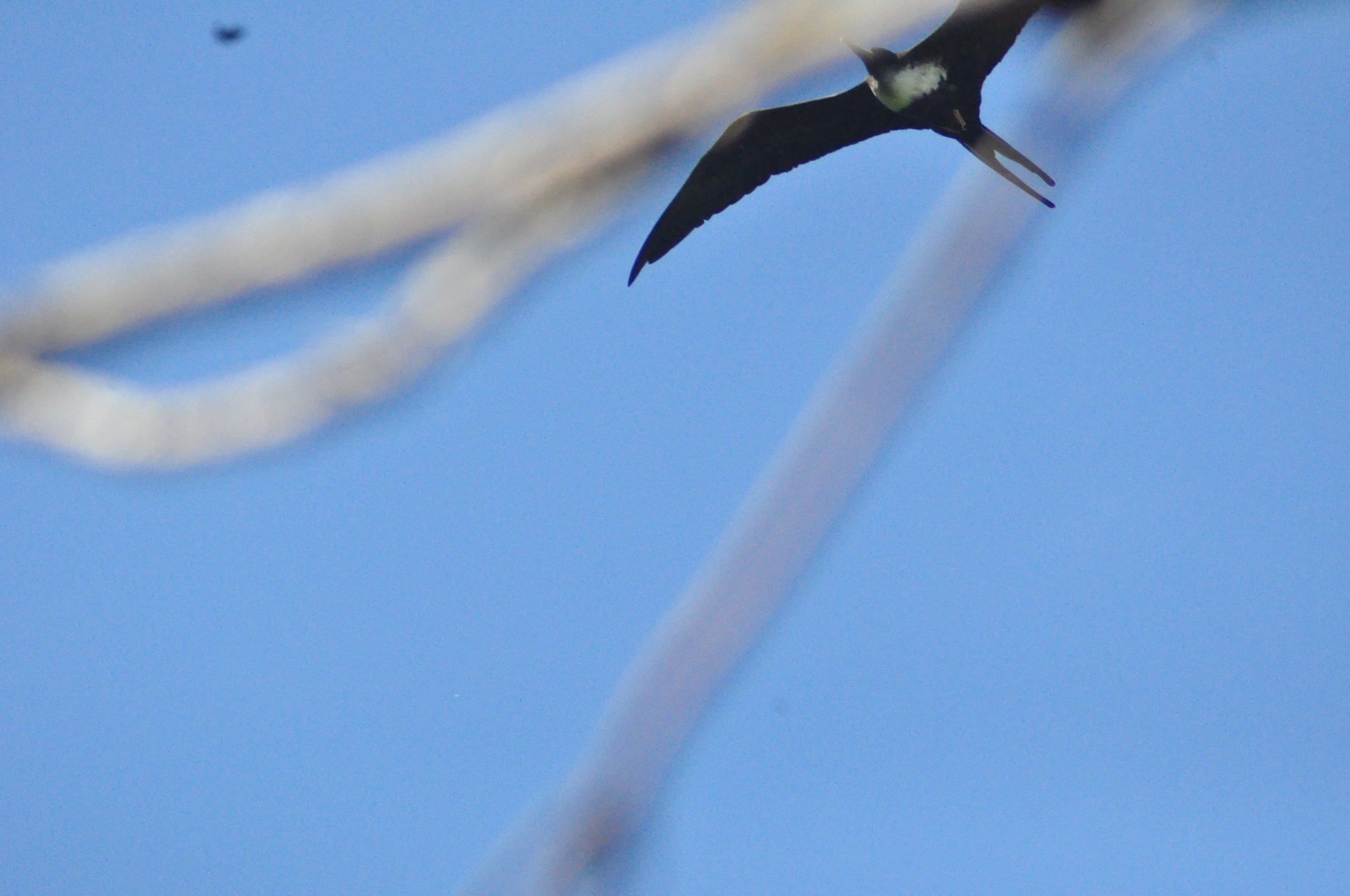
The combination of small size and forked tail makes this species recognizable among frigatebirds. The white underwing spurs present in both sexes and juveniles provide a reliable field mark, appearing as distinctive patches in the armpit region when banking in flight. Males are mostly black with a white flank patch and red throat sac, while females show a striking black-and-white pattern with a black head and neck, white collar and breast, and red eye ring. When comparing to the great frigatebird, note the smaller overall size and more pronounced forked tail. The white spur on the underwing is a key feature separating this species from other frigatebirds at close range.
Distribution & Habitat
This seabird occurs over tropical and subtropical waters throughout the Indian and Pacific Oceans, extending to the Atlantic coast of Brazil. It is the most common and widespread frigatebird in Australian waters. Breeding occurs on remote islands, with significant colonies on Christmas Island, the Aldabra Atoll, islands off northern Australia, the Phoenix Islands, and Line Islands in the central Pacific. Small isolated populations persist in the South Atlantic near the Trindade Archipelago off Brazil. These birds are occasionally sighted from mainland coasts, particularly before tropical cyclones in Australian waters, before returning to open ocean areas.
Behavior & Ecology
Feeding takes place entirely in flight, with birds scooping squid and flying fish from the ocean surface. While kleptoparasitism—harassing other seabirds to steal their catches—is well-known, it represents a minor portion of the diet. Breeding occurs between May and December in Australian regions, with nests built in trees on remote islands. Courtship displays are elaborate, featuring males with inflated red throat sacs, various calls, bill rattling, and wing spreading. Both parents share nest building, incubation, and chick-rearing duties. A single egg hatches after 6-7 weeks, with fledglings remaining dependent for extended periods. Young birds may stay in the nest for up to six months, with parents continuing to feed them well after fledging.
Conservation
Classified as Least Concern due to the large global population estimated at several hundred thousand birds. The largest colonies include 15,000 breeding pairs off northern Australia and 6,000 pairs on the Aldabra Islands, with the biggest populations in the central Pacific's Phoenix and Line Islands. Ground-nesting populations face significant threats from introduced predators, particularly feral cats, which devastated colonies on islands including Baker, Howland, and Jarvis. Cat eradication programs have enabled remarkable recovery, with Baker Island's population rebounding from zero in 1965 to over 16,000 individuals by 2002. However, the South Atlantic subspecies (F. a. trinitatis) faces critical threats, with fewer than 20 breeding pairs remaining off Brazil's Trindade Archipelago. If recognized as a separate species, this population would qualify as Critically Endangered and is listed as such in Brazil.
Culture
The article does not mention any cultural significance or folklore associated with this species.
Source: Wikipedia · CC BY-SA 3.0
Taxonomy
- Order
- Suliformes
- Family
- Fregatidae
- Genus
- Fregata
- eBird Code
- lesfri
Subspecies (3)
-
Fregata ariel ariel
breeds islands in Indian and Pacific oceans from Cocos (Keeling) Island and Ashmore Reef (Australia) patchily eastward through Bismarck Archipelago, New Caledonia area, and Fiji to Tuamotu Archipelago
-
Fregata ariel iredalei
Mascarene Islands; disperses to coasts of Somalia and India
-
Fregata ariel trinitatis
breeds Trindade Island (off eastern Brazil); wanders to coastal Brazil
Data Sources
Species description from Wikipedia, licensed under CC BY-SA 3.0.
Bird images and sounds sourced from GBIF, contributed by citizen scientists worldwide under Creative Commons licenses.
Taxonomy data from AviList 2025.