Christmas Frigatebird
Fregata andrewsi
白腹军舰鸟
Introduction
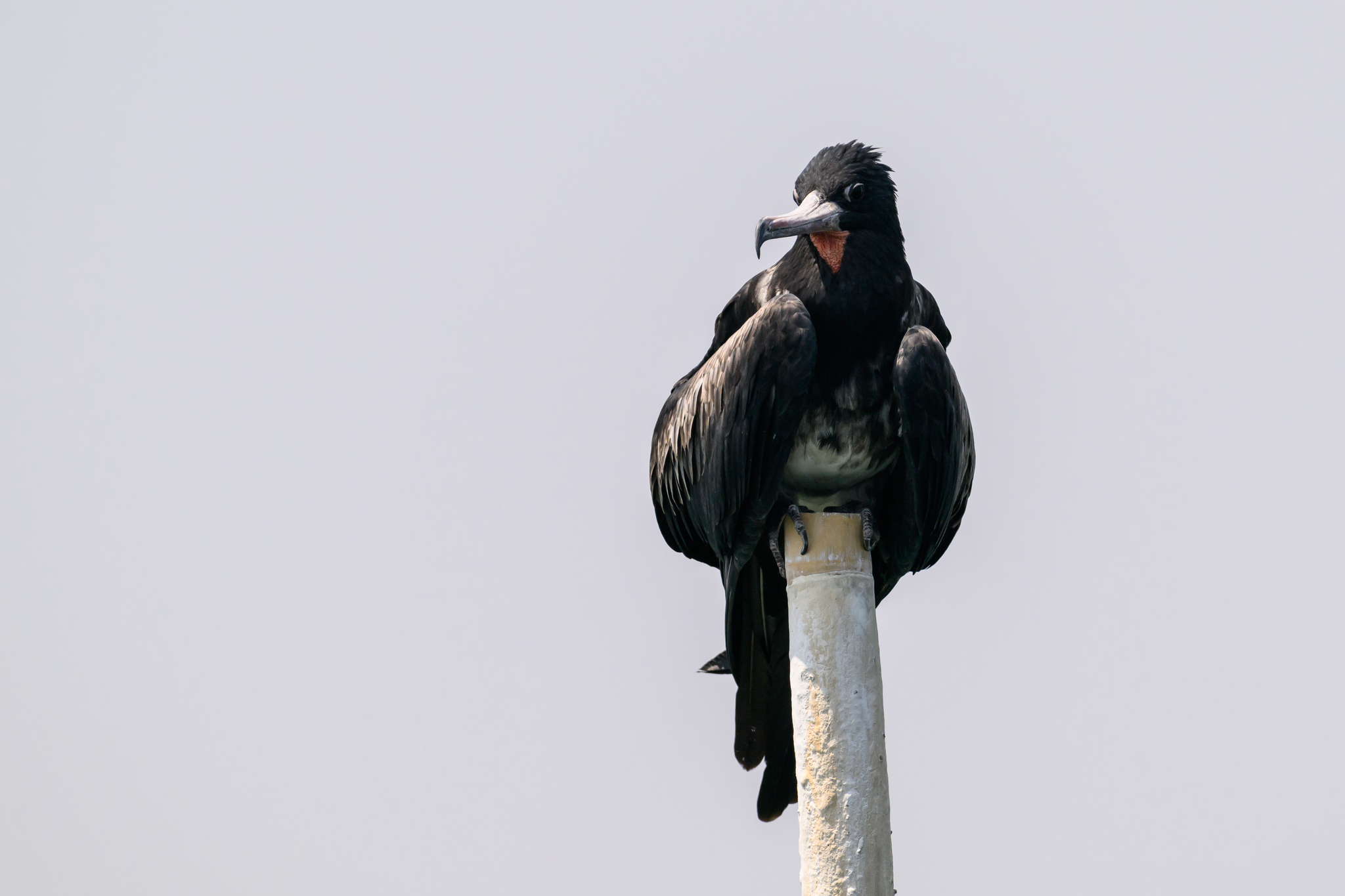
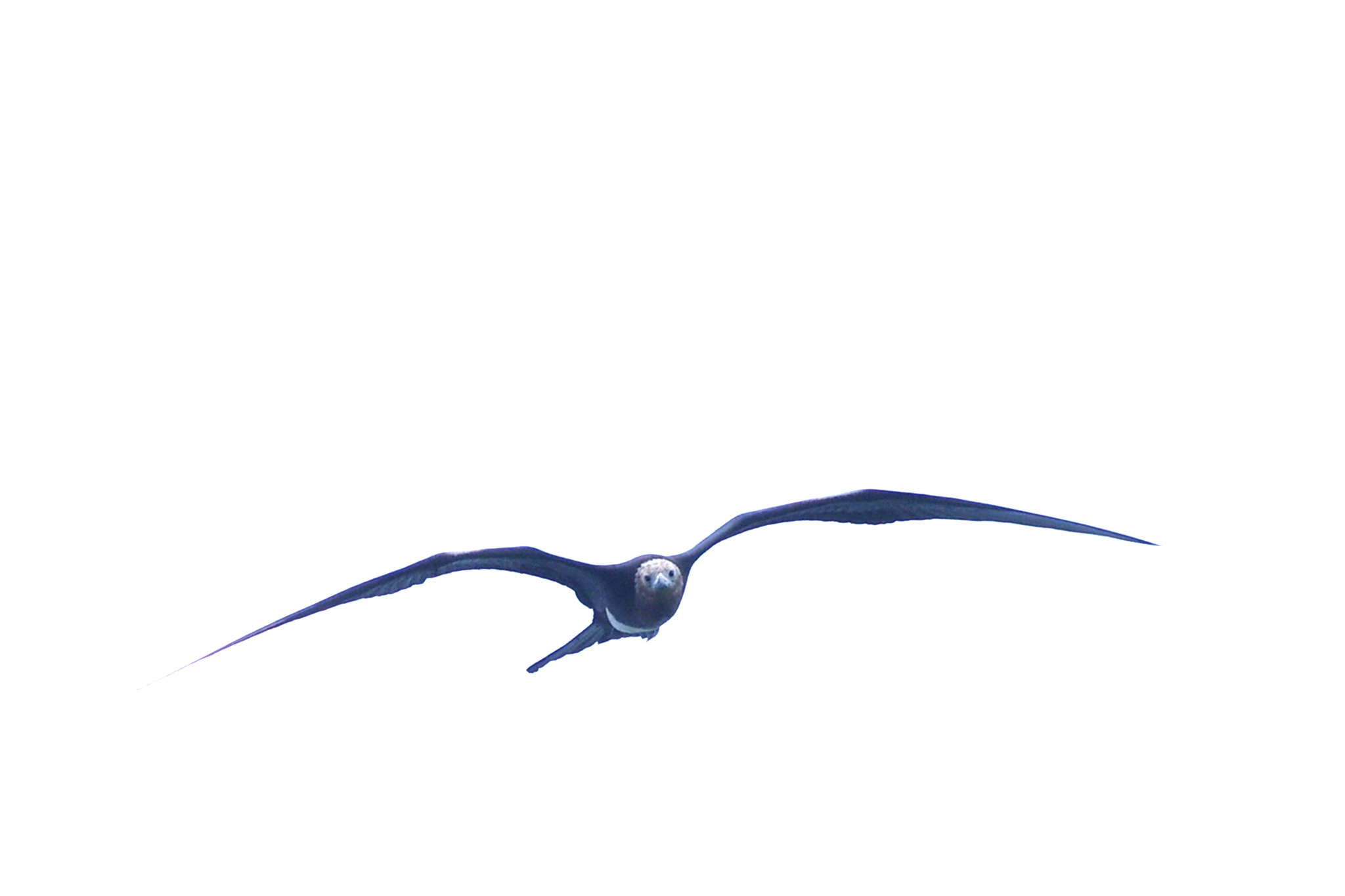
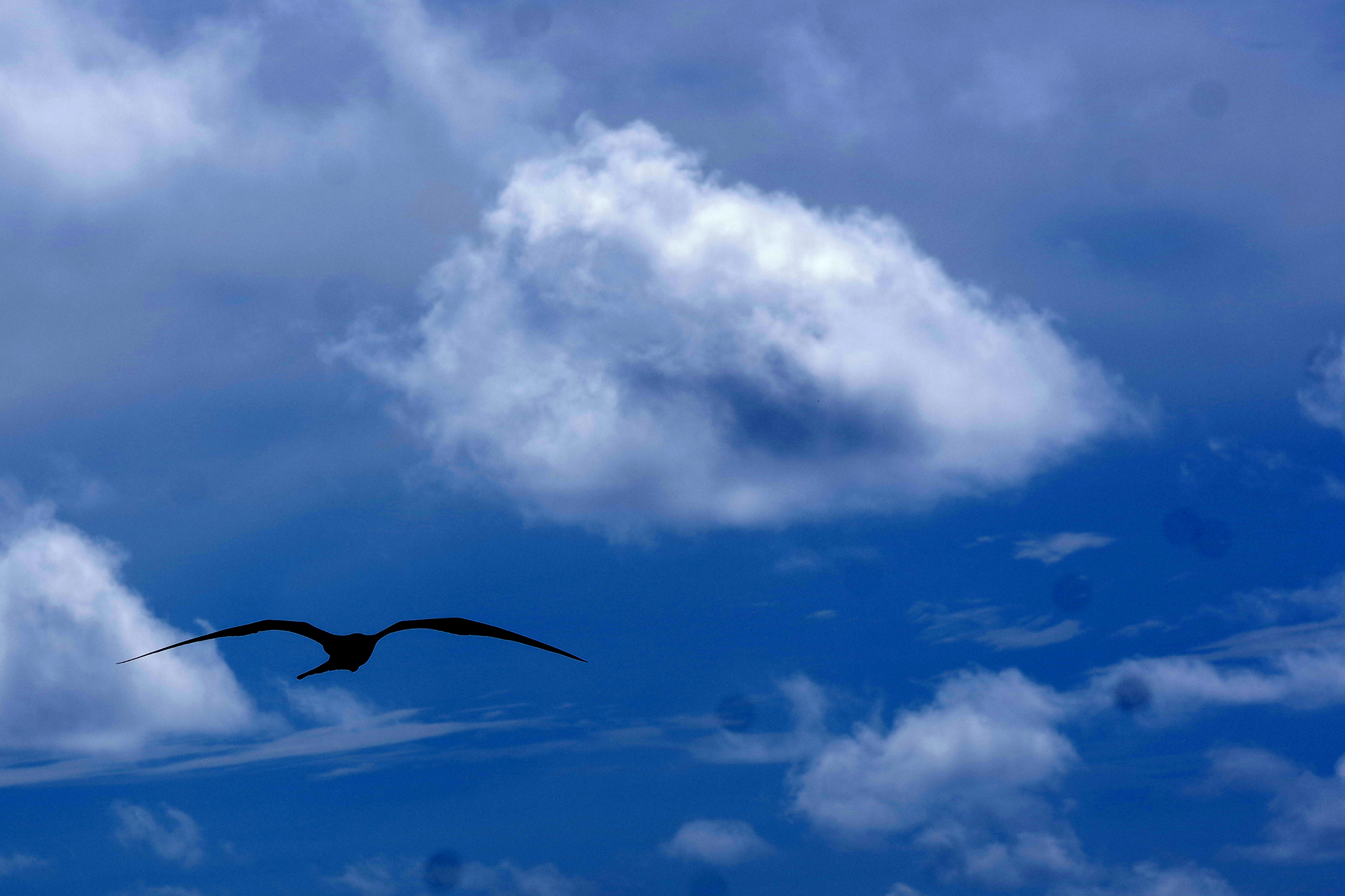
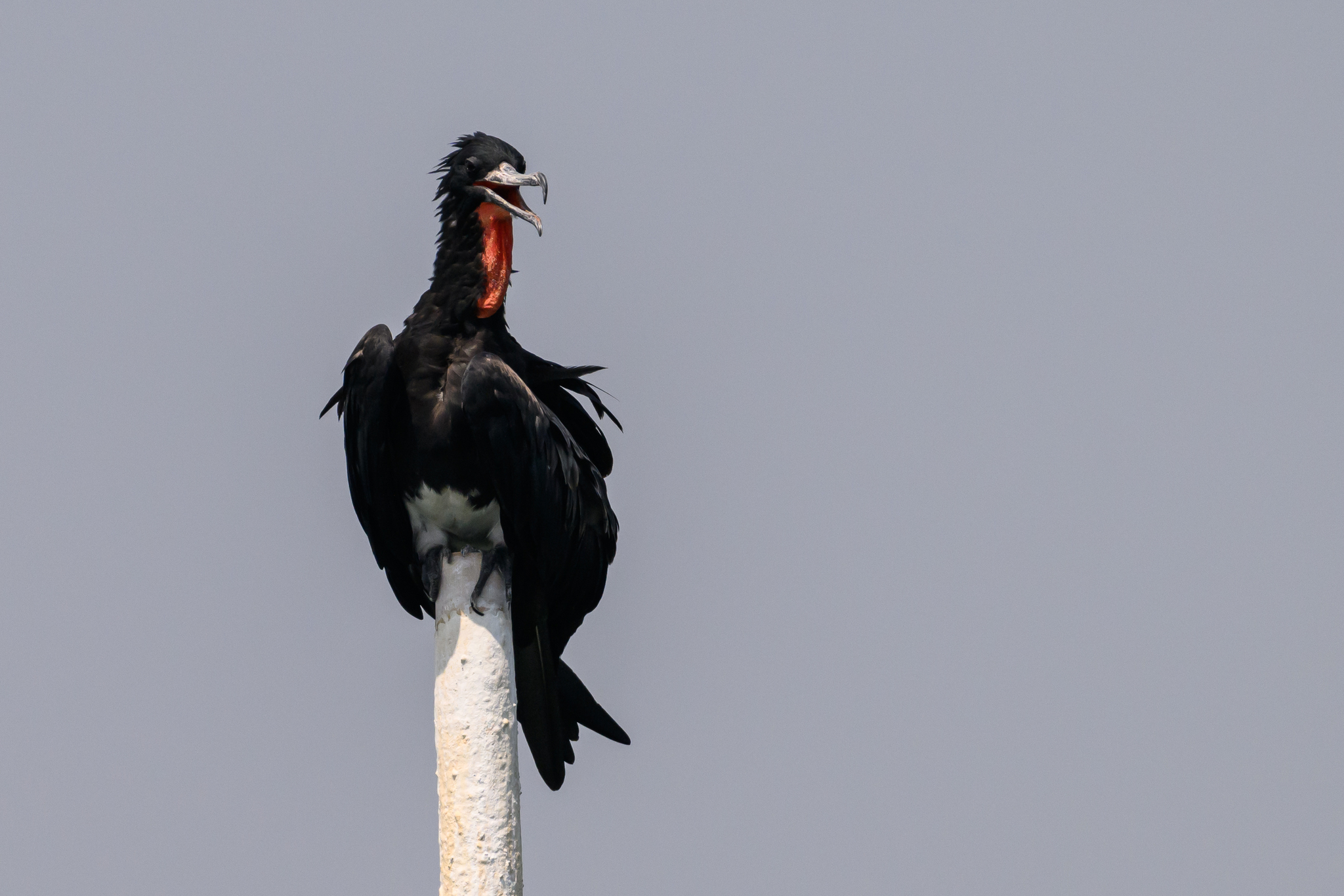
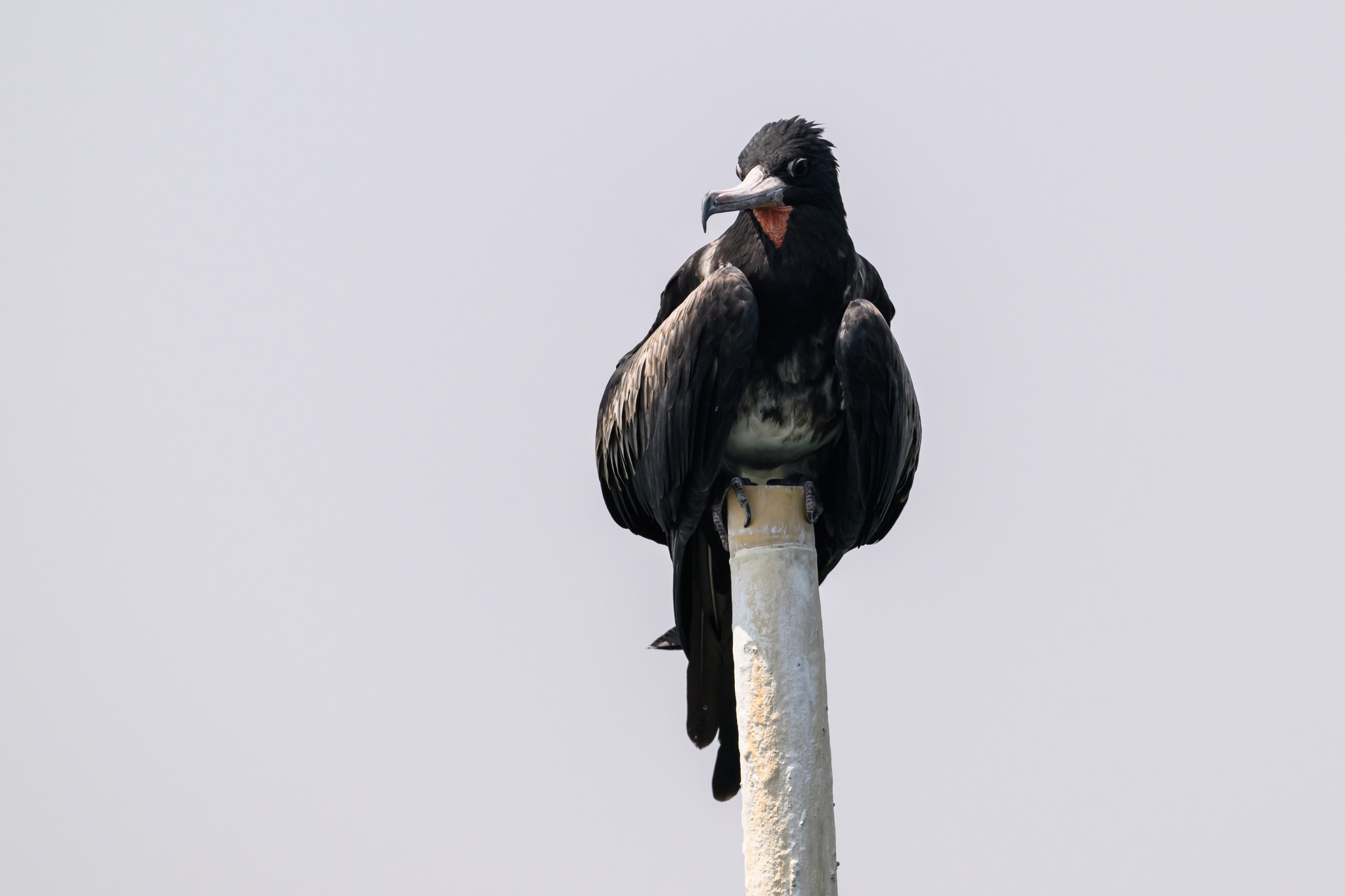
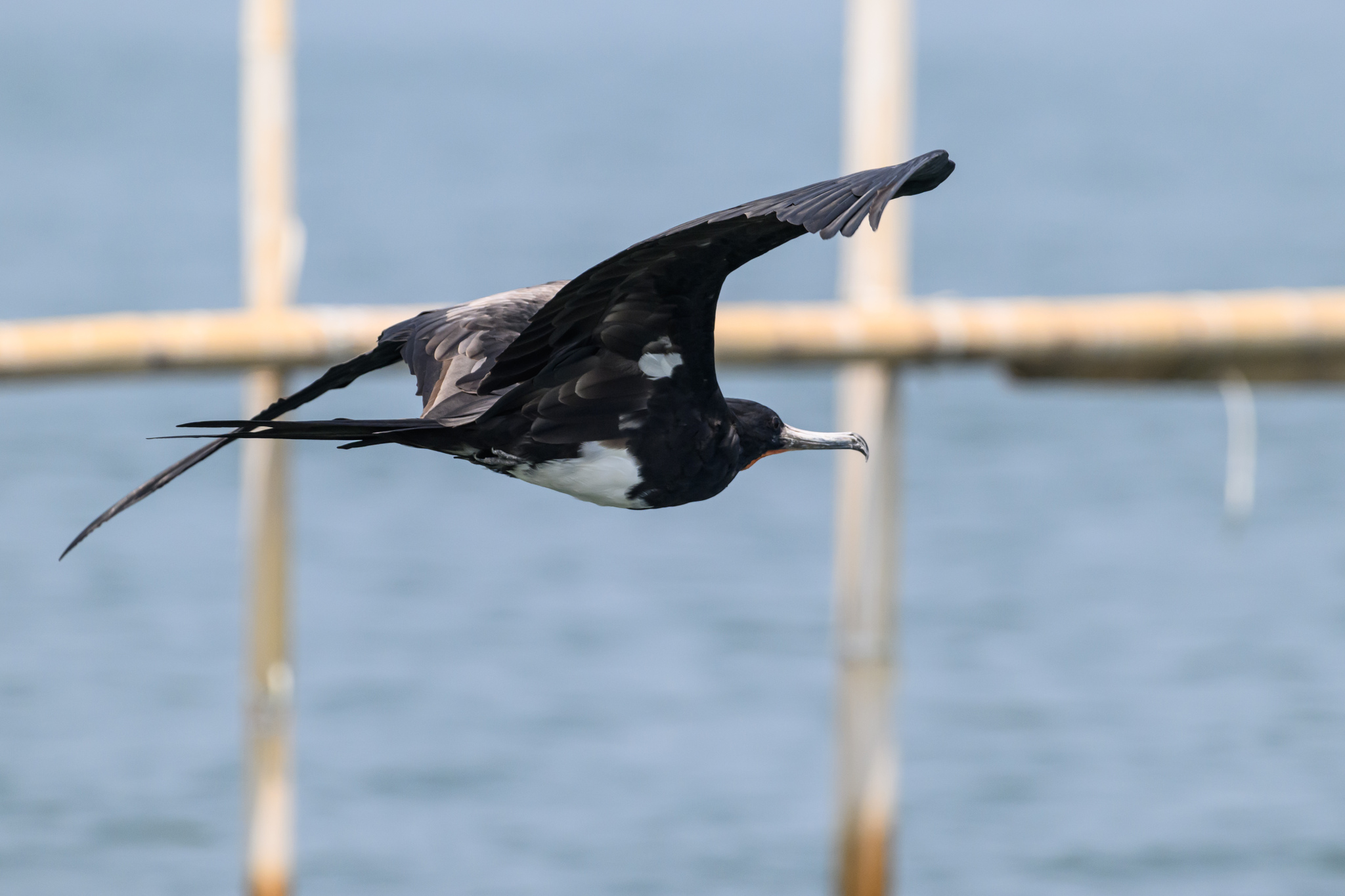
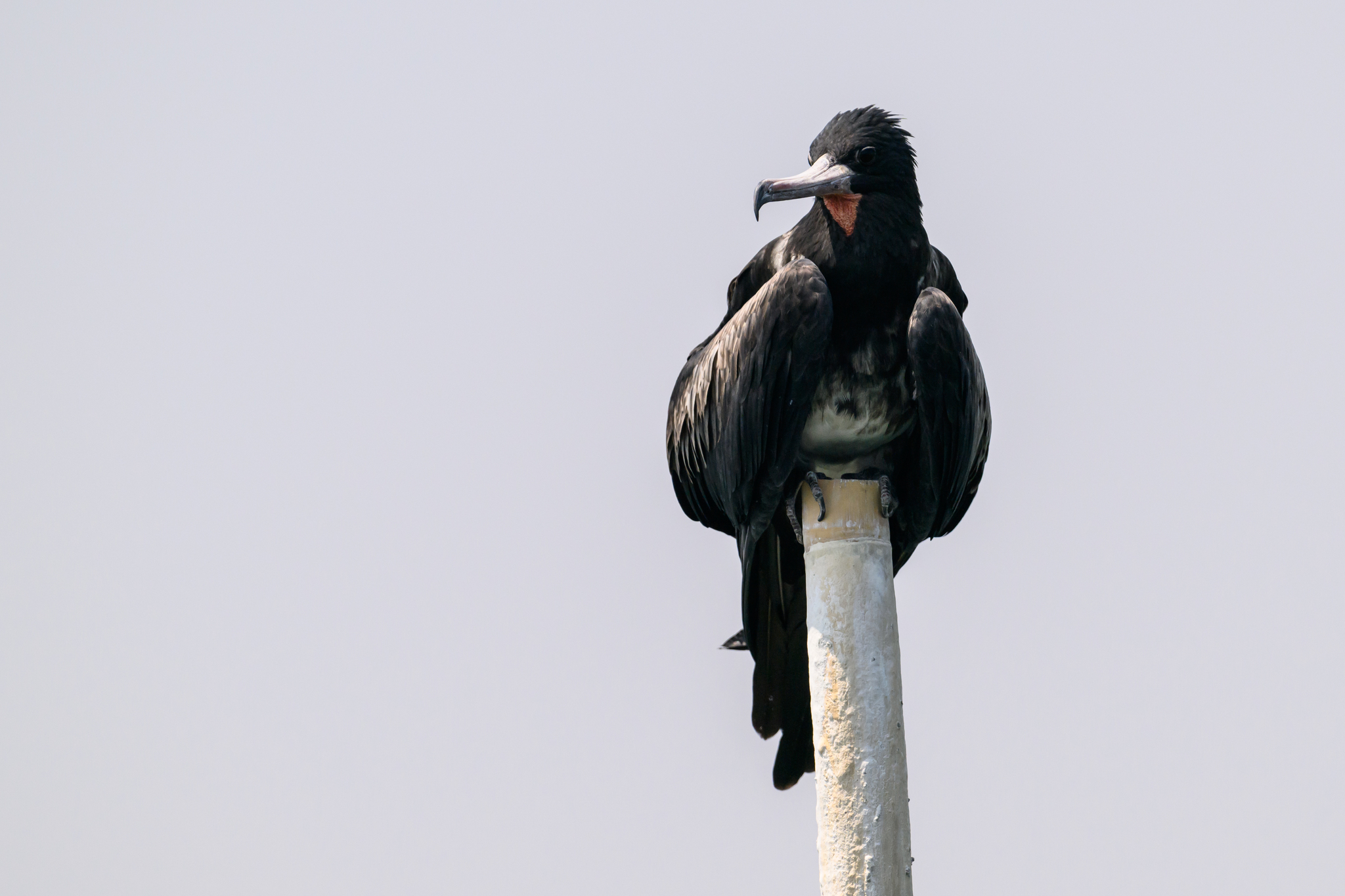
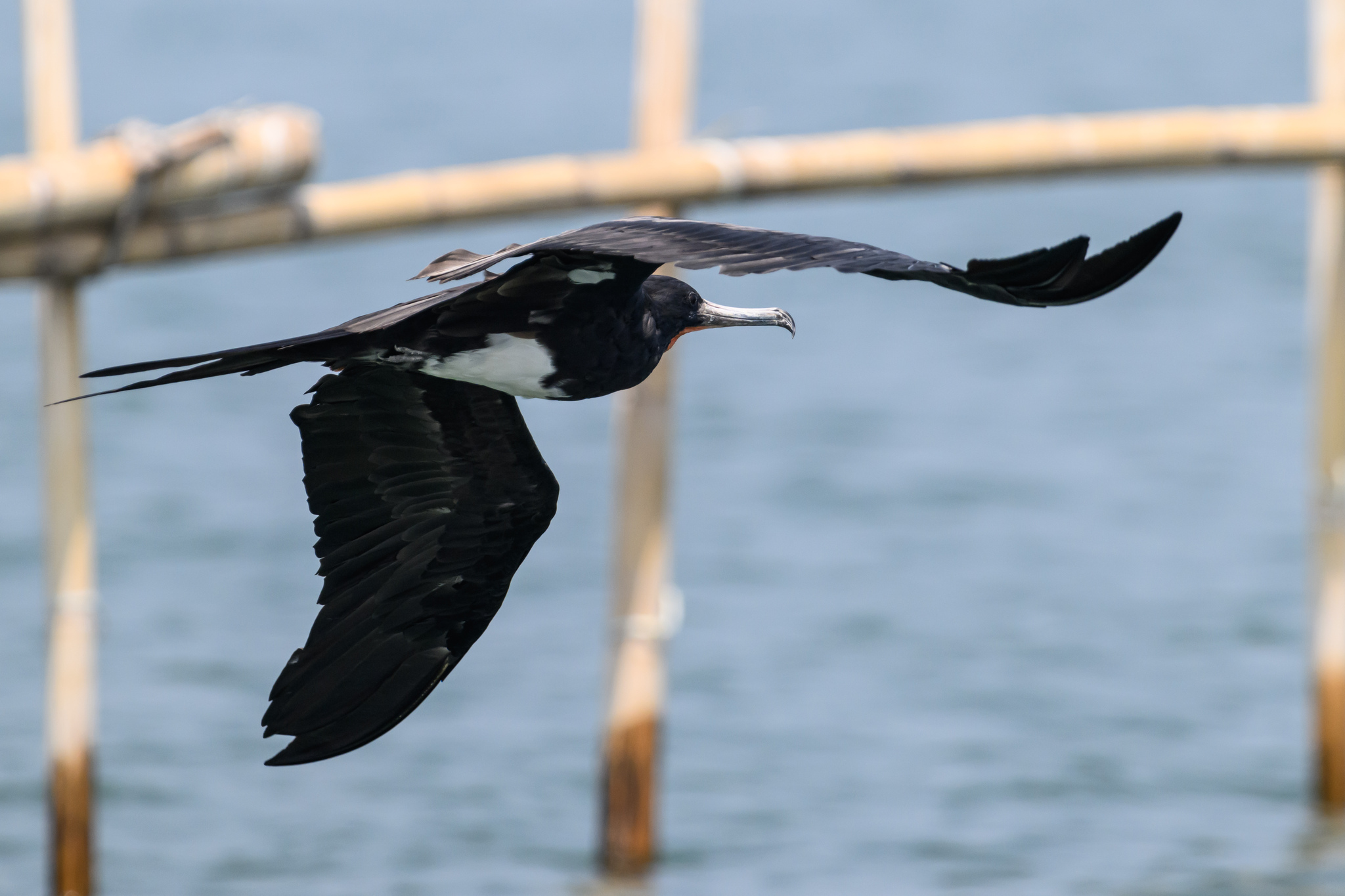
A seabird in the family Fregatidae, endemic as a breeder to Christmas Island in the Indian Ocean. Distinctive for its large size, brownish-black plumage, long narrow wings, and deeply forked tail. Feeds primarily on flying fish taken in flight from the ocean's surface and engages in kleptoparasitism, harassing other birds to steal their food. Classified as Vulnerable by the IUCN.
Description
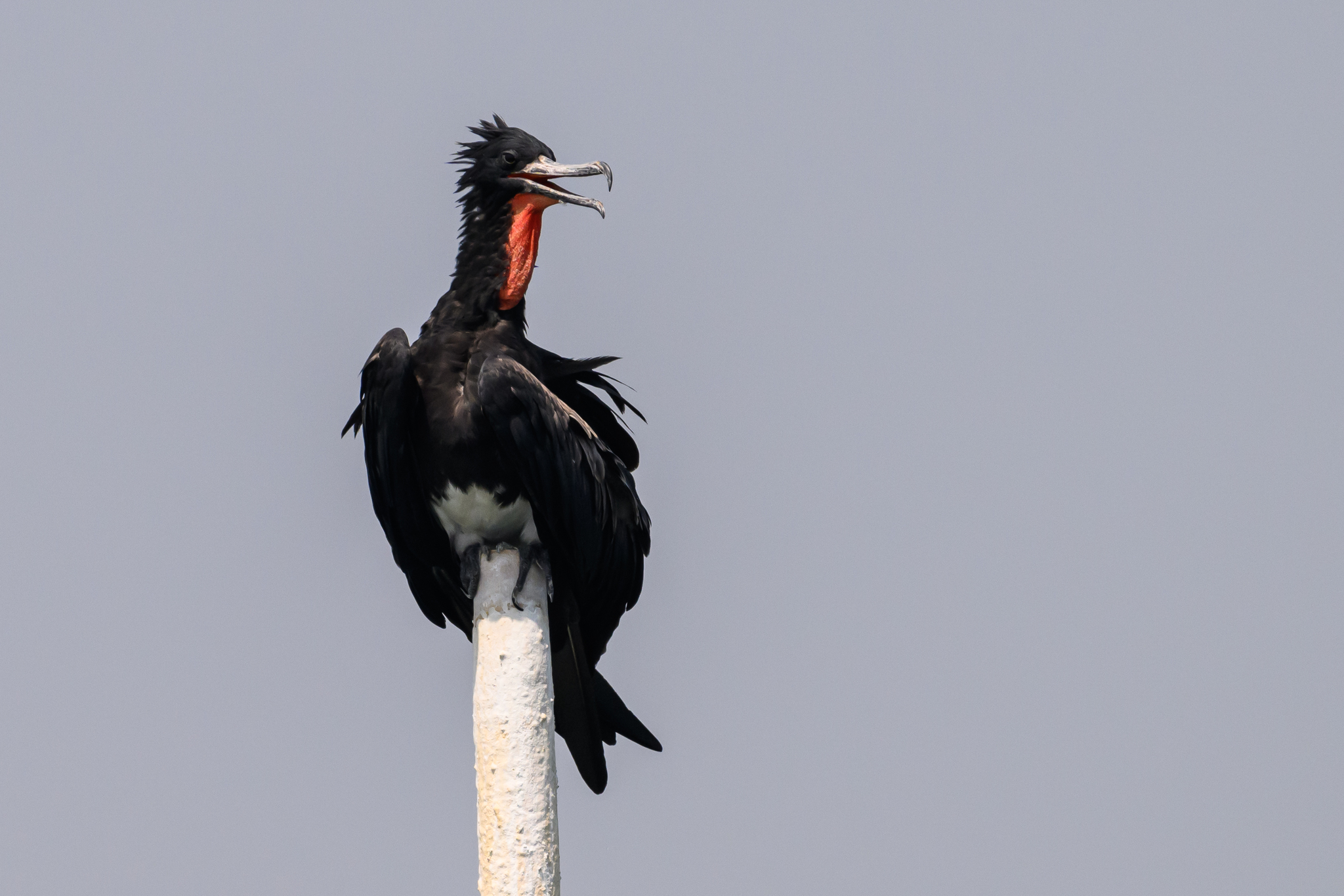
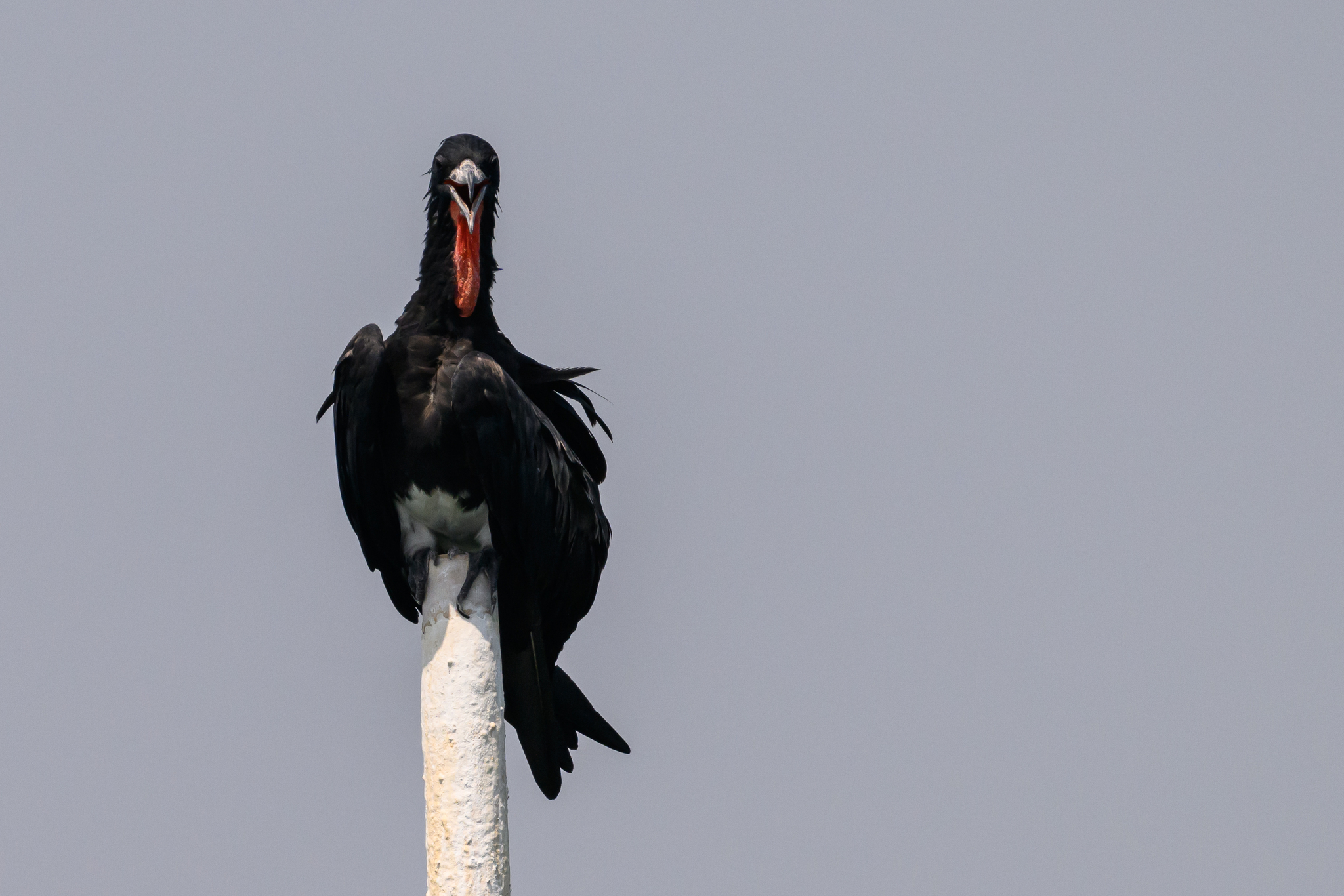
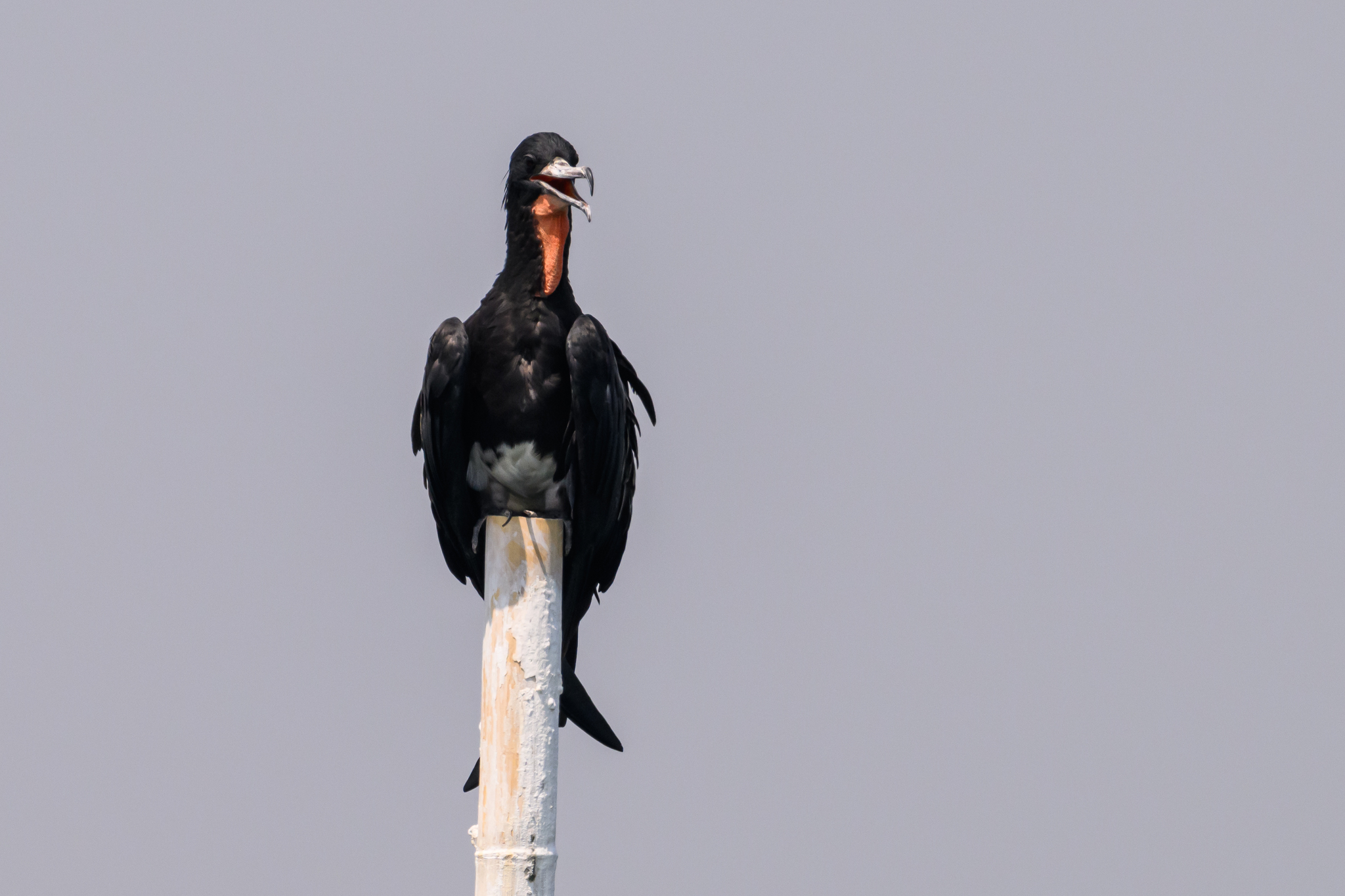
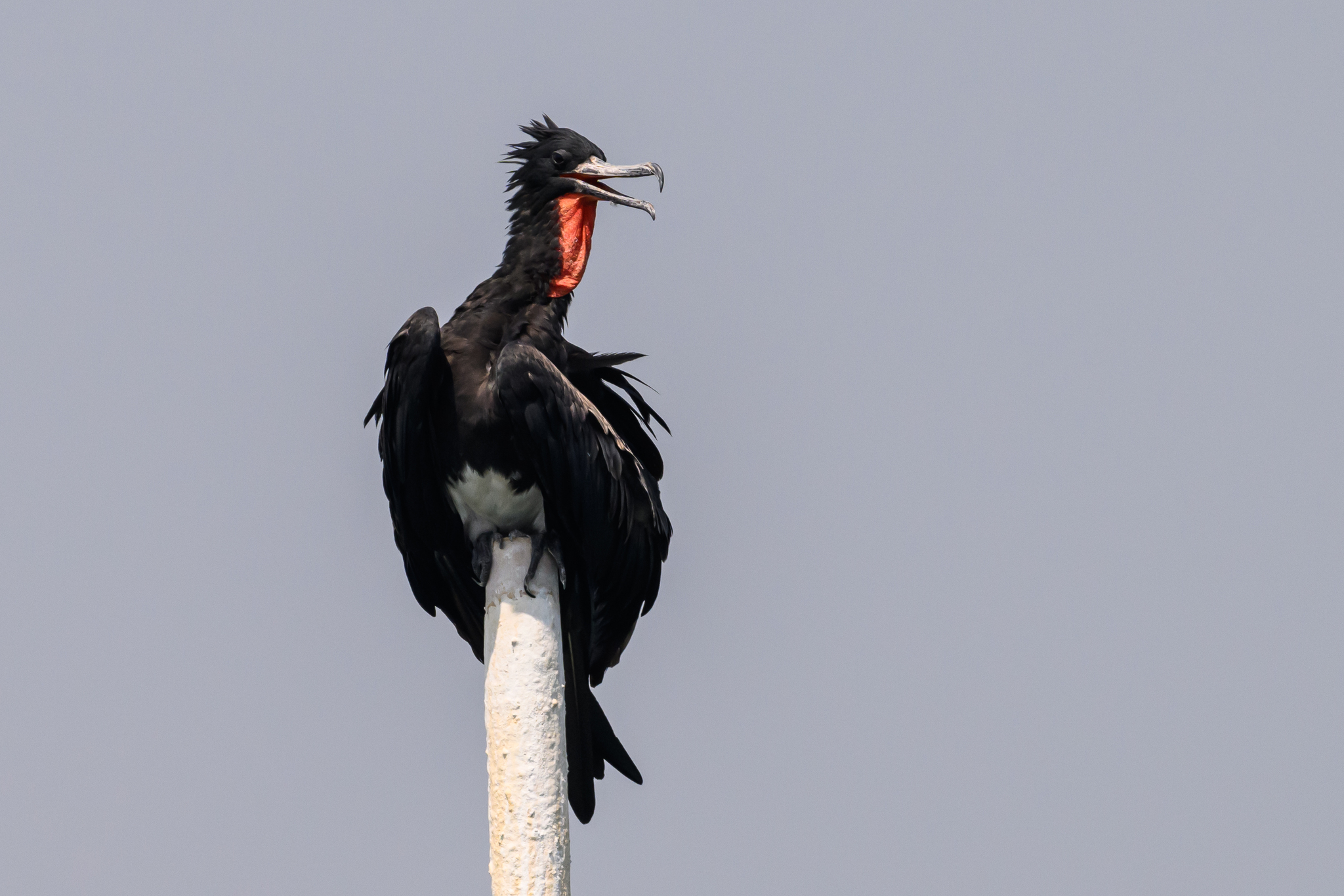
A large, lightly built seabird measuring 89-100 cm (35-39 in) in length with a wingspan of 205-230 cm (81-91 in) and weighing approximately 1,550 g (3.42 lb). The adult male is entirely black except for a distinctive white belly patch and has a bright red gular sac that inflates during courtship. The female is slightly larger than the male and displays white plumage on the breast and belly.
Identification
Adult males are unmistakable with all-black plumage contrasting with a white belly patch. Other plumages closely resemble the smaller lesser frigatebird but can be distinguished by whiter bellies and longer white underwing spurs. The species has a wingspan of approximately 2.15 m (7.1 ft).
Distribution & Habitat
Endemic to Christmas Island in the Indian Ocean. Breeds in only four main nesting colonies on the island. No information provided on migration patterns.
Behavior & Ecology
Forages by taking fish in flight from the ocean's surface, predominantly flying fish. Regularly practices kleptoparasitism, pursuing and harassing other seabirds to force them to regurgitate their meals. Males display to females by inflating their striking red gular sac.
Conservation
IUCN status: Vulnerable (formerly Critically Endangered). In 2003, there were approximately 1,200 breeding pairs; due to biennial breeding, the total adult population is estimated at 3,600-7,200 individuals. Threats include persecution by fishermen, breeding habitat loss from phosphate mining, marine pollution, and entanglement in fishing equipment. Populations continue to decline.
Source: Wikipedia · CC BY-SA 3.0
Taxonomy
- Order
- Suliformes
- Family
- Fregatidae
- Genus
- Fregata
- eBird Code
- chifri1
Distribution
breeds Christmas Island (east-central Indian Ocean); ranges Andaman Sea and Gulf of Thailand across Sunda Shelf to South China Sea and Sulu Sea (southwestern Philippines)
Data Sources
CBR Notes: IUCN红色名录等级由CR降为VU
Species description from Wikipedia, licensed under CC BY-SA 3.0.
Bird images and sounds sourced from GBIF, contributed by citizen scientists worldwide under Creative Commons licenses.
Taxonomy data from AviList 2025.