Red-breasted Flycatcher
Ficedula parva
红胸姬鹟
Introduction
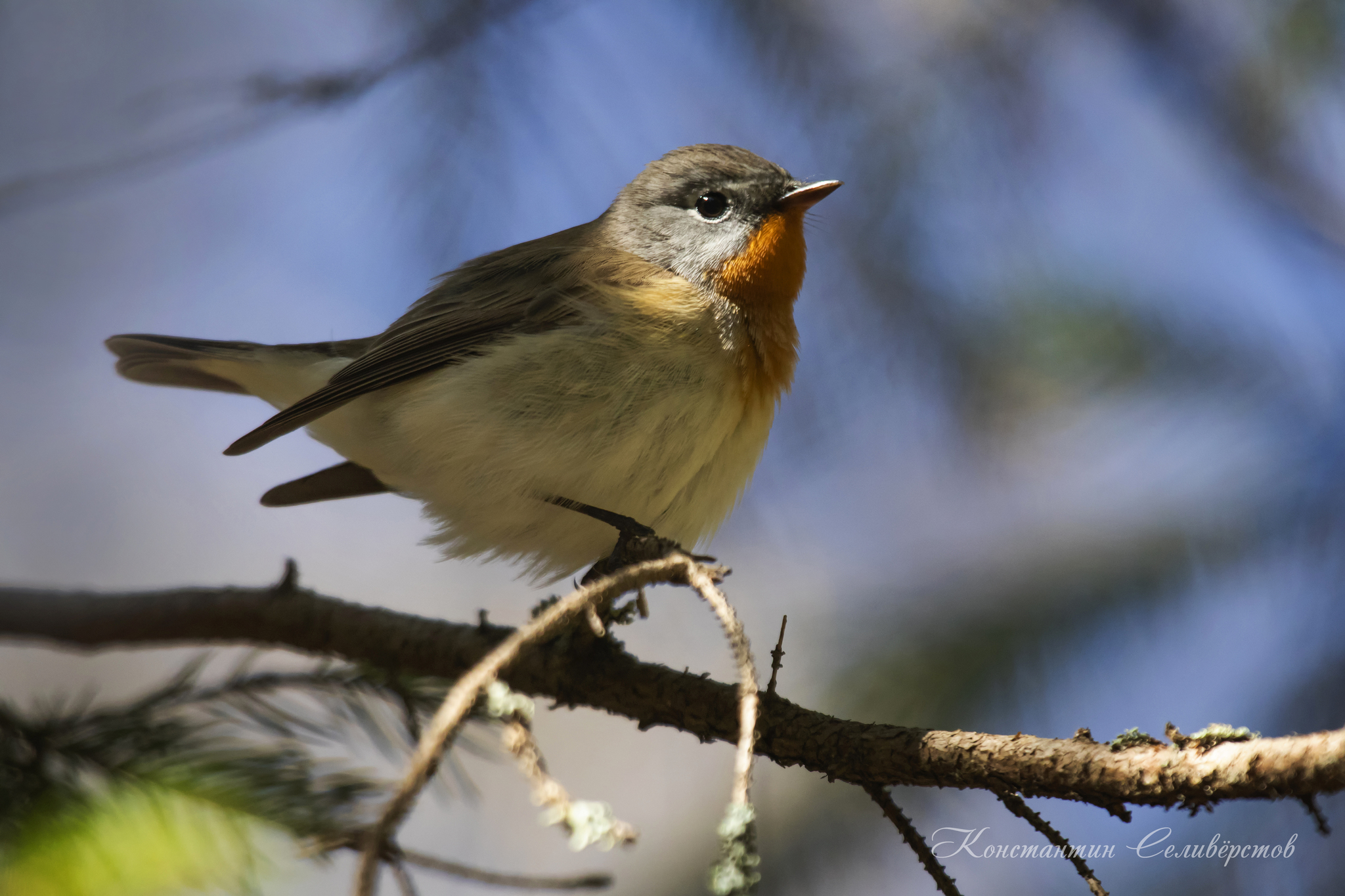
This small Old World flycatcher breeds across eastern Europe and Central Asia. It is a passage migrant through western Europe, migrating to wintering grounds in south Asia. The species breeds in mature broadleaf and mixed forests, particularly Beech and Oak woodland with well-developed understory and clearings. It forages by sallying for insects, displaying tail-flicking and fanning movements. Males sing from exposed perches during the breeding season, displaying an orange throat patch. The species forms a superspecies complex with two other flycatcher species. Distinguishing features from relatives include plumage tones and song.
Description
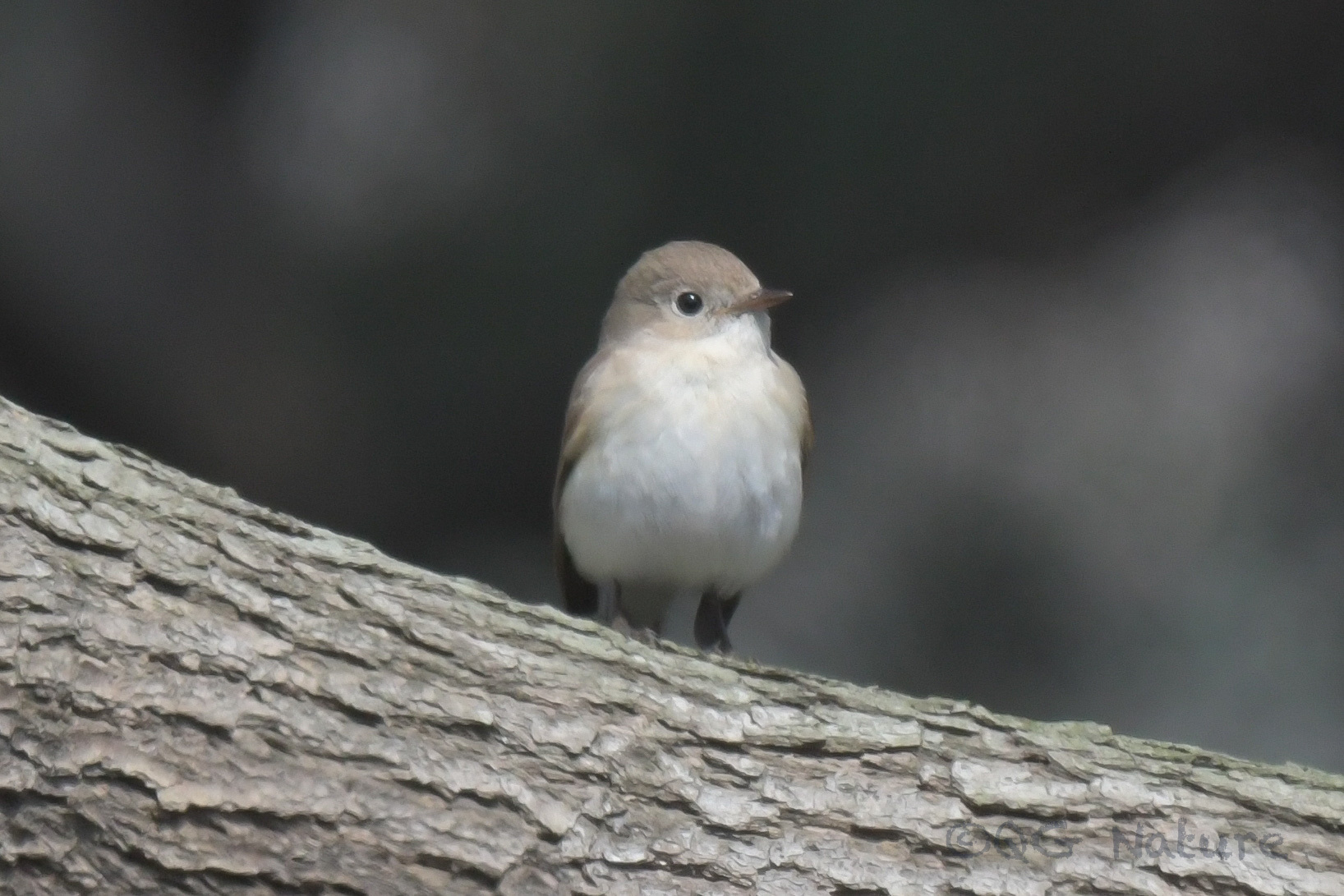
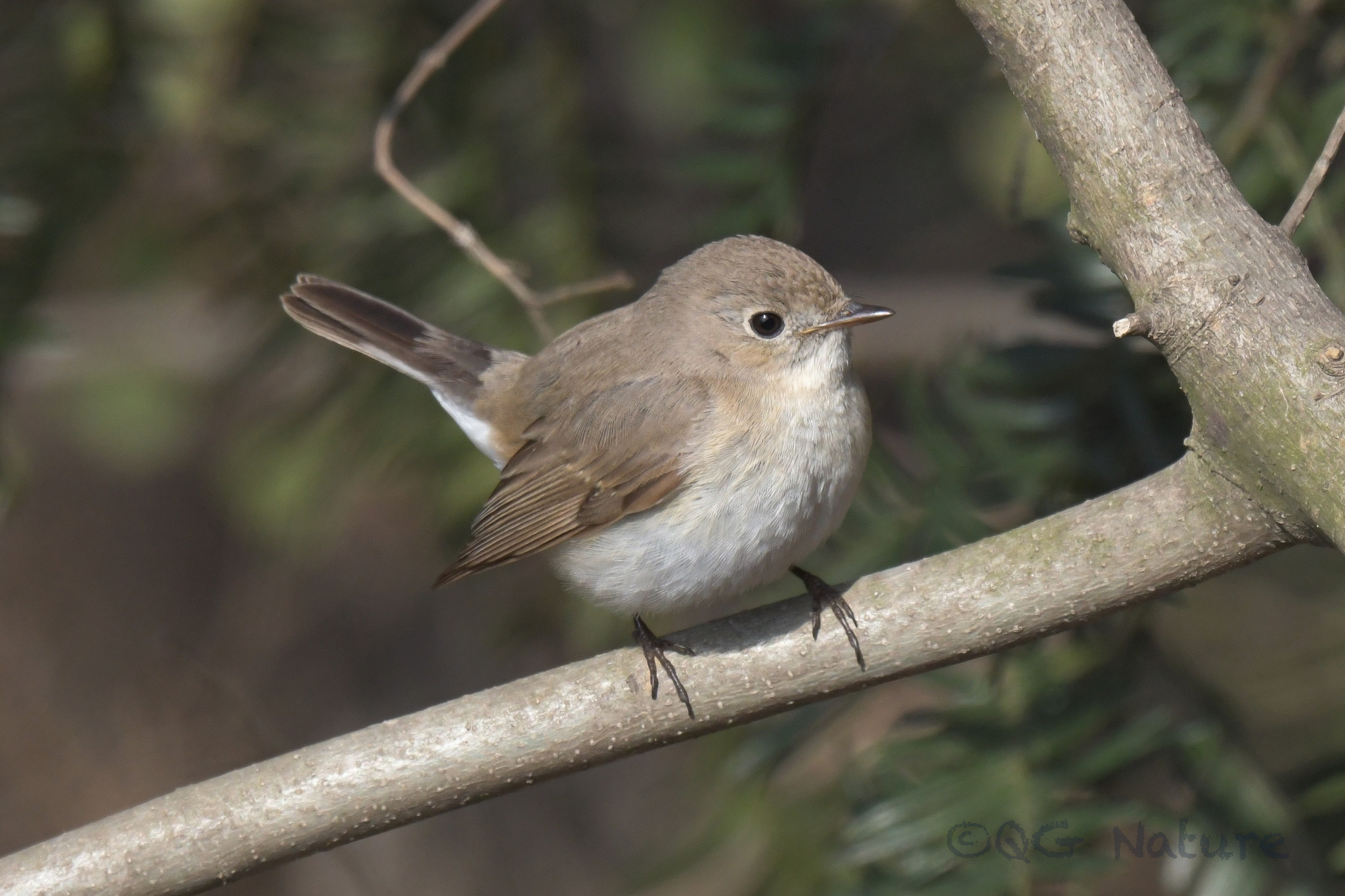
One of Europe's smallest flycatchers at 11-12 cm, this species is only slightly larger than a Eurasian Wren. Breeding males have muted brown upperparts, clean white underparts, a grey head, and a striking orange throat patch. The black bill has a notably pale pinkish base. All plumages share a distinctive wheatear-like tail pattern: entirely black with white at the base of the outer feathers. A conspicuous white eyering is present in every plumage. The overall warmer coloration and more extensive orange throat patch distinguish this species from the very similar taiga flycatcher. The bird has the broad, pointed bill shape typical of aerial insectivores.
Identification
The combination of small size, white eyering, and distinctive tail pattern (black with white at the outer base) helps identify this species. Males are told from the similar taiga flycatcher by warmer overall plumage tones and the more extensive orange throat patch. The bill shows a brighter, more extensive pinkish base. Females and immatures lack the orange throat and can be more challenging, but their small size, white eyering, and tail pattern remain distinctive. Listen for the song: three to four seconds of far-carrying, repetitive whistles often preceded by quiet zit notes, less melodious than the European pied flycatcher's song. The typical call is a chip-chip-chr-rrr, with a slower, rattling zrrrt compared to the taiga flycatcher.
Distribution & Habitat
Breeds across eastern Europe through Central Asia to the Caucasus and Urals, extending north to the Arctic Circle and south to the central Balkans and Carpathians. Western populations are scarcer and more scattered, found in suitable mature forest habitat in Germany, Sweden, and Austria. Favors Beech and Oak woodland with tall trees, understory, and open perching areas near glades and water. Strictly migratory, wintering primarily in northwestern India from northwest Pakistan and Himalayan foothills south to Karnataka, and east to Bihar and Odisha. Autumn migration runs from August through early October, peaking mid-September; spring migration begins mid-March with arrival on breeding grounds late April to early May. Males arrive before females to secure territories.
Behavior & Ecology
Active diurnally, singing about an hour before sunrise during breeding season. Highly territorial when breeding, with males defending territories through loud singing and display postures. The diet consists mainly of insects and small spiders caught on the wing, including ants, beetles, hoverflies, true flies, and moth larvae. Foraging occurs in the canopy and understory, with birds inspecting leaves and tree trunks like leaf warblers, often flicking their tail upward while watching for prey. Nesting occurs from late May to June, with four to seven eggs (typically five or six) laid in moss and grass nests placed in tree holes, half cavities, or under bark. Both parents share incubation and feeding duties. Autumn diet supplements insects with elderberries, currants, and blackberries.
Conservation
Listed as Least Concern on the IUCN Red List, with an estimated 6.5 to 10.5 million mature individuals (3.5-5 million breeding pairs). Europe holds over 95% of the global breeding range, and the European population is increasing according to BirdLife International (2015). The overall global population appears stable, though severe localized declines have occurred in eastern Hungary. Conservation efforts focus on preventing local extinction in areas threatened by habitat loss, particularly the preservation of mature old-growth broadleaf and mixed forests. Nest box schemes have had limited success unless combined with predator protection measures.
Culture
The genus name Ficedula derives from the Latin for a small fig-eating bird, reflecting early beliefs about this group of birds. No significant cultural or folklore traditions specific to this species were documented in available sources.
Source: Wikipedia · CC BY-SA 3.0
Taxonomy
- Order
- Passeriformes
- Family
- Muscicapidae
- Genus
- Ficedula
- eBird Code
- rebfly
Distribution
breeds northern Europe to southern Urals, Balkans, and southern Caspian; winters to southern Asia
Data Sources
Species description from Wikipedia, licensed under CC BY-SA 3.0.
Bird images and sounds sourced from GBIF, contributed by citizen scientists worldwide under Creative Commons licenses.
Taxonomy data from AviList 2025.