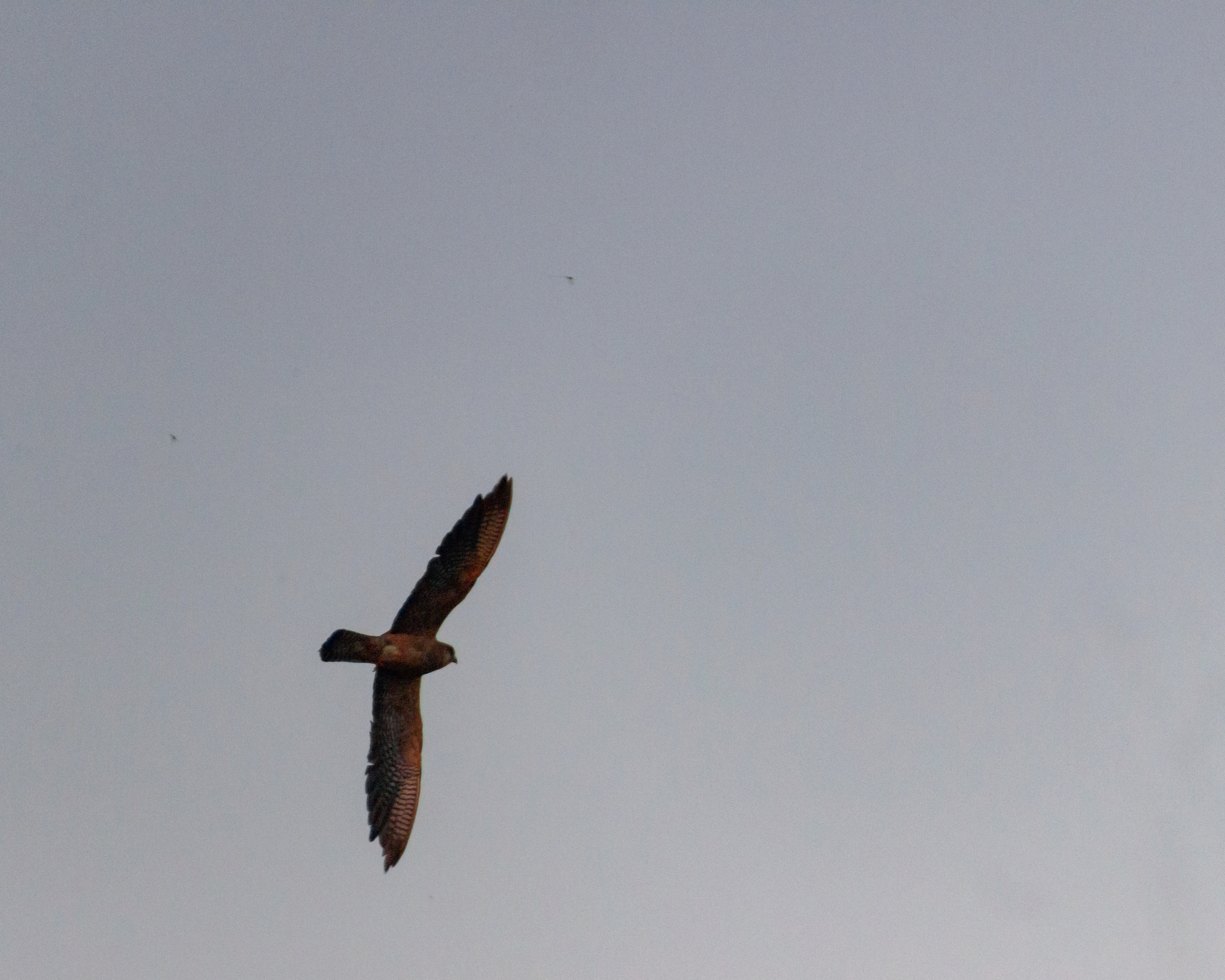
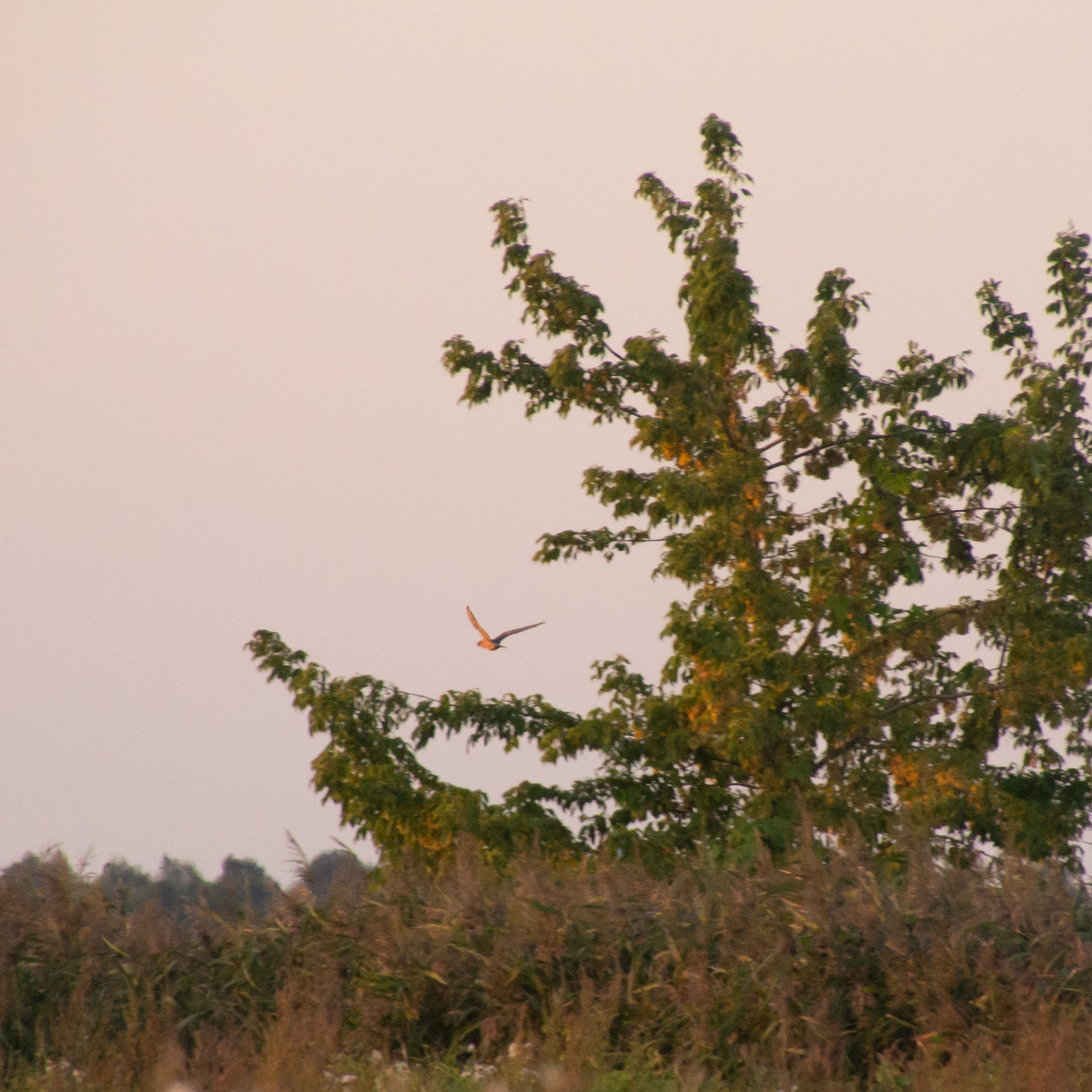
Red-footed Falcon
Falco vespertinus
西红脚隼
Introduction
A medium-small falcon belonging to the family Falconidae. Found in eastern Europe and Asia, with the main breeding areas in southern Russia, Ukraine, Hungary, Romania, and Serbia. A migratory species wintering in southern and eastern Africa. It is a colonial breeder that reuses abandoned corvid nests, particularly those of rooks. The population has declined drastically since the 1980s due to rook persecution and loss of nesting sites. The global population is estimated at 300,000-800,000 individuals, with 26,000-39,000 breeding pairs in Europe.
Description
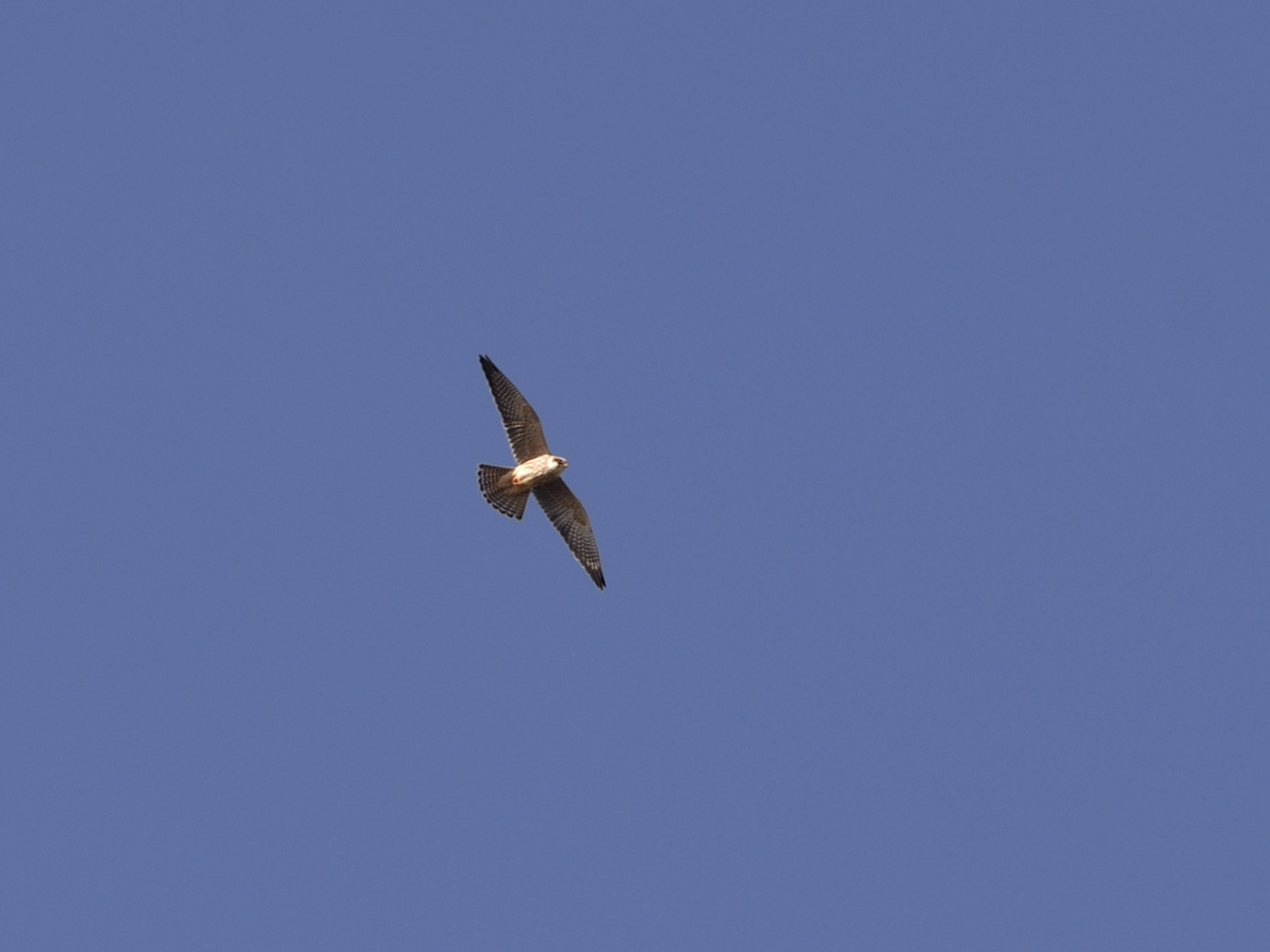
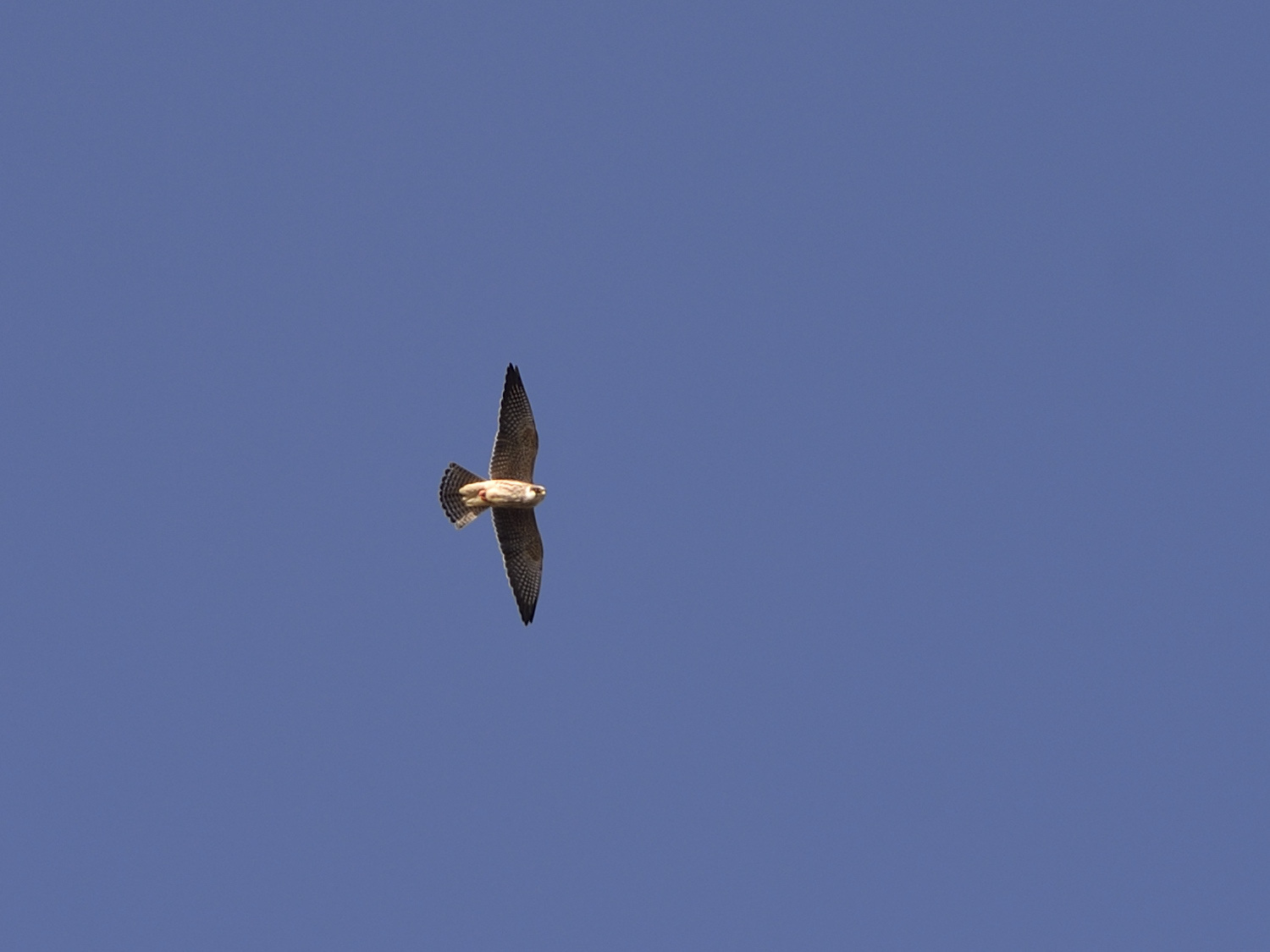
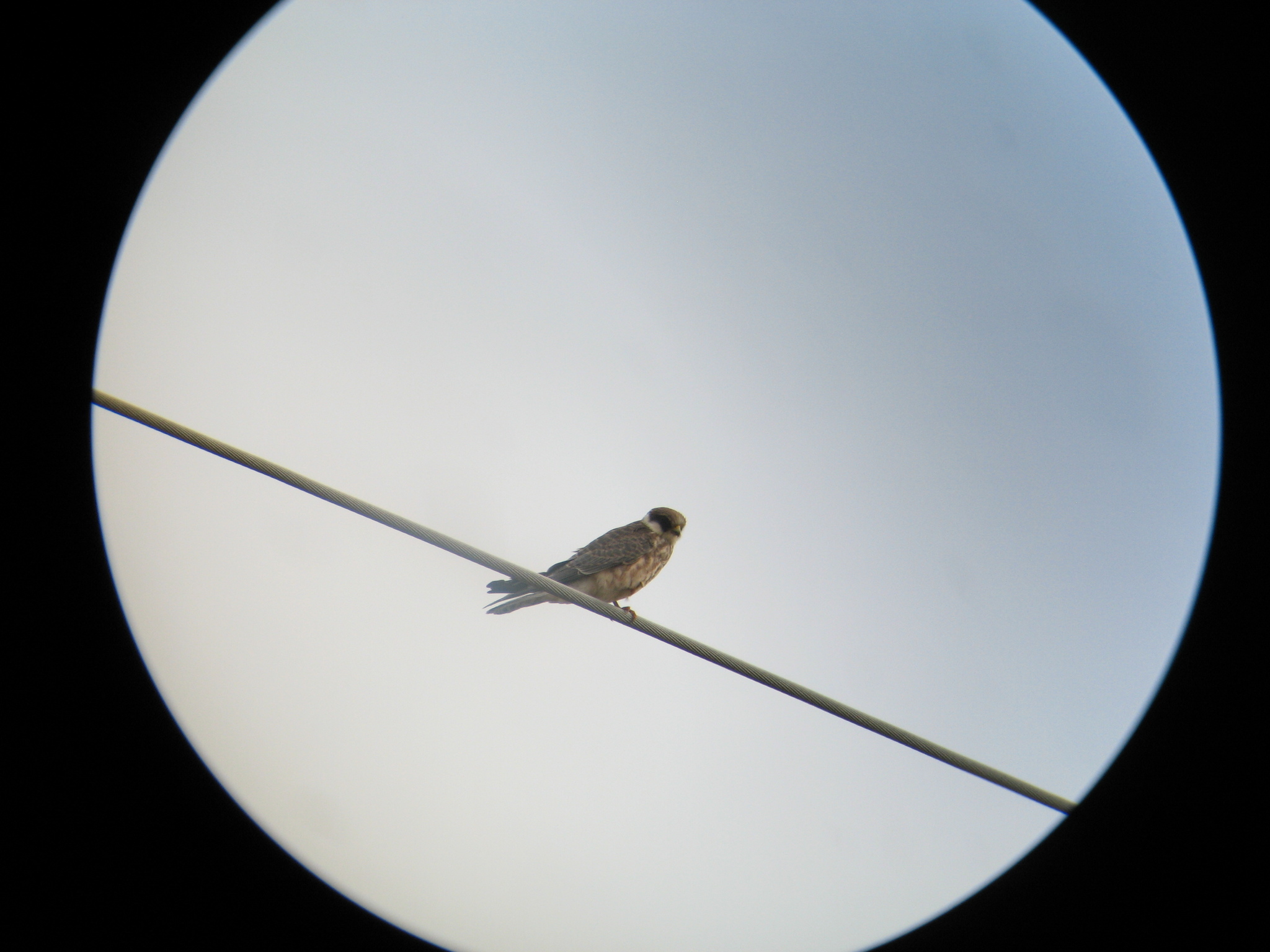
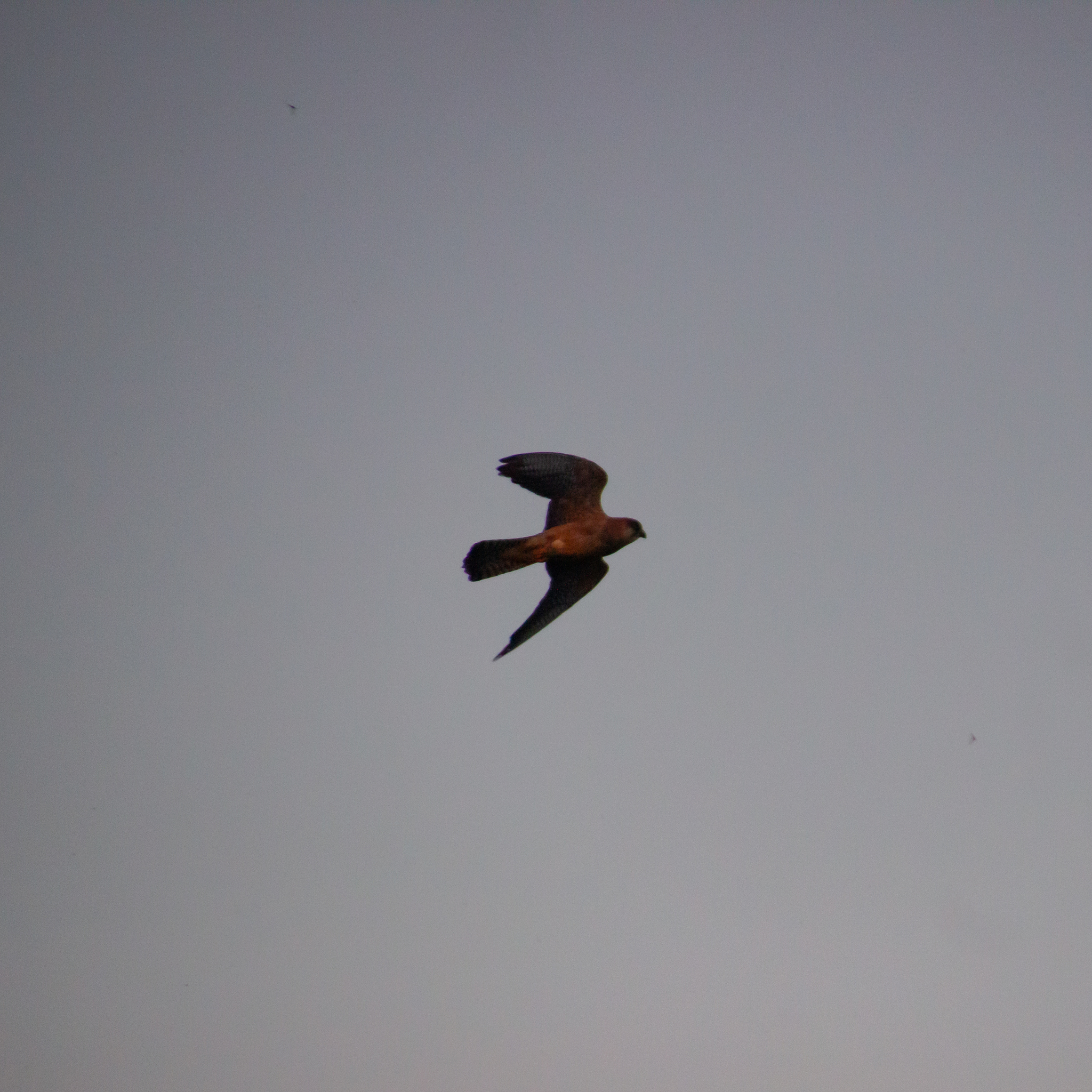
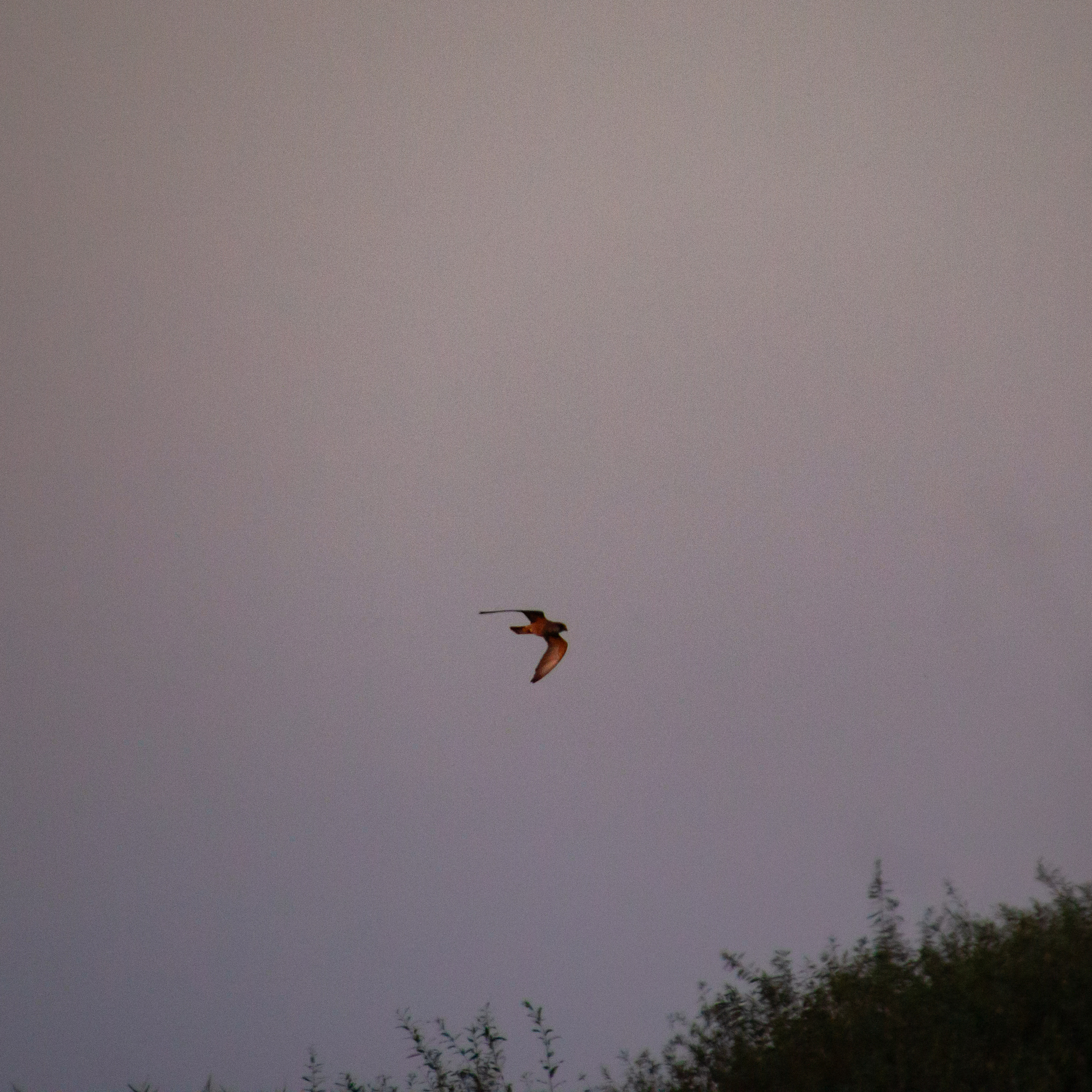
A long-winged falcon with distinctive sexual dimorphism. Adult males are entirely blue-grey with red undertail coverts and legs, and uniformly grey underwings. Females have grey upperparts and wings, orange-colored head and underparts, and a white face marked by a black eye stripe and moustachial stripe. Juveniles are brown above and buff below with dark streaking, resembling the female's facial pattern. Body length ranges from 28-34 cm, wingspan from 65-75 cm, and average mass is 155 g.
Identification
Appears morphologically intermediate between kestrels and hobbies. Adult males are distinctive with all-blue-grey plumage and red legs, unlike any similar European falcon. Females and juveniles can be confused with the closely related Amur falcon, though the ranges overlap only near Lake Baikal. The species may be more closely related to the merlin than to other living falcons. The combination of grey back, orange underparts, and white face with dark markings in females helps distinguish it from other small falcons.
Distribution & Habitat
Breeds across eastern Europe and central Asia. Core European populations are in southern Russia, Ukraine, Hungary, Romania, and Serbia, with smaller numbers in Italy, Bulgaria, Moldova, Austria, Slovakia, Belarus, and occasionally Germany and the Baltic states. Asian breeding range extends from south of the taiga east to the upper Lena River, roughly between 58°-63°N latitude and around 45°S. The southern limit follows the Altai Mountains and steppe zones, reaching the Volga River and Caspian Sea coast. Winters in southern and eastern Africa. Regular vagrant to western Europe, with the first North American record on Martha's Vineyard, Massachusetts in August 2004.
Behavior & Ecology
Colonial breeder that exclusively uses abandoned nests built by corvids, especially rooks, typically at heights of 13-20 m. Clutch size is 2-4 eggs. An opportunistic predator with a varied diet including large insects, amphibians, reptiles, small mammals, and bird nestlings. Hunts by hovering over open areas before making steep dives. Demonstrates biparental care, with females performing most incubation (59% of cases) and initial nest attendance. Males provide most food during incubation and early chick-rearing. Maximum lifespan is 13.25 years in the wild and 18 years in captivity.
Conservation
Globally classified as Near-Threatened due to severe population declines since the 1980s. European population is 26,000-39,000 pairs, with significant breeding concentrations in the Pannonian region. A 90% population crash occurred following mid-1980s rook persecution in Europe, eliminating most potential breeding colonies. In Voivodina, breeding pairs declined from 308 in 1990 to just 61 by 2001. Major threats include rook population collapse, nest site loss, pesticide use depleting prey, electrocution from power lines, and hunting during migration. Conservation efforts focus on artificial nest box colonies, with EU LIFE Nature funding supporting programs in Hungary and western Romania since 2006.
Culture
Considered an umbrella species affecting other community species, playing a significant role in Natura 2000 designation processes. Conservation programs emphasize that protecting breeding sites provides additional socio-economic benefits for both wildlife and local human populations.
Source: Wikipedia · CC BY-SA 3.0
Taxonomy
- Order
- Falconiformes
- Family
- Falconidae
- Genus
- Falco
- eBird Code
- reffal1
Distribution
breeds central Eurasia; winters in sub-Saharan Africa
Vocalizations
Data Sources
Species description from Wikipedia, licensed under CC BY-SA 3.0.
Bird images and sounds sourced from GBIF, contributed by citizen scientists worldwide under Creative Commons licenses.
Taxonomy data from AviList 2025.