Eurasian Hobby
Falco subbuteo
燕隼
Introduction
The Eurasian hobby is a small falcon found across Europe and Asia. It inhabits open countryside, particularly near woodlands and wetlands. Body length ranges from 29-36 centimeters. It is a versatile hunter that pursues large dragonflies on the wing, captures bats, and preys on swallows and swifts. Migration occurs in small groups between breeding and wintering grounds.
Description
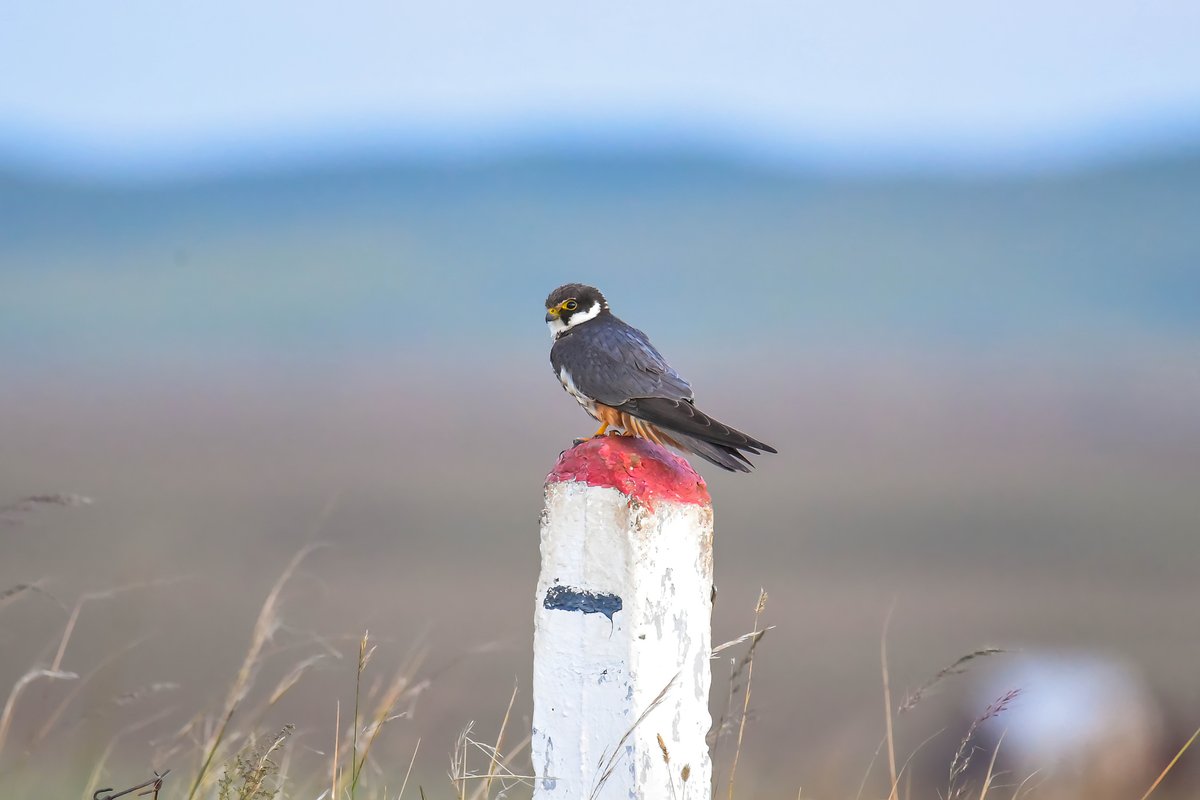
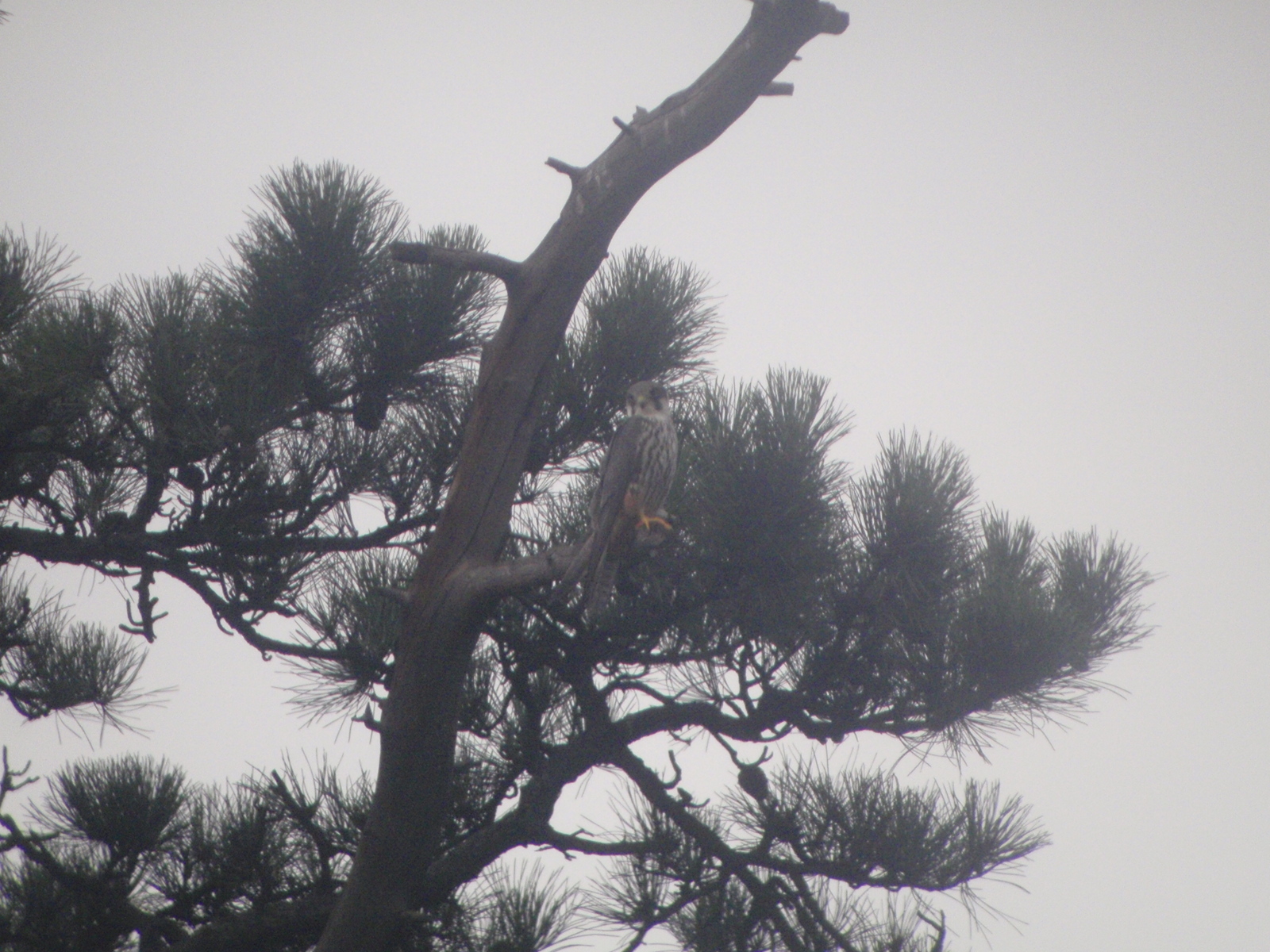
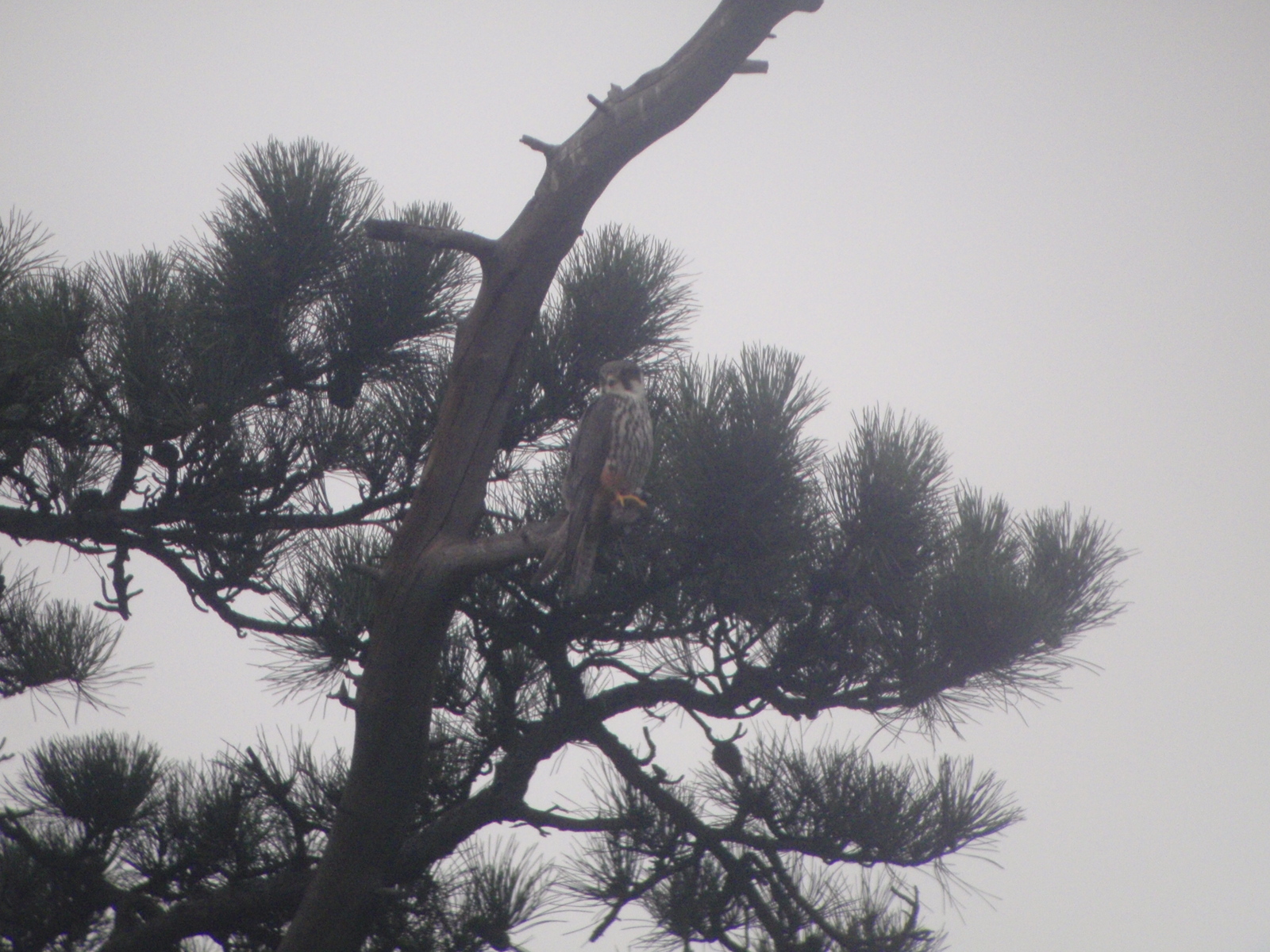
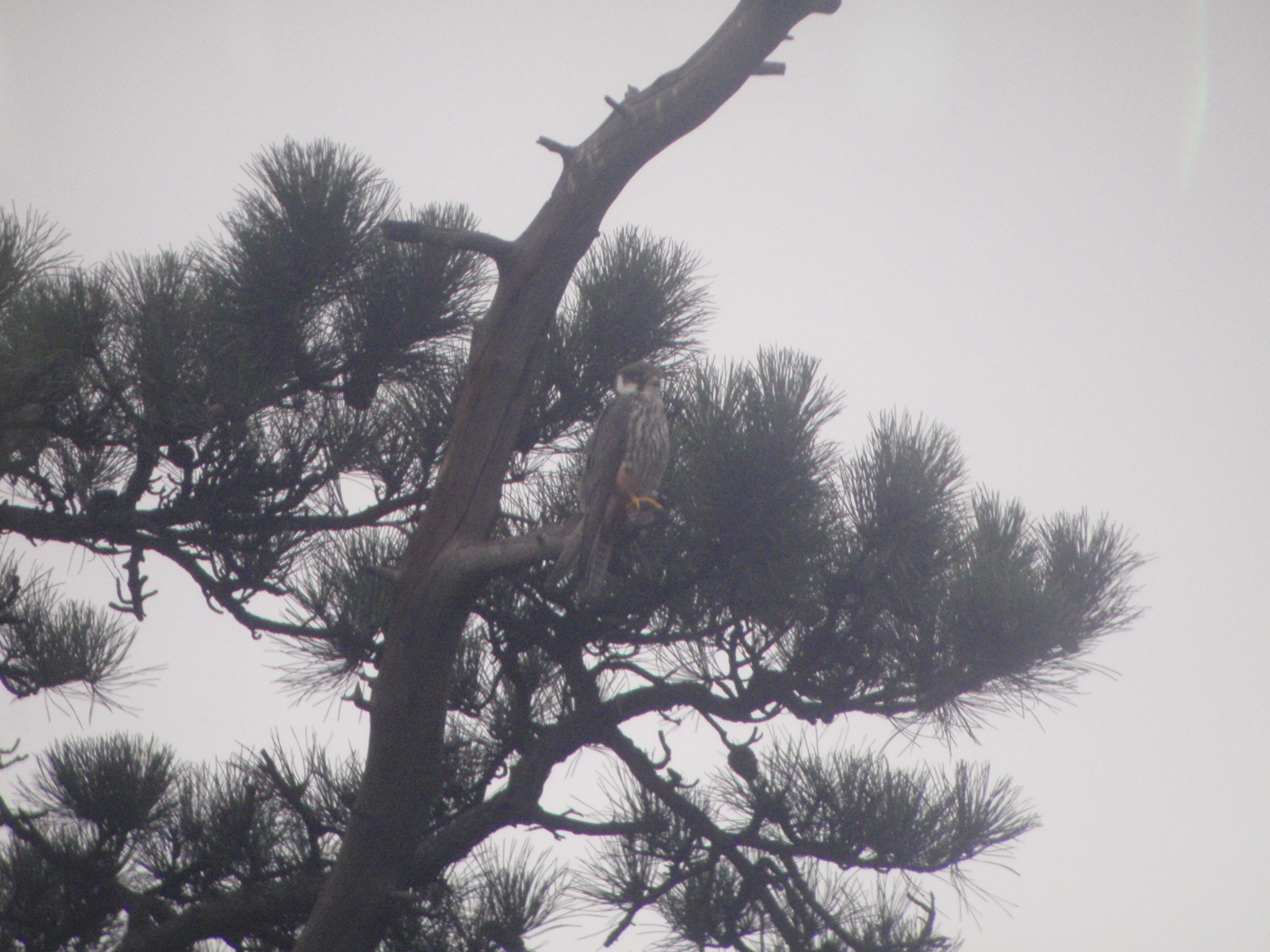
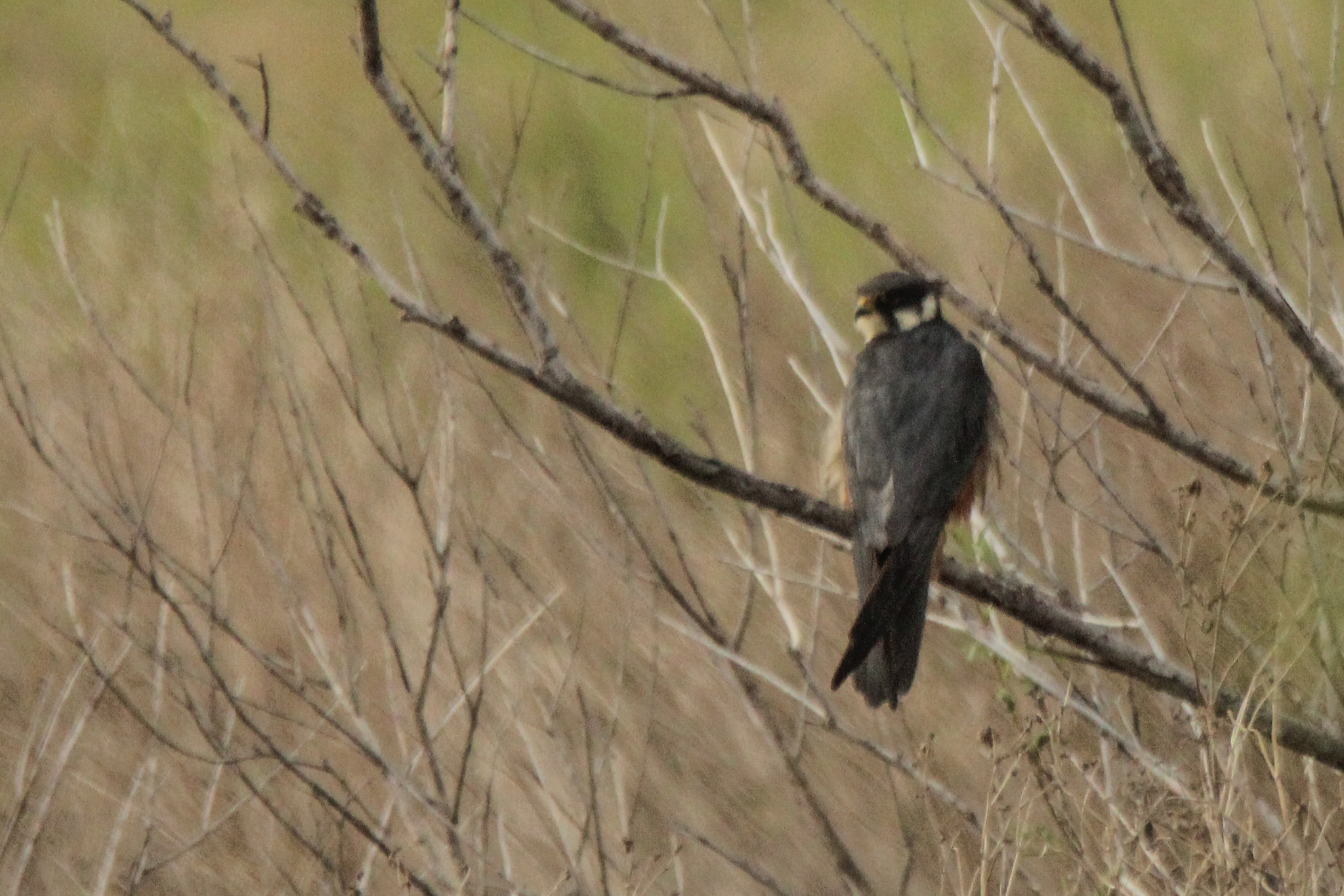
This compact falcon displays a sophisticated plumage pattern that rewards close observation. Adults exhibit slate-grey upperparts contrasting with a dark crown and distinctive black moustache stripes framing the white throat. The underparts are whitish with fine black streaking, while the thighs and undertail coverts show unstreaked rufous coloring that appears as reddish 'trousers' at close range. The sexes appear similar, though juveniles are notably browner overall with scaled upperparts and streaked buffy coloring on the thighs and undertail coverts. The hobby undergoes a distinct first-summer plumage before acquiring adult feathers. Measurements reveal a body length of 29-36 centimeters, wingspan of 74-84 centimeters, and weight ranging from 175-285 grams.
Identification
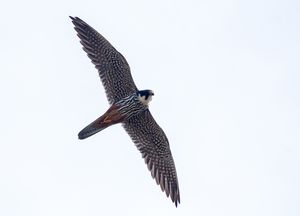
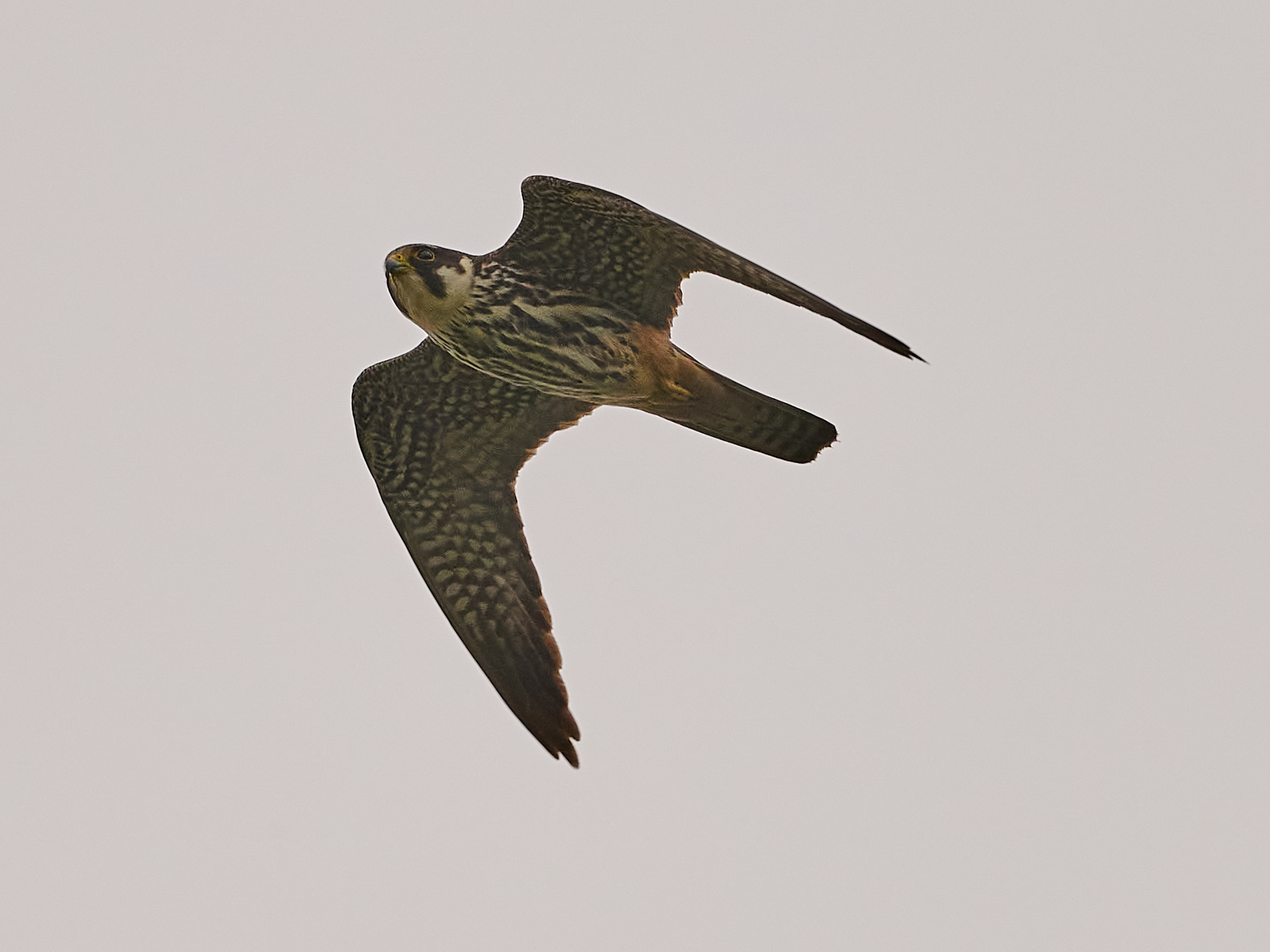
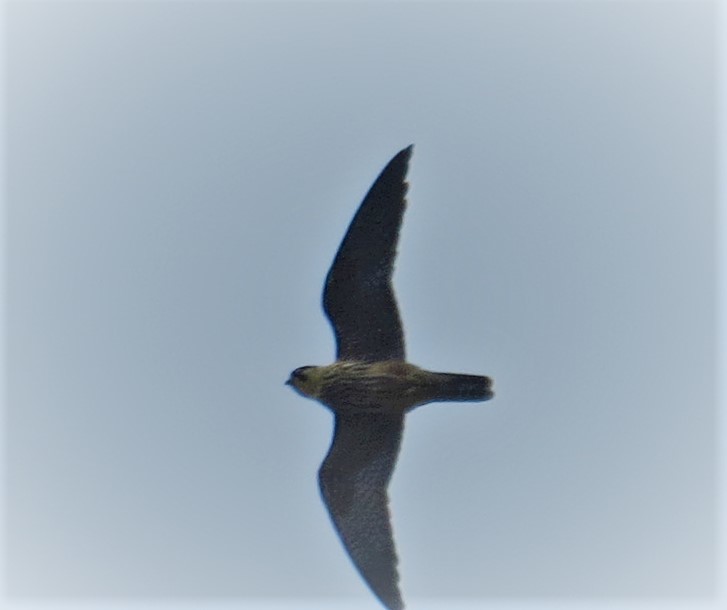
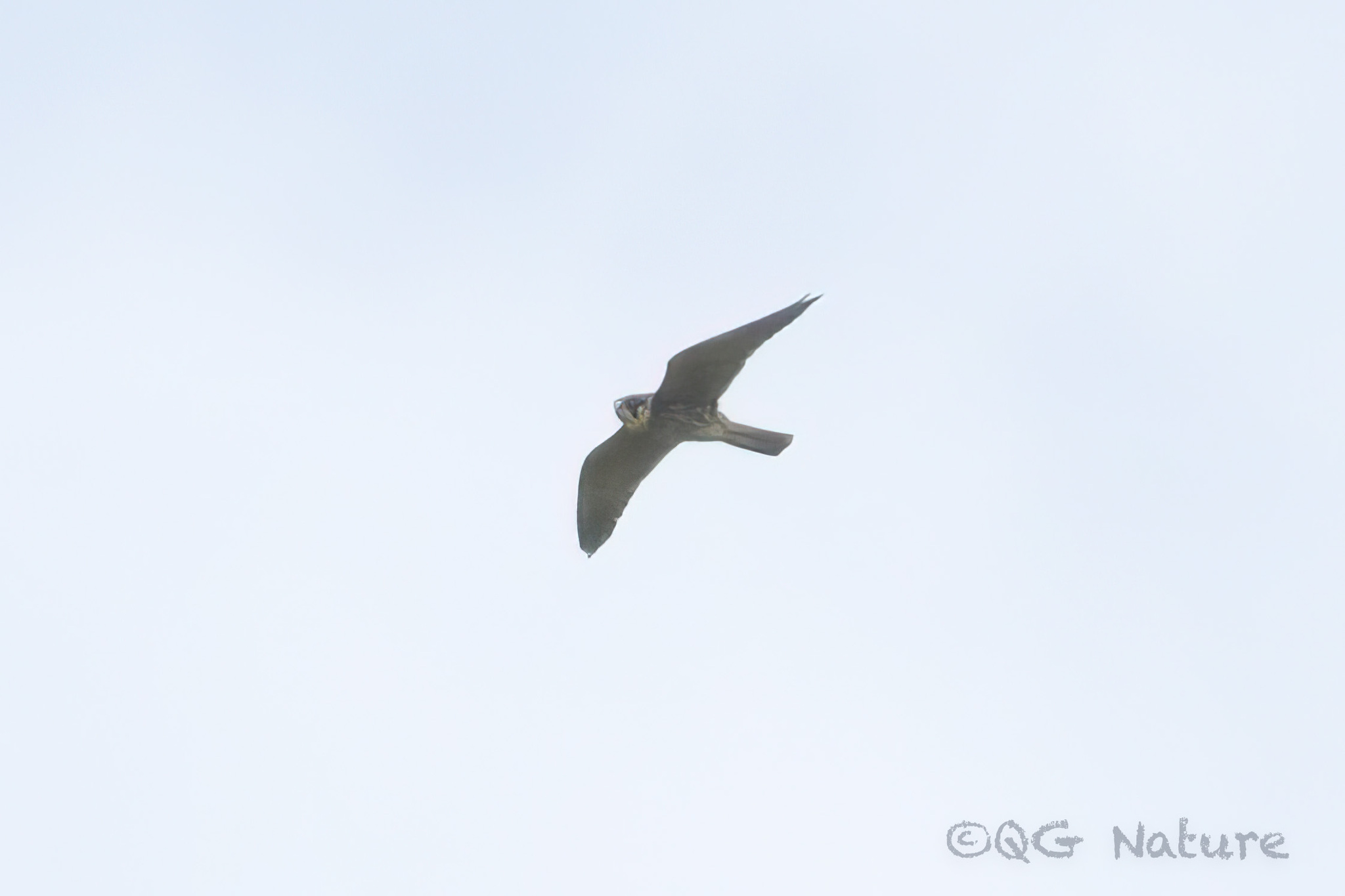
In flight, this falcon appears sickle-shaped with its long, pointed wings and square tail, often fooling observers into thinking they're watching a swift. The combination of slender body, pointed wings, and rapid wingbeats creates a distinctive silhouette. Compared to similar falcons, the unstreaked white throat and rufous thigh patch provide reliable identification marks. The pale underwing with dark streaking and the contrasting rufous undertail coverts become visible during gliding flights. Its agile, twisting pursuit of swifts and swallows is characteristic behavior that helps distinguish it from other falcon species.
Distribution & Habitat
This species breeds extensively across the Palearctic region, from Western Europe through Central Asia. The nominate subspecies is a long-distance migrant, traveling to sub-Saharan Africa and South Asia for the winter. The eastern subspecies (F.s. streichi) is mainly resident, occupying Myanmar through south China and northern Indochina. Vagrants occasionally reach North America, with documented sightings in Massachusetts, Washington, Alaska, Newfoundland, and British Columbia. The species has also been recorded as a rare visitor to Australia and Brazil. It favors open habitats including farmland, marshes, taiga, and savannah, typically occurring in lowlands with scattered woodland patches.
Behavior & Ecology
This falcon is a masterful aerial hunter, capturing large insects like dragonflies which it transfers from talons to beak while continuing to fly in slow circles. Its speed enables it to pursue swallows and swifts with remarkable success, and birdwatchers often hear the characteristic alarm calls of barn swallows and house martins when a hobby is nearby. It harasses swallow flocks during roosting dispersal. Non-breeding birds are crepuscular, doing most hunting in early morning and evening hours. Migrating birds move in small groups. Nesting occurs in abandoned crow nests in hedgerow trees or woodland edges, with 2-4 eggs incubated over 28 days by both parents, though the female contributes more. In falconry, this bold species has been trained to hunt quails, larks, hoopoes, and drongos.
Conservation
The species is currently listed as Least Concern by the IUCN, reflecting its extensive range and relatively stable population. While specific population numbers are not provided, the species is described as widespread across its breeding territories. The main threats include habitat loss through agricultural intensification and reduction of available prey species. Pesticide use may indirectly impact populations by reducing insect availability. Conservation efforts focus on protecting woodland edge habitats and maintaining traditional landscapes that support the mixed farmland and woodland mosaic this species requires.
Culture
The hobby holds a unique place in popular culture as the namesake of the Subbuteo table football games company. The story goes that the creator, an ornithologist, was refused permission to register 'Hobby' as a trademark, so the company adopted the Latin species name Subbuteo instead. The English name derives from Old French 'hobé' or ' hobet'. Throughout history, this bold and courageous falcon has been valued in falconry for its spirit and hunting ability, trained to pursue various bird species including quails, larks, and hoopoes.
Source: Wikipedia · CC BY-SA 3.0
Taxonomy
- Order
- Falconiformes
- Family
- Falconidae
- Genus
- Falco
- eBird Code
- eurhob
Subspecies (2)
-
Falco subbuteo streichi
southern and eastern China to Myanmar and northern Indochina
-
Falco subbuteo subbuteo
breeds Palearctic; winters to southern Africa, southern Eurasia, and Greater Sundas
Data Sources
Species description from Wikipedia, licensed under CC BY-SA 3.0.
Bird images and sounds sourced from GBIF, contributed by citizen scientists worldwide under Creative Commons licenses.
Taxonomy data from AviList 2025.