Saker Falcon
Falco cherrug
猎隼
Introduction
A large falcon species (Falco cherrug) belonging to the hierofalcon complex. It breeds from Central Europe eastwards across the Palearctic to Manchuria. This raptor of open grasslands prefers areas with some trees or cliffs. Known as the second fastest bird in level flight, capable of reaching 150 km/h, it is a partial migrant—European juveniles migrate while adults are mostly resident, with migratory populations wintering in the Sahel region or Qinghai-Tibet Plateau. BirdLife International categorizes the species as endangered due to rapid population decline.
Description
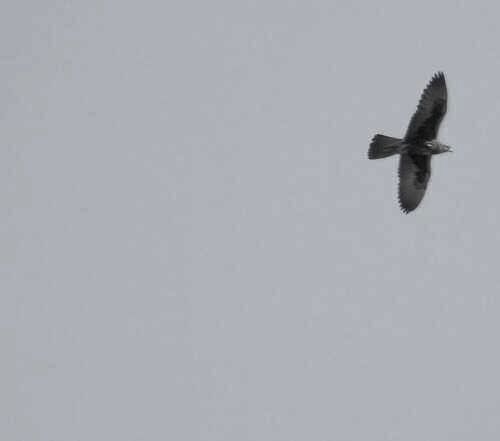
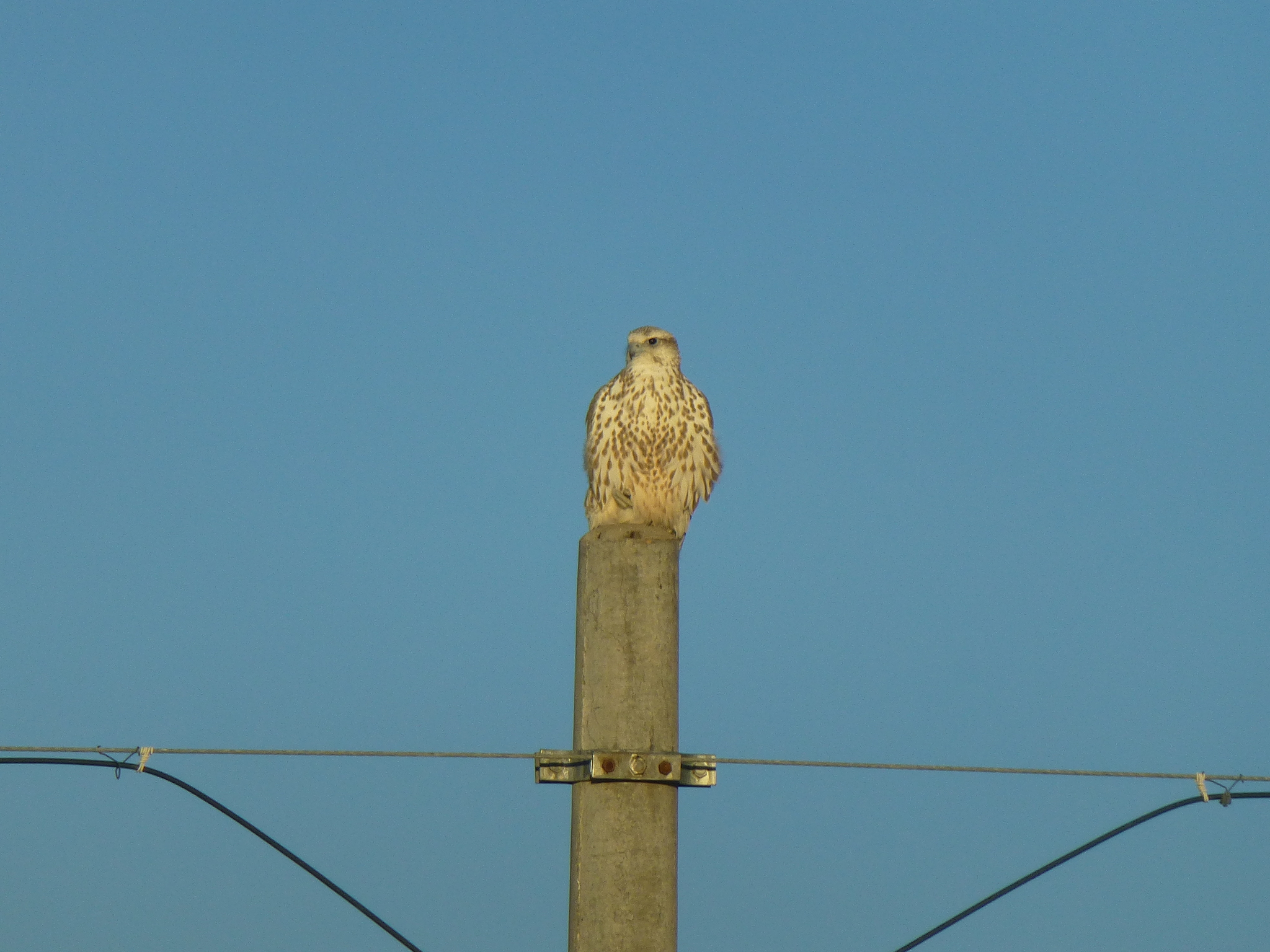
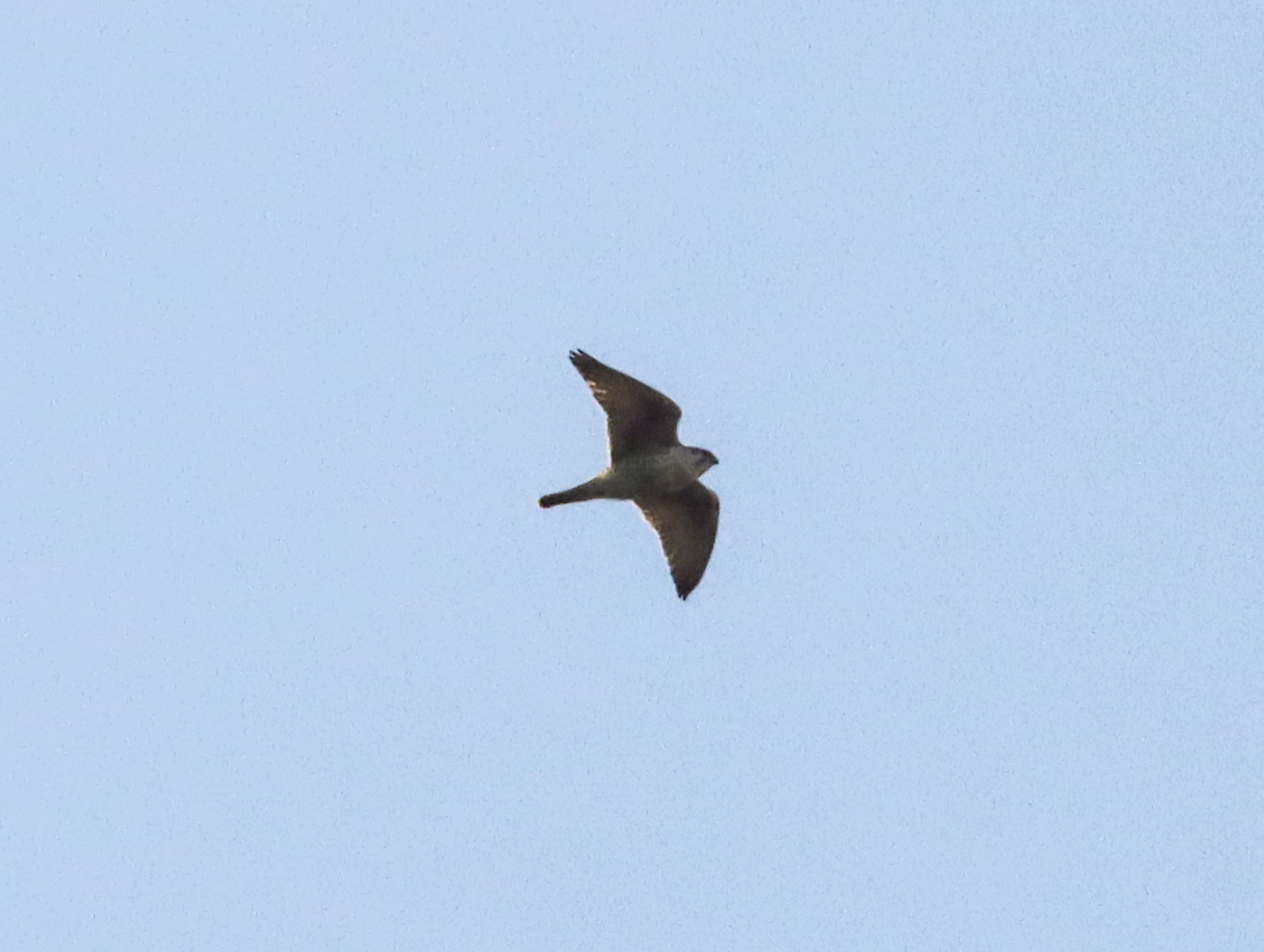
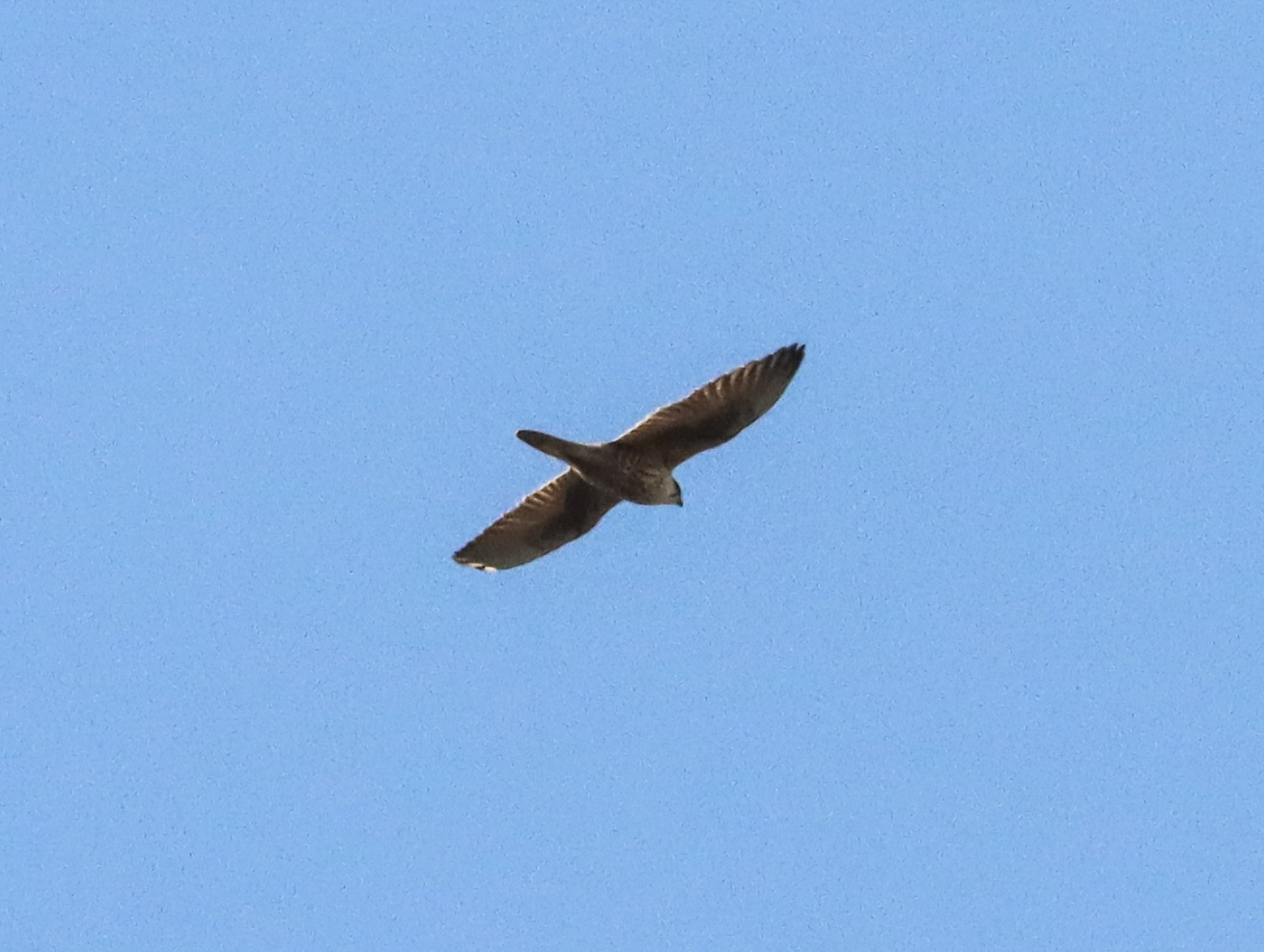
A large hierofalcon measuring 45–57 cm in length with a wingspan of 97–126 cm. Males weigh 730–990 g and females 970–1,300 g. The plumage is variable; adults resemble a larger, browner gyrfalcon and are larger and more heavily built than the lanner falcon. Males and females are similar except for size. Young birds are darker and more heavily streaked. The call is a sharp kiy-ee or repeated kyak-kyak-kyak.
Identification
Distinguished from the gyrfalcon by browner coloration and slightly smaller size. Compared to the lanner falcon, it is larger and more heavily built. Variable plumage can make identification challenging, but the combination of large size, brownish coloration, and horizontal hunting flight (rather than stooping) are characteristic field marks.
Distribution & Habitat
Breeds from Central Europe across the Palearctic to Manchuria. Inhabits open grasslands with trees or cliffs, and nests on cliffs or in abandoned stick nests. European and West Asian populations migrate to the Sahel region, crossing the Middle East, Arabian Peninsula, and Pakistan. Eastern populations from the Altai Mountains winter on the Qinghai-Tibet Plateau.
Behavior & Ecology
Hunts primarily by horizontal pursuit rather than stooping from height. Diet consists mainly of rodents and birds; in Europe, ground squirrels and feral pigeons are common prey. Builds no nest of its own, instead using abandoned stick nests in trees or cliff ledges previously used by storks, ravens, or buzzards. Lays 3–6 eggs. Saker nests support a species-rich assemblage of commensal insects.
Conservation
Classified as Endangered by BirdLife International due to rapid population decline, particularly in Central Asian breeding grounds. The global population was estimated at 7,200–8,800 mature individuals in 2004. Main threats include illegal trapping for the falconry trade (Kazakhstan loses up to 1,000 birds annually), habitat loss, and susceptibility to avian influenza. Captive breeding programs exist in the United States, Canada, and Europe. Hungary maintains a strongly protected and relatively abundant population.
Culture
The national bird of Hungary, Mongolia, United Arab Emirates, Saudi Arabia, Kuwait, Qatar, and Yemen. In Hungarian mythology, the Turul was probably a saker falcon (kerecsensólyom). Known as Hur ('Free-bird') by Arabs, it has been integral to Arab heritage and culture for over 9,000 years. Used in falconry since ancient times in the Arabian Peninsula and remains highly regarded for hunting medium to large game birds.
Source: Wikipedia · CC BY-SA 3.0
Taxonomy
- Order
- Falconiformes
- Family
- Falconidae
- Genus
- Falco
- eBird Code
- sakfal1
Subspecies (4)
-
Falco cherrug cherrug
breeds east-central Europe eastward to northern Kazakhstan and south-central Siberia, in the south through Türkiye and Iran; winters from southern Europe and northern and eastern Africa (in Rift Valley to south-central Kenya) eastward in southwestern Asia to northern Pakistan
-
Falco cherrug coatsi
breeds in plains of southwestern Kazakhstan and western Turkmenistan to eastern Uzbekistan and southern Kazakhstan
-
Falco cherrug hendersoni
Pamir Mountains (eastern Tajikistan) eastward to the Tibetan Plateau
-
Falco cherrug milvipes
breeds mountains of central Tien Shan and Altai Mountains east through Mongolia and Inner Mongolia (northeastern China), south from Transbaikalia through Ladakh (northwestern India) to central China; winters from Iran eastward to Nepal, northern India, and southern and central China (including Tibet)
Data Sources
Species description from Wikipedia, licensed under CC BY-SA 3.0.
Bird images and sounds sourced from GBIF, contributed by citizen scientists worldwide under Creative Commons licenses.
Taxonomy data from AviList 2025.