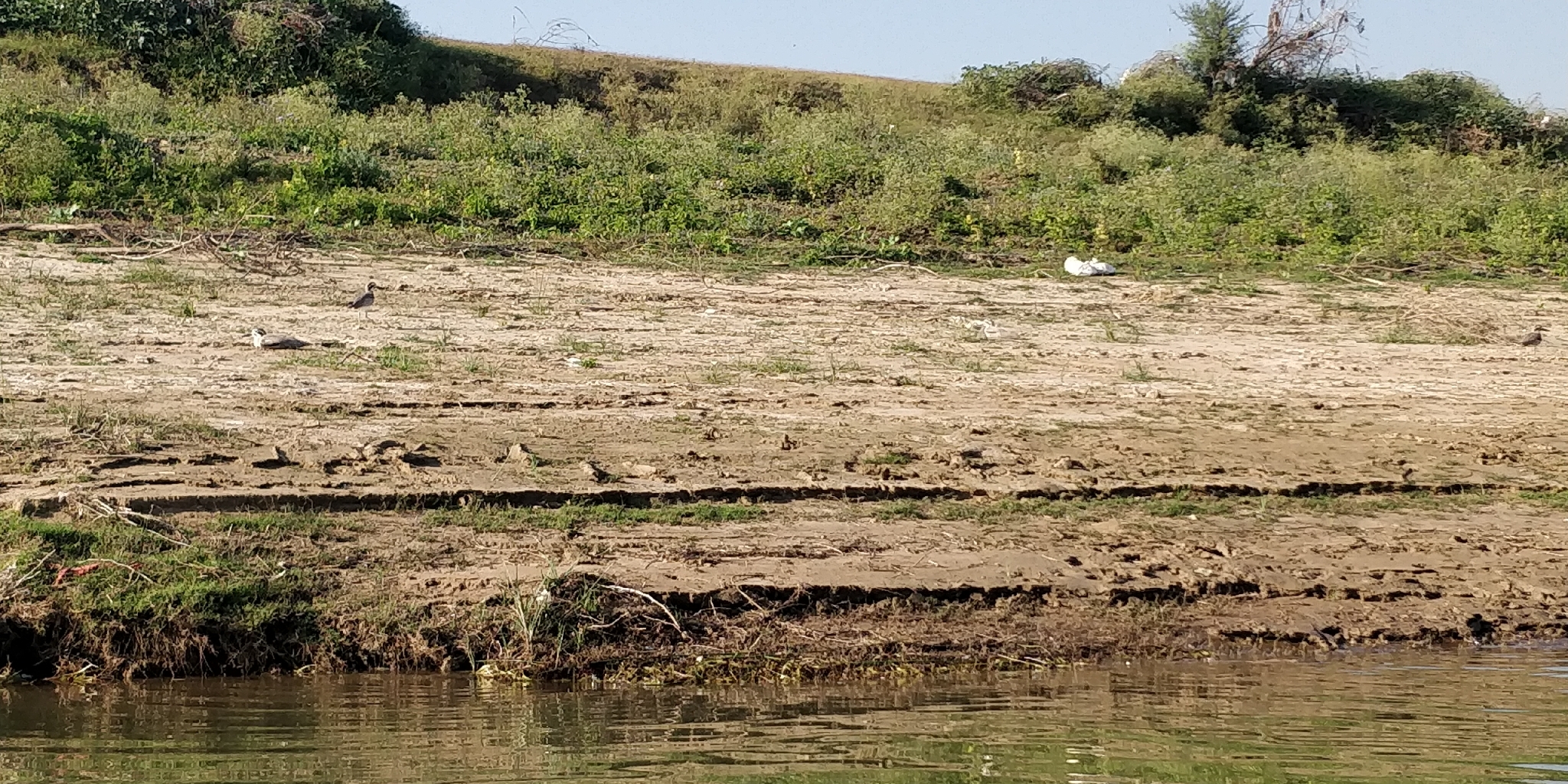
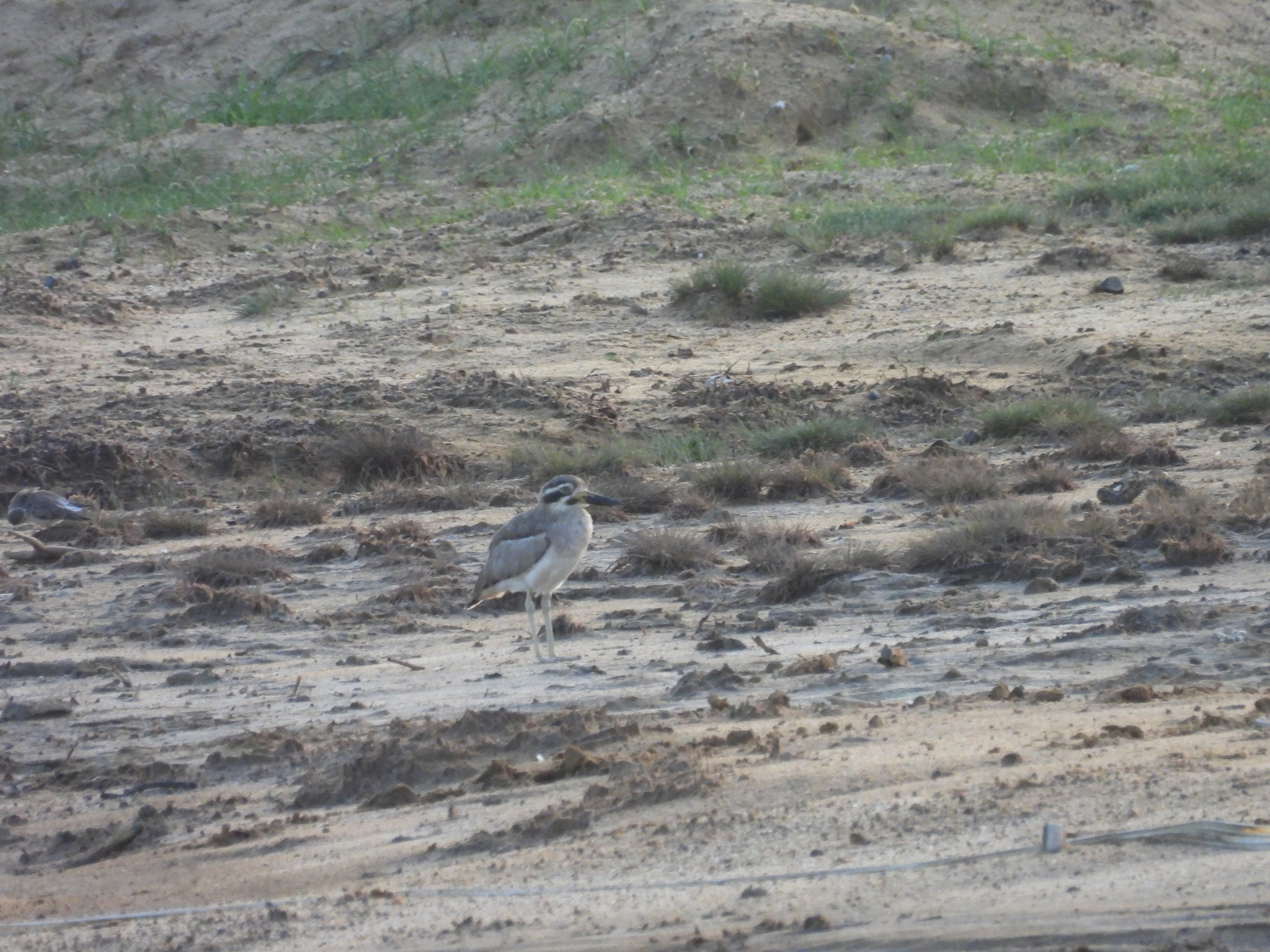
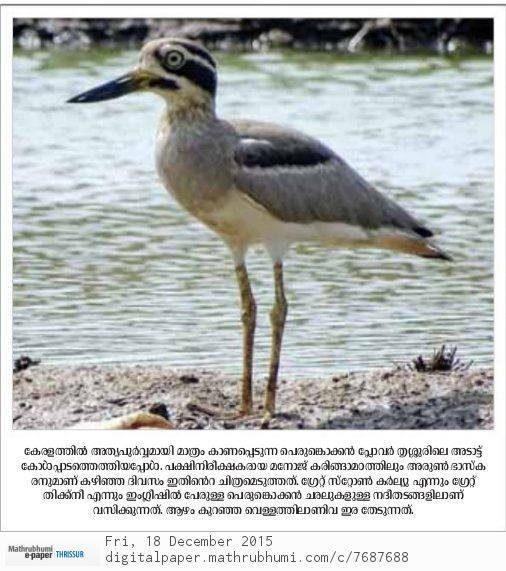
Great Stone-curlew
Esacus recurvirostris
大石鸻
Description
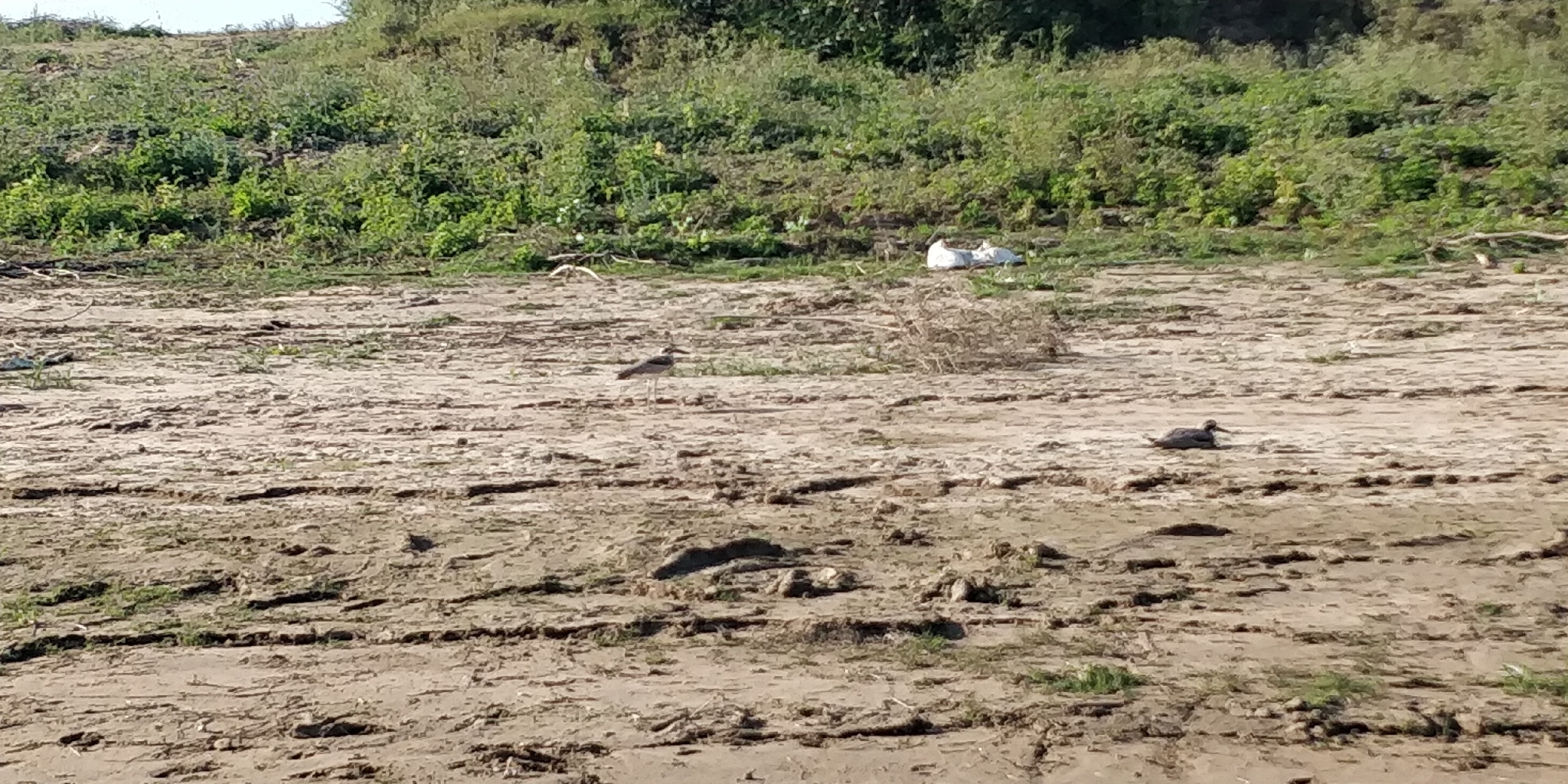
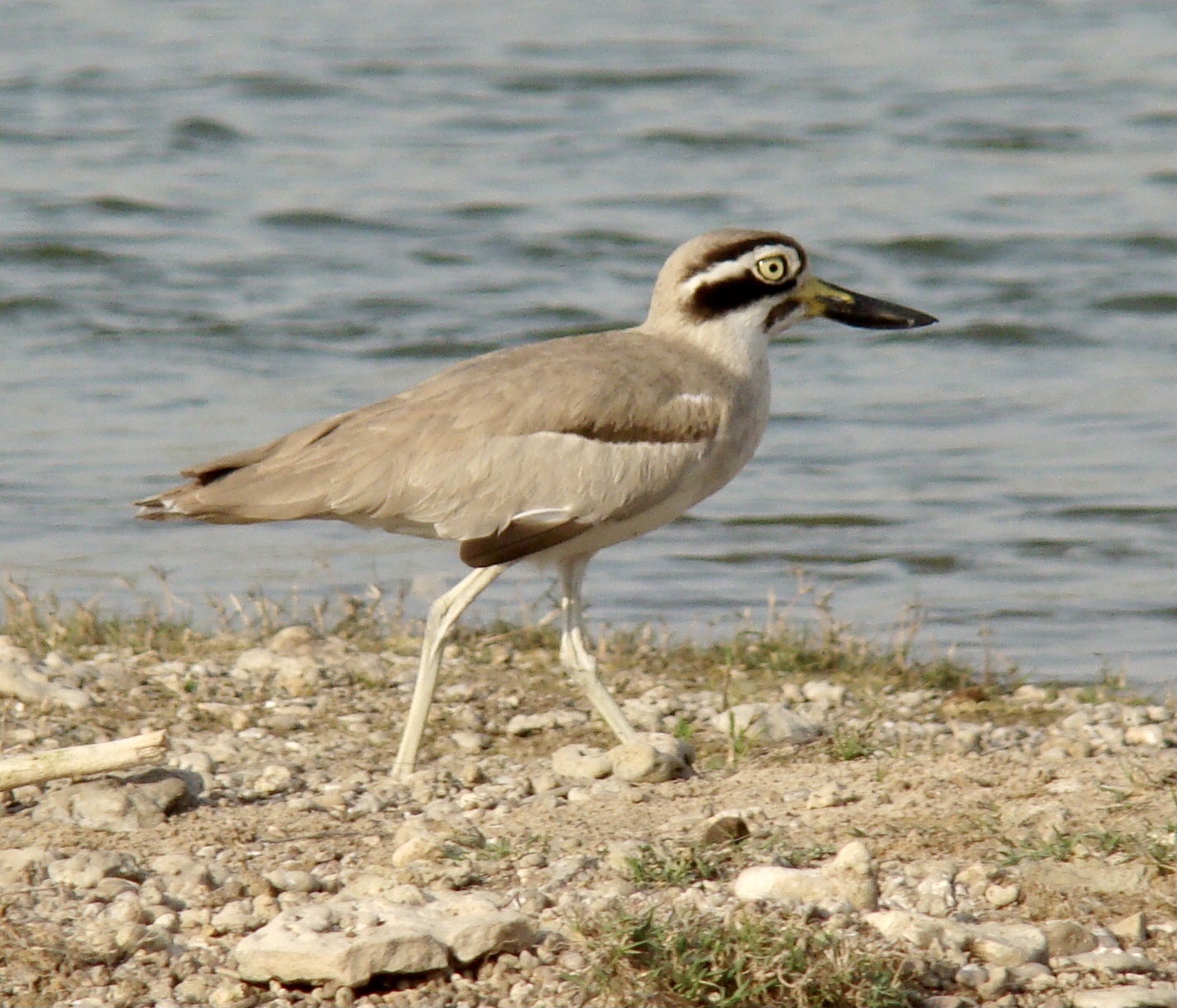
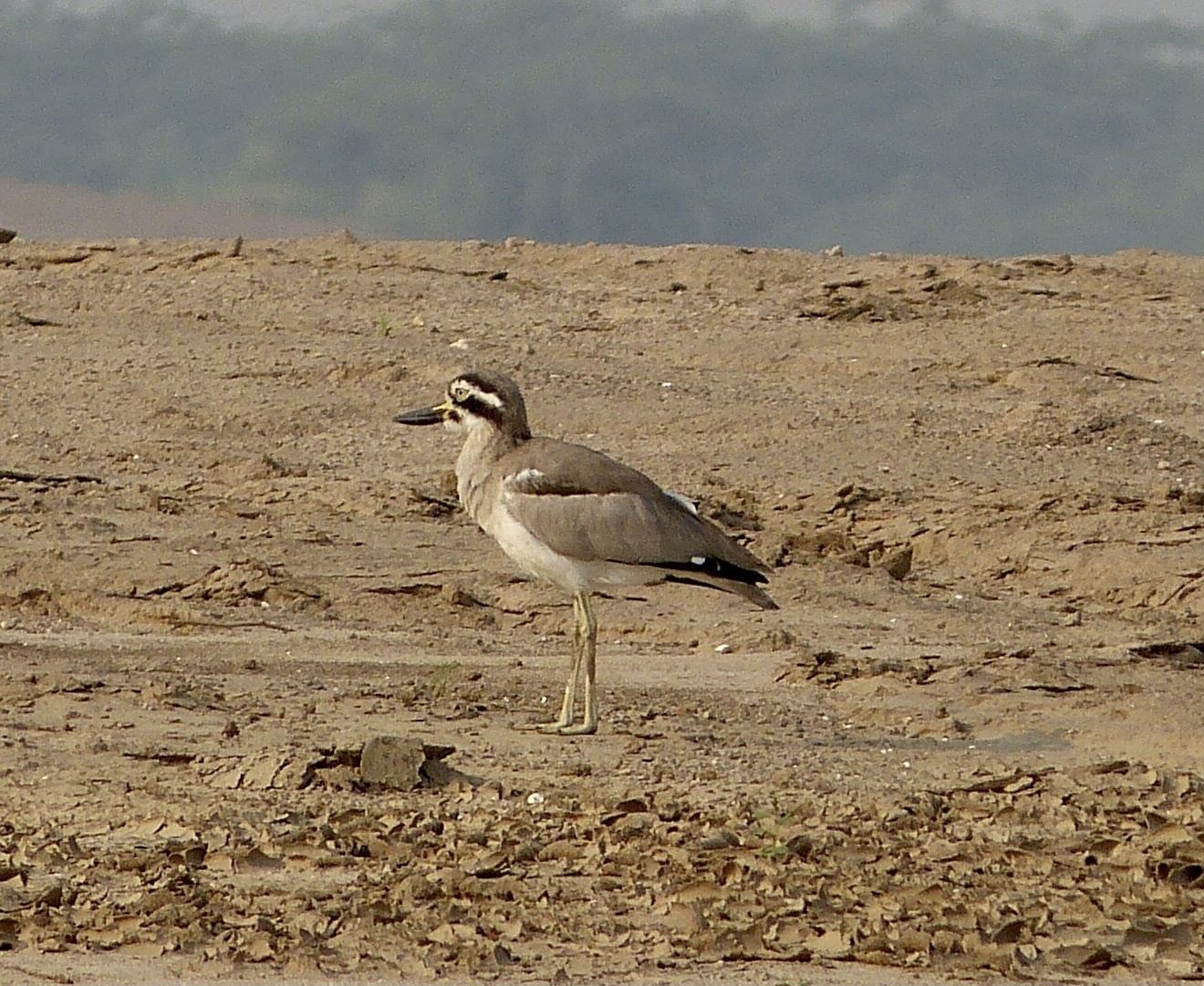
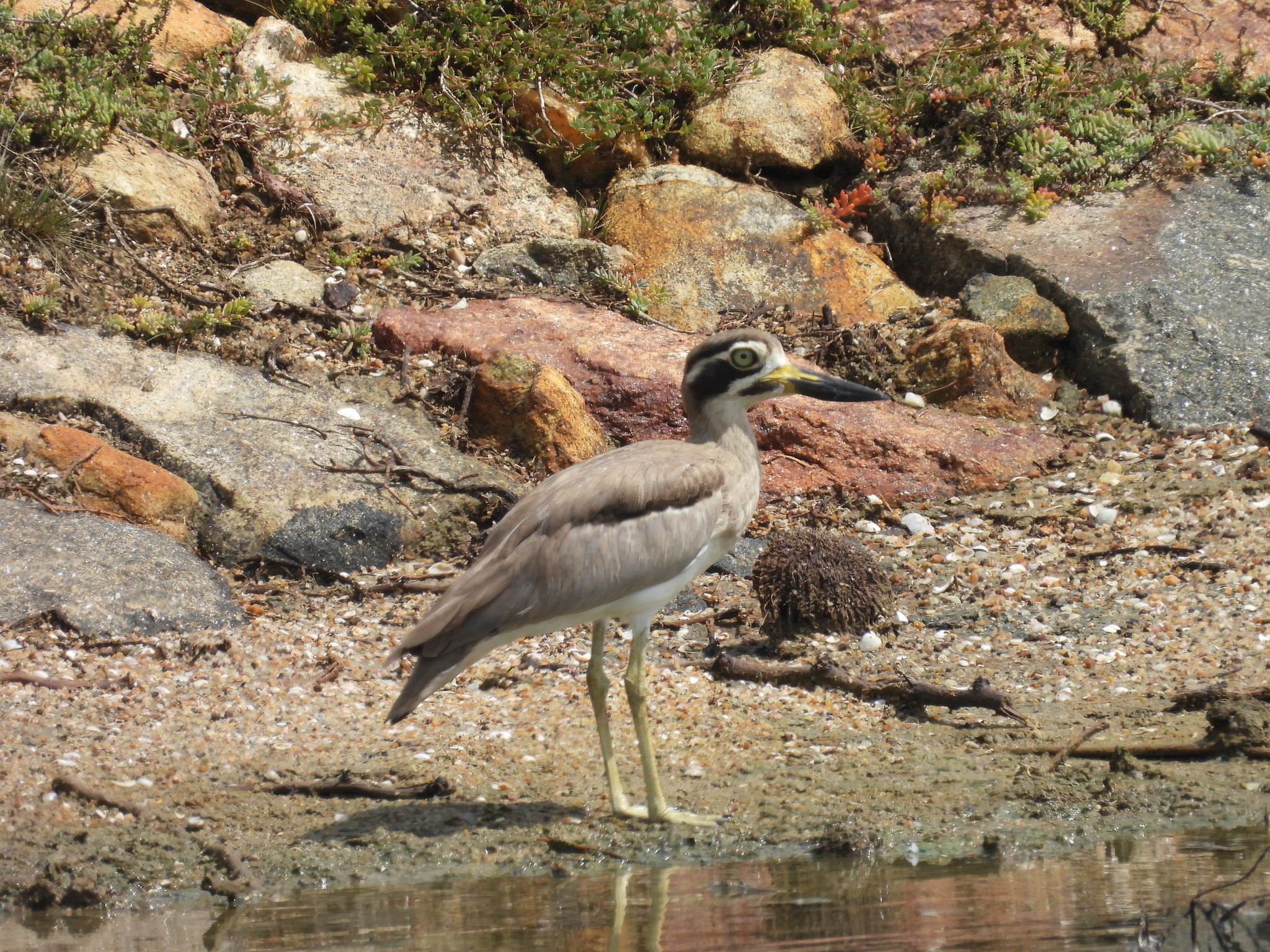
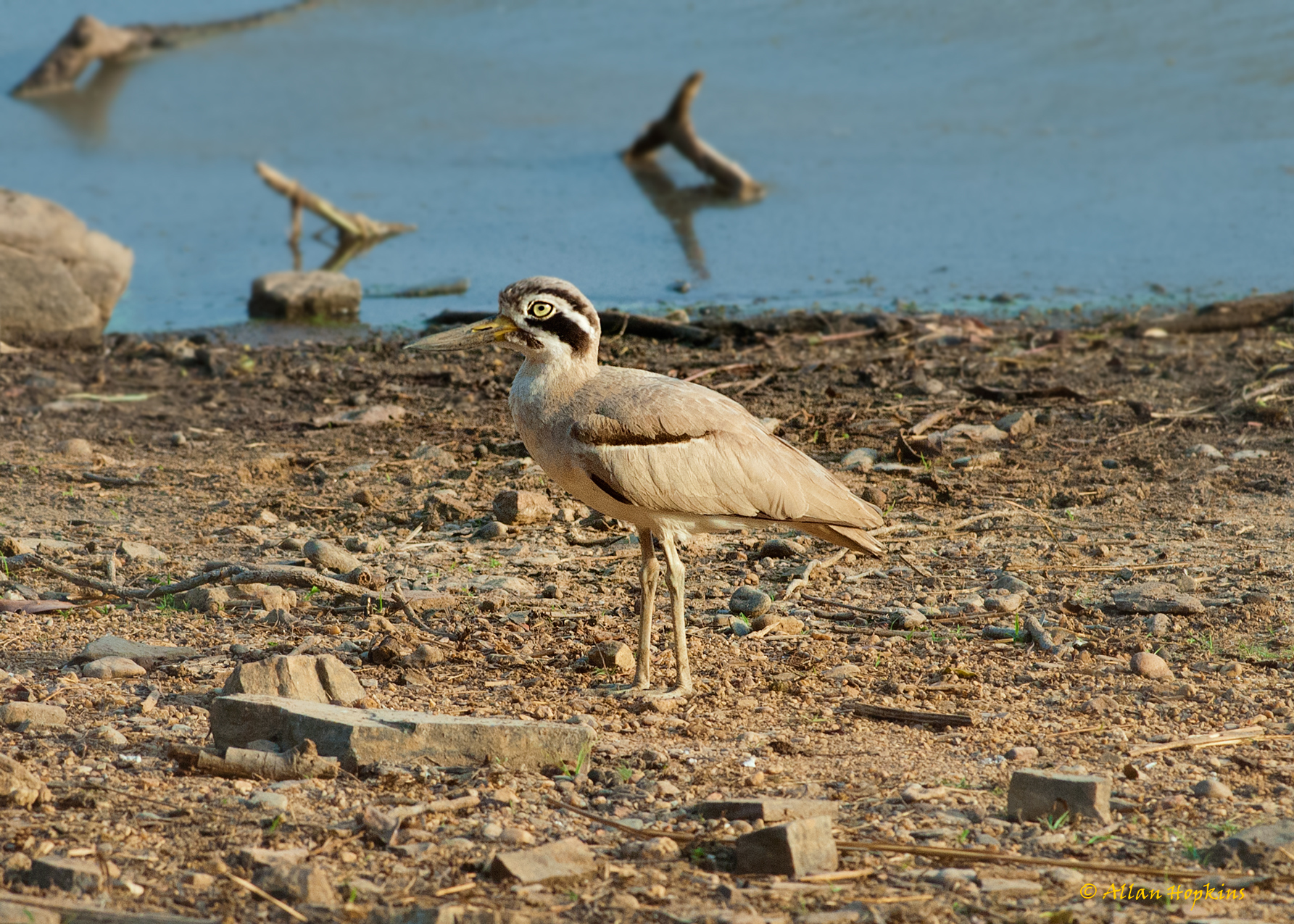
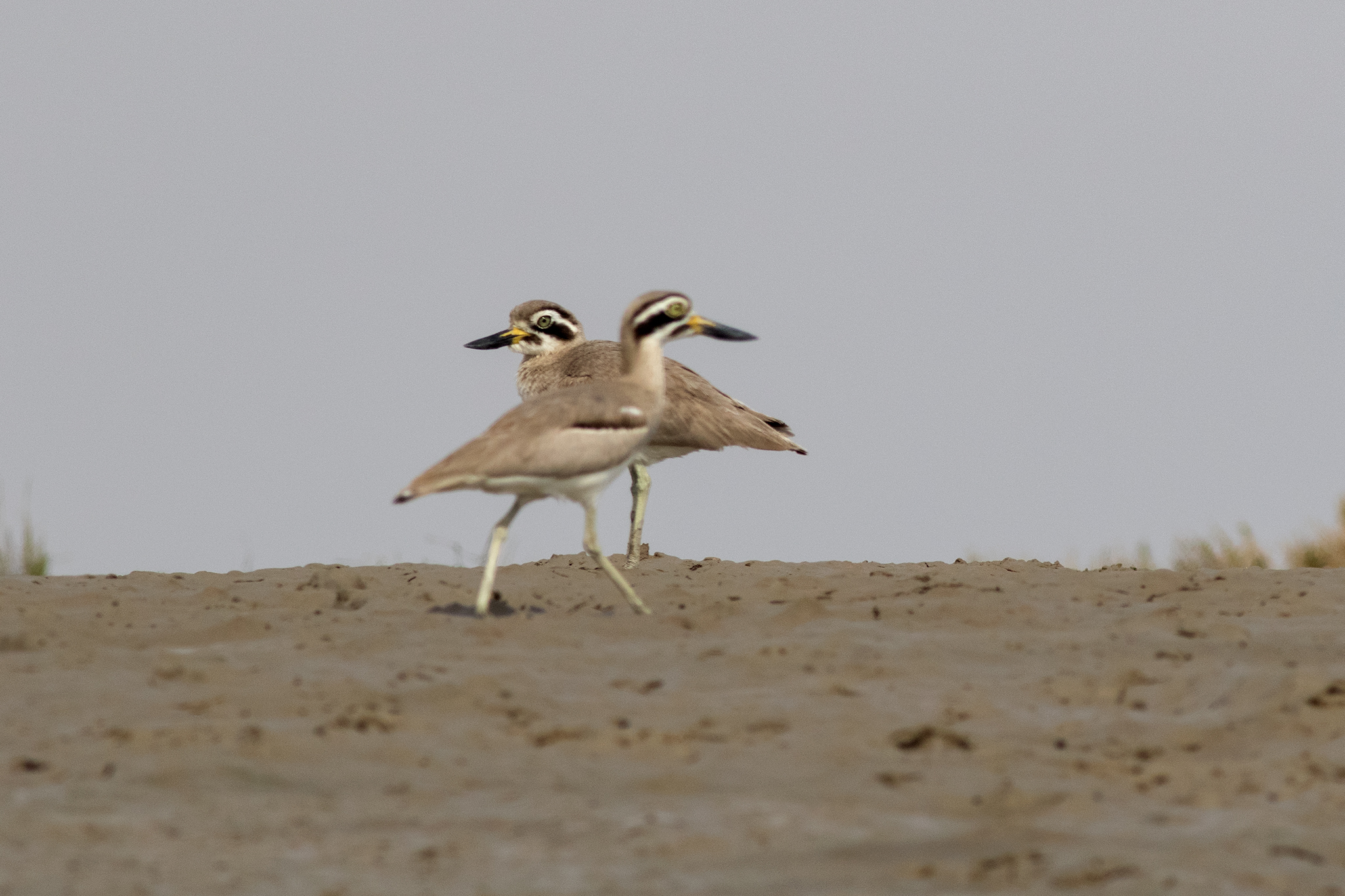
A large wader measuring 49-55 cm in length with a distinctive massive 7 cm bill. The bill is black with a yellow base and features a sharp angle on the lower mandible, creating an upturned appearance. Plumage consists of unstreaked grey-brown upperparts and breast, with whitish underparts. The face displays a striking black and white pattern. The eyes are bright yellow and the legs are a duller greenish-yellow. In flight, the upperwing shows black and white flight feathers while the underwing is mainly white. The sexes are similar in appearance, though juveniles are slightly paler than adults.
Identification
The great stone-curlew can be identified by its exceptionally large size and massive upturned bill, which distinguishes it from other stone-curlews. Its unstreaked grey-brown plumage combined with the striking black and white facial pattern and bright yellow eyes are key field marks. The yellow-based black bill and greenish-yellow legs aid identification.
Distribution & Habitat
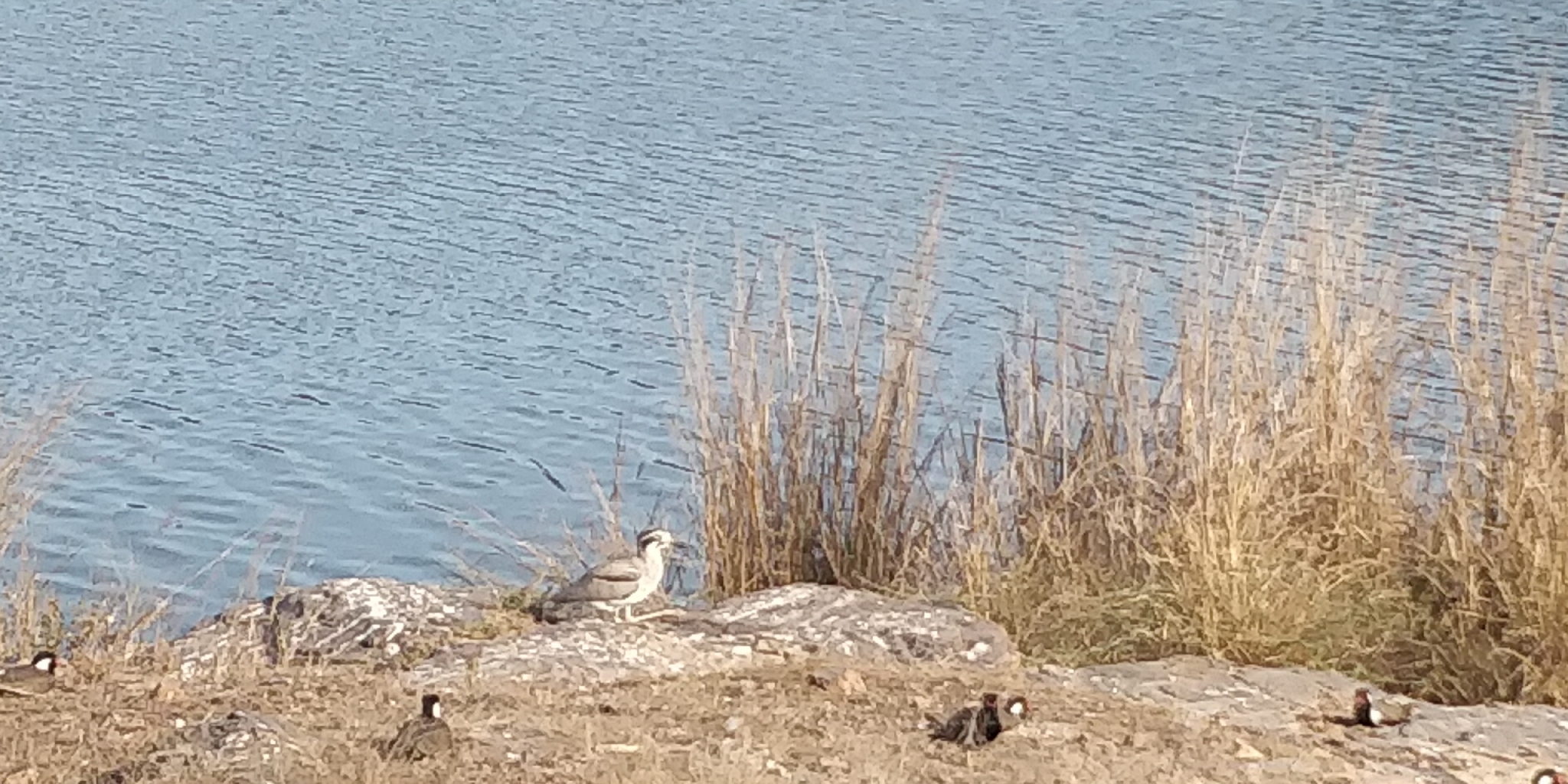
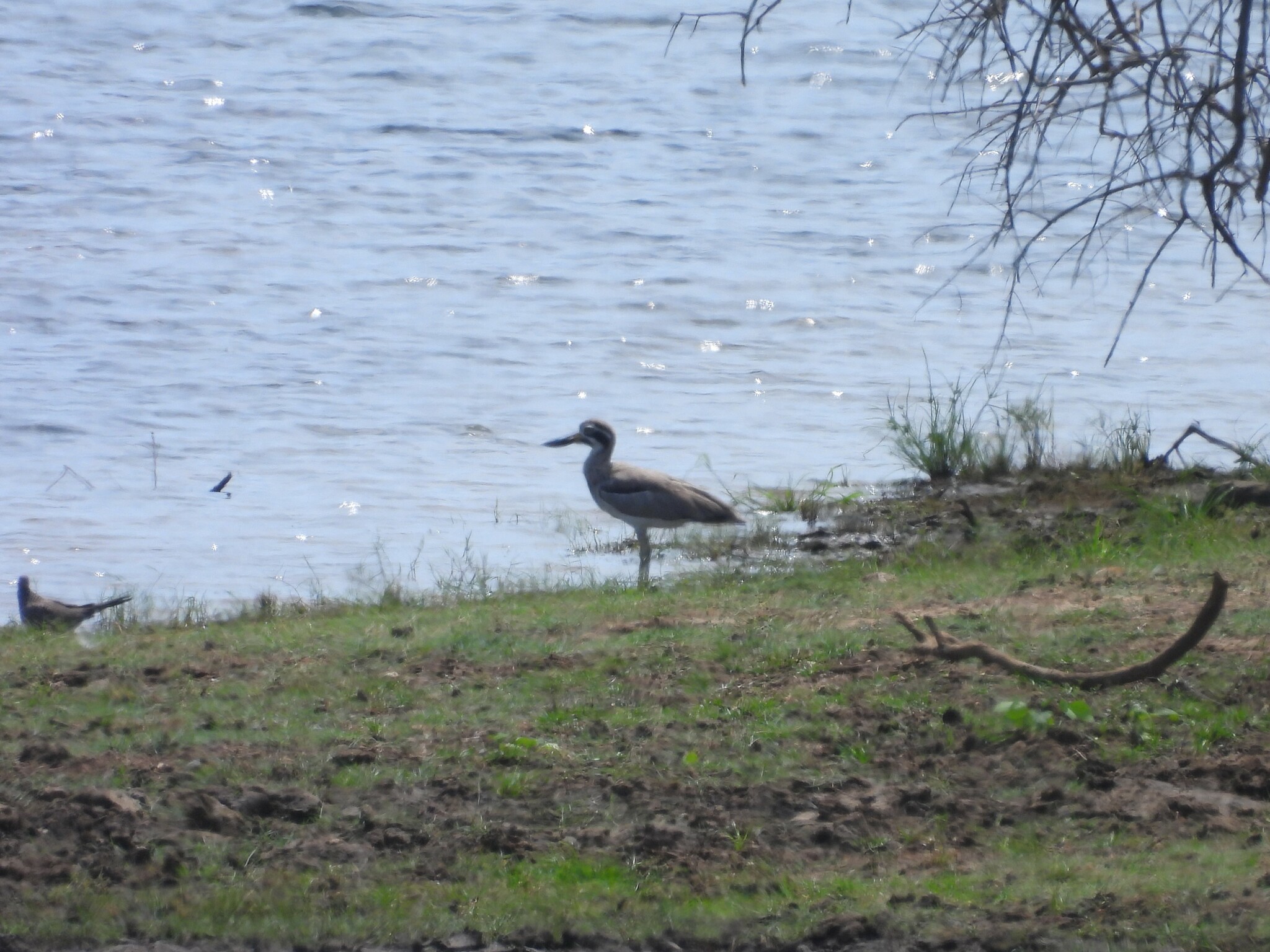
Found across tropical southern Asia as a resident breeder. Its range extends from India, Pakistan, Sri Lanka, and Bangladesh through South-east Asia. The species inhabits gravel banks along rivers and large lakes as well as coastal beaches.
Behavior & Ecology
Mainly nocturnal or crepuscular but frequently forages during the day. It moves slowly and deliberately with occasional short runs. This wary bird typically flies away from observers using powerful, stiff wingbeats. Vocalizations consist of a wailing whistle given mainly at night. Diet includes crabs, large insects, and other animal prey. Breeding involves laying a single egg in a bare scrape on open shingle.
Source: Wikipedia · CC BY-SA 3.0
Taxonomy
- Order
- Charadriiformes
- Family
- Burhinidae
- Genus
- Esacus
- eBird Code
- grtkne1
Distribution
estuaries of southern Iran; riverine systems of Indus Valley (central Pakistan), sub-Himalayan India southward to Sri Lanka and eastward to northern Thailand, northern Cambodia, and Vietnam
Data Sources
Species description from Wikipedia, licensed under CC BY-SA 3.0.
Bird images and sounds sourced from GBIF, contributed by citizen scientists worldwide under Creative Commons licenses.
Taxonomy data from AviList 2025.