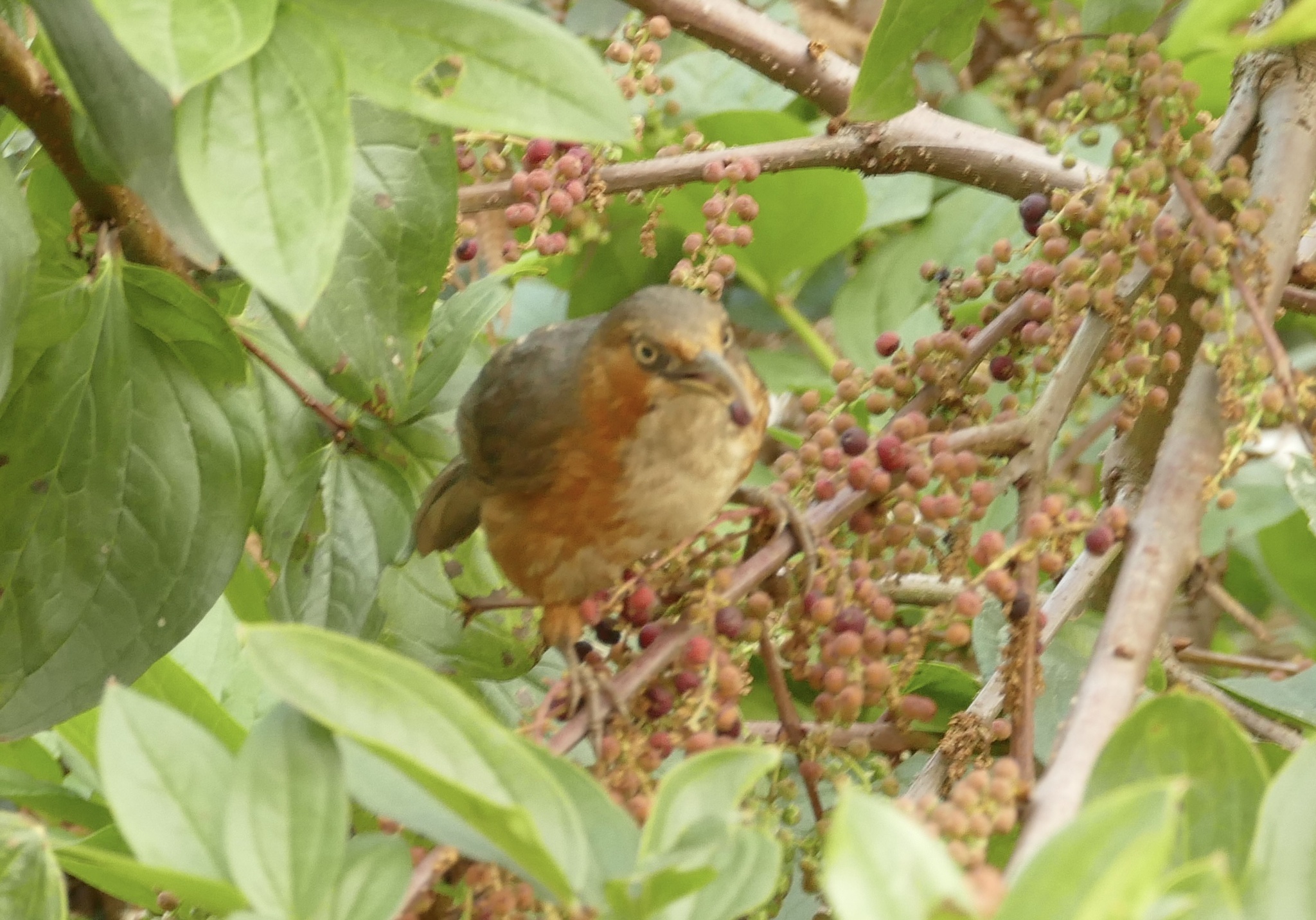
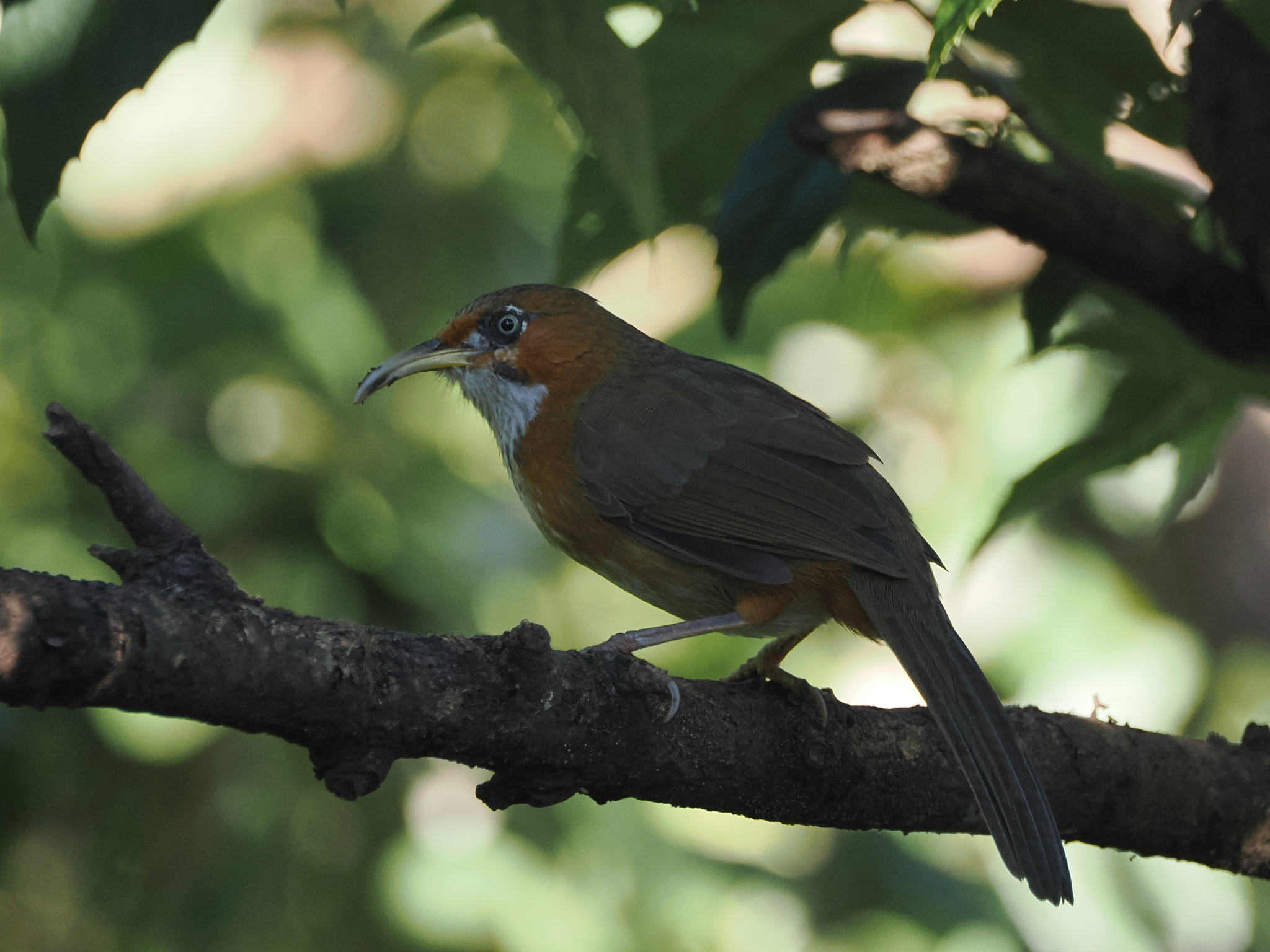
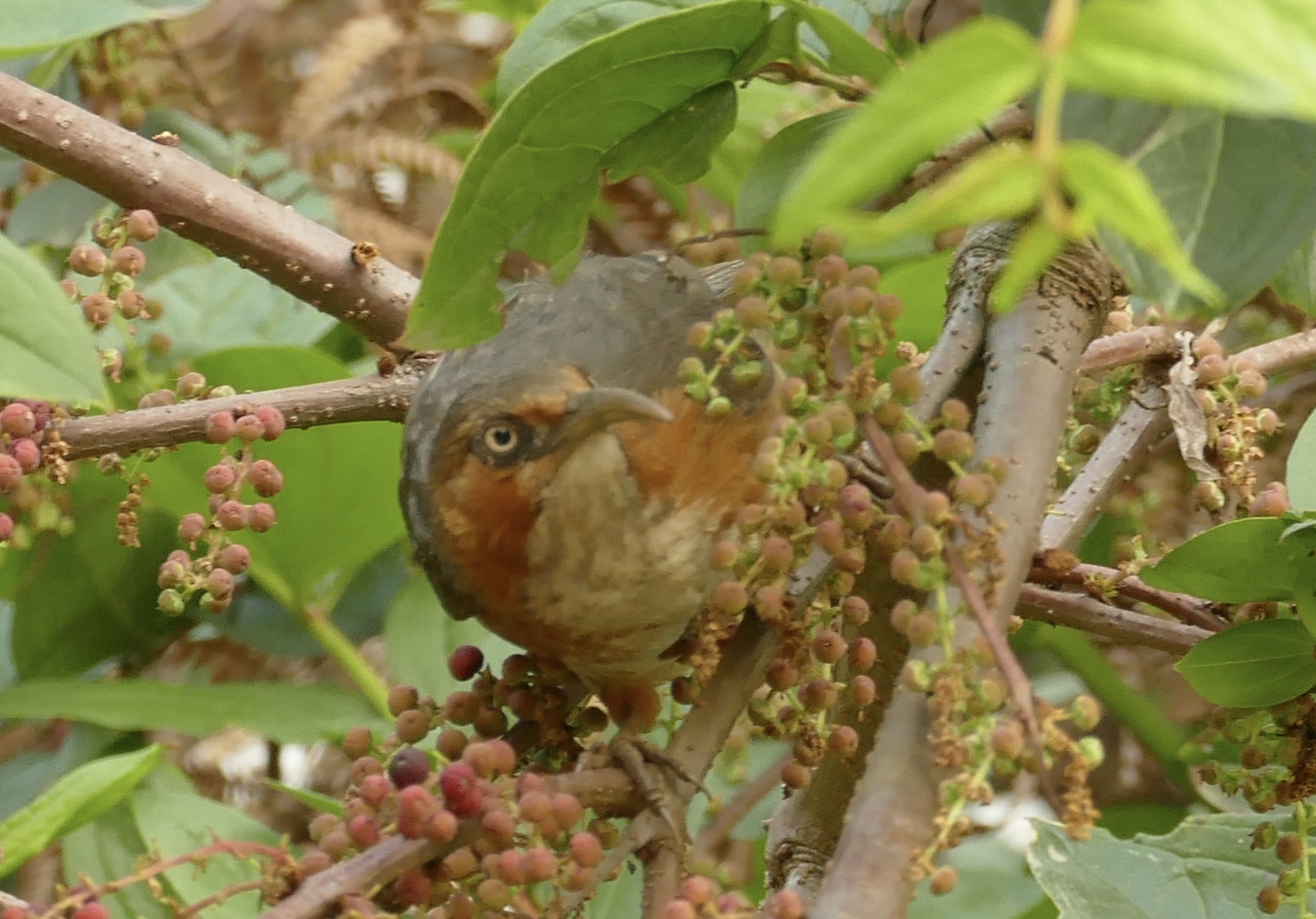
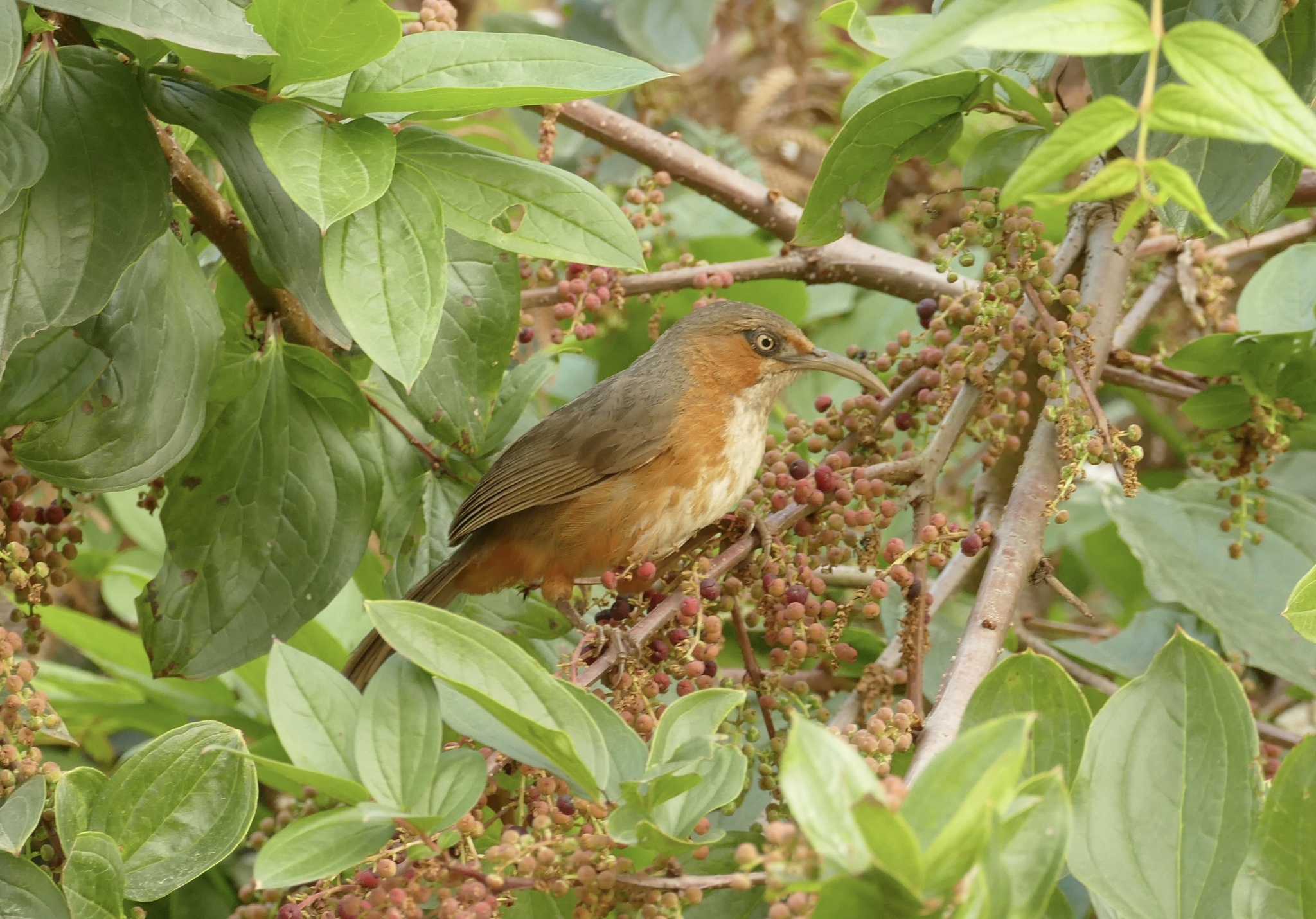
Rusty-cheeked Scimitar Babbler
Erythrogenys erythrogenys
锈脸钩嘴鹛
Introduction
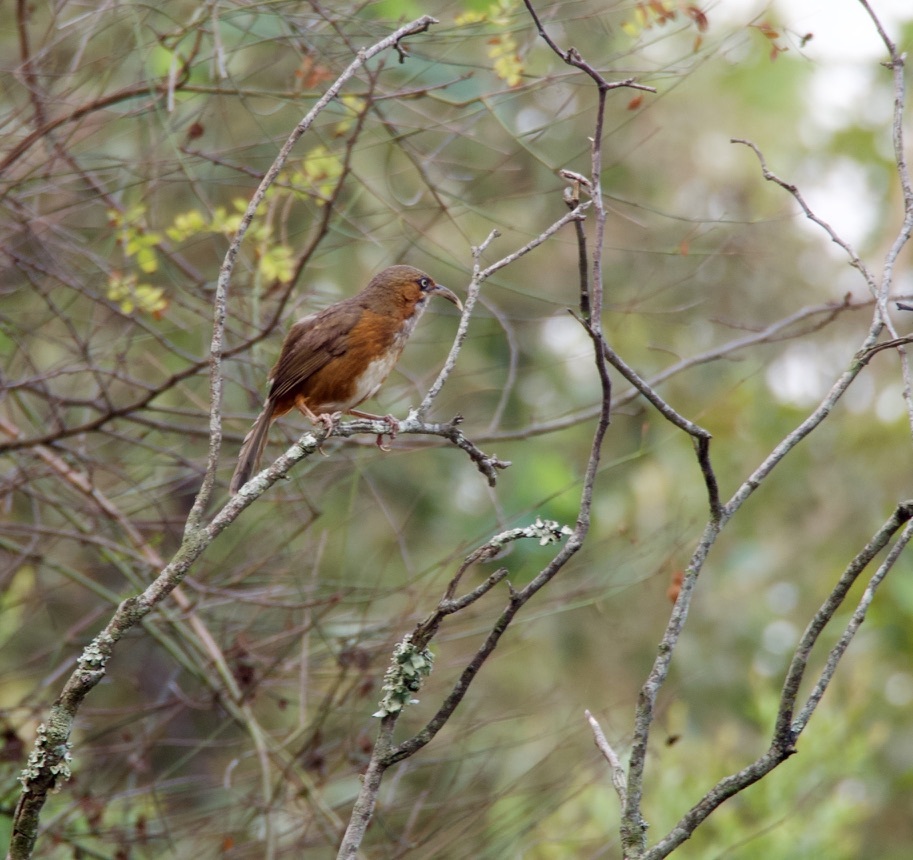
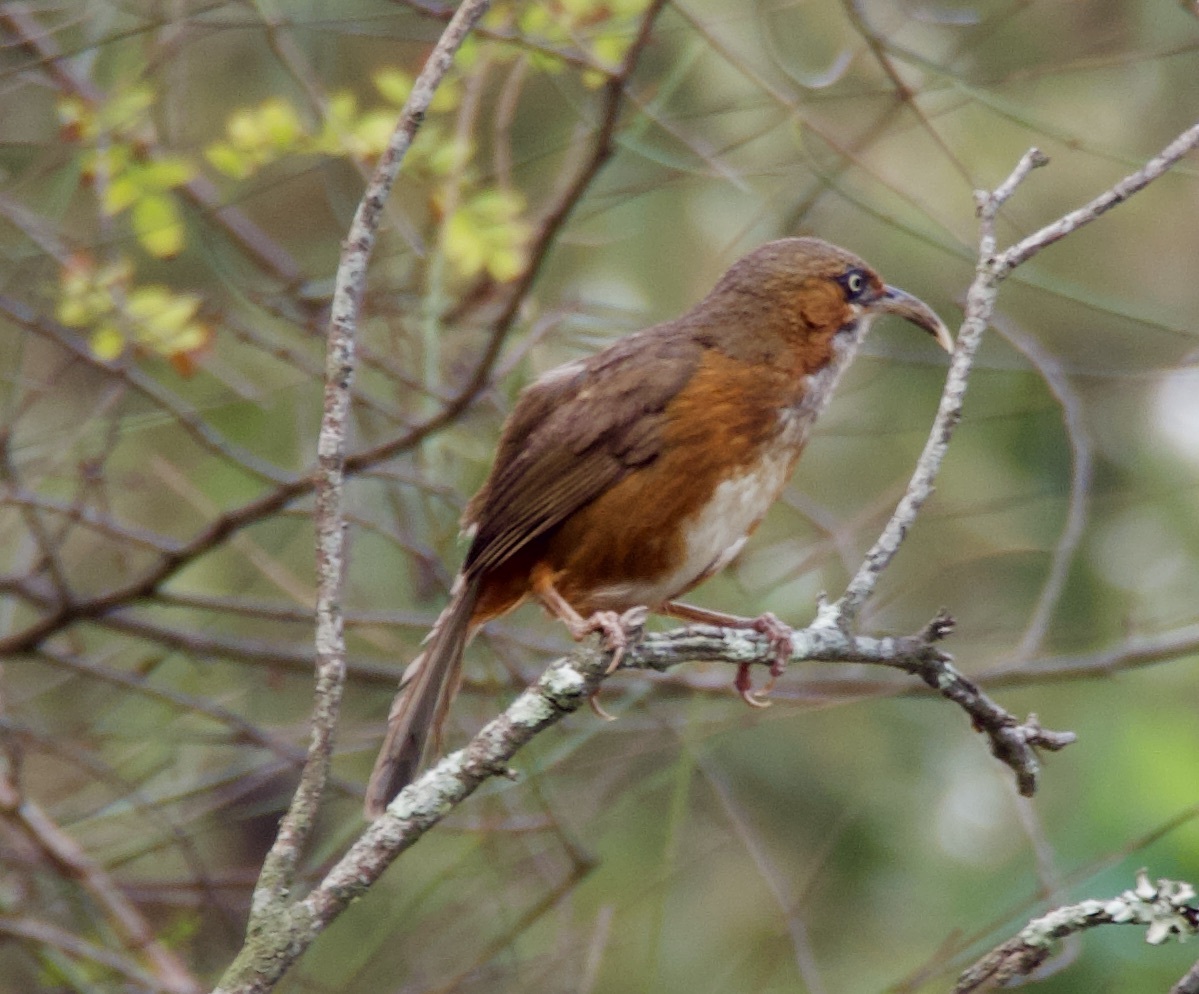
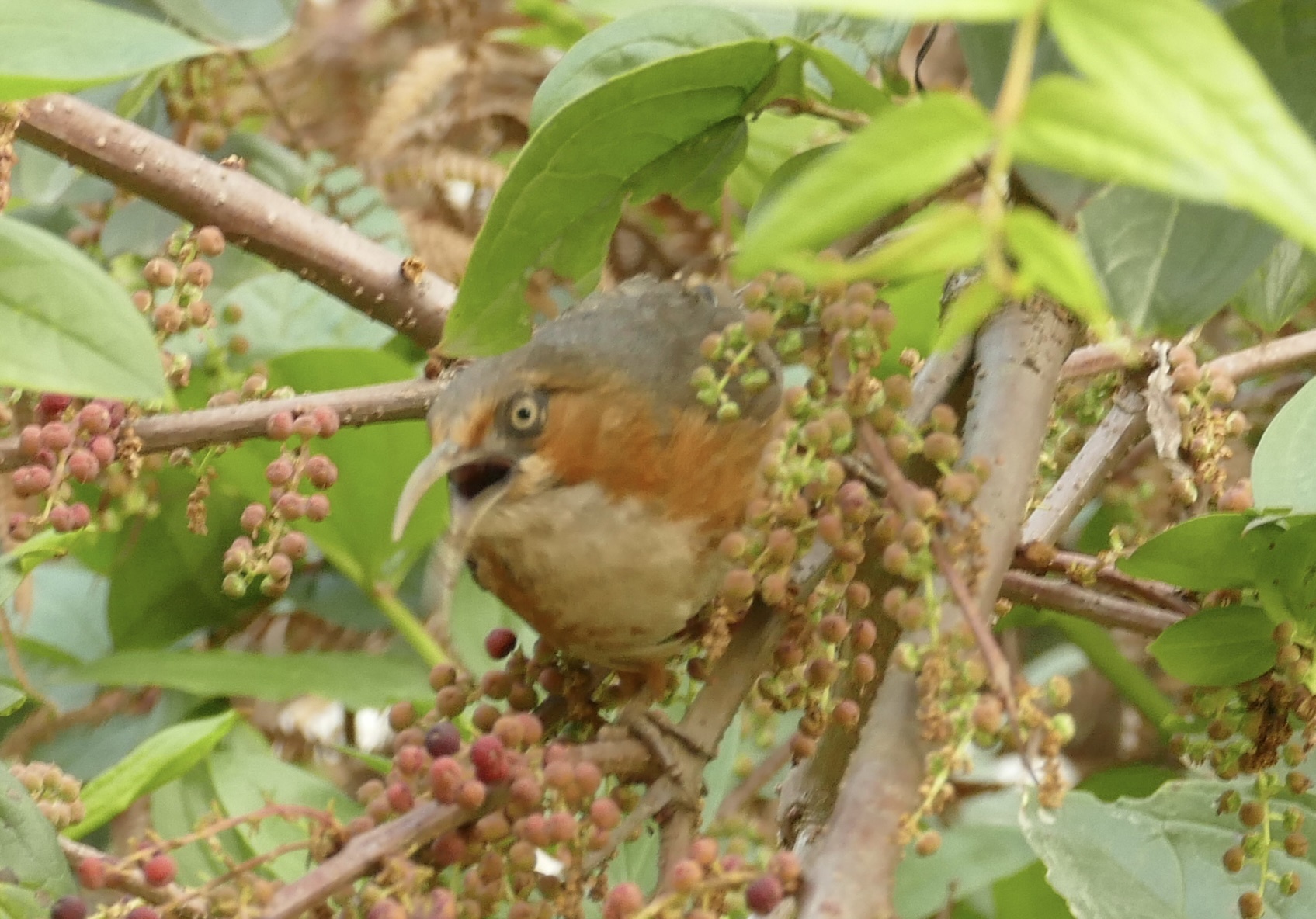
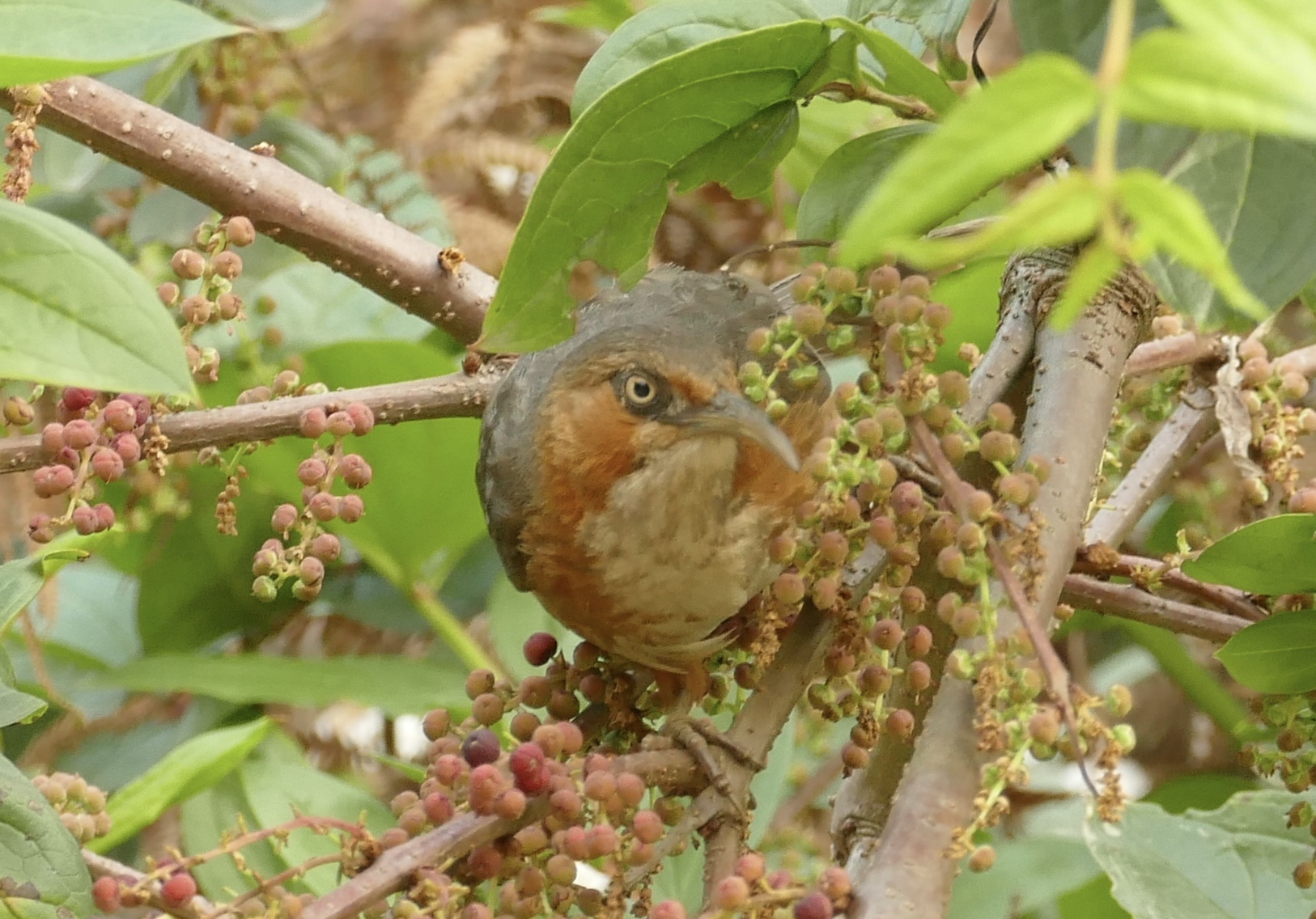
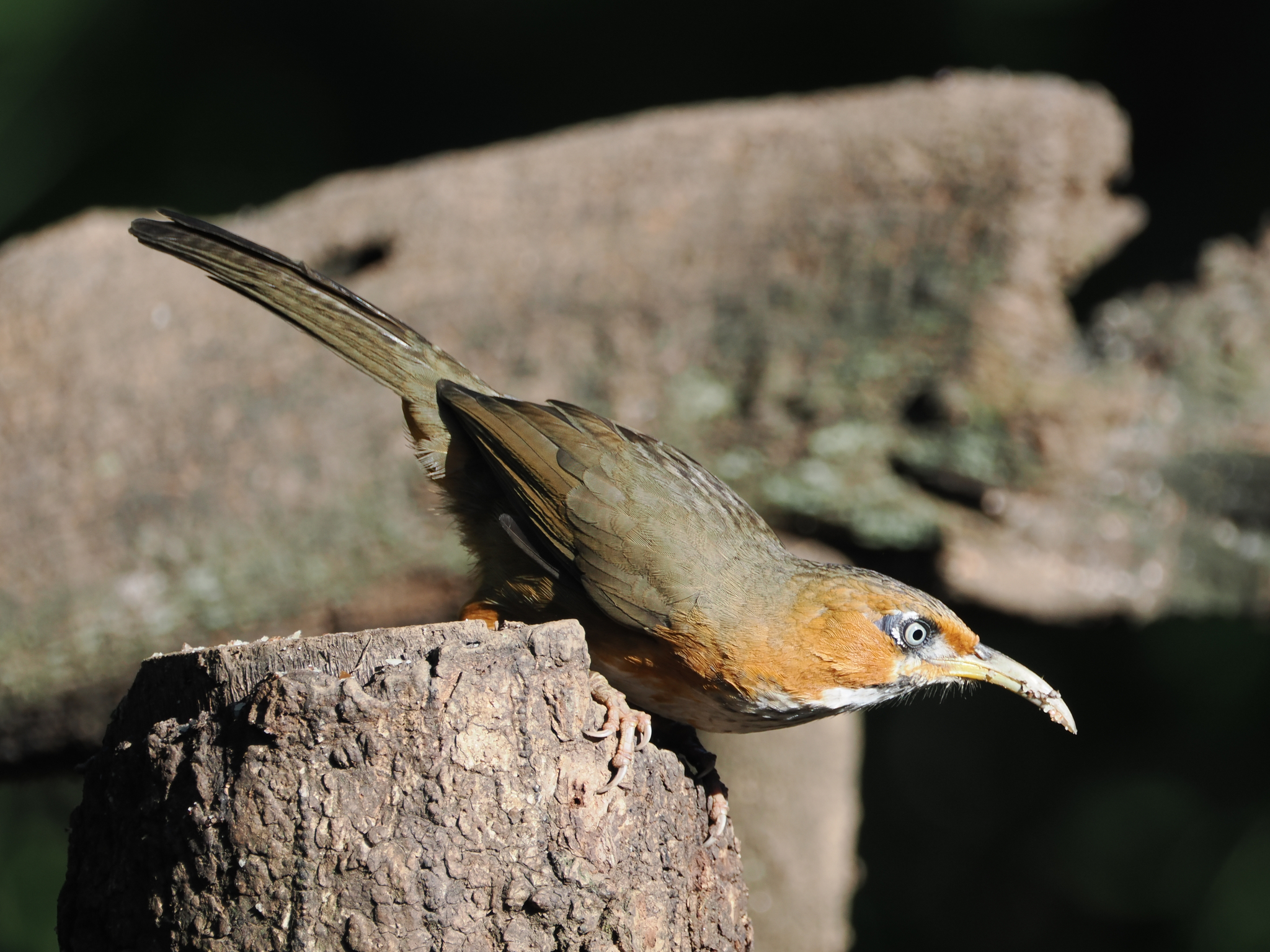
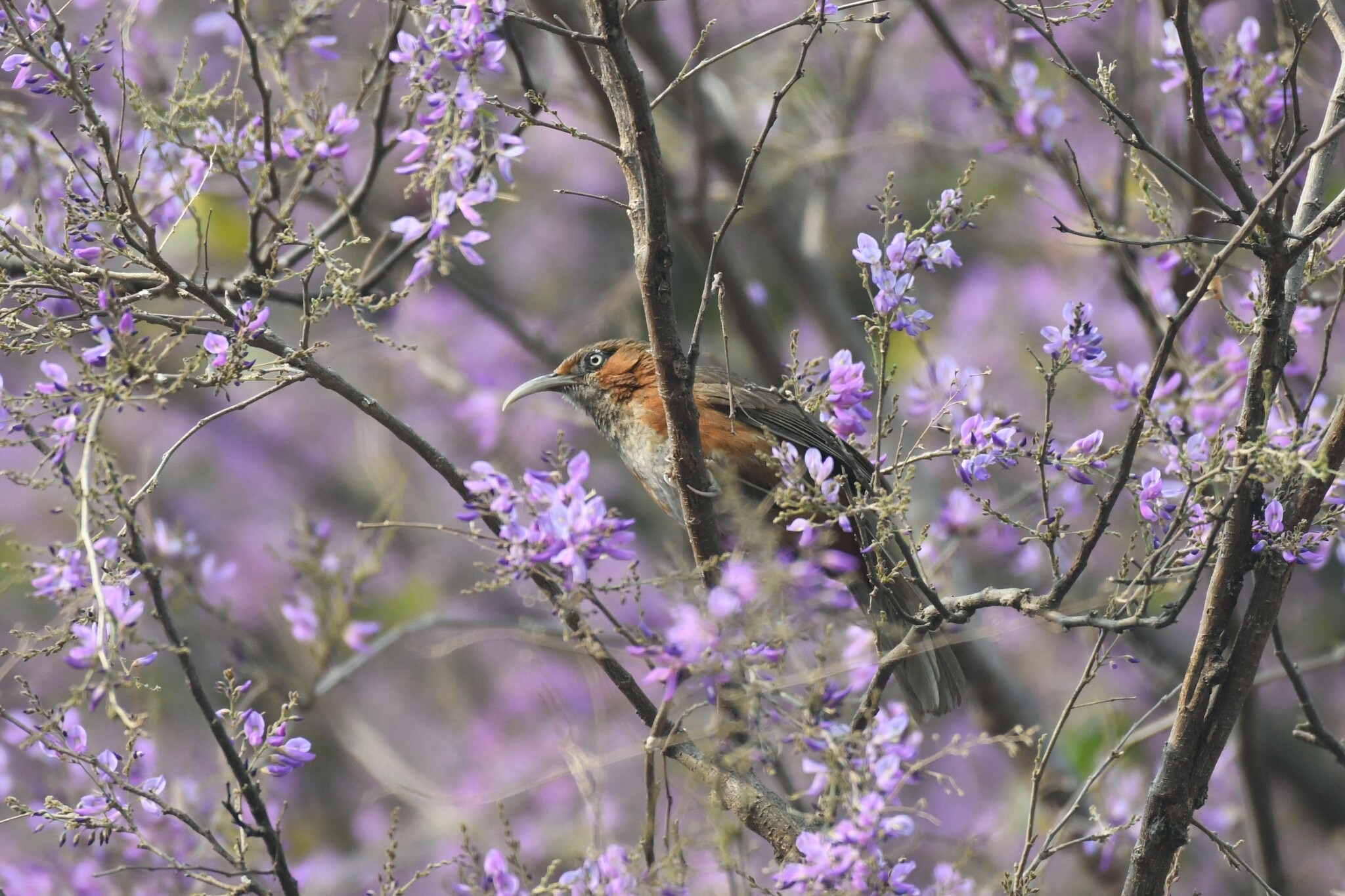
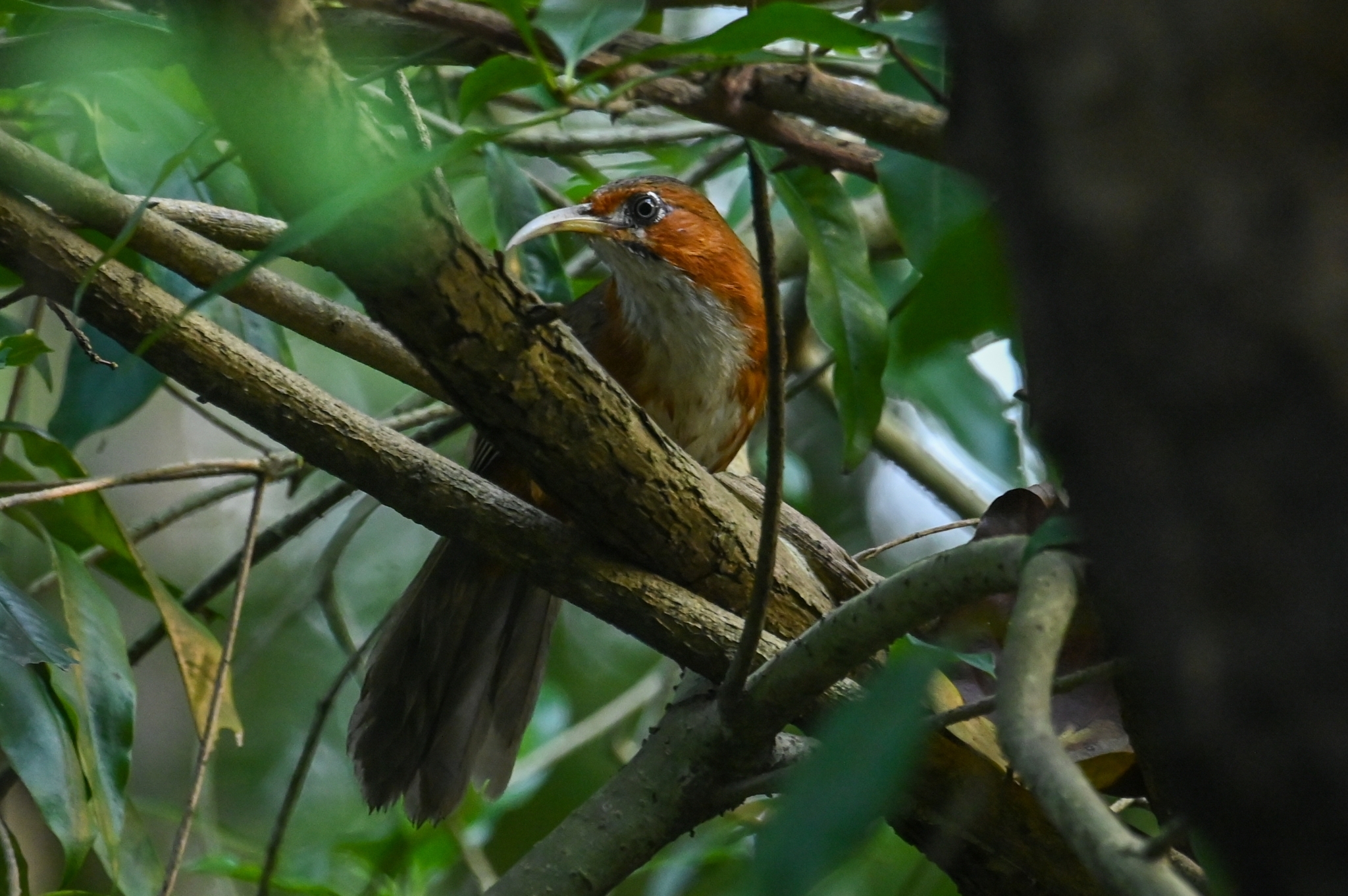
A passerine bird in the babbler family Timaliidae. Found in the Himalayas from northeast Pakistan to Bhutan. Inhabits subtropical or tropical moist lowland forest and subtropical or tropical moist montane forest at elevations up to 2,600 m (8,500 ft). Characterized by a long, decurved scimitar-shaped beak and rusty coloring on the face, head, thighs, and flanks. Three subspecies are recognized across its range. Formerly considered conspecific with the red-eyed scimitar babbler found in eastern Myanmar and northwestern Thailand.
Description
Upperparts are olive-brown. The sides of the face, head, thighs, and flanks show rusty coloring. The belly is mostly white. The sexes are alike in plumage. The beak is long and decurved in a distinctive scimitar shape.
Distribution & Habitat
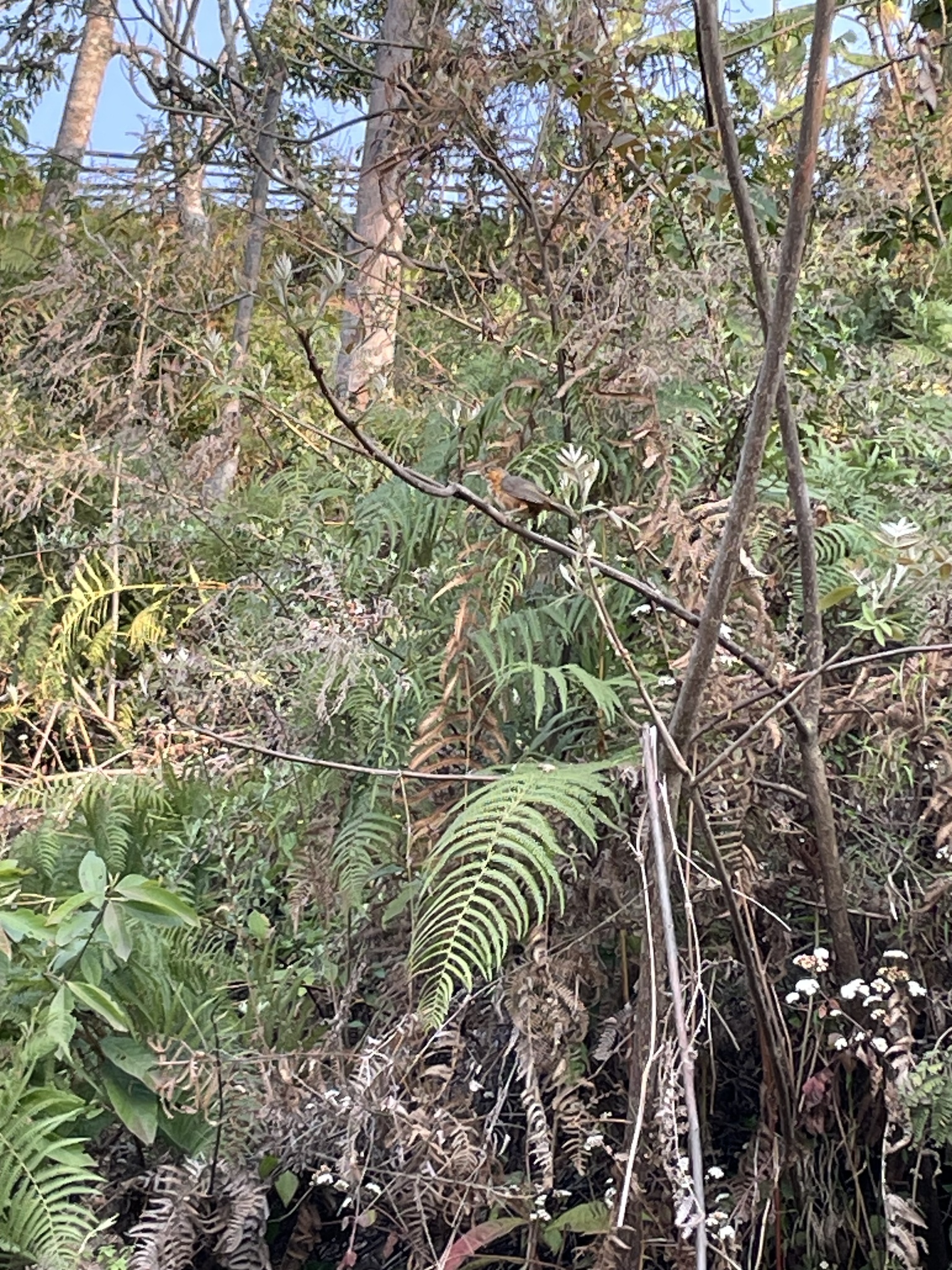
Occurs from the Himalayas to Myanmar. Inhabits subtropical or tropical moist lowland forest and subtropical or tropical moist montane forest. Found at elevations up to 2,600 m (8,500 ft). Three subspecies: E. e. erythrogenys in west Himalayas (northeast Pakistan and north India), E. e. ferrugilatus in west and central Nepal, and E. e. haringtoni from east Nepal to east Bhutan.
Behavior & Ecology
Feeds mostly on the forest floor and in the low canopy. Forms small groups. Diet consists of insects, grubs, and seeds. Vocalizations include a mellow, fluty whistle and a distinctive two-noted 'CUE..PE...CUE..pe' call followed by single-note replies from a mate. Also gives guttural alarm calls and a liquid contact note. The species is generally quite noisy.
Source: Wikipedia · CC BY-SA 3.0
Taxonomy
- Order
- Passeriformes
- Family
- Timaliidae
- Genus
- Erythrogenys
Vocalizations
Subspecies (3)
-
Erythrogenys erythrogenys erythrogenys
Himalayas of northeastern Pakistan and northern India
-
Erythrogenys erythrogenys ferrugilatus
montane forest of Kashmir to central Nepal
-
Erythrogenys erythrogenys haringtoni
Himalayas (Sikkim to Bhutan)
Data Sources
Species description from Wikipedia, licensed under CC BY-SA 3.0.
Bird images and sounds sourced from GBIF, contributed by citizen scientists worldwide under Creative Commons licenses.
Taxonomy data from AviList 2025.