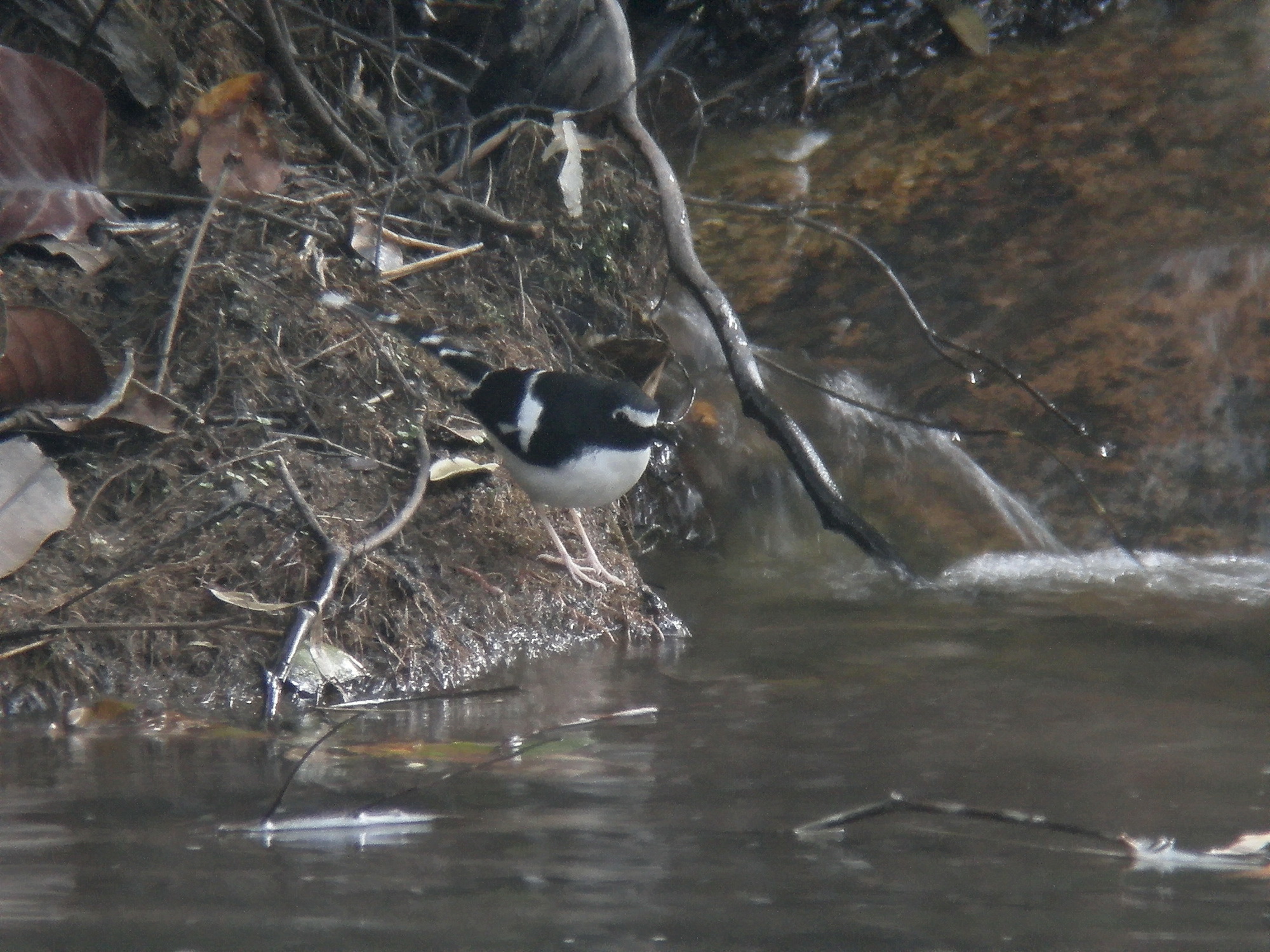
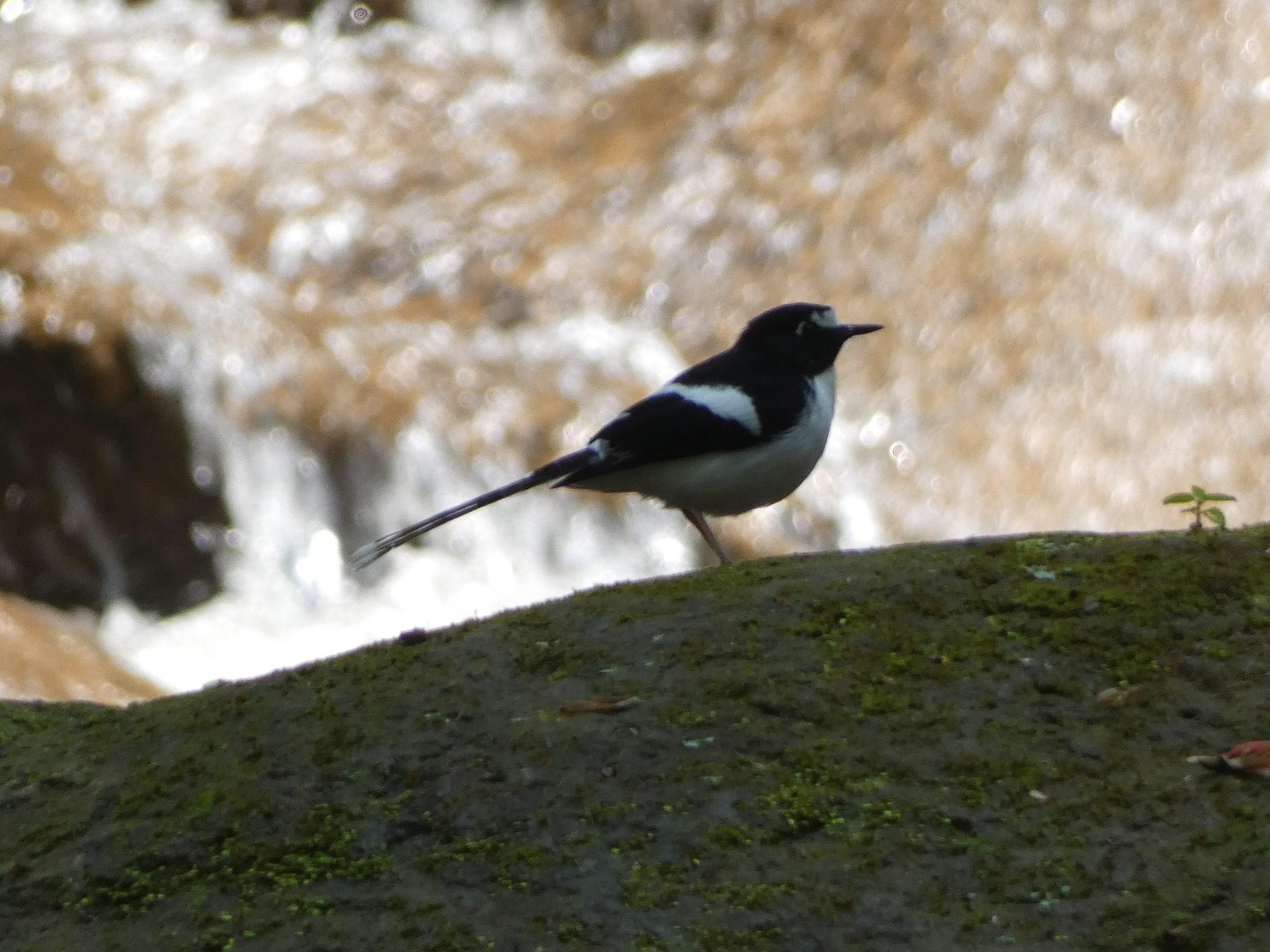
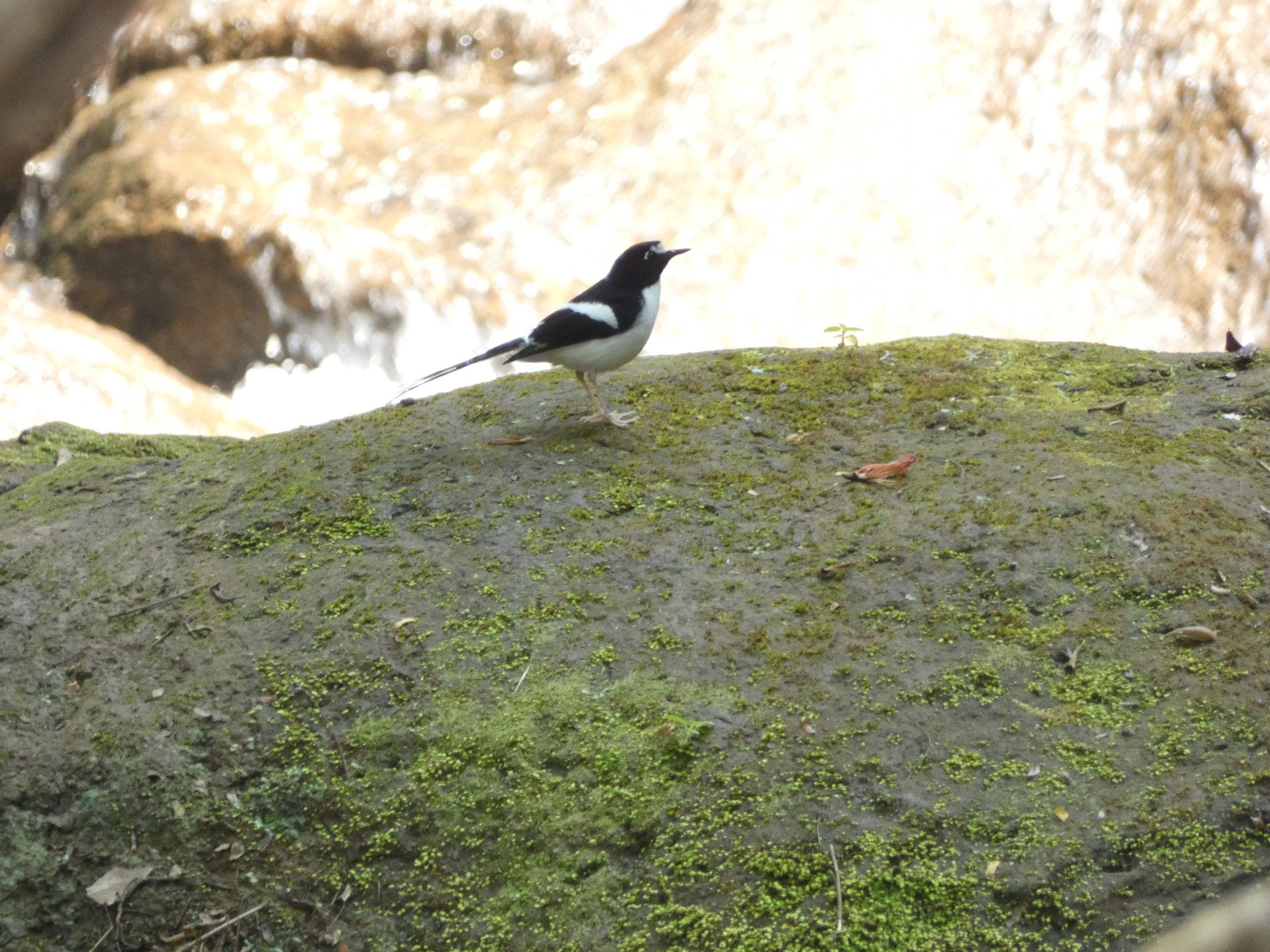
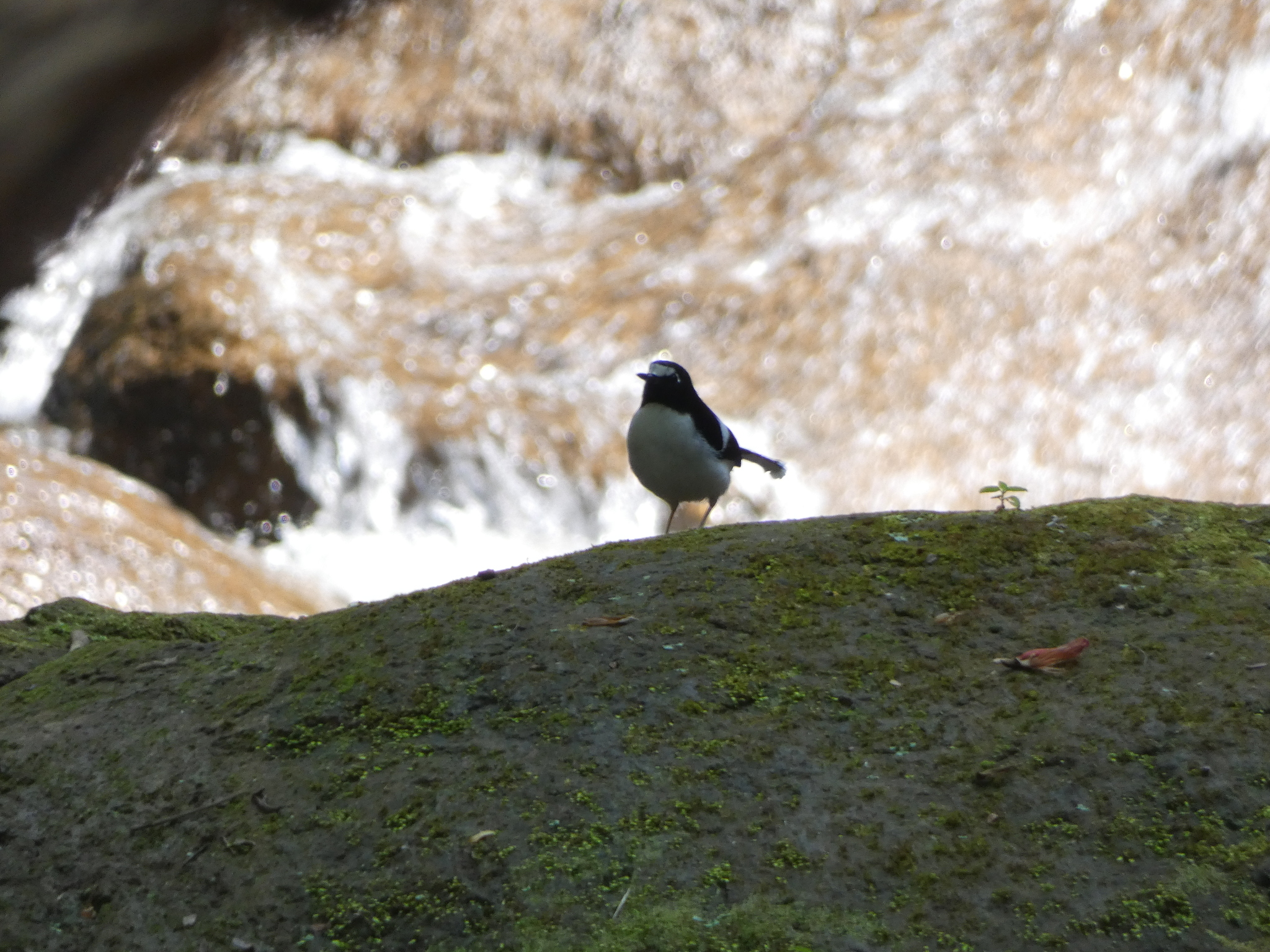
Black-backed Forktail
Enicurus immaculatus
黑背燕尾
Introduction
A forktail species in the family Muscicapidae (Old World flycatchers and chats). Found across the Indian subcontinent and adjoining Southeast Asia, including Bangladesh, Bhutan, India, Myanmar, Nepal, and Thailand. Inhabits fast-flowing rivers and streams in temperate forests and subtropical or tropical moist lowland forests. Distinguished by its long, deeply forked tail and striking black-and-white plumage pattern. Typically solitary and shy, though occasionally found in pairs or family groups. Classified as Least Concern by the IUCN, though precise population and range remain unknown; population is believed stable and exceeding 10,000 individuals.
Description
A medium-sized forktail measuring 20.5 to 23 centimeters in length and weighing 25 to 29 grams. The species exhibits bold black-and-white plumage: a broad white stripe crosses the forehead, while the crown, face, mantle, and wings are black. The underparts are white, sharply delineated from the black throat. Wings display a broad white band across the greater coverts. The tail is long, graduated, and deeply forked, black with a white tip and three white bands formed by shorter tail feathers. The beak is black, feet and legs are light pink, and the iris is brown. The species is monomorphic with no sexual dimorphism; juveniles lack the adult's prominent forehead stripe and have sooty-brown black plumage.
Identification
Similar to the slaty-backed forktail but lacks the slaty back, is smaller, and has a slimmer bill. The white facial band is narrower than that of the white-crowned forktail, and it is distinguished by its white (not black) breast. Approximately the same size as bulbul species. Vocalizations include a short, whistled two-note call described as 'tseep - dew' or 'hurt-zeee,' with syllables sometimes given separately as a hollow 'huu' and shrill 'zeee.' The call is higher pitched than that of the slaty-backed forktail, which produces a squeaky-hinge-like sound.
Distribution & Habitat
Ranges across Bangladesh, Bhutan, India, Myanmar, Nepal, and Thailand, with additional records from southwestern Yunnan (China) and southeastern Tibet. Inhabits fast-flowing rivers and streams in moist tropical broadleaf forest and subtropical lowland forest, frequenting rocks, boulders, and mud or sand banks. Typically found below 1,450 meters elevation, though recorded up to 2,600 meters in Arunachal Pradesh, India. In Nepal, the elevational range is 75 to 1,370 meters. Distribution is described as discontinuous in some regions; uncommon in the western parts of its range but common in Bhutan.
Behavior & Ecology
Solitary but occasionally found in pairs or family groups during breeding season. A shy bird that bobs its tail while feeding and opens and closes its forked tail in a scissor-like motion at rest. Flight is quick and straight, often following water courses, and individuals are sometimes observed near waterfalls. Diet consists of aquatic insects and their larvae, and crustaceans; forages along fast-moving streams, on midstream rocks, and occasionally enters water or forages in forest pools and damp areas. Breeding occurs from March to June; builds a cup-shaped nest of plant matter, moss, and fibers in tree holes, rock crevices, or under banks. Lays three pinkish eggs speckled with red-brown, averaging 2.08 by 1.58 centimeters. Both sexes construct the nest and incubate. First-year birds disperse from breeding areas between April and October.
Conservation
Classified as Least Concern by the International Union for Conservation of Nature. The global population is unknown but believed to be stable and exceeding 10,000 individuals. The species' range is estimated at greater than 20,000 square kilometers. No significant population declines have been documented, though precise numbers remain uncertain due to the species' shy nature and the difficulty of surveying its riverine habitat.
Culture
No specific cultural significance or folklore documented in available sources.
Source: Wikipedia · CC BY-SA 3.0
Taxonomy
- Order
- Passeriformes
- Family
- Muscicapidae
- Genus
- Enicurus
- eBird Code
- blbfor1
Distribution
rocky streams of northern India to Myanmar, southwestern China, and northwestern Thailand
Data Sources
Species description from Wikipedia, licensed under CC BY-SA 3.0.
Bird images and sounds sourced from GBIF, contributed by citizen scientists worldwide under Creative Commons licenses.
Taxonomy data from AviList 2025.