Ochre-rumped Bunting
Emberiza yessoensis
红颈苇鹀
Introduction
The ochre-rumped bunting (Emberiza yessoensis) is a small passerine bird belonging to the family Emberizidae. It occurs across Manchuria, Korea, and Japan, inhabiting temperate grassland and wetland environments including swamps and marshes. The species is classified as endangered in South Korea due to ongoing habitat loss throughout its range.
Description
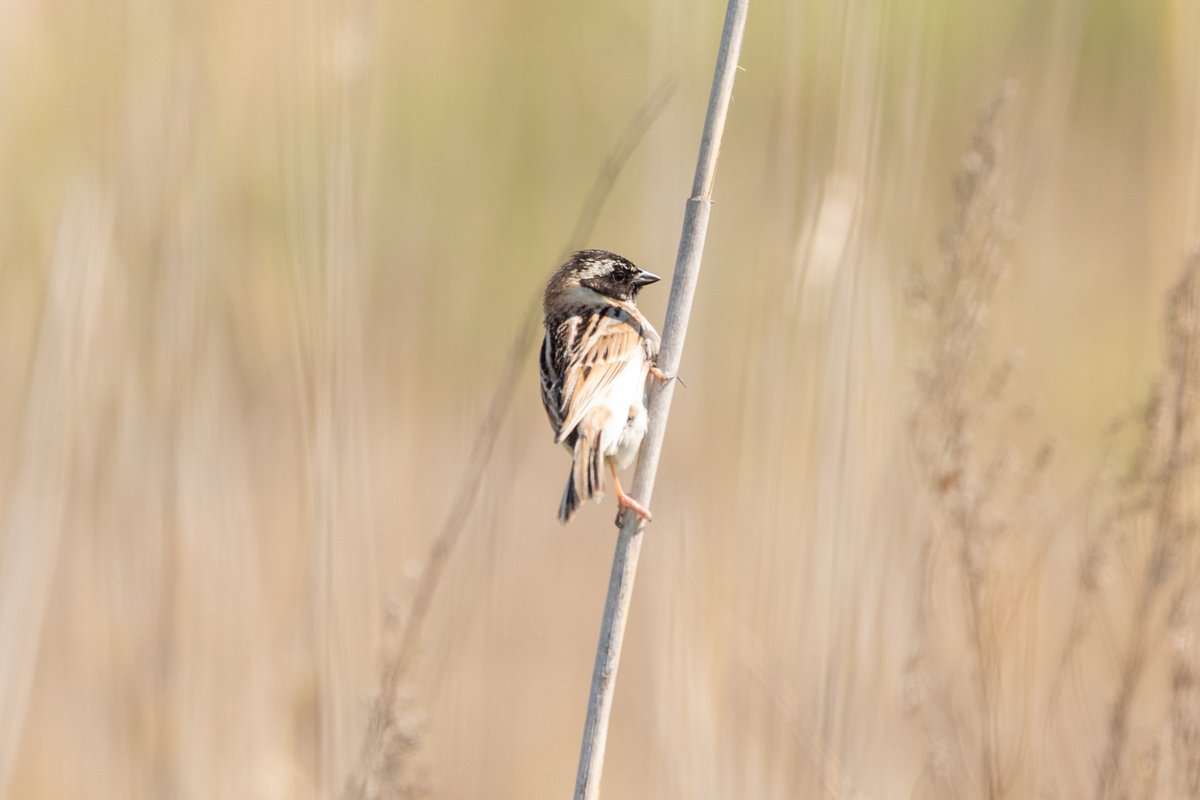
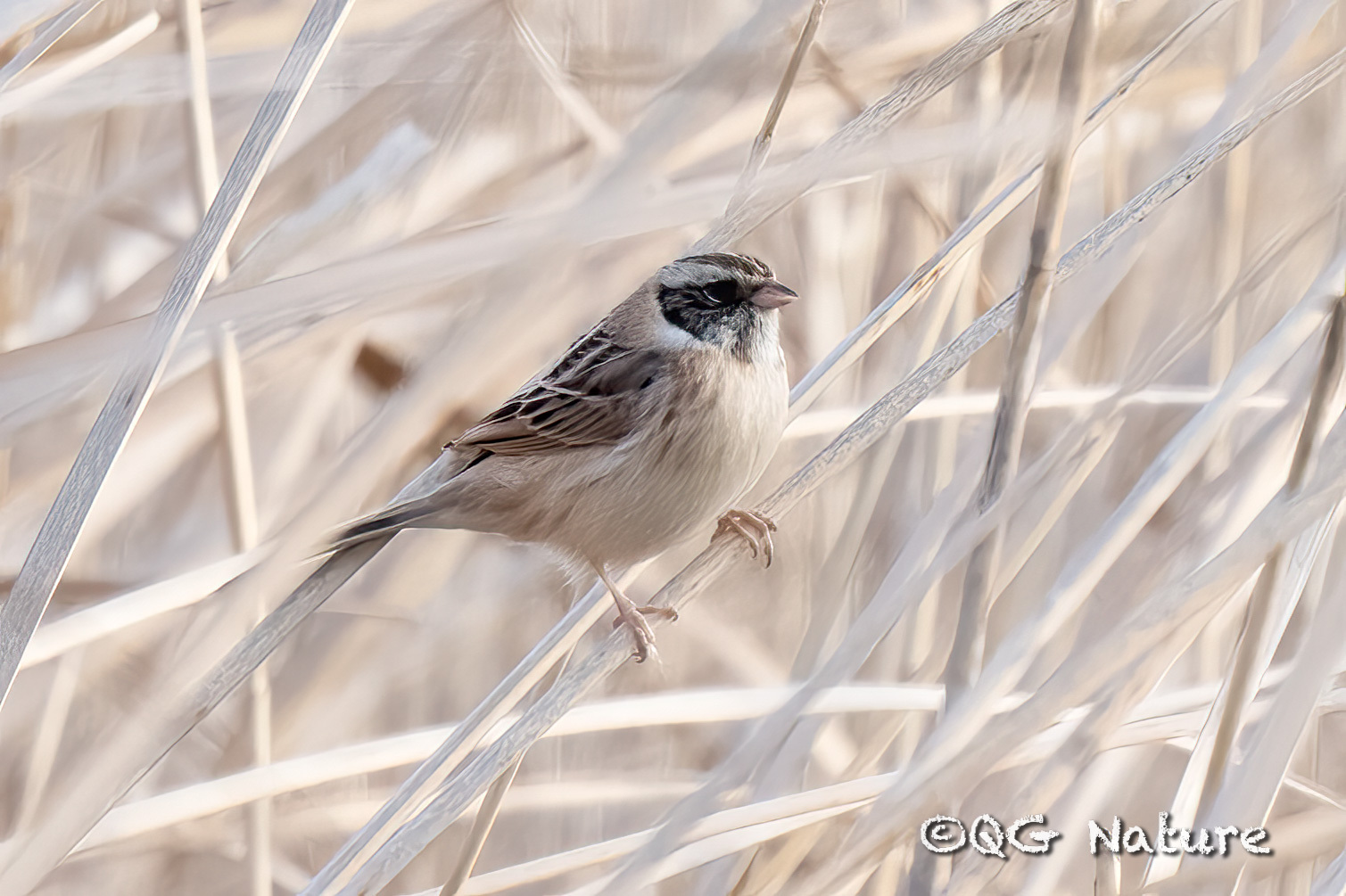
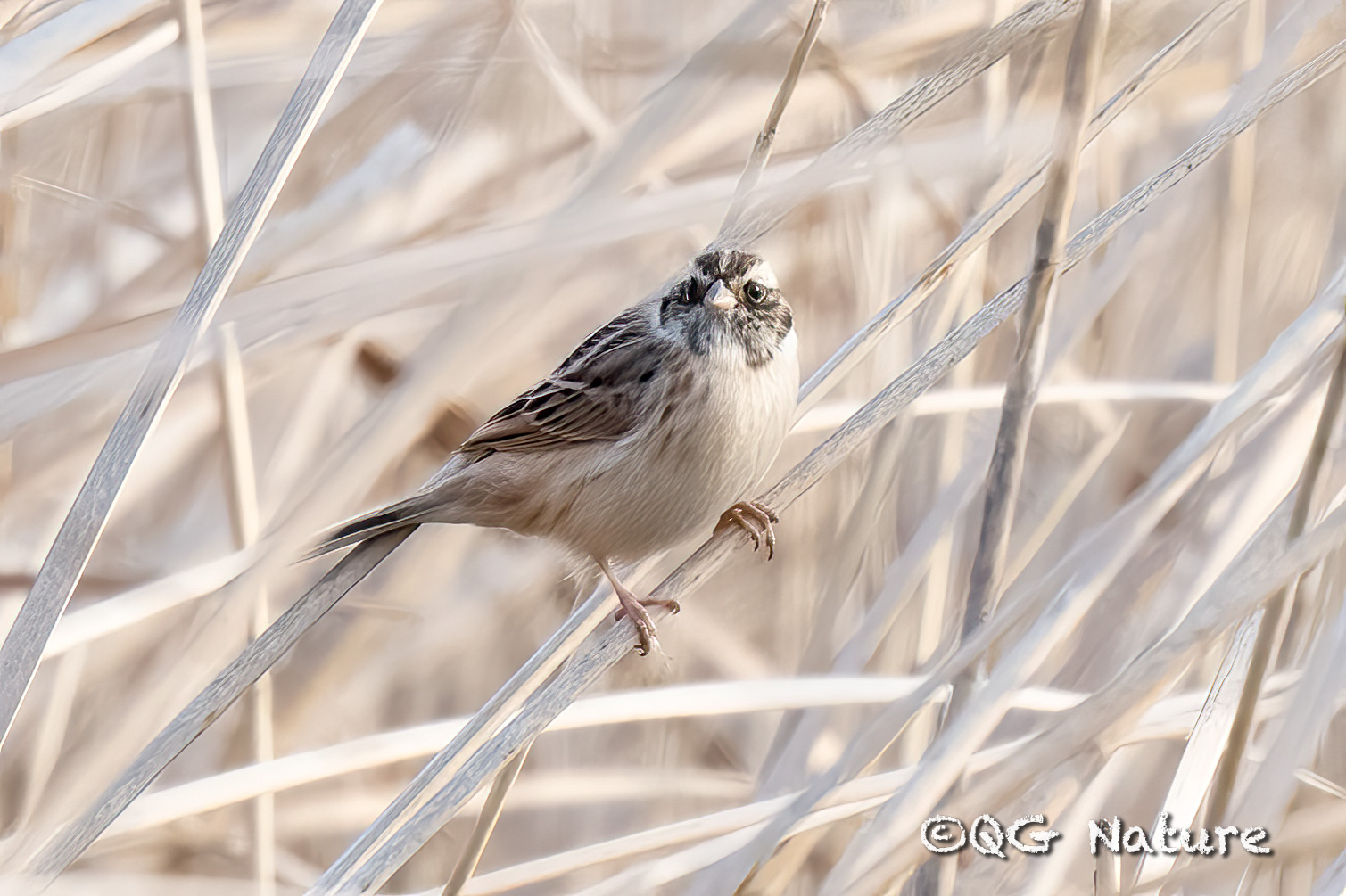
A compact bunting measuring 15 centimetres in length, this species exhibits notably pink legs and bill during winter months. Adult males display a dark upper back, rich chestnut upperparts, and bold black and buff striping across the breast and flanks. The nape is brown, while the sides of the neck show whitish coloration. Females present a more subdued appearance with buffy submoustachial and throat regions, prominent black malar stripes, and a dark brown crown finely streaked with pale markings. Juveniles feature a pale greyish-brown central crown stripe and a distinctive yellowish-brown rump, which provides a useful identification clue when observing younger birds.
Identification
The ochre-rumped bunting is most readily distinguished from other reed buntings by its overall richer plumage coloration. It shares close taxonomic affinities with the common reed bunting and Pallas's reed bunting, both of which have historically been classified in the separate genus Schoeniclus. The species' pink-legged and pink-billed appearance in winter plumage helps distinguish it from similar species. The rich chestnut upperparts and overall warmer coloration provide the most reliable field marks, particularly when compared to the more subdued tones of related reed bunting species.
Distribution & Habitat
The species occupies a range spanning Manchuria, Korea, and Japan, where it inhabits temperate grasslands and swamp environments. Two subspecies are recognised, with E. y. continentalis breeding in eastern Mongolia, northeast China, and Ussuriland before migrating to east China for winter. The nominate subspecies E. y. yessoensis breeds and winters within Japan, with additional wintering populations occurring in Korea. This distribution pattern means that observers in different parts of the species' range may encounter different subspecies depending on the season.
Behavior & Ecology
The vocal repertoire of this species includes two characteristic calls, transcribed as 'sur-swee-ik' and 'tik'. These sounds may be heard when birds are disturbed or communicating within their grassland and wetland habitats. While detailed information on breeding behavior and diet is limited in available sources, the species' association with grassland and swamp habitats suggests feeding strategies typical of seed-eating buntings in these environments. The species is likely to exhibit social behaviors typical of its genus during the non-breeding season.
Conservation
The ochre-rumped bunting is classified as threatened due to ongoing habitat loss throughout its range. The degradation and conversion of temperate grasslands and wetlands for agricultural and developmental purposes have significantly reduced the availability of suitable breeding and wintering habitat. In South Korea, the situation is particularly concerning, with the species listed as endangered at the national level. These conservation pressures, combined with the species' relatively restricted distribution, mean that population monitoring and habitat protection measures are essential for ensuring the long-term survival of this bunting.
Culture
No significant cultural associations, folklore, or mythological connections were documented in available sources for this species.
Source: Wikipedia · CC BY-SA 3.0
Taxonomy
- Order
- Passeriformes
- Family
- Emberizidae
- Genus
- Emberiza
- eBird Code
- ocrbun1
Subspecies (2)
-
Emberiza yessoensis continentalis
breeds southeastern Siberia and eastern Manchuria; winters to southern Korea and eastern China
-
Emberiza yessoensis yessoensis
Japan (southern Kuril Islands, Hokkaido, and Honshu)
Data Sources
Species description from Wikipedia, licensed under CC BY-SA 3.0.
Bird images and sounds sourced from GBIF, contributed by citizen scientists worldwide under Creative Commons licenses.
Taxonomy data from AviList 2025.