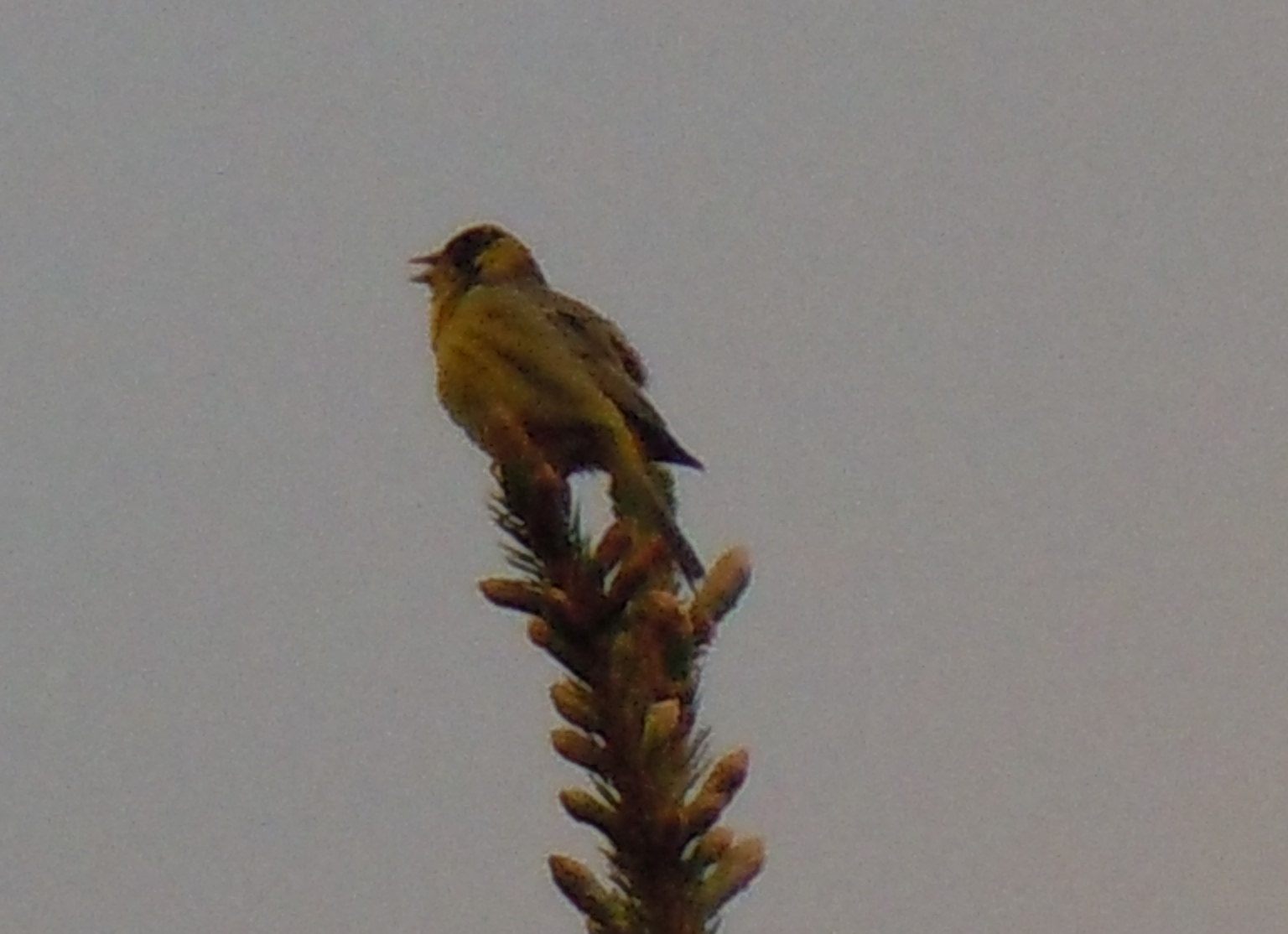
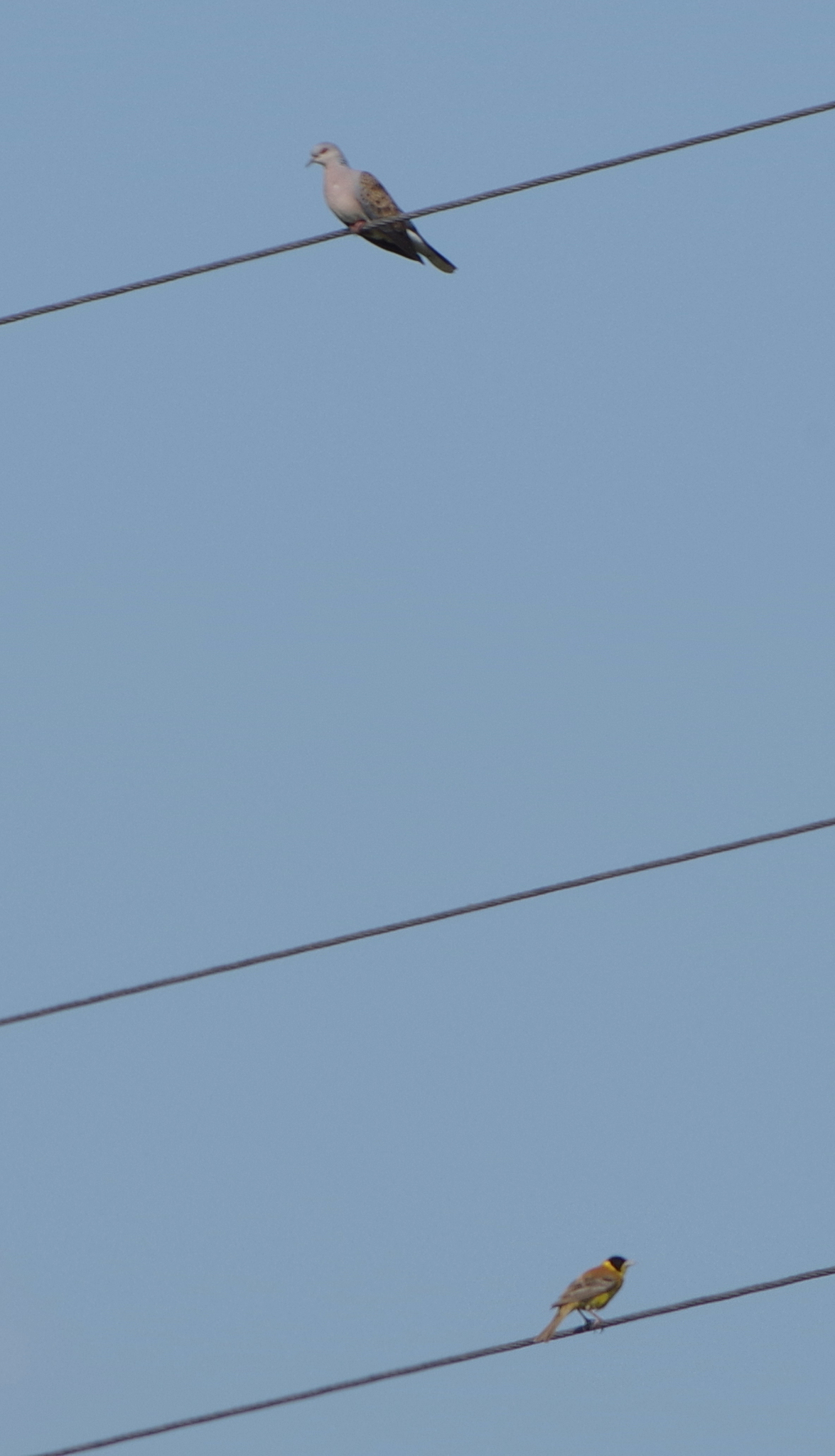
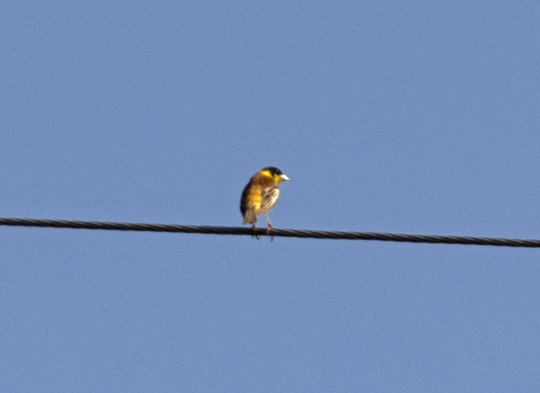
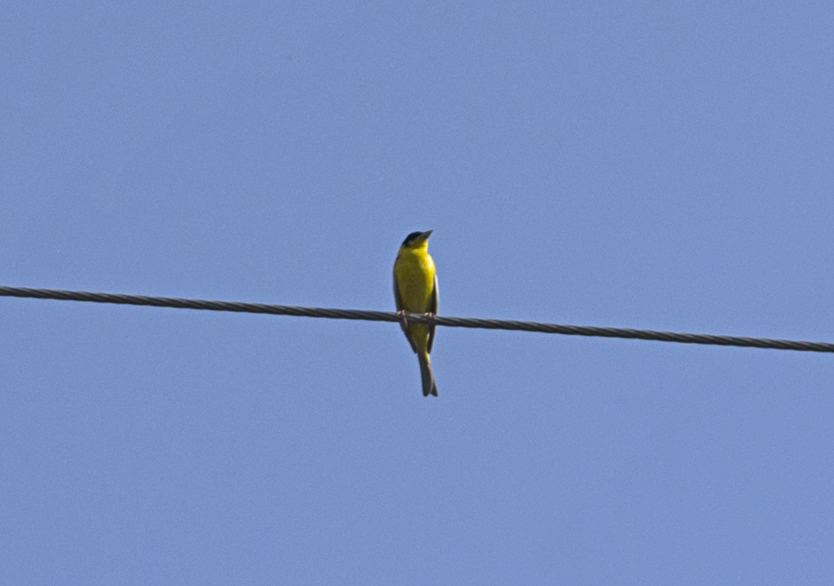
Black-headed Bunting
Emberiza melanocephala
黑头鹀
Introduction
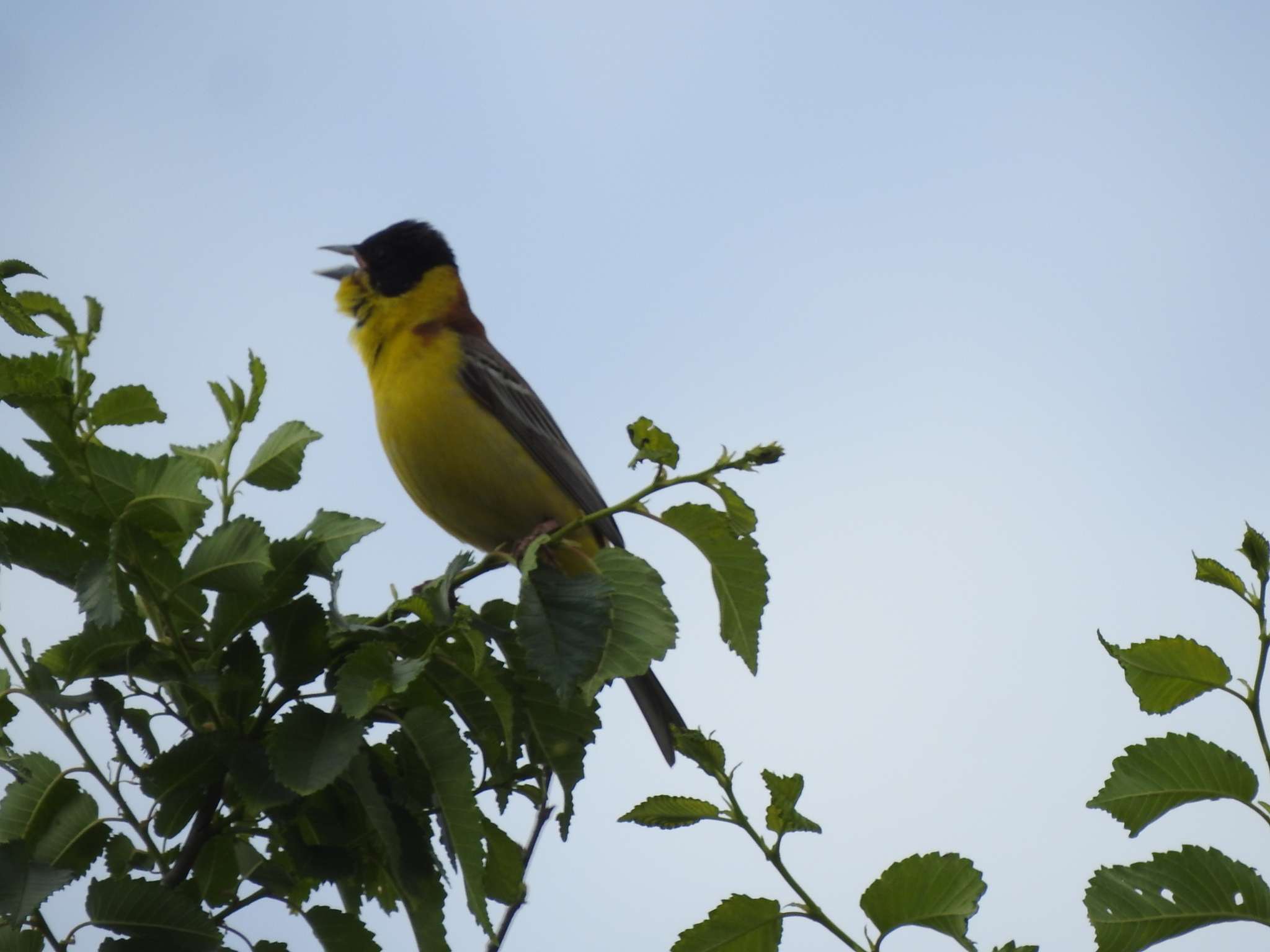
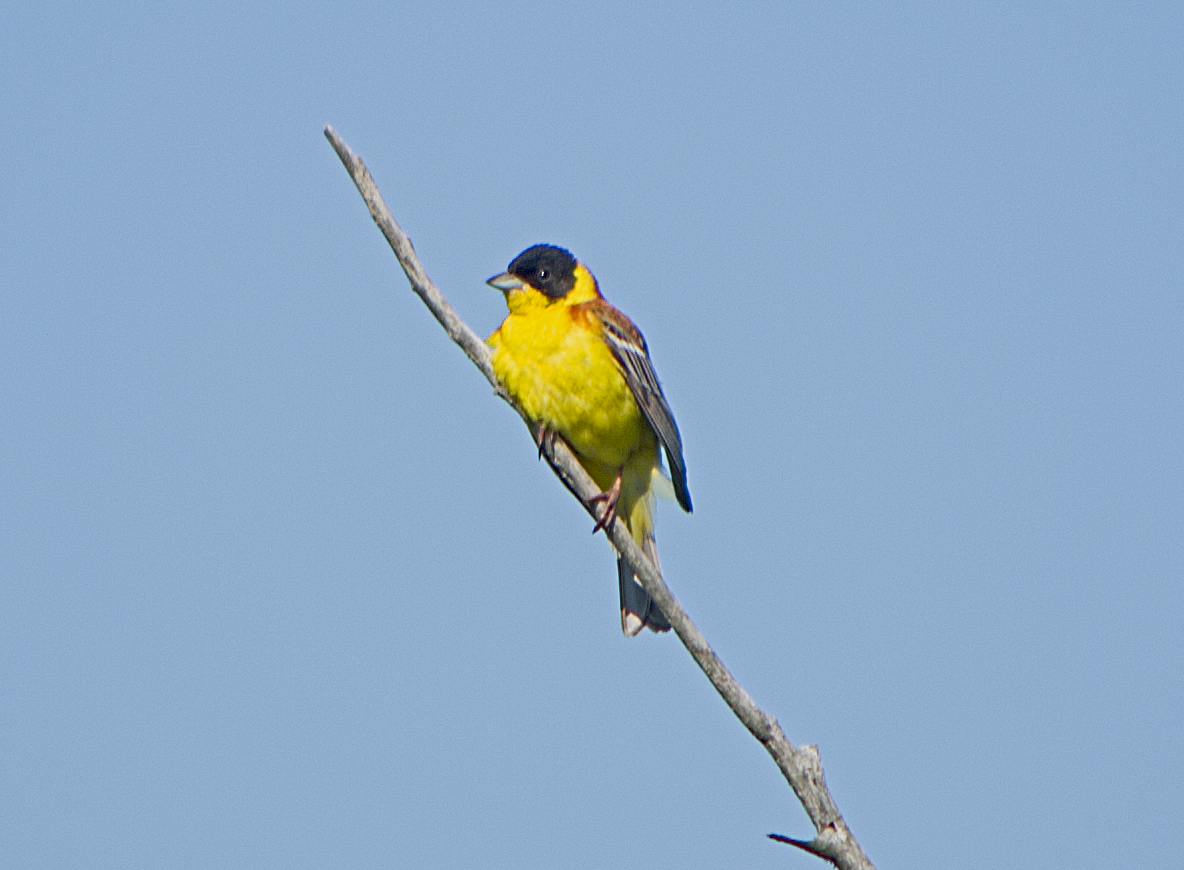
A passerine bird in the bunting family Emberizidae. It breeds across south-east Europe east to Iran and migrates in winter mainly to India, with some individuals ranging further into south-east Asia. Inhabits open grassland habitats where it forages in flocks for grains and seeds. Adult males display bright yellow underparts, chestnut upperparts, and a black head. The species forms natural hybrids with the closely related red-headed bunting where their breeding ranges overlap in northern Iran. The IUCN categorizes this species as Least Concern due to its large range and population size.
Description
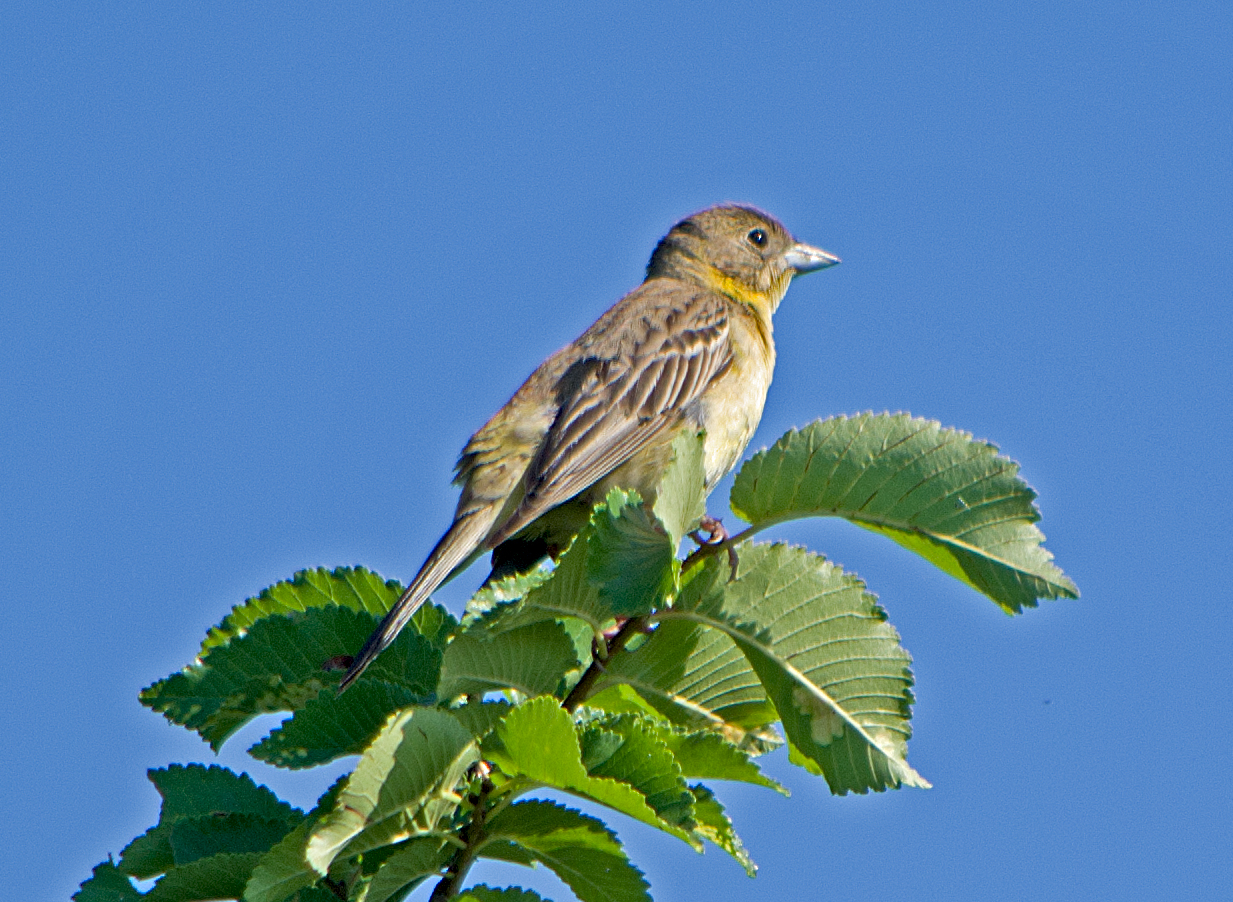
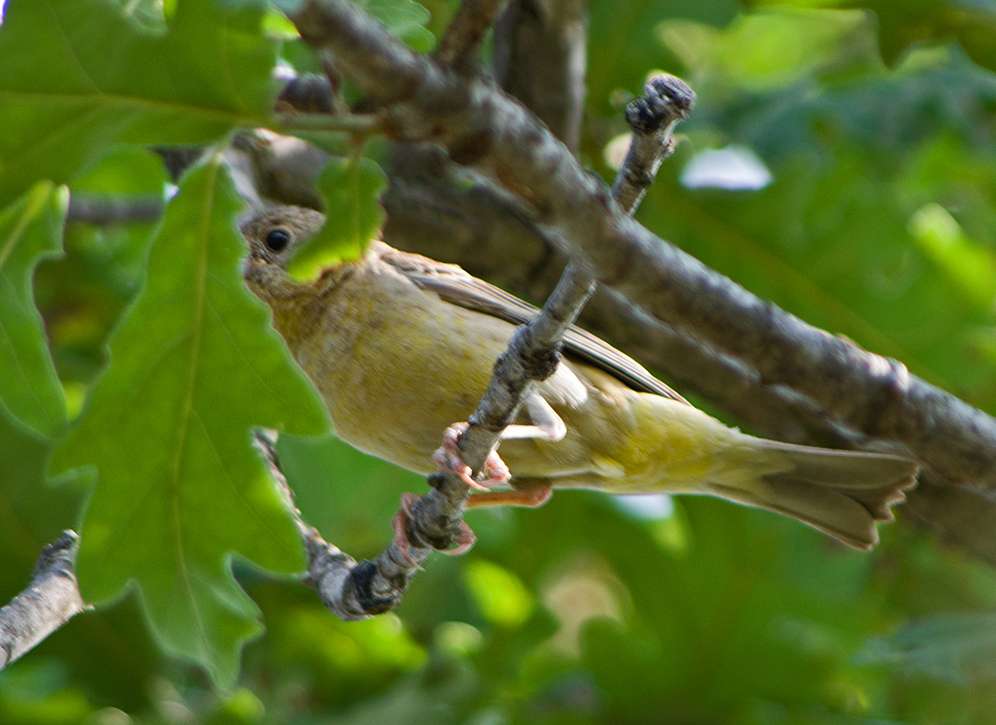
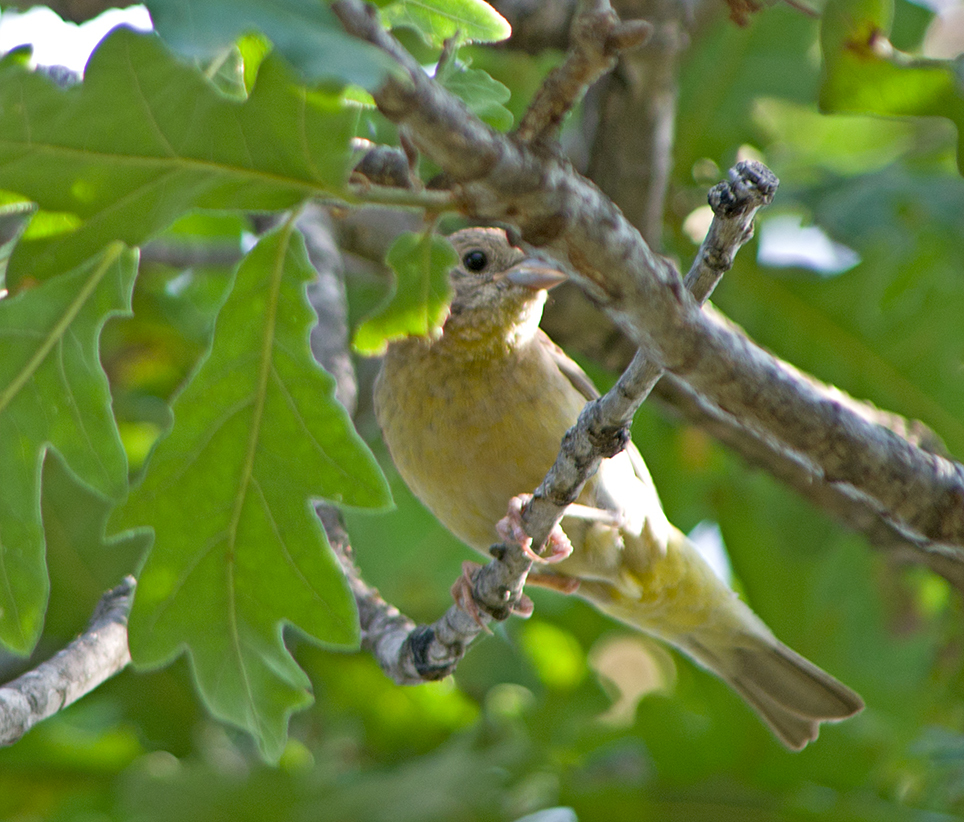
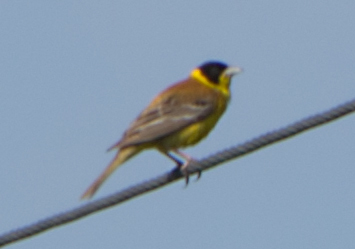
A medium-sized bunting measuring 15 cm (5.9 in) in length, larger than a reed bunting, with a notably long tail. The breeding male has striking yellow underparts, chestnut upperparts, and a black hood covering the head. The female resembles a duller version of the male, with pale yellow underparts, grey-brown back, and greyish head tones. Juveniles are similar to females but show distinctive yellow coloring on the vent. First-year males develop a grey crown with mixed chestnut and grey patches on the back.
Identification
Can be challenging to distinguish from the closely related red-headed bunting in non-breeding plumages. Adult males are unmistakable with their black hood and yellow underparts. Females and juveniles differ from female red-headed buntings in having darker cheeks relative to the throat. First-year females show more streaking on the crown compared to the lower back, while both first-year males and females display yellow vents. The species undergoes two annual moults, unlike many other Emberiza buntings.
Distribution & Habitat
Breeds from south-eastern Europe through central Asia to Iran, preferring open scrubby areas and agricultural land. The wintering range centers on western and northern India, extending south to northern Karnataka. Vagrants have been recorded in Japan, China, Hong Kong, Thailand, Laos, South Korea, and Malaysia. The longest recorded migration from a ringed individual spanned approximately 7,000 km, with another bird covering 1,000 km in seven days. Males migrate separately and arrive at wintering grounds before females. Large communal roosts form in thorny acacia trees, often mixed with other species such as the yellow-throated sparrow.
Behavior & Ecology
Forages in flocks across grasslands and agricultural fields, feeding primarily on seeds and insects when provisioning young. Breeding occurs in summer, with nests built as cups of dry grass lined with hair, positioned in low bushes or on the ground. Clutches contain four to six eggs, incubating for approximately 13 days, with chicks fledging after about 10 days. The winter call is a single-note tweet or soft 'zrit'. The song consists of loud, high-pitched harsh notes that accelerate into a jangling mix with interspersed clear slurred notes before ending abruptly. In Bulgaria, drying cotton thistle stems collapsing on nests has caused high mortality, representing an ecological trap.
Conservation
IUCN Red List status: Least Concern. The global population is estimated between 7.6 and 27.5 million adult individuals. While the population trend is unknown, the species benefits from a large range. Primary threats include habitat degradation and the specific threat of cotton thistle stem collapse on nests in certain regions.
Source: Wikipedia · CC BY-SA 3.0
Taxonomy
- Order
- Passeriformes
- Family
- Emberizidae
- Genus
- Emberiza
- eBird Code
- blhbun1
Distribution
breeds south-central Eurasia; winters to India
Data Sources
Species description from Wikipedia, licensed under CC BY-SA 3.0.
Bird images and sounds sourced from GBIF, contributed by citizen scientists worldwide under Creative Commons licenses.
Taxonomy data from AviList 2025.