
Grey-necked Bunting
Emberiza buchanani
灰颈鹀
Introduction
Medium-sized bunting breeding across Central Asia from the Caspian Sea to the Altai Mountains. Inhabits dry, stony slopes with rocky, scrubby hillsides and low thorny vegetation. Males sing from prominent perches during the breeding season. Typically occurs in small groups outside the breeding season, unlike some bunting species that form large flocks. Part of a complex of similar-looking buntings with identification challenges, particularly in worn non-breeding plumage. Western populations undertake short-distance migrations south to the Indian subcontinent for winter.
Description
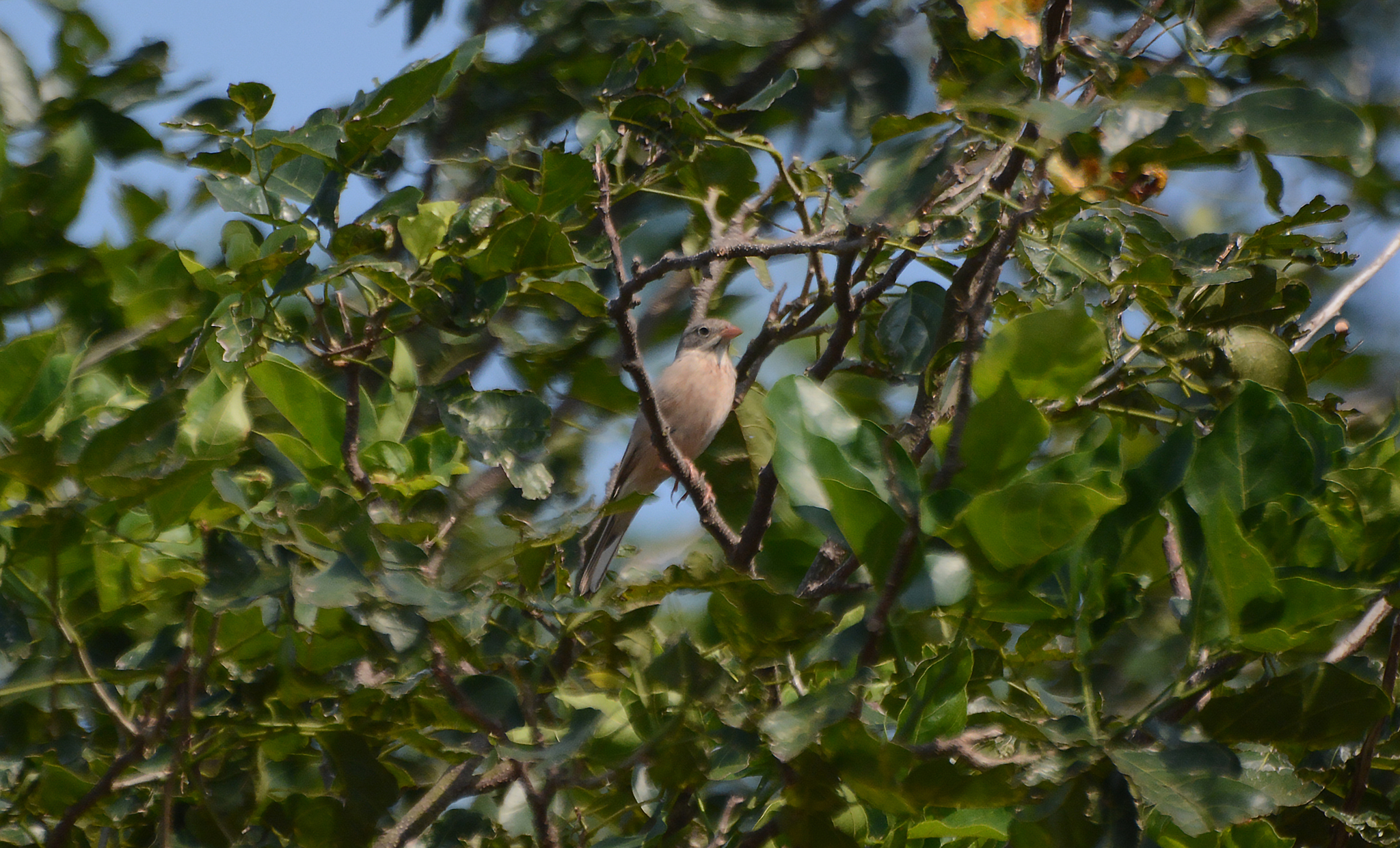
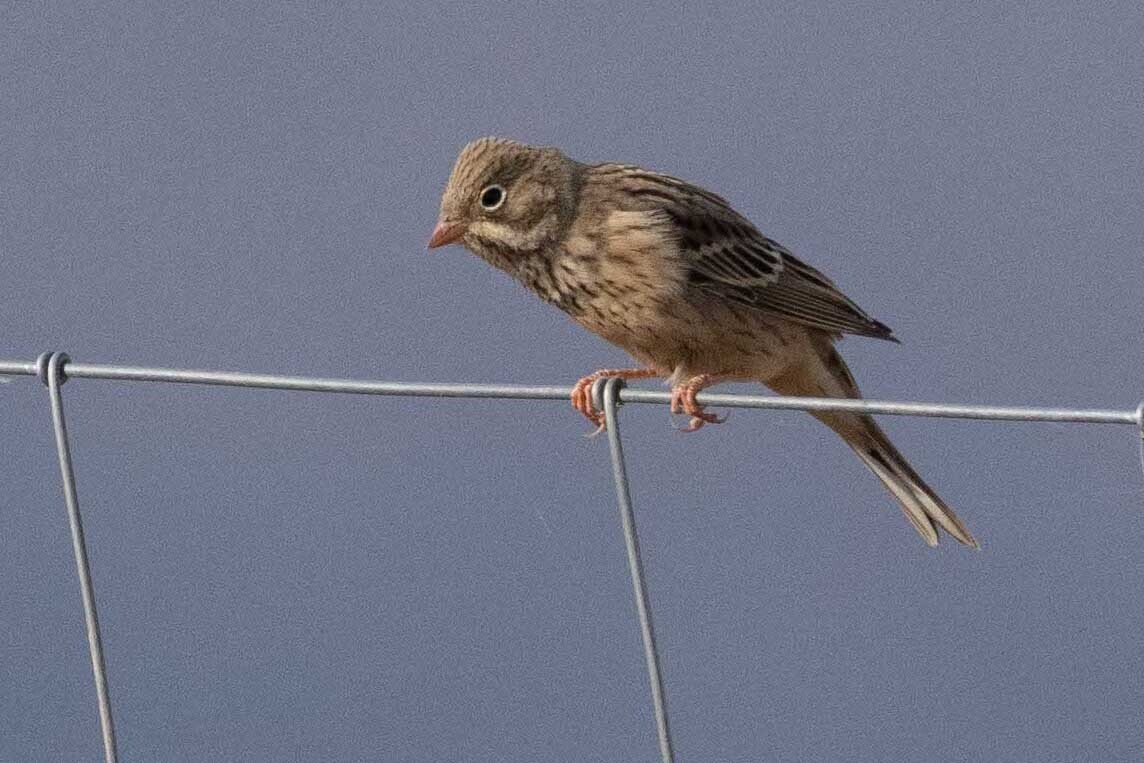
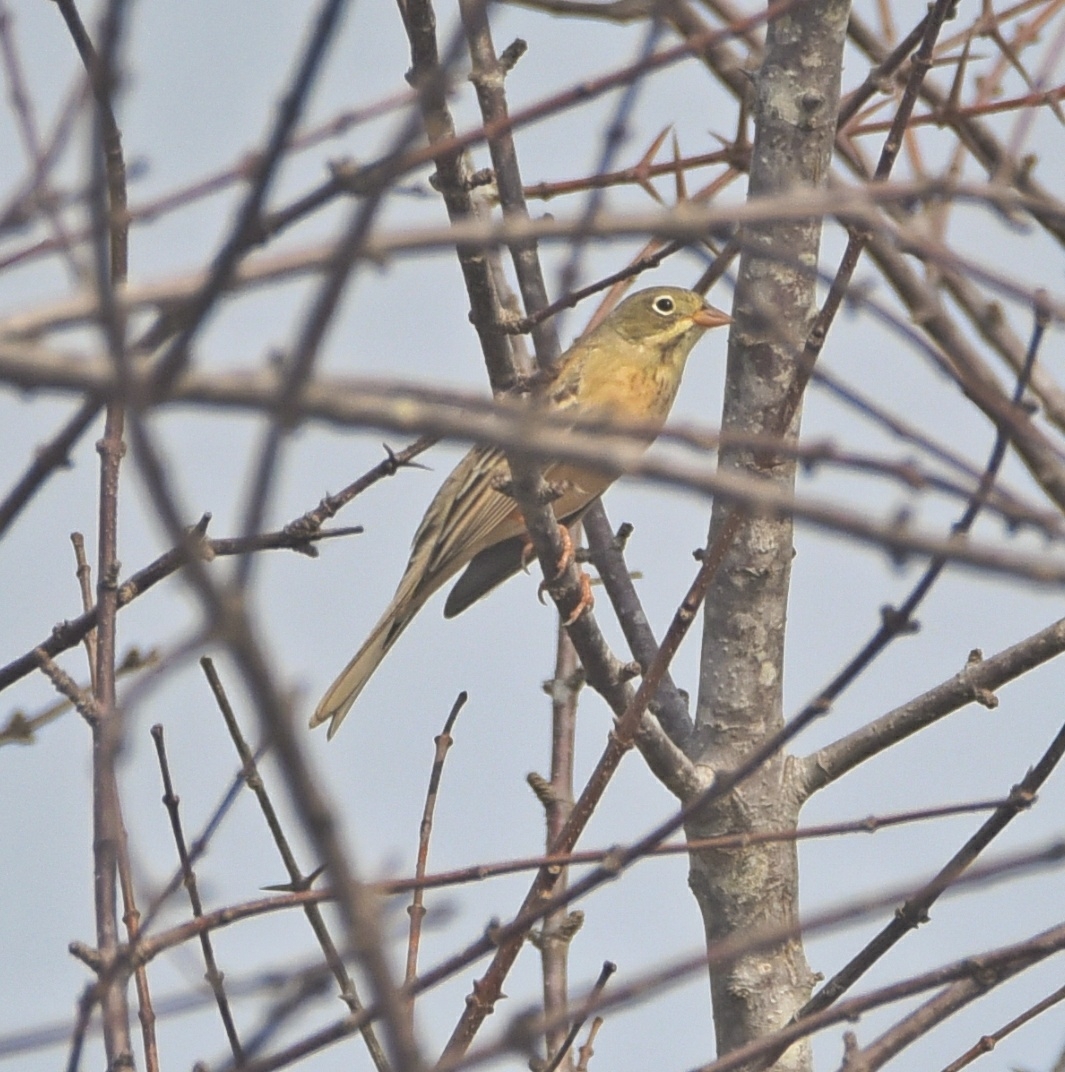
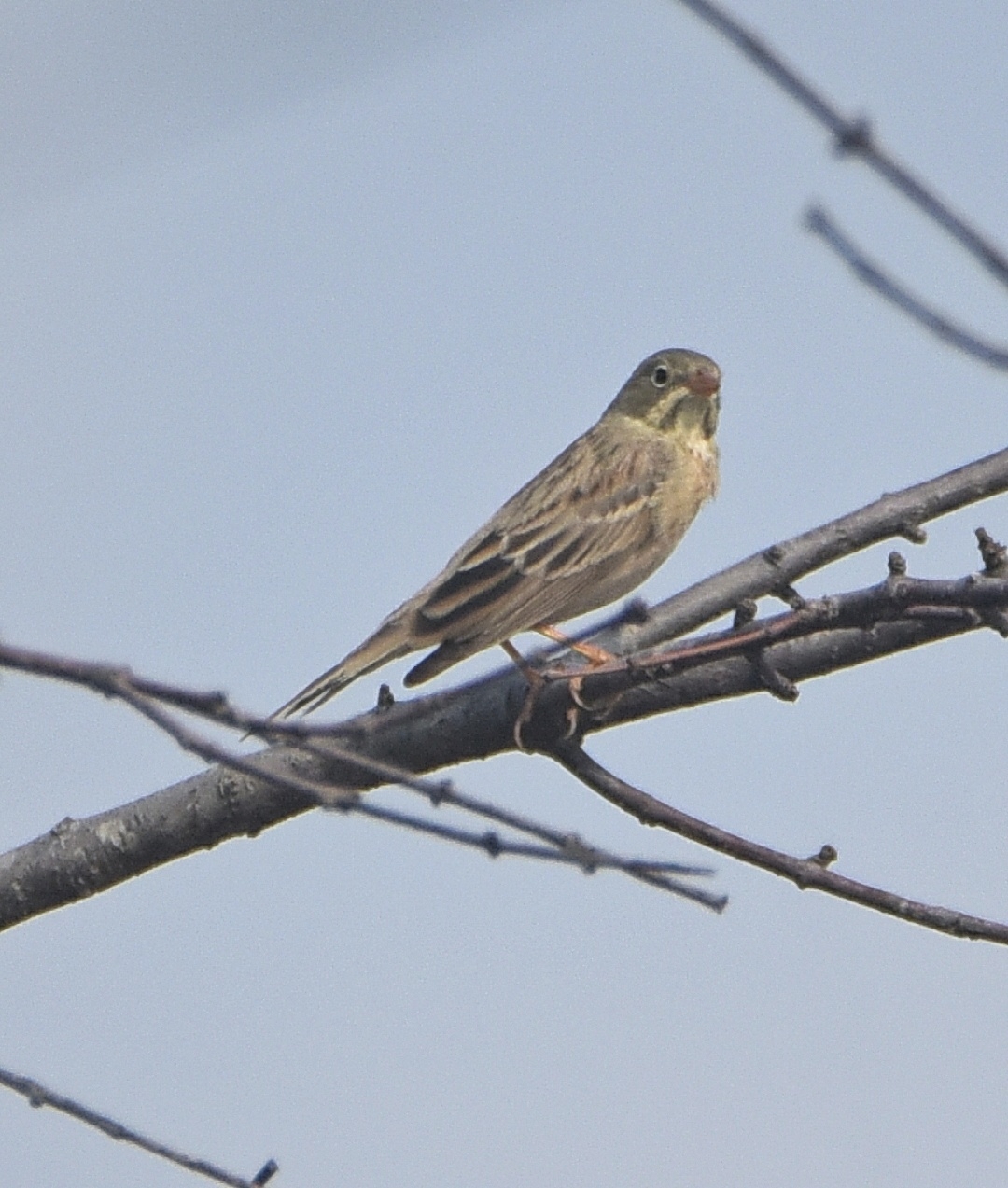
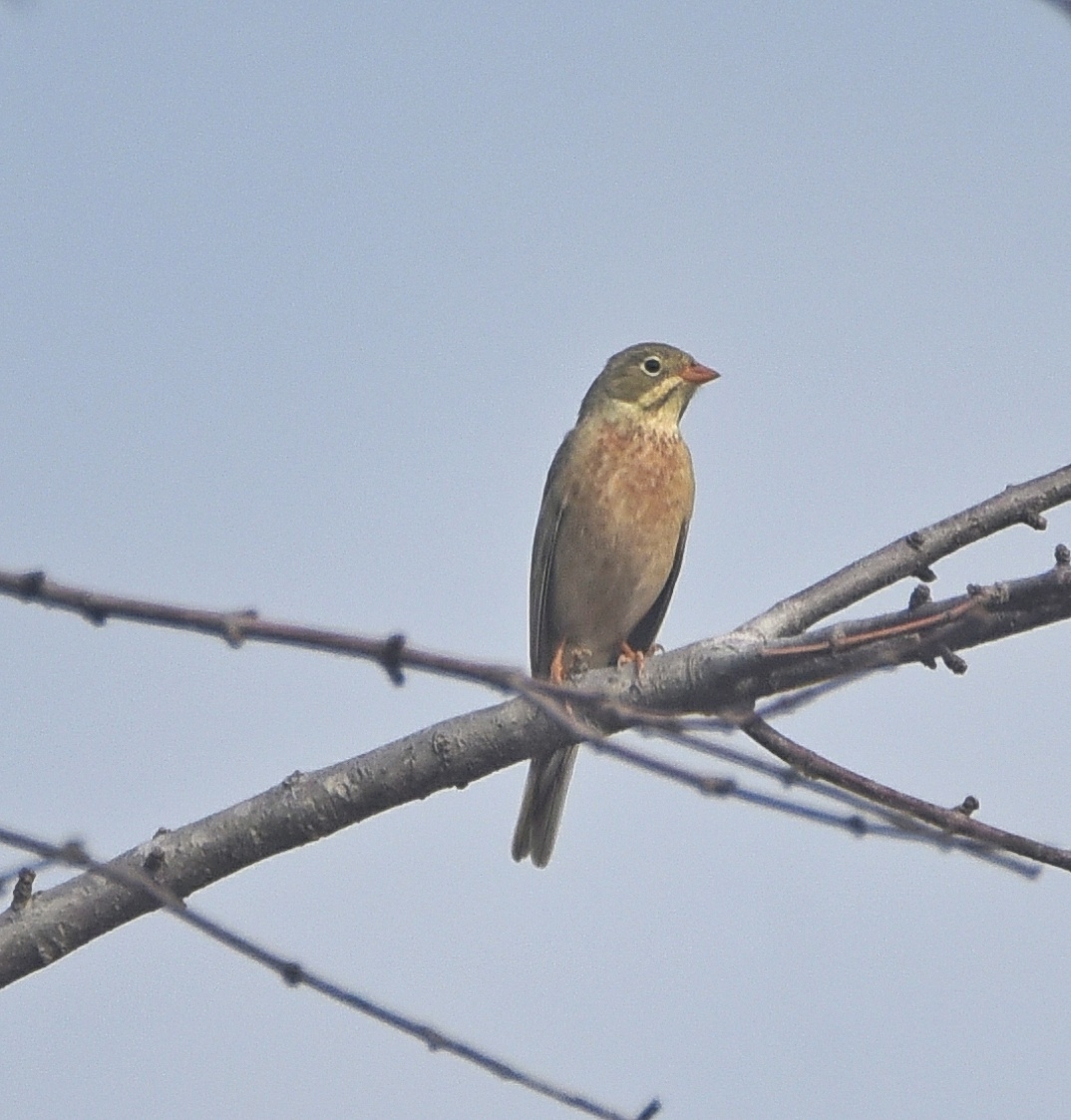
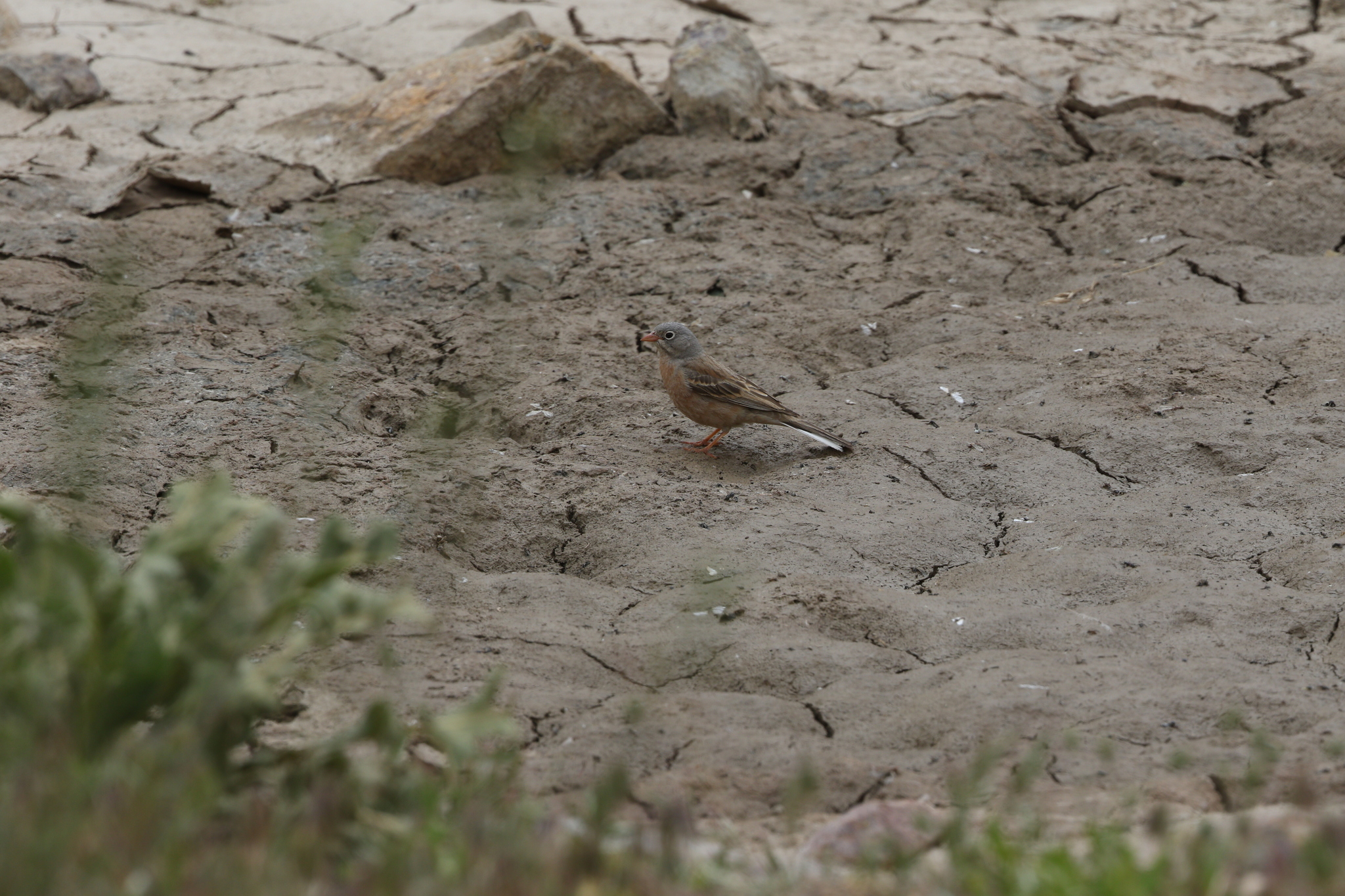
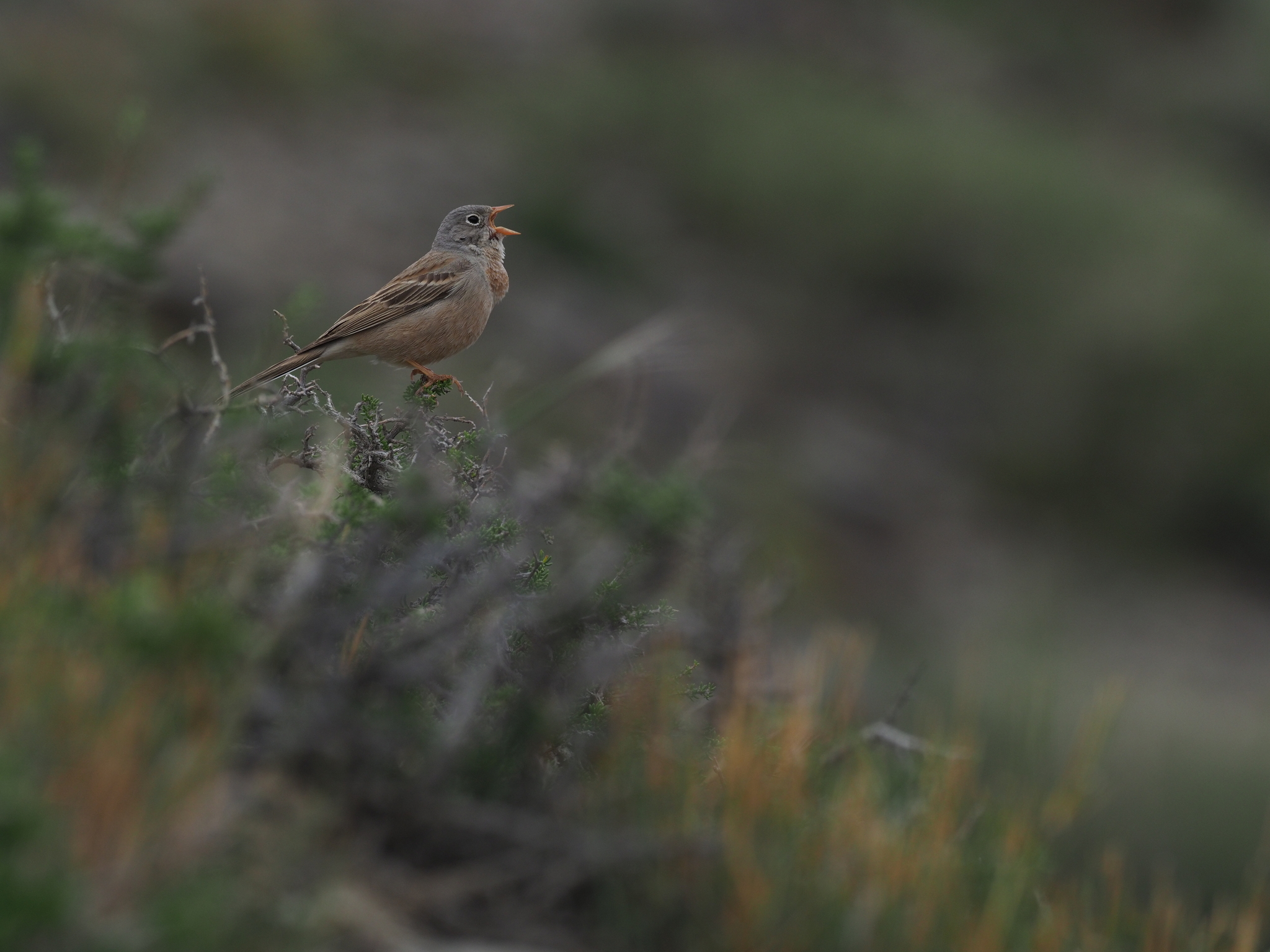
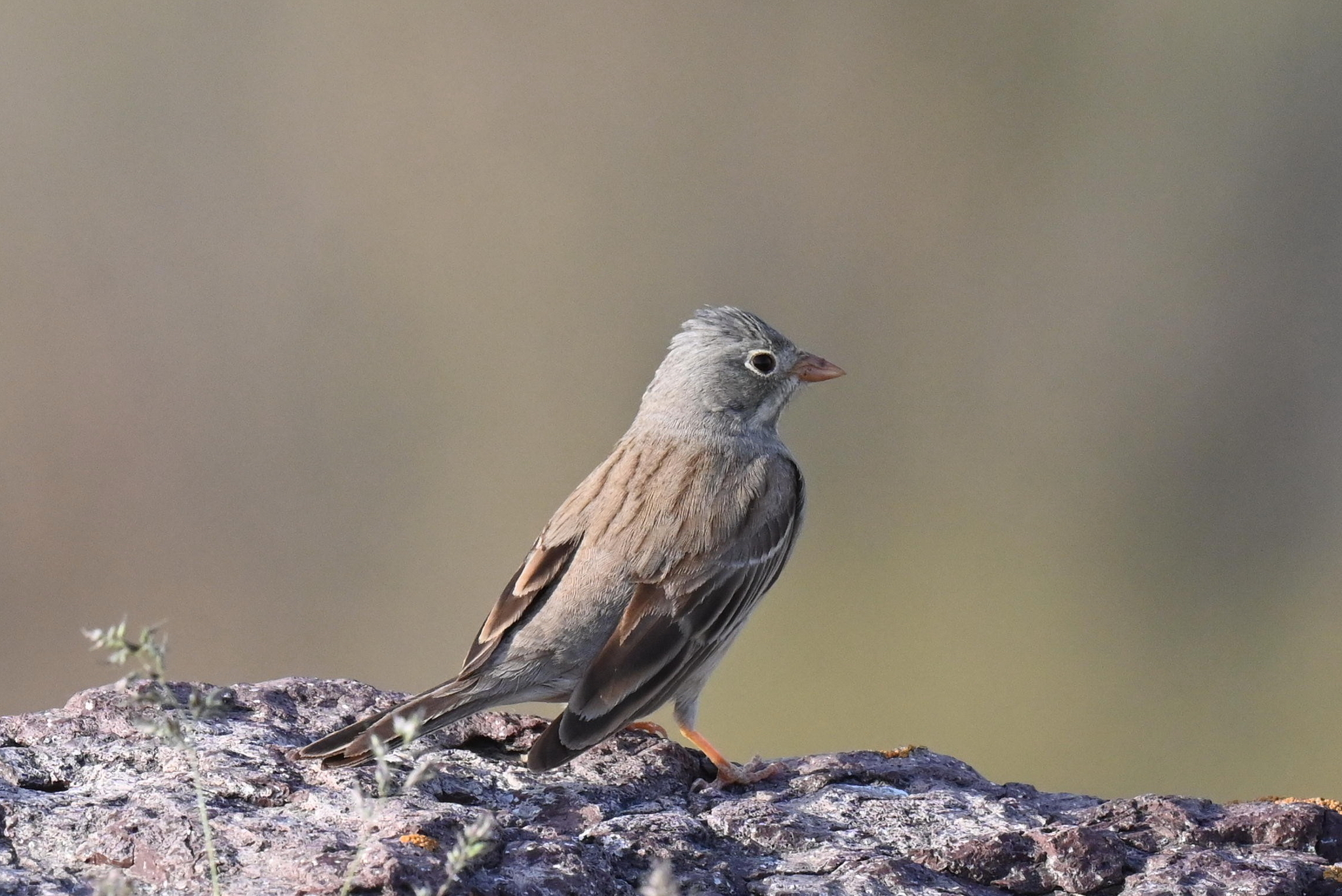
This bunting shows a distinctive long pink bill that serves as a key identification feature. The upperparts are greyish, while the male wears a conspicuous grey hood that contrasts sharply with a prominent white eye-ring. The chin and throat are whitish-pink, framed by distinct grey malar stripes running along the sides of the throat. The underparts display a warm pinkish-brown coloration. Females are noticeably duller overall but may show a more pronounced moustachial stripe than males. The outer tail feathers are whitish, visible in flight. The combination of grey hood, pink bill, and pinkish underparts distinguishes this species from many of its relatives.
Identification
The most reliable field marks are the long pink bill and the male's distinctive white eye-ring against the grey hood. In worn plumage, identification can be challenging due to the strong similarity to the much commoner ortolan bunting, and birdwatchers should pay careful attention to the head pattern and bill color. The pinkish underparts and white eye-ring are key differentiators, though females can be particularly problematic. The species' preference for stony, scrubby hillsides also helps distinguish it from some habitat generalists. The metalling song with its characteristic swee-swee notes ending in a drawn-out dzwe-ee-dul is distinctive once learned.
Distribution & Habitat
This bunting breeds across Central Asia from the Caspian Sea region through Kazakhstan and neighboring countries to the Altai Mountains. Its breeding range extends through Afghanistan, Armenia, Azerbaijan, Iran, Turkey, and the Central Asian republics to Mongolia, China, and Russia. In winter, it disperses southward to the Indian subcontinent, including Nepal, Bhutan, and parts of Pakistan and northwest India, with some records as far south as Sri Lanka. Populations from Baluchistan migrate through Gujarat in September and return north in March. The species is an extremely rare vagrant north of its normal range, with recent records from Finland and the Netherlands, though such wanderers are easily overlooked.
Behavior & Ecology
Outside the breeding season, this bunting occurs in small flocks, moving through its habitat with a characteristic undulating flight pattern. It forages on the ground in open, stony areas, particularly where low thorn scrub provides both feeding opportunities and shelter. The breeding season begins with the arrival at nesting territories in March, with nest construction shortly thereafter. The nest is built on the ground, typically positioned beneath overhanging vegetation for concealment, and lined with grass and hair. The song, delivered from a perch on a bush or rock, consists of short, shrill notes that increase in volume - a metallic jingle quite unlike the simpler songs of related species. In winter, the species gives only a short, subdued click note.
Conservation
The species is currently assessed as Least Concern by the IUCN, reflecting its relatively large geographic range and apparently stable population trends. While specific population numbers are not well documented, the species' extensive distribution across multiple countries suggests it is not currently facing significant conservation concerns. However, as with many grassland and scrubland species, potential threats include habitat degradation through overgrazing or agricultural intensification. The species' reliance on specific dry, scrubby habitats means that significant changes to these landscapes could affect local populations.
Culture
This species holds little documented cultural significance in folklore or tradition, reflecting its relatively restricted geographic range and the remote nature of much of its habitat. The scientific name commemorates Francis Buchanan-Hamilton, a Scottish physician and naturalist who worked extensively in India during the early nineteenth century. The species was described based on his drawings, though the exact date of publication remained uncertain for many years, with some sources suggesting 1845 rather than the commonly cited date due to delays in the journal's publication.
Source: Wikipedia · CC BY-SA 3.0
Taxonomy
- Order
- Passeriformes
- Family
- Emberizidae
- Genus
- Emberiza
- eBird Code
- gyhbun1
Vocalizations
Subspecies (3)
-
Emberiza buchanani buchanani
breeds Afghanistan to western Pakistan; winters to southeastern India
-
Emberiza buchanani cerrutii
eastern Türkiye, Russia south of the Caucasus to Iran; Mugodzhary Mountains
-
Emberiza buchanani neobscura
Tajikistan to western Xinjiang, eastern Kazakhstan, and western Mongolia
Data Sources
Species description from Wikipedia, licensed under CC BY-SA 3.0.
Bird images and sounds sourced from GBIF, contributed by citizen scientists worldwide under Creative Commons licenses.
Taxonomy data from AviList 2025.