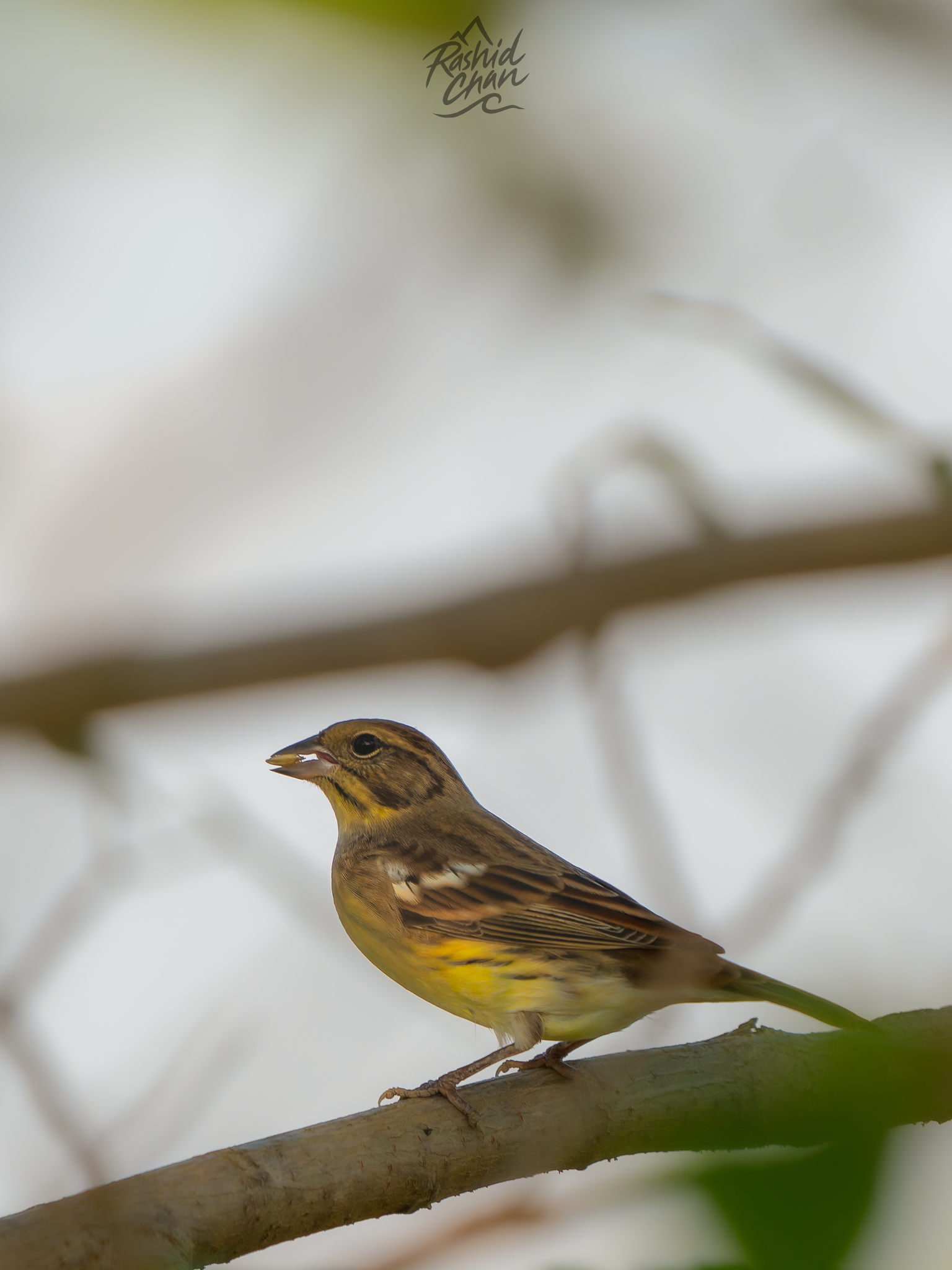
Yellow-breasted Bunting
Emberiza aureola
黄胸鹀
Introduction
The yellow-breasted bunting is a small passerine that was once widespread across the Boreal and East Palearctic regions. The species is relatively stocky and gathers in large flocks during migration. It has a sharp 'zick' call and a clear song of 'tru-tru, tri-tri'. During the breeding season, males display distinctive plumage. Populations have collapsed due to intensive trapping in China, where birds are caught during migration and sold for consumption under the names 'sparrows' or 'rice birds'. The species has declined from common to critically endangered in just two decades.
Description
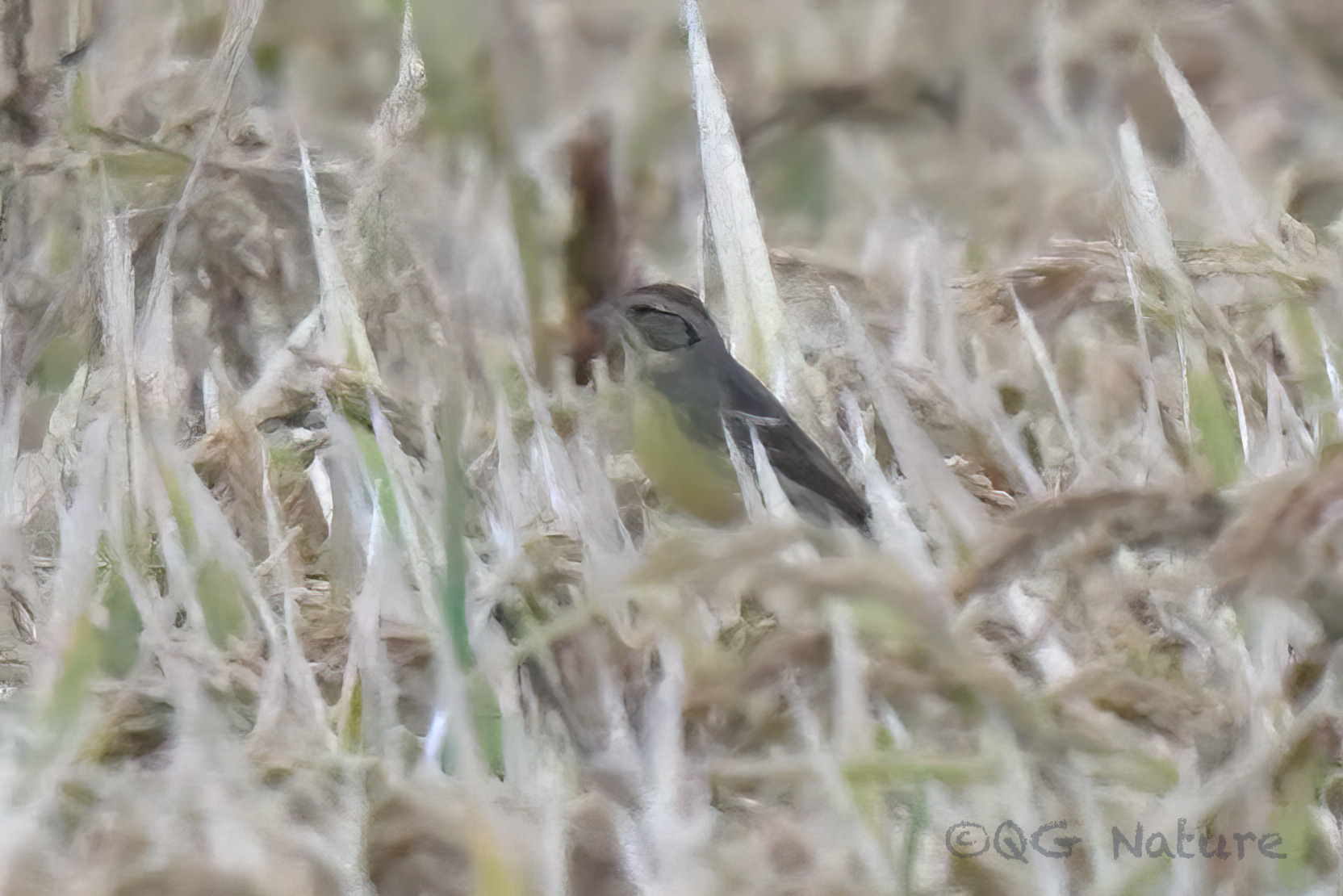
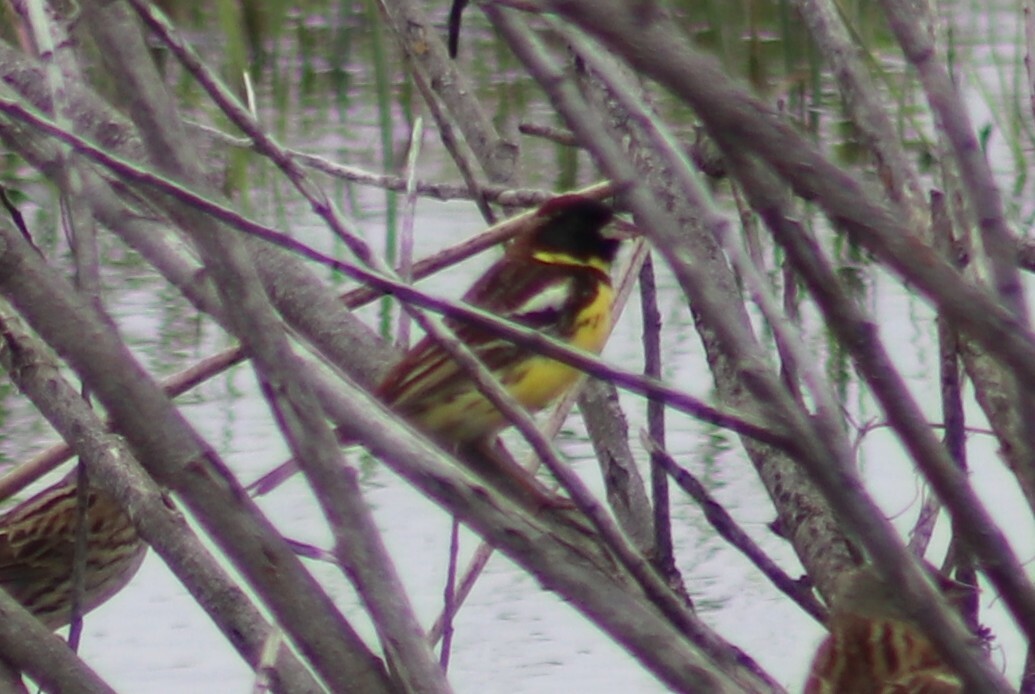
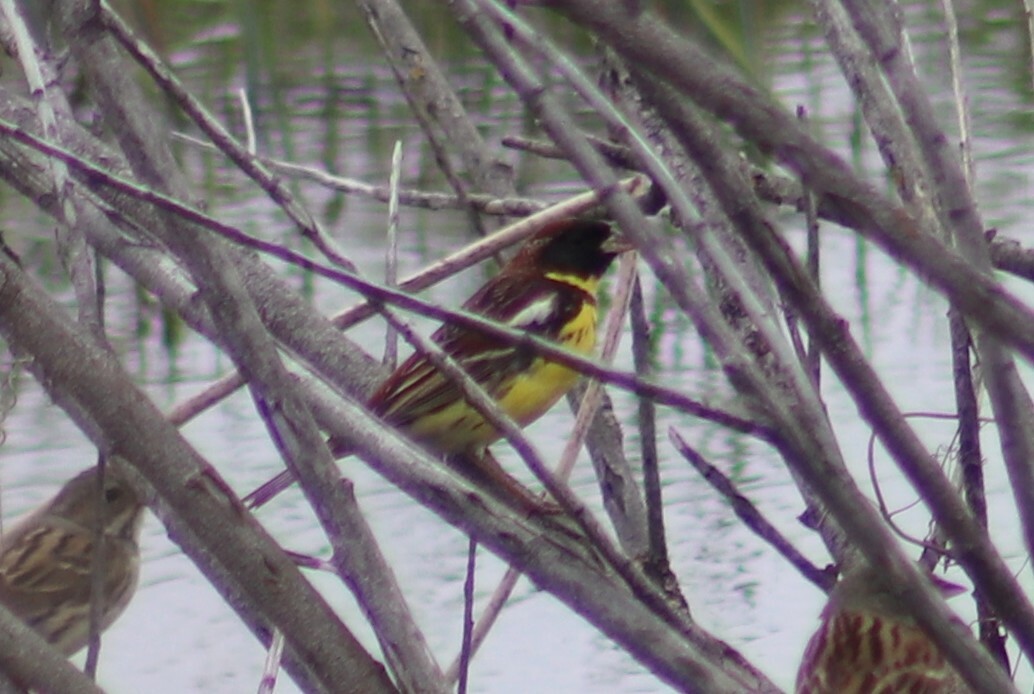
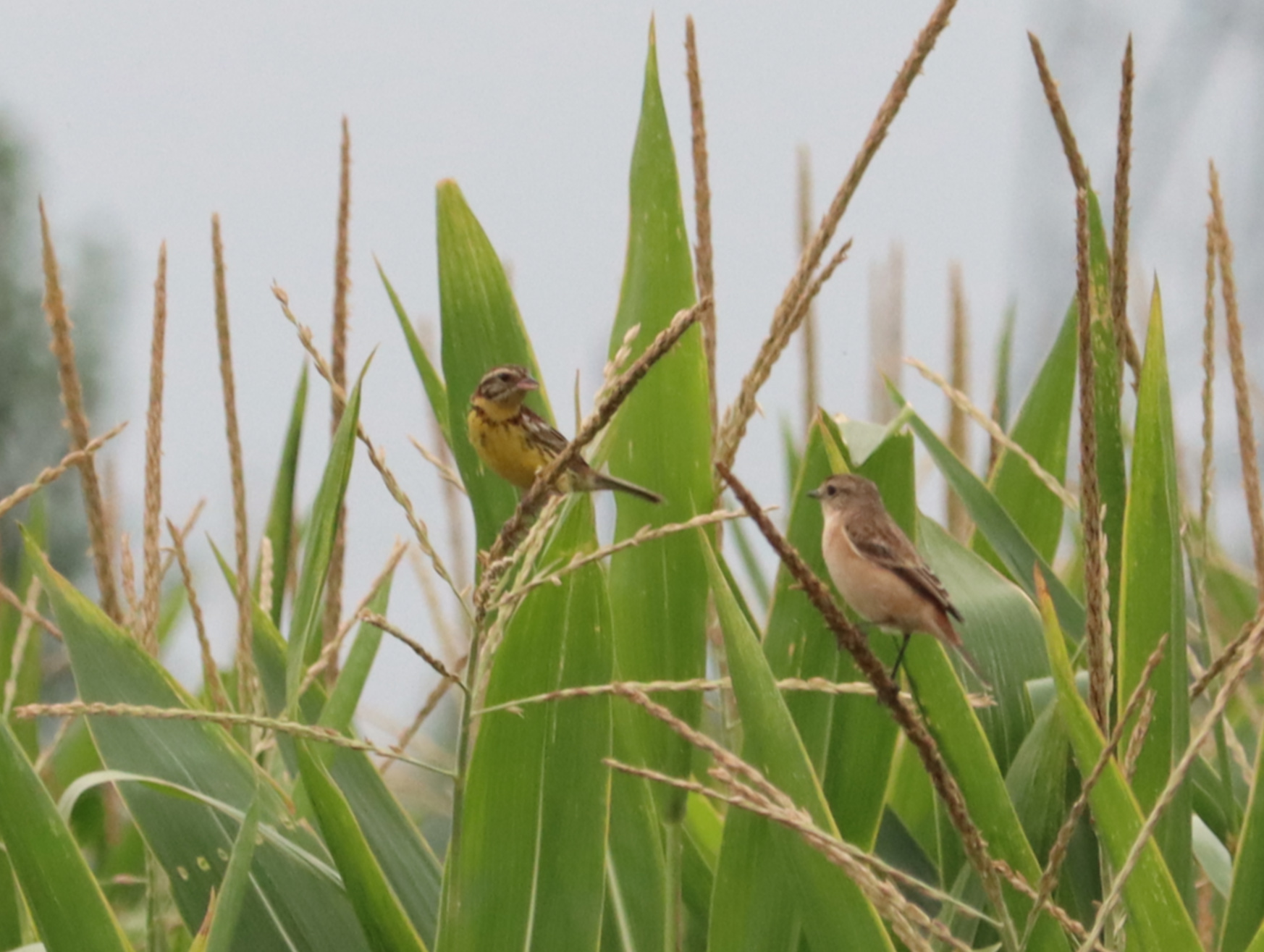
This is a small bunting measuring 14-16 cm in length and weighing 17-26 g. Despite its modest size, it appears relatively large and stocky compared to other buntings. The breeding male is unmistakable, with bright white underparts marked by black flank streaks, brown upperparts, a black face and throat bar, and a pink lower mandible. The female presents a more subdued appearance with heavily streaked grey-brown upperparts and less intensely yellow underparts. She has a whitish face marked by dark stripes on the crown, through the eye, and across the cheek. Juveniles resemble the female but have a buff wash to the underparts and face rather than the cleaner tones of the adult female.
Distribution & Habitat
Two subspecies occur across the species' range. The nominate race breeds in boreal forests from Finland east to the Bering Sea, migrating to Indochina for the winter. The eastern subspecies breeds from the Amur River through Manchuria, North Korea, Kamchatka, and the Kuril Islands, wintering in southeast Asia, India, and North Korea. The species is migratory throughout its range. While primarily an Asian species, it is a rare but regular wanderer to western Europe, with approximately four records from the Aleutian Islands of Alaska and a single 2017 record from Labrador, Canada. During winter, birds form large flocks in cultivated areas, rice fields, and grasslands, preferring to roost in reedbeds and rice fields. Remarkably, roosts of up to 6,378 birds were documented in early 2023 at the Kyon Ka Pyin-Tap Seik Conservation Area in Myanmar's Irrawaddy Delta.
Behavior & Ecology
The species breeds in open scrubby habitats near water, typically utilizing dry water rice fields for foraging and reedbeds for roosting. In Siberia, these birds construct their nests on the ground, laying clutches of four to six eggs. Their diet varies seasonally—while raising young, adults primarily feed their offspring insects, but at other times they consume seeds. Outside the breeding season, they are highly social, gathering in large flocks that can number in the thousands at roost sites. The species is vocal throughout the year, with the characteristic 'zick' call serving as an alert note and the clear 'tru-tru, tri-tri' song delivered from prominent perches during the breeding season.
Conservation
The yellow-breasted bunting has undergone one of the most dramatic population collapses of any bird species in recent decades. Listed as Least Concern as recently as 2004, it has since been progressively uplisted to Critically Endangered. The decline, beginning in the early 2000s, has been driven primarily by intensive trapping during migration and at wintering sites. In southern China, hunters flush birds from roosts and capture them in mist-nets for sale as food, marketed as 'sparrows' or 'rice birds'. While this hunting was initially localized, increasing wealth and mobility have expanded the practice geographically, with hunters now traveling long distances to harvest sufficient numbers. Conservation measures are complicated by the species' wide distribution and migratory habits, but addressing the unsustainable harvest in China is considered essential for preventing extinction.
Culture
The yellow-breasted bunting has no documented cultural significance, folklore, or mythological associations in the available sources.
Source: Wikipedia · CC BY-SA 3.0
Taxonomy
- Order
- Passeriformes
- Family
- Emberizidae
- Genus
- Emberiza
- eBird Code
- yebbun
Subspecies (2)
-
Emberiza aureola aureola
breeds Murmansk (far northwestern Russia; formerly eastern Finland) eastward to eastern Siberia and southward to far northern Kazakhstan and central Mongolia; winters southern and southeastern Asia
-
Emberiza aureola ornata
breeds south-central Siberia and northeastern Mongolia, northeastern China, and far northern Hokkaido (northern Japan); winters southern and southeastern Asia and southern China
Data Sources
Species description from Wikipedia, licensed under CC BY-SA 3.0.
Bird images and sounds sourced from GBIF, contributed by citizen scientists worldwide under Creative Commons licenses.
Taxonomy data from AviList 2025.