Pied Heron
Egretta picata
斑鹭
Introduction
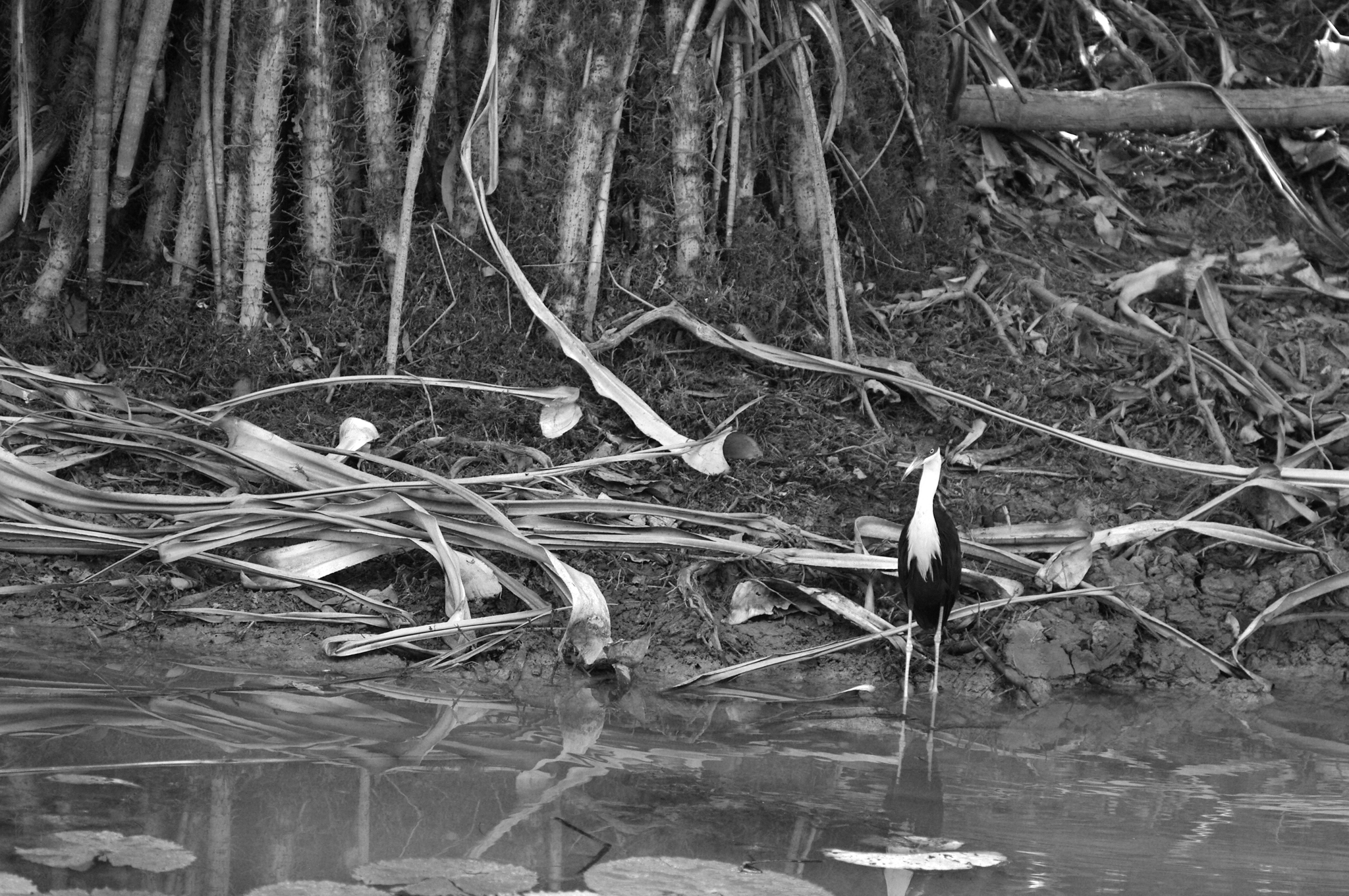
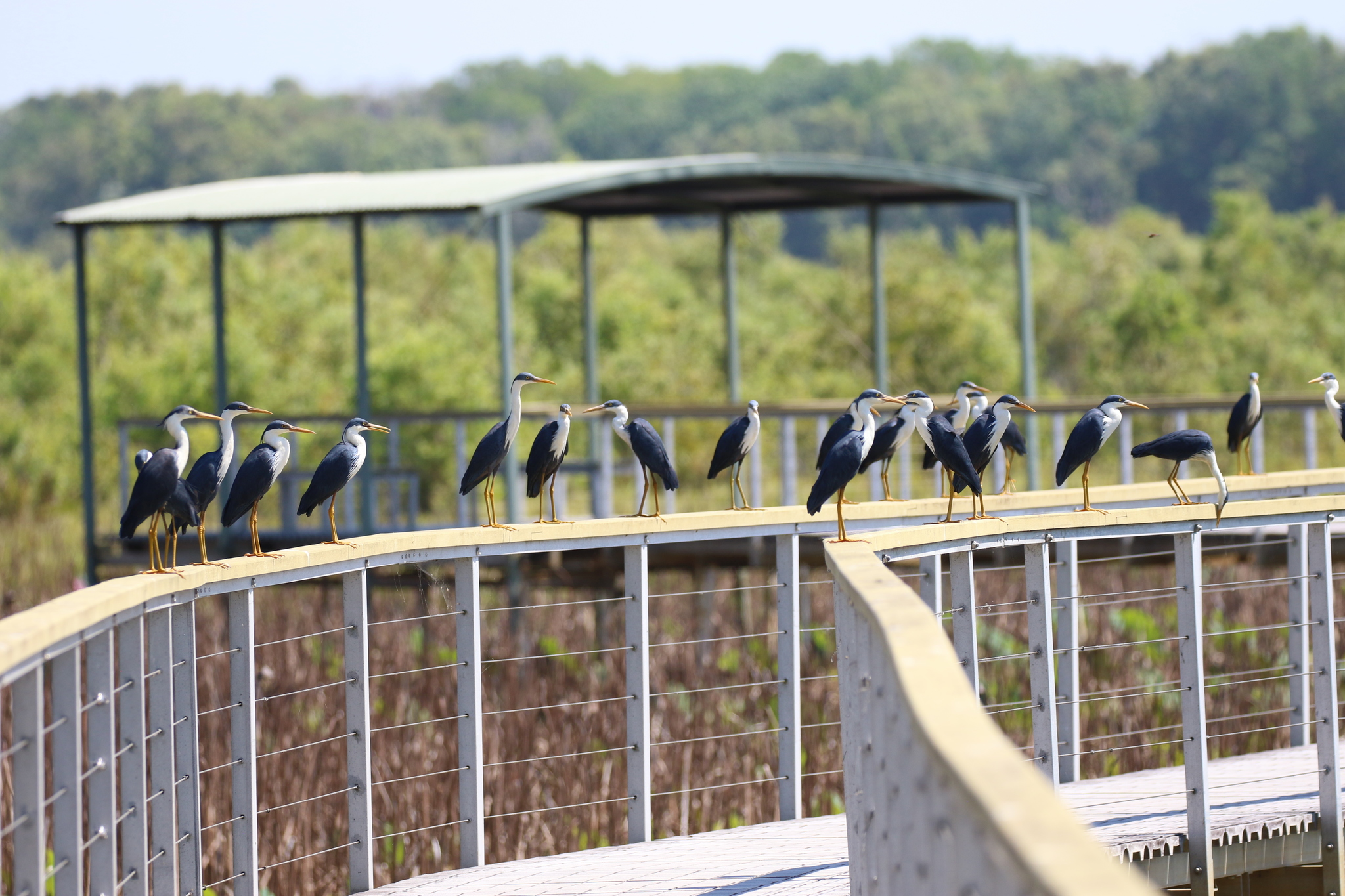
This heron occurs across the monsoonal coastlines and islands from northern Australia through Wallacea to New Guinea. It inhabits wetland environments including shallow waters, wet grasslands, and mangrove edges. The species was formally described by John Gould in 1845 and is monotypic, with no recognized subspecies. It has dark slaty upperparts, white on the throat and neck, and a crest. It forages with patient, deliberate movements and gathers in large flocks numbering in the hundreds or thousands when feeding or roosting.
Description
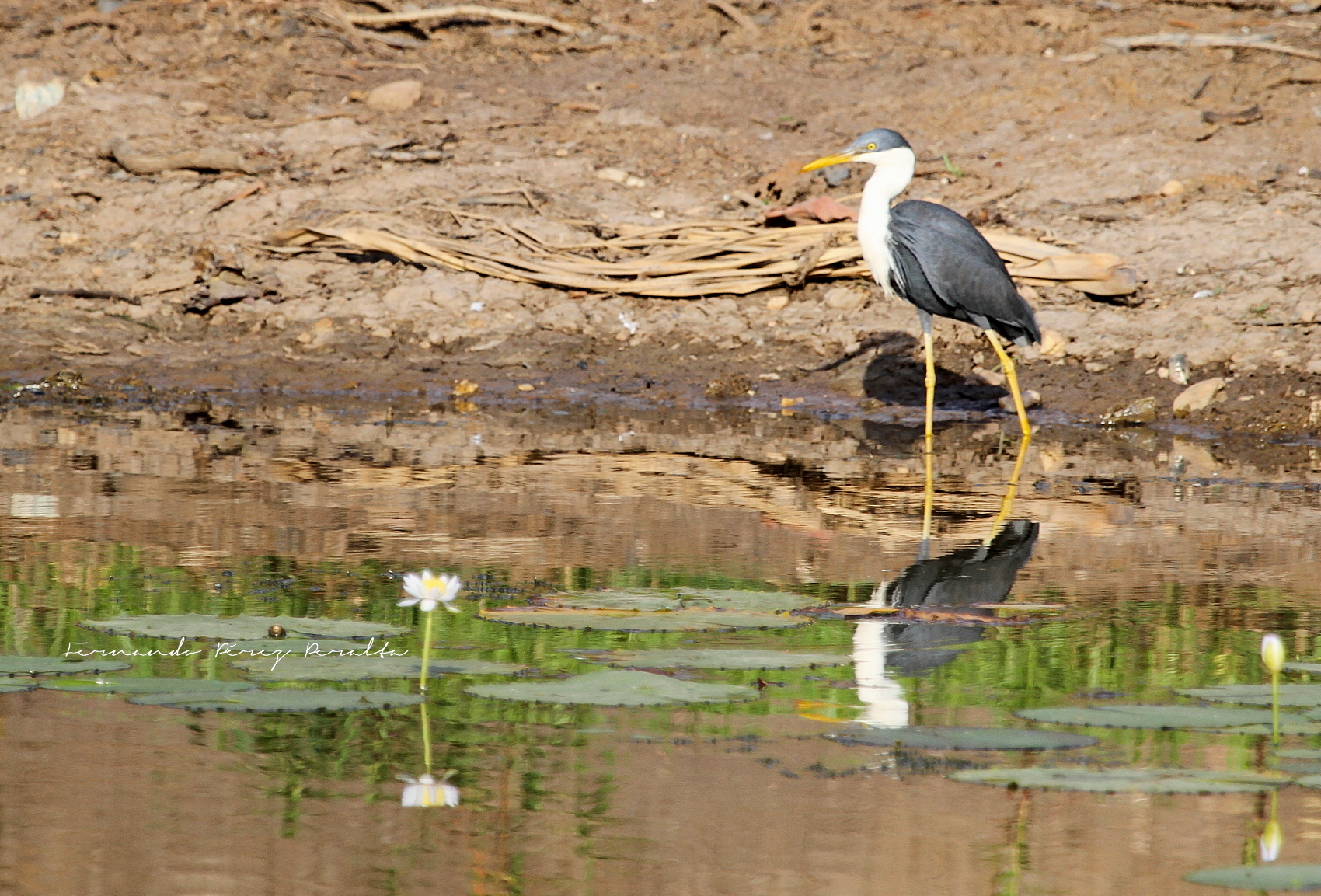
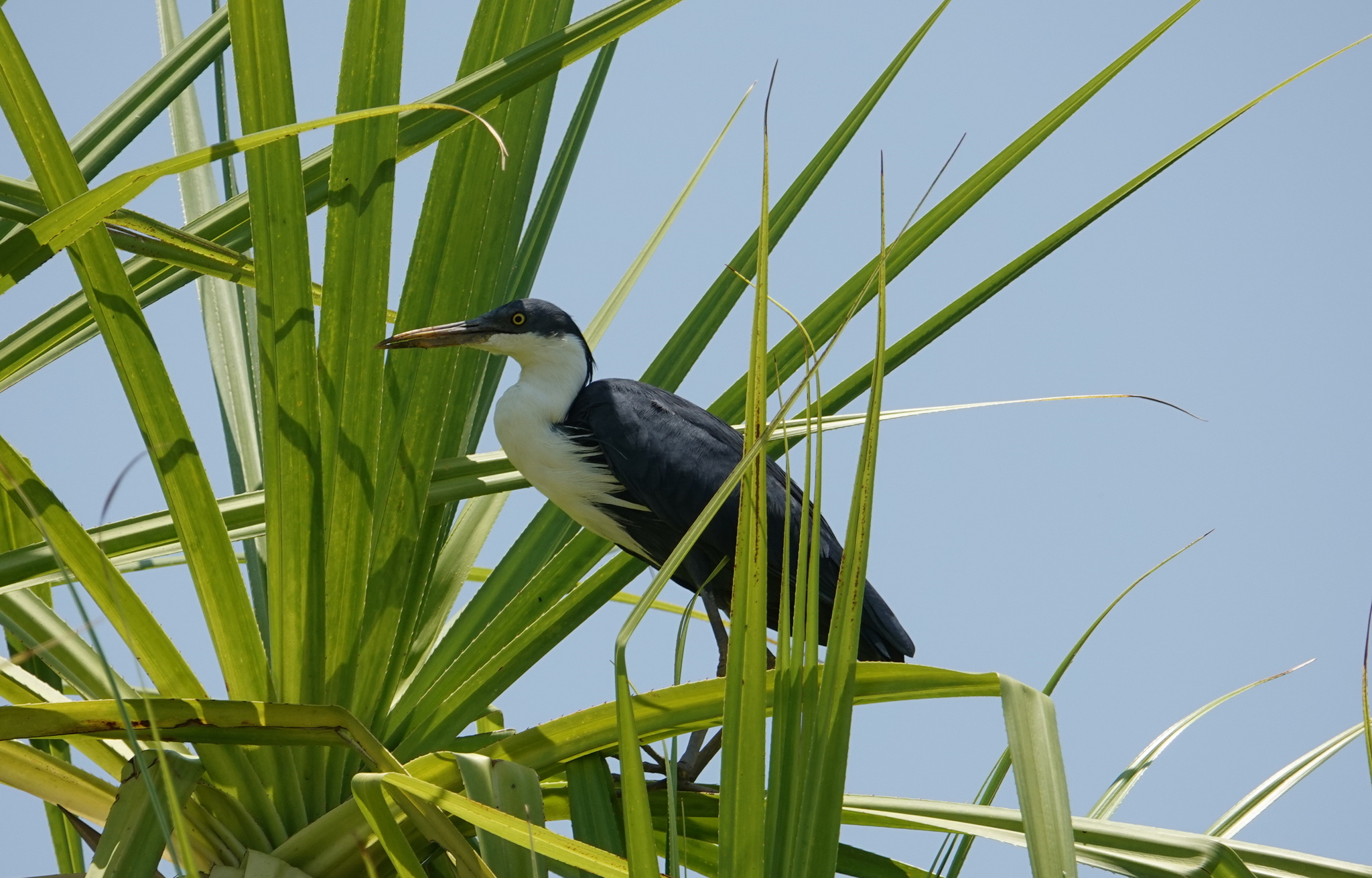
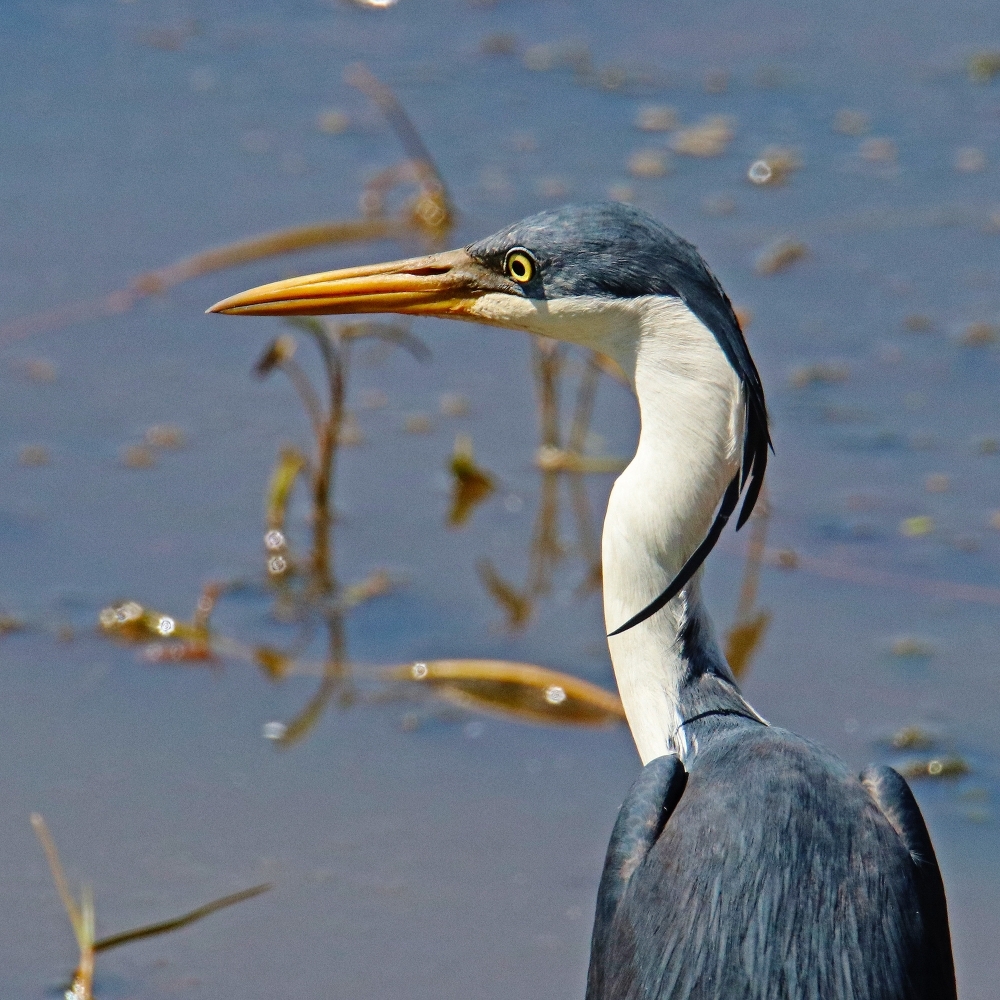
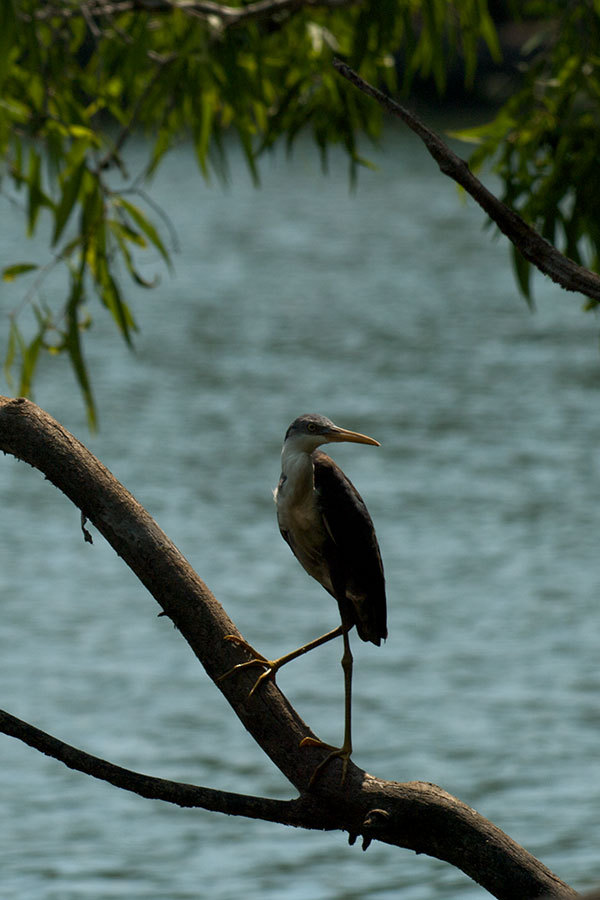
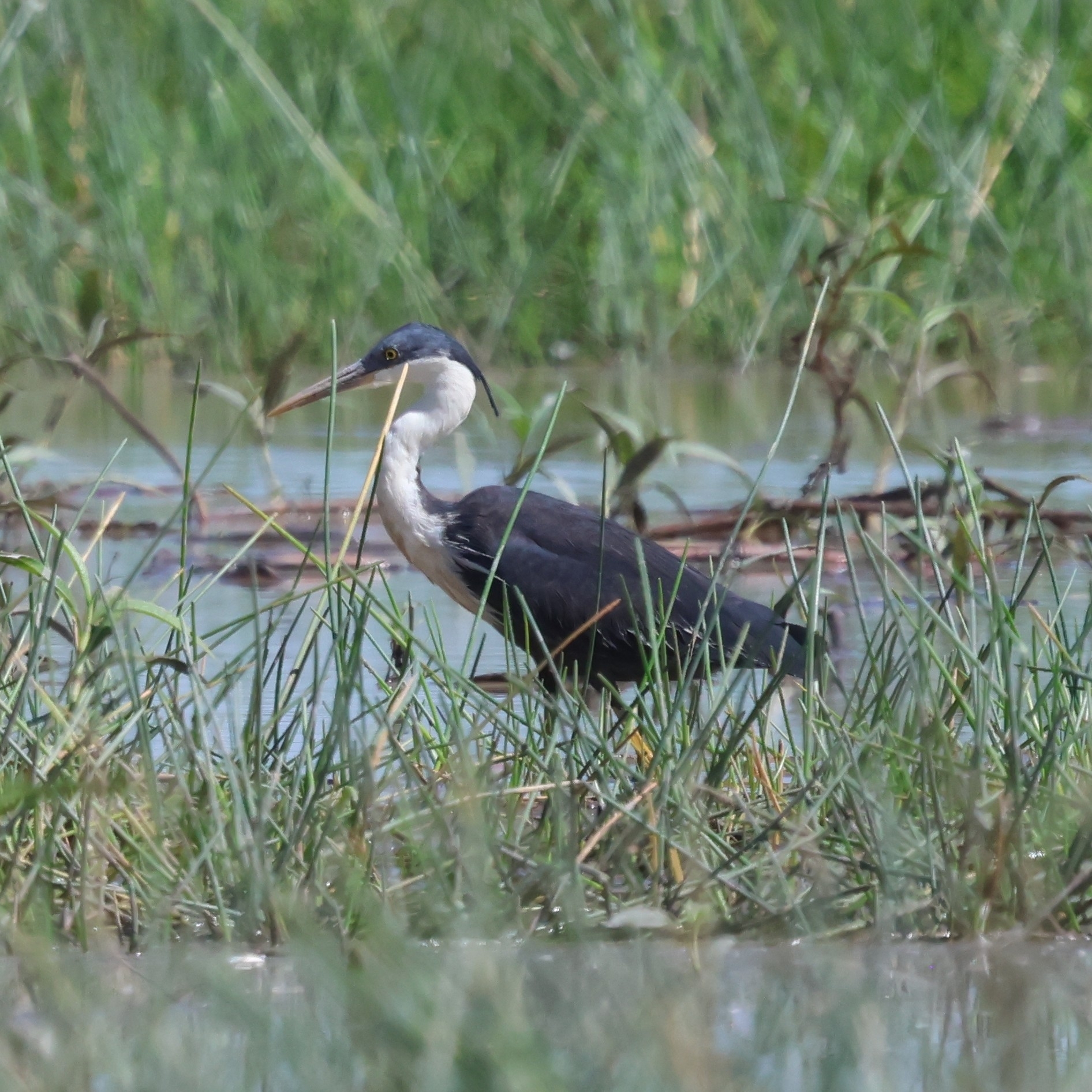
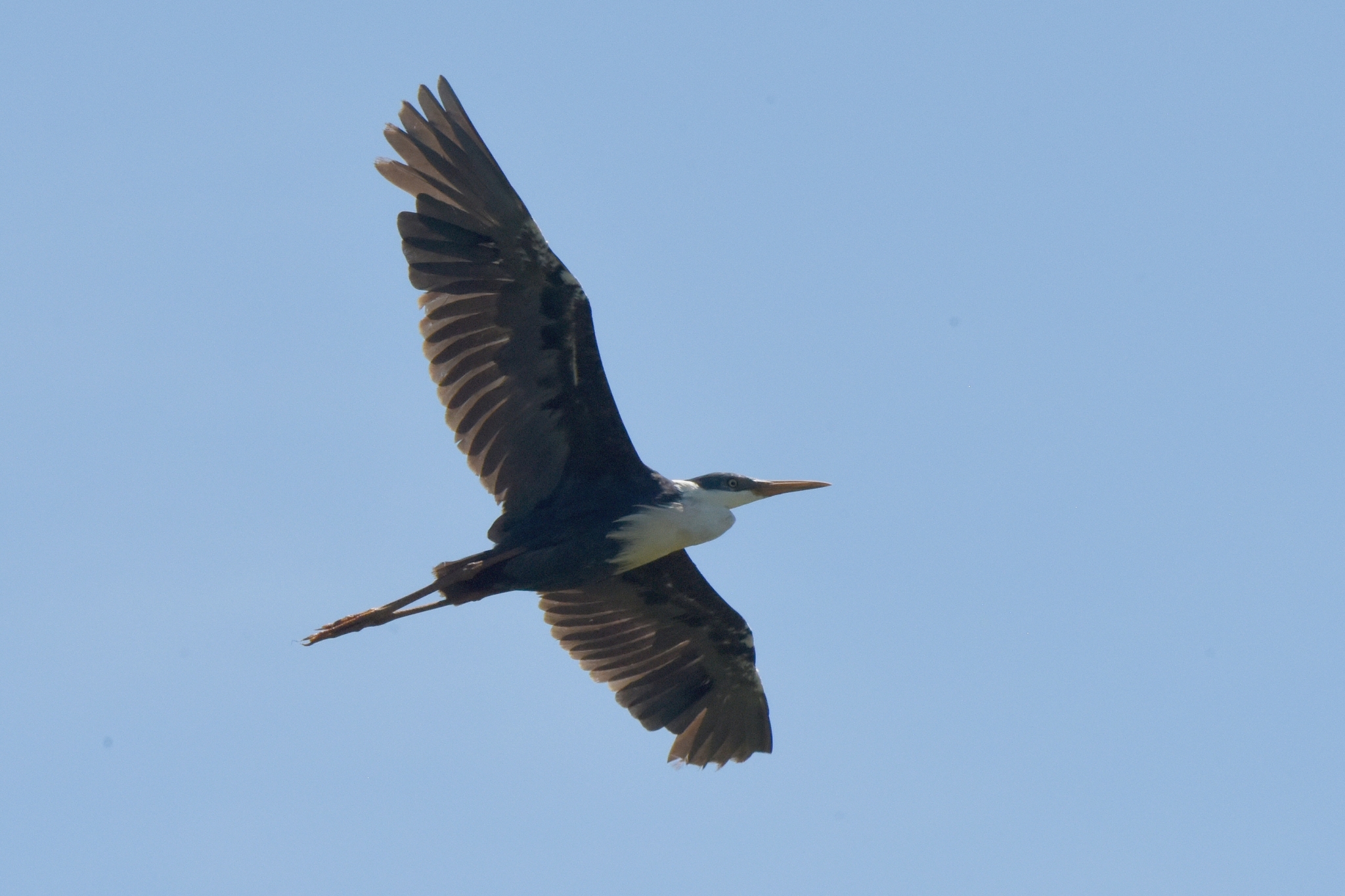
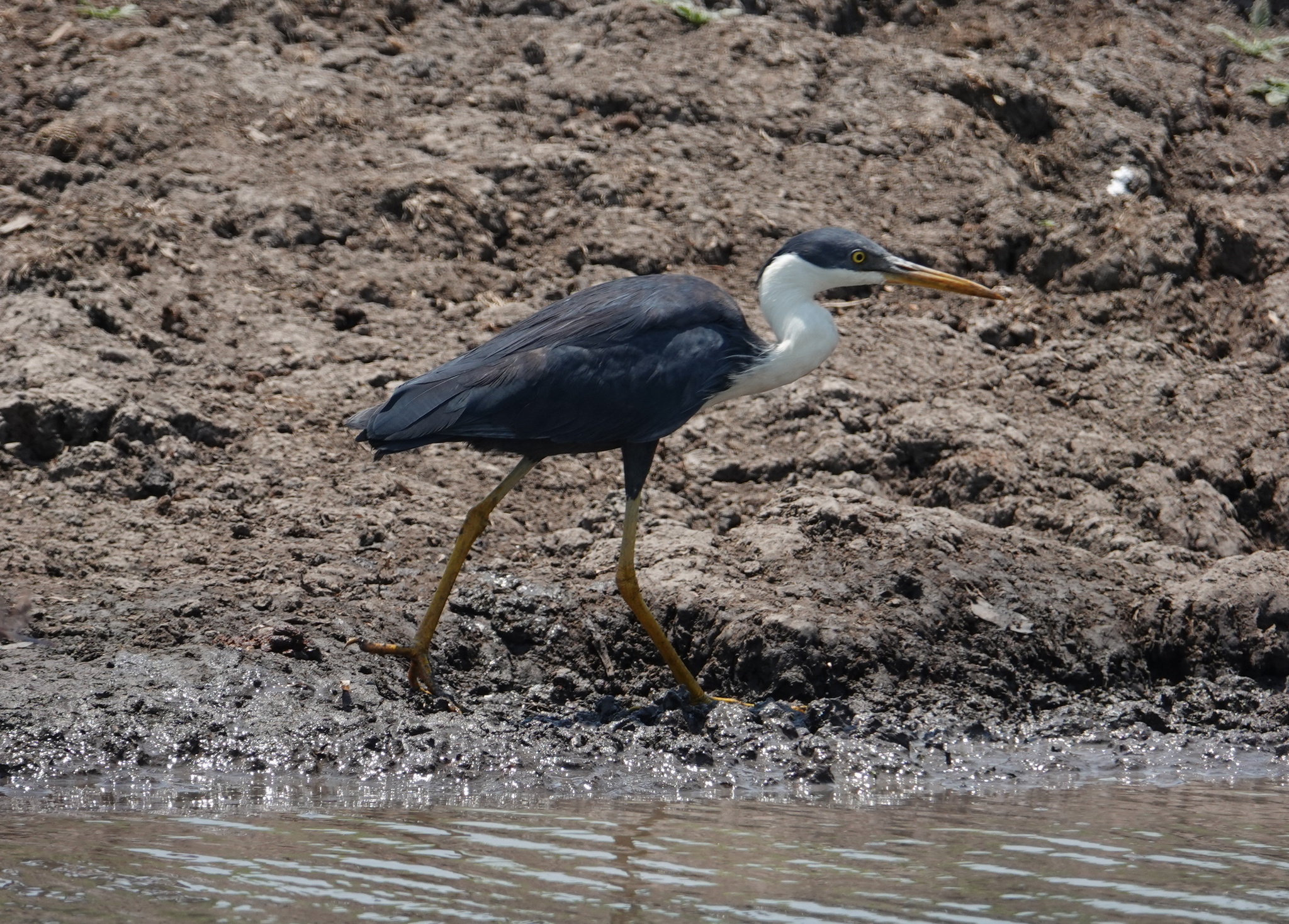
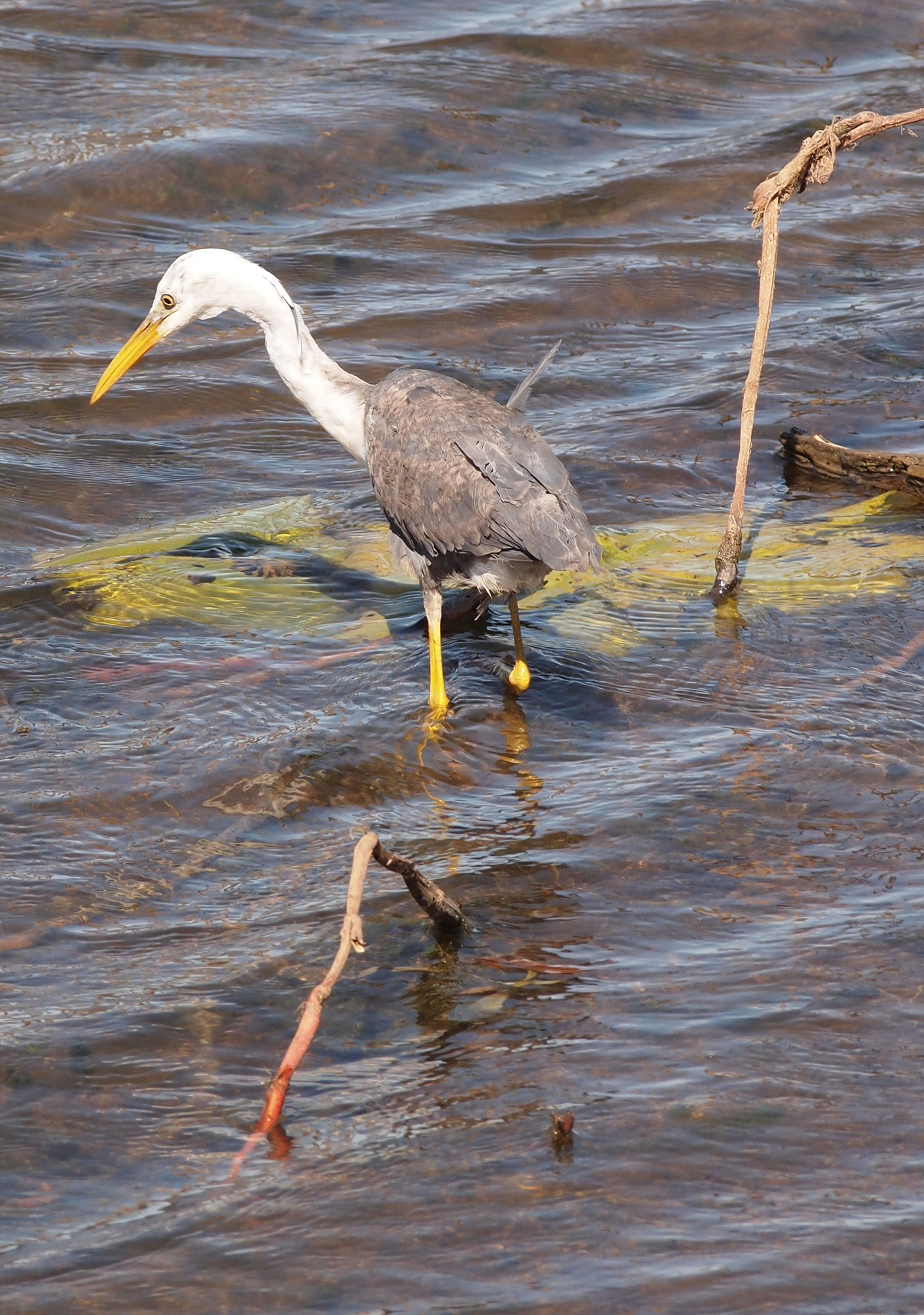
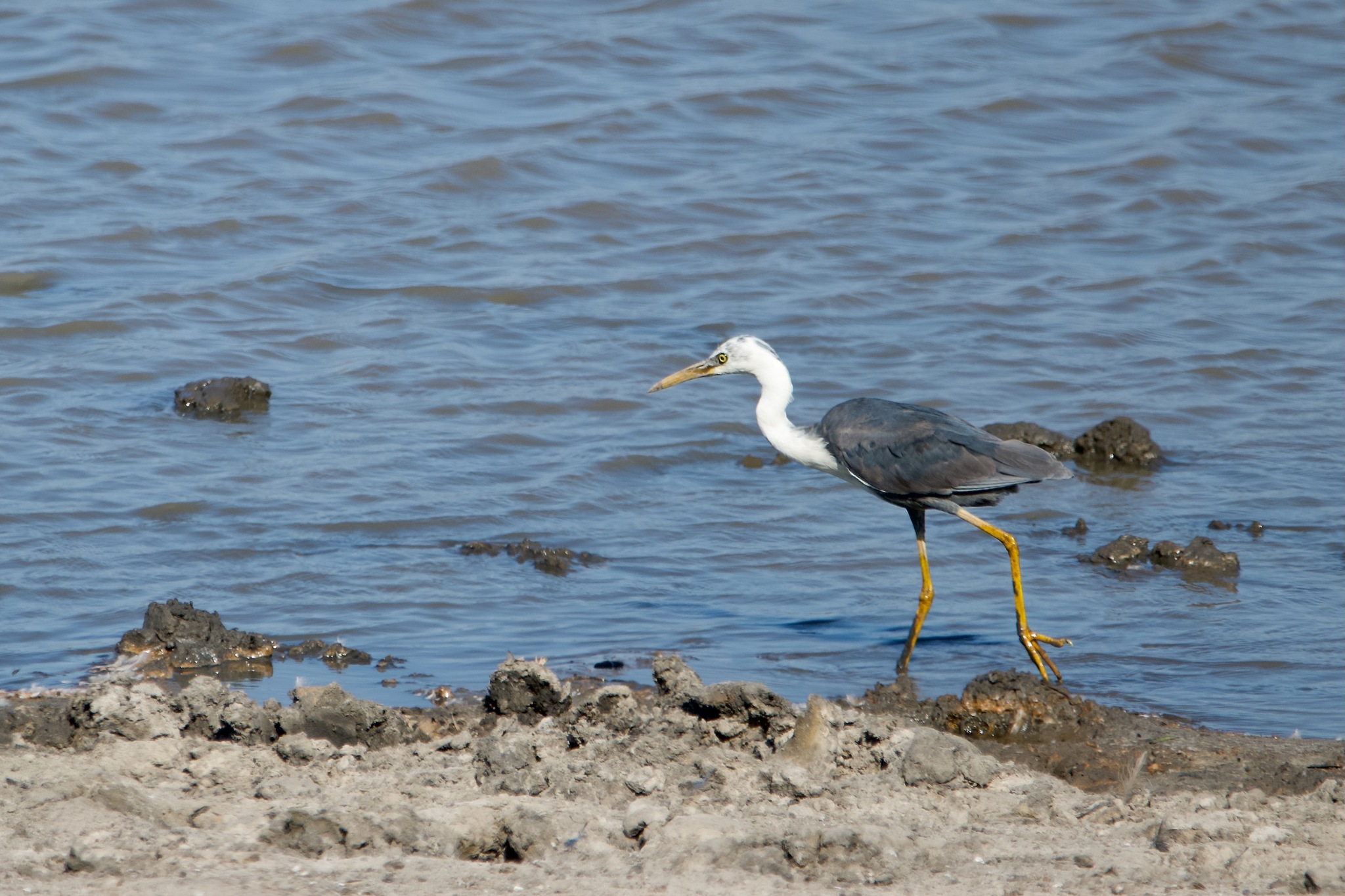
A small, compact heron measuring 43-55 cm in length with a graceful, elongated silhouette typical of the family. The adult plumage is characterized by dark slaty coloration on the wings, body, and head, which bears a distinctive pointed crest. The throat and neck present a clean white that contrasts sharply with the darker upperparts. Sexual dimorphism is subtle but present, with males weighing 247-280 g and females slightly lighter at 225-242 g. Juveniles and immature birds lack the adult's crest and dark head coloration, appearing more uniformly pale and resembling small versions of the white-necked heron to the point where young birds were once classified as a separate species.
Identification
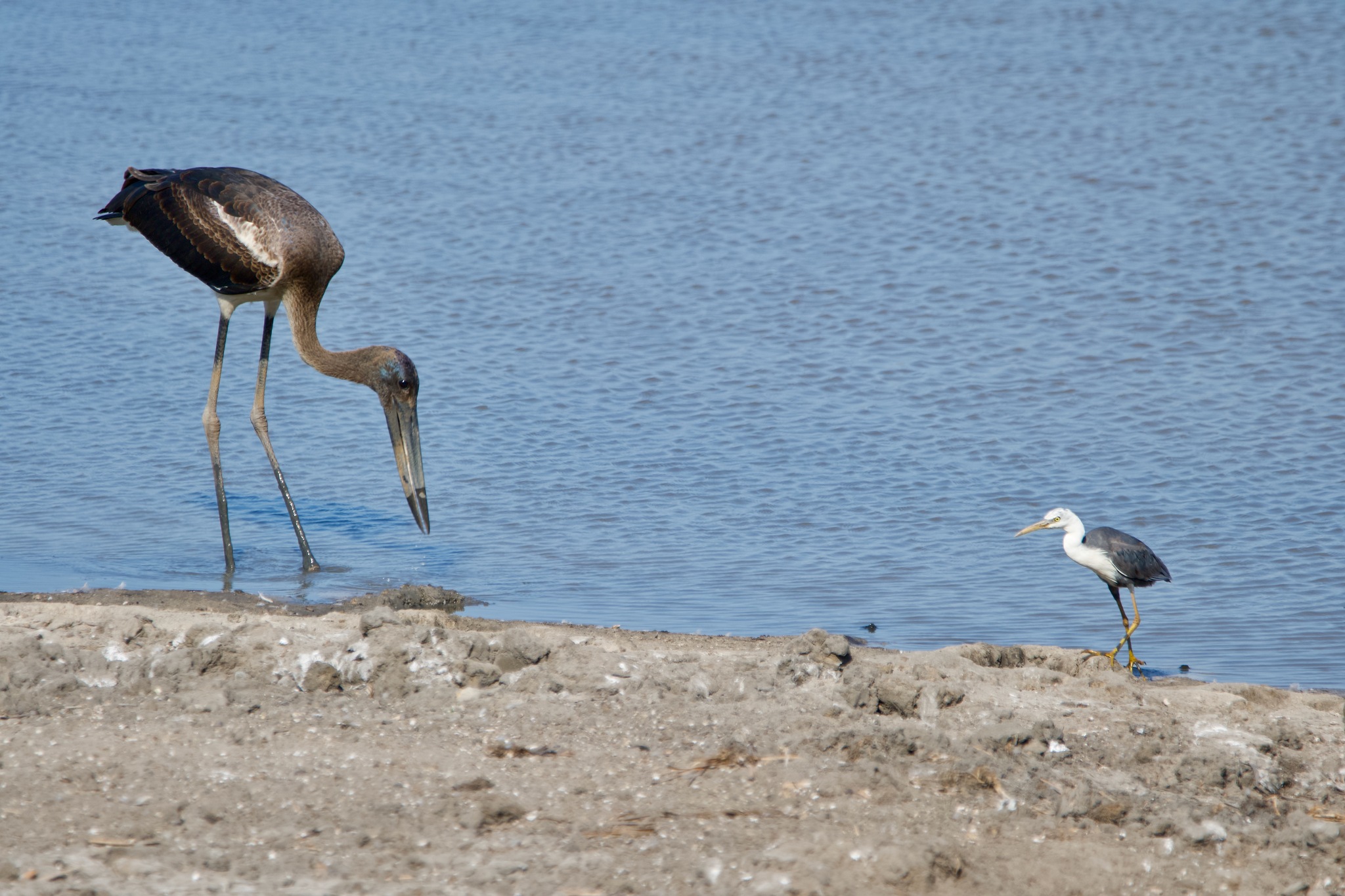
In the field, this species is most likely to be confused with the white-necked heron, though it is significantly smaller and stockier. The key distinguishing feature is the white throat and neck contrasting with dark upperparts versus the white neck and darker body of the white-necked heron. Immature birds present greater identification challenges, as they lack the dark head and crest of adults and closely resemble juvenile white-necked herons, though their smaller size and more compact structure can aid identification when comparison is possible.
Distribution & Habitat
This species occupies coastal and subcoastal regions across the monsoonal belt of northern Australia, extending through the islands of Wallacea and into various parts of New Guinea. Its habitat preference centers on wetlands and wet grasslands, where it utilizes the shallow margins and edges of water bodies. It shows particular affinity for mangrove forests when breeding and forages extensively in both freshwater and brackish wetland environments throughout its range.
Behavior & Ecology
The vocal repertoire is relatively simple, consisting of a loud, harsh 'awk' or 'ohrk' given in flight, while soft cooing sounds are exchanged around the nest. Breeding occurs from February through May, with pairs building shallow stick platforms in trees overhanging water, including mangroves. Colonies often include other heron species. The clutch consists of 1-2 blue-green eggs. Diet is diverse, encompassing insects, frogs, crabs, fish, and other small aquatic animals, with insects forming the most significant prey item. Feeding may occur solitarily or in large aggregations of up to a thousand individuals, particularly in productive wetland areas.
Source: Wikipedia · CC BY-SA 3.0
Taxonomy
- Order
- Pelecaniformes
- Family
- Ardeidae
- Genus
- Egretta
- eBird Code
- pieher2
Distribution
Sulawesi, southern New Guinea, and northern Australia (northeastern Kimberley region, northern Western Australia, to northeastern Queensland; scarce inland)
Data Sources
Species description from Wikipedia, licensed under CC BY-SA 3.0.
Bird images and sounds sourced from GBIF, contributed by citizen scientists worldwide under Creative Commons licenses.
Taxonomy data from AviList 2025.