Green Imperial Pigeon
Ducula aenea
绿皇鸠
Introduction
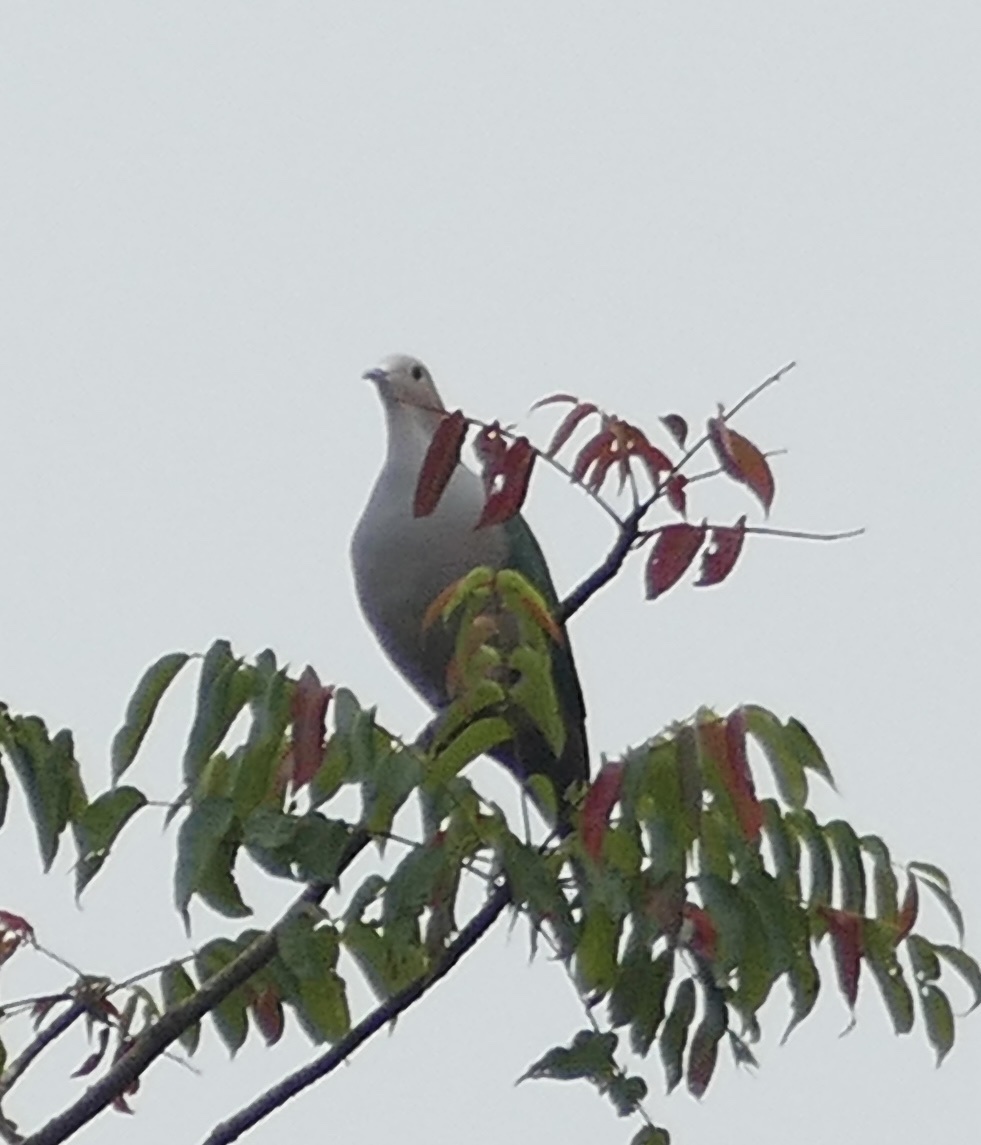
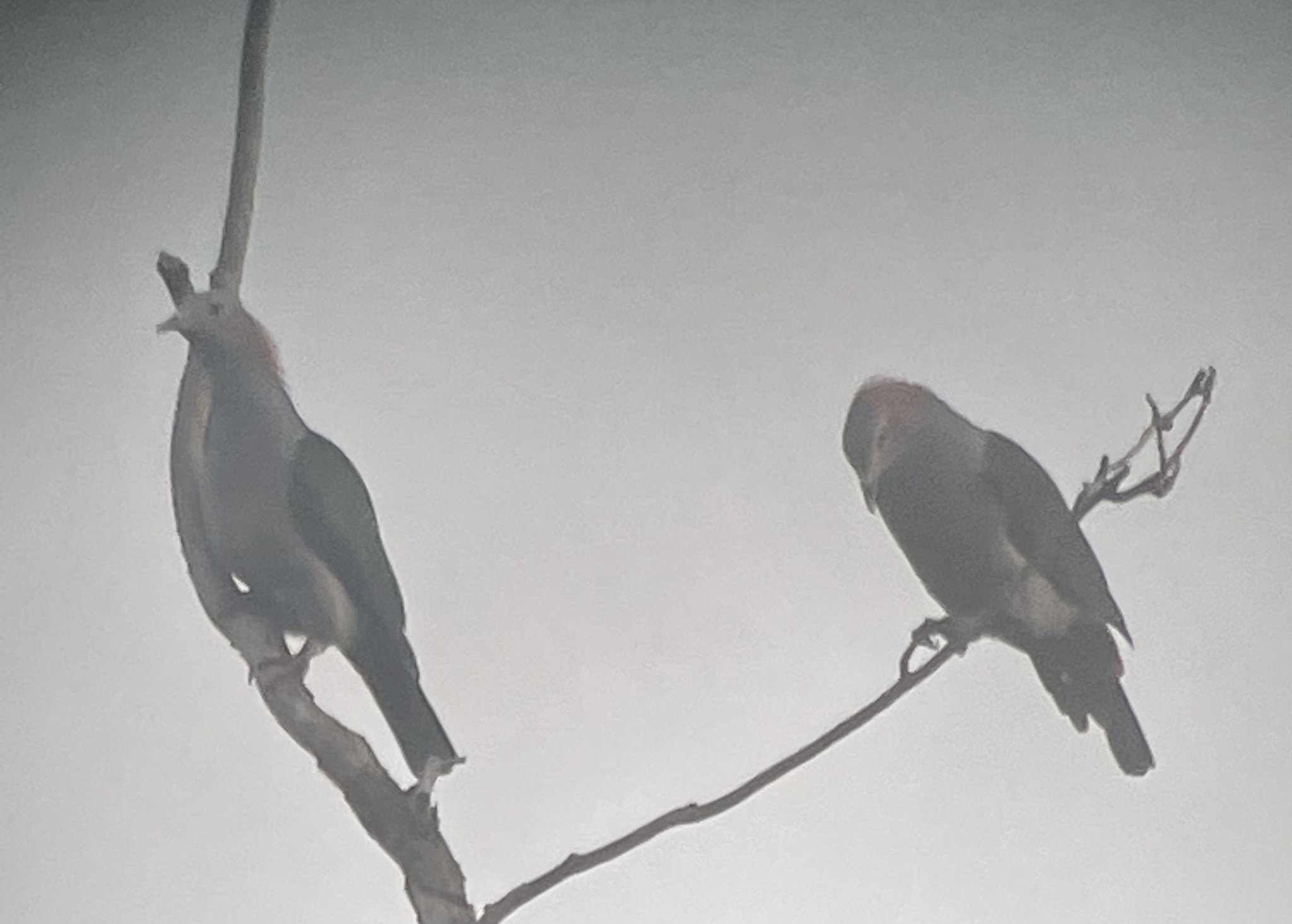
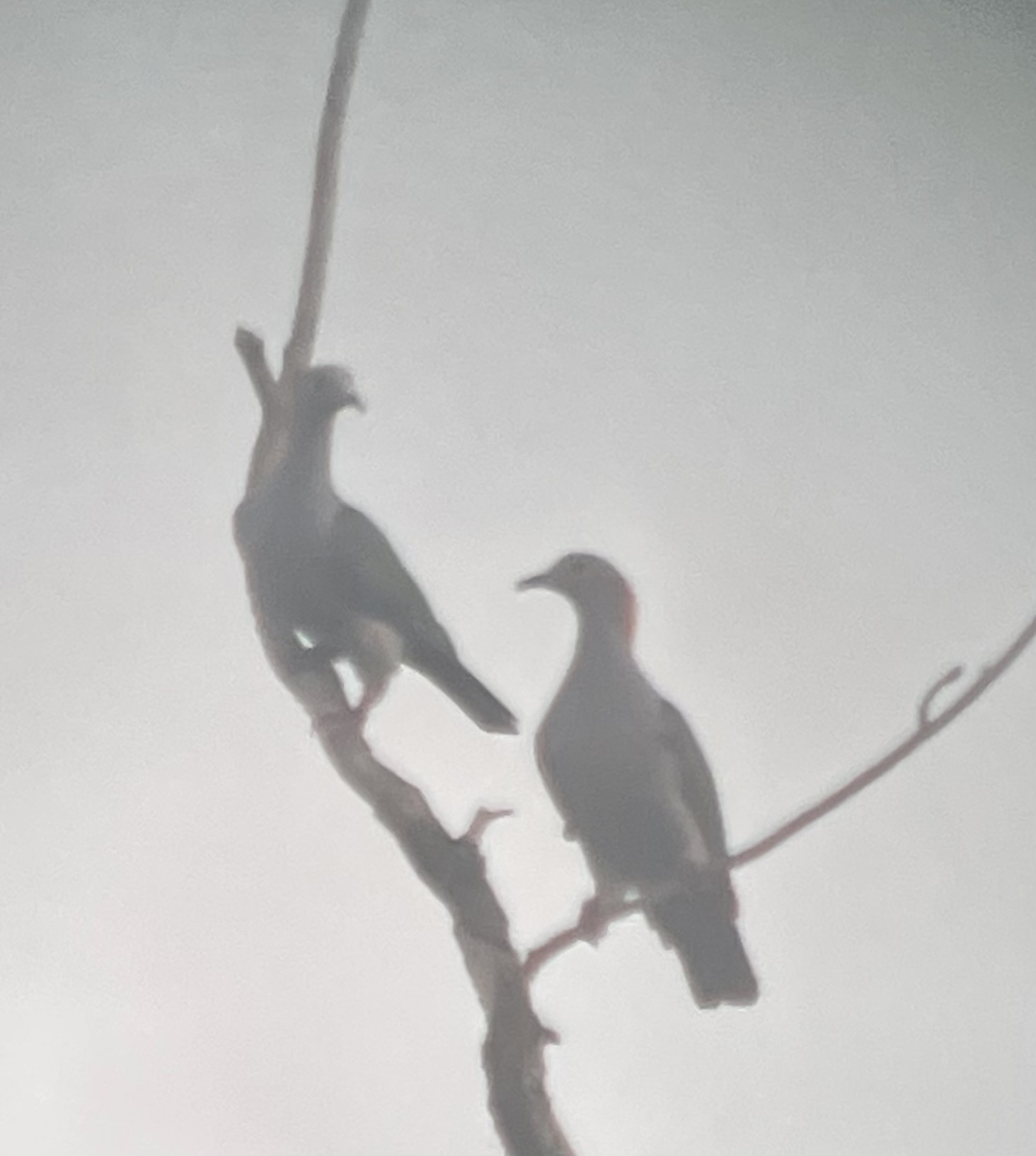
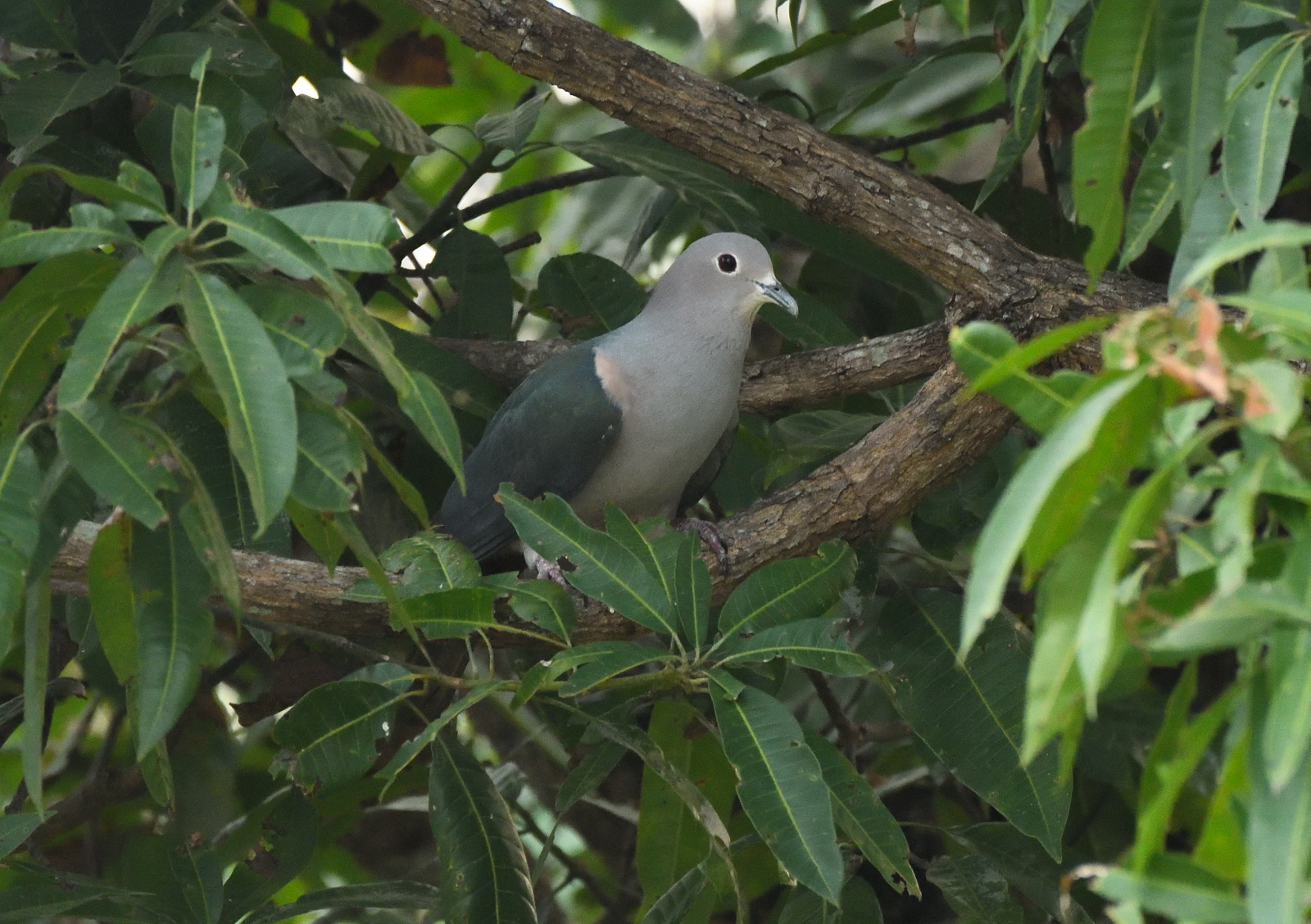
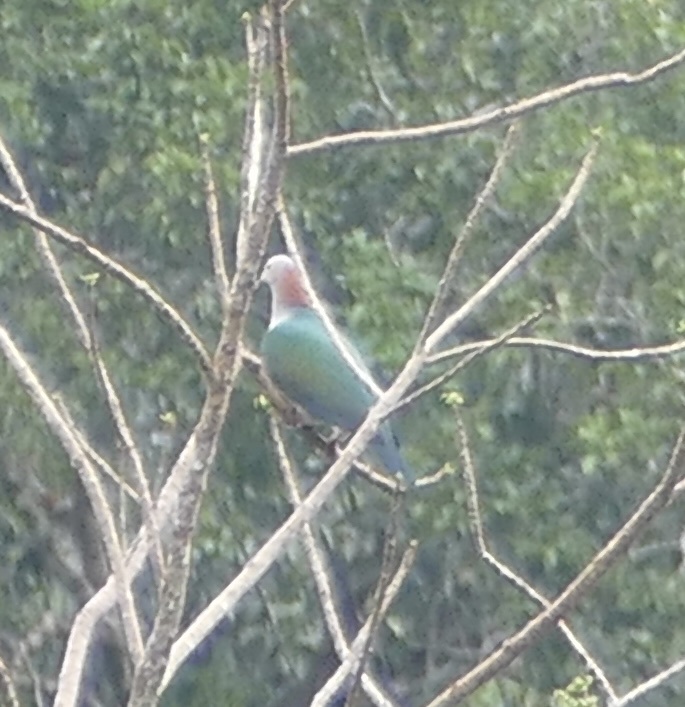
The green imperial pigeon (Ducula aenea) is a large forest-dwelling pigeon in the family Columbidae. It inhabits tropical forests from the Himalayan foothills through Southeast Asia to the Philippines and Indonesia. The species measures approximately 45 centimeters in length and is characterized by metallic green upperparts with a white head and underparts. It occupies lowland and hill forests across its range, where eleven recognized subspecies have been documented. This arboreal species moves through the upper canopy feeding on fruits and plant matter, typically occurring in small groups or pairs rather than large flocks. Its flight is fast and direct with characteristic wing beats. The species' call is deep and resonant.
Description
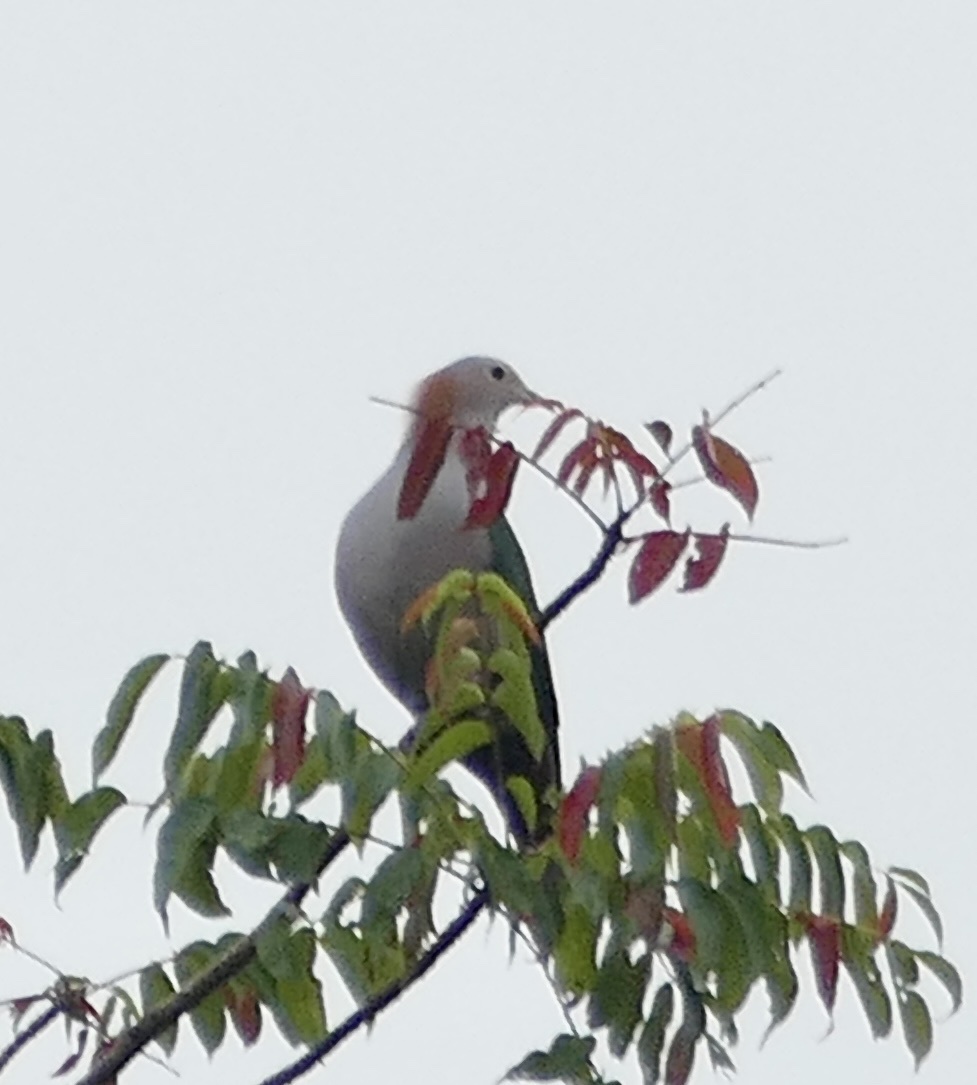
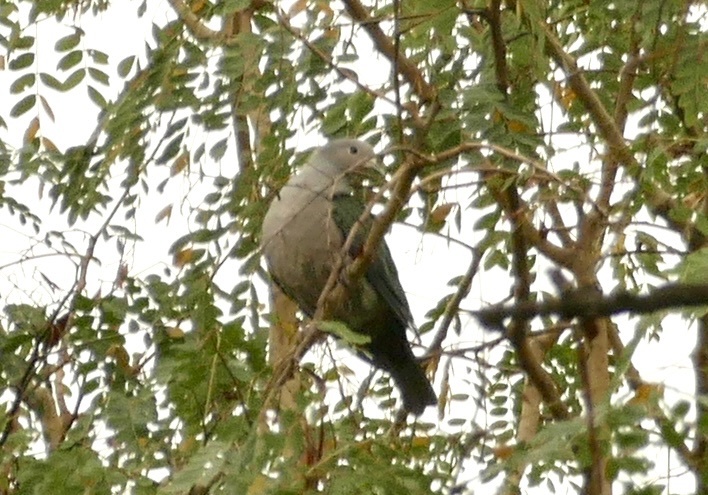
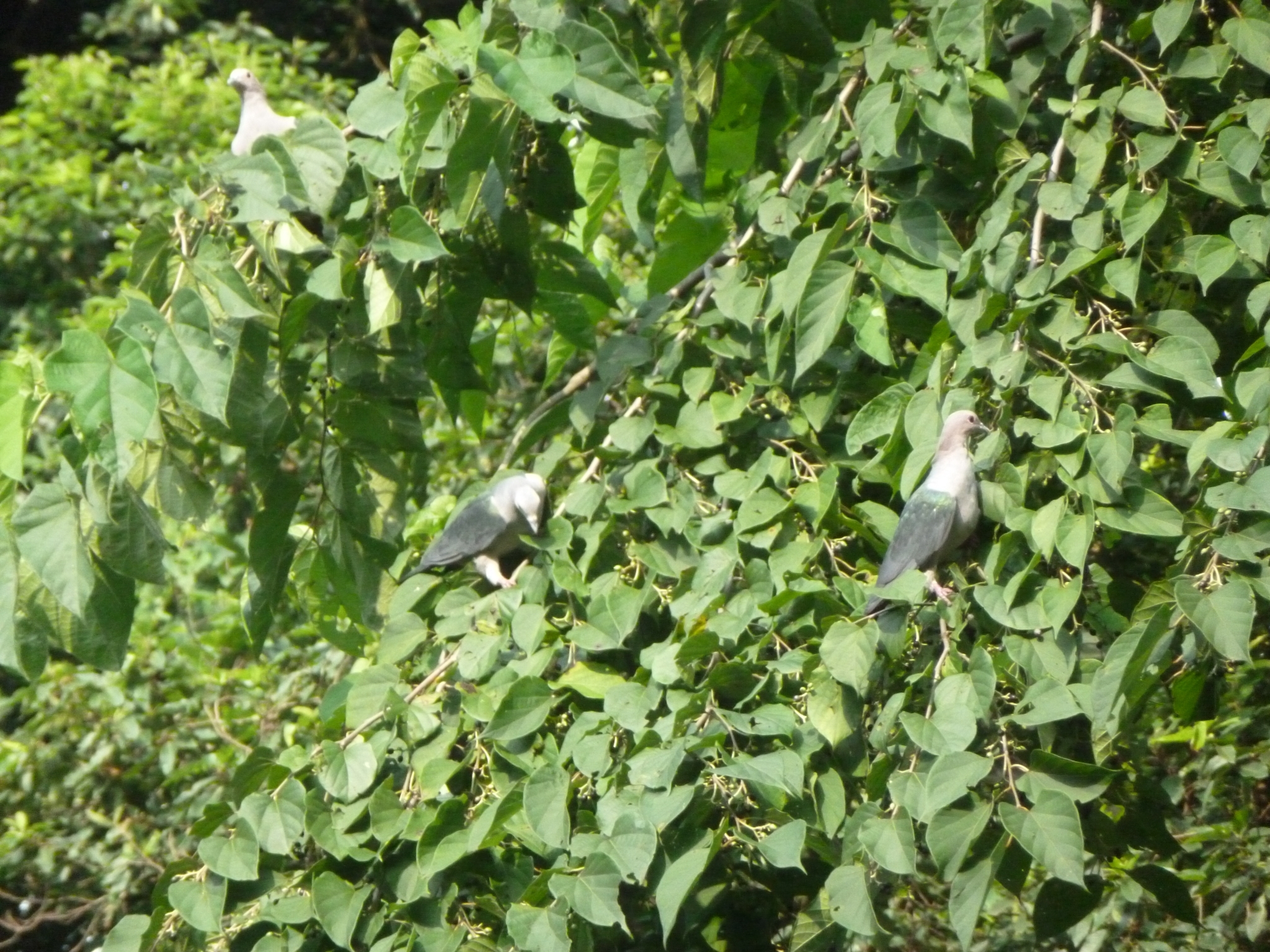
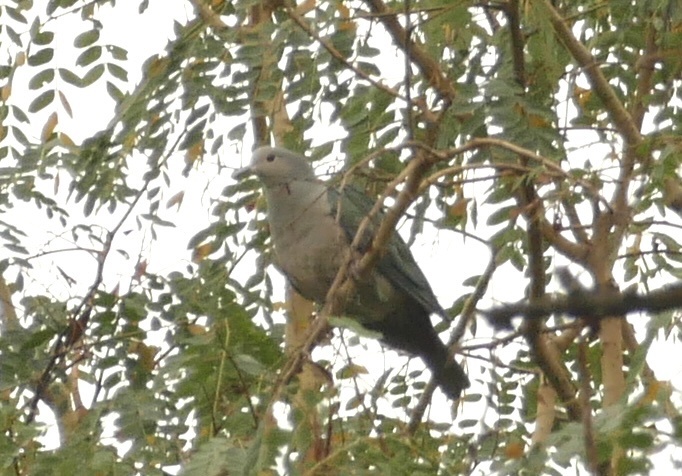
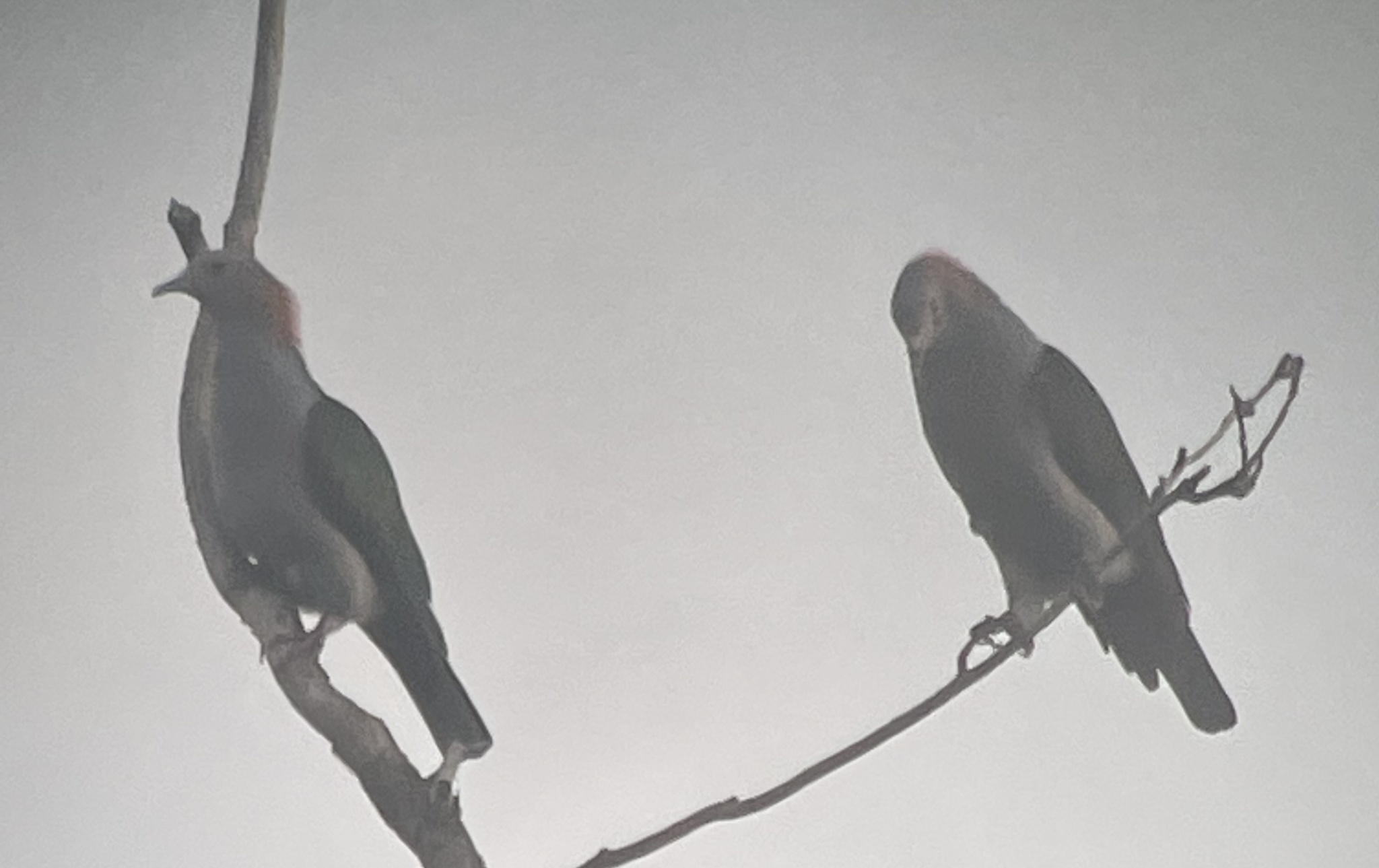
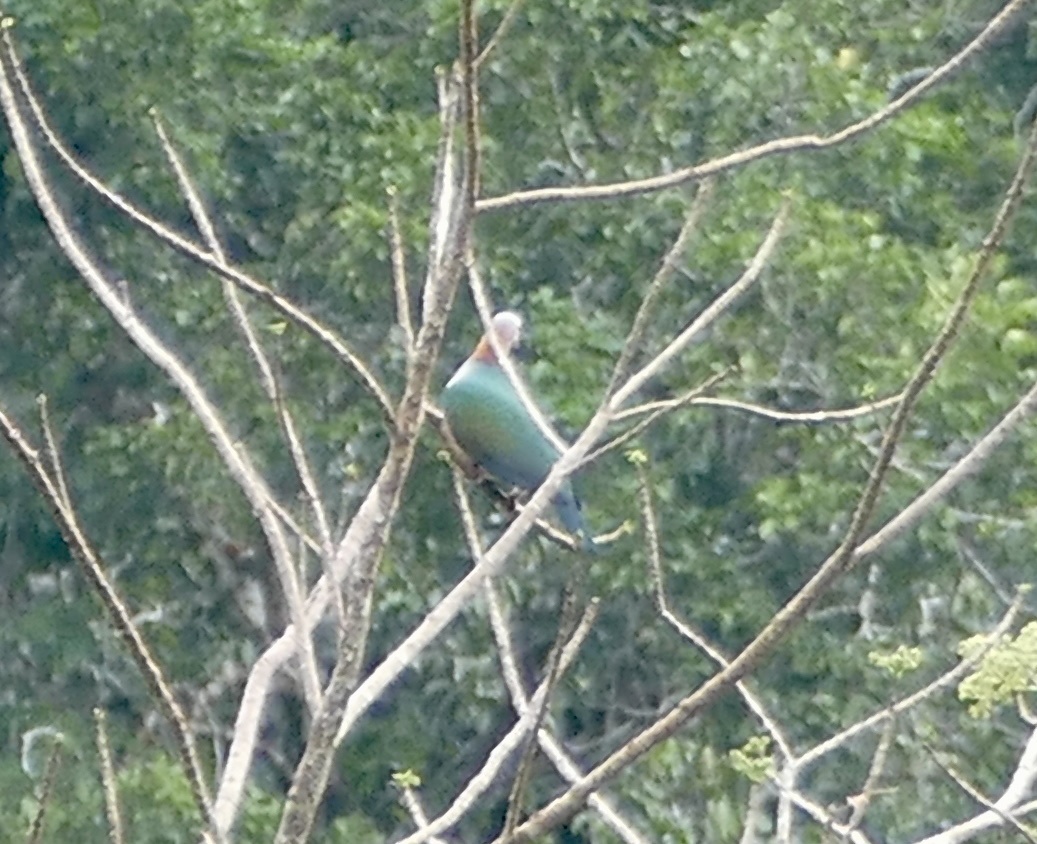
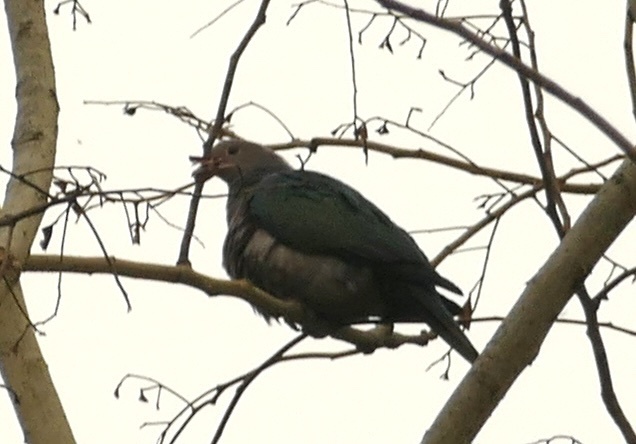
A large, plump pigeon measuring 45 centimeters in length. The back, wings, and tail display a distinctive metallic green coloration. The head and underparts are predominantly white, creating a striking contrast with the green upperparts. The undertail coverts are a rich maroon color. The sexes are similar in appearance, exhibiting no sexual dimorphism in plumage. The most notable feature is its deep, resonant call, which often reveals the bird's presence before it can be spotted in the treetop canopy.
Identification
This species is best identified by its combination of metallic green upperparts and white head and underparts, along with maroon undertail coverts. Its large size and plump build distinguish it from smaller forest doves. The deep, resonant call is often the first indicator of its presence. The chestnut-naped imperial pigeon subspecies in the Celebes region shows distinctive coloration on the head that sets it apart from other populations. As a canopy-dwelling species, it is most often seen perched in the upper levels of tall forest trees or in fast, direct flight between tree tops.
Distribution & Habitat
A widespread forest species across tropical southern Asia, occurring from Nepal and India eastward through Myanmar, Thailand, and Southeast Asia to Indonesia and the Philippines. As a resident breeding bird, it occupies various forested habitats within its extensive range. The species shows considerable geographic variation with eleven recognized subspecies adapted to different island and regional populations throughout its range.
Behavior & Ecology
An arboreal species that feeds on plant material and fruits in the tree canopy. Its flight is fast and direct, characterized by the regular beats and occasional sharp wing flicks typical of pigeons. It builds a stick nest in trees and lays a single white egg. The birds are not highly gregarious but may form small flocks, particularly when foraging. They are more often encountered in pairs or solitary, moving quietly through the forest canopy where they are detected more often by call than by sight.
Conservation
The green imperial pigeon is not currently considered globally threatened. Its extensive range across multiple countries and adaptability to various forest types contributes to its relatively stable population status. While specific population numbers are not available, the species is described as common to locally common throughout much of its range.
Culture
No specific cultural significance, folklore, or traditional uses are documented for this species in the available sources.
Source: Wikipedia · CC BY-SA 3.0
Taxonomy
- Order
- Columbiformes
- Family
- Columbidae
- Genus
- Ducula
- eBird Code
- gripig1
Subspecies (11)
-
Ducula aenea aenea
Philippines (except for northern Luzon and associated islands and the southwestern islands)
-
Ducula aenea andamanica
Andaman Islands
-
Ducula aenea consobrina
islands off western Sumatra (Simeulue southward to the Mentawai Islands)
-
Ducula aenea fugaensis
northern Philippines (Calayan, Camiguin Norte, and Fuga)
-
Ducula aenea intermedia
Sangihe and Talaud islands
-
Ducula aenea nuchalis
northern Luzon (northern Philippines)
-
Ducula aenea palawanensis
Palawan, adjacent southern Philippines, and Banggai Islands (off eastern Sulawesi)
-
Ducula aenea paulina
Sulawesi and associated islands, including Togian, Banggai, and Sula islands (off eastern Sulawesi)
-
Ducula aenea polia
Thai-Malay Peninsula and Greater and Lesser Sundas (Lombok eastward to Alor)
-
Ducula aenea pusilla
southern India and Sri Lanka
-
Ducula aenea sylvatica
northern India eastward to southeastern China (including Hainan), southern Thailand and southern Myanmar, Laos, Cambodia, and Vietnam
Data Sources
Species description from Wikipedia, licensed under CC BY-SA 3.0.
Bird images and sounds sourced from GBIF, contributed by citizen scientists worldwide under Creative Commons licenses.
Taxonomy data from AviList 2025.