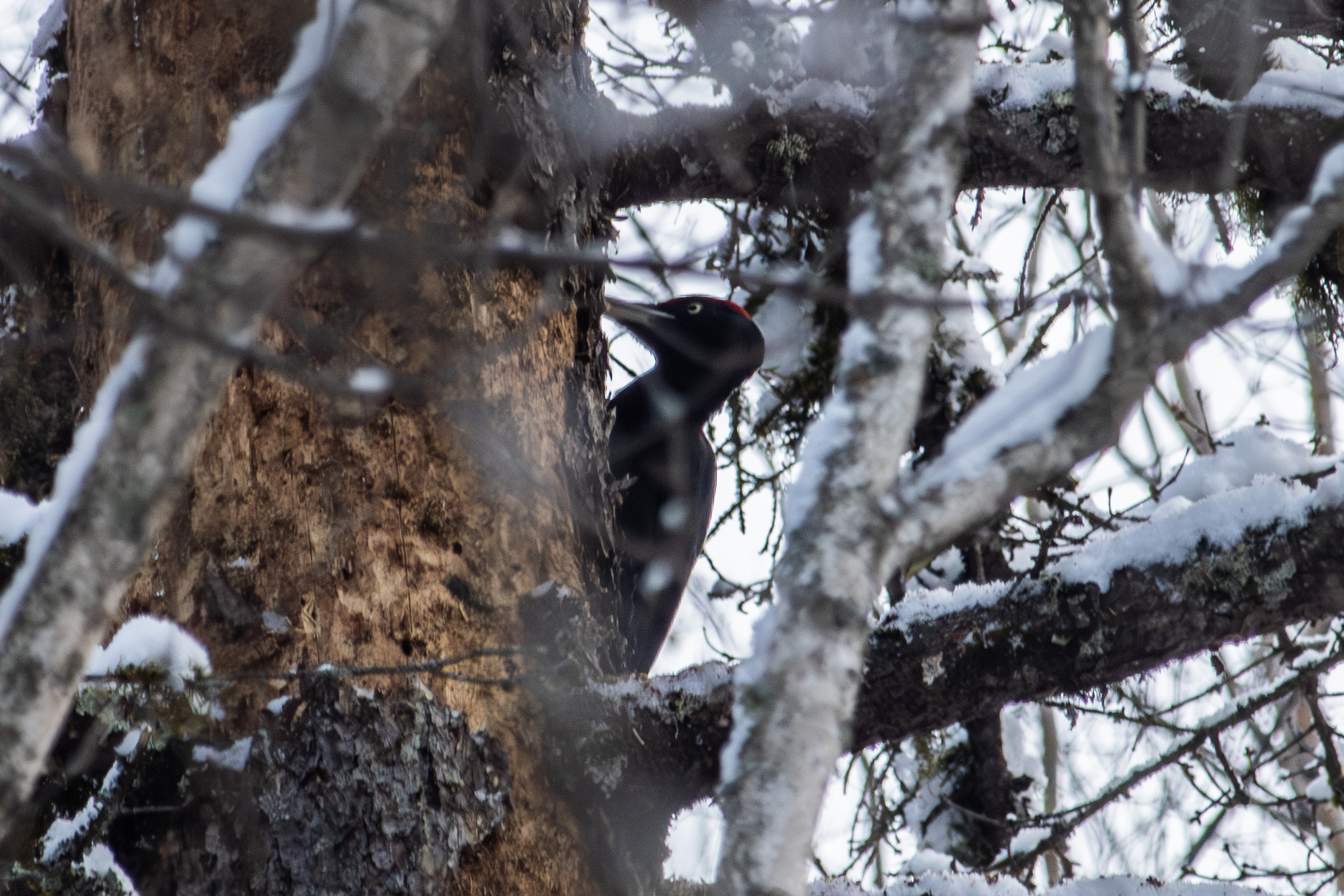
Black Woodpecker
Dryocopus martius
黑啄木鸟
Introduction
A large woodpecker (Dryocopus martius) found in mature forests across the northern Palearctic. It is the sole representative of its genus in this region and its range is expanding. This species is the largest woodpecker in Europe and in the Asian portion of its range, and among the largest woodpecker species worldwide. It is non-migratory and inhabits old-growth forest or large forest stands, excavating large tree holes for residence. These excavations provide secondary habitat for several other species. The diet consists primarily of carpenter ants. It fills the same ecological niche in Europe as the pileated woodpecker does in North America.
Description
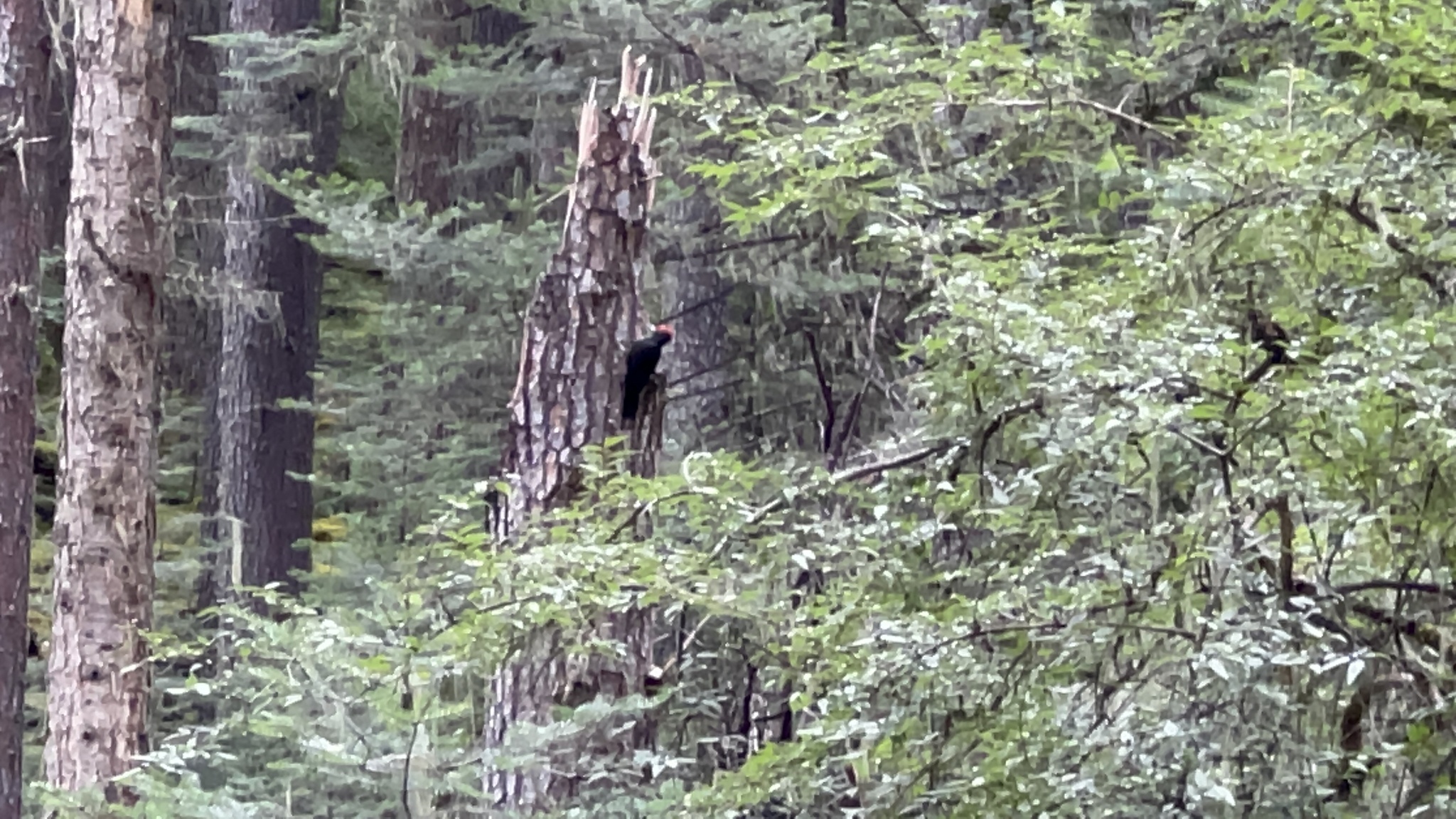
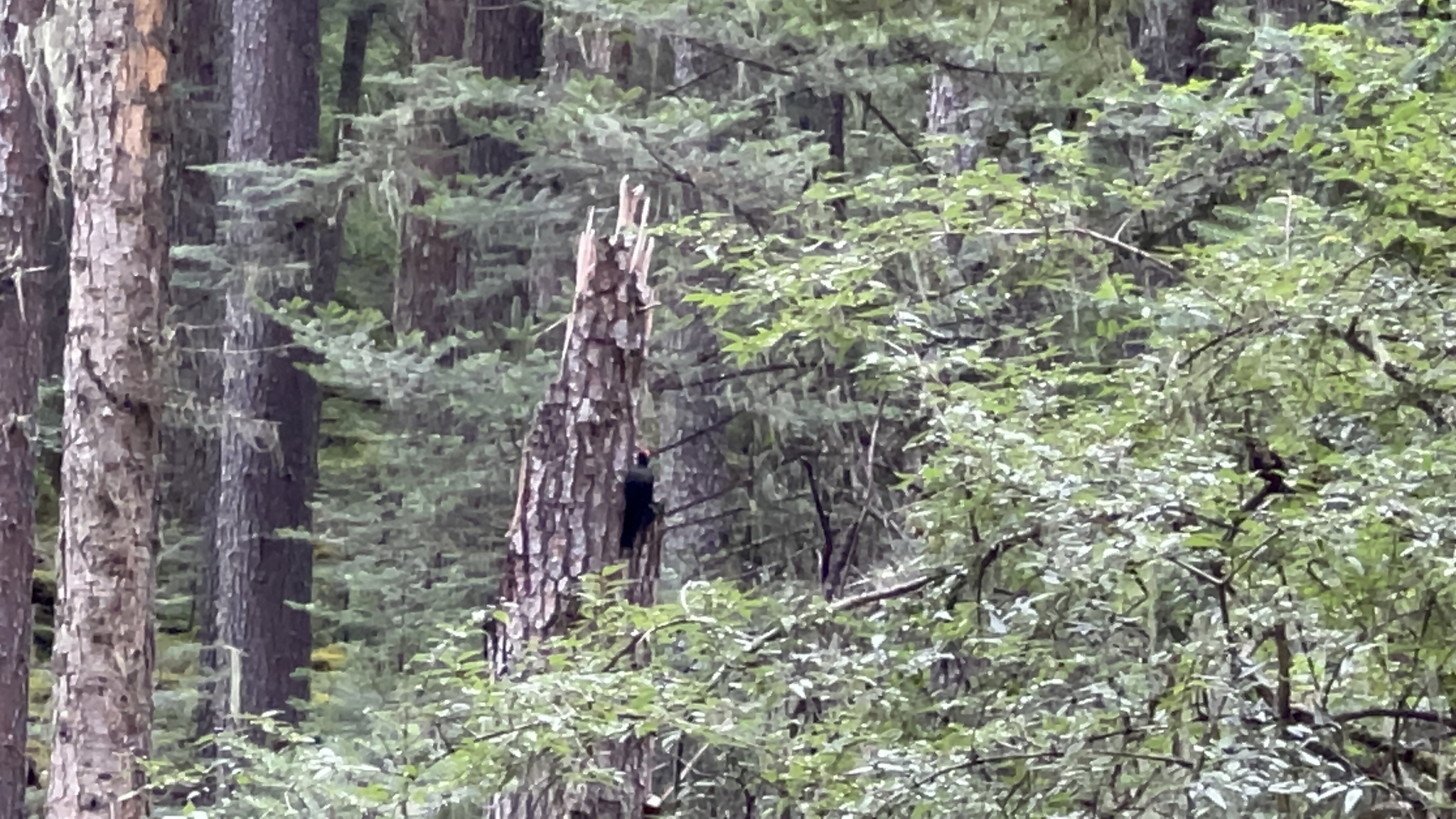
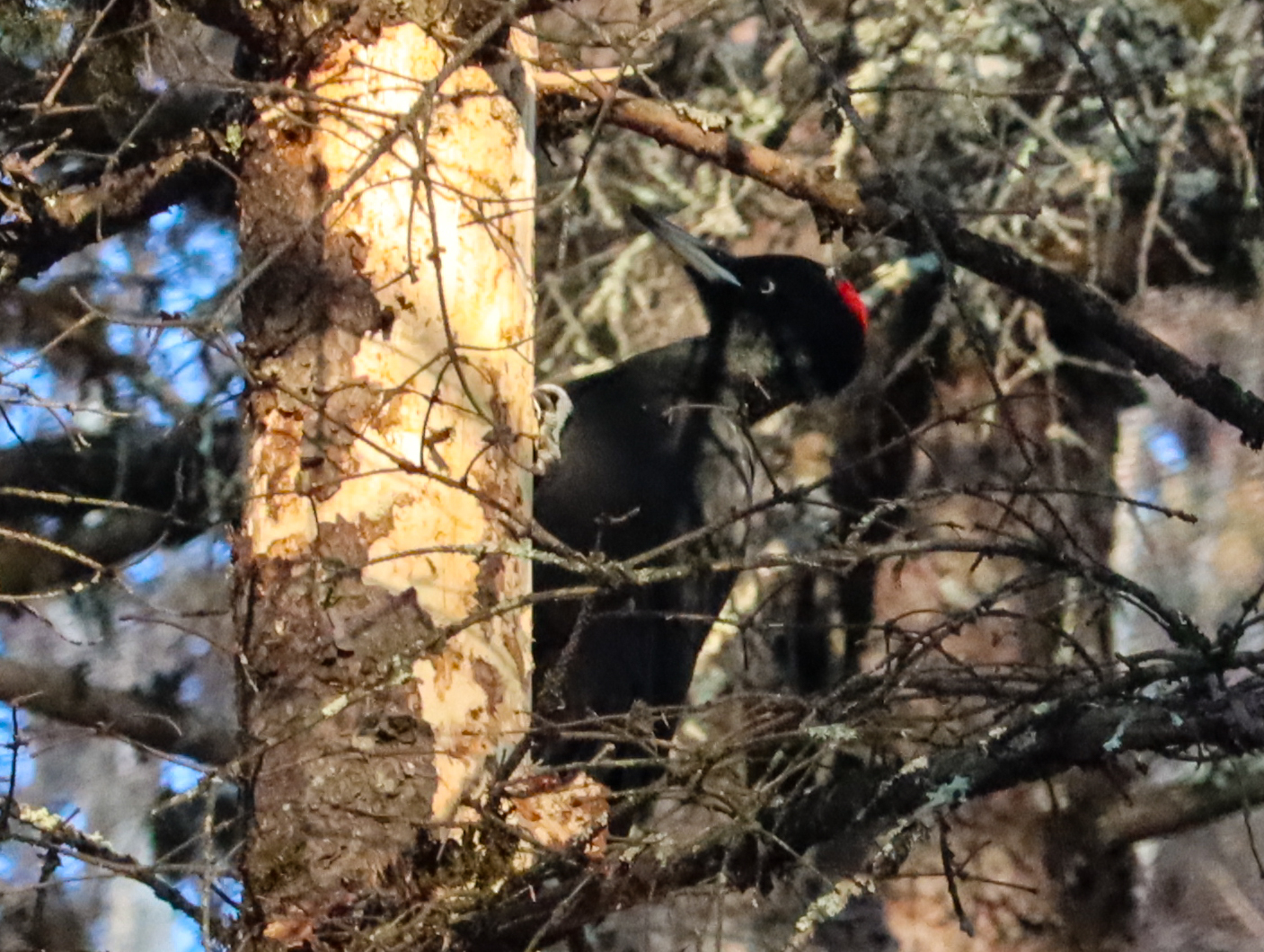
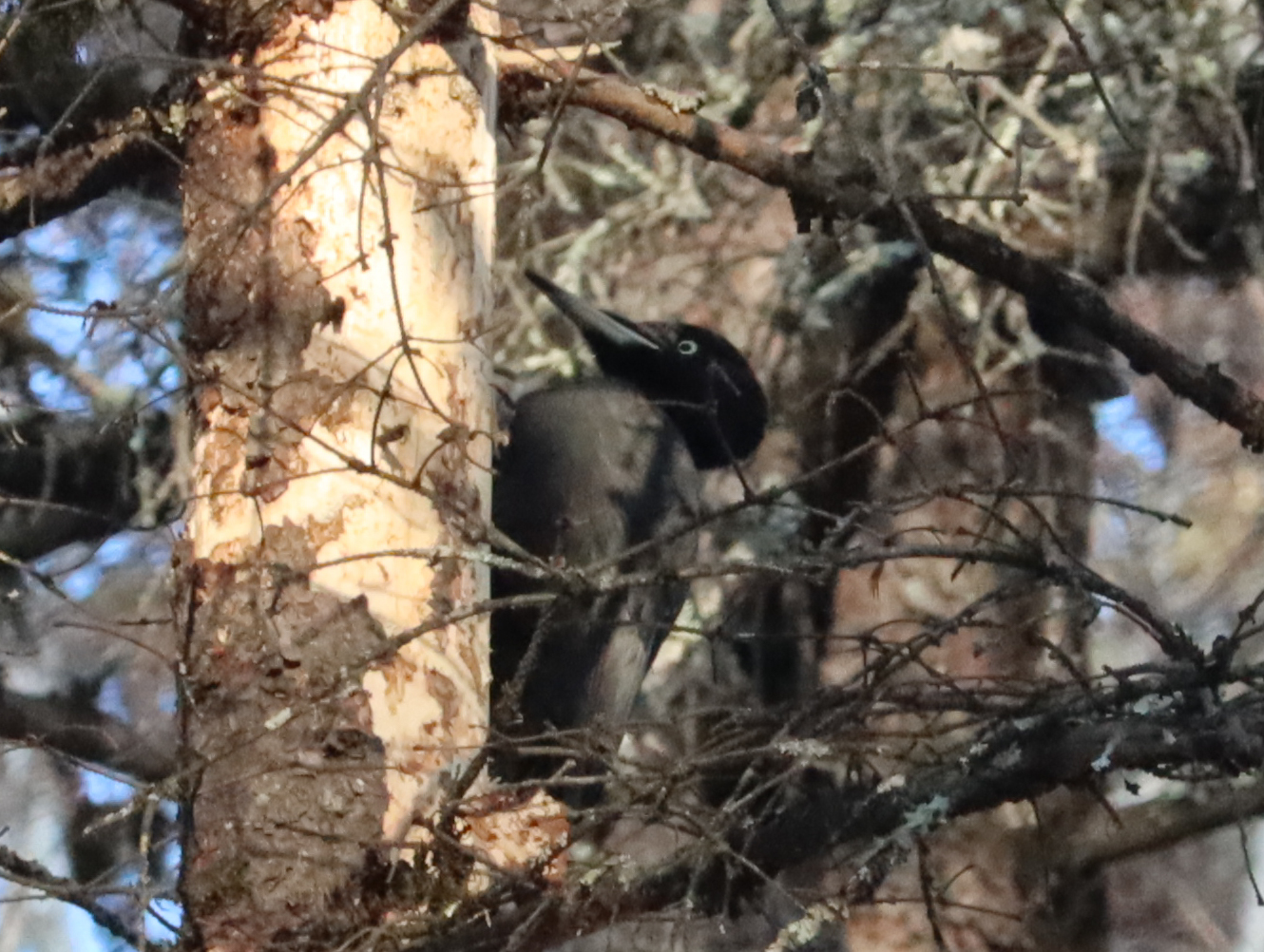
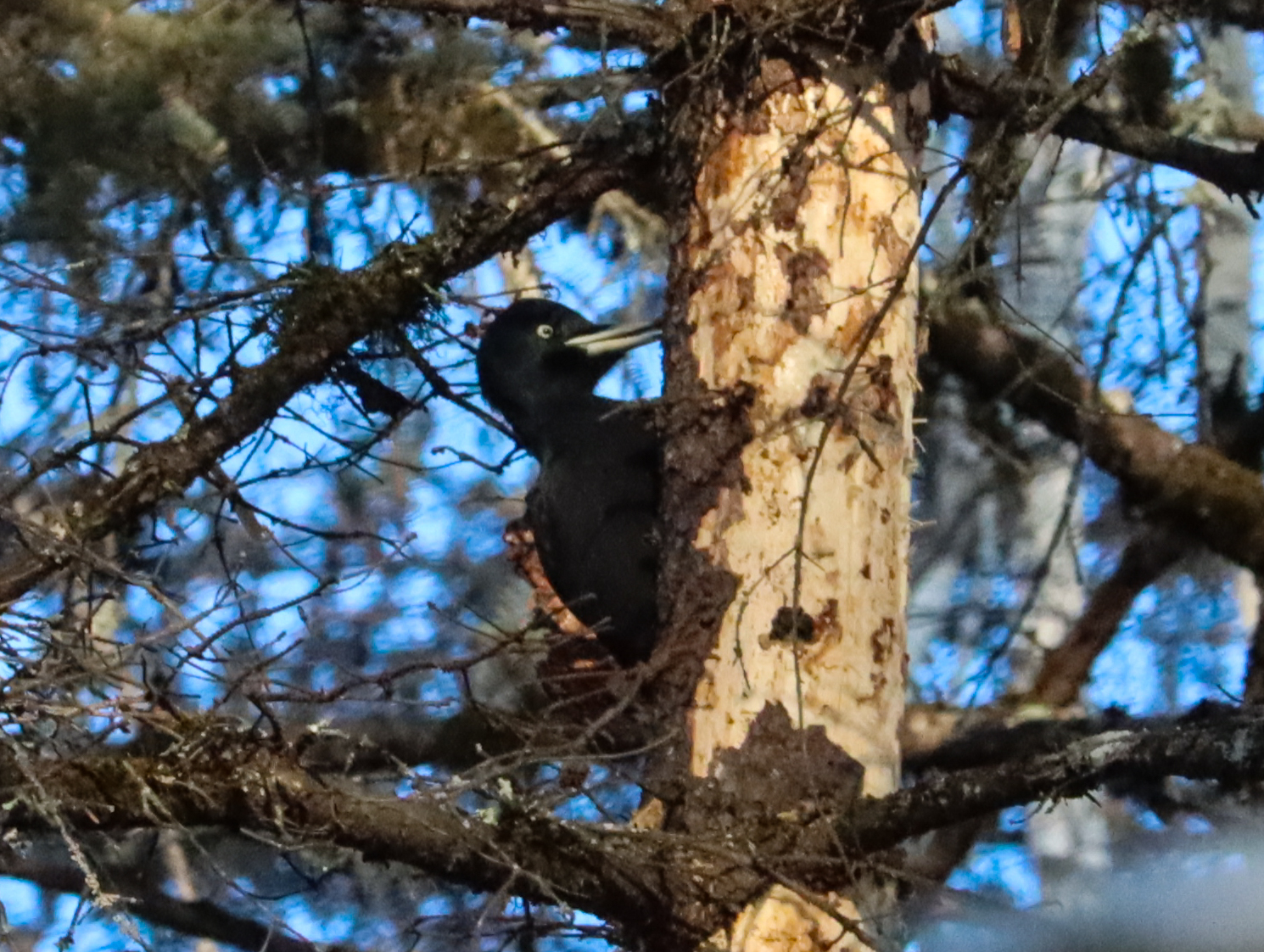
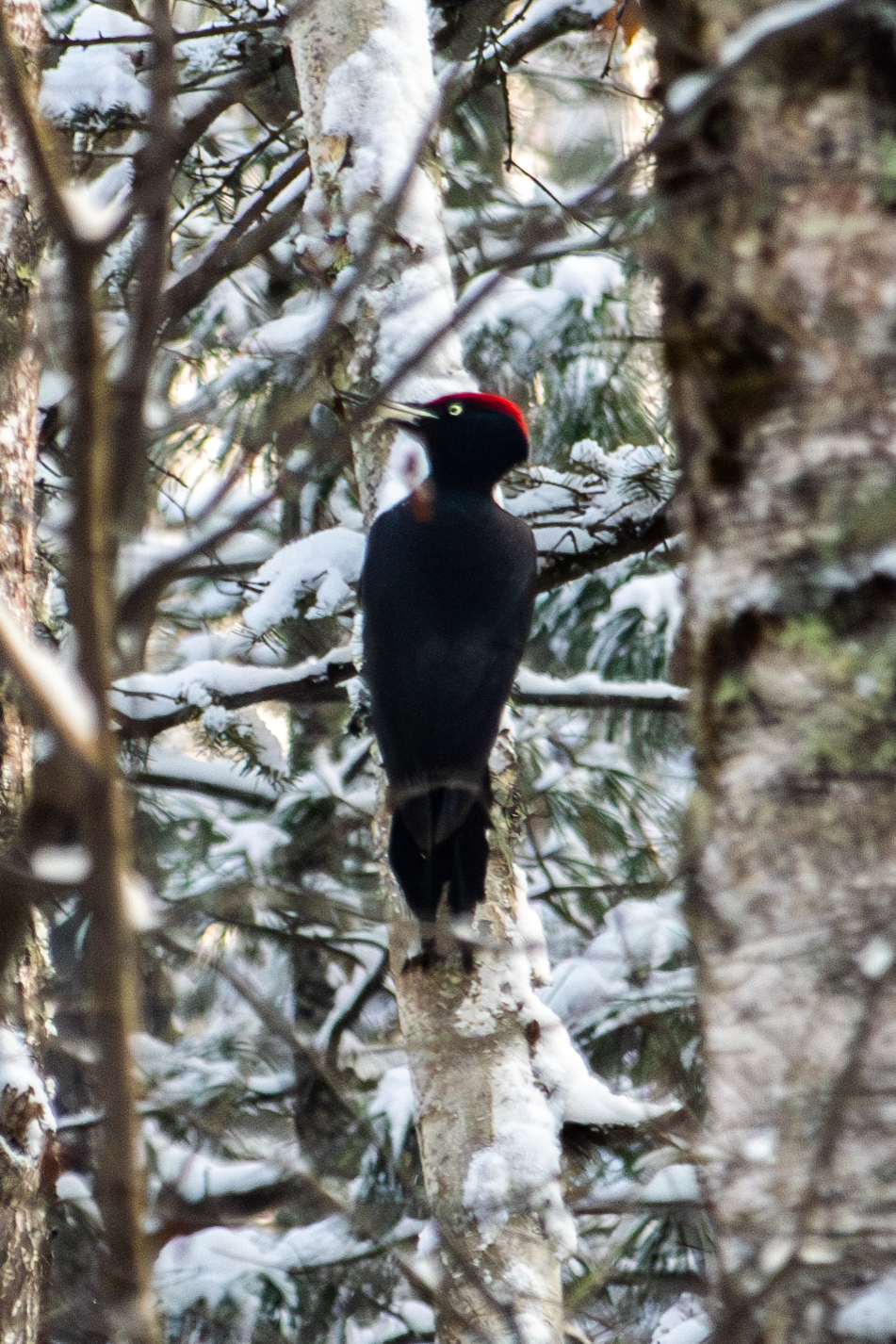
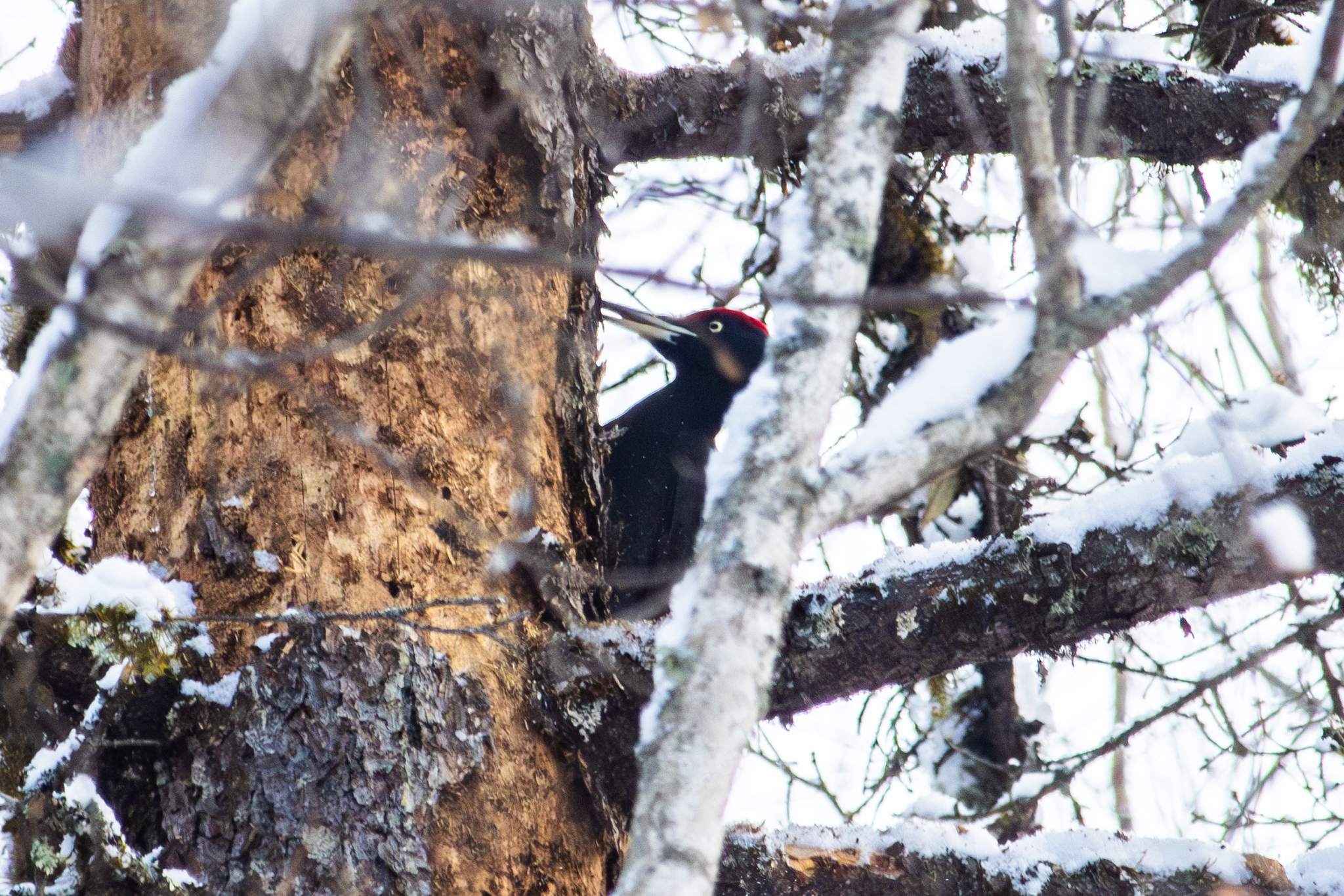
A crow-sized woodpecker measuring 45-55 cm in length with a 64-84 cm wingspan. Body weight averages 250-400 g. The plumage is entirely black apart from the red crown; males have a completely red crown while females display red only on the top hindcrown. The bill is very long at 5-6.7 cm. Juveniles are less glossy with a duller red crown and paler grey throat and bill. Standard measurements: wing chord 22.7-26 cm, tail 15.9-17.3 cm, tarsus 3.6-4 cm.
Identification
Easily identified as the largest woodpecker within its range. The entirely black plumage with red crown is distinctive. In flight, it shows slow, unsteady wing beats with the head raised, unlike the dipping, bounding flight of other woodpeckers. Two distinct calls: a short single high-pitched whistle (kree-kree-kree) repeated twice, and a screech-like shrill call during flight. The piercing yellow eyes are prominent.
Distribution & Habitat
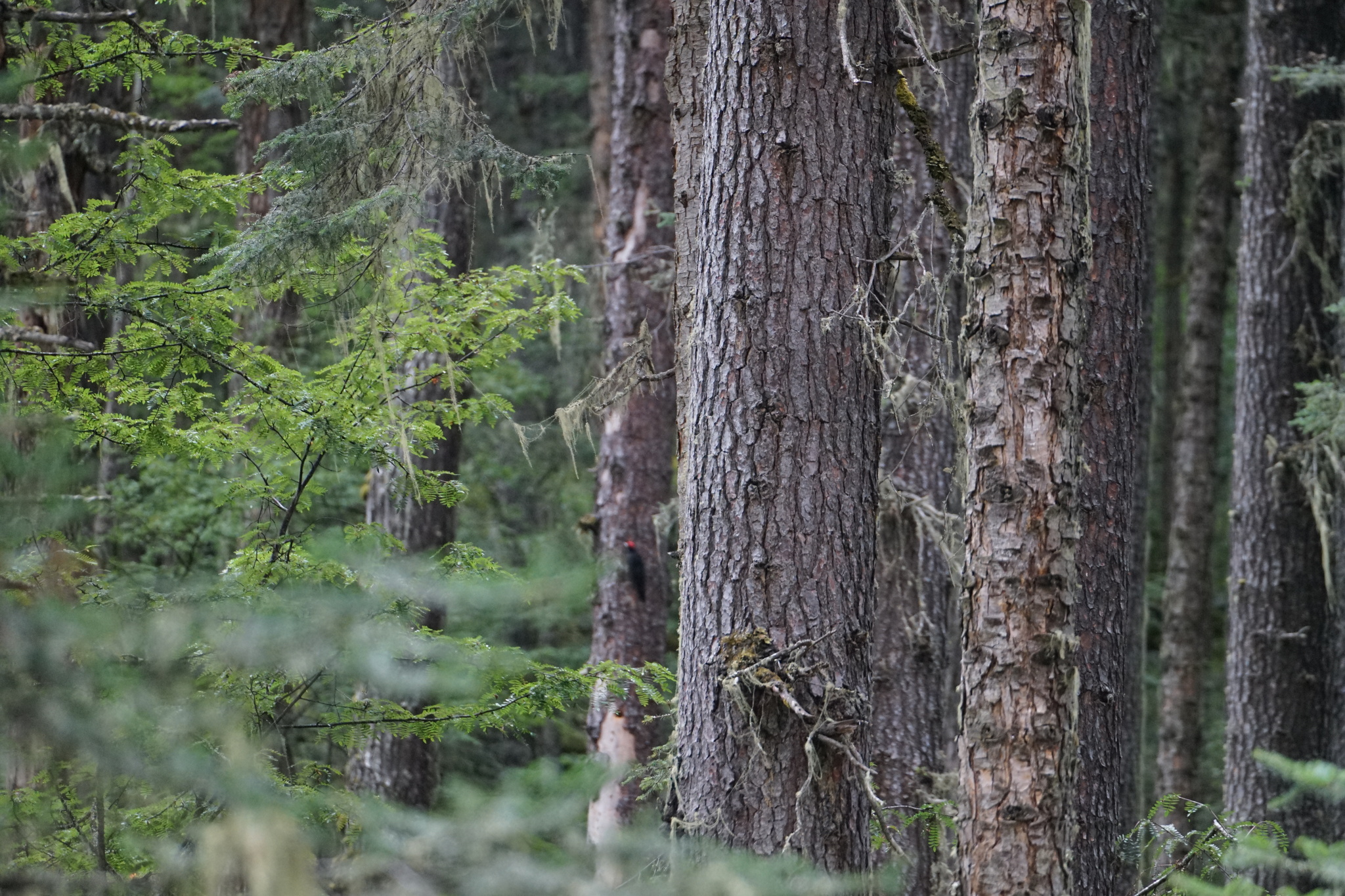
Range extends east from Spain across Europe, excluding Great Britain, Ireland, and northernmost Scandinavia. Also found in Asia (Korea, Japan, China) and the Middle East (Iran, Kazakhstan). Inhabits extensive, mature woodland including coniferous, tropical, subtropical, and boreal forests, from 100-2,400 m elevation. More uncommon and discontinuous in the Asian portion of its range. Approximately 80 disputed sightings in the UK, but proximity to continental Europe suggests possible regular crossing.
Behavior & Ecology
Feeds primarily on carpenter ants and wood-boring beetle grubs by hammering on dead trees. The strong neck muscles and large bill allow access to prey deep within trees. Short, stumpy legs, long sharp claws, and stiff tail feathers aid positioning. Nests are excavated in live poplar or pine trees, often with fungal heart rot. The cavity is dug downward creating a chamber lined only with woodchips. Lays 2-8 eggs (average 4-6). Both parents share incubation, feeding, and brooding duties. Nestlings leave after 18-35 days and remain with adults for another week. Functions as a keystone species by providing habitat for other species.
Conservation
Fairly widely distributed but requires mature trees and dead wood stands. Populations declined with historical deforestation and some areas, including the Pyrenees, still struggle. However, forest restoration has led to increases in parts of Europe. Occasionally considered a nuisance due to damage to infrastructure. Main cause of nesting failure is predation by pine martens, which also take over nest holes. Western jackdaws regularly usurp nests. Raptors including Ural owls, eagle-owls, goshawks, buzzards, and golden eagles occasionally prey on adults.
Culture
The municipality of Nurmijärvi, Finland, has adopted this species as its title bird due to its relative commonness locally and appearance in the literature of Aleksis Kivi, a national author originally from the area. The local football club NJS uses the bird as its logo. Believed to be the woodpecker species referenced by the Umbrian word 'peiqu' in the Iguvine Tablets, a bird prominent in early Italic religion and mythology.
Source: Wikipedia · CC BY-SA 3.0
Taxonomy
- Order
- Piciformes
- Family
- Picidae
- Genus
- Dryocopus
- eBird Code
- blawoo1
Subspecies (2)
-
Dryocopus martius khamensis
Tibet and southwestern China
-
Dryocopus martius martius
coniferous and beech forest of Eurasia
Data Sources
Species description from Wikipedia, licensed under CC BY-SA 3.0.
Bird images and sounds sourced from GBIF, contributed by citizen scientists worldwide under Creative Commons licenses.
Taxonomy data from AviList 2025.