Common Flameback
Dinopium javanense
金背啄木鸟
Introduction
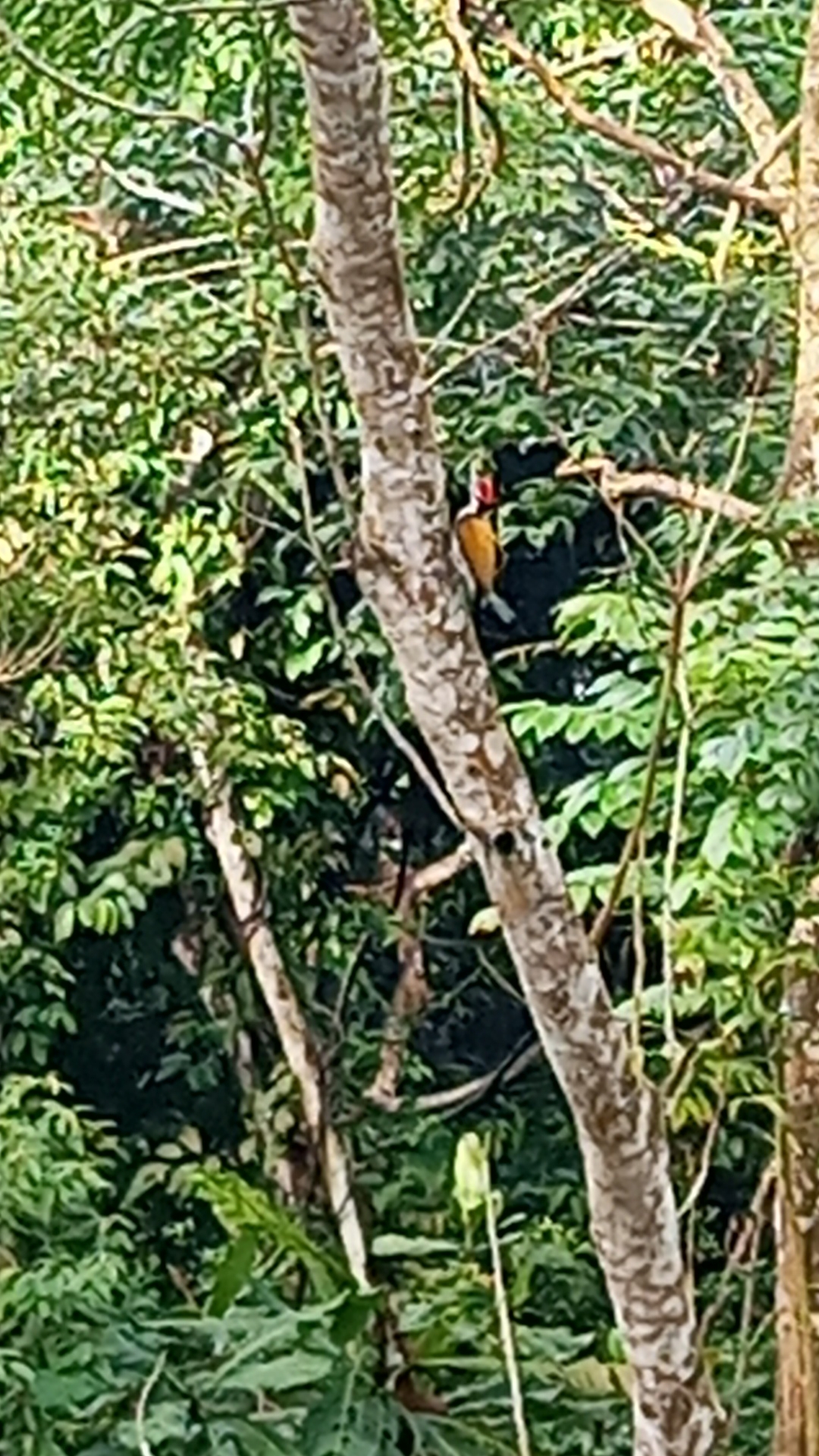
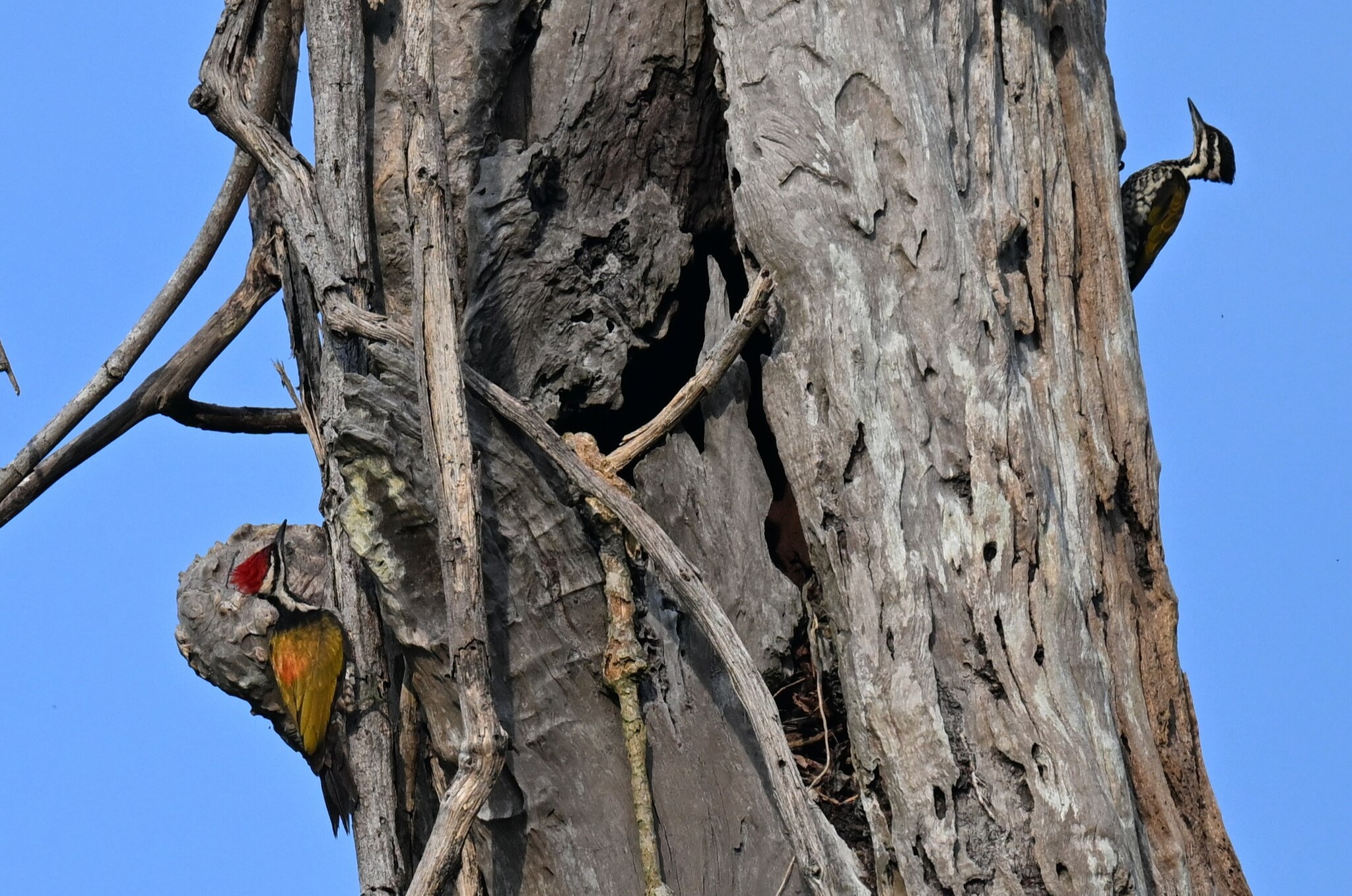
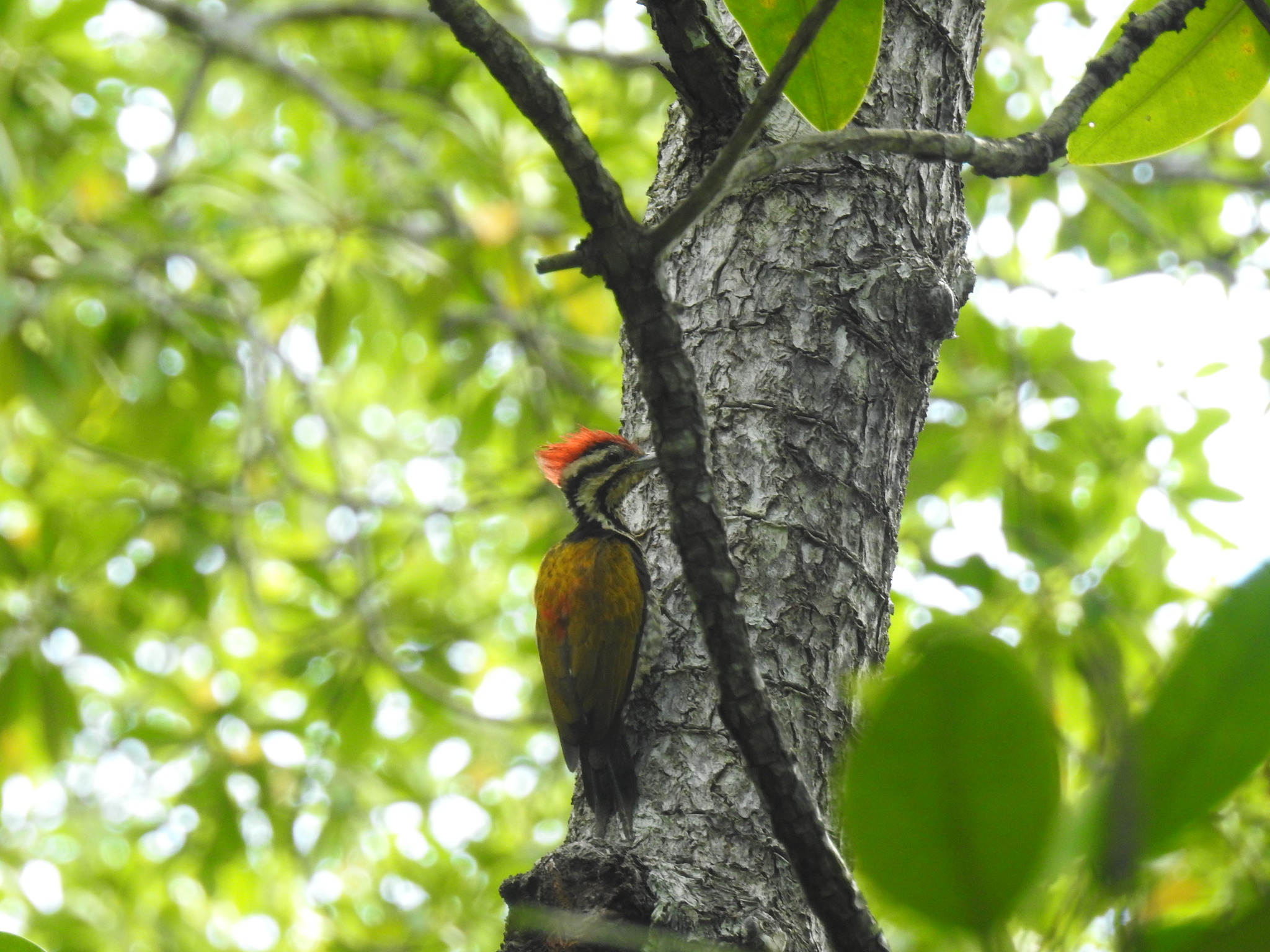
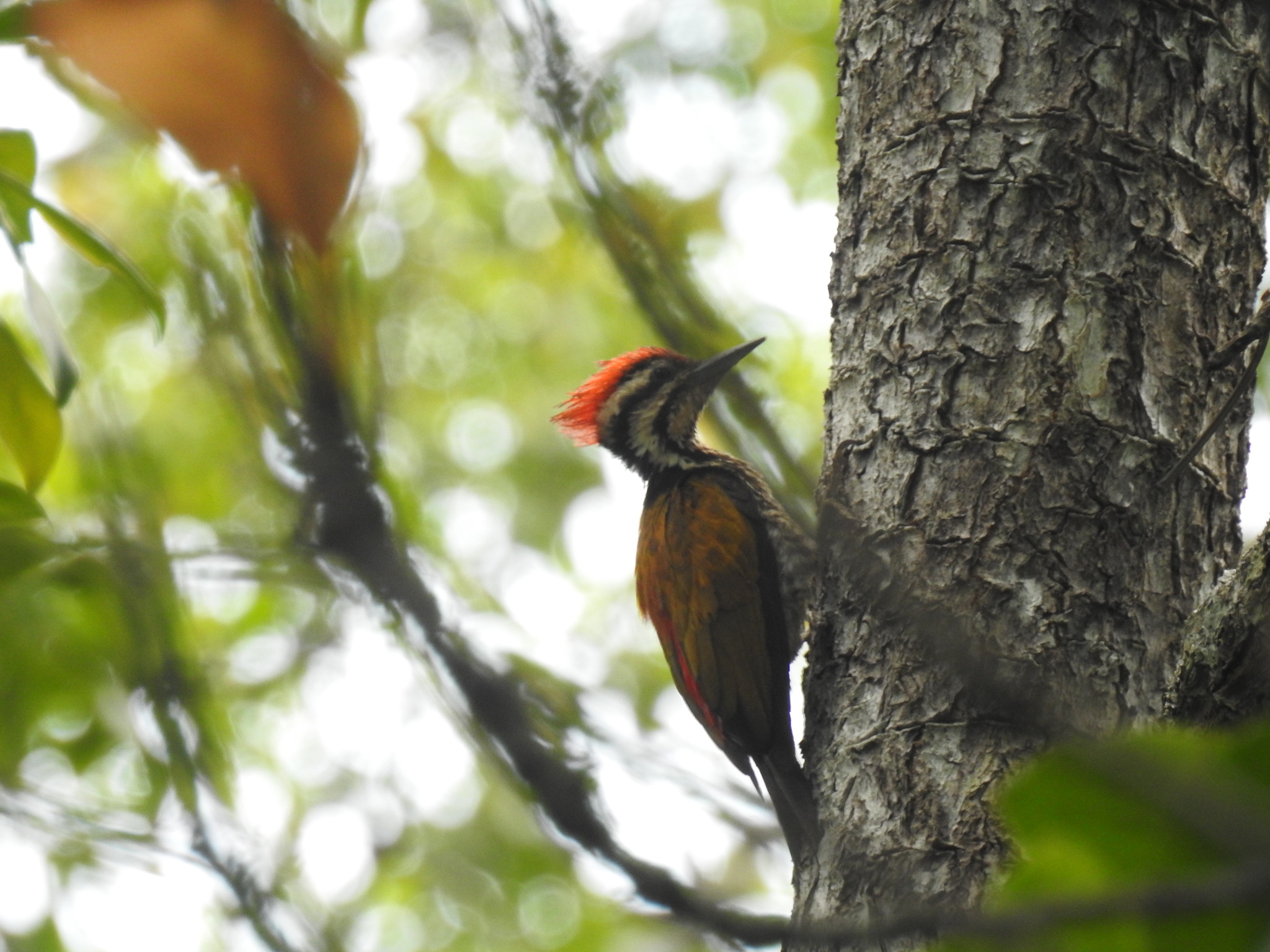
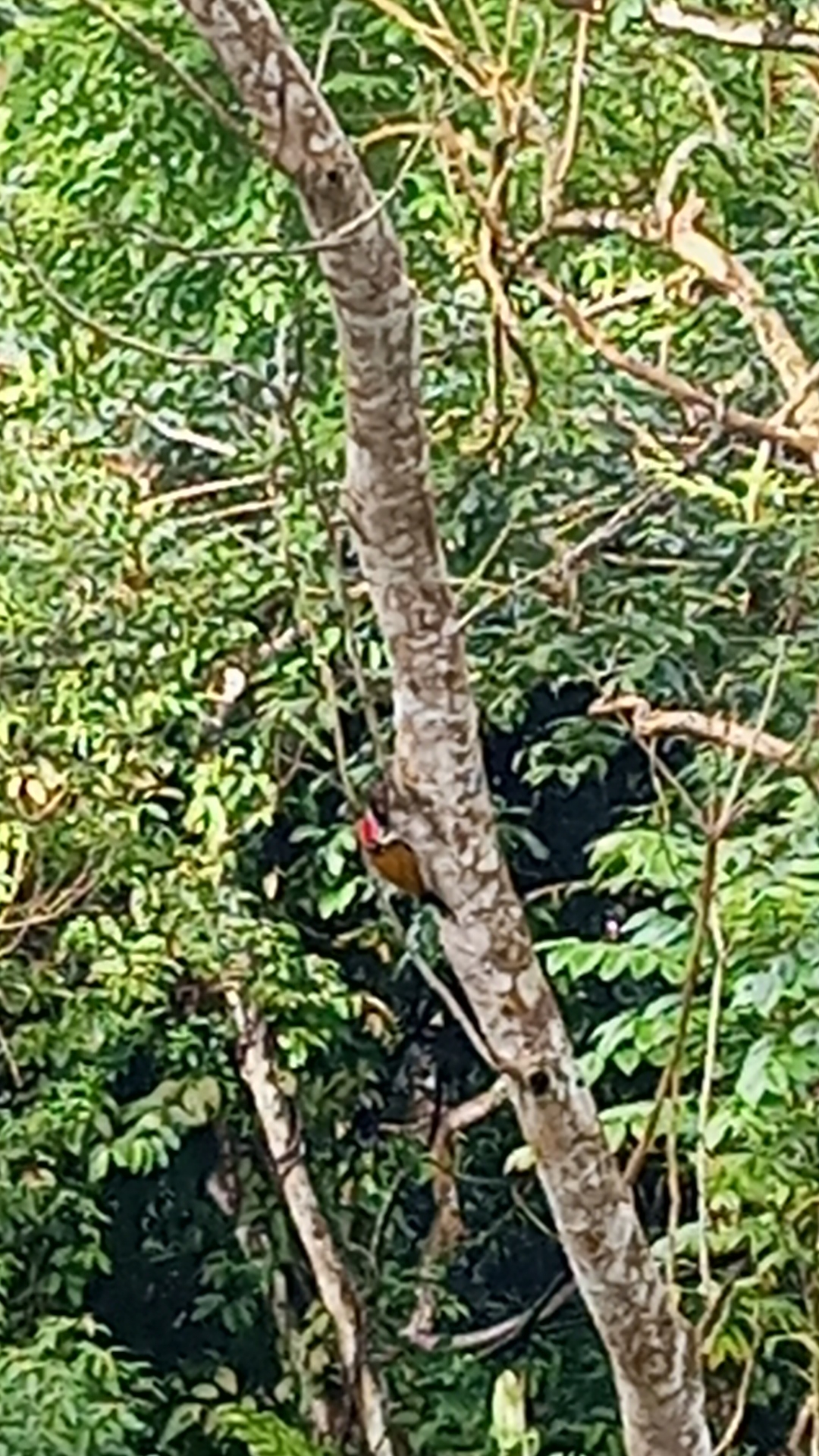
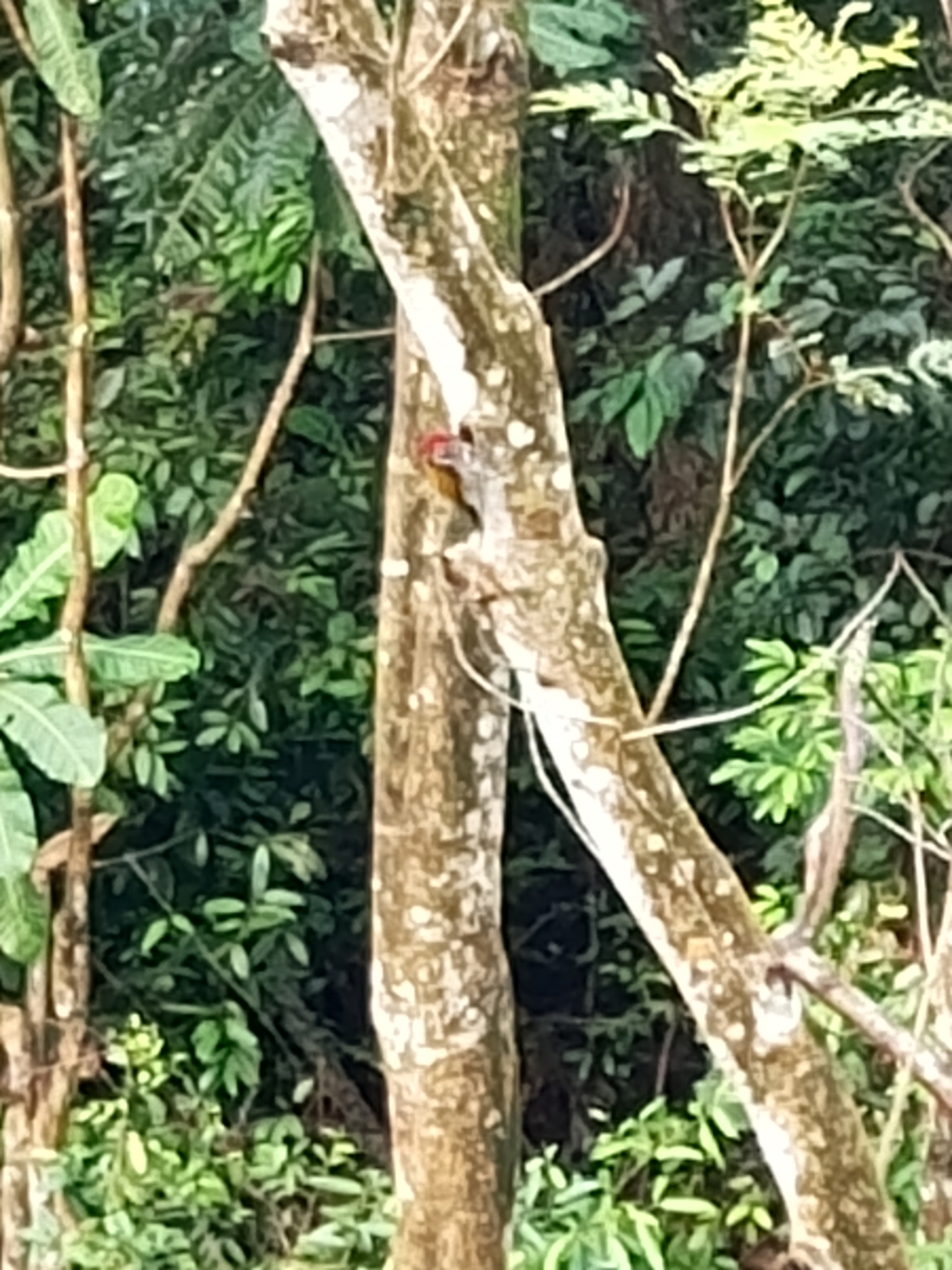
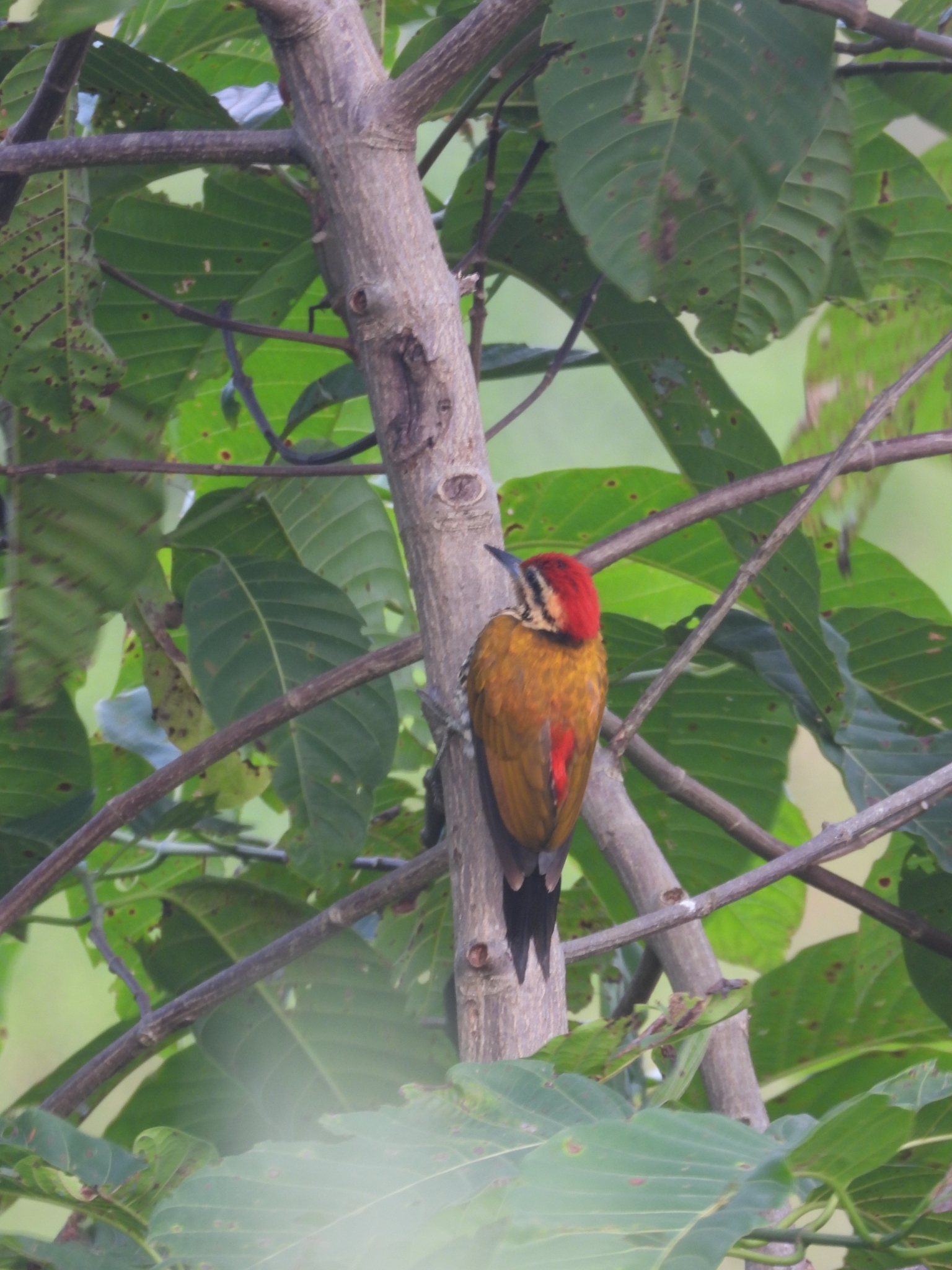
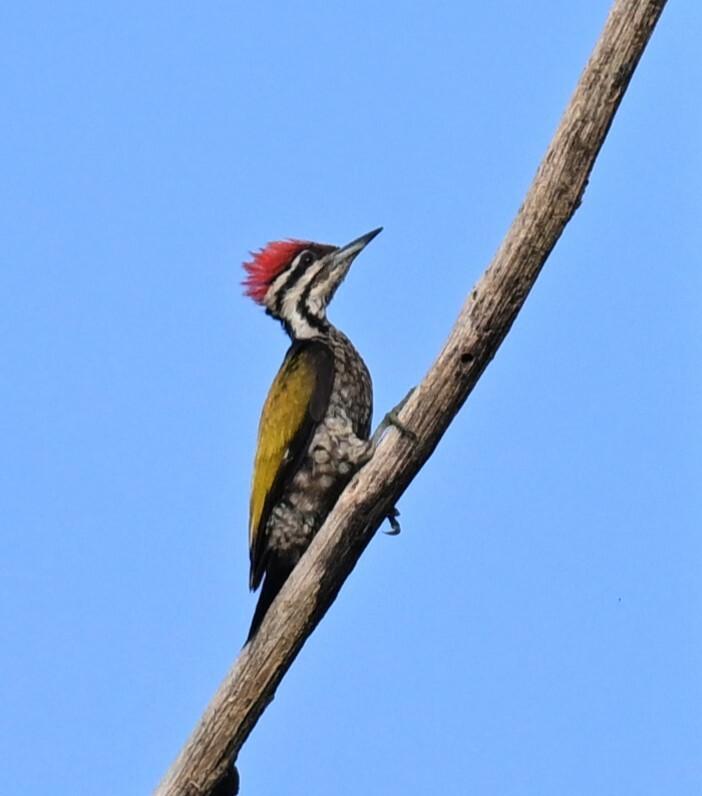
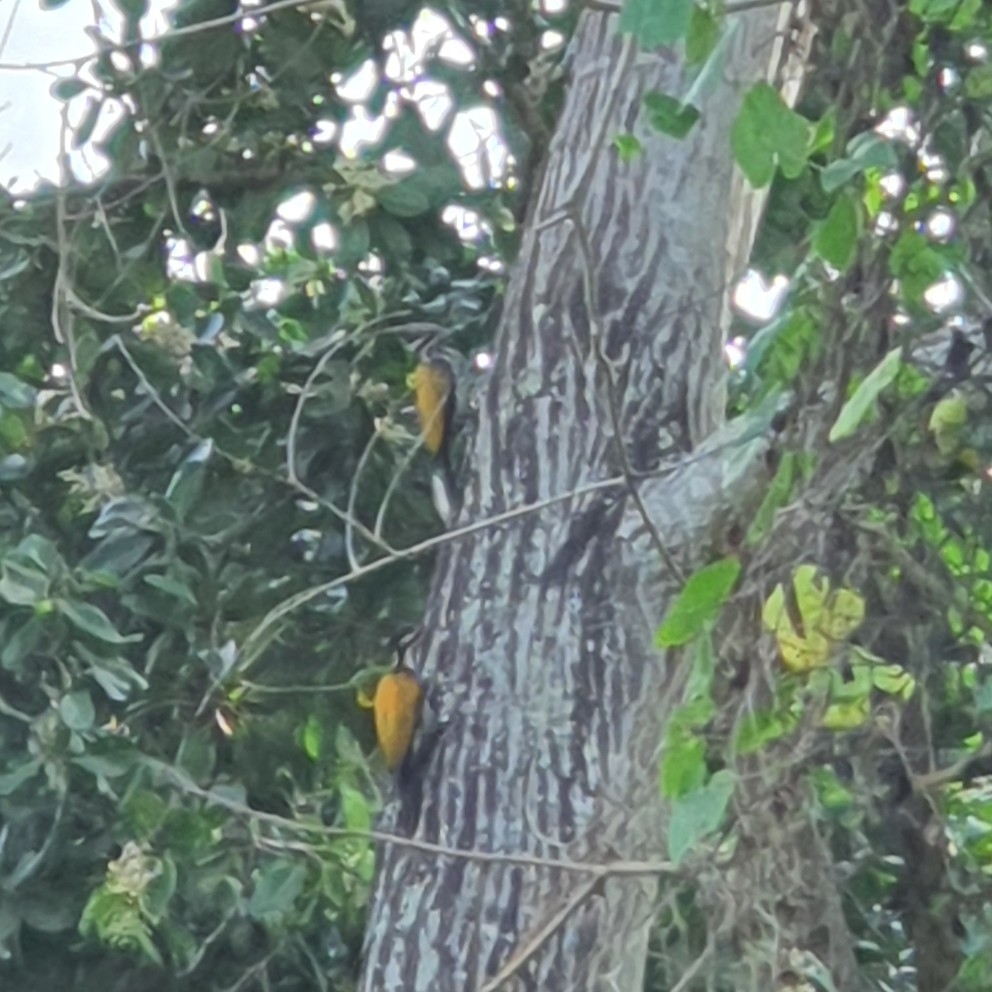
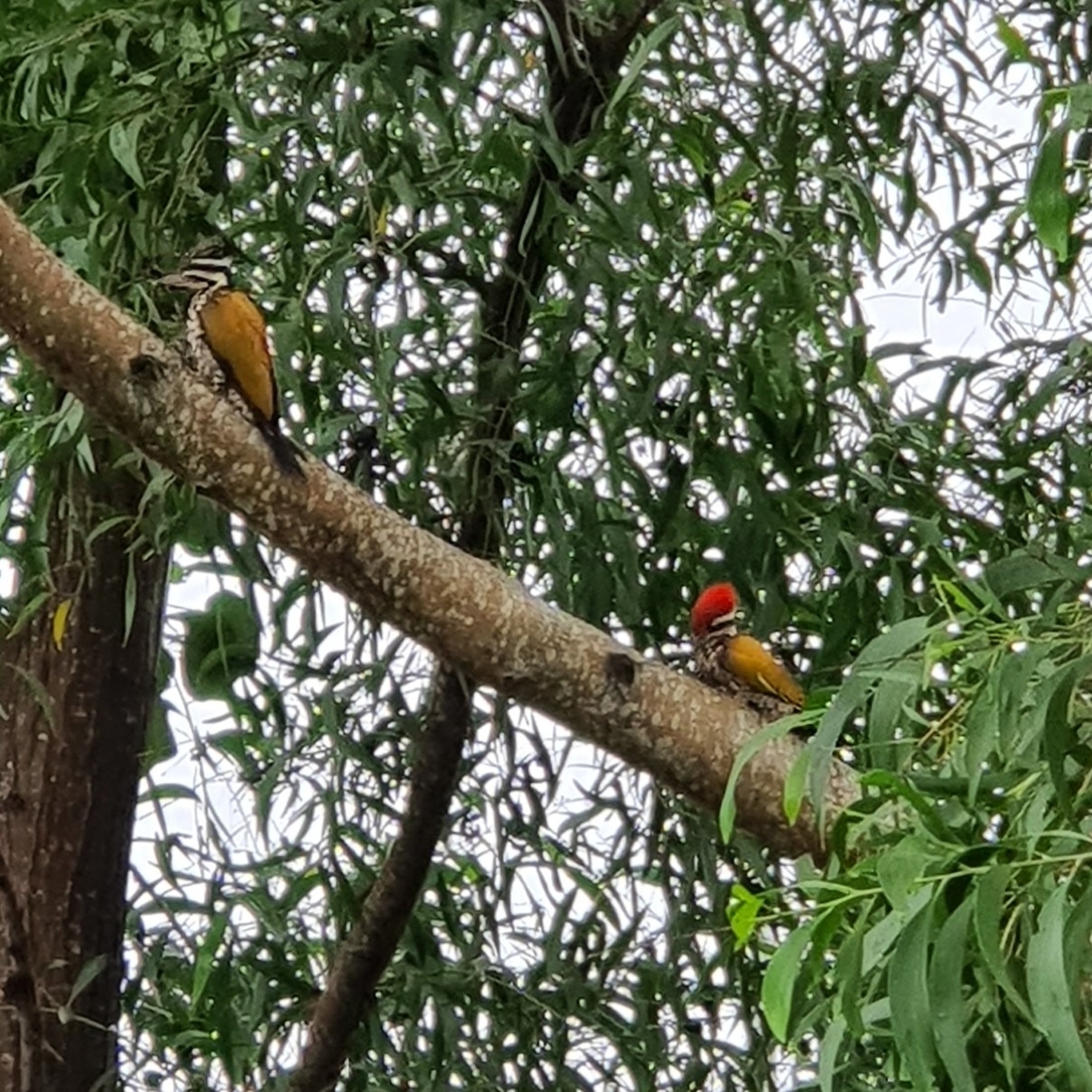
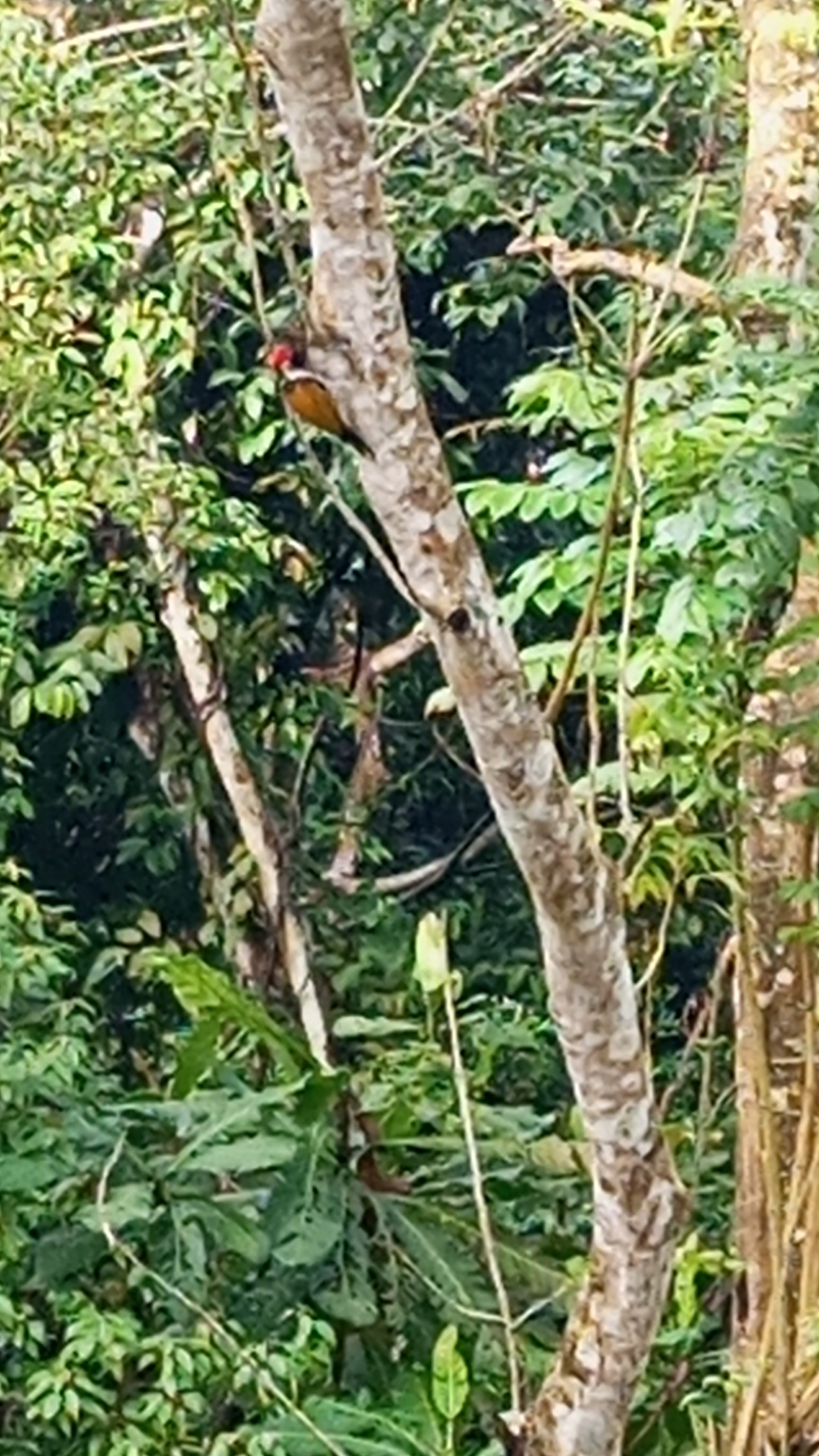
A small woodpecker species found in forests and woodlands throughout South and Southeast Asia. Adults measure 28-30 cm in length. Unlike most woodpeckers, it rarely drums, instead using subtle foraging techniques and relying on high-pitched calls for communication and detection. The species possesses a distinctive three-toed foot structure that enables agile movement through trees. Males have a red crest; females display a black-and-white streaked crest.
Description
This compact woodpecker measures 28-30 cm in length and possesses the characteristic three-toed foot arrangement of its genus. The most striking feature is the crest, which differs markedly between sexes: males wear a vibrant red crest, while females display a black crest marked with white streaks. The facial pattern is complex and distinctive, featuring a white supercilium, white cheek stripe, and white throat area, all separated by contrasting black stripes. The underparts are spotted black and white, creating a distinctive pattern. The red rump is visible in flight. The species has a relatively small bill compared to some larger flameback species, and the black nape helps distinguish it from similar woodpeckers in the region.
Identification
Birdwatchers can distinguish this species from the larger greater flameback by its notably smaller bill and the presence of a black nape. The red rump and white throat separate it from the black-rumped flameback. However, distinguishing it from the Himalayan flameback presents a challenge, as the two species are nearly identical in appearance. The most reliable field mark is the vocalization: a loud, high-pitched series of 'kow-kowp' rattles. This call is incredibly similar to that of the greater flameback, so observers must rely on size and bill shape for that comparison. Both species show crest color differences between sexes, with males having red crests and females having black streaked crests.
Distribution & Habitat
This species ranges widely across South and Southeast Asia, from the Western Ghats of India through the Indochinese peninsula to the Greater Sunda Islands. It occupies diverse habitats including moist open forests, scrublands, and mangrove forests, though it generally avoids urban areas due to its shy nature. While primarily a lowland species, it can be found at elevations up to 1700 meters in India, where it shows a preference for pine forests. The species occurs on several islands including Sumatra, Java, and Borneo, with different subspecies occupying different portions of this extensive range.
Behavior & Ecology
This woodpecker exhibits distinctive foraging behavior that sets it apart from typical woodpecker activity. Rather than drumming on wood, it employs gleaning and probing techniques, moving silently through trees in abrupt patterns—remaining motionless before suddenly lunging at passing insects. Its diet consists primarily of ants, though it also hawks slow-flying insects from the air and gleans other invertebrates from tree surfaces. The species is relatively quiet and rarely produces sounds. Its vocal repertoire includes the 'wicka call,' simple 'kow calls,' complex 'kowp calls' used as alarm notes during flight, and a rapid 'rattle call.' Sexes typically forage on different trees while maintaining contact, moving to opposite sides of trees when too close. They nest in tree cavities within fruit trees or coconut palms, with clutch sizes of 2-3 eggs.
Conservation
The species occupies a vast range across multiple countries and island groups, inhabiting various forest types including mangroves and scrublands. While specific population figures are not readily available, its occurrence across multiple habitat types suggests a relatively stable distribution. However, ongoing habitat loss in parts of its range, particularly deforestation for agriculture and development, may pose local concerns. The species' shyness and preference for forested habitats means it is unlikely to thrive in heavily degraded or urban areas.
Culture
No specific cultural significance, folklore, or mythological associations are documented for this species in the available literature.
Source: Wikipedia · CC BY-SA 3.0
Taxonomy
- Order
- Piciformes
- Family
- Picidae
- Genus
- Dinopium
- eBird Code
- comfla1
Vocalizations
Subspecies (6)
-
Dinopium javanense borneonense
Borneo (except northeast)
-
Dinopium javanense exsul
eastern Java and Bali
-
Dinopium javanense intermedium
Bangladesh and Assam to Myanmar, southwestern China, and Indochina
-
Dinopium javanense javanense
peninsular Thailand southward to Sumatra (including the Riau Archipelago) and western Java
-
Dinopium javanense malabaricum
wet woodland of western India
-
Dinopium javanense raveni
Eraban Island and adjacent northeastern Borneo
Data Sources
Species description from Wikipedia, licensed under CC BY-SA 3.0.
Bird images and sounds sourced from GBIF, contributed by citizen scientists worldwide under Creative Commons licenses.
Taxonomy data from AviList 2025.