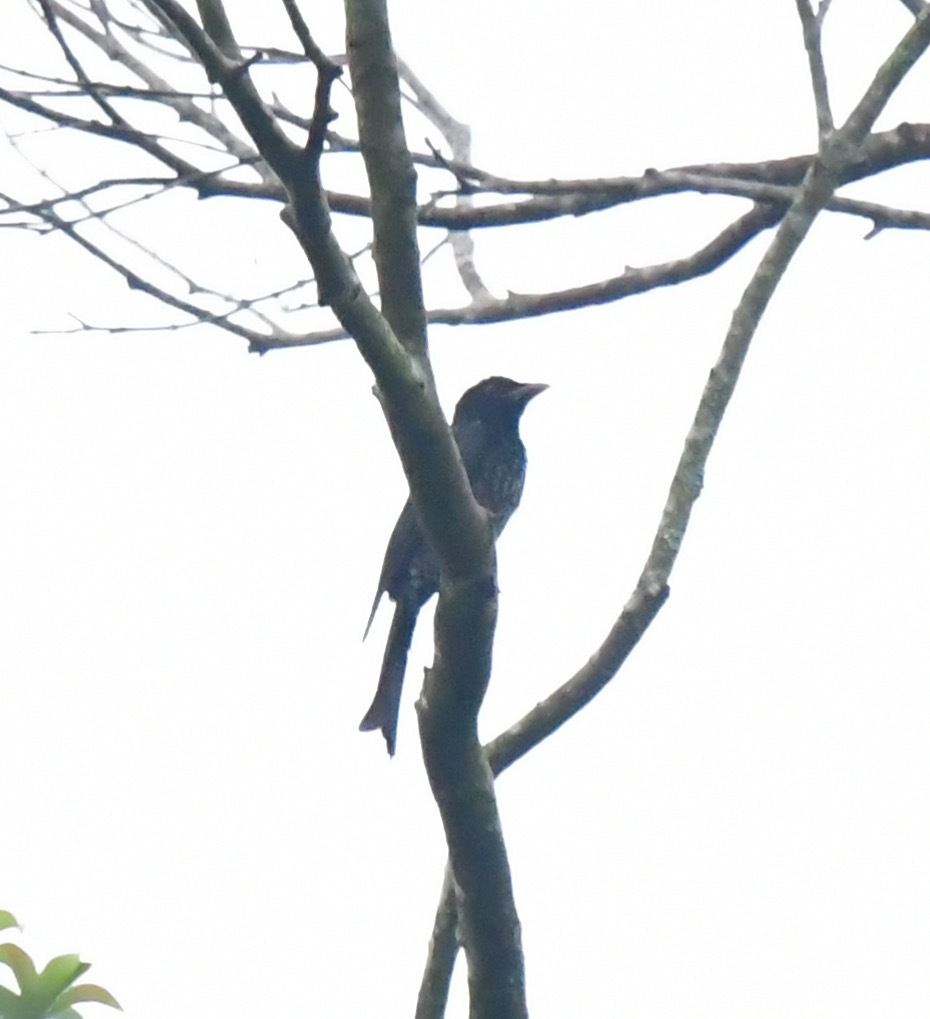
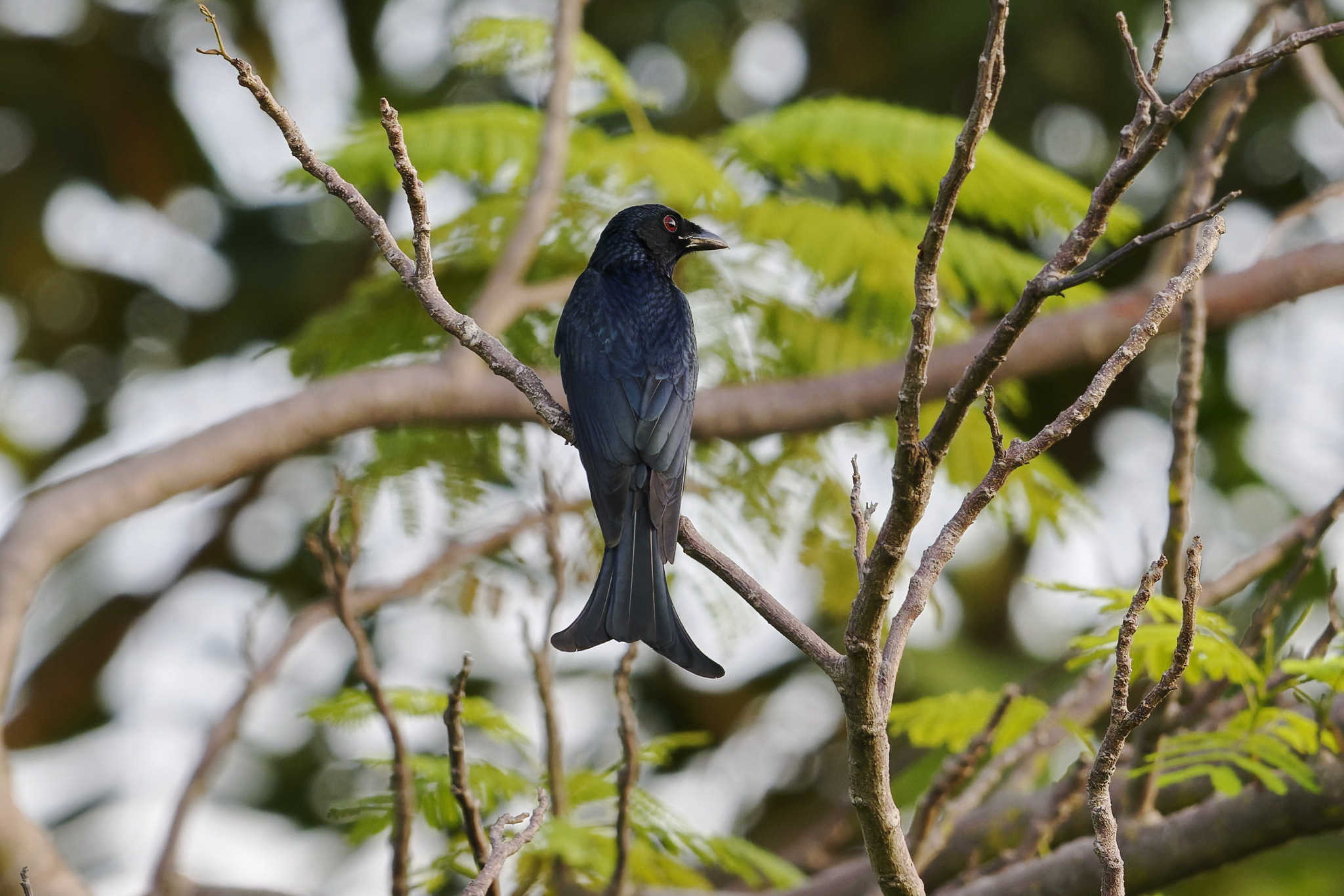
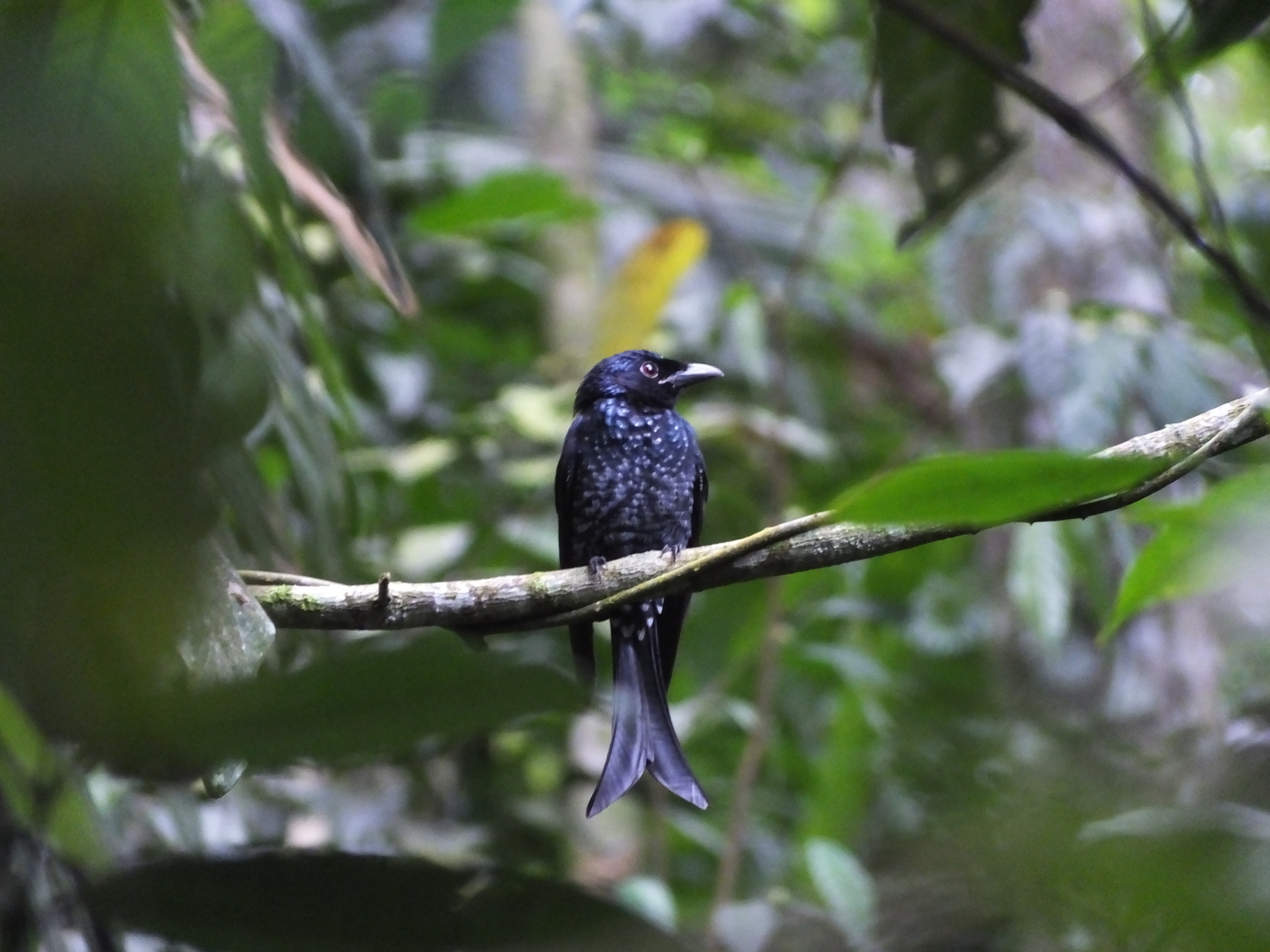
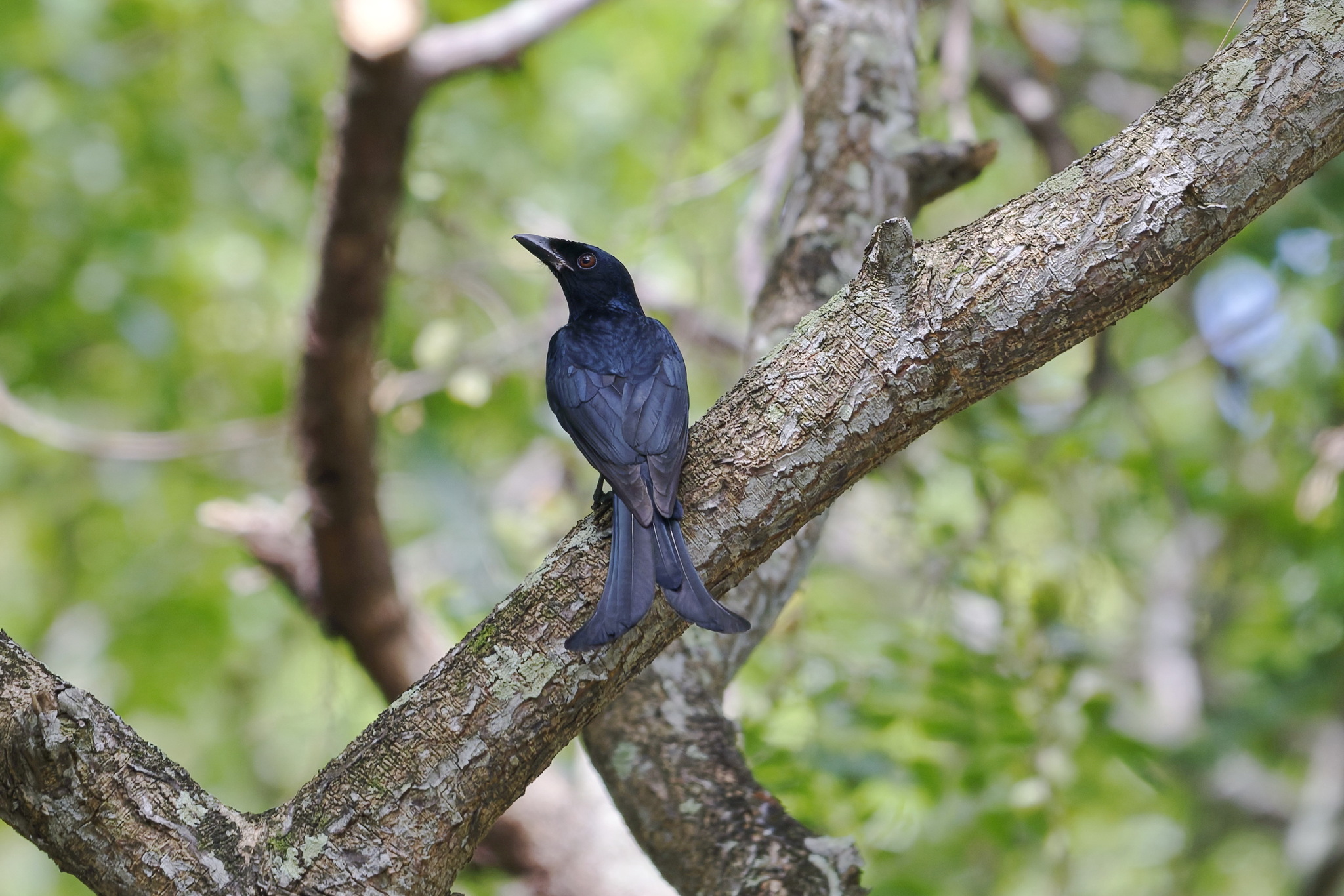
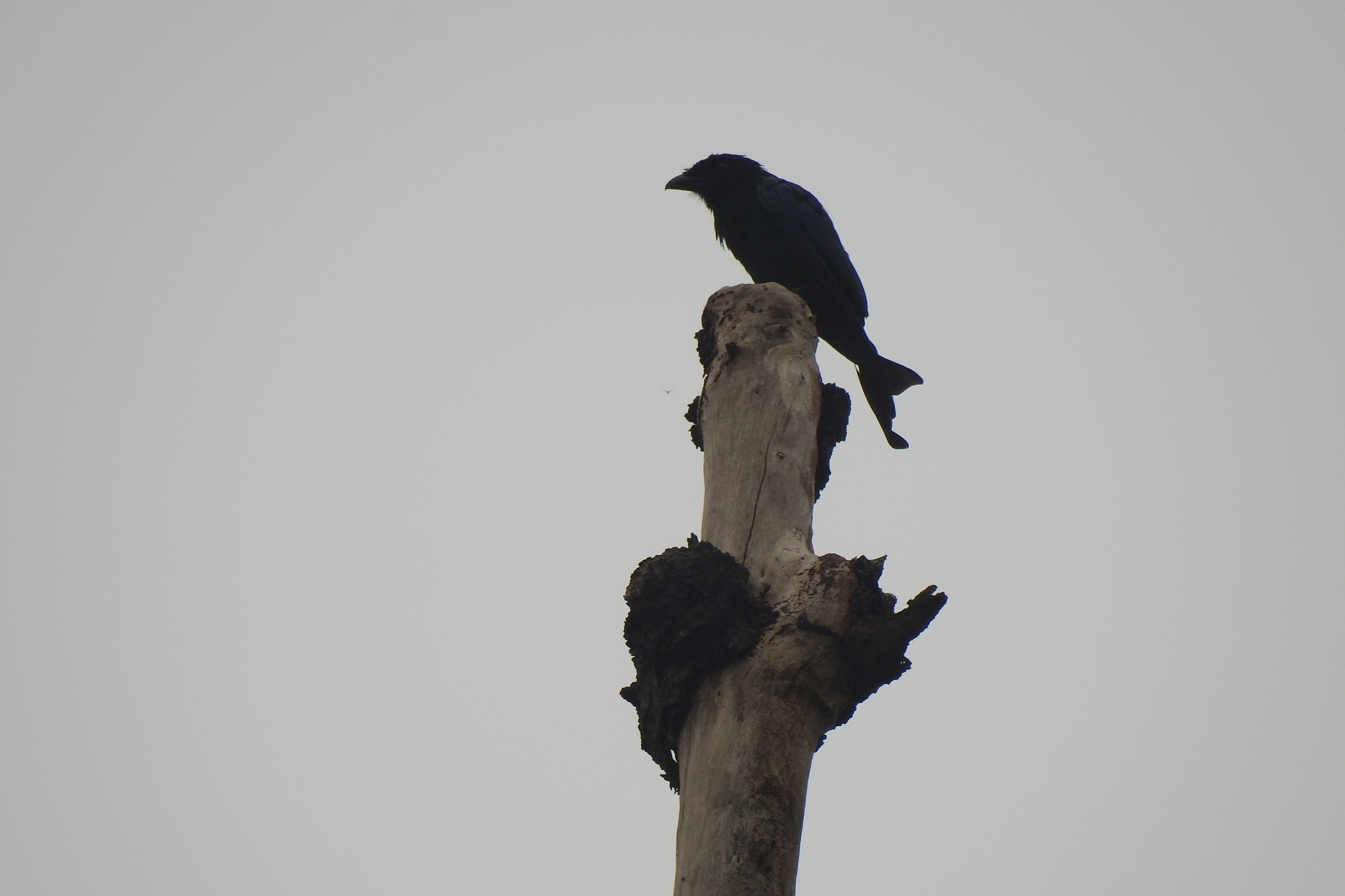
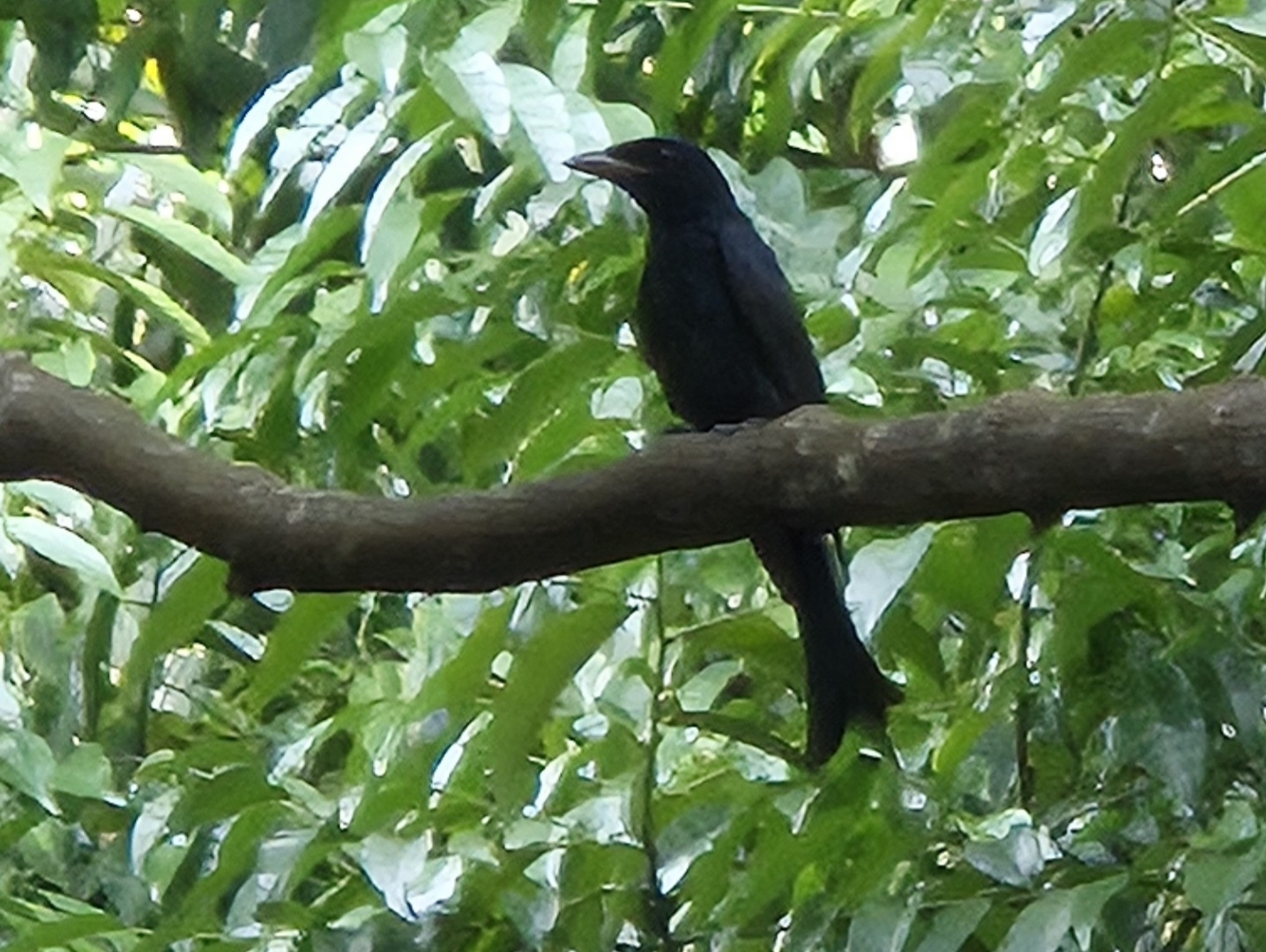
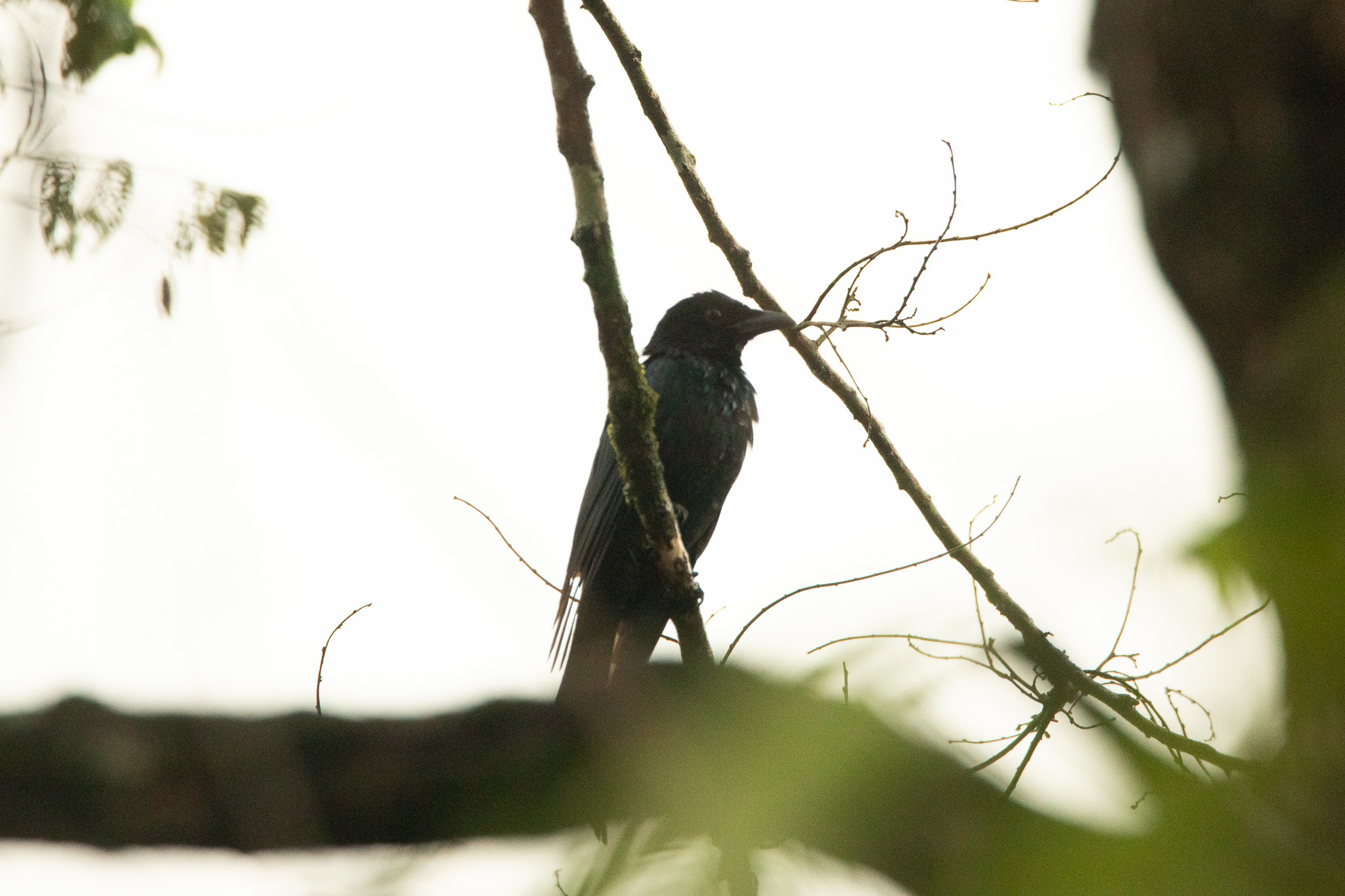
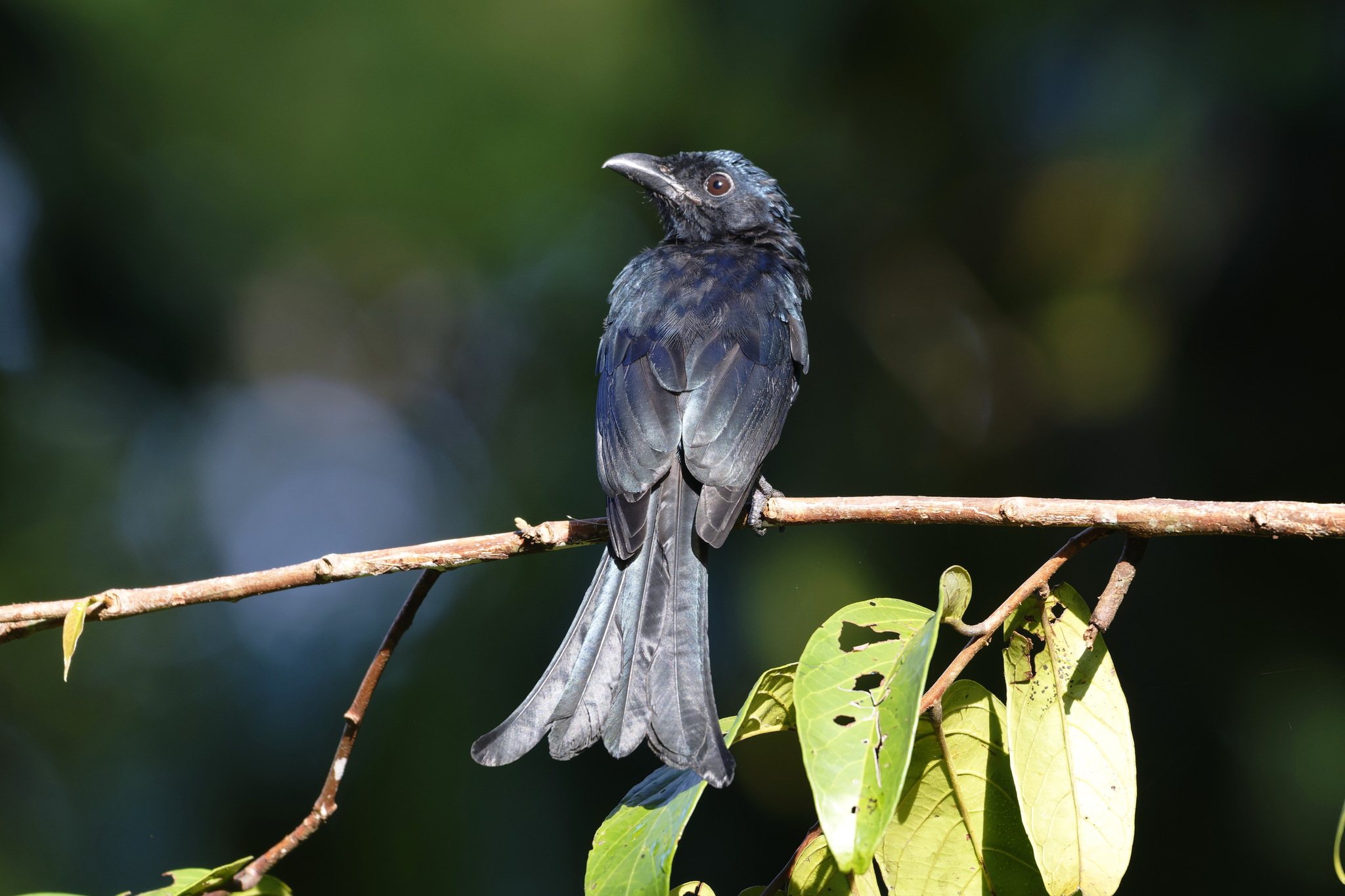
Crow-billed Drongo
Dicrurus annectens
鸦嘴卷尾
Introduction
The Black Drongo (Dicrurus macrocercus) is a completely black-plumaged drongo with a deeply forked tail, measuring 23-28 cm in length. Its range extends from India eastwards through the Philippines and Indonesia, spanning over a dozen countries across Southeast Asia. This species inhabits moist tropical forests, particularly dense evergreen and moist-deciduous woodlands, and typically remains within the forest interior rather than venturing into open habitats. It perches on exposed branches and catches insects in aerial pursuits. The species is found from lowland forests of the Thai-Malay Peninsula to the mangroves of the Indonesian archipelago.
Description
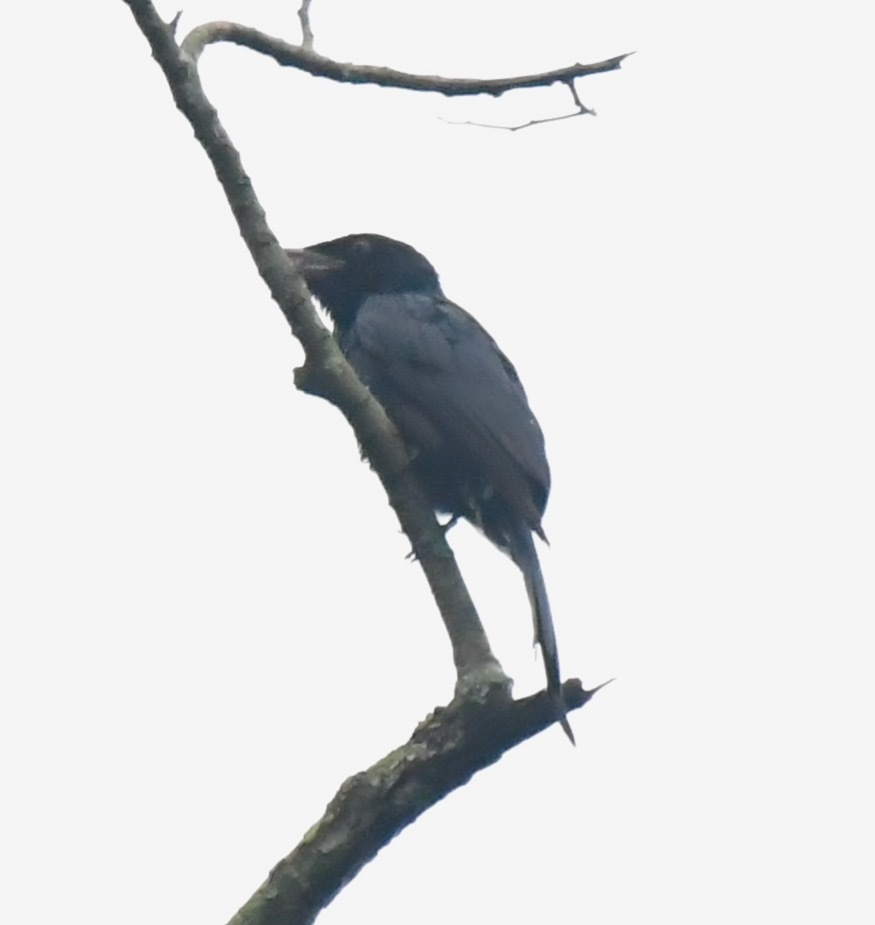
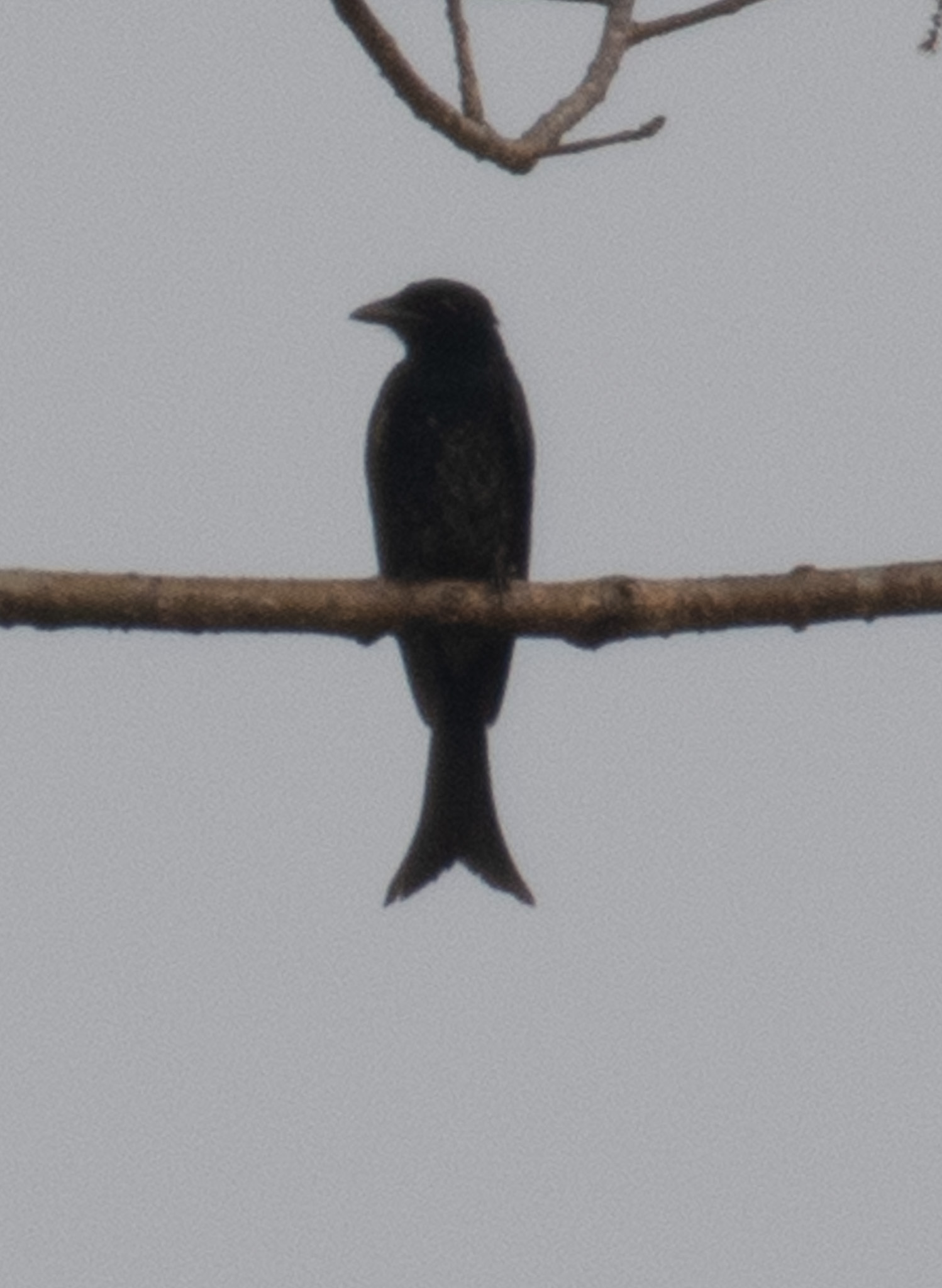
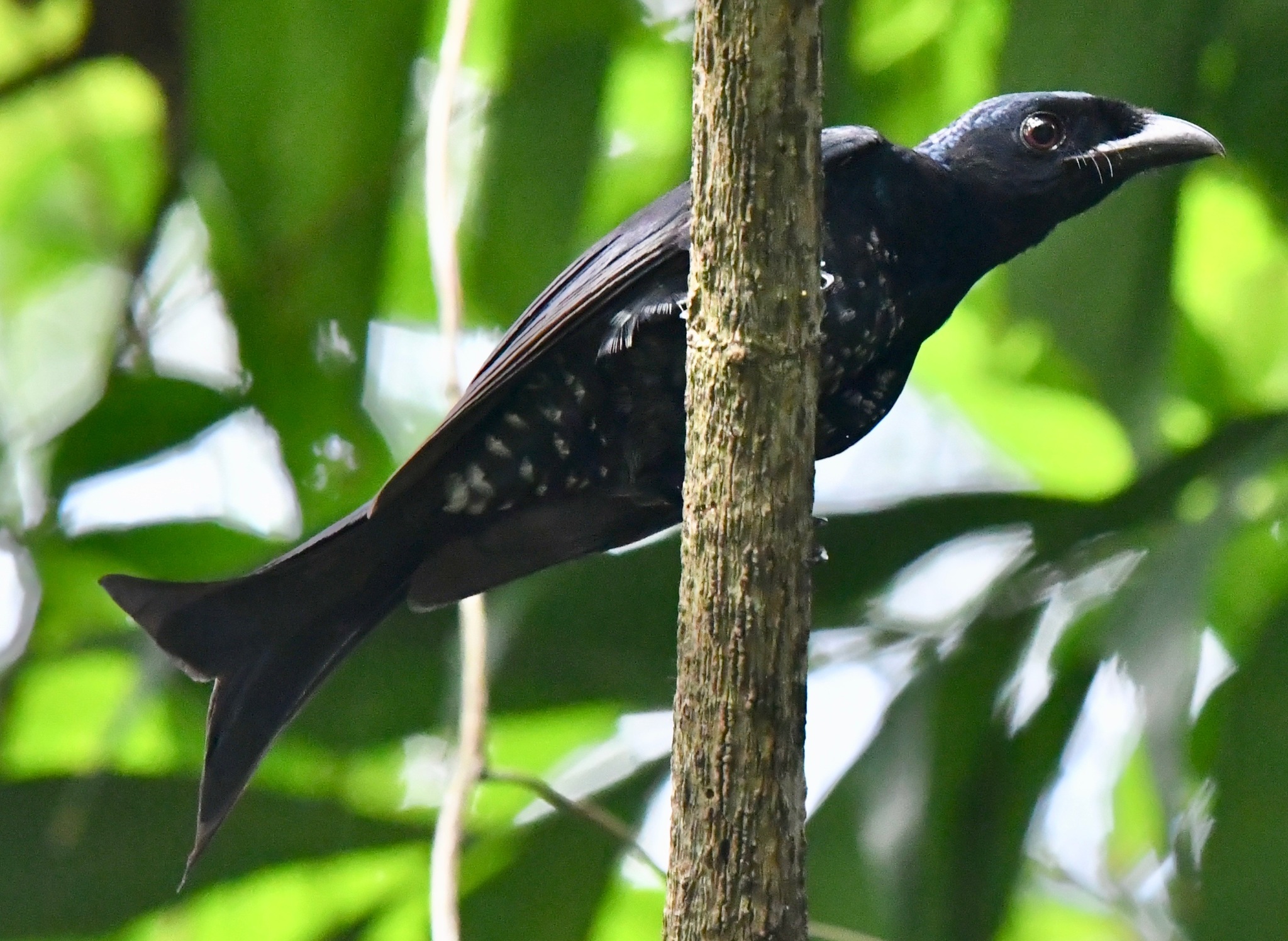
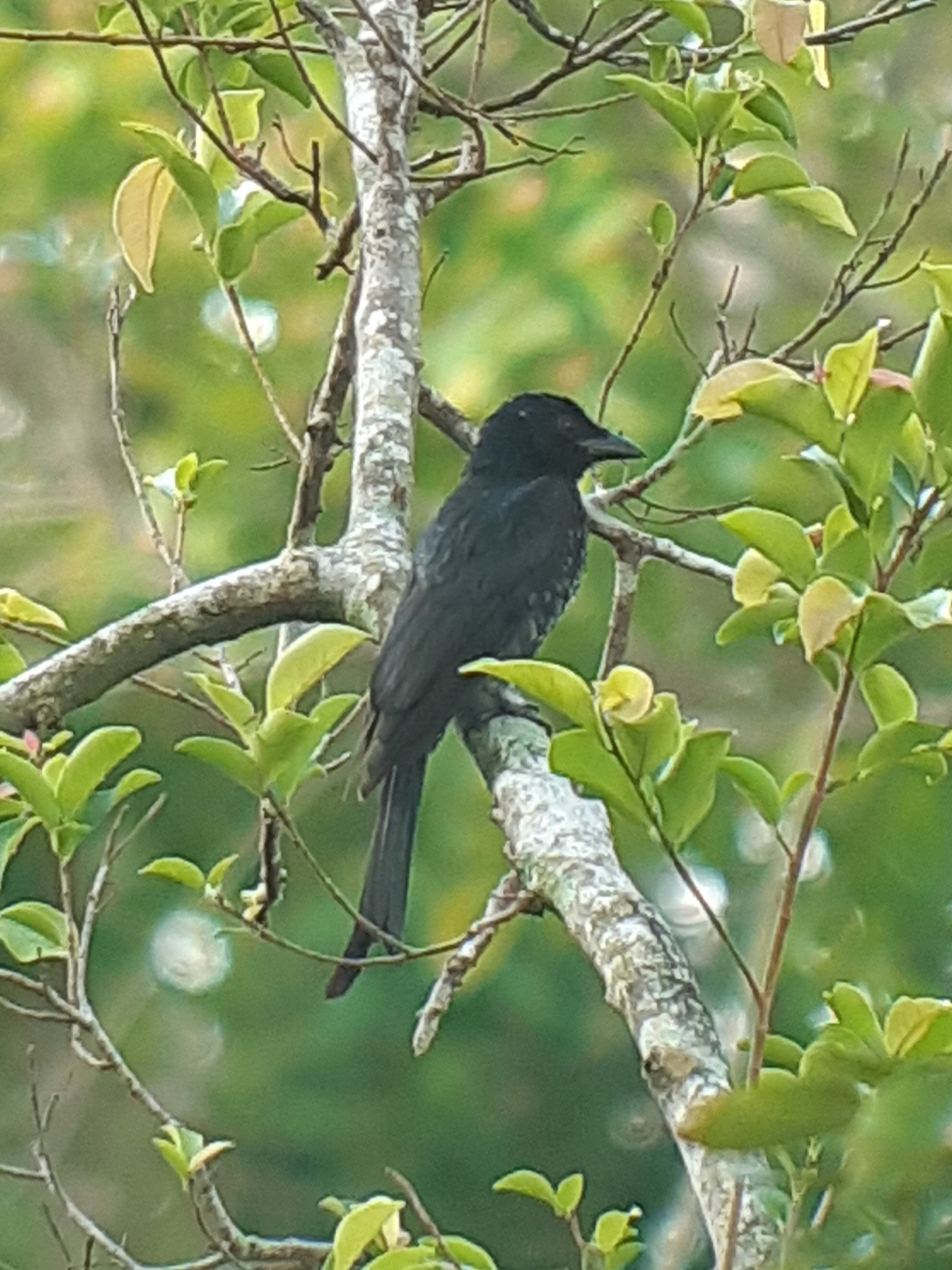
A medium-sized passerine with entirely black plumage that appears glossy and jet-black in good lighting. The most distinctive feature is its stout, crow-like bill that gives the species its common name, notably thicker than most other drongo species. The tail is moderately forked, though not as deeply forked as some relatives. The eyes are dark, and the legs and feet are black. The overall silhouette resembles a small crow or large black flycatcher. Both sexes appear similar in plumage.
Identification
This species is most easily confused with the black drongo, but the stouter, more robust bill is the primary distinguishing feature. The crow-billed drongo also tends to inhabit denser forest interior rather than the more open habitats preferred by the black drongo. The forked tail helps separate it from similarly-sized blackbirds and mynas. In flight, the combination of the stout bill and forked tail against the all-black plumage provides the best identification clues. Range overlap with similar species throughout Southeast Asia means careful attention to bill shape and habitat preference is essential.
Distribution & Habitat
Found across Southeast Asia from the Indian subcontinent eastwards, including Bangladesh, Bhutan, Brunei, Cambodia, China, India, Indonesia, Laos, Malaysia, Myanmar, Nepal, the Philippines, Singapore, Thailand, and Vietnam. Inhabits subtropical and tropical moist lowland forests as well as mangrove forests. Prefers dense evergreen and moist-deciduous woodland, typically staying within the forest interior rather than edges or open areas. No significant migratory movements are documented, though some local seasonal movements may occur.
Behavior & Ecology
This insectivorous species actively forages by sallying from perches to catch flying insects in the air, also gleaning prey from foliage. The breeding season occurs between April and June. Both parents participate in constructing a small cup-shaped nest made of grass and held together with cobwebs, typically positioned in the fork of a slender branch. The female alone incubates the eggs after the nest is complete. Little is documented about vocalizations, but like other drongos, it likely produces varied calls including harsh notes and more melodic phrases.
Conservation
Listed as Least Concern by the IUCN due to its extremely large range and apparently stable population. The species is described as common throughout much of its distribution. Potential threats include habitat loss from deforestation, though its preference for various forest types and apparent adaptability may buffer some impacts. Population trends have not been quantified, but no immediate major conservation concerns are identified for this species.
Culture
No specific cultural significance, folklore, or mythological associations are documented in available sources for this species.
Source: Wikipedia · CC BY-SA 3.0
Taxonomy
- Order
- Passeriformes
- Family
- Dicruridae
- Genus
- Dicrurus
- eBird Code
- crbdro1
Distribution
breeds eastern Himalayas to southern China; winters to southeastern Asia and Greater Sundas
Data Sources
Species description from Wikipedia, licensed under CC BY-SA 3.0.
Bird images and sounds sourced from GBIF, contributed by citizen scientists worldwide under Creative Commons licenses.
Taxonomy data from AviList 2025.