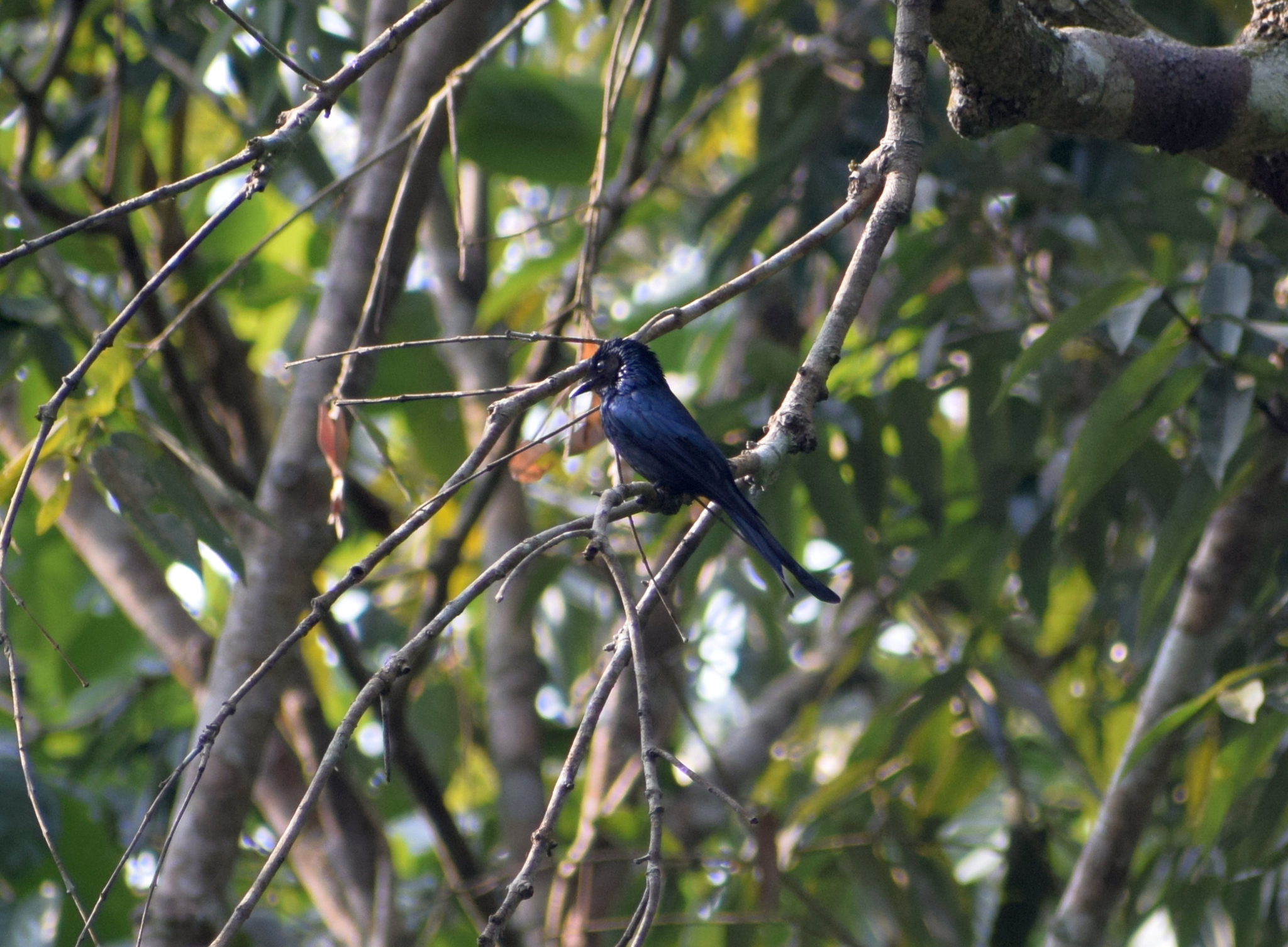
Bronzed Drongo
Dicrurus aeneus
古铜色卷尾
Introduction
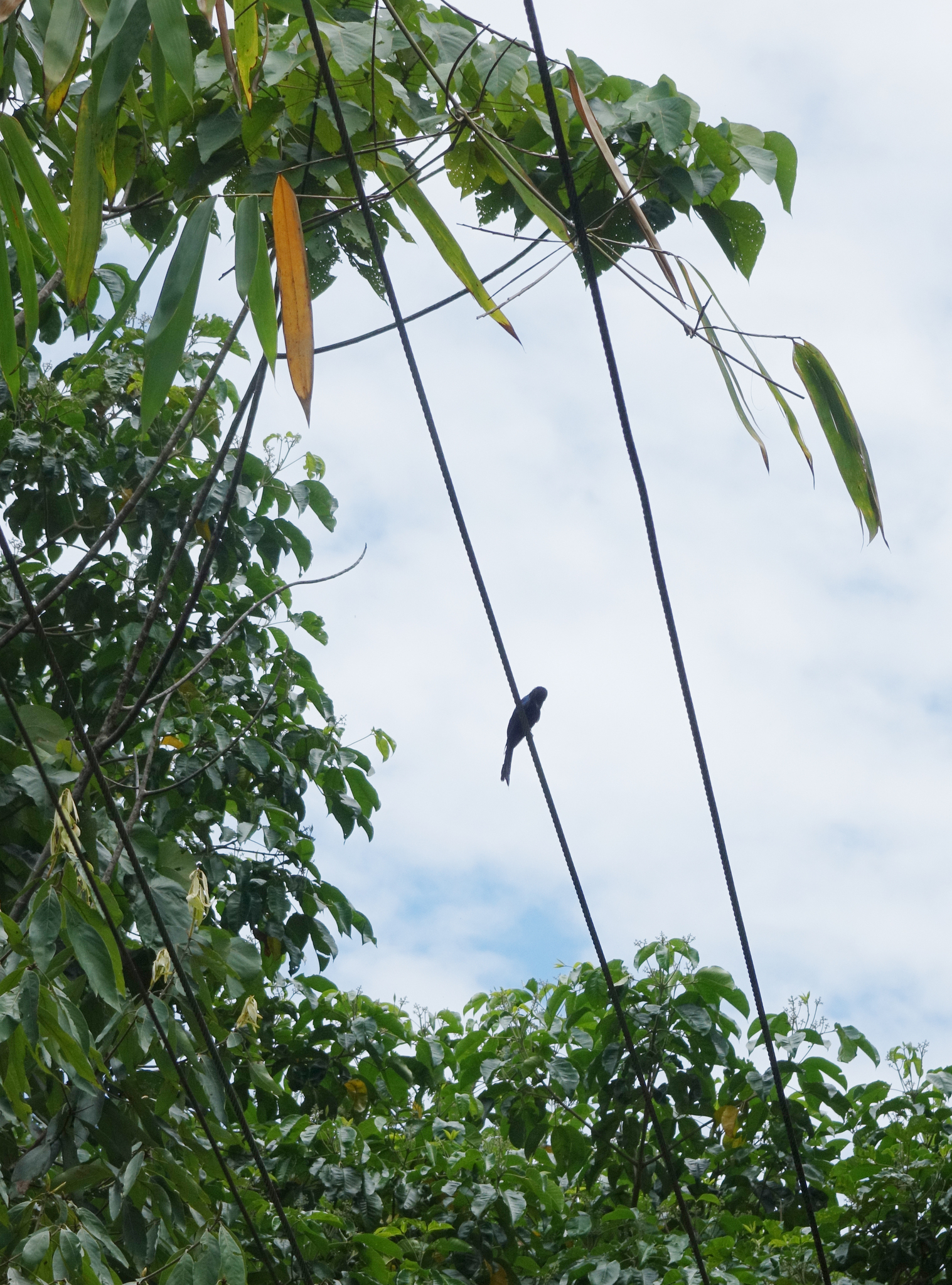
A member of the drongo family, resident throughout the forests of the Indian subcontinent and Southeast Asia. It makes aerial sallies from exposed perches to capture flying insects. It is an accomplished mimic capable of reproducing the calls of numerous other forest bird species. It frequently joins mixed-species foraging flocks, moving through the middle and upper levels of the forest. Distinguished by its compact size and metallic plumage.
Description
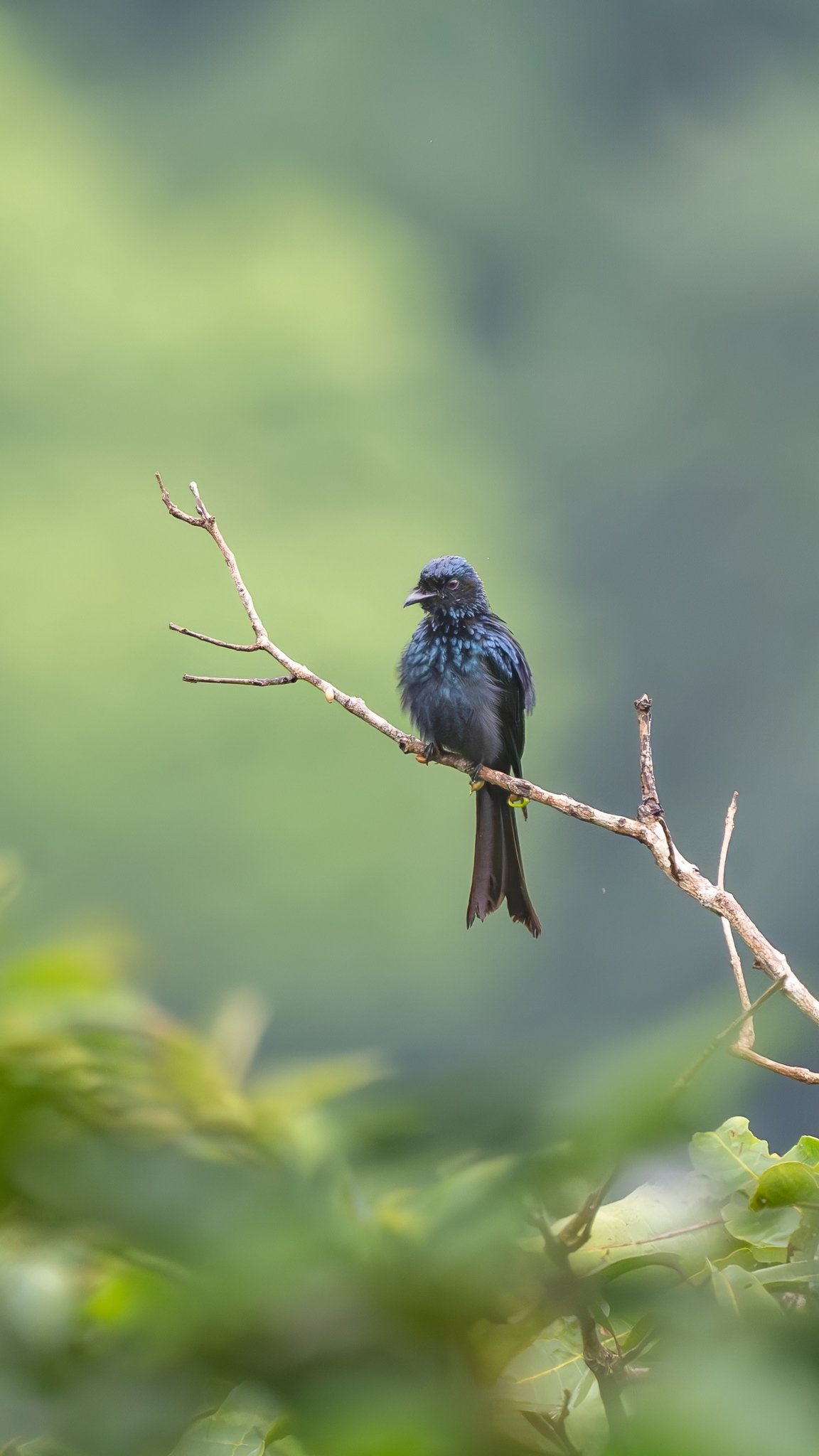
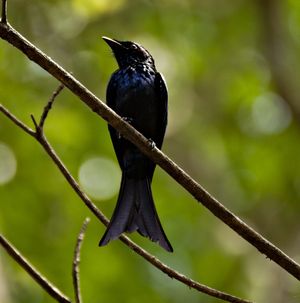
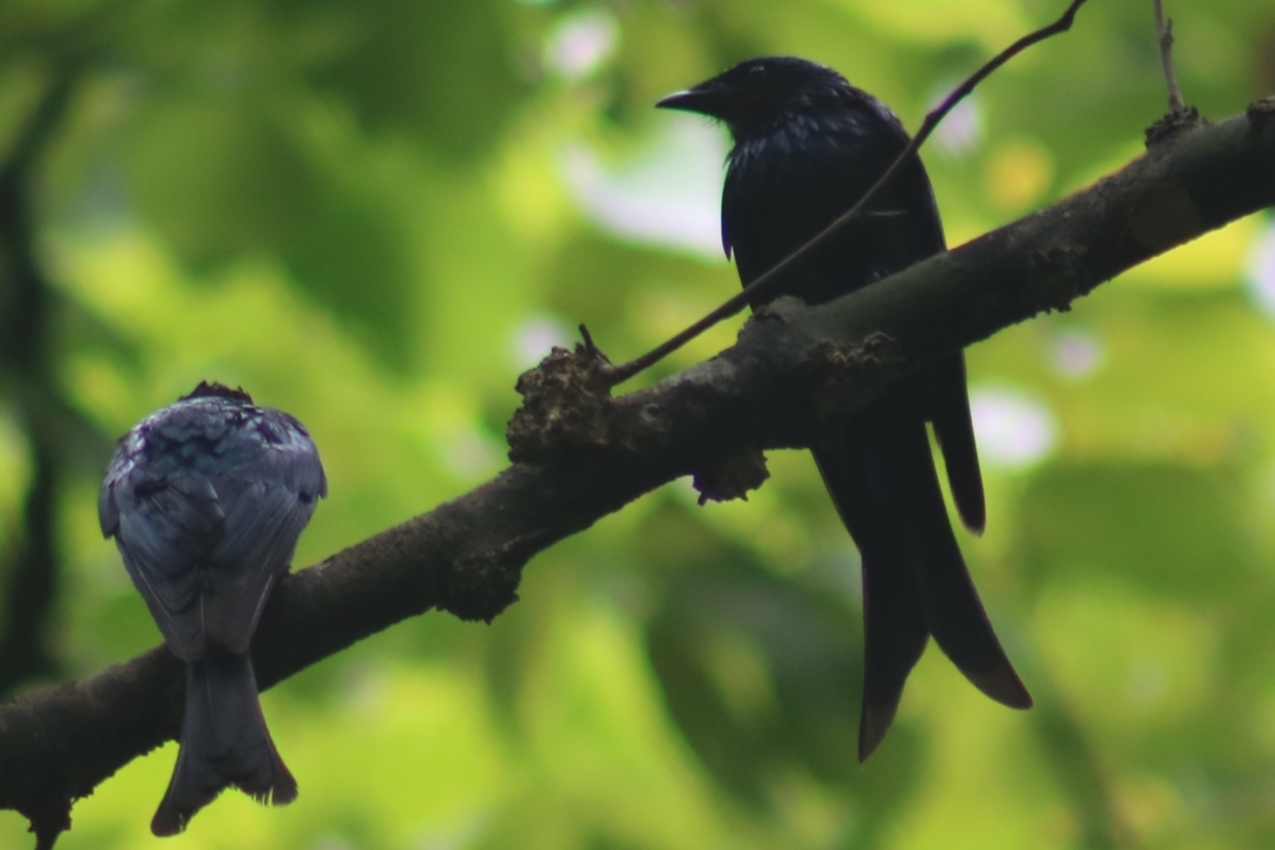
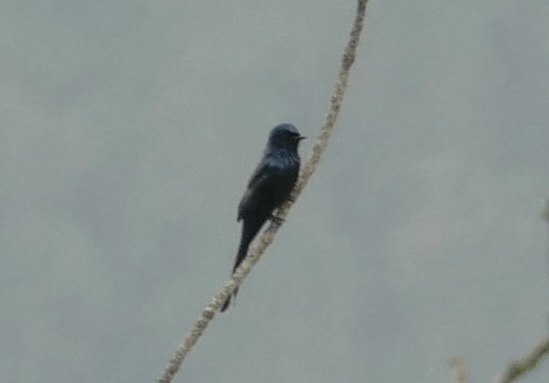
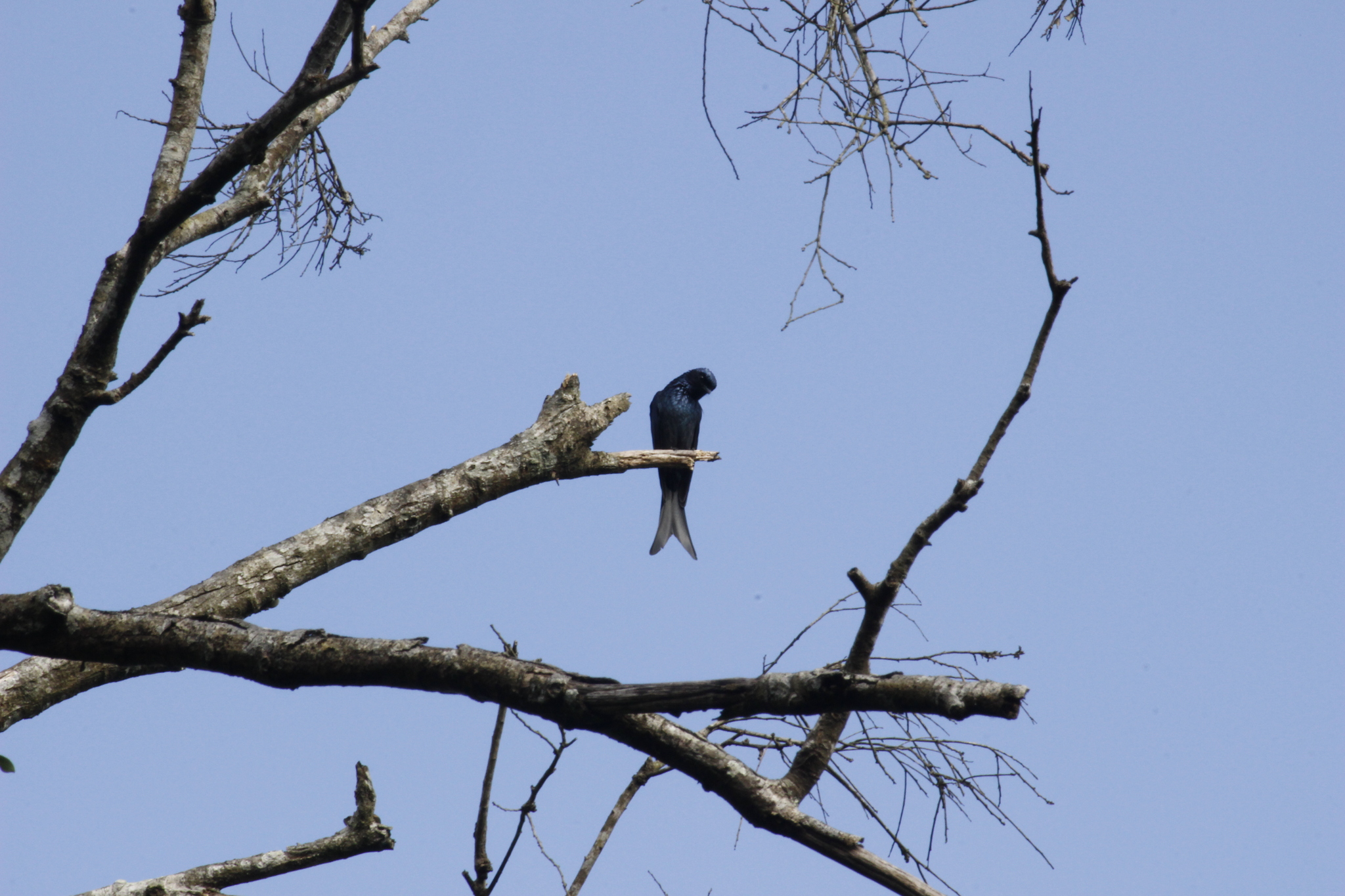
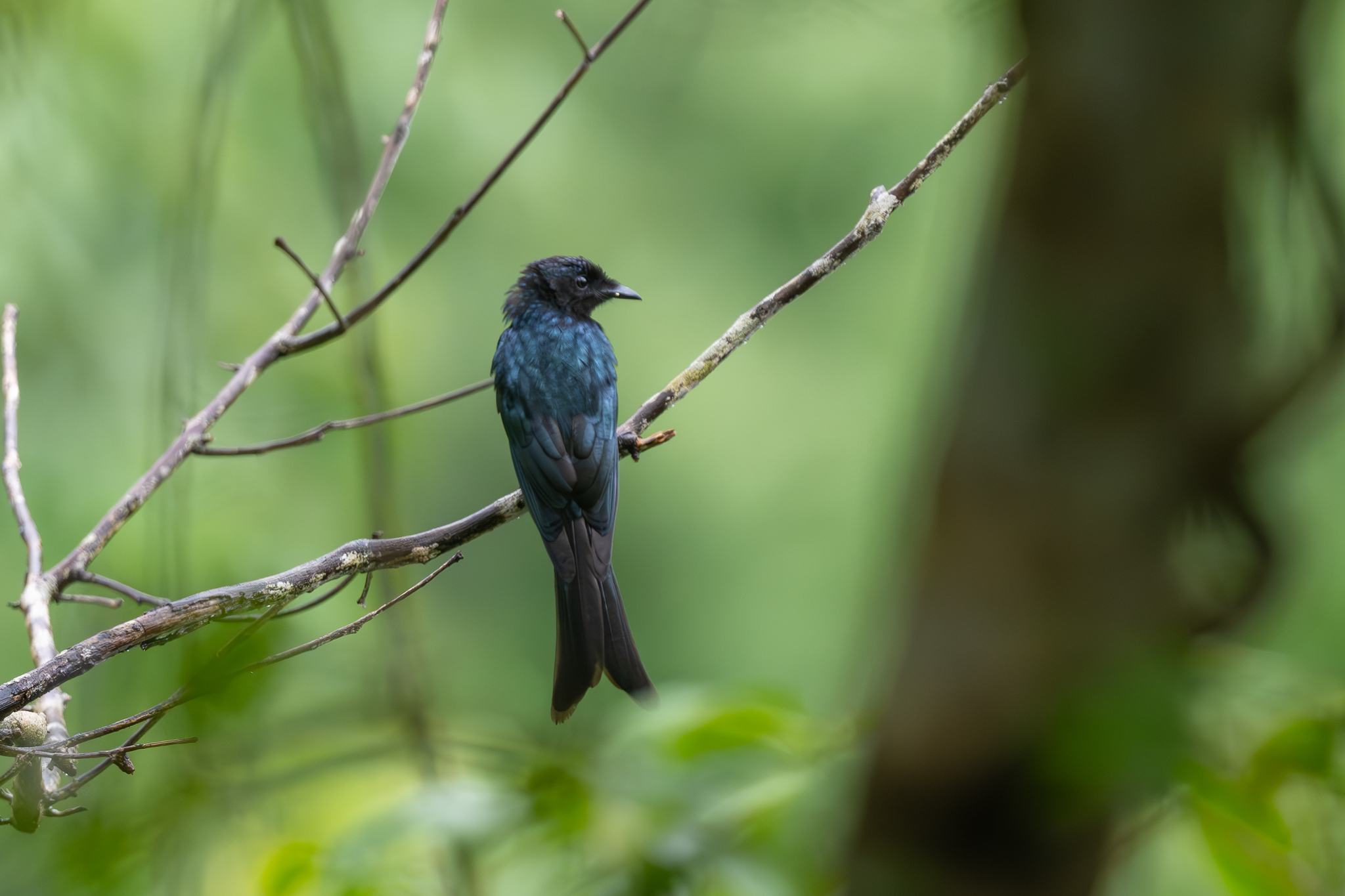
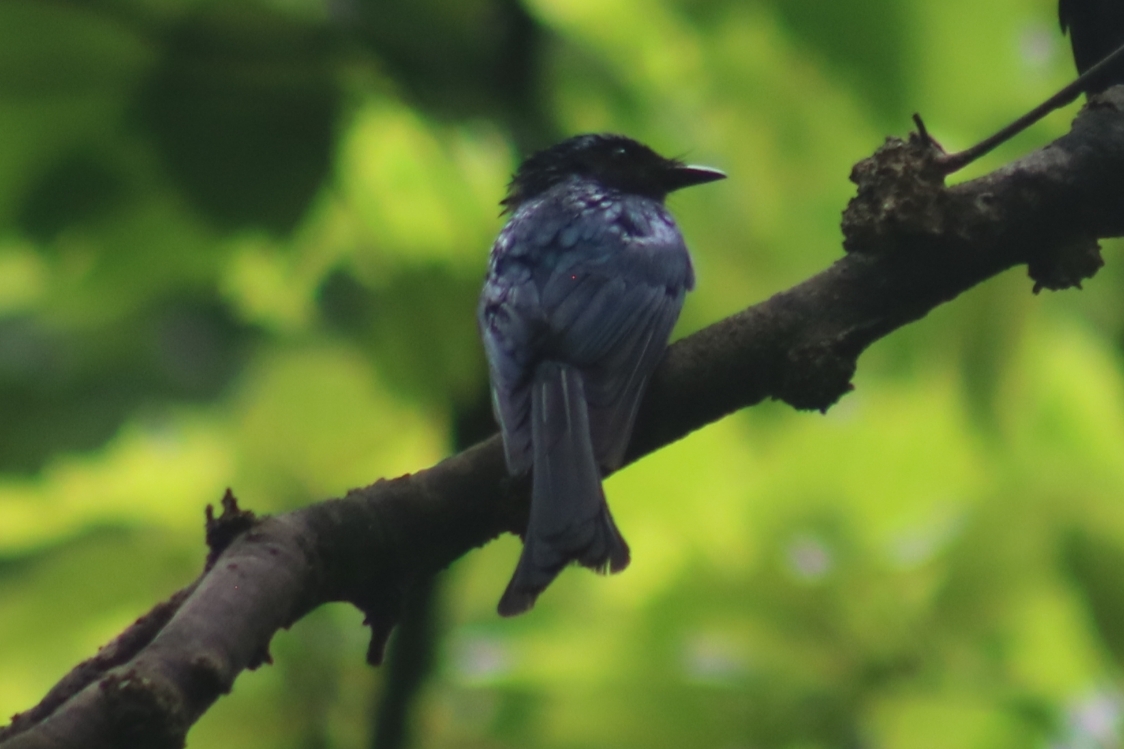
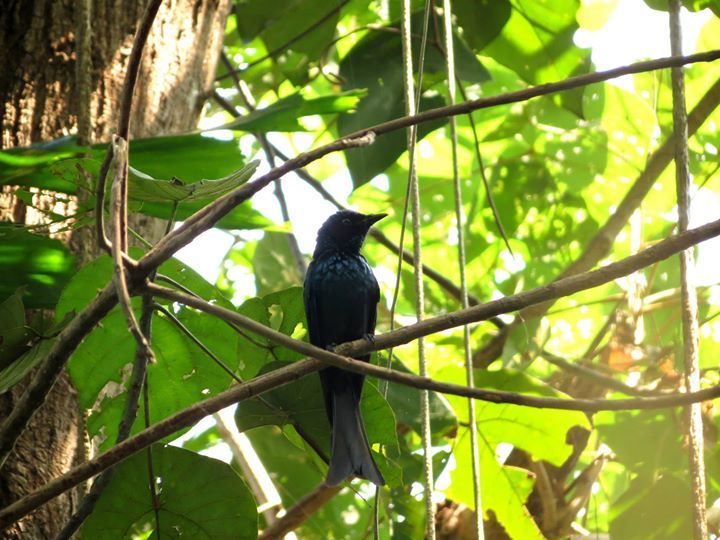
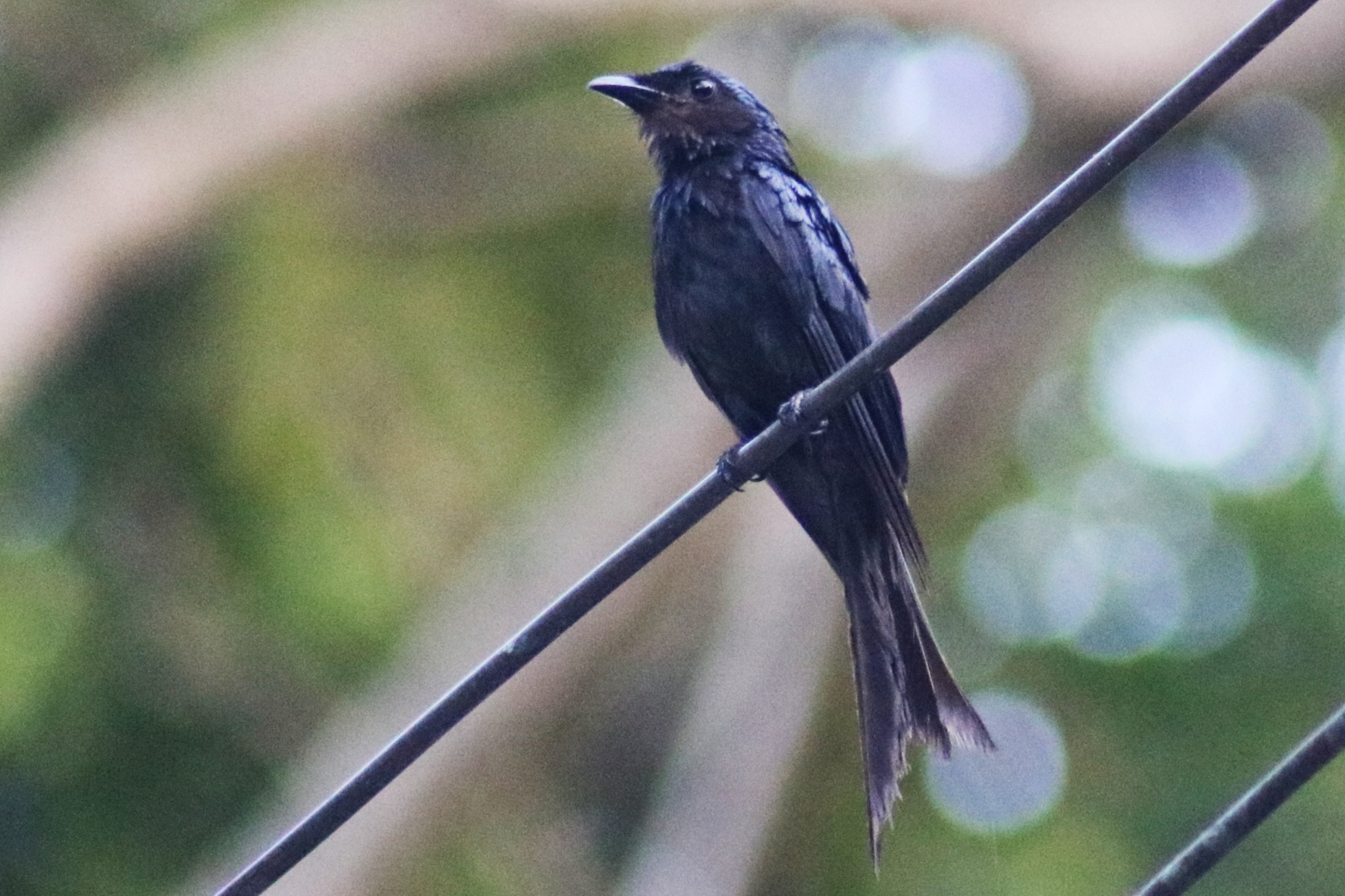
This is a relatively small drongo, measuring 24 cm in length, smaller than the black drongo. The plumage is characterized by a metallic bronze-green gloss that gives it a spangled appearance on the head, neck, and breast. The lores appear velvety, while the ear coverts are comparatively duller. The tail is slender and deeply forked, with the outer tail feathers spreading slightly outward at the tips. Adults display this distinctive forked tail profile year-round. Immature birds have white-tipped axillaries, while juveniles are duller overall with brownish tones and reduced spangling.
Identification
This species is most reliably distinguished from other drongos by its smaller, more compact build and the distinctive spangled, metallic gloss on the head, neck, and breast. The forked tail is deeper than in some relatives, with outer feathers that flare subtly outward. The velvety texture of the lores and the overall bronze-green sheen, rather than pure black coloration, help separate it from the black drongo and other similar species in the region.
Distribution & Habitat
This species occurs throughout the Western Ghats and Eastern Ghats of India, and extends along the lower Himalayas from western Uttaranchal eastward through Indochina to Hainan. Its range continues through the Malay Peninsula, Sumatra, and northern Borneo. It is exclusively a bird of moist broadleaved evergreen forests, typically staying within the forest interior rather than venturing into open areas or edges.
Behavior & Ecology
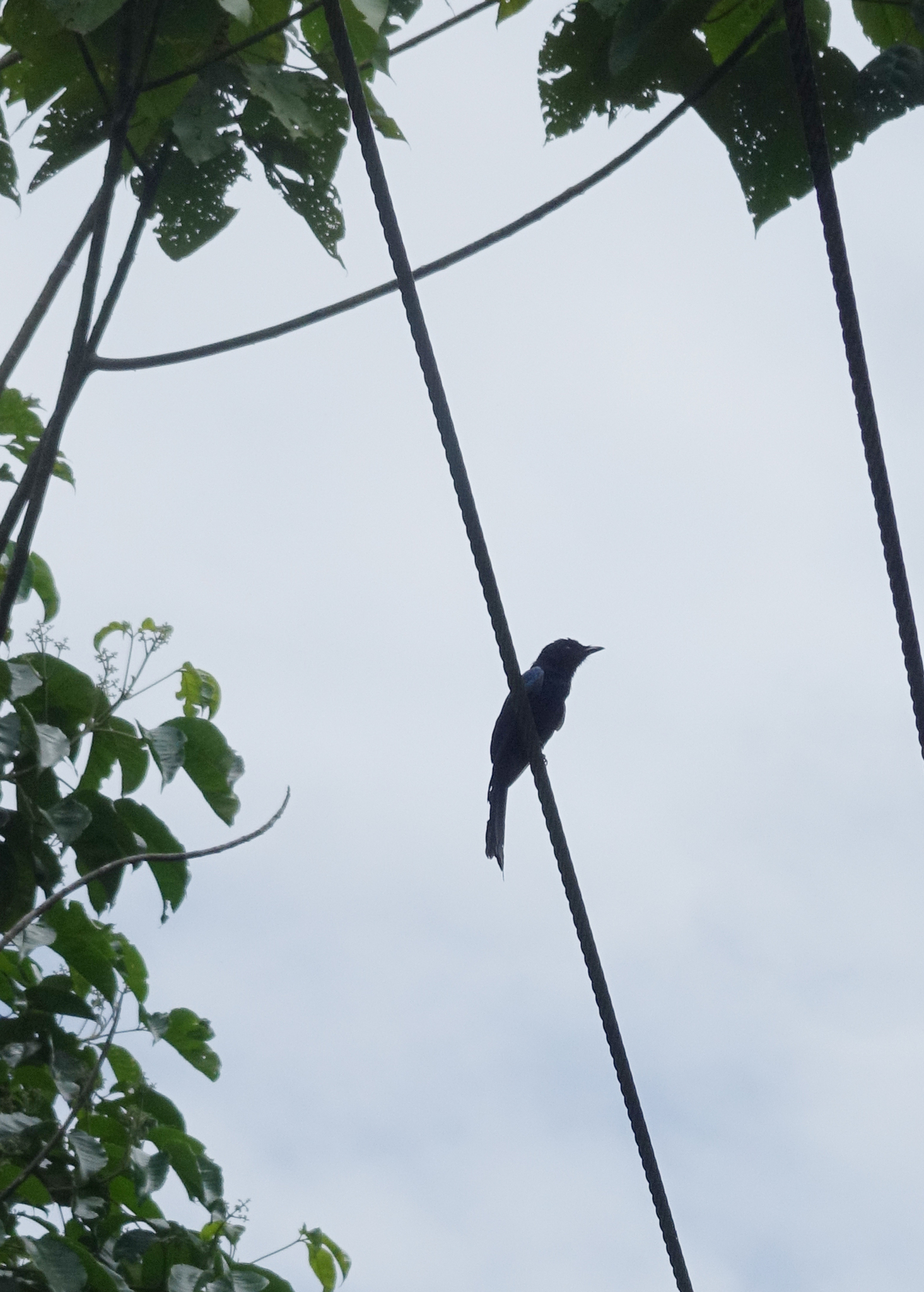
These birds are typically encountered alone or in small groups of two to three individuals. They actively hunt insects by making aerial sallies from perches under the forest canopy, often returning repeatedly to favorite lookout branches. They readily join mixed-species foraging flocks moving through the forest. Like other drongos, they are accomplished mimics, able to imitate the calls of numerous other bird species with remarkable accuracy. The breeding season spans from February to July. The cup-shaped nest, built in a tree, contains three or four pinkish to brownish eggs that are darker at the broad end and often marked with cloudy spots. The nest structure incorporates cobwebs, giving it a whitish appearance. Despite their modest size, these birds are notably aggressive and fearless, readily attacking much larger species that approach their nest.
Conservation
IUCN Red List assessment, population trends, and specific threats are not detailed in the available source material.
Culture
Cultural significance, folklore, or traditional references to this species are not covered in the source material.
Source: Wikipedia · CC BY-SA 3.0
Taxonomy
- Order
- Passeriformes
- Family
- Dicruridae
- Genus
- Dicrurus
- eBird Code
- brodro1
Vocalizations
Subspecies (3)
-
Dicrurus aeneus aeneus
India to southwestern China, Myanmar, Thailand, Indochina, and the Thai-Malay Peninsula
-
Dicrurus aeneus braunianus
Taiwan
-
Dicrurus aeneus malayensis
southern Thai- Malay Peninsula, Sumatra, and Borneo
Data Sources
Species description from Wikipedia, licensed under CC BY-SA 3.0.
Bird images and sounds sourced from GBIF, contributed by citizen scientists worldwide under Creative Commons licenses.
Taxonomy data from AviList 2025.