Lesser Whistling Duck
Dendrocygna javanica
栗树鸭
Introduction
A resident of South and Southeast Asian wetlands. Inhabits lakes, marshes, wet paddy fields, and urban wetlands. Roosts in large flocks during the day and feeds actively after sunset. Nests in tree hollows or forks, sometimes using old nests of other birds. Capable of perching in trees. Produces a loud, two-note whistling call. Flight is slow with rapid wingbeats. Forms large congregations in urban wetlands during winter months, notably in cities such as Kolkata and Goa.
Description
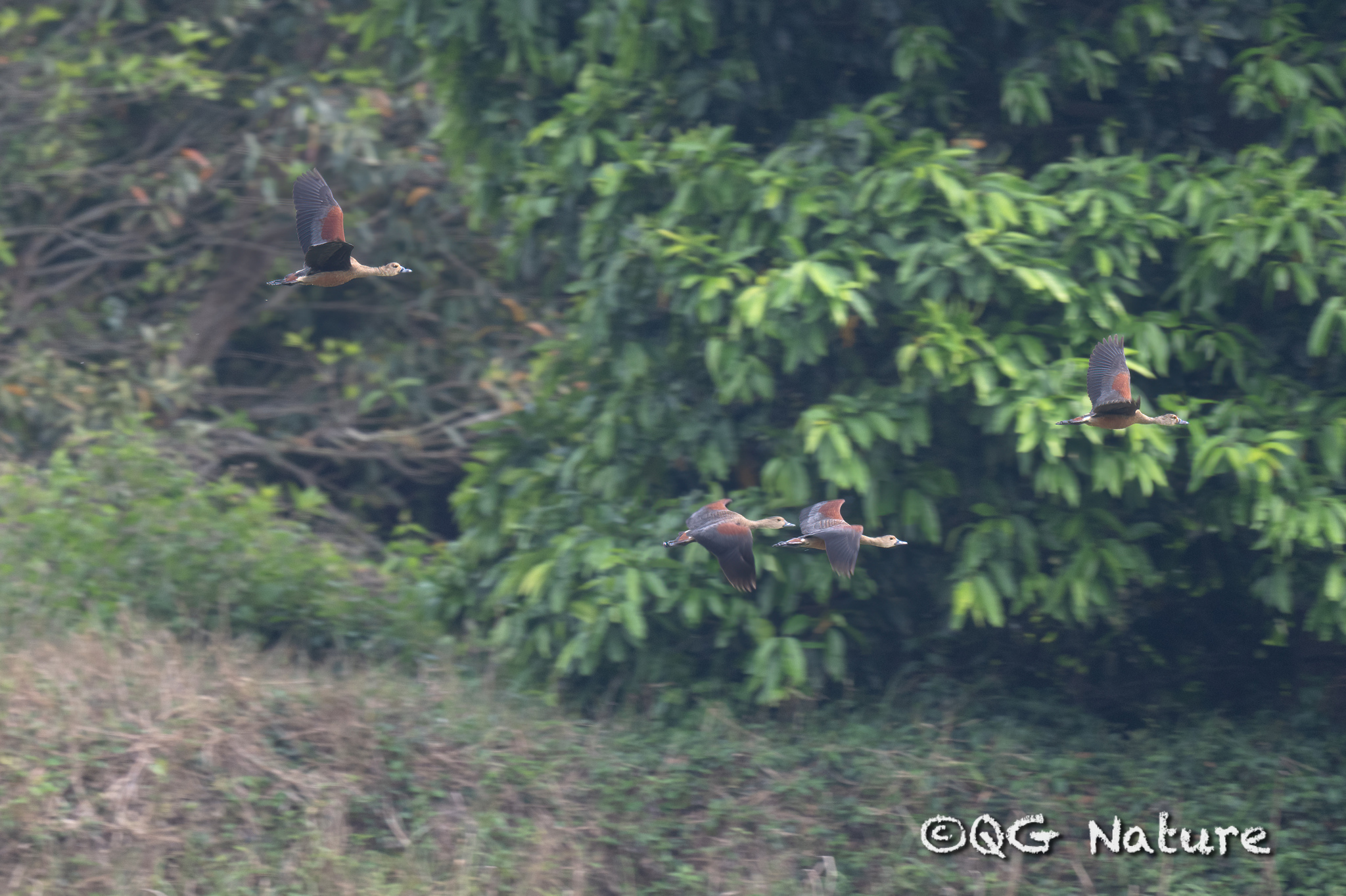
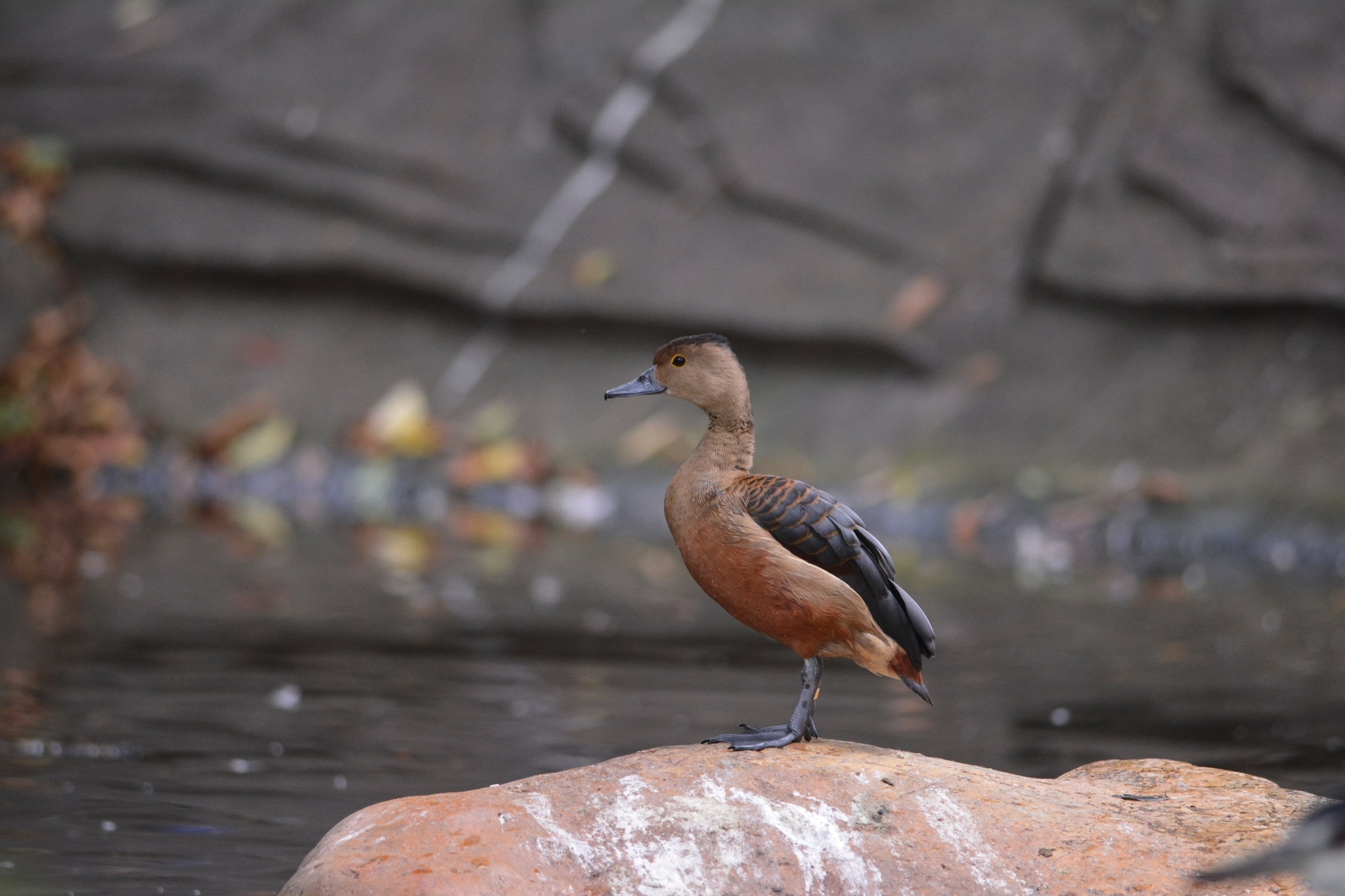
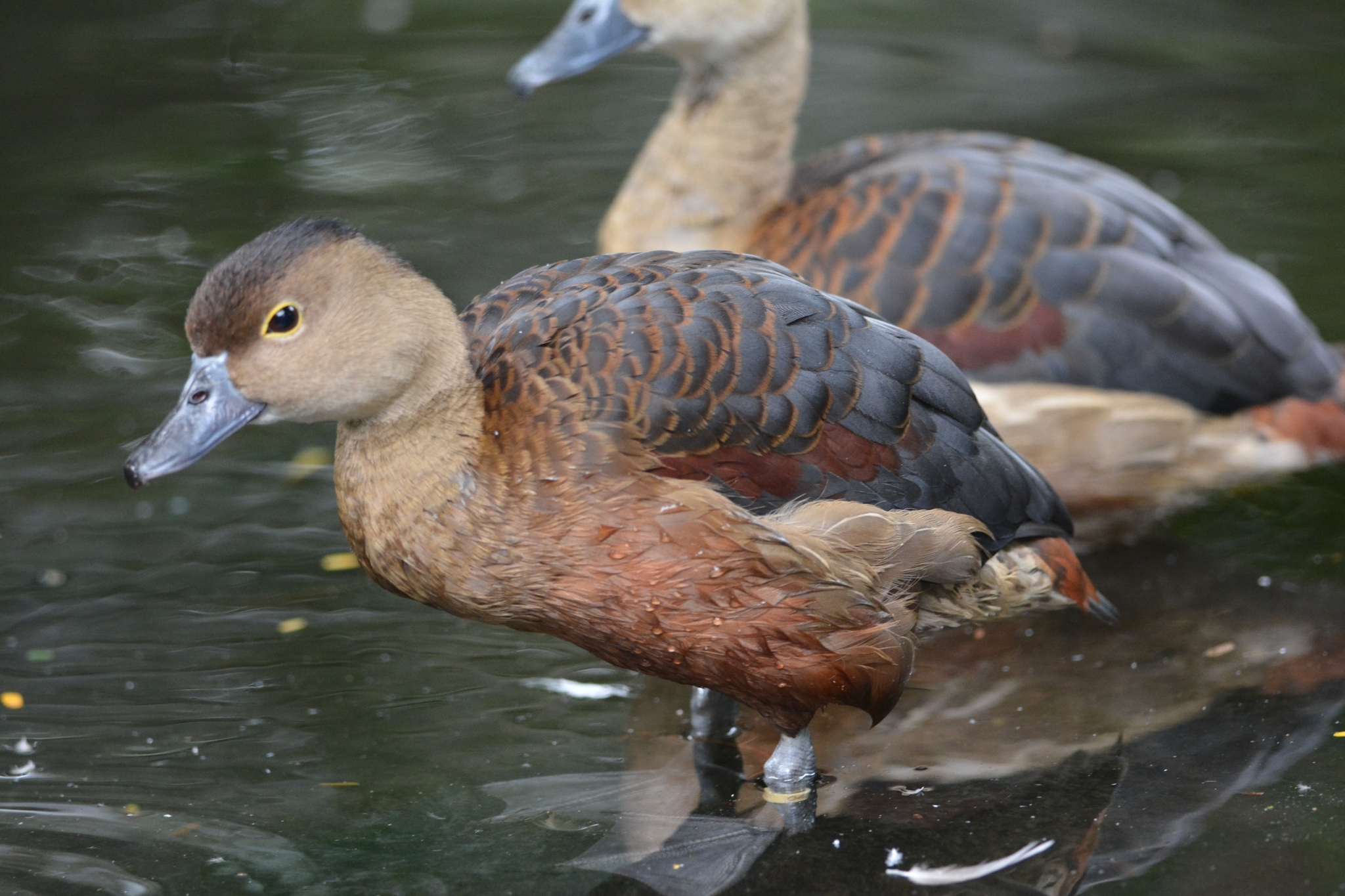
This chestnut-brown, long-necked duck has broad wings visible in flight and measures slightly smaller than its relatives. The plumage is uniformly brown with a distinctive chestnut rump. A notable feature is the orange to yellow ring around the eye, which contrasts with the dark crown. Both sexes appear identical in plumage. The upper-tail coverts are chestnut, distinguishing it from similar species. When flying, the head is held below the body level, and the outermost primary feather has a modified inner vane. Downy chicks are black with a white eyebrow and white patches on the head, wing, lower back, and rump. Albino individuals have been recorded in wild populations.
Identification
This species is most easily confused with the fulvous whistling duck, but the chestnut upper-tail coverts immediately separate it from the fulvous species, which has creamy-white rump feathers. The orange to yellow eye ring is another key field mark. In flight, look for slow, laboured movement with rapid wingbeats and the head held below the body. The repetitive, wheezy 'seasick' call is diagnostic and often heard before the birds are seen. They are very nocturnal, so daytime sightings typically show them resting in flocks on lake edges rather than actively feeding.
Distribution & Habitat
A widespread resident across lowland wetlands of the Indian subcontinent and Southeast Asia, with populations extending to island groups including the Andaman Islands, Nicobar Islands, and Maldives. They inhabit freshwater wetlands with good vegetation cover and rest during the day on banks or even on the open sea in coastal areas. While largely sedentary, northern populations make local movements southward in winter. Large numbers gather in urban wetlands during the winter months, particularly in cities like Kolkata and Goa.
Behavior & Ecology
Highly gregarious outside breeding season, these ducks feed nocturnally on aquatic plants, cultivated rice grains, small fish, frogs, molluscs, and worms. They employ both dabbling and diving techniques and will waddle onto land to feed. Courtship involves the male facing the female while dipping and raising his bill in water. Breeding occurs during the monsoon season, with nests built in tree holes or tree forks, sometimes using old kite or heron nests. Clutches of 7-12 white eggs are incubated by both parents for 22-24 days. More than one brood per season is possible, and young have been observed riding on their parents' backs. The loud, two-note whistling call is produced both in flight and as a response to disturbance.
Conservation
With a vast distribution range of 1-10 million square kilometres and an estimated global population of 2-20 million individuals, this species is considered globally secure. Their Adaptability to urban wetlands and avoidance by hunters (who consider them poor eating) contribute to their stable status. However, hunters in Assam have been known to raise ducklings as live decoys. No specific conservation measures are currently required given their widespread abundance.
Culture
Local Indian names like 'sili' and 'silhahi' are derived from the species' distinctive wheezy two-note call. In captivity, they become remarkably tame, readily walking around enclosures and responding to whistles. Individuals in captivity in the USA have been recorded living up to 9 years. At the Alipore Zoological Gardens, captive birds introduced in the 1930s were eventually joined by wild individuals, creating a self-sustaining urban population.
Source: Wikipedia · CC BY-SA 3.0
Taxonomy
- Order
- Anseriformes
- Family
- Anatidae
- Genus
- Dendrocygna
- eBird Code
- lewduc1
Distribution
Indian subcontinent to southeastern Asia and Greater Sundas
Vocalizations
Data Sources
Species description from Wikipedia, licensed under CC BY-SA 3.0.
Bird images and sounds sourced from GBIF, contributed by citizen scientists worldwide under Creative Commons licenses.
Taxonomy data from AviList 2025.