Fulvous-breasted Woodpecker
Dendrocopos macei
纹腹啄木鸟
Introduction
A member of the Picidae family, this medium-sized woodpecker occurs across the Indian subcontinent. It inhabits wooded environments from lowland forests to montane slopes. The species exhibits pied plumage with a buffy breast. Taxonomic revision has occurred, with the freckle-breasted woodpecker recently split from this taxon. It forages on tree trunks and branches, drilling into wood to search for insects, and is identified by its drumming and call notes.
Description
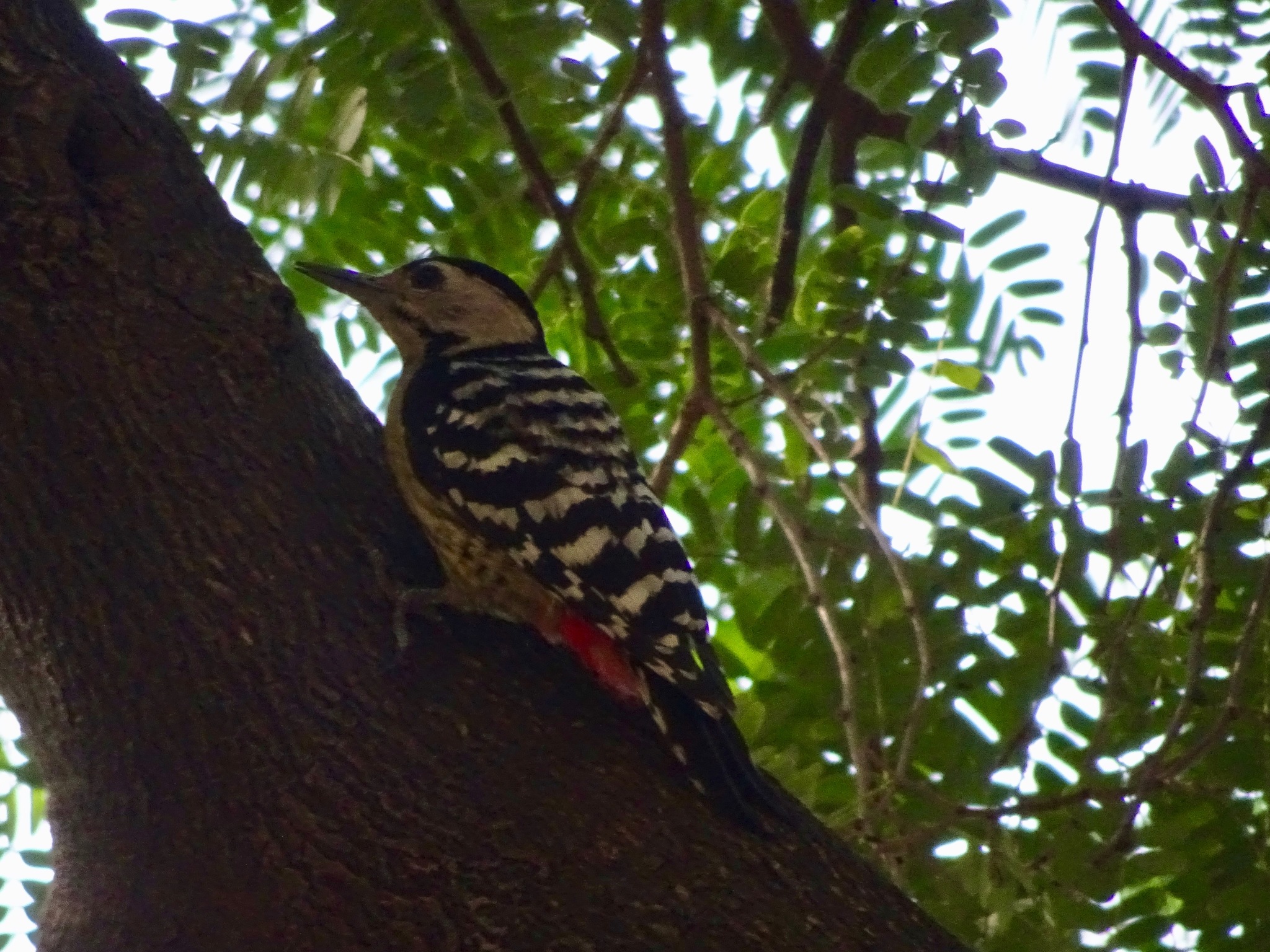
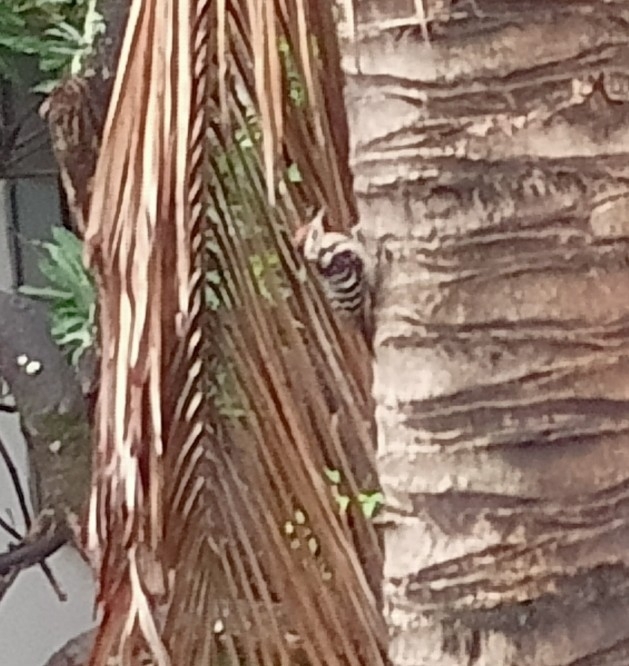
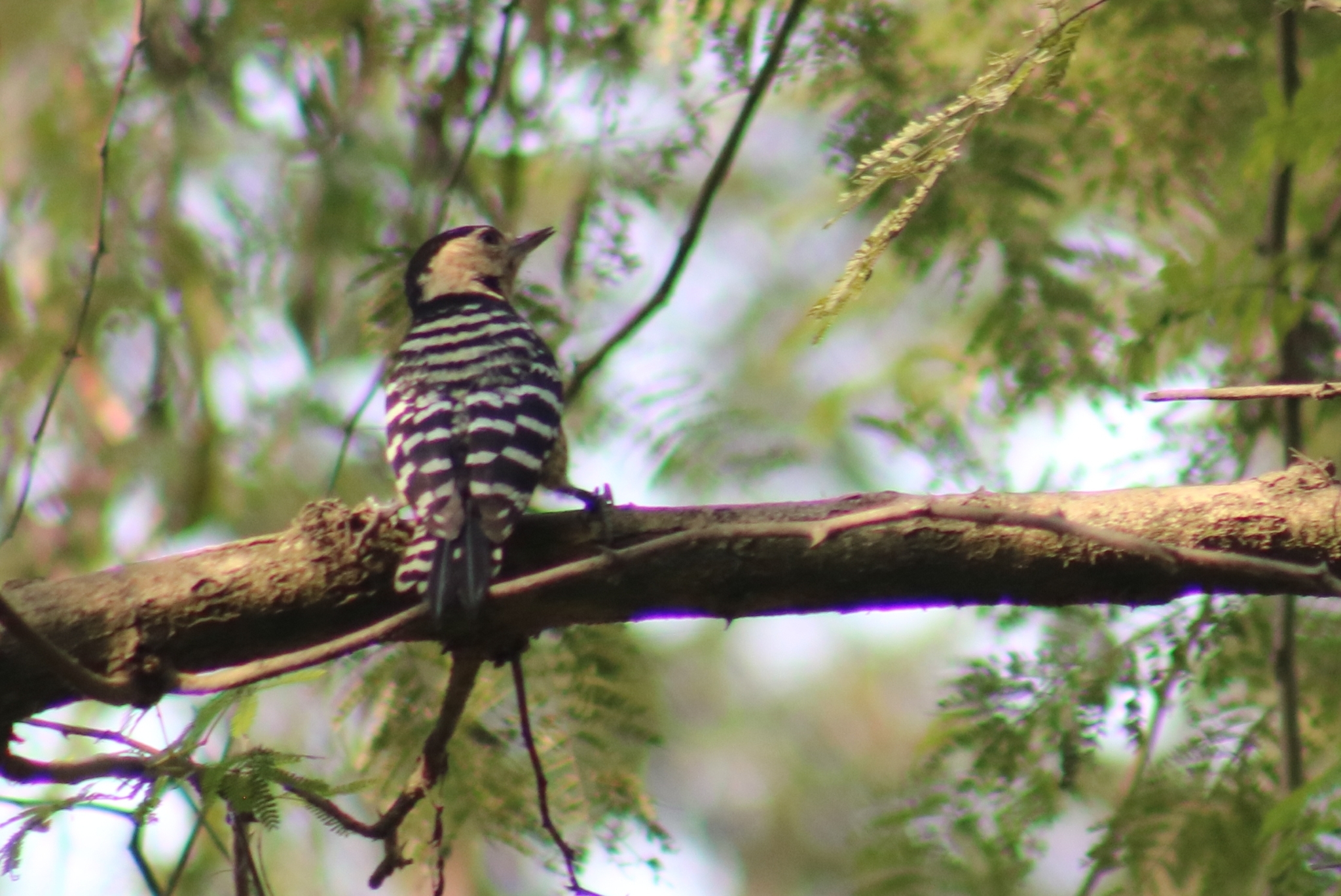
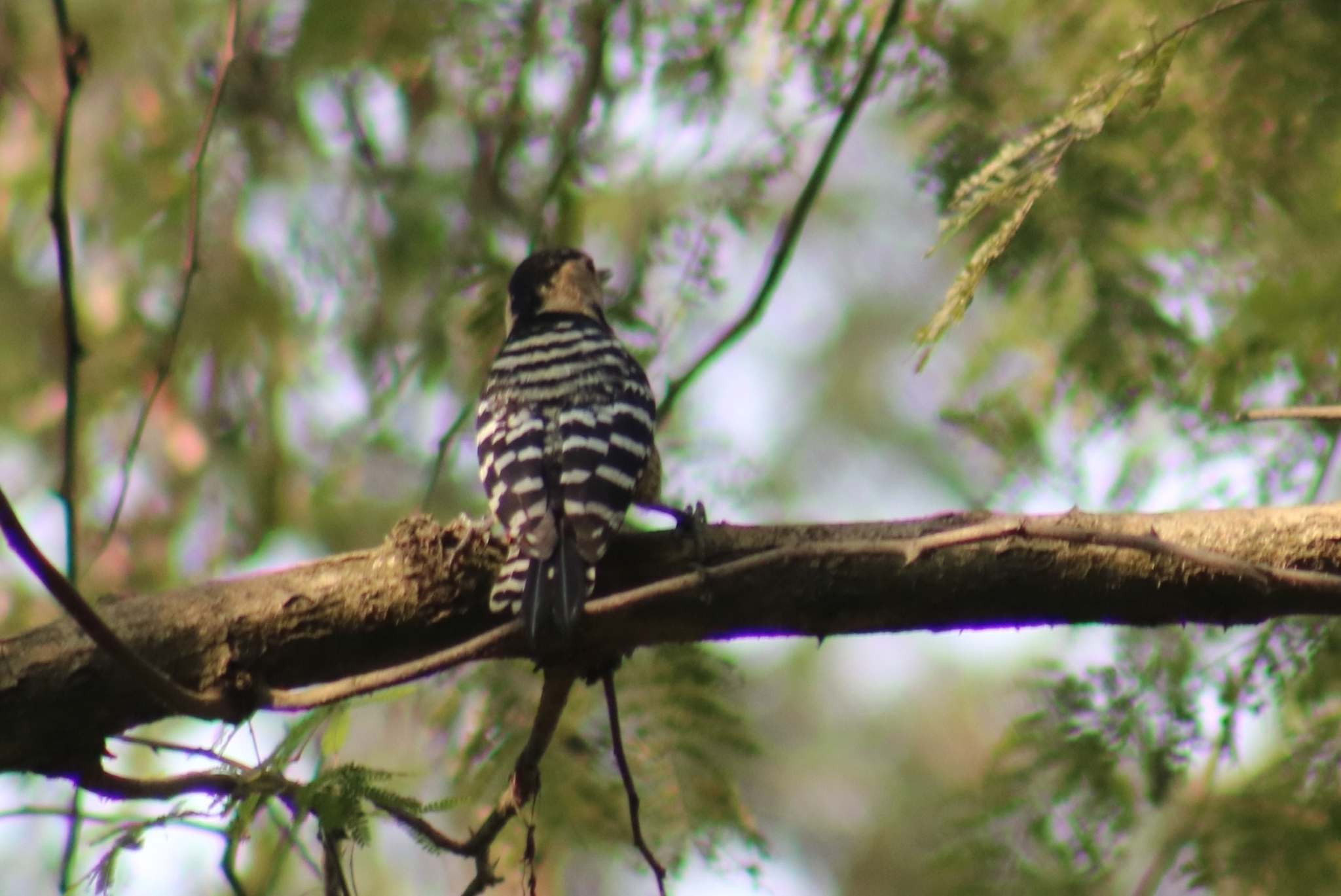
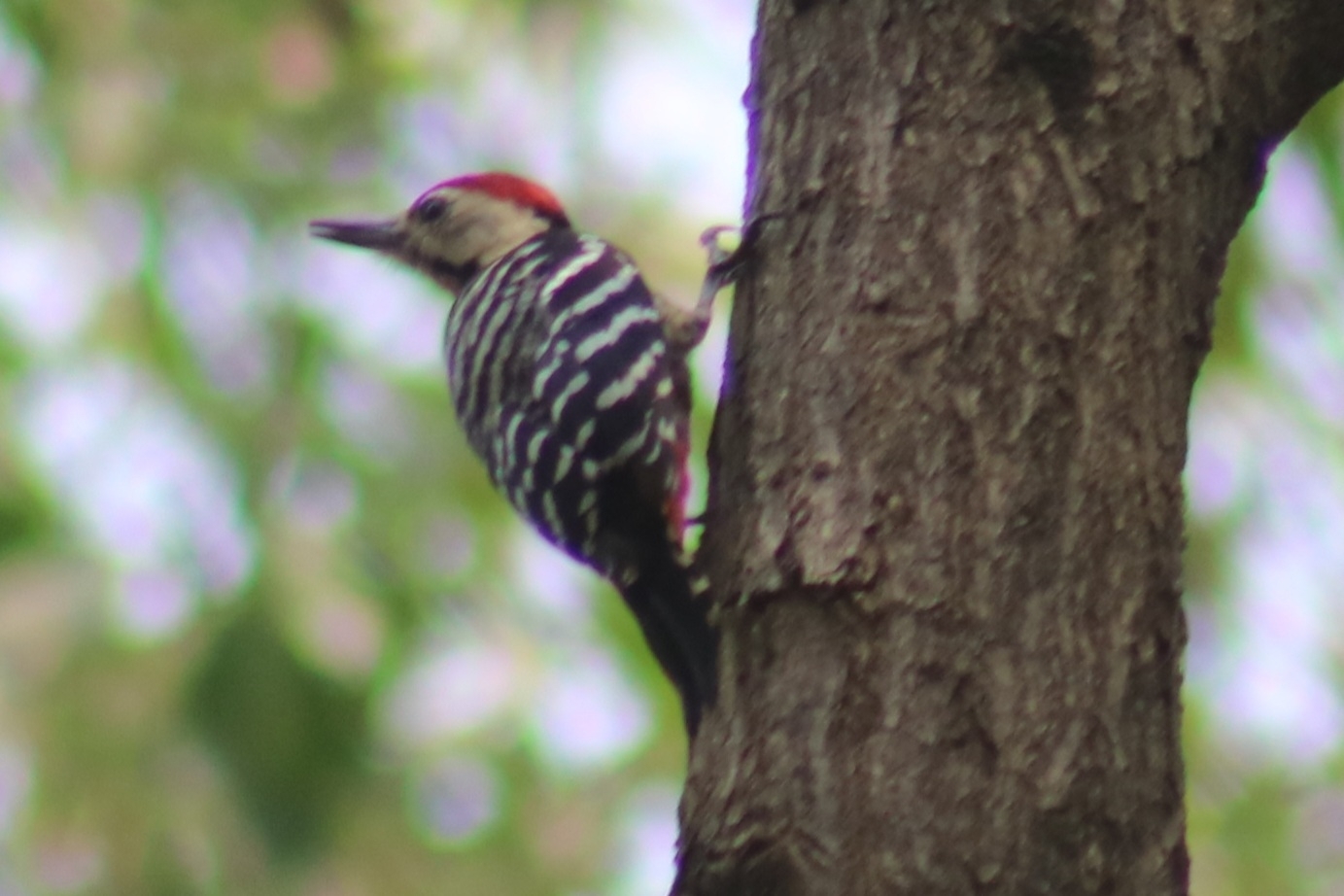
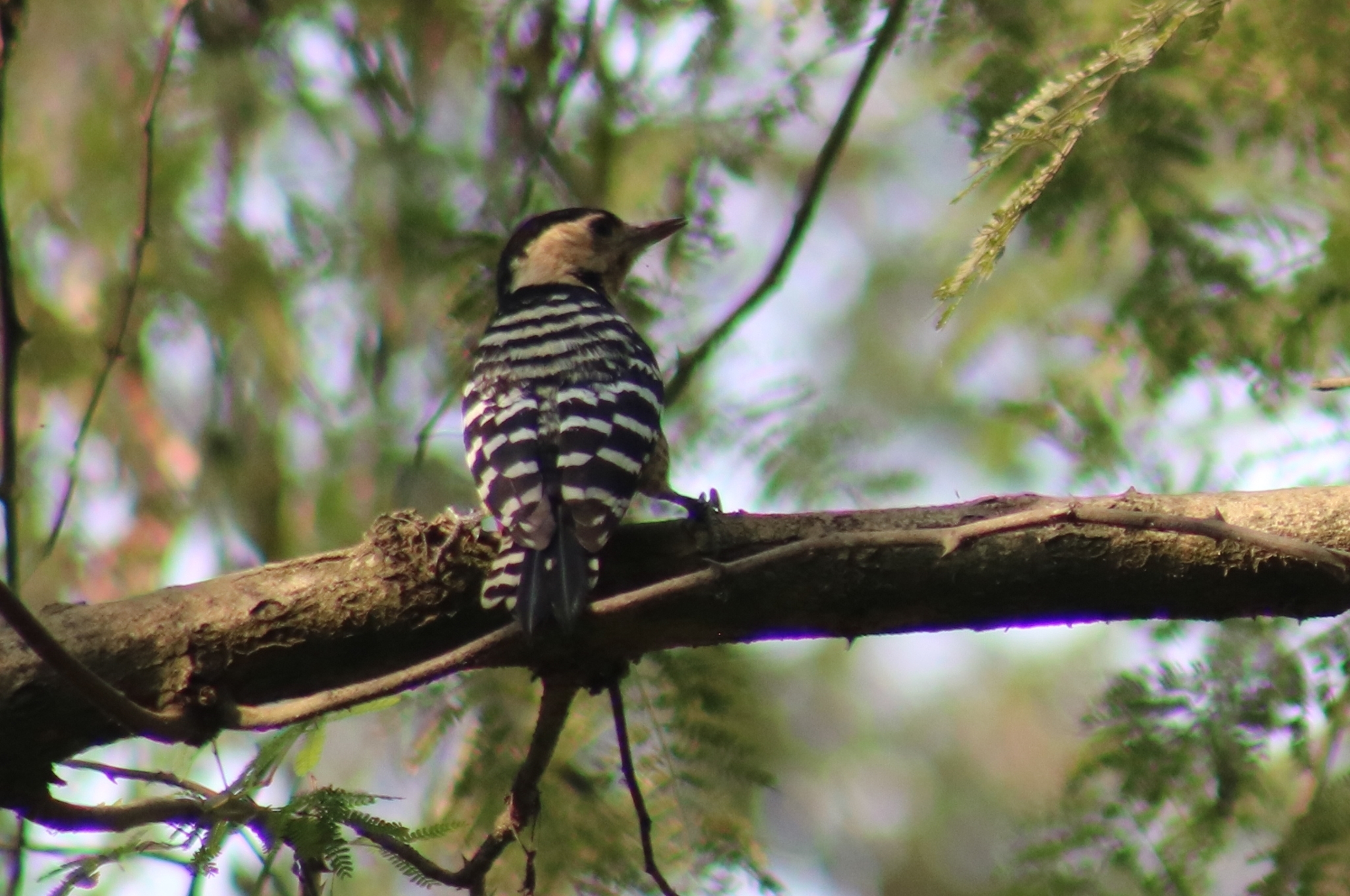
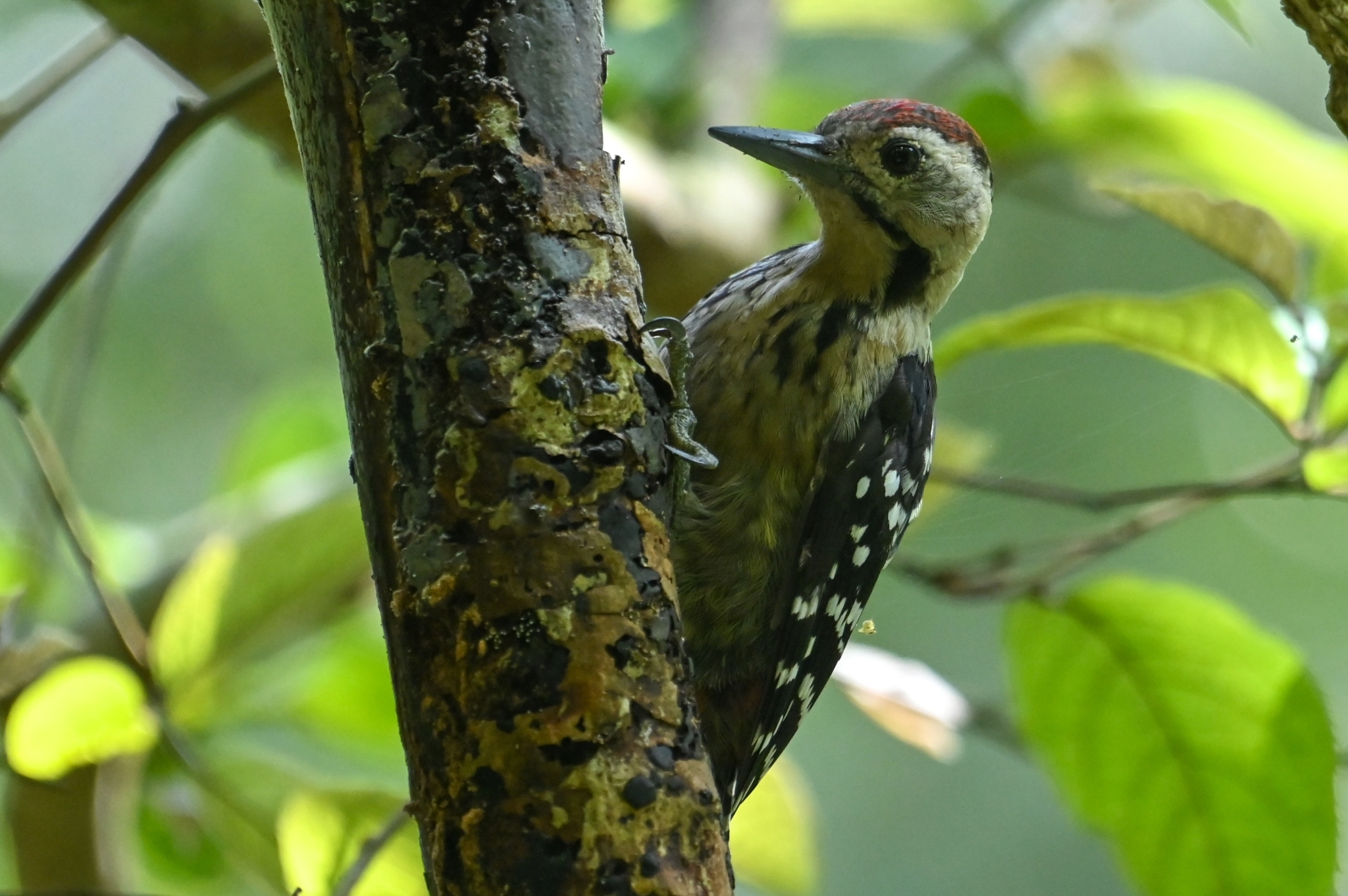
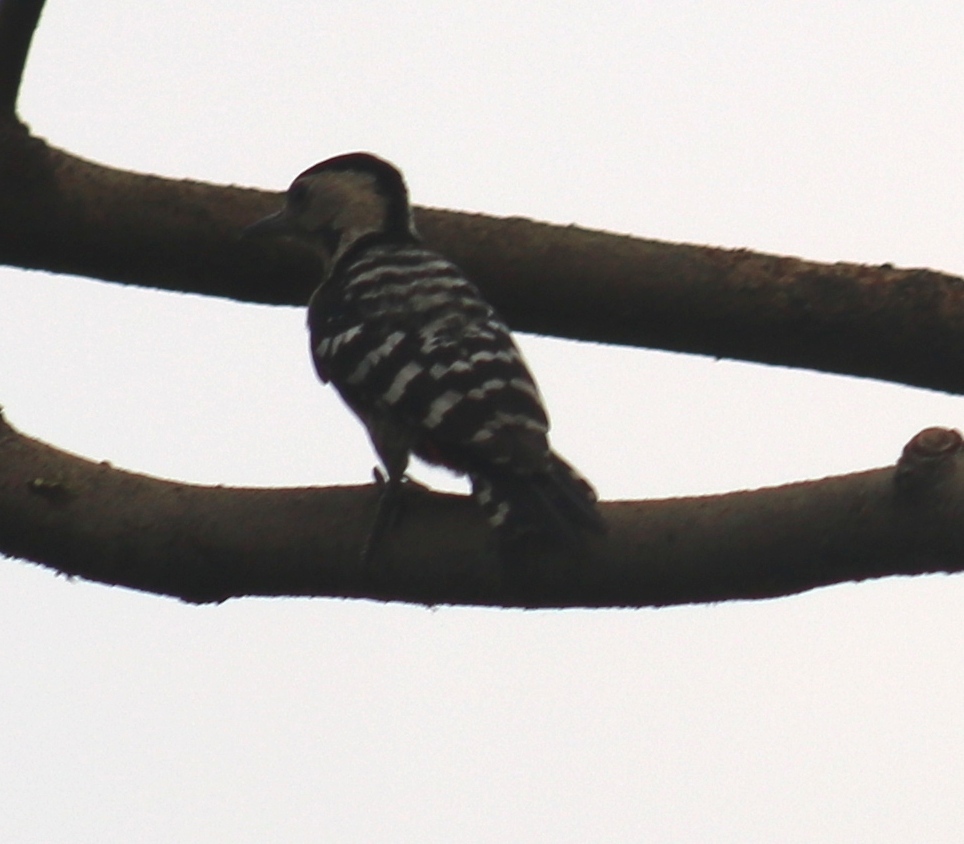
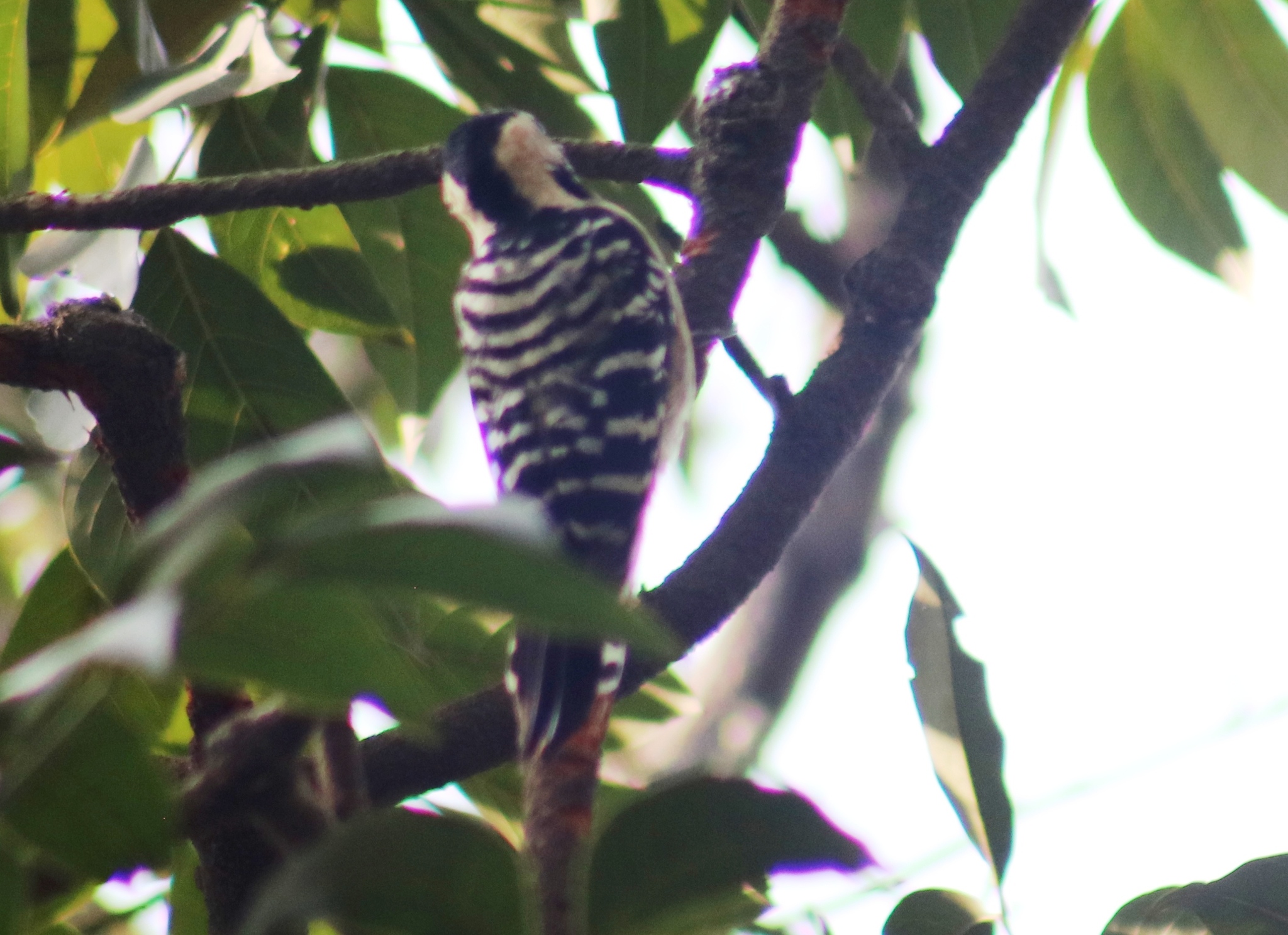
This medium-sized woodpecker displays a bold pied appearance. The upperparts are black with heavy white barring, creating a strongly contrasting pattern. The undertail feathers are red, providing a distinctive field mark. The breast and belly show buff-colored plumage with light barring on the flanks and subtle streaking along the sides. The cheeks are whitish, partially bordered by a black line that frames the facial features. Sexual dimorphism is evident in the crown coloration: males possess a red crown with orange on the forehead, while females have an entirely black crown.
Distribution & Habitat
The species occurs across the Himalayan foothills and northeastern Indian subcontinent, being found in Bangladesh, Bhutan, Nepal, India, and Myanmar. It occupies subtropical and tropical dry forests, moist lowland forests, and moist montane forests throughout its range. The species demonstrates adaptability to various forest types within these categories, from lowland tropical forests to higher elevation montane woodland.
Behavior & Ecology
As a typical member of its genus, this woodpecker forages by excavating wood and bark in search of insects and their larvae. It drums on wood surfaces and produces characteristic vocalizations typical of woodpeckers. The breeding behavior follows patterns common among Picidae, including cavity excavation in trees and parental care of young. Further behavioral details follow the general biology of tropical forest woodpeckers.
Conservation
The species appears to maintain a stable population across its range and is not currently considered threatened. Its presence in multiple protected areas throughout its distribution contributes to its continued survival. Population trends remain generally stable, though detailed population assessments may be limited.
Culture
No specific cultural significance, folklore, or mythological associations are documented for this species.
Source: Wikipedia · CC BY-SA 3.0
Taxonomy
- Order
- Piciformes
- Family
- Picidae
- Genus
- Dendrocopos
- eBird Code
- fubwoo2
Subspecies (2)
-
Dendrocopos macei macei
central Nepal to northern Myanmar and eastern peninsular India (Odisha and Andra Pradesh)
-
Dendrocopos macei westermani
northern Pakistan, northwestern India (Himachal Pradesh), and western Nepal
Data Sources
Species description from Wikipedia, licensed under CC BY-SA 3.0.
Bird images and sounds sourced from GBIF, contributed by citizen scientists worldwide under Creative Commons licenses.
Taxonomy data from AviList 2025.