Darjeeling Woodpecker
Dendrocopos darjellensis
黄颈啄木鸟
Introduction
The Darjeeling woodpecker is a medium-sized woodpecker endemic to the eastern Himalayas, occurring in Sikkim, Bhutan, and the Himalayan foothill regions of northern India. It inhabits dense, humid evergreen and semi-evergreen forests at middle elevations, where it forages along main branches and larger limbs of tall trees. The species is not considered rare within its relatively restricted range.
Description
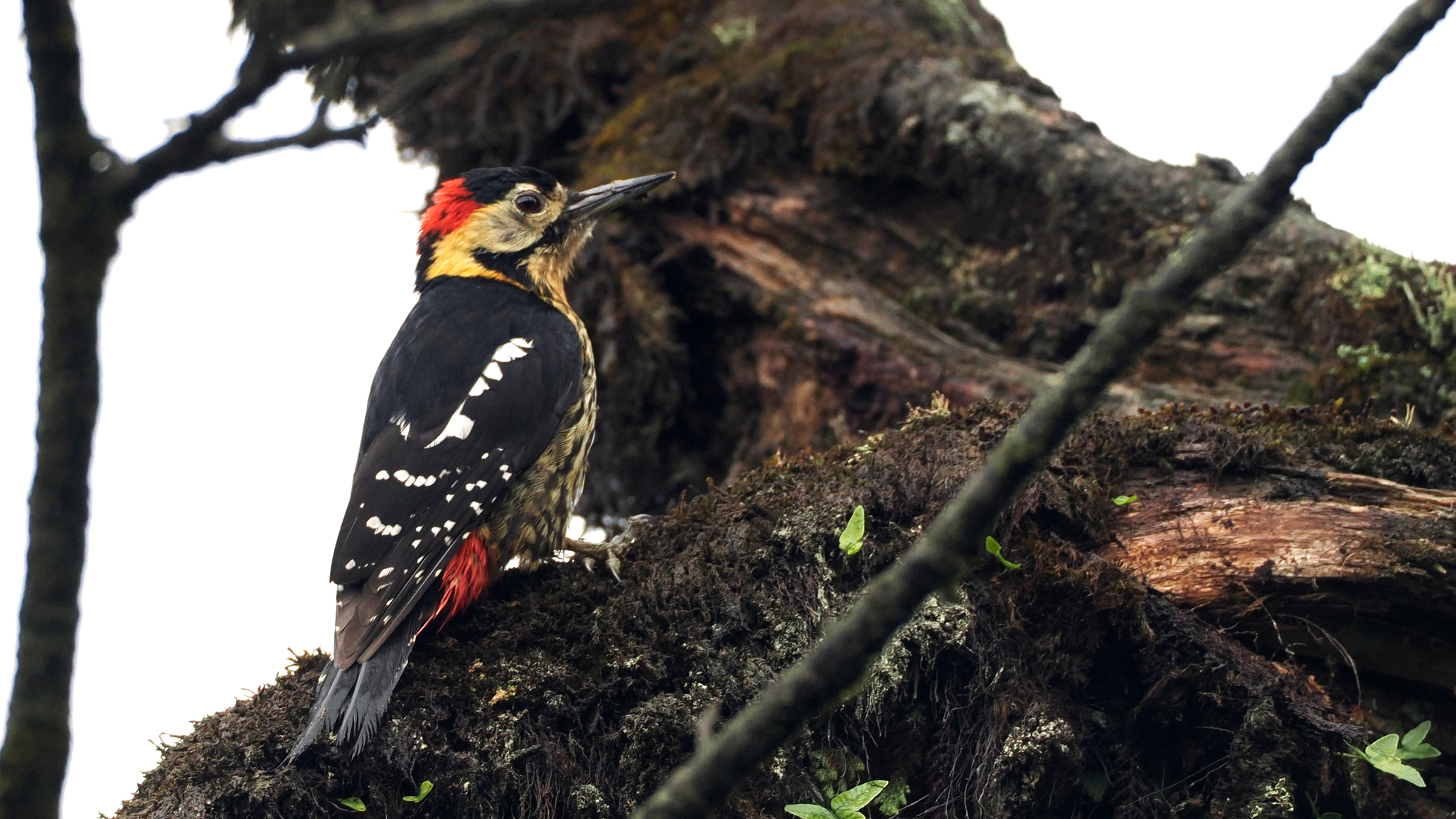
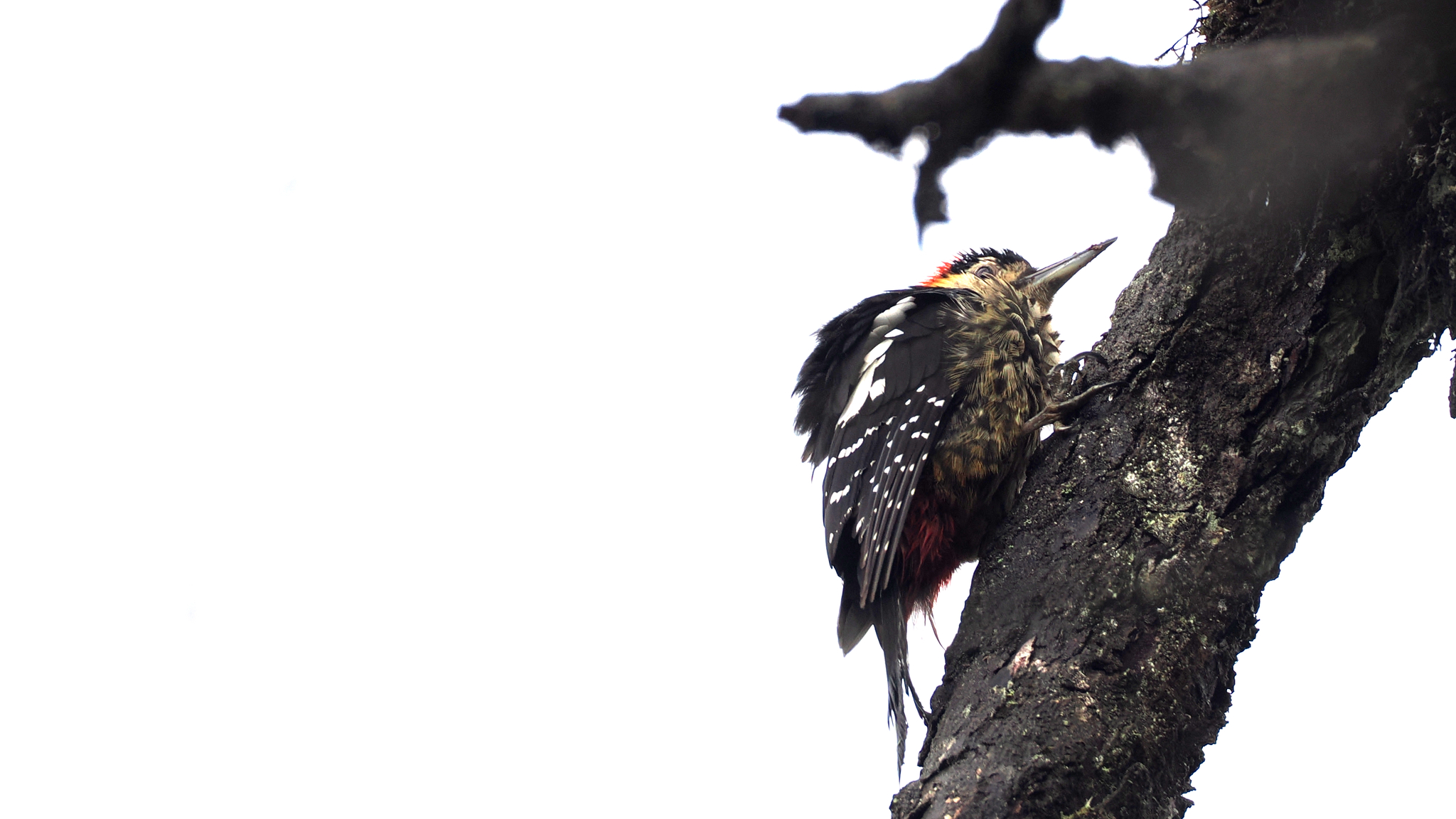
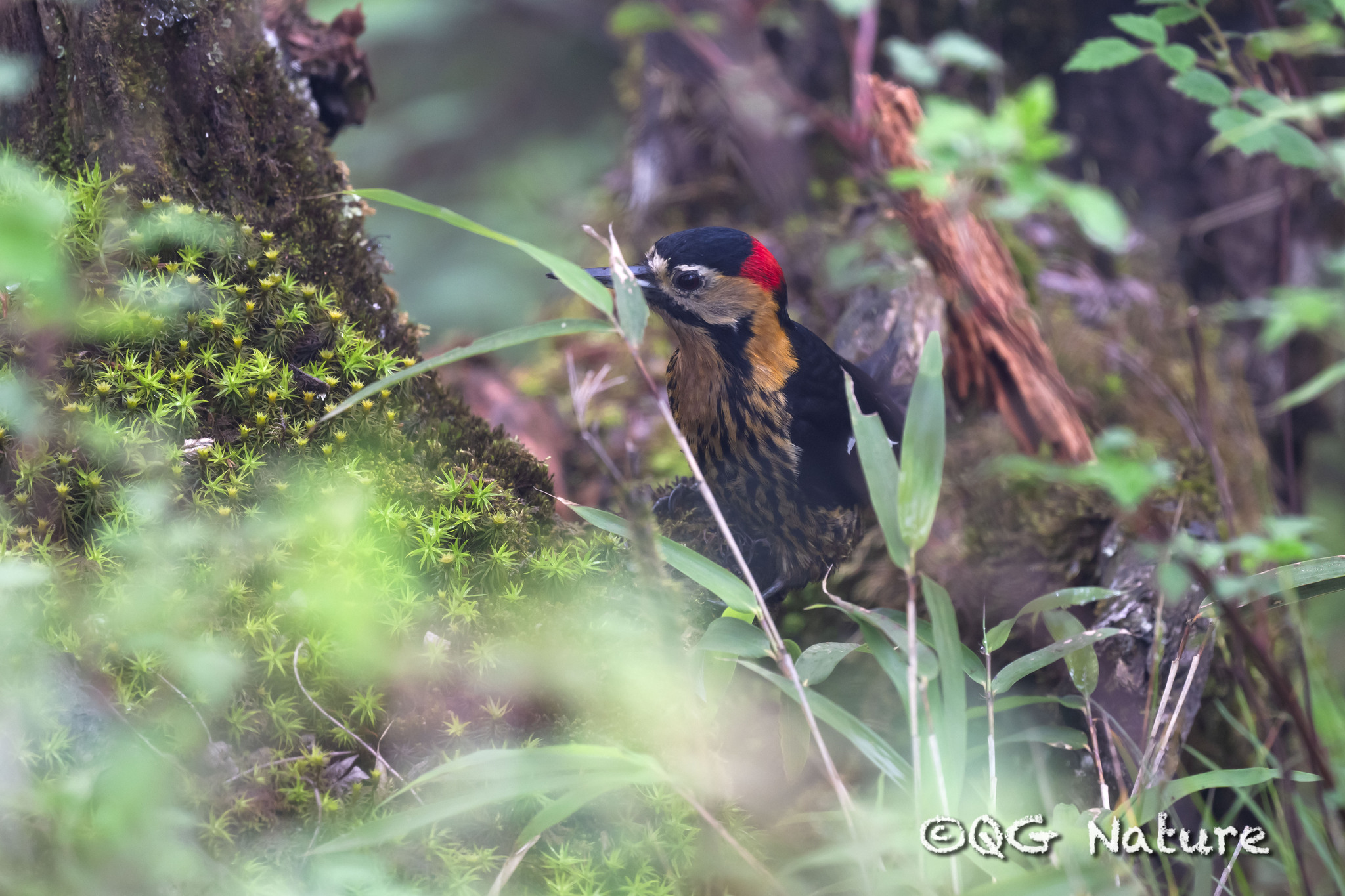
A medium-sized woodpecker displaying a boldly pied plumage pattern. The upperparts are black, contrasting with prominent white scapular patches. The flight feathers and tail sides show distinctive white barring. The underparts are yellow-buff with heavy black streaking, culminating in an unstreaked red vent region. The head features white cheeks and a long, black moustachial stripe that extends down to the upper breast. Both sexes share the yellow coloration on the neck sides, though males are distinguished by a red patch on the nape. The bill is notably long and sturdy, adapted for excavating in wood.
Distribution & Habitat
This species occupies a relatively compact range across the northern fringe of the Indian subcontinent, with confirmed populations in Bhutan, India, Myanmar, Nepal, and Tibet. It demonstrates a strong association with humid forest environments, occupying both subtropical and tropical moist lowland forests as well as subtropical and tropical moist montane forests. The species appears to favor middle-elevation forest habitats within this gradient, typically found between the lowlands and the higher alpine zones of the Himalayan range.
Source: Wikipedia · CC BY-SA 3.0
Taxonomy
- Order
- Piciformes
- Family
- Picidae
- Genus
- Dendrocopos
- eBird Code
- darwoo1
Subspecies (2)
-
Dendrocopos darjellensis darjellensis
Nepal to southeastern Tibet, northeastern India, northern Myanmar, and northwestern Tonkin
-
Dendrocopos darjellensis desmursi
southwestern China
Data Sources
Species description from Wikipedia, licensed under CC BY-SA 3.0.
Bird images and sounds sourced from GBIF, contributed by citizen scientists worldwide under Creative Commons licenses.
Taxonomy data from AviList 2025.