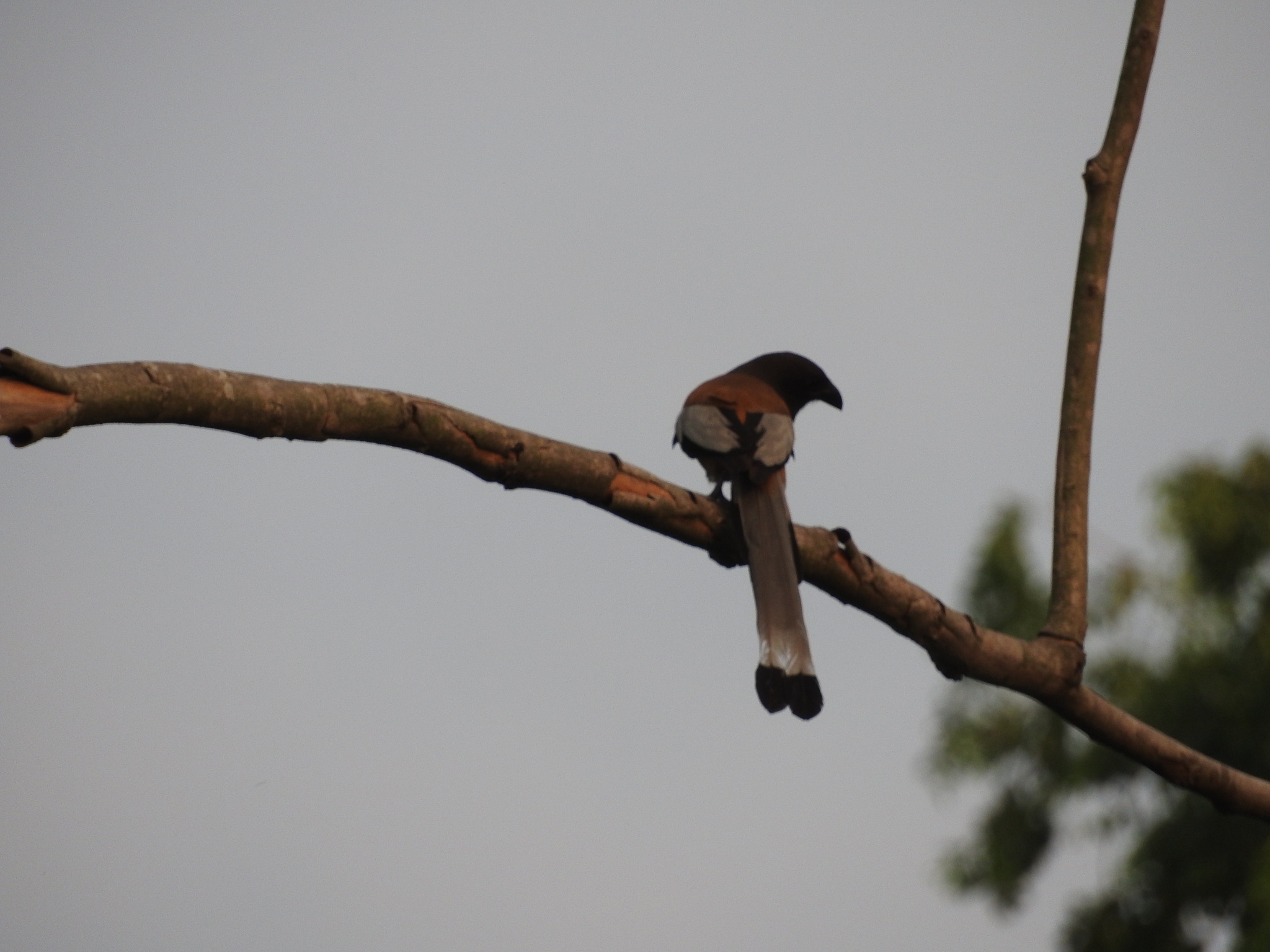
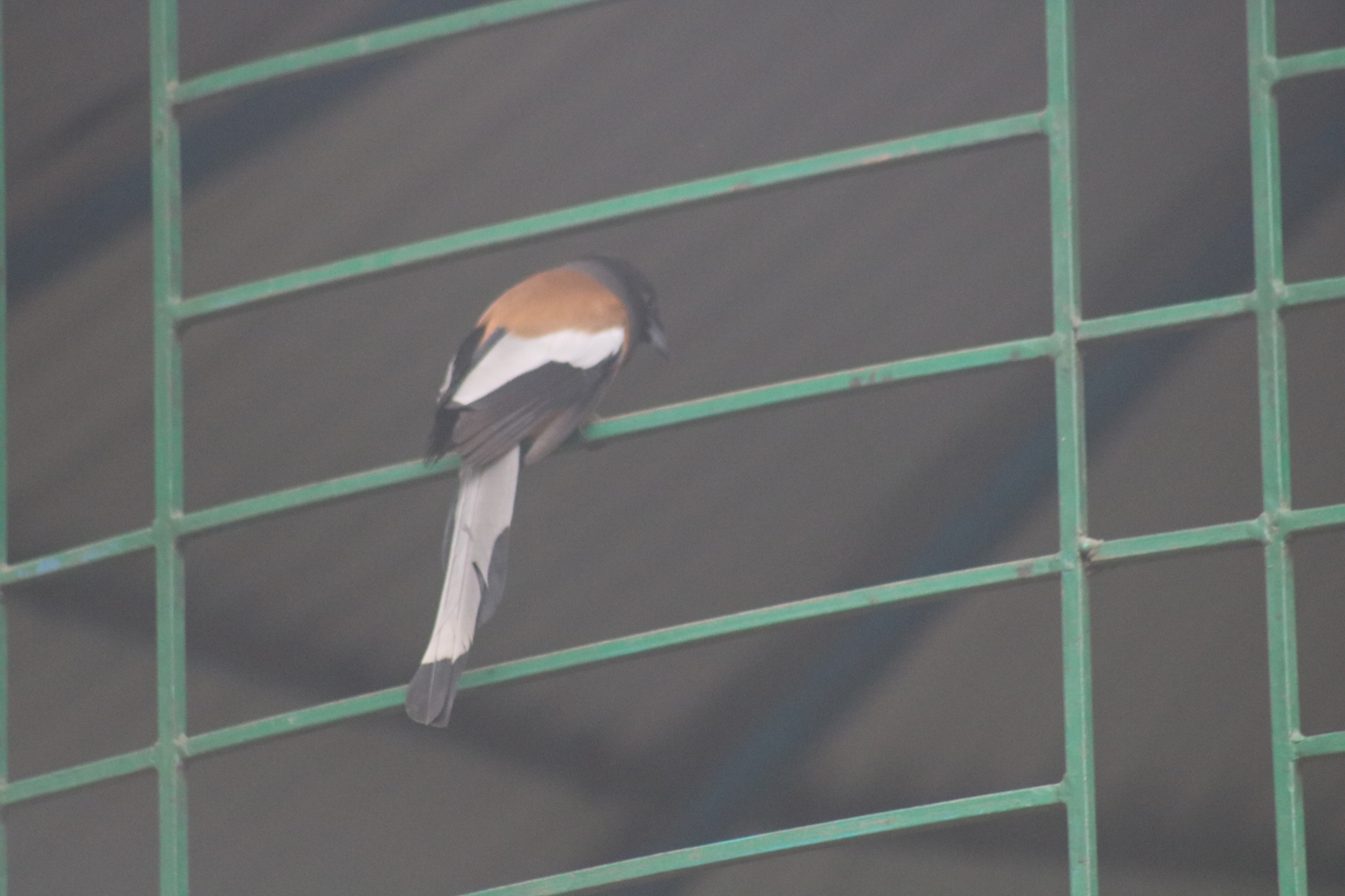
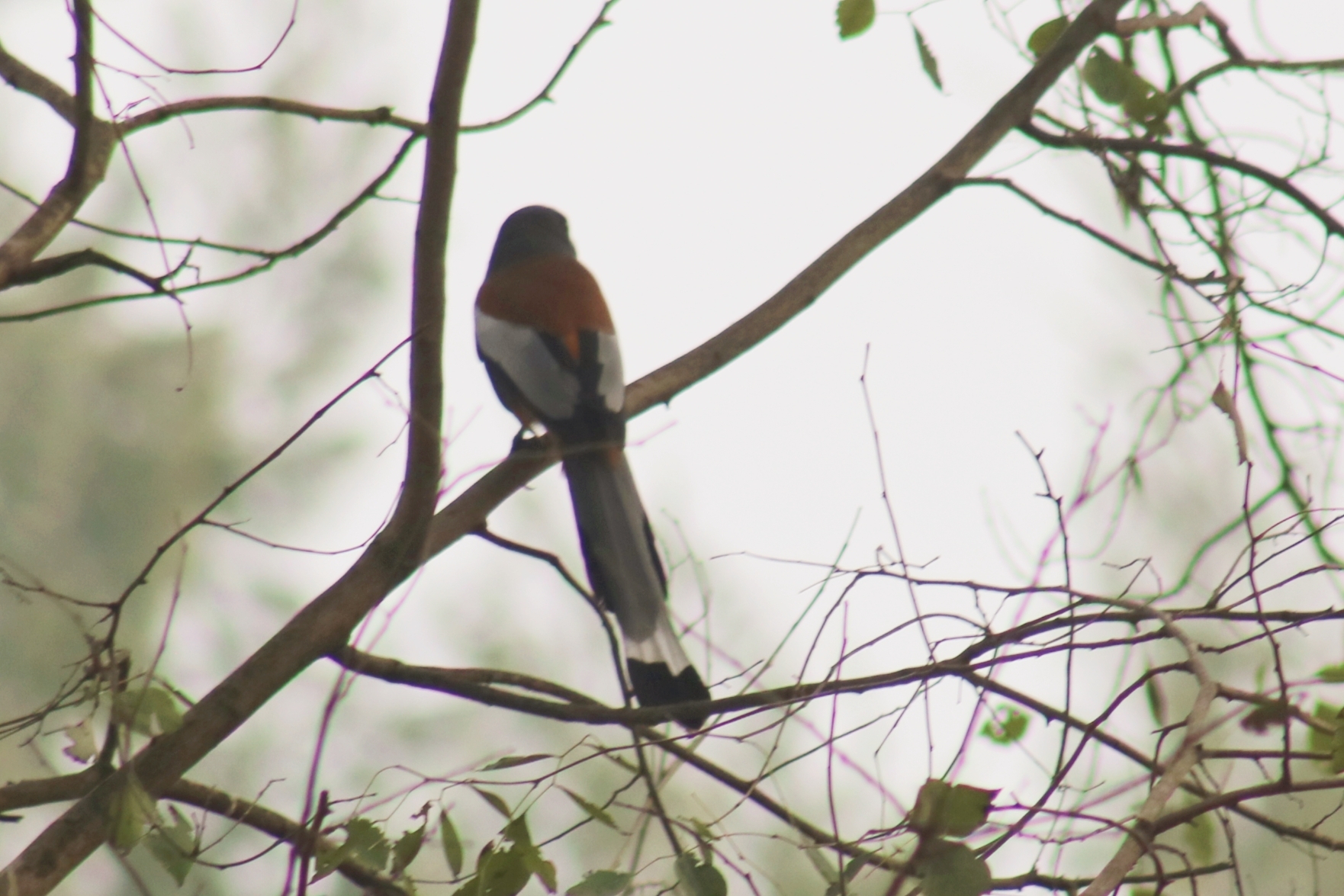
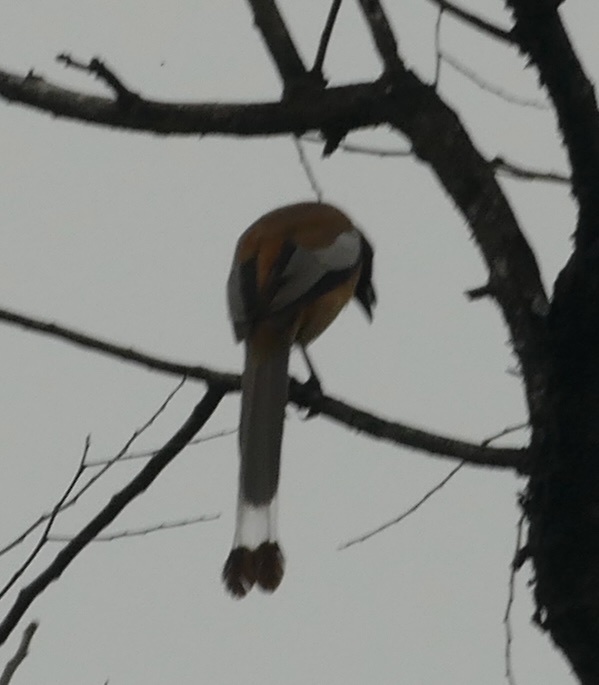
Rufous Treepie
Dendrocitta vagabunda
棕腹树鹊
Introduction
This treepie is a member of the crow family, identified by its long graduated tail and loud calls. It is native to the Indian subcontinent and adjoining regions of Southeast Asia. Its range extends across diverse environments from open scrub and agricultural land to forests and urban gardens. The species is opportunistic and omnivorous in its feeding habits.
Description
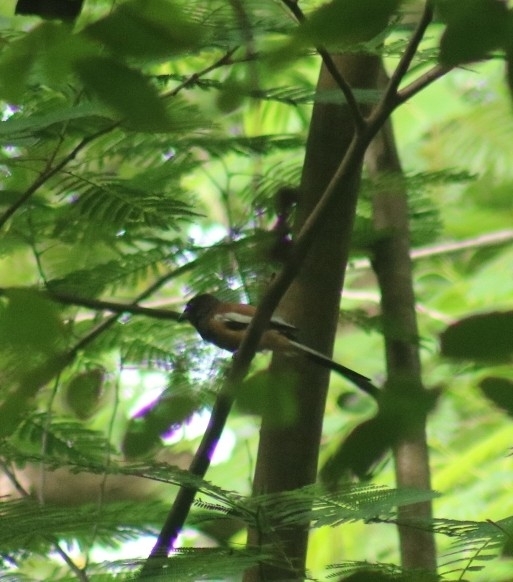
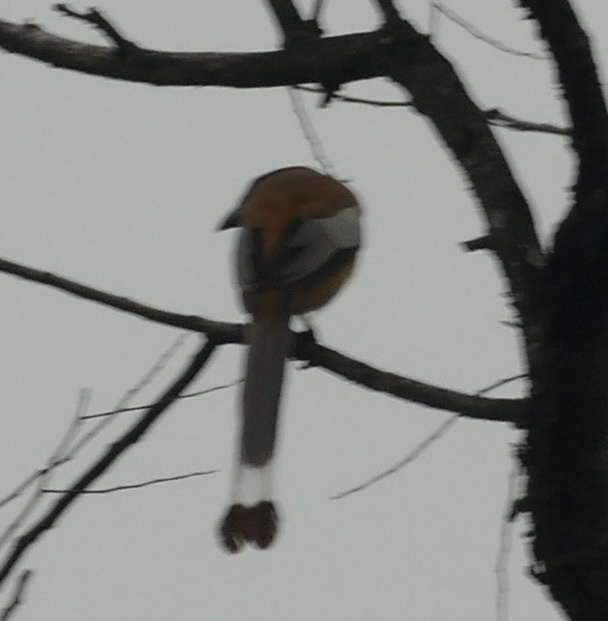
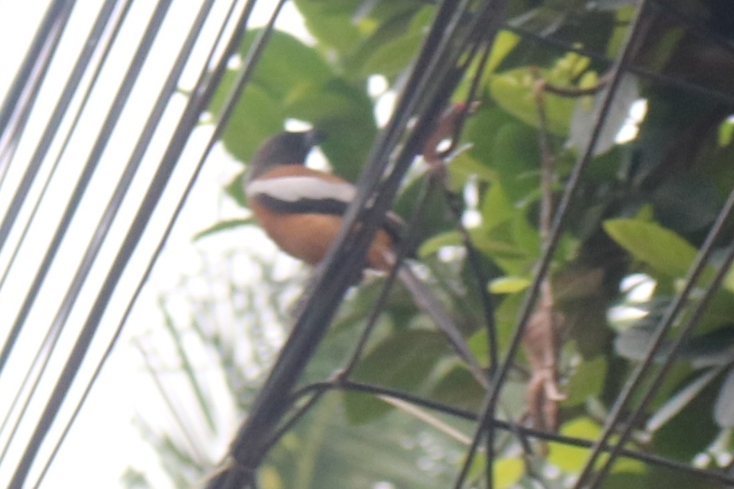
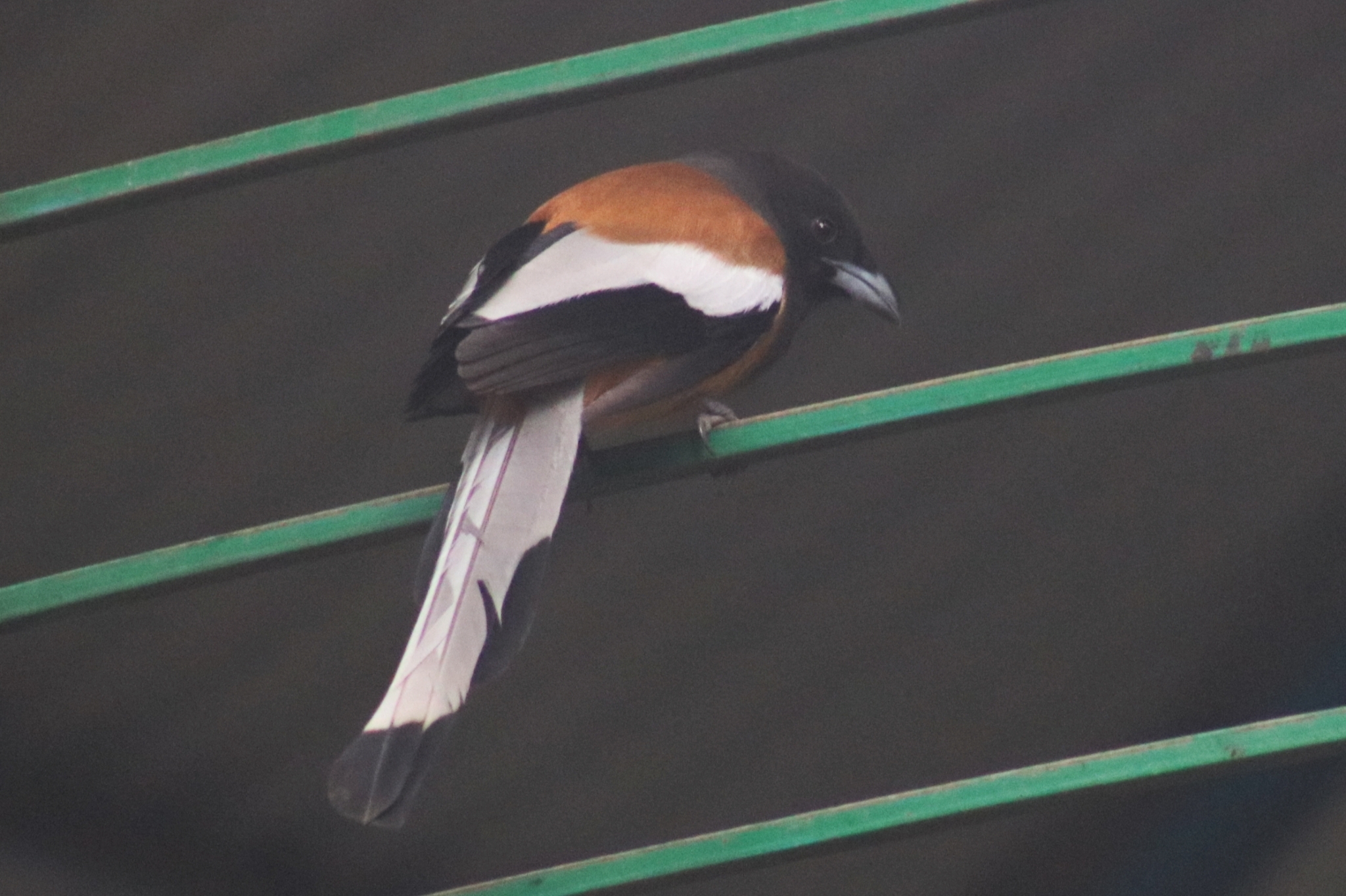
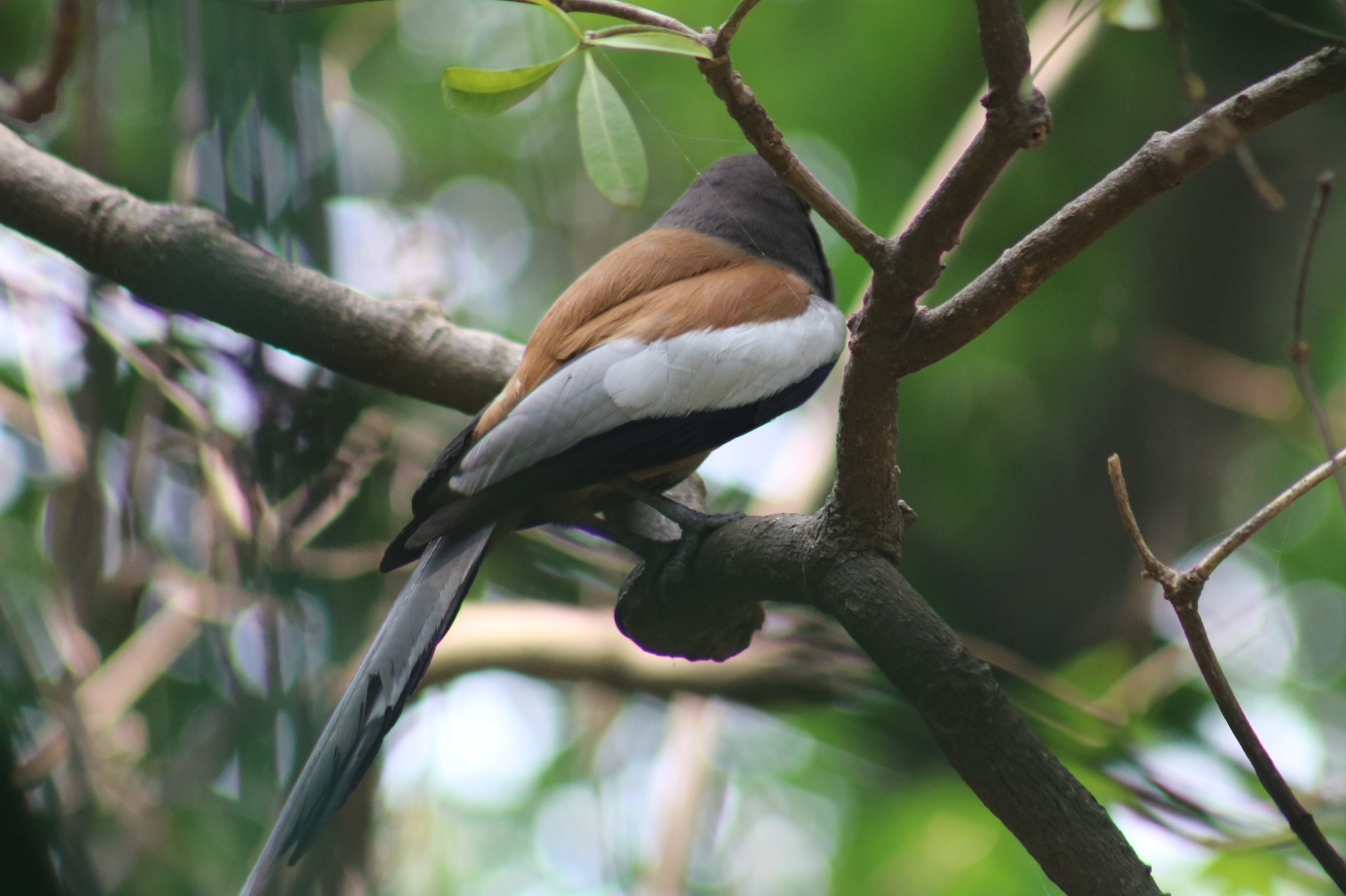
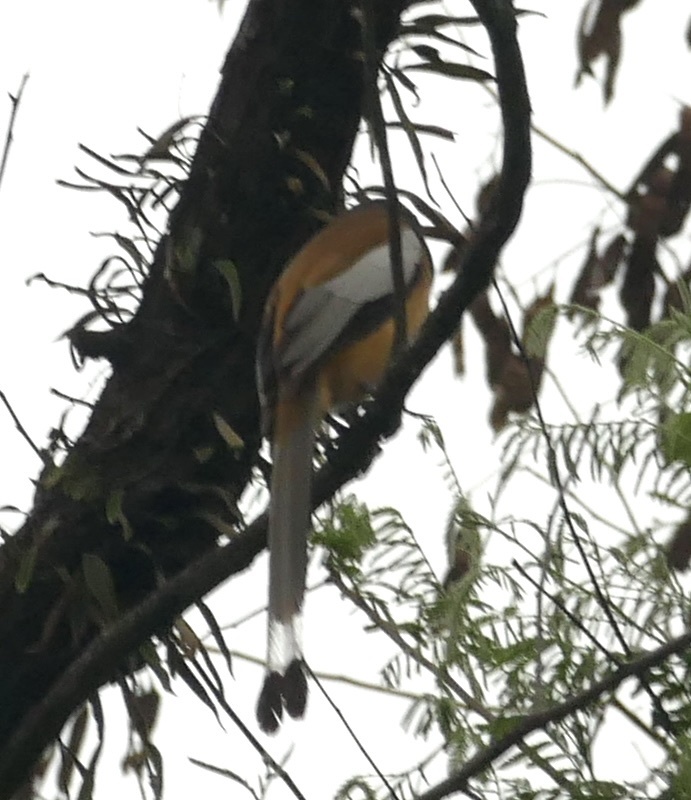
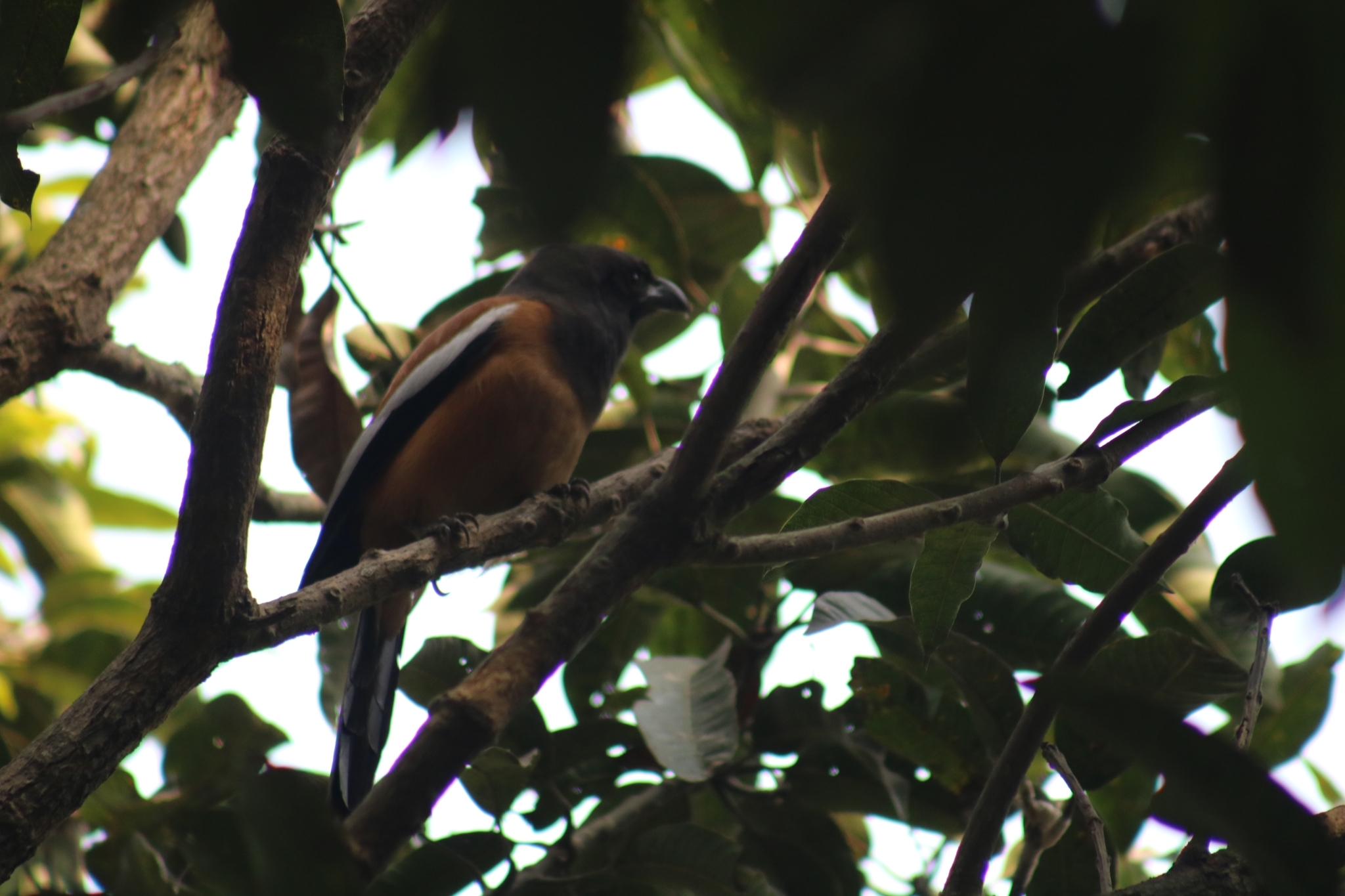
Adults display cinnamon-brown plumage on the body with a striking black head. The most distinctive feature is the long, graduated tail, which is bluish-grey and tipped with black. A prominent white patch adorns the wing, contrasting with black primaries and white wing coverts. The underparts and lower back range from warm tawny-brown to orange-brown. The bill is stout and hooked at the tip, while the legs, feet, and bill are black. Sexes appear identical. Populations show considerable geographic variation in plumage brightness and size, with several subspecies described across the range.
Identification
The grey treepie is the only species with which this bird might be confused, but it lacks the bright rufous mantle that distinguishes the rufous treepie. The combination of cinnamon body plumage, black head, long bluish-grey tail with black tip, and white wing patch is diagnostic. The hooked, stout bill and black legs also aid identification. Its loud, musical calls are often the first clue to its presence.
Distribution & Habitat
The range spans Pakistan, India, Bangladesh, Myanmar, Laos, and Thailand, covering a vast area across the Indian subcontinent into mainland Southeast Asia. This bird inhabits open forest types, including scrub, plantations, and gardens. It shows seasonal elevational movements in the Garhwal Himalayas, migrating between different altitudes throughout the year.
Behavior & Ecology
This bird possesses a diverse repertoire of vocalizations, with the most frequently heard being a bob-o-link or ko-tree call. Local names like kotri derive directly from these characteristic sounds. It is primarily arboreal, feeding on invertebrates, small reptiles, bird eggs and nestlings, seeds, fruits, and nectar, particularly from Bombax ceiba trees. It sometimes consumes fruits toxic to mammals and readily feeds on carcasses. Agile movement through branches allows it to join mixed-species feeding flocks alongside drongos and babblers. A notable symbiosis exists with sambar deer, which permit the birds to feed on ectoparasites from their bodies. The species caches food and is considered beneficial to palm cultivation in southern India due to predation on destructive weevil grubs.
Conservation
While specific population figures are not provided, the species' wide distribution and adaptability to multiple habitat types, including urban areas, suggest a stable overall population. Its presence across several countries and ability to exploit human-modified landscapes likely provides resilience against localized threats.
Culture
The bird features in local culture through various names tied to its distinctive calls. The name kotri directly imitates its vocalization. In some regions, it is called taka chor, meaning coin thief, reflecting local perceptions of its behavior. These names demonstrate the bird's integration into human cultural awareness across its range.
Source: Wikipedia · CC BY-SA 3.0
Taxonomy
- Order
- Passeriformes
- Family
- Corvidae
- Genus
- Dendrocitta
- eBird Code
- ruftre2
Vocalizations
Subspecies (9)
-
Dendrocitta vagabunda behni
western India (Rajasthan, western Madhya Pradesh and Gujarat southward to Karnataka)
-
Dendrocitta vagabunda bristoli
northeastern Pakistan and northwestern India to western Nepal
-
Dendrocitta vagabunda kinneari
southern Myanmar and northwestern Thailand
-
Dendrocitta vagabunda pallida
southeastern India
-
Dendrocitta vagabunda parvula
southwestern India (southern Kanara to Cape Comorin)
-
Dendrocitta vagabunda sakeratensis
eastern Thailand and Indochina
-
Dendrocitta vagabunda saturatior
Tenasserim and southern Thailand
-
Dendrocitta vagabunda sclateri
western Myanmar (upper Chindwin to Chin Hills and Arakan Mountains)
-
Dendrocitta vagabunda vagabunda
lower Himalayas and northeastern India (south to Hyderabad)
Data Sources
Species description from Wikipedia, licensed under CC BY-SA 3.0.
Bird images and sounds sourced from GBIF, contributed by citizen scientists worldwide under Creative Commons licenses.
Taxonomy data from AviList 2025.