Collared Treepie
Dendrocitta frontalis
黑额树鹊
Introduction
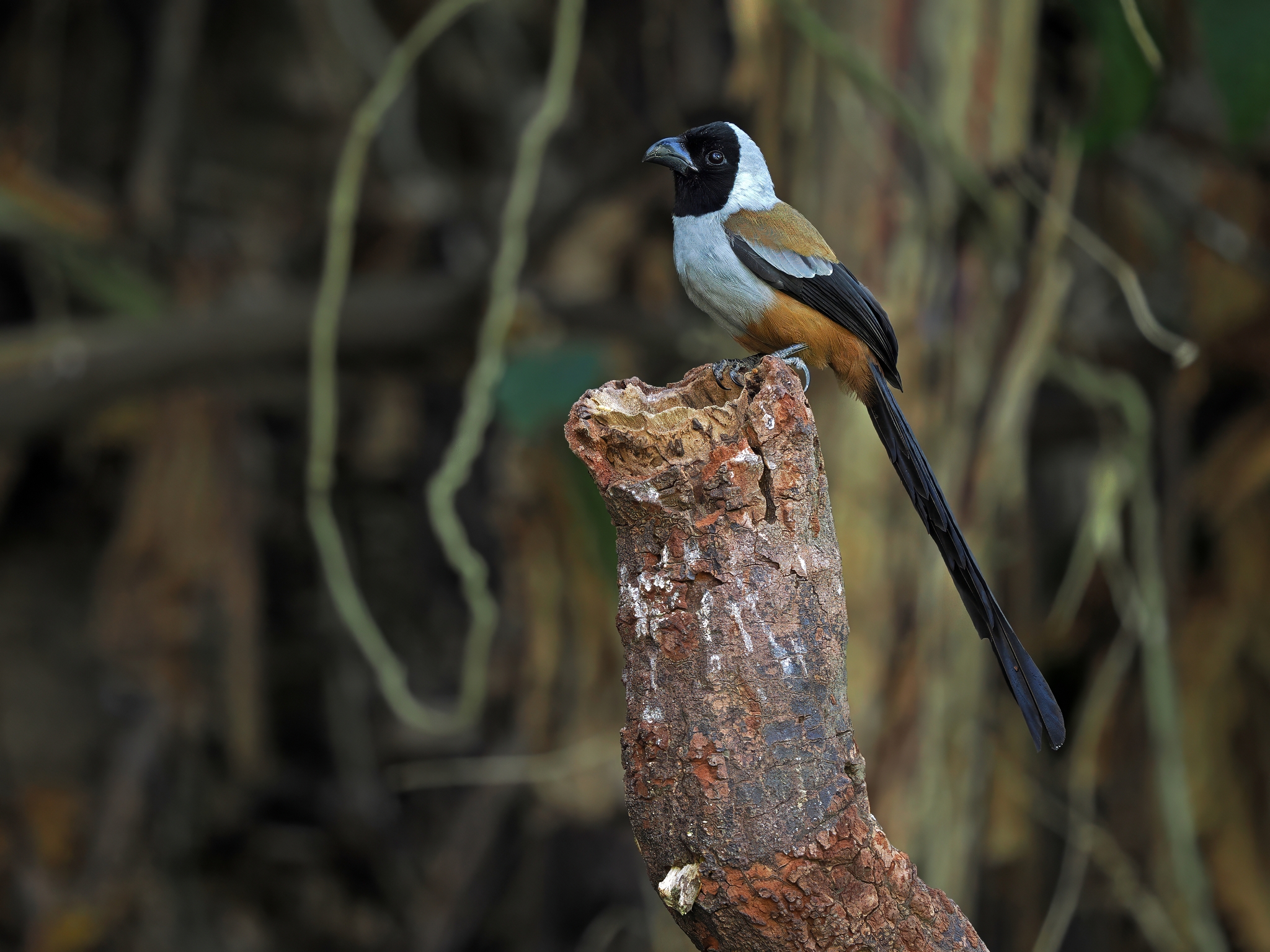
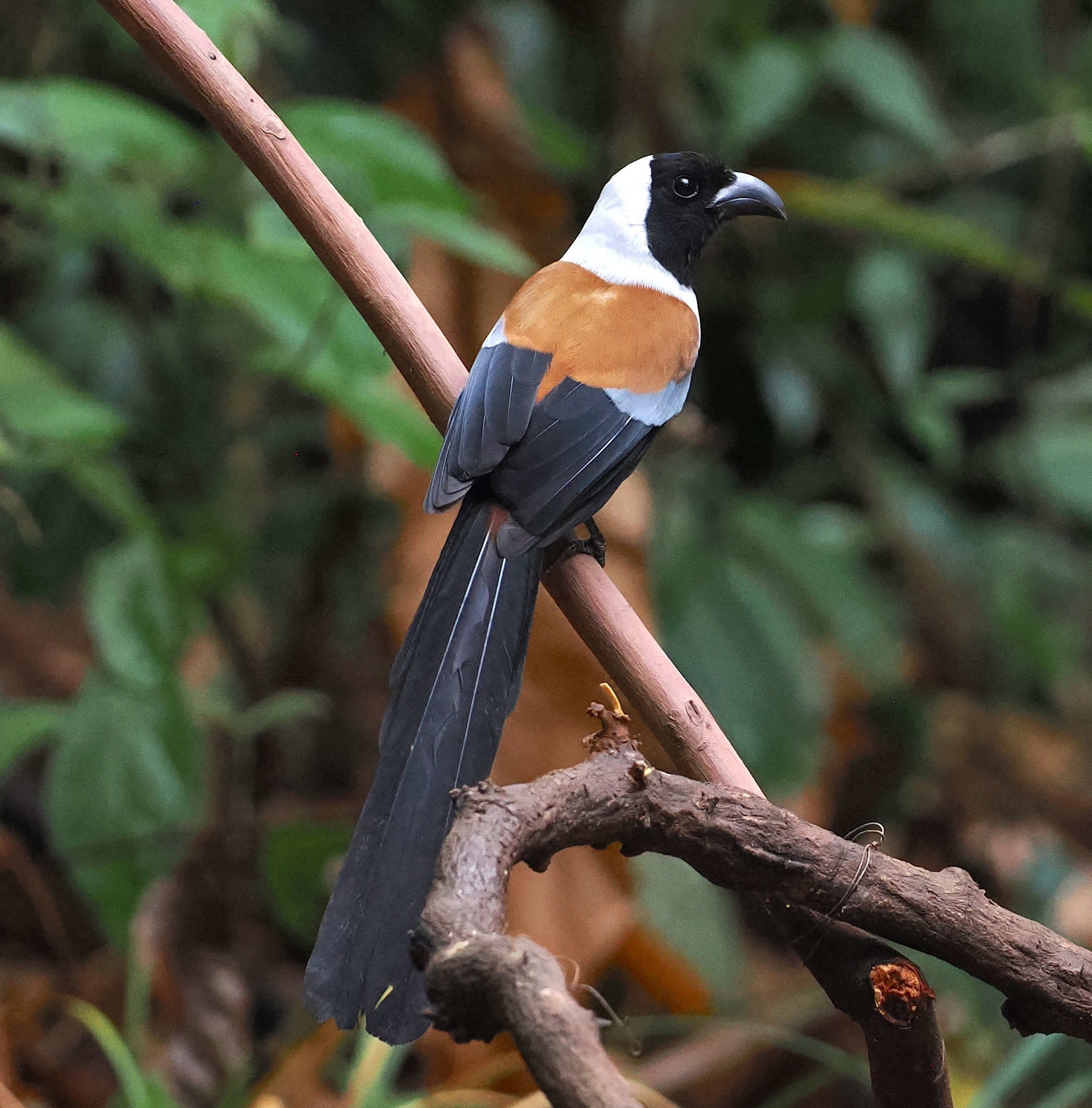
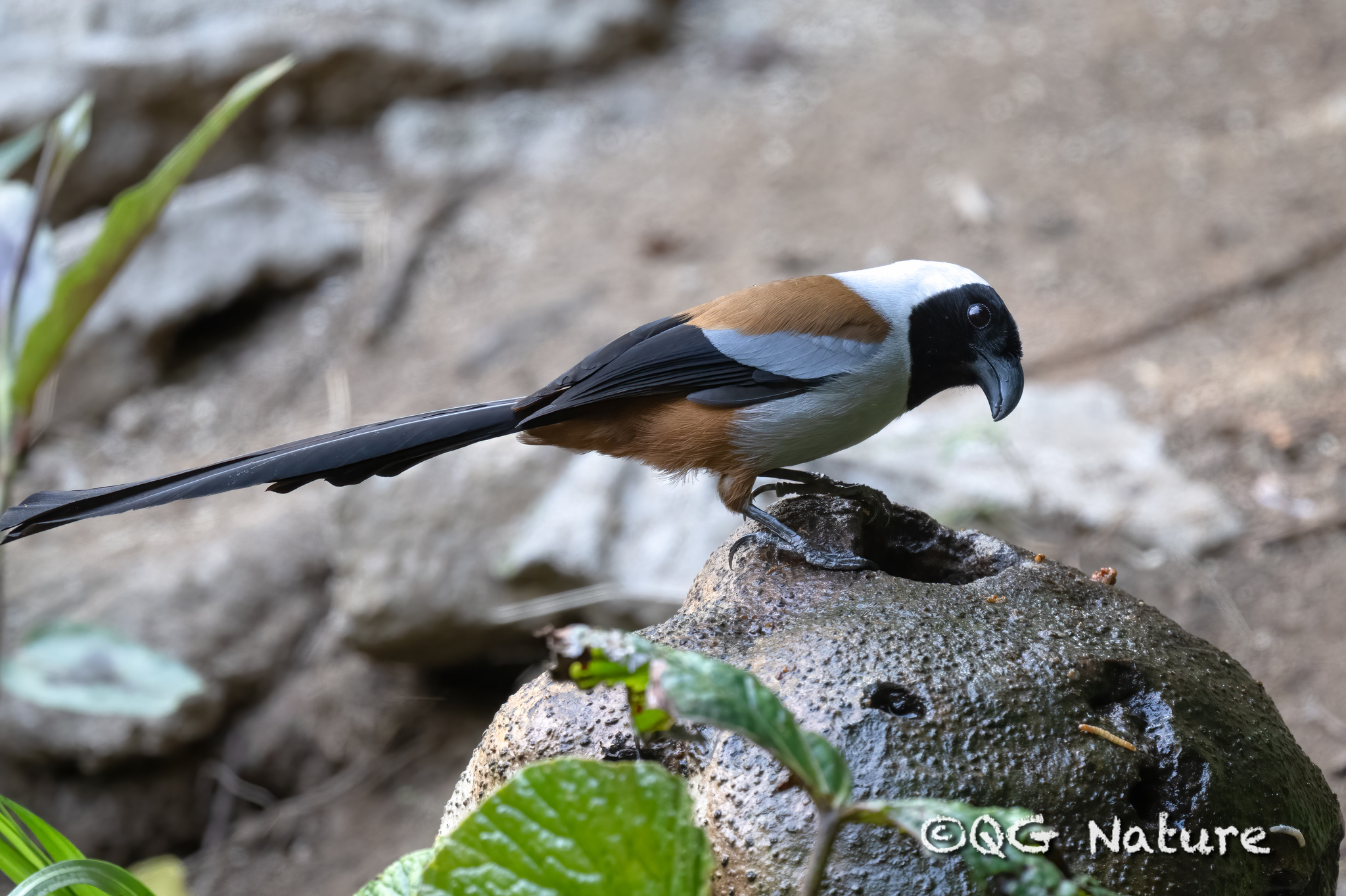
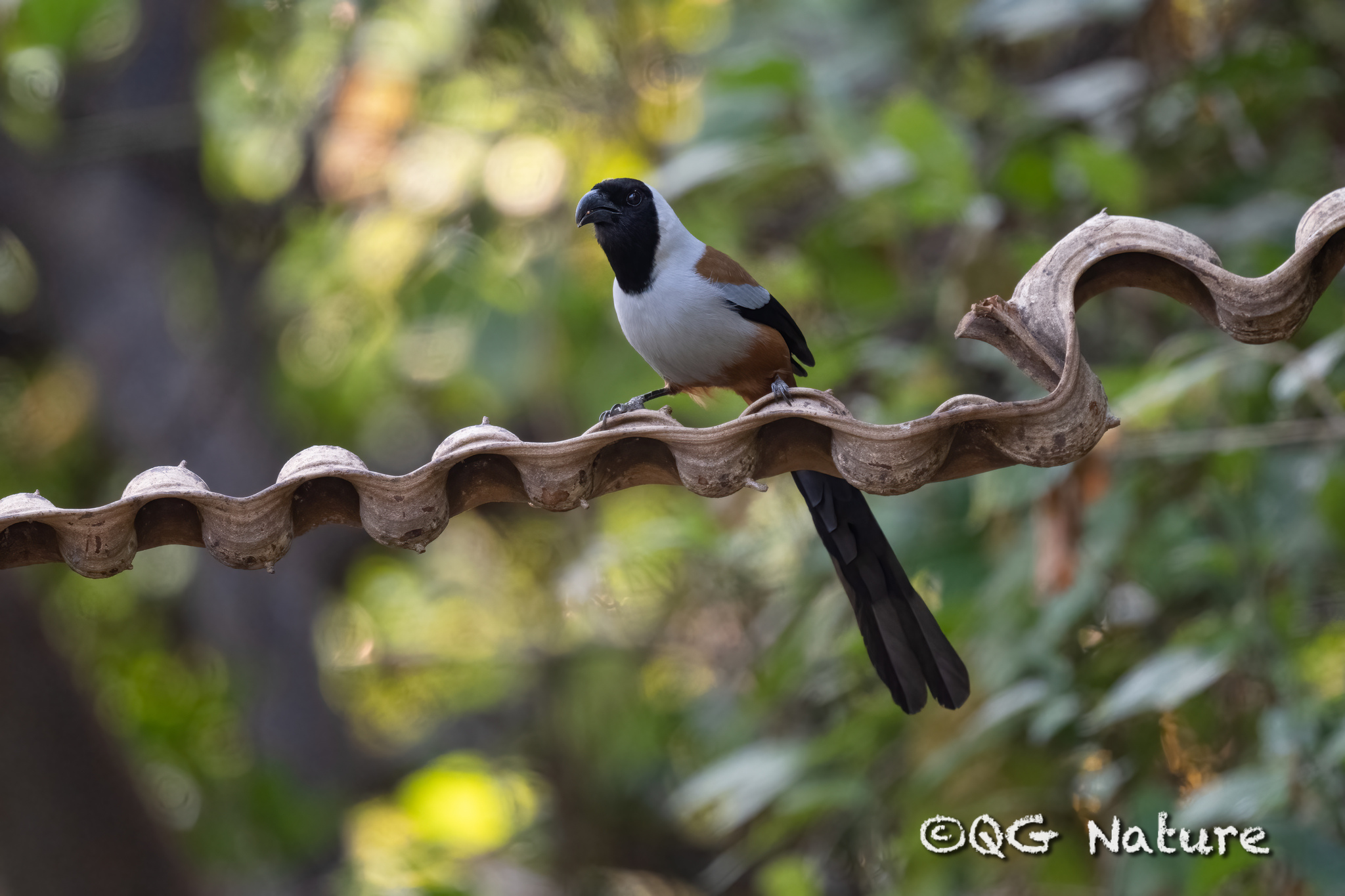
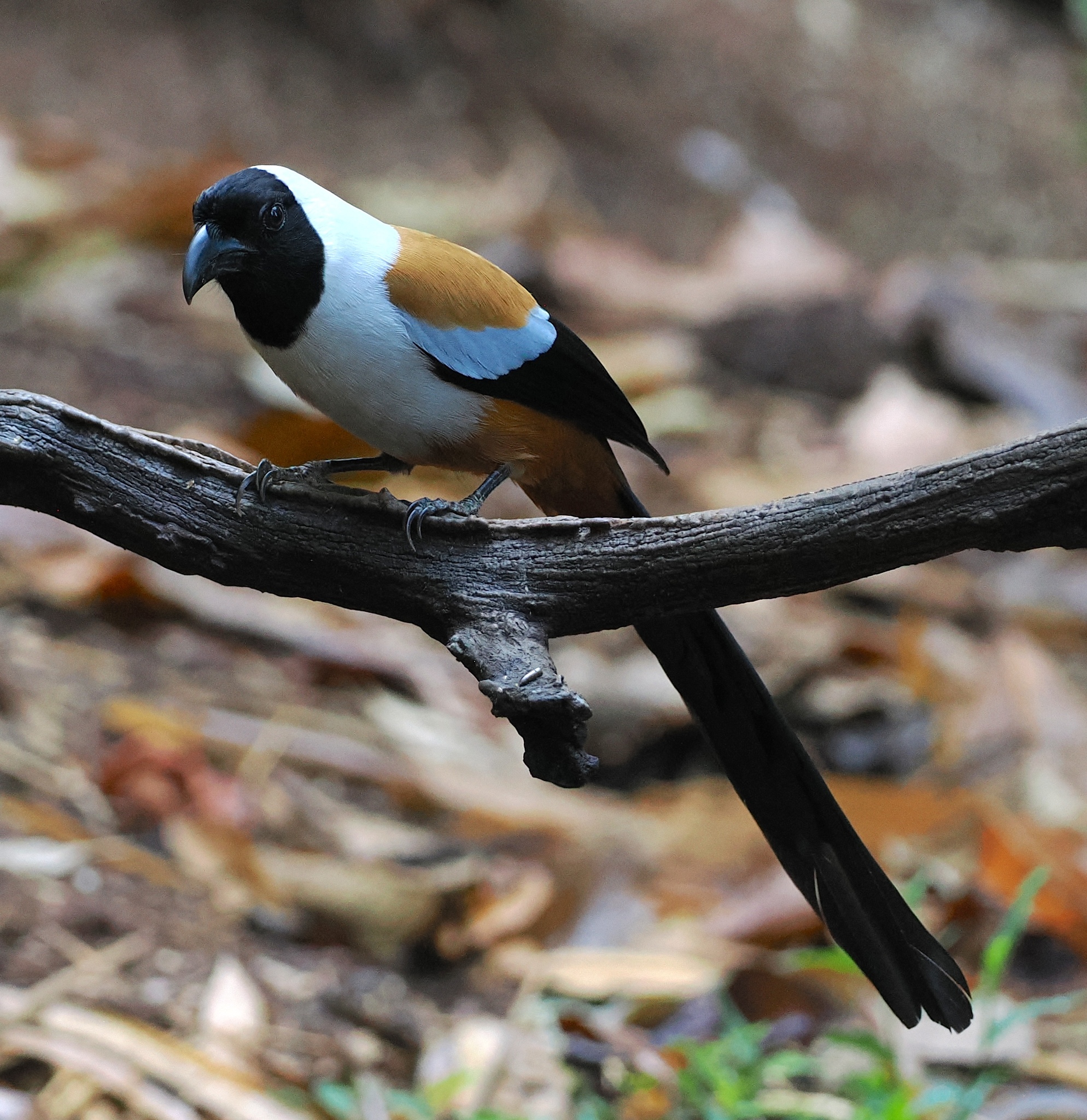
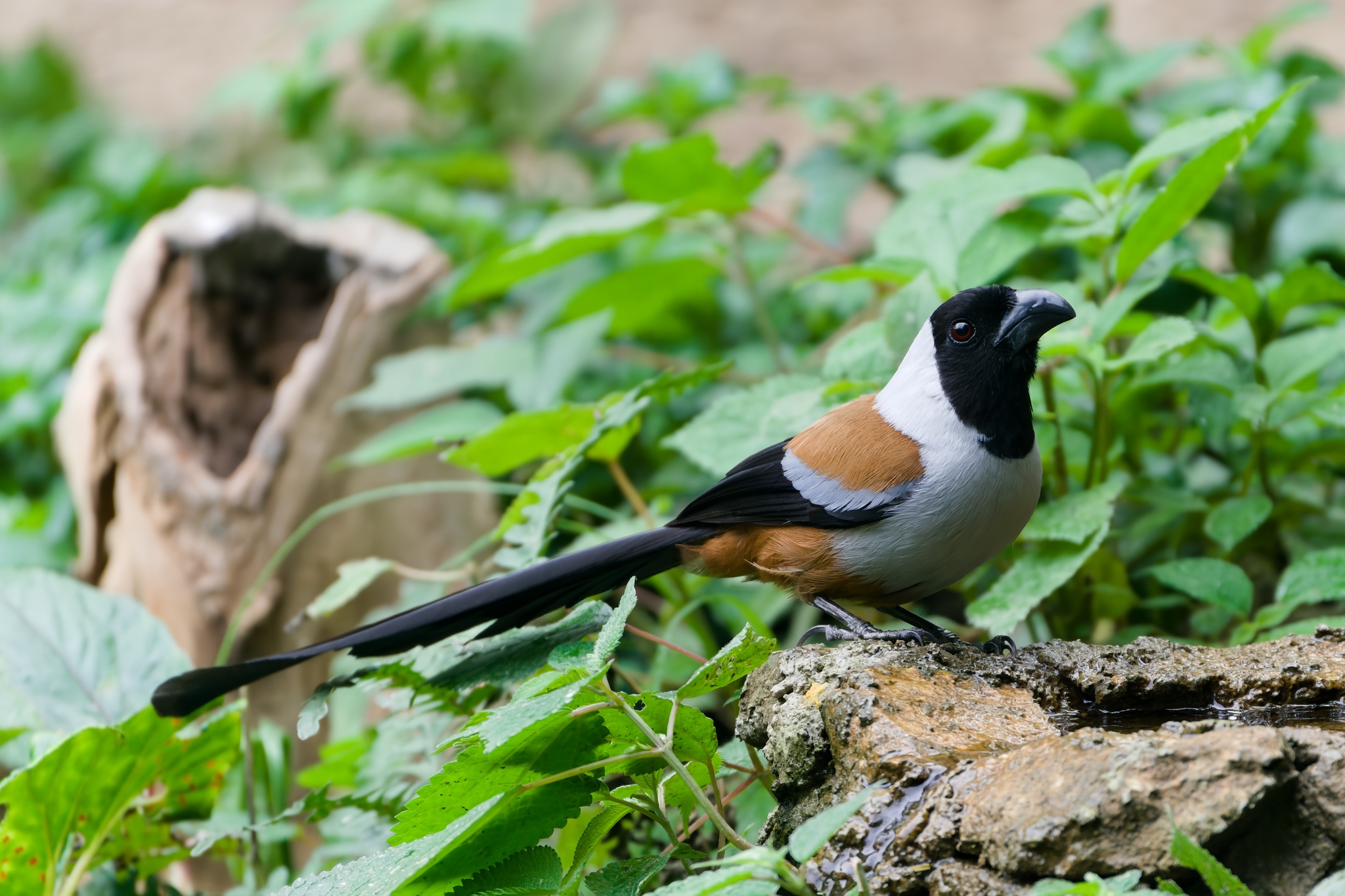
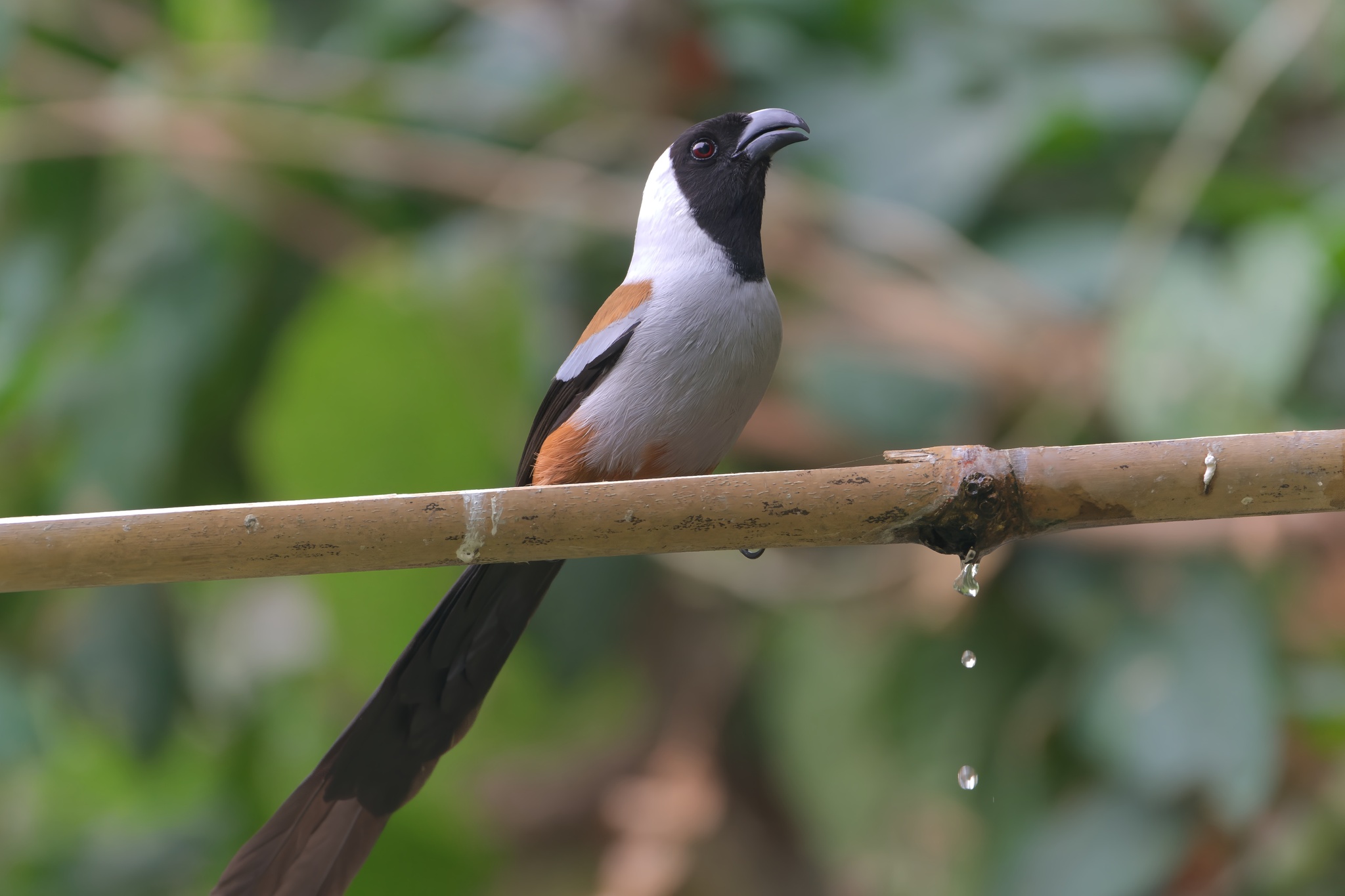
This Asian member of the crow family (Corvidae) is a forest-dwelling treepie. It is slightly smaller than a blue jay, with a compact body and elongated tail. The species has a glossy black forehead and face, silvery-grey chest and shoulders, and chestnut-brown back and wings with white coverts. It inhabits high-elevation hill forests across the eastern Himalayas. The species is agile in the forest canopy and produces varied calls including metallic notes and characteristic chatter. As a fruit-eater, it plays a role in seed dispersal.
Description
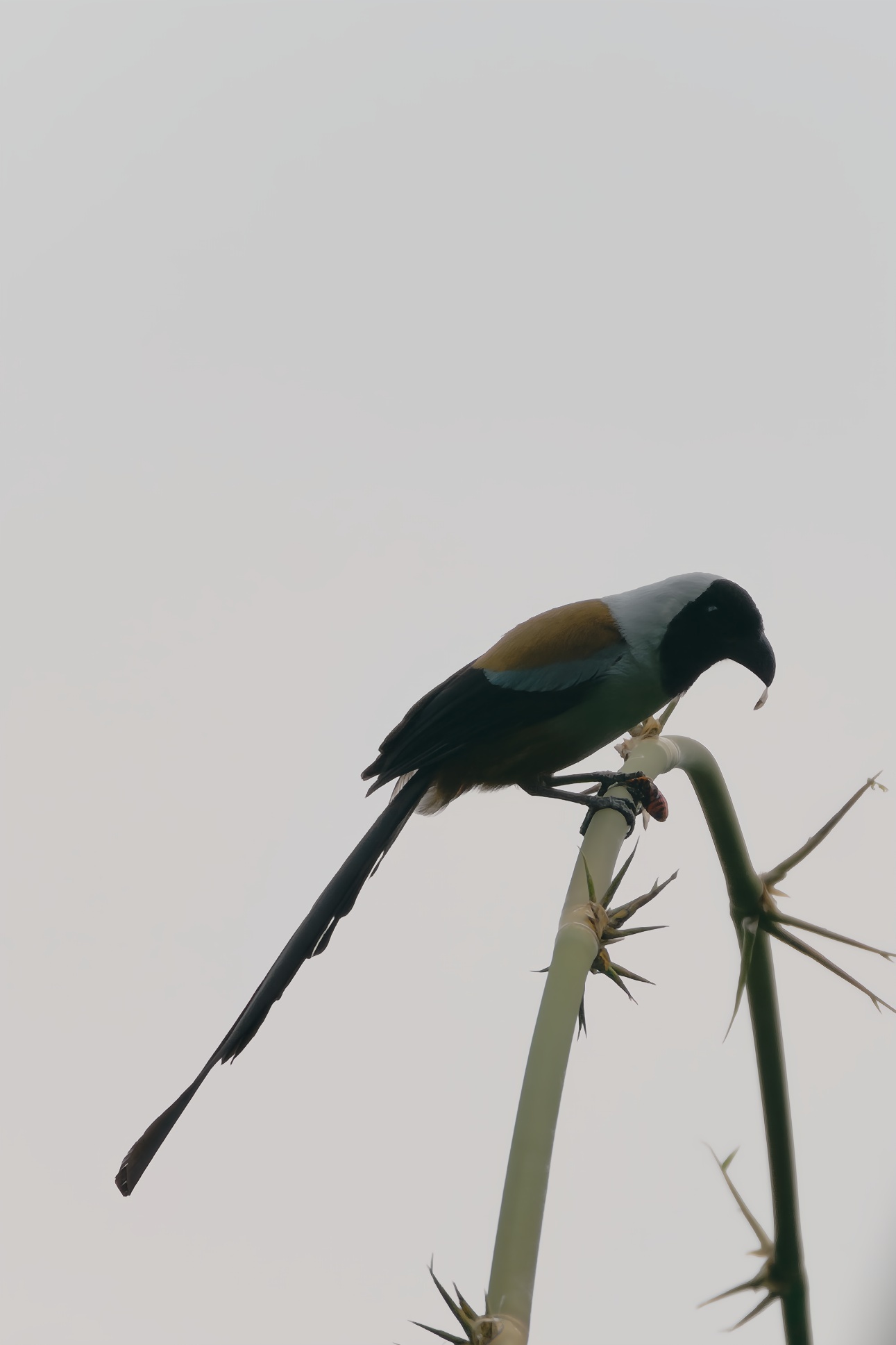
This small corvid is slightly smaller than a blue jay, featuring the compact body and long tail typical of treepies. The forehead, face, and bib are glossy black, creating a bold facial mask. The chest, neck, and shoulders display a light silvery or bluish-grey coloration. The back is a warm chestnut brown, with similar tones on the underparts. The wing coverts are white, contrasting with the black primaries and tail feathers. The overall effect is a distinctive two-toned bird with dark face and tail offset by grey upper chest and white wing panels.
Identification
The bold black face and forehead combined with the silvery-grey chest and shoulders provide the best field identification marks. The white wing coverts are conspicuous in flight and help distinguish it from similar treepie species. The long tail and compact body, typical of the group, may cause initial confusion with other forest corvids, but the unique facial pattern and wing coloration are diagnostic within its range.
Distribution & Habitat
This species inhabits a broad but often localized band across the northeastern Indian Himalayas, extending through Bangladesh and Nepal into Burma (Myanmar). It is strongly associated with hill forests at relatively high elevations, preferring wooded habitats with intact canopy cover. The species appears to be sedentary within this range, though some local movements may occur in response to seasonal conditions.
Behavior & Ecology
Diet consists primarily of invertebrates, with the species demonstrating specialized hawking behavior to capture flying termites during emergences. Fruits and berries supplement the diet year-round, supporting forest regeneration through seed dispersal. The nest is a small, neatly constructed platform typically situated in bamboo clumps, shrubs, or small trees at the margins of forest clearings. Breeding occurs with a standard clutch of 3-5 eggs. Vocalizations are varied but consistently include metallic notes alongside the characteristic chatter alarm call typical of treepies, making the species detectable by ear before visual confirmation.
Source: Wikipedia · CC BY-SA 3.0
Taxonomy
- Order
- Passeriformes
- Family
- Corvidae
- Genus
- Dendrocitta
- eBird Code
- coltre1
Distribution
Himalayas of northern India, northern Myanmar, and northwestern Vietnam
Data Sources
Species description from Wikipedia, licensed under CC BY-SA 3.0.
Bird images and sounds sourced from GBIF, contributed by citizen scientists worldwide under Creative Commons licenses.
Taxonomy data from AviList 2025.