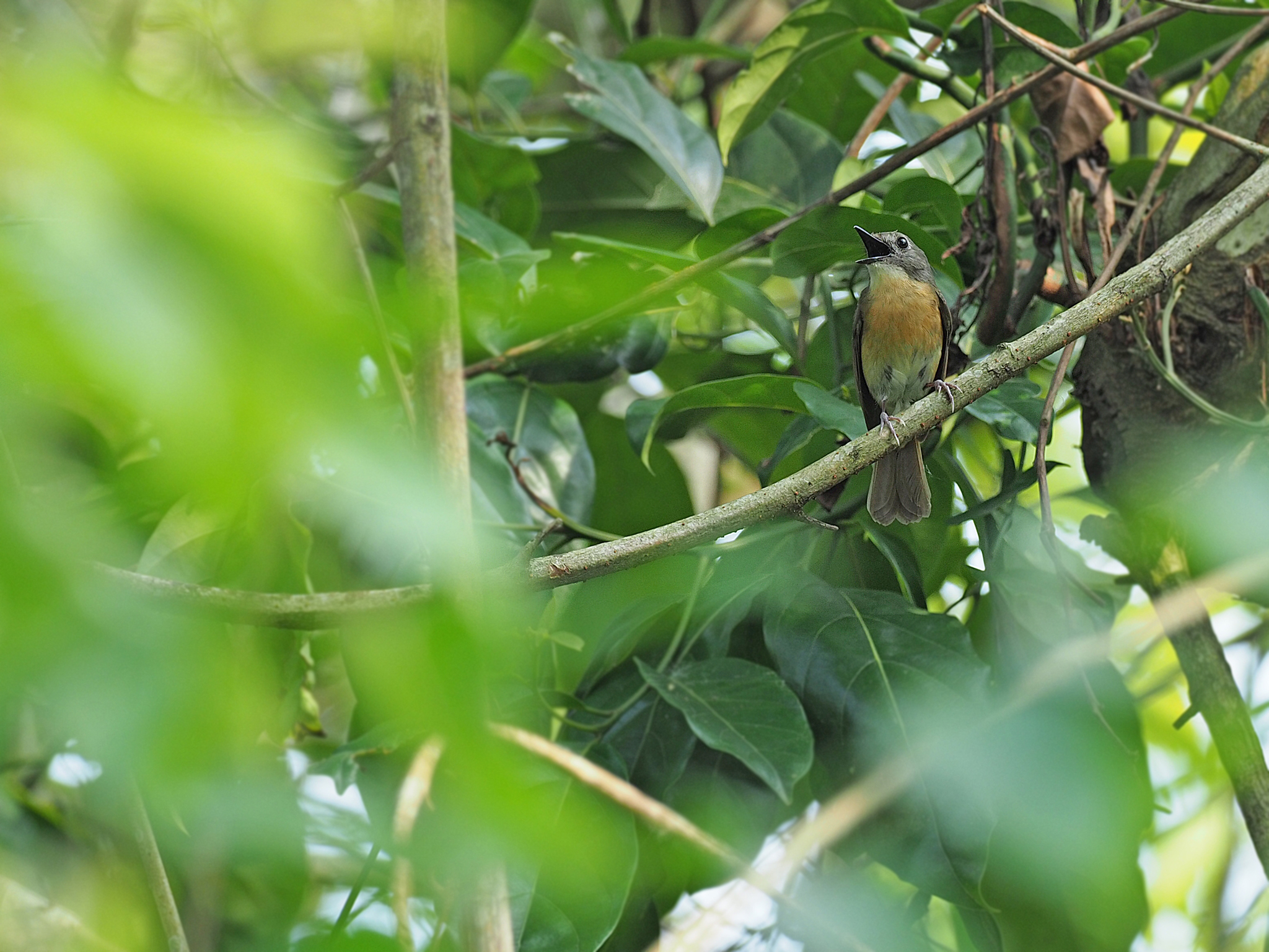
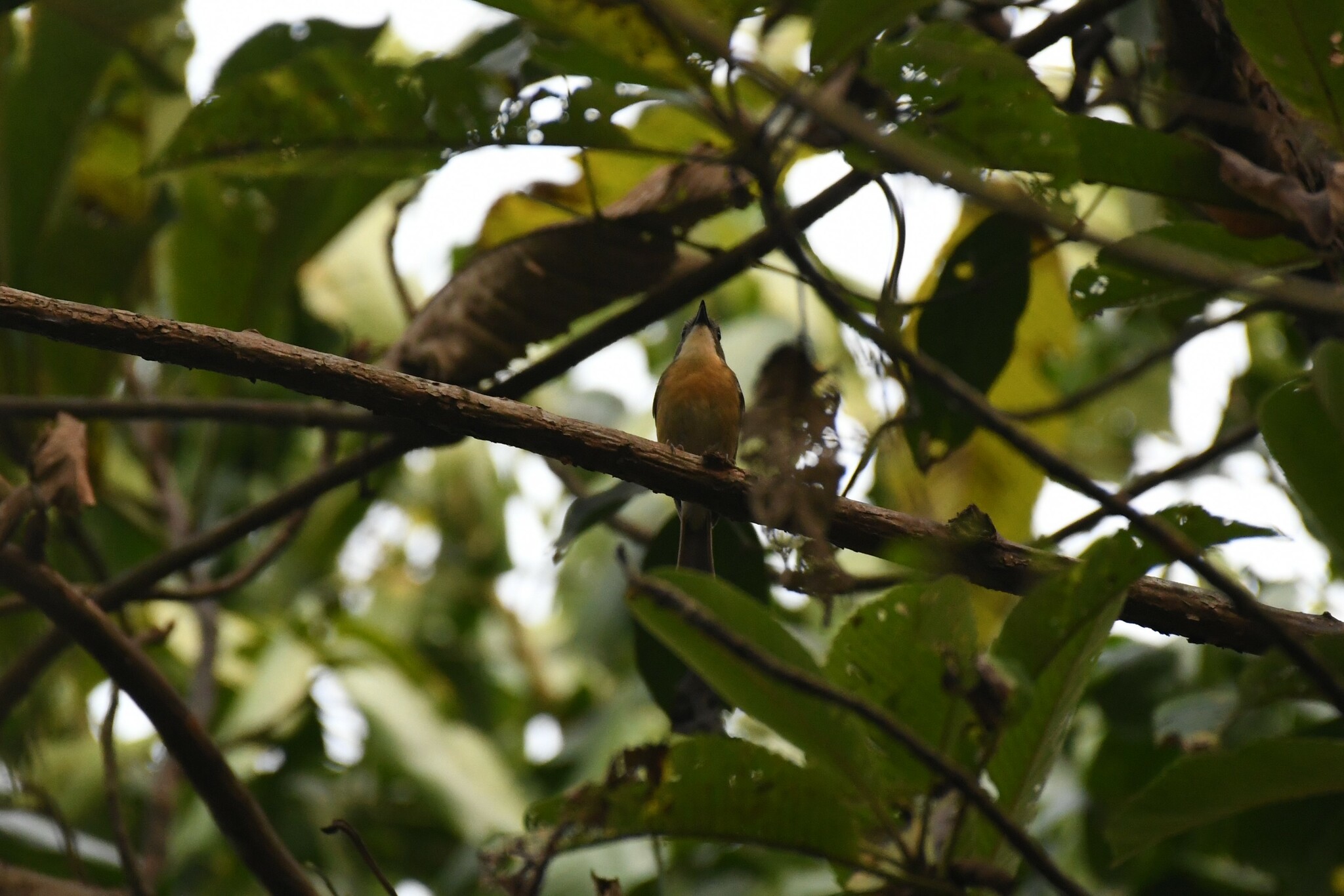

Pale-chinned Flycatcher
Cyornis poliogenys
灰颊仙鹟
Introduction
Medium-sized flycatcher in the family Muscicapidae. Found across Bangladesh, Bhutan, China, India, Myanmar, and Nepal. Inhabits subtropical and tropical moist lowland forests at elevations from sea level to 1,600 metres. Both sexes show dull bluish-grey upperparts with rufous chest, whitish throat, and white underparts. Four recognized subspecies occur across its range. Nesting takes place during April–June. Strictly insectivorous.
Description
Length ranges from 15.5 to 18 cm (6.1–7.1 in). Both sexes appear similar with dull bluish-grey upperparts and wings. The underparts feature a rufous chest, whitish throat, and white belly and vent. The tail is relatively long and slightly forked. Unlike many mainland Asian congeners in the genus Cyornis, males lack the intense blue plumage that characterizes related species.
Identification
Key distinguishing feature is the combination of dull bluish-grey upperparts lacking the intense blue coloration shown by other Cyornis species. The rufous chest patch and whitish throat help separate it from similar flycatchers in its range. The relatively plain appearance compared to other blue flycatchers is a reliable field mark.
Distribution & Habitat
Occurs across Bangladesh, Bhutan, China, India, Myanmar, and Nepal. Inhabits subtropical and tropical moist lowland forests, typically occurring at elevations from sea level up to 1,600 metres. The four subspecies show geographic partitioning: C. p. poliogenys occupies the central Himalaya to eastern Bangladesh and southwestern Myanmar; C. p. cachariensis ranges from the eastern Himalaya to south-central China and northern Myanmar; C. p. laurentei is restricted to Yunnan in southern China; and C. p. vernayi occurs in the Eastern Ghats of eastern India.
Behavior & Ecology
Strictly insectivorous, foraging by sallying from perches to catch flying insects in typical flycatcher fashion. Nesting season occurs during April–June. The species builds a cup-shaped nest, though specific nest construction details are not provided. Social behavior patterns are not well documented in available sources.
Conservation
IUCN conservation status not assessed in available sources. Population trends and specific threats have not been documented.
Culture
No cultural significance or folklore documented in available sources.
Source: Wikipedia · CC BY-SA 3.0
Taxonomy
- Order
- Passeriformes
- Family
- Muscicapidae
- Genus
- Cyornis
- eBird Code
- pacblf1
Subspecies (4)
-
Cyornis poliogenys cachariensis
eastern Himalayas (Assam) to northwestern Myanmar and southern China (northwestern Yunnan)
-
Cyornis poliogenys laurentei
southwestern China (southeastern Yunnan)
-
Cyornis poliogenys poliogenys
Himalayas (central Nepal to northeastern India, Bhutan, and western Myanmar)
-
Cyornis poliogenys vernayi
eastern India (Eastern Ghats from northern Odisha to Andhra Pradesh)
Data Sources
Species description from Wikipedia, licensed under CC BY-SA 3.0.
Bird images and sounds sourced from GBIF, contributed by citizen scientists worldwide under Creative Commons licenses.
Taxonomy data from AviList 2025.