Black-necked Swan
Cygnus melancoryphus
黑颈天鹅
Introduction
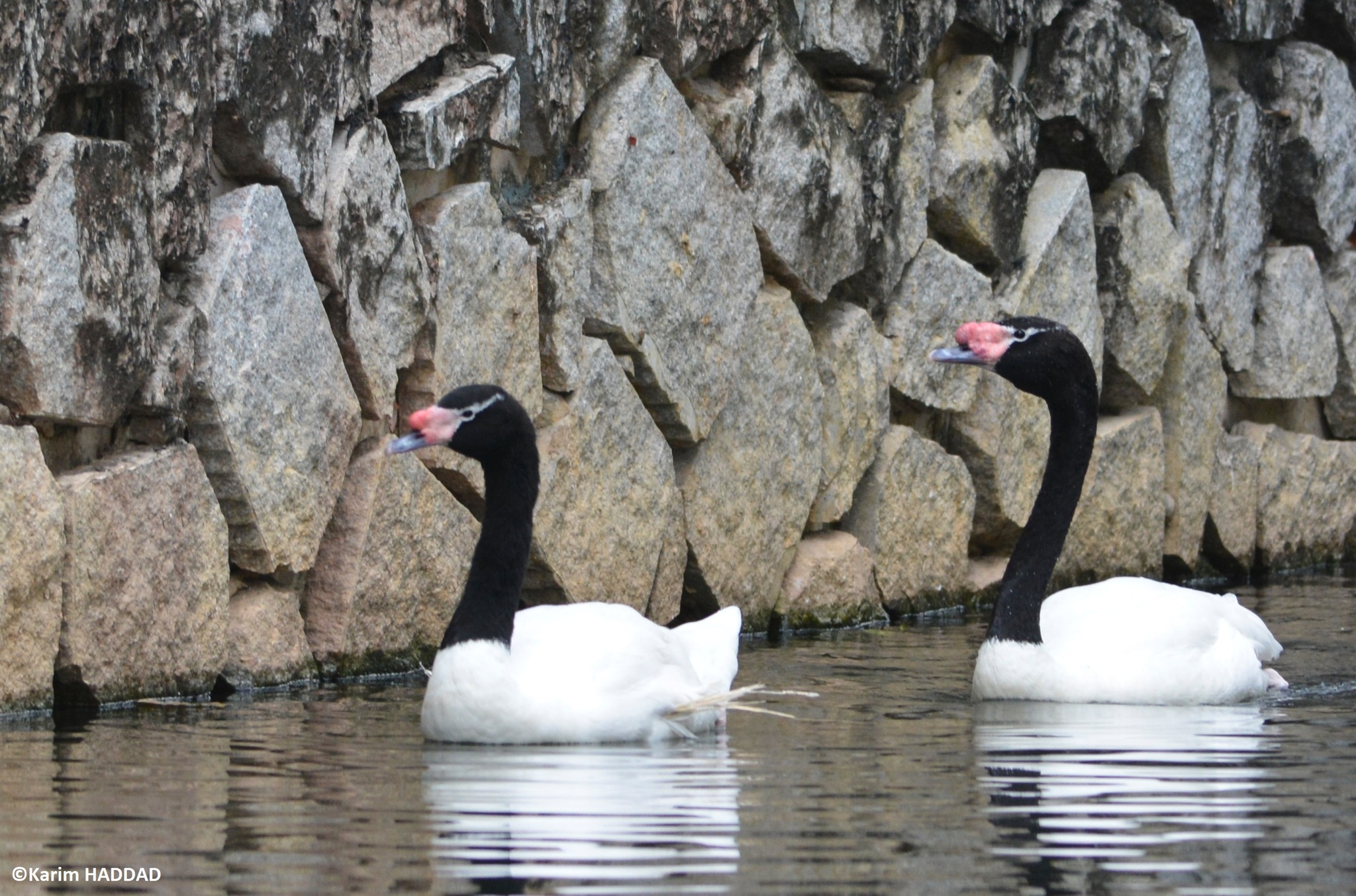
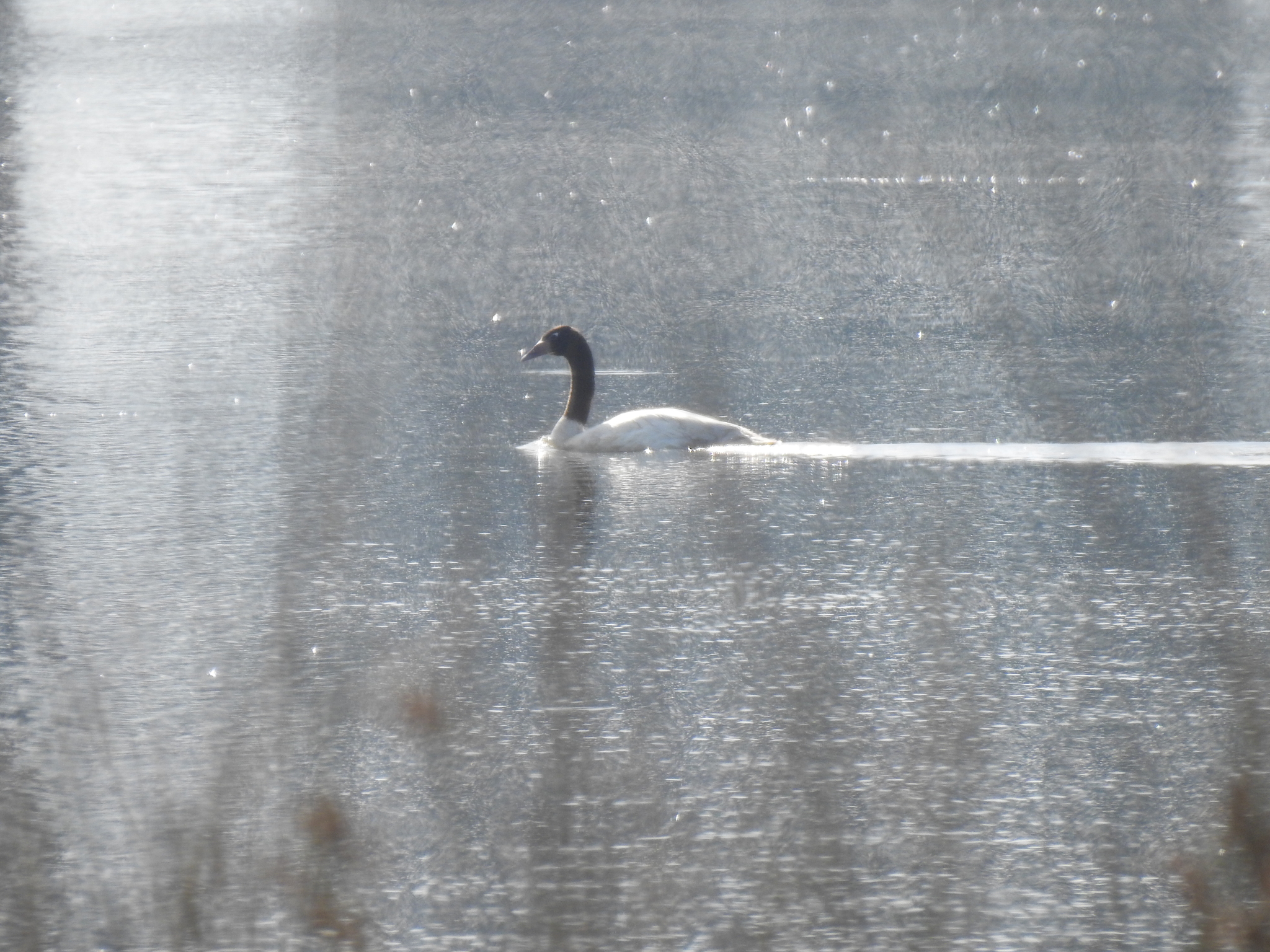
The black-necked swan (Cygnus melancoryphus) is the only member of its genus breeding in the Neotropics. Its range extends across the wetlands of southern South America, from Tierra del Fuego to the Falkland Islands, occupying marshes, lagoons, and coastal wetlands. Body length exceeds 1.2 meters. The species is characterized by a red knob at the base of the bill and a white stripe behind the eye. Historical hunting pressure eliminated the species from much of Chile in the 18th and 19th centuries, though populations have since recovered. Juveniles are grayish and lack the adult's white plumage and bill knob during their first years.
Description
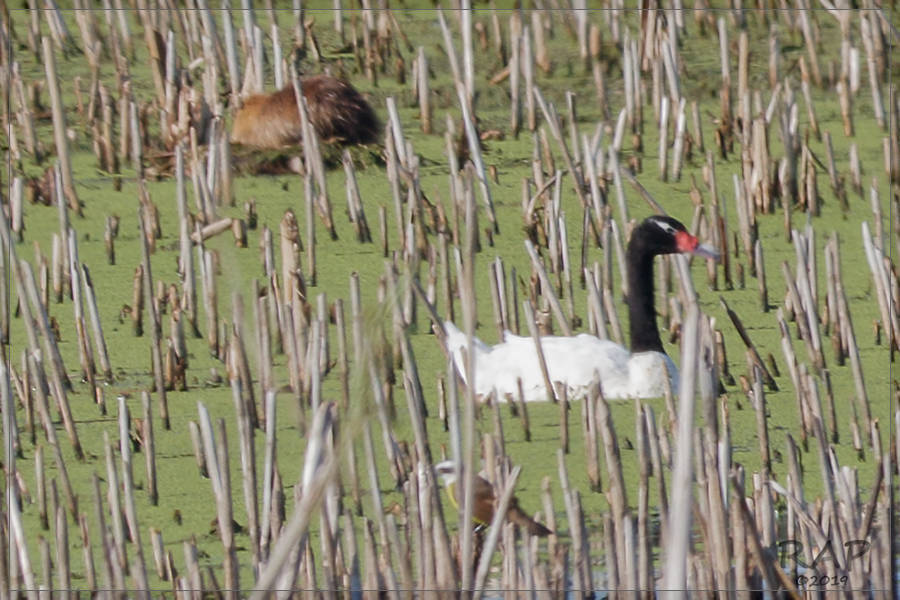
This is the largest waterfowl native to South America, with adults measuring 102 to 124 centimeters in length and weighing 4.6 to 8.7 kilograms for males and 3.5 to 4.4 kilograms for females. The wingspan ranges from 135 to 177 centimeters. The plumage presents a bold pattern: the body is entirely white while the neck and head are black. A prominent red knob adorns the base of the bill, and most adults display a distinctive white stripe behind the eye. The sexes appear identical. Juveniles differ markedly, showing grayish plumage instead of white and lacking the red knob until they reach their third or fourth year.
Identification
In the field, this species is unmistakable within its range due to its unique combination of black neck and head with white body plumage. The red basal knob and white post-ocular stripe provide additional identification cues visible at reasonable distances. The large size and long neck eliminate confusion with most other waterfowl. The only other swans in its range are introduced species, and this species is readily distinguished by its black neck and head contrasting with the white body. Juveniles may cause brief confusion due to their gray plumage, but their relatively large size and eventual white feathering distinguish them from potential similar species.
Distribution & Habitat
This species inhabits the southern tier of South America, breeding from Tierra del Fuego northward through central Chile, Uruguay, and into Rio Grande do Sul in extreme southern Brazil. It withdraws from the southern half of Argentina during winter, expanding its range northward to São Paulo state in Brazil. The Falkland Islands support a year-round resident population. Habitat includes freshwater marshes, swamps, shallow lakes, brackish lagoons, and sheltered coastal areas. On the mainland, it often occurs near human habitation but avoids built-up areas in the Falklands. Non-breeding flocks occasionally reach elevations of 900 to 1,250 meters in the Argentine Andes. Vagrants have been recorded on Juan Fernández Island, the South Orkney Islands, the South Shetland Islands, and the Antarctic Peninsula. The Carlos Anwandter Nature Sanctuary in Chile has become a particularly important population center.
Behavior & Ecology
This species maintains an almost entirely vegetarian diet, feeding on aquatic plants including Chara, Potamogeton, and Typha, along with algae such as Aphantotece and Rhyzoclonium. In parts of Chile, Egeria densa constitutes the principal food source. Foraging methods include immersing the head and neck, surface feeding, and upending to reach deeper vegetation. During drought conditions, it will graze in meadows and pastures. Breeding timing varies geographically, occurring from July to November in the southern extent and as early as September in northern areas; Falkland populations breed between August and November. The species forms long-term pair bonds. Both parents construct a mound nest on small islets or partially floating in reedbeds, with clutch sizes of four to eight eggs. Males guard females during the 34- to 36-day incubation period. Vocalizations are rare outside breeding season but include a soft, musical 'Whee-whee-whee' call used for territorial challenges and pair contact, along with a 'hooee-hoo-hoo' from males.
Conservation
The IUCN assesses this species as Least Concern, reflecting its very large range and apparently stable population, though exact population figures remain unknown. It remains widespread and generally common throughout its range. Historical hunting during the 18th and 19th centuries extirpated populations from much of Chile, though the species has since recolonized these areas. Some egg collecting and hunting continue today. Protected areas in mainland Argentina support significant populations, with an estimated 50,000 individuals in that country alone. The species occurs in numerous protected areas across its range, and no immediate major threats have been identified. However, avian influenza, particularly H5N1, has caused mortality events, with outbreaks documented in Chilean and Uruguayan populations in 2023.
Culture
No specific cultural significance, folklore, or mythological associations are documented for this species.
Source: Wikipedia · CC BY-SA 3.0
Taxonomy
- Order
- Anseriformes
- Family
- Anatidae
- Genus
- Cygnus
- eBird Code
- blnswa2
Distribution
breeds far southern Brazil to Tierra del Fuego and Falkland Islands; some winter northward to São Paulo (southeastern Brazil)
Data Sources
Species description from Wikipedia, licensed under CC BY-SA 3.0.
Bird images and sounds sourced from GBIF, contributed by citizen scientists worldwide under Creative Commons licenses.
Taxonomy data from AviList 2025.