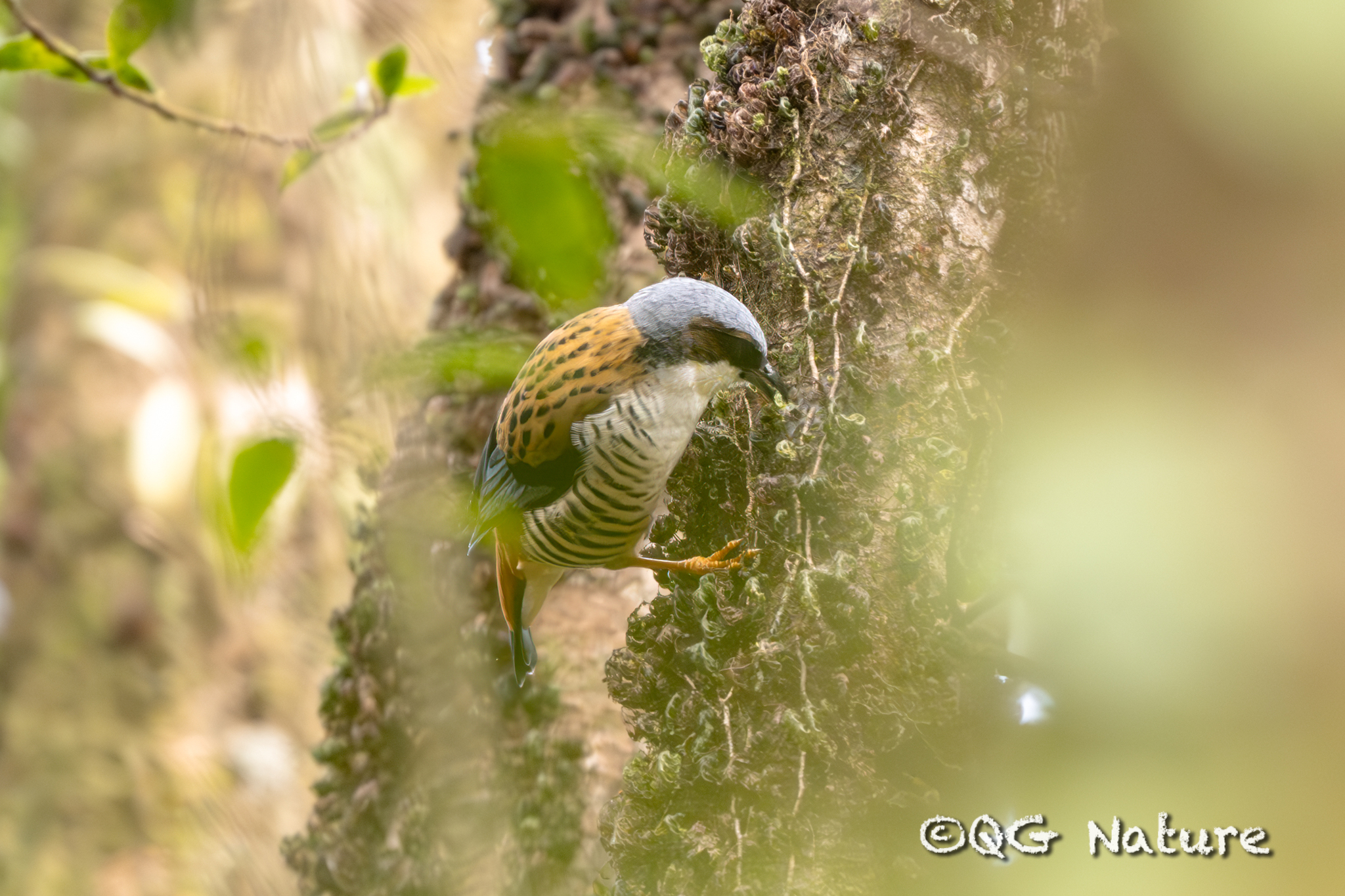
Himalayan Cutia
Cutia nipalensis
斑胁姬鹛
Introduction
Taxonomic placement: Family Leiothrichidae. Geographic range: Himalayan region from India through northern Thailand, with an isolated subspecies in Peninsular Malaysia. Habitat: Tropical to subtropical humid montane forests, typically in oak-dominated broadleaf forests at elevations of 1,500-2,500 meters above sea level. Taxonomic notes: Formerly considered the only member of its genus; the Vietnamese cutia is now recognized as a distinct species.
Distribution & Habitat
The species occupies a broad geographic range extending through the Himalayan region from India to northern Thailand, with an additional subspecies population in Peninsular Malaysia. Its habitat preferences center on broadleaf forests of the foothills, particularly oak-dominated woodlands at elevations from approximately 1,500 meters ASL upward. While found in tropical to subtropical humid montane forest environments, it does not ascend to the high mountain zones typical of some Himalayan bird species. The elevation ceiling appears to be around 2,500 meters, above which it is rarely if ever recorded.
Conservation
The species maintains a status of Least Concern on the IUCN Red List, retaining this assessment following the taxonomic split that separated the Vietnamese cutia as a distinct species. Population trends have not indicated significant declines, and the species is not currently considered threatened. In Bhutan, birdwatchers regularly encounter this species, indicating a stable and healthy population in that portion of its range.
Source: Wikipedia · CC BY-SA 3.0
Taxonomy
- Order
- Passeriformes
- Family
- Leiothrichidae
- Genus
- Cutia
- eBird Code
- cutia1
Subspecies (3)
-
Cutia nipalensis cervinicrissa
highlands of Malay Peninsula (southern Perak to southern Selangor)
-
Cutia nipalensis melanchima
eastern Myanmar to southern Yunnan, northwestern Thailand, northern Laos, and northwestern Tonkin
-
Cutia nipalensis nipalensis
Nepal to eastern Assam, western Myanmar, southern Sichuan, and northwestern Yunnan
Data Sources
Species description from Wikipedia, licensed under CC BY-SA 3.0.
Bird images and sounds sourced from GBIF, contributed by citizen scientists worldwide under Creative Commons licenses.
Taxonomy data from AviList 2025.