Asian Desert Warbler
Curruca nana
荒漠林莺
Introduction
This small Old World warbler inhabits arid landscapes of central and western Asia. It represents a recent taxonomic split from an African counterpart. Its range extends into the extreme eastern edges of Europe. It occupies semi-desert and dry steppe environments with sparse shrub cover for nesting. It feeds on the ground, distinguishing it from many warbler relatives. Its distinctive jingle song is delivered during advertisement flights. It occurs as a vagrant in western Europe, including Great Britain.
Description
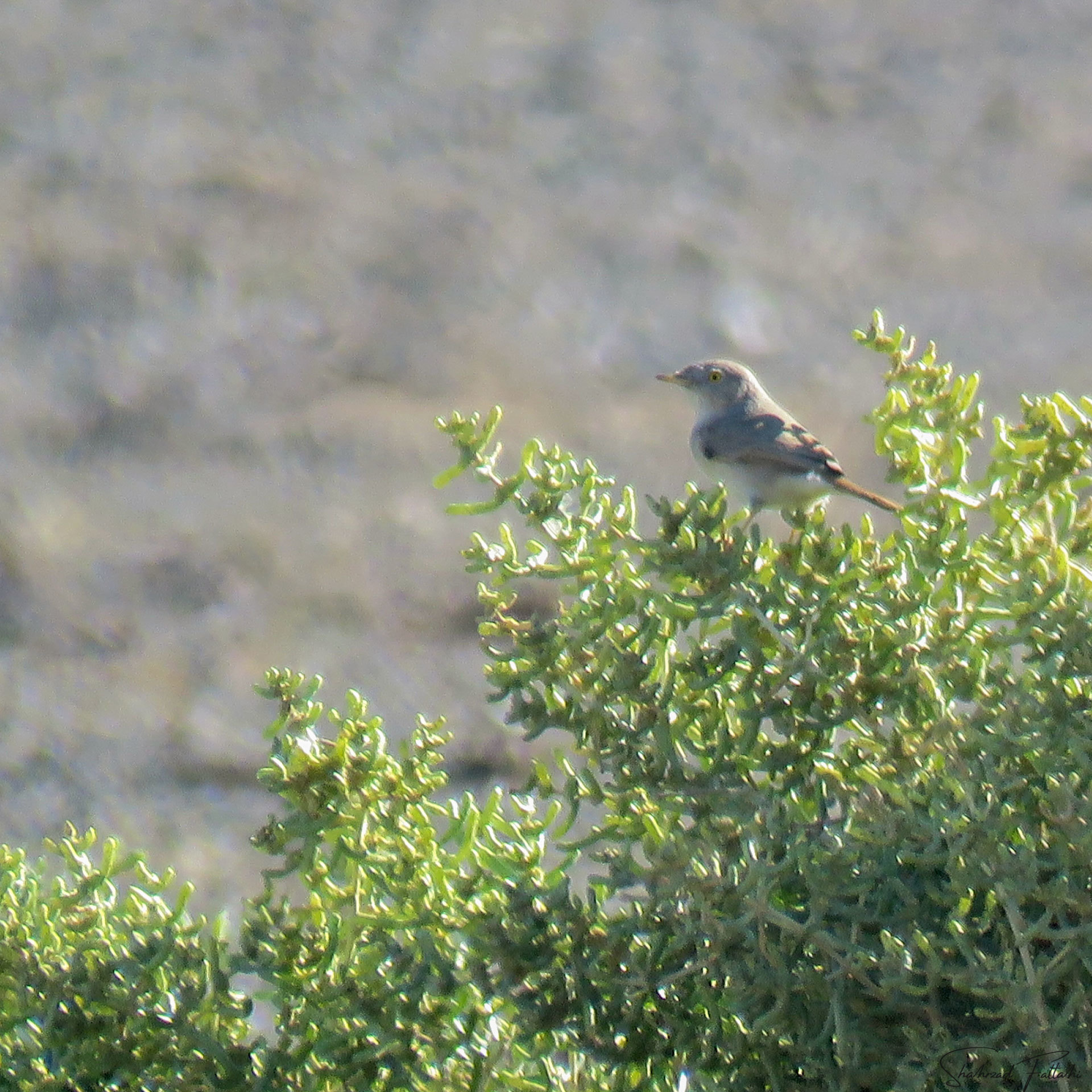
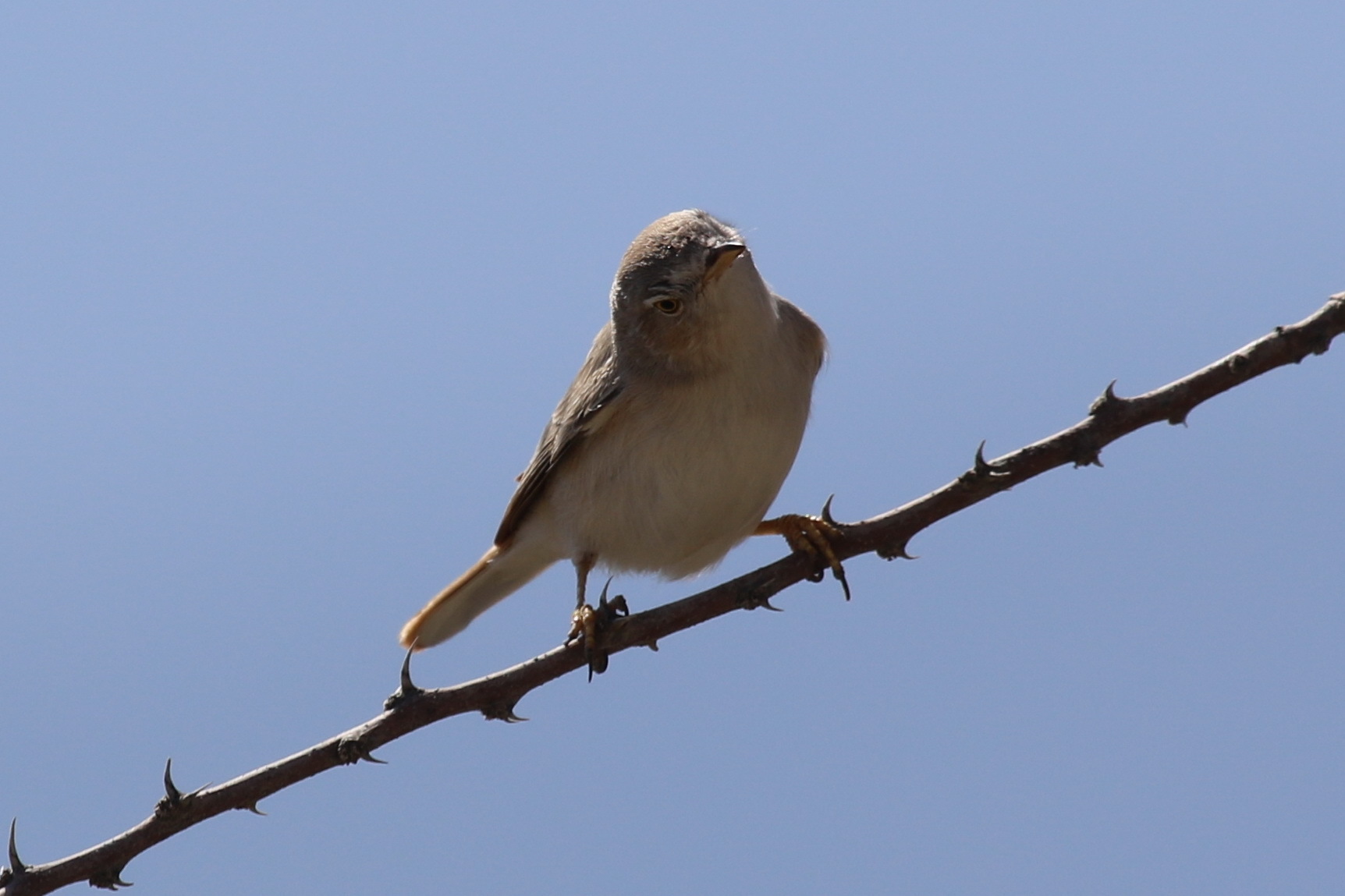
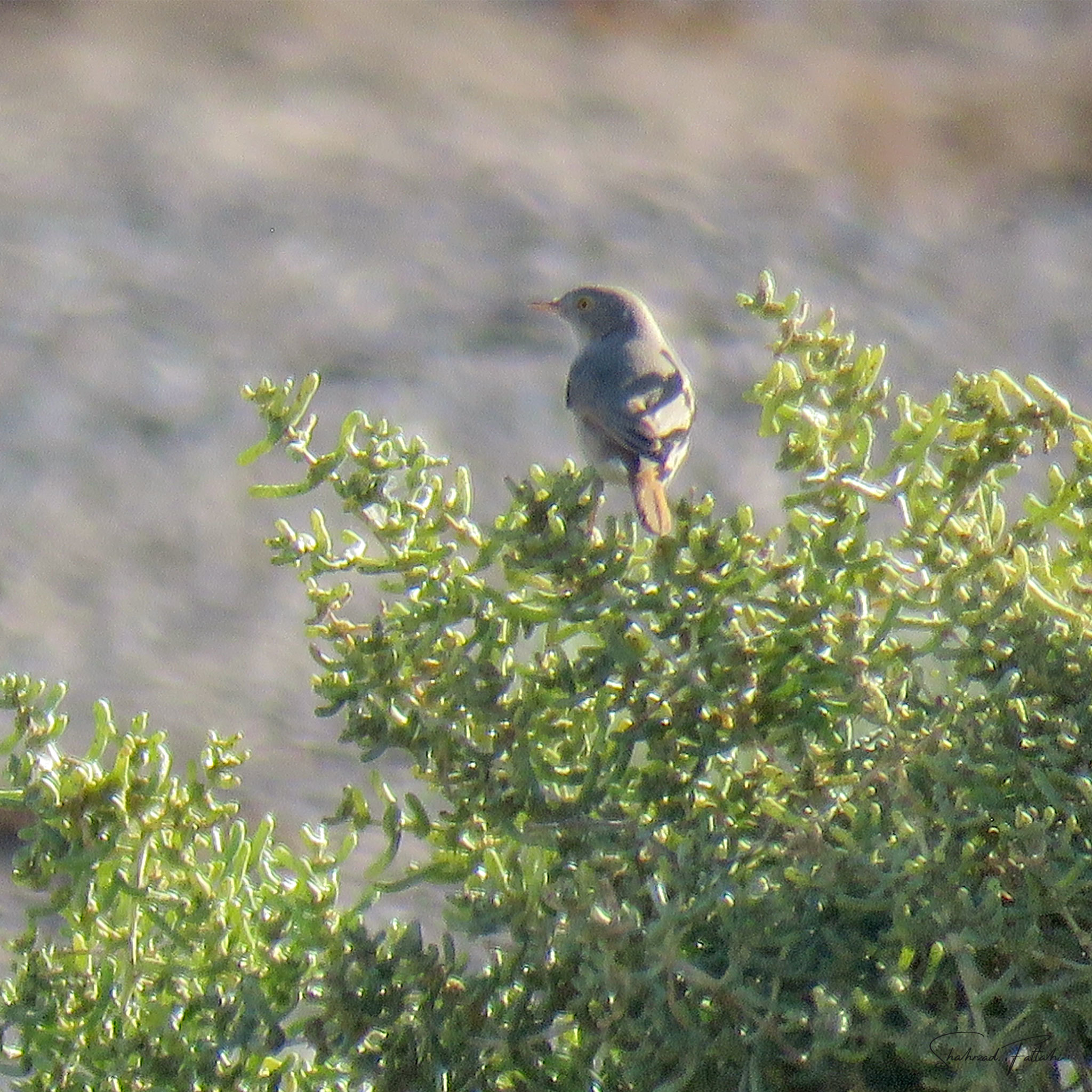
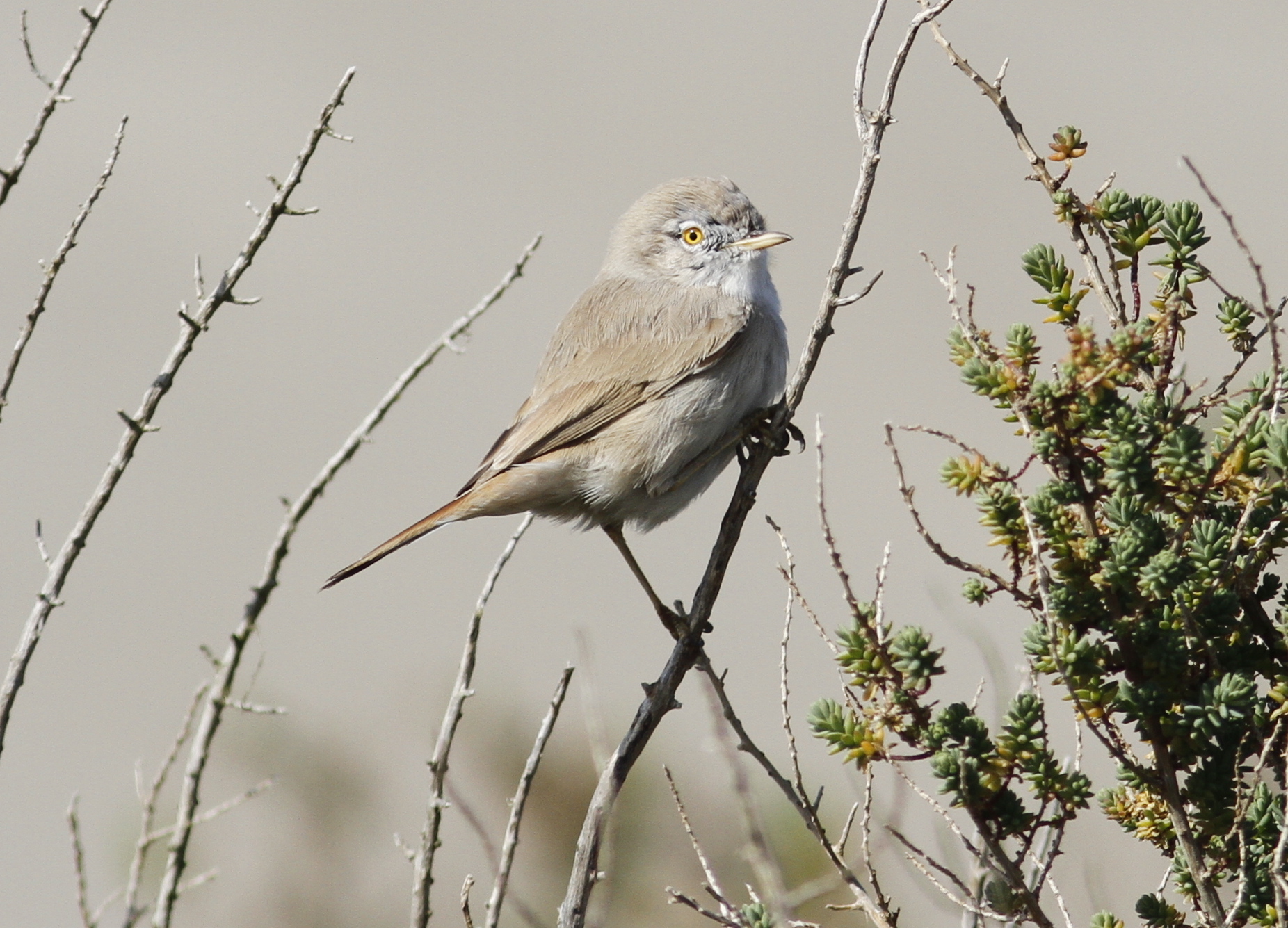
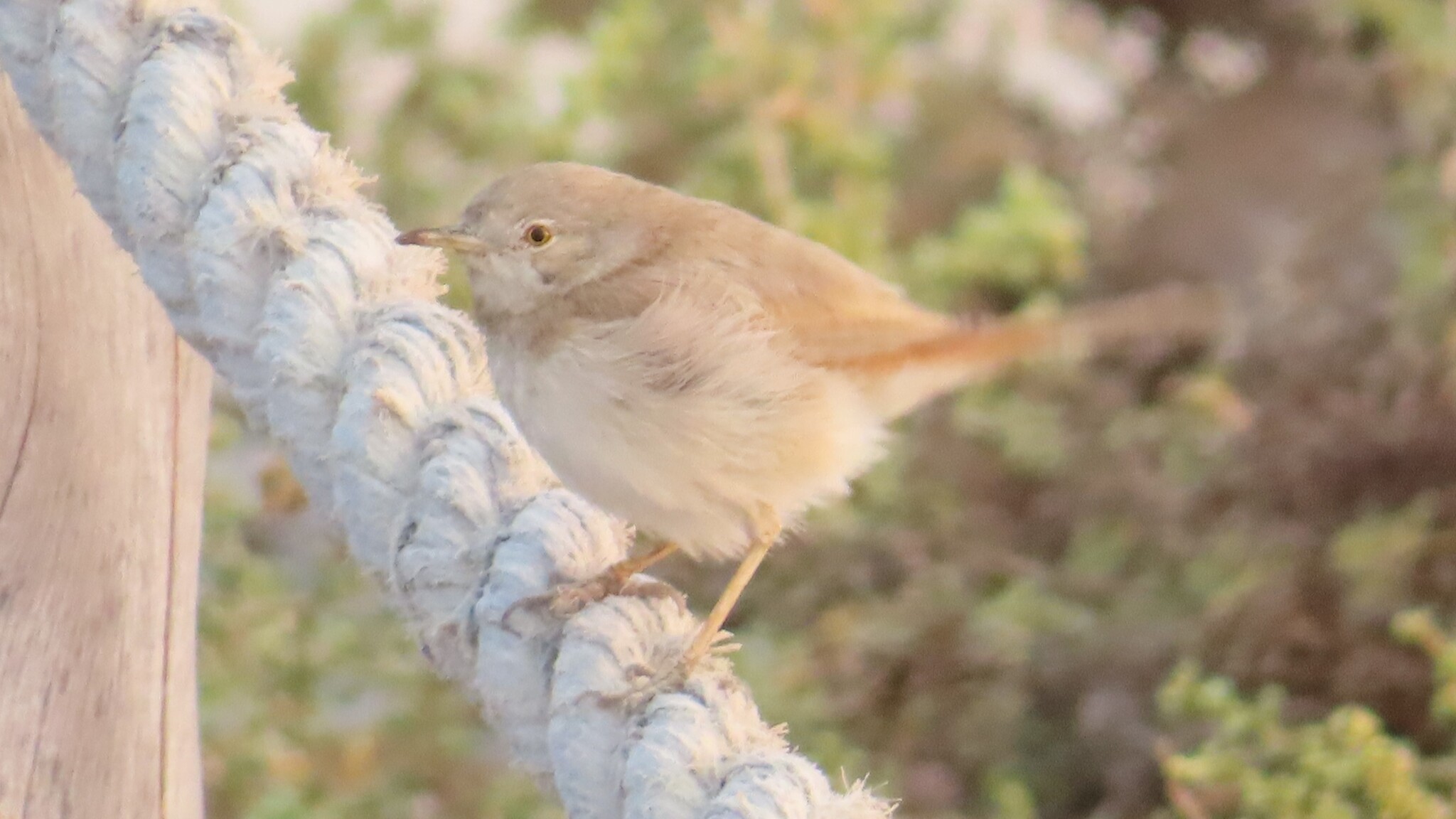
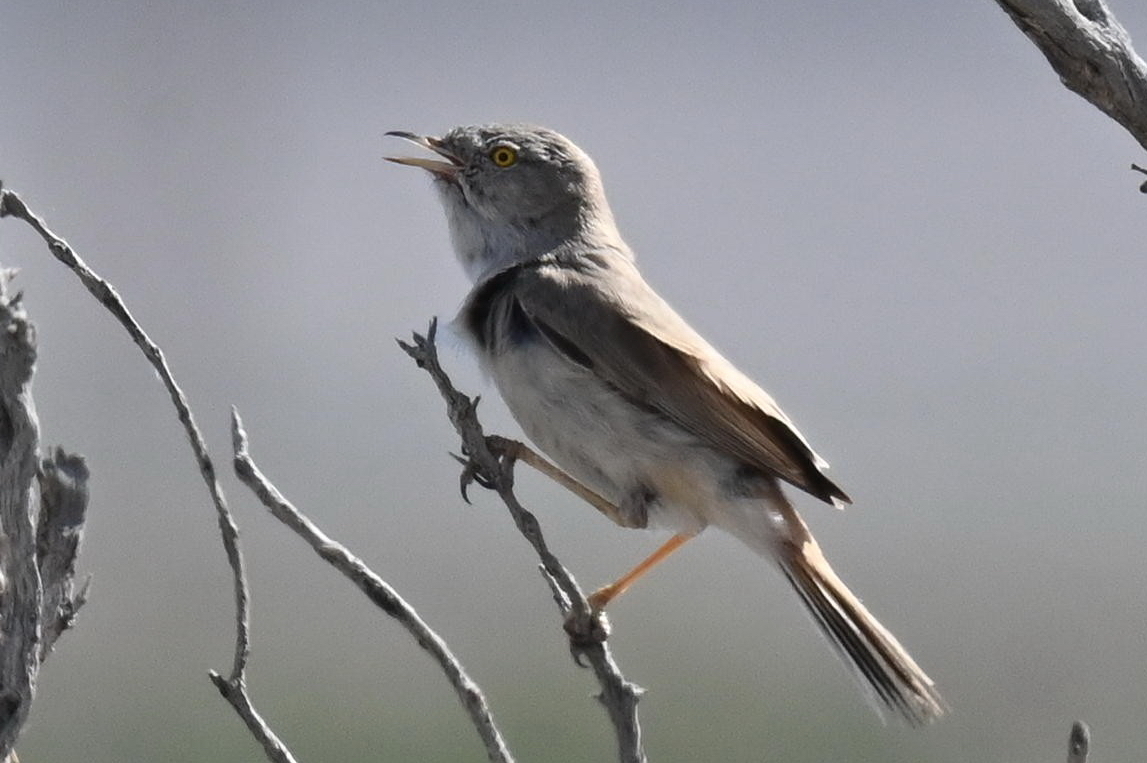
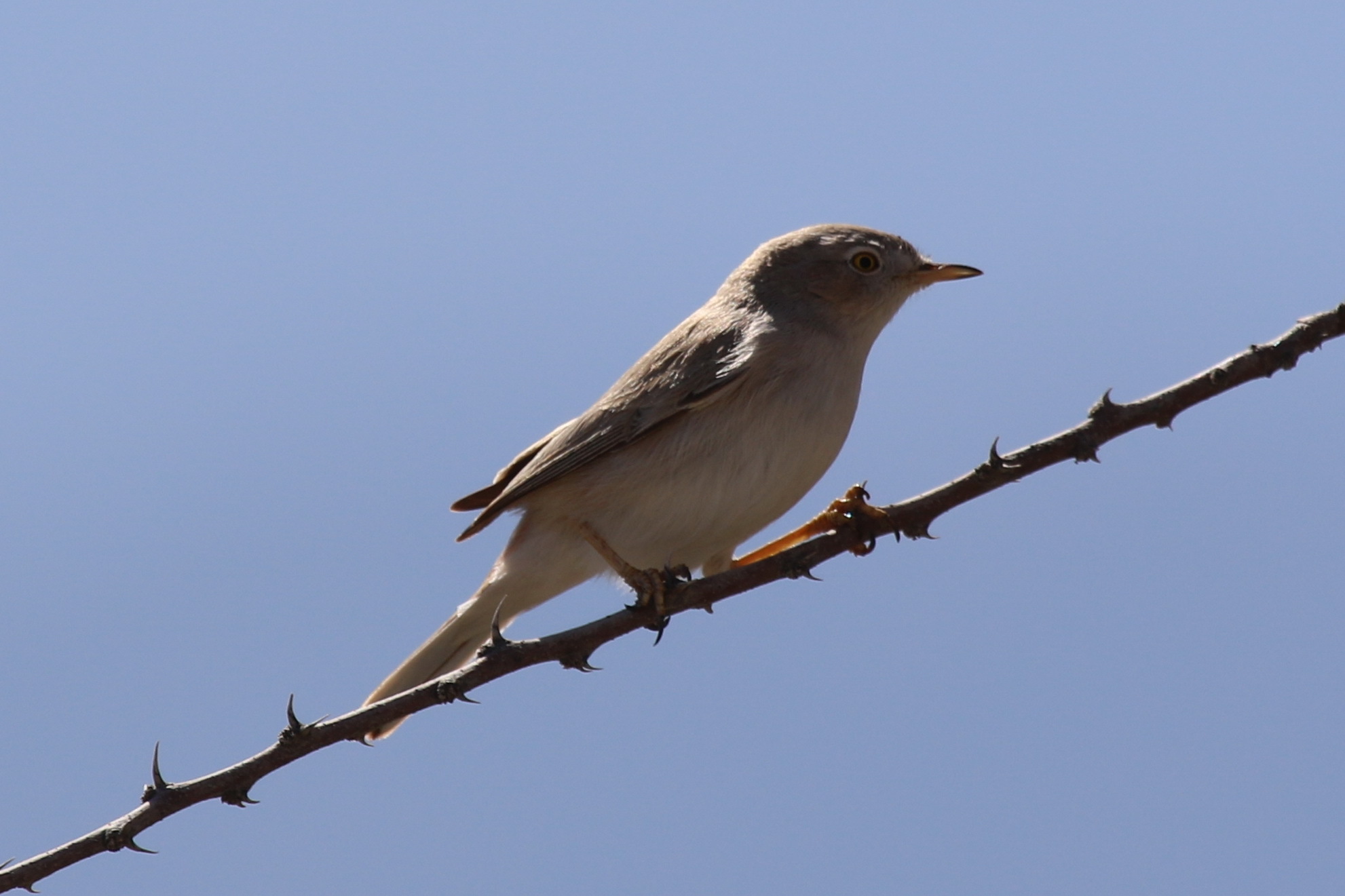
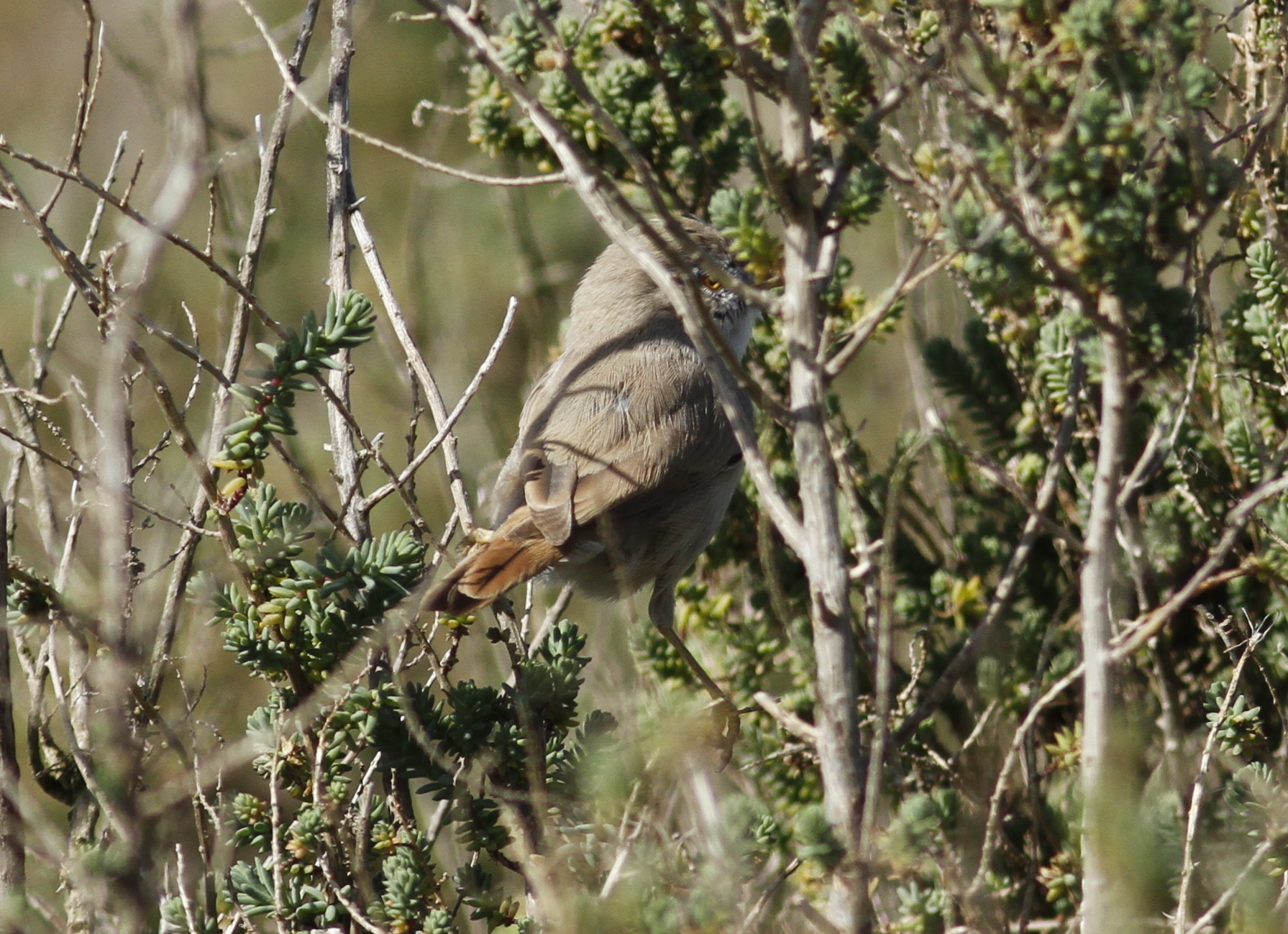
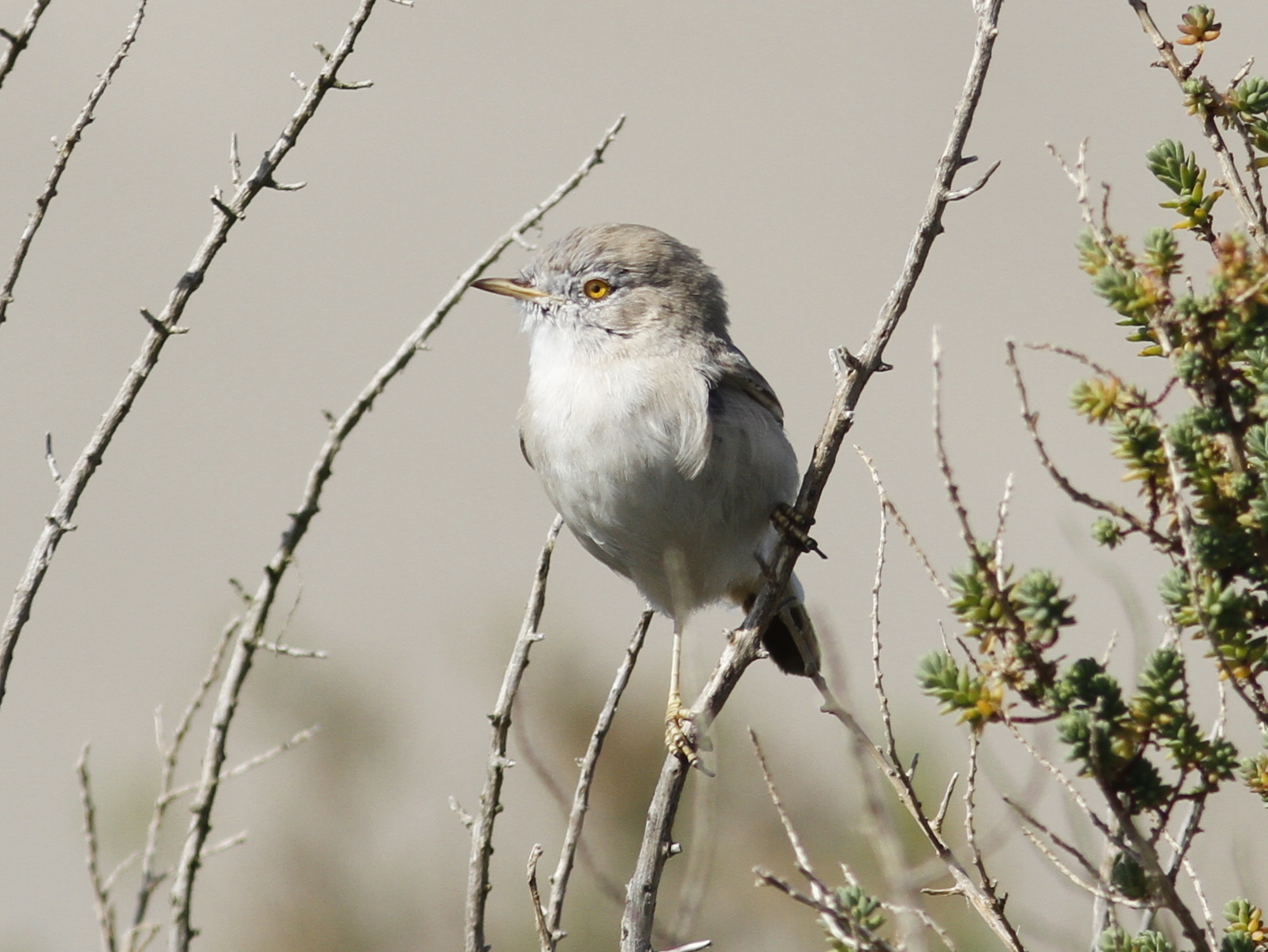
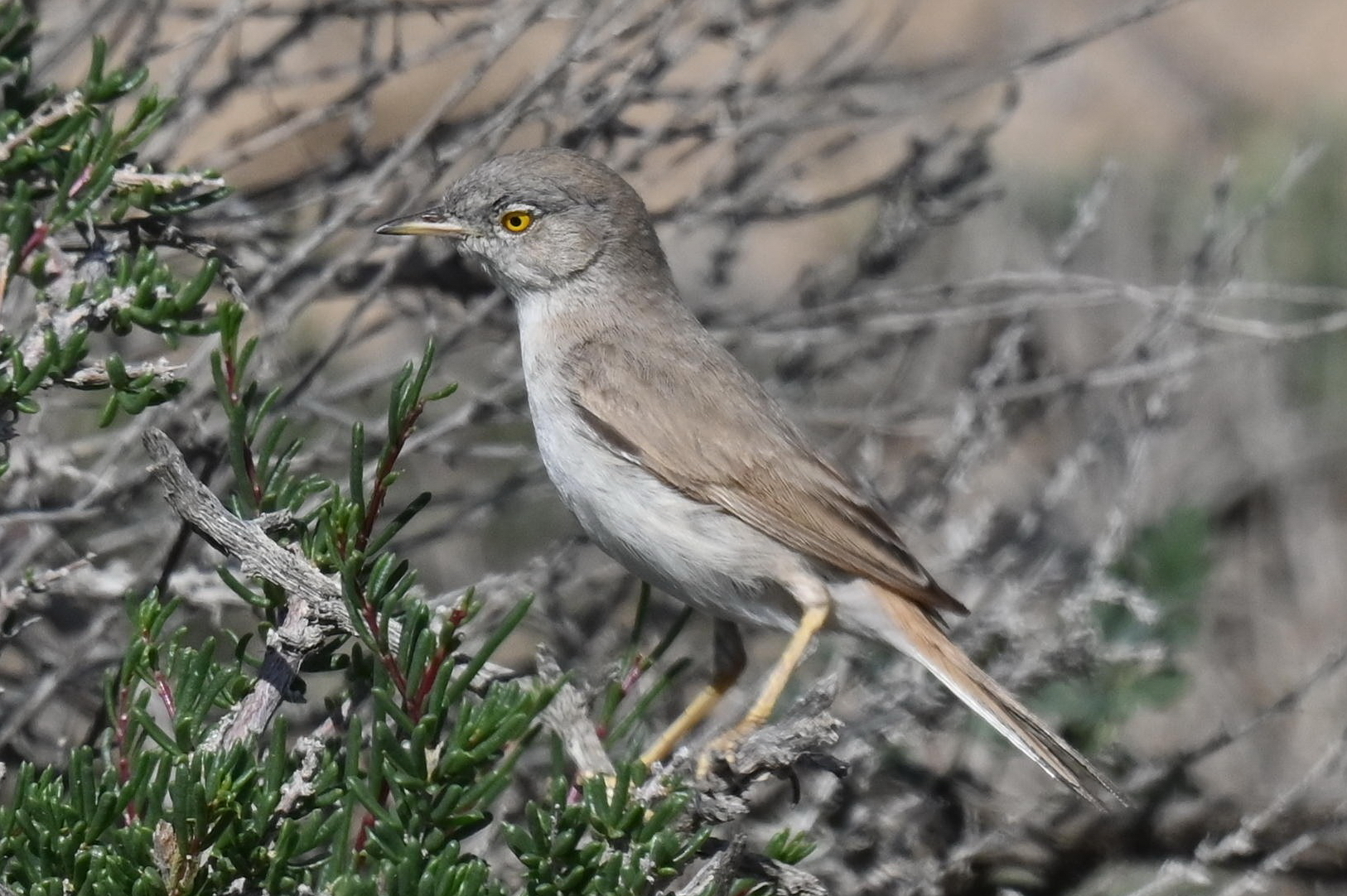
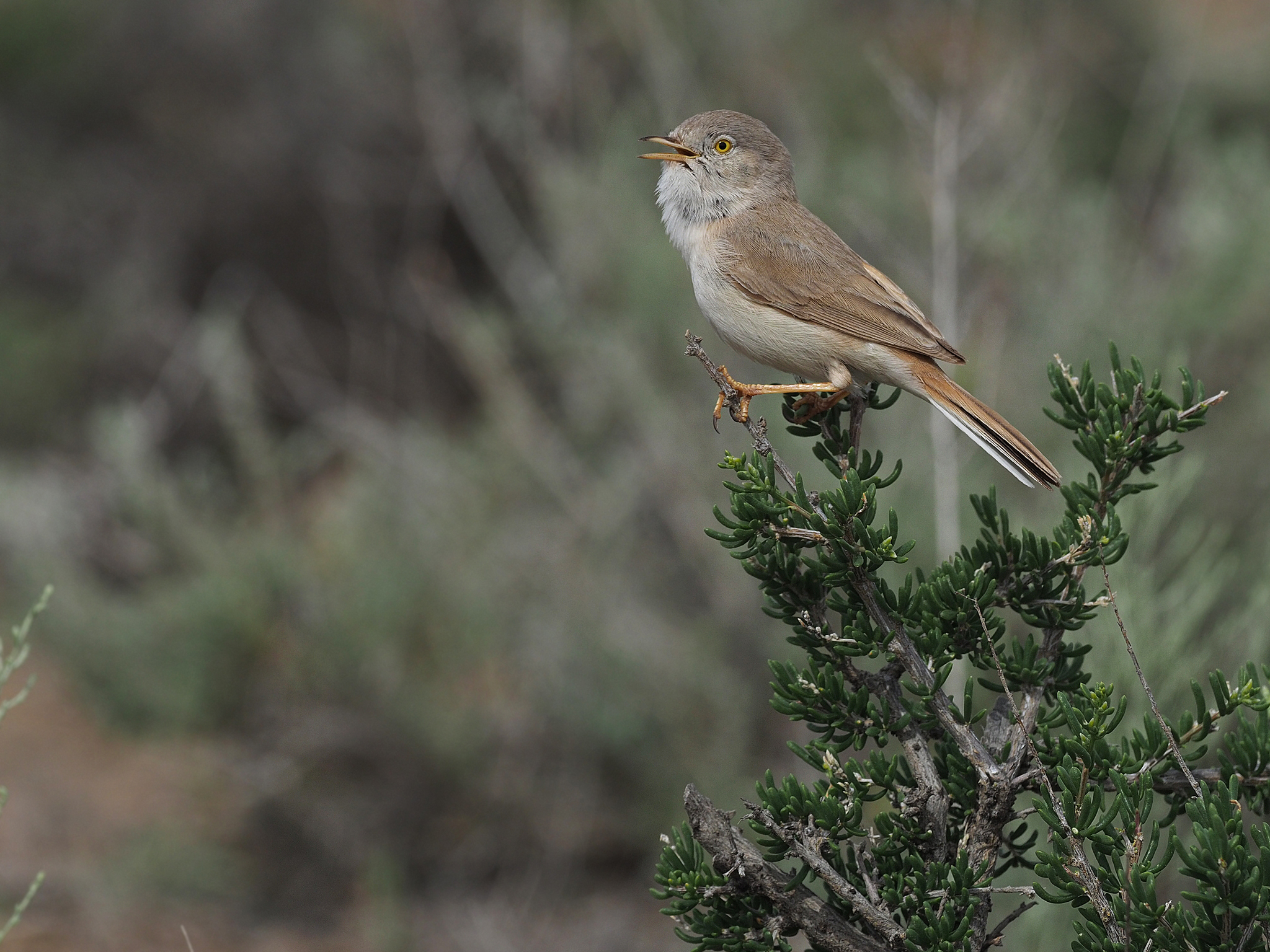
This diminutive warbler measures 11.5–12.5 cm in length, making it the second-smallest member of its genus. The plumage is remarkably understated, with both sexes appearing nearly identical. The upperparts display pale grey-brown coloration, while the wings and tail show a richer brown tone. Underparts are whitish, providing subtle contrast. The yellowish coloration extends to both the bill and legs, and the eye features a distinctive yellow iris. The overall impression is one of muted camouflage colors suited to its desert and steppe habitat.
Identification
Field identification can present challenges due to the species' plain appearance. The closest diagnostic feature is its combination of small size, yellowish bill and legs, and the yellow iris. Female common whitethroats present the most significant identification confusion, as they closely resemble richly coloured individuals. However, the Asian desert warbler's ground-feeding behavior differs markedly from the more typical canopy activities of related species. Its distinctive jingle song, often delivered in flight, provides the most reliable identification clue in the field.
Distribution & Habitat
The breeding range extends across the deserts and steppes of central and western Asia, with the eastern limit reaching western Inner Mongolia in China. In Europe, breeding occurs only in the Volga Delta area. With the arrival of winter, the species migrates to similar arid habitats in southwestern Asia, from Arabia to northwestern India, and along the Red Sea coastal regions of northeastern Africa. It shows a strong preference for semi-desert and dry steppe environments, requiring the presence of bushes for nesting purposes.
Behavior & Ecology
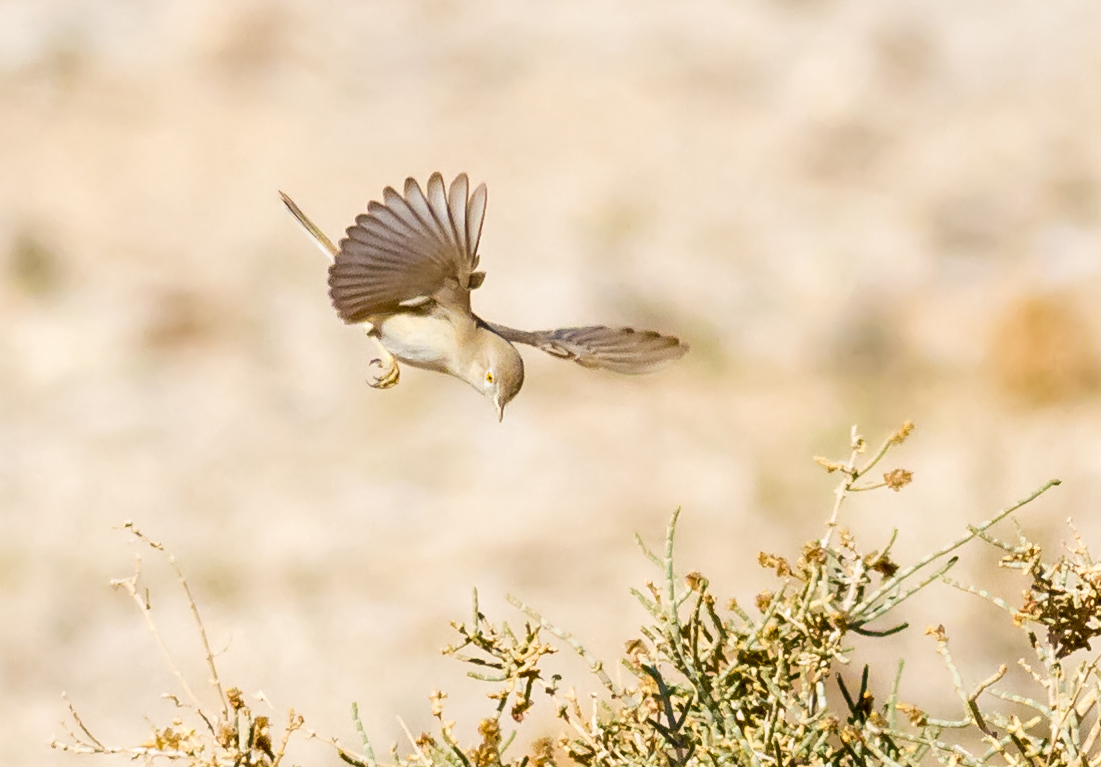
Unlike most warbler species, this bird commonly forages on the ground, a behavior that sets it apart from its arboreal relatives. Its diet consists primarily of insects, though small berries are also taken when available. The breeding season involves nest construction in low shrubs, with clutches of 4–6 eggs typical. The song, a distinctive jingle incorporating both clear and harsher notes, is frequently delivered during an advertising flight, serving territorial and courtship purposes.
Conservation
No specific population data or conservation assessment is provided in available sources.
Culture
No cultural significance or folklore is documented for this species.
Source: Wikipedia · CC BY-SA 3.0
Taxonomy
- Order
- Passeriformes
- Family
- Sylviidae
- Genus
- Curruca
- eBird Code
- asdwar1
Distribution
breeds Caspian Sea to Mongolia and western China; winters to northeastern Africa and India
Data Sources
Species description from Wikipedia, licensed under CC BY-SA 3.0.
Bird images and sounds sourced from GBIF, contributed by citizen scientists worldwide under Creative Commons licenses.
Taxonomy data from AviList 2025.