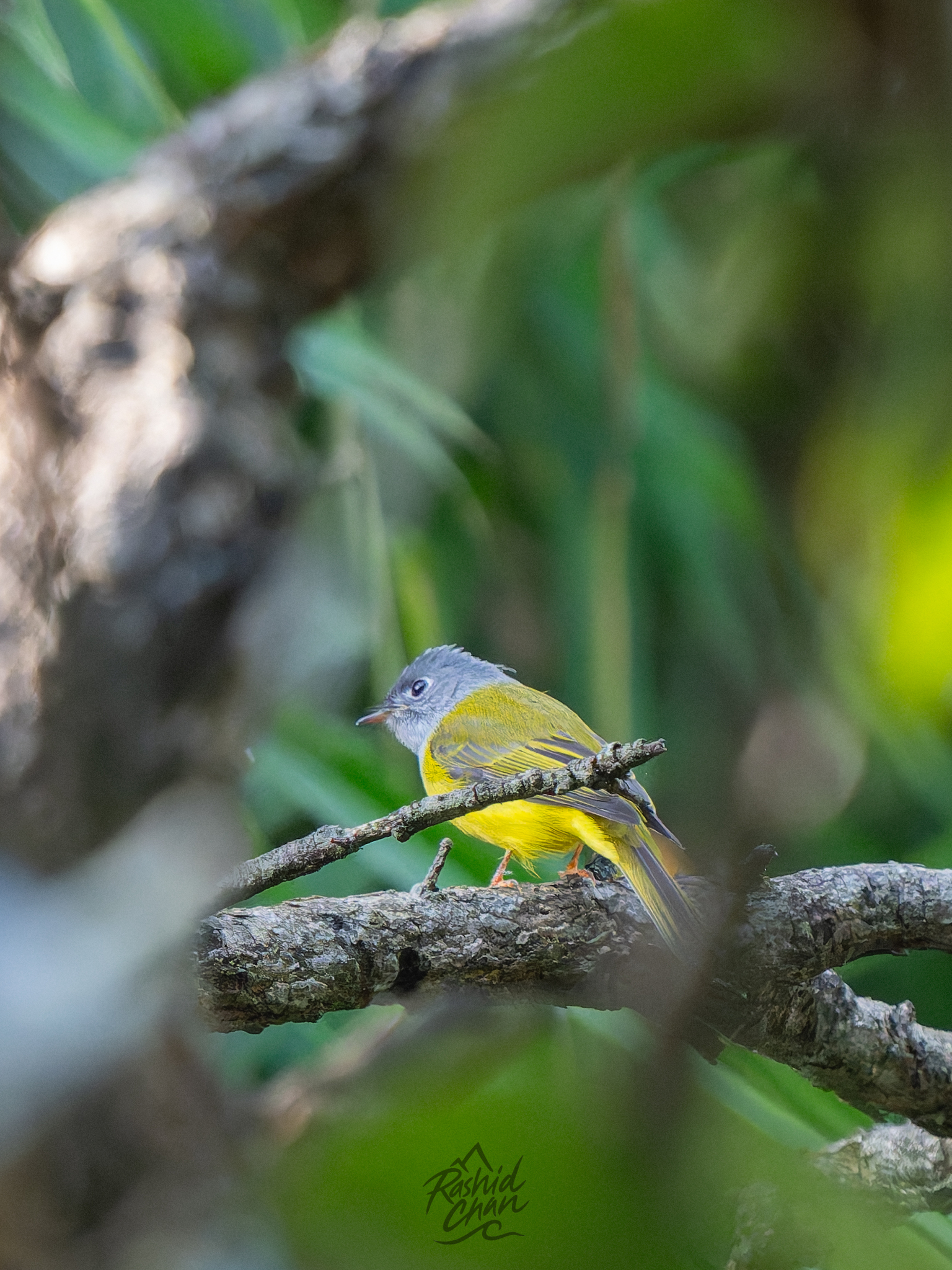
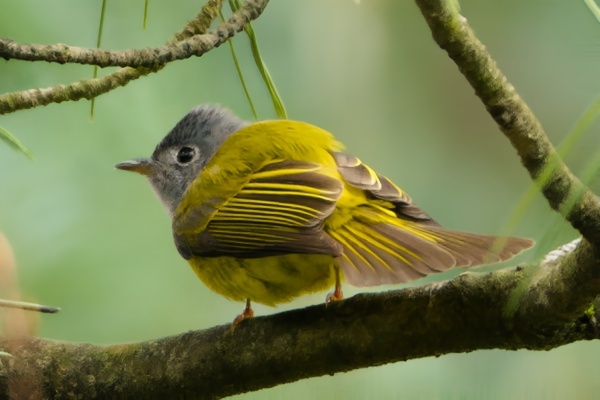
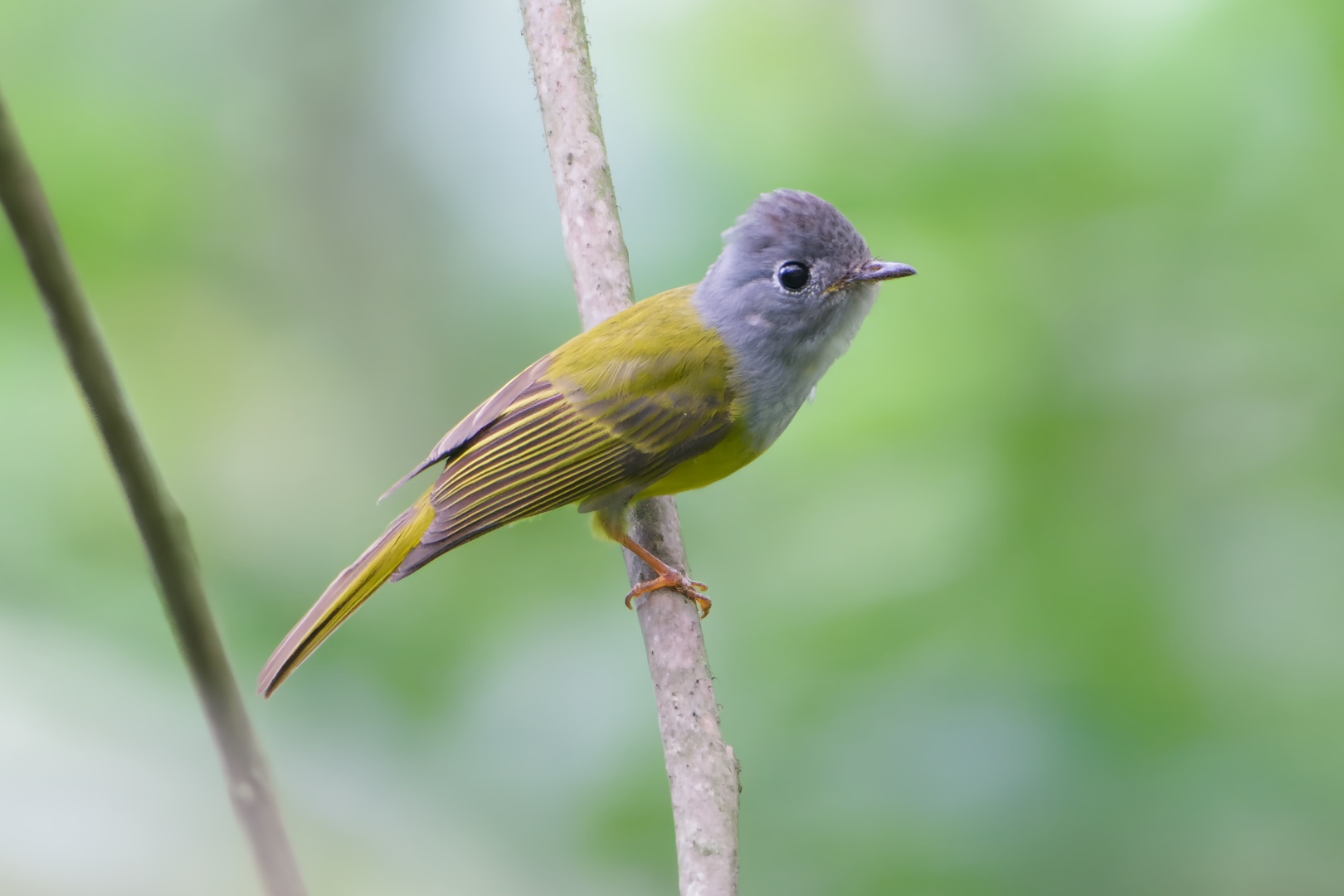
Grey-headed Canary-flycatcher
Culicicapa ceylonensis
方尾鹟
Introduction
Small passerine bird in family Stenostiridae. Inhabits tropical Asian forests from primary oak forest to secondary growth and gardens. Found in canopy and understory layers. Forages for insects using flycatcher strategy, making sallies from low perches to catch aerial prey. Highly social, joins mixed-species foraging flocks and occurs in pairs. Maintains contact through calls. Perches with upright posture.
Description
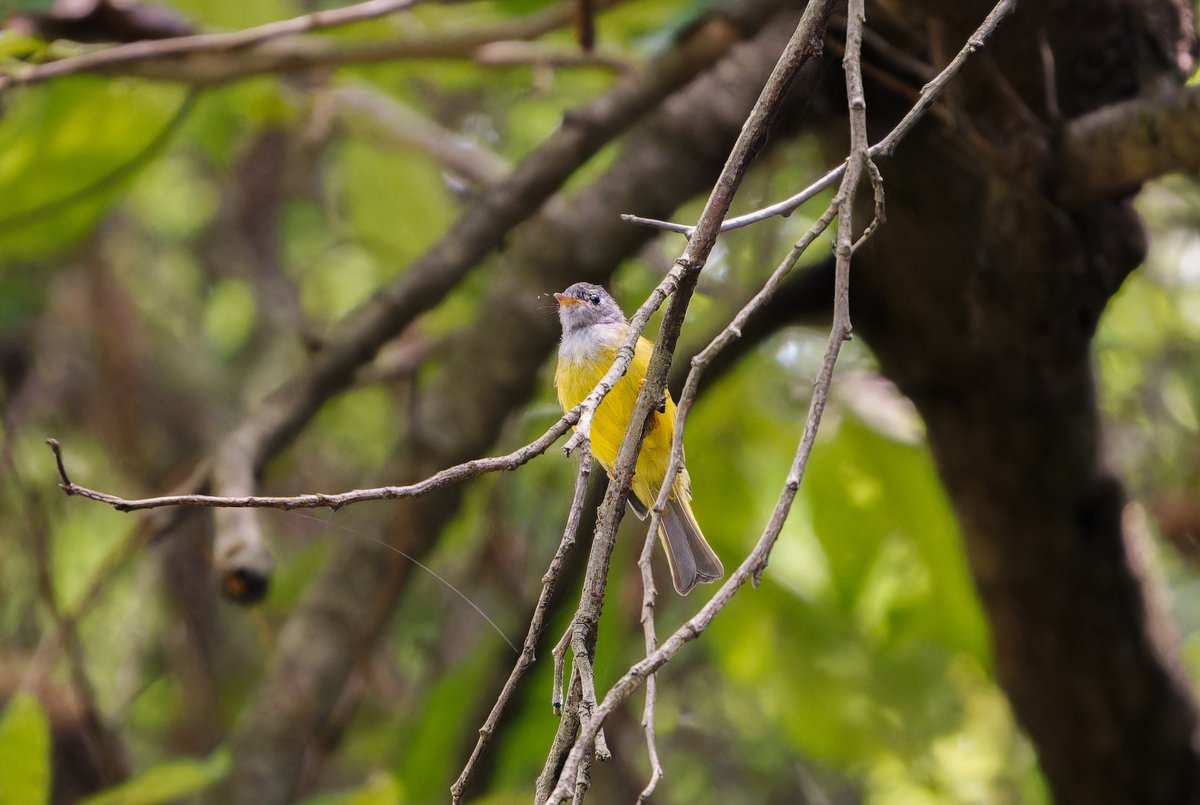
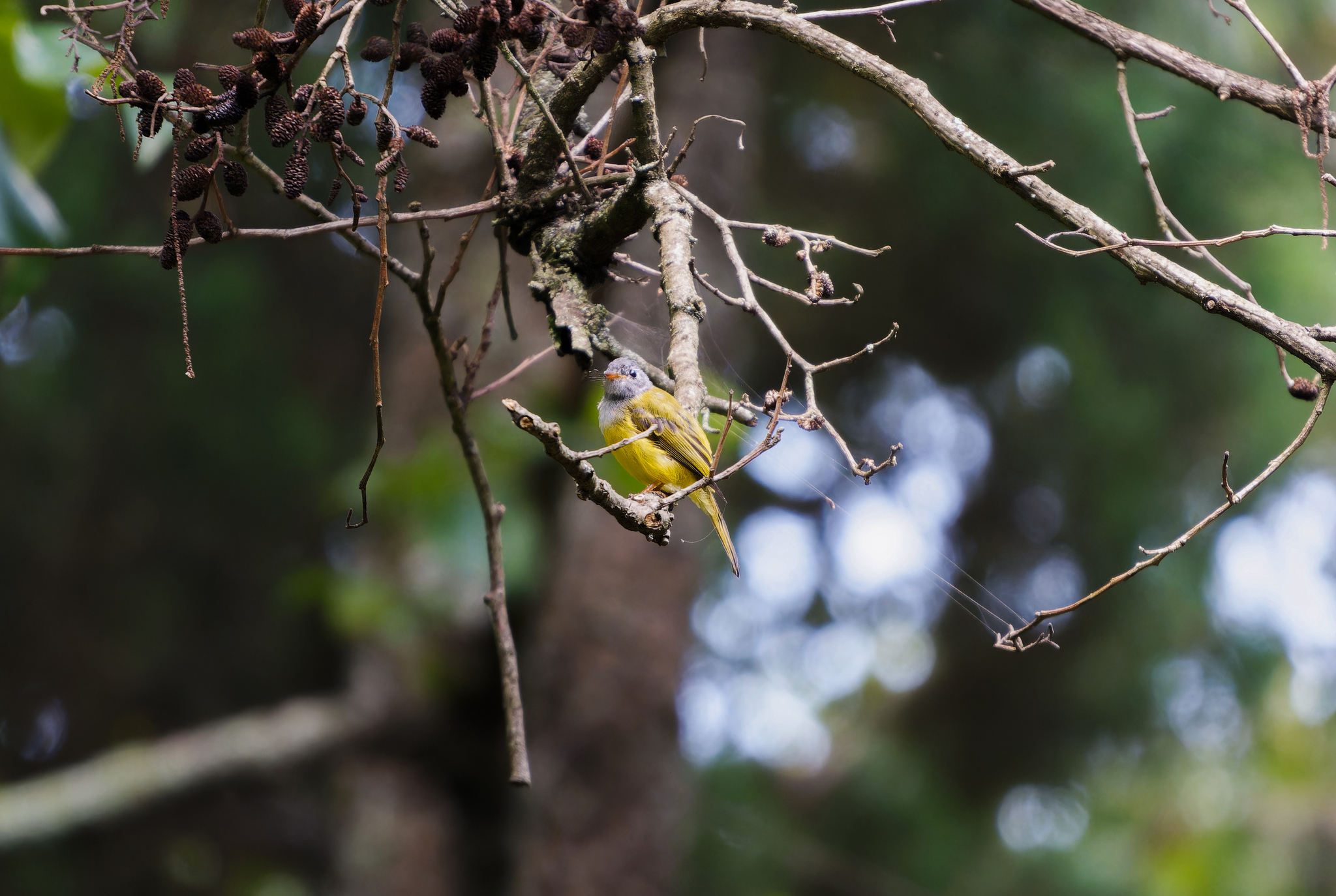
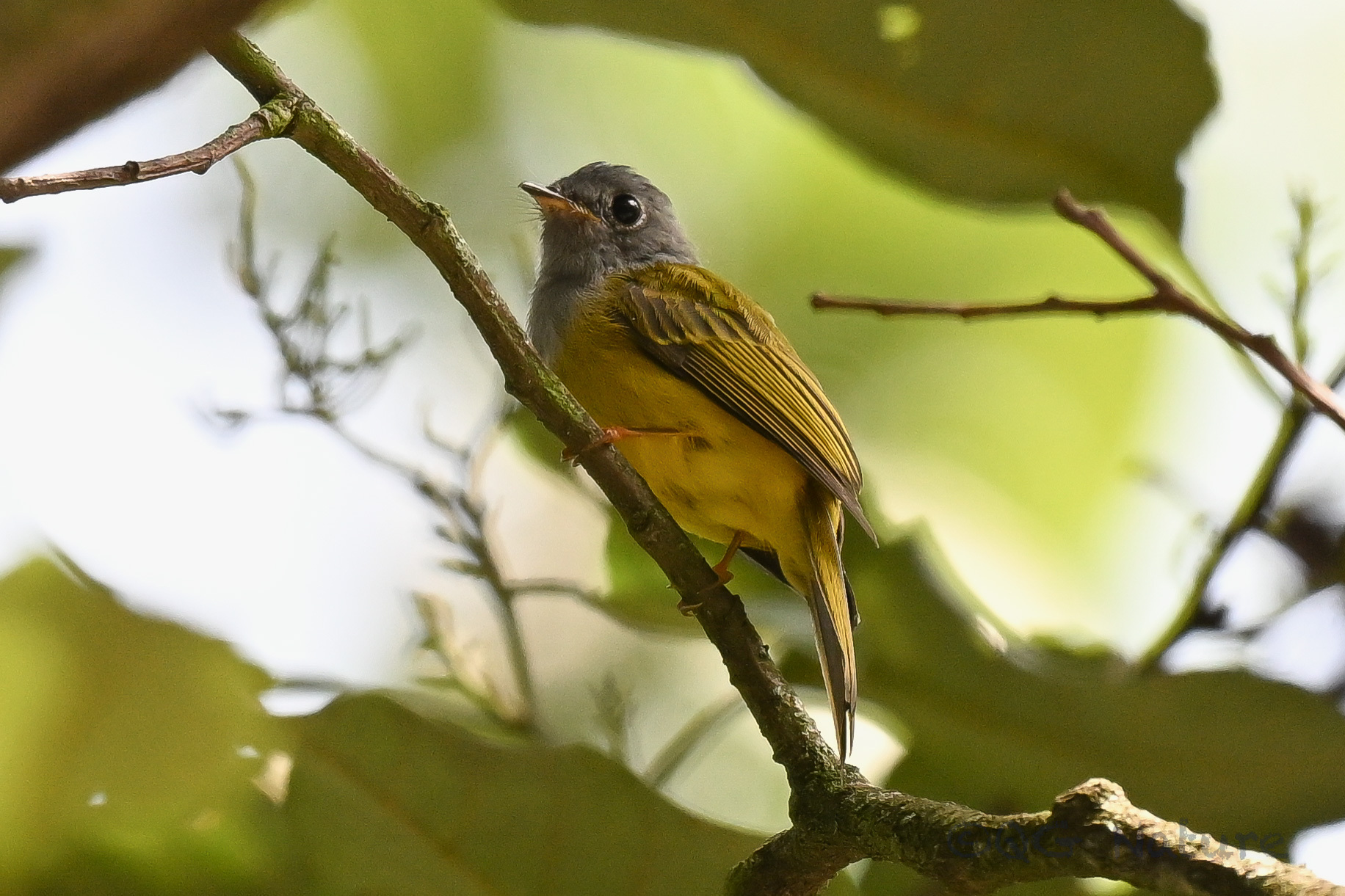
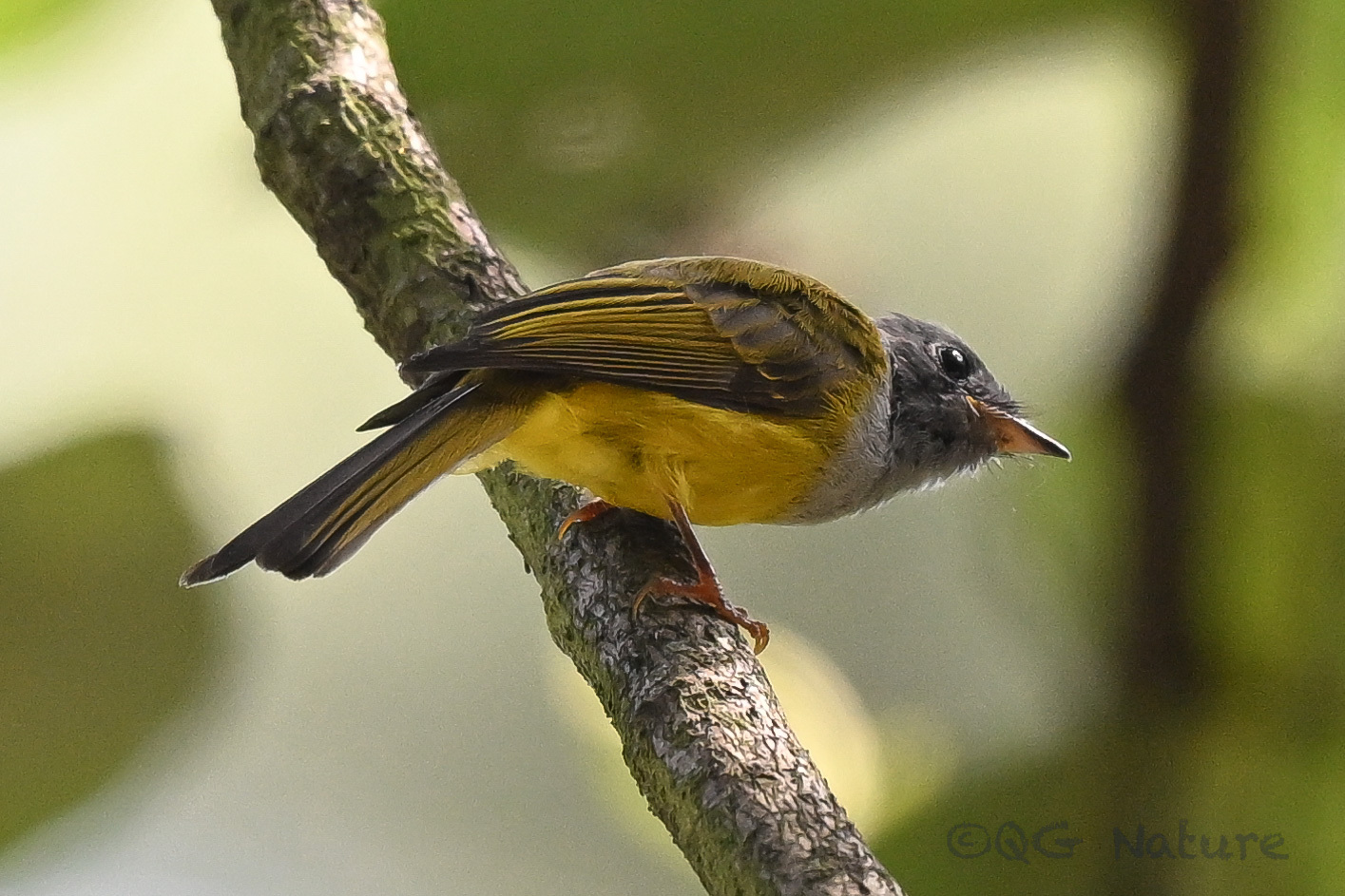
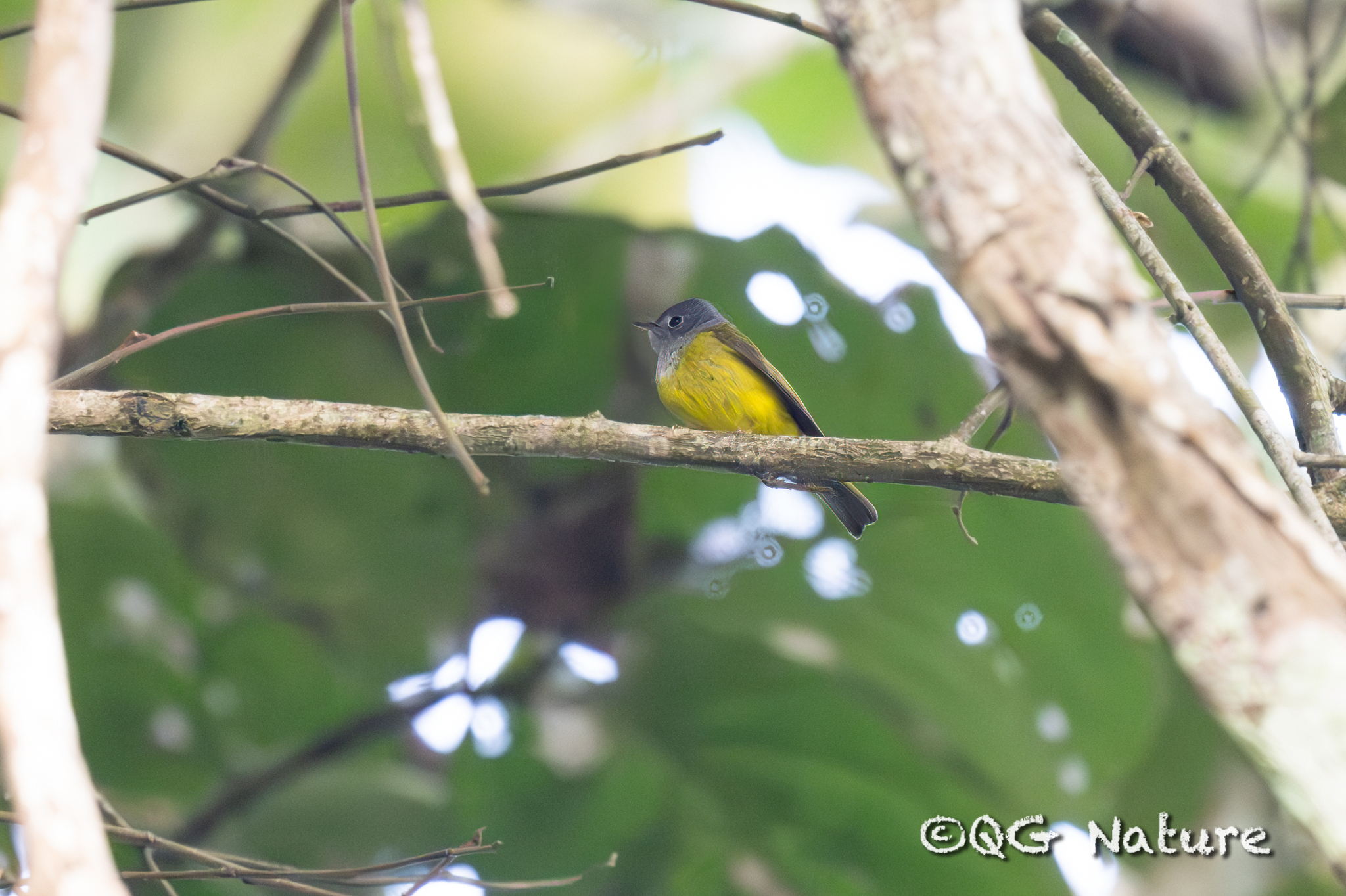
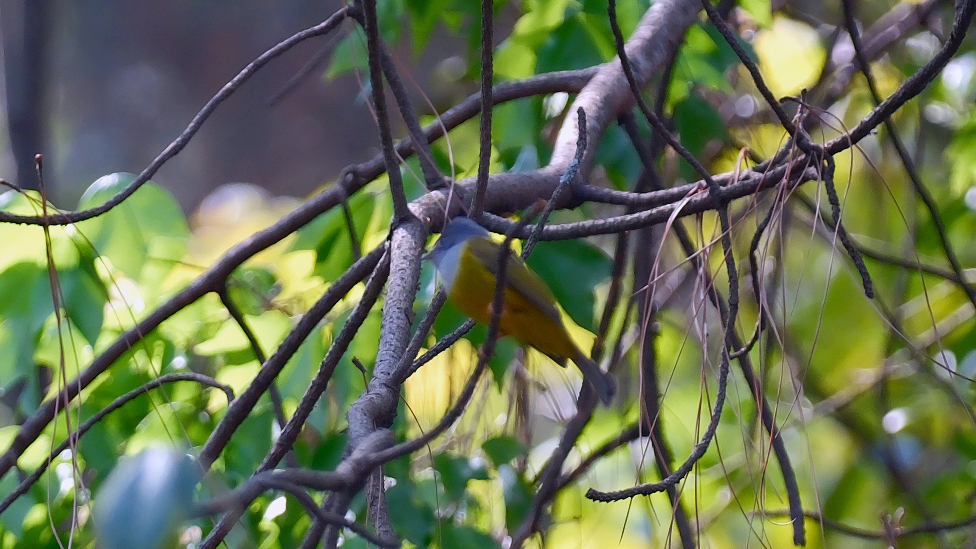
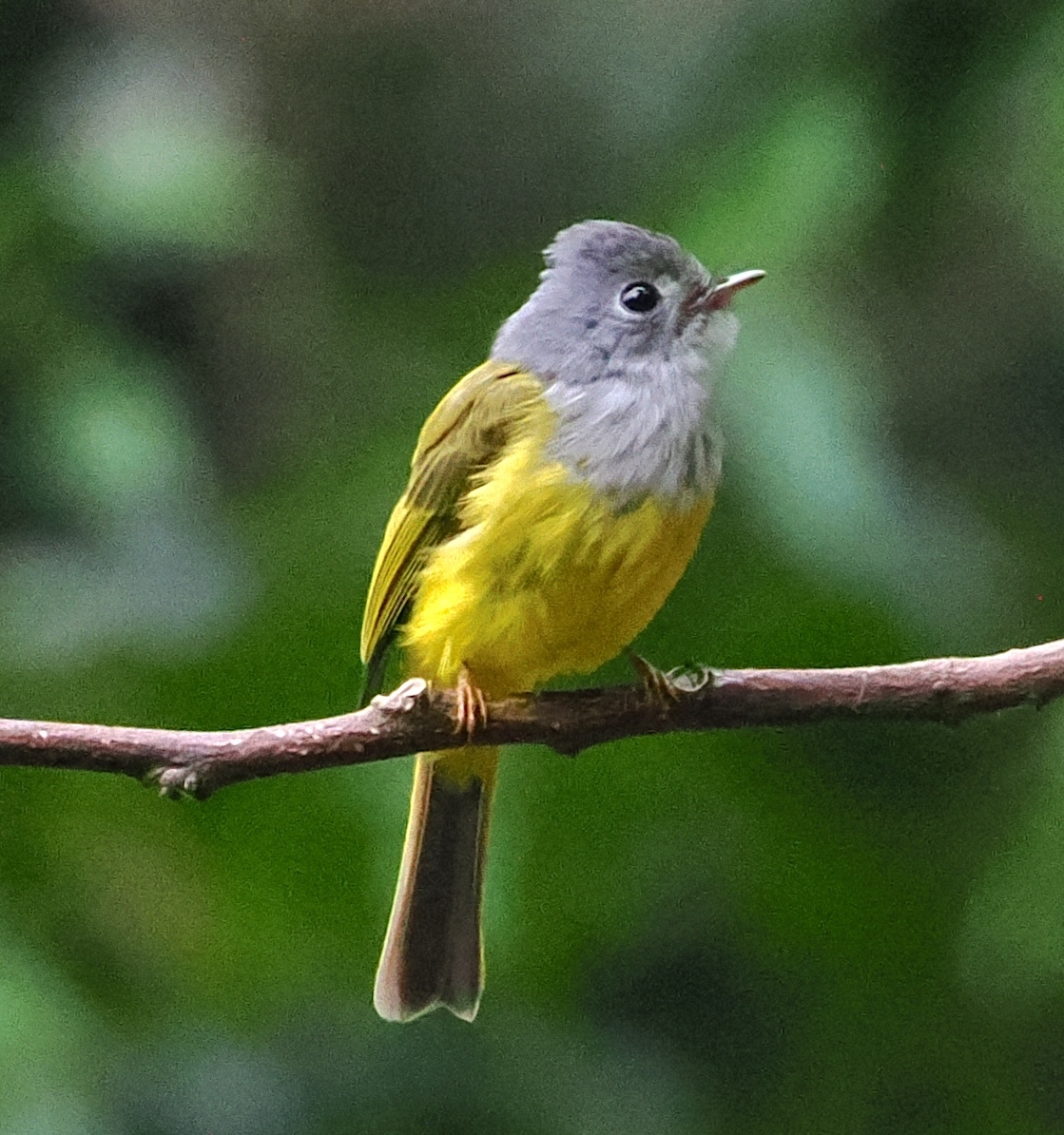
This compact bird measures 12–13 cm (4.7–5.1 in) in length and possesses a distinctive square-shaped grey head that gives it a somewhat flattened appearance. The underparts are a vivid canary yellow, contrasting with yellowish-green upperparts and a grey hood that extends over the head and face. The sexes are identical in plumage, both displaying this striking color combination. The most notable feature is their extremely flat bill, which when viewed from above appears as an almost perfect equilateral triangle and is surrounded by prominent rictal bristles. They maintain a very upright posture when perched and forage actively with quick, restless movements characteristic of flycatchers. Populations across their extensive range show variation in color saturation and exact dimensions, leading to the recognition of several subspecies.
Identification
The combination of the square grey head, yellow underparts, and yellowish-green upperparts makes this species relatively distinctive within its range. The flat, triangular bill and upright posture are good field marks. It can be distinguished from similar-sized flycatchers by its brighter yellow underparts and the unique head shape. When foraging, its habit of making flycatcher-like sallies from low perches and its loud calling are helpful identification cues. The grey hood contrasts more sharply with the yellow belly than in many similar species.
Distribution & Habitat
This species breeds across a wide swath of southern Asia, from Pakistan and central India through Bangladesh and Sri Lanka east to Indonesia and southern China. It occupies upland to montane oak and broadleaved forests at elevations up to and above 2,000 m ASL. While many populations are resident year-round, Himalayan populations are partial migrants that winter in peninsular India, sometimes appearing in surprisingly arid habitats. During the non-breeding season (September to March in India), they descend to plains and lower elevations where they favor well-wooded areas including mature secondary forests, abandoned plantations, and overgrown gardens near water and streams.
Behavior & Ecology
Strictly insectivorous, this bird employs classic flycatcher foraging behavior, making aerial sallies from low perches under the canopy to catch flying insects. Pairs often forage together and frequently join mixed-species foraging flocks, contributing to the noisy activity of forest bird communities. The breeding season varies by region, occurring from April to June in India and later in western China. The female builds a unique unlined cup nest bound with cobwebs and often covered with moss, placing it against mossy tree trunks, on rocks, or ledges in mud banks. The typical clutch contains three or four eggs. In northern Borneo, Hodgson's hawk-cuckoo has been recorded as a brood parasite of this species.
Conservation
The species is currently considered common and widespread throughout its extensive range. It occurs in multiple protected areas and shows adaptability to degraded habitats including secondary forests and plantations. While specific population numbers are not available, its large range and occurrence in varied habitat types suggest a stable global population. However, ongoing habitat loss in some parts of its range, particularly lowland forest conversion, may require monitoring in affected areas.
Culture
No specific cultural significance, folklore, or mythological associations were documented in available sources for this species.
Source: Wikipedia · CC BY-SA 3.0
Taxonomy
- Order
- Passeriformes
- Family
- Stenostiridae
- Genus
- Culicicapa
- eBird Code
- gyhcaf1
Vocalizations
Subspecies (5)
-
Culicicapa ceylonensis antioxantha
Thai-Malay Peninsula, Sumatra, Java, Bali, and Borneo
-
Culicicapa ceylonensis calochrysea
breeds northern Pakistan and northern India to southern China, Myanmar, and Indochina; winters to central India
-
Culicicapa ceylonensis ceylonensis
southern India and Sri Lanka
-
Culicicapa ceylonensis connectens
Sumba (western Lesser Sundas)
-
Culicicapa ceylonensis sejuncta
western Lesser Sundas (Lombok and Flores)
Data Sources
Species description from Wikipedia, licensed under CC BY-SA 3.0.
Bird images and sounds sourced from GBIF, contributed by citizen scientists worldwide under Creative Commons licenses.
Taxonomy data from AviList 2025.