Tibetan Eared Pheasant
Crossoptilon harmani
藏马鸡
Introduction
Inhabits high-altitude forests of southeast Tibet and adjacent northern India, typically at elevations of 3,000 to 5,000 meters, descending to approximately 2,280 meters during winter. Occurs in boreal and temperate forests with bushy clearings, rhododendron thickets, and dense scrub-filled valleys. Breeding season occurs from May through July, with females laying eggs during this period. Forms monogamous pairs. Shares characteristics with the white eared pheasant, including short ear tufts and droopy tail structure. The two species hybridize in the Salworth Valley. Classified as threatened by habitat destruction and hunting in parts of its range.
Description
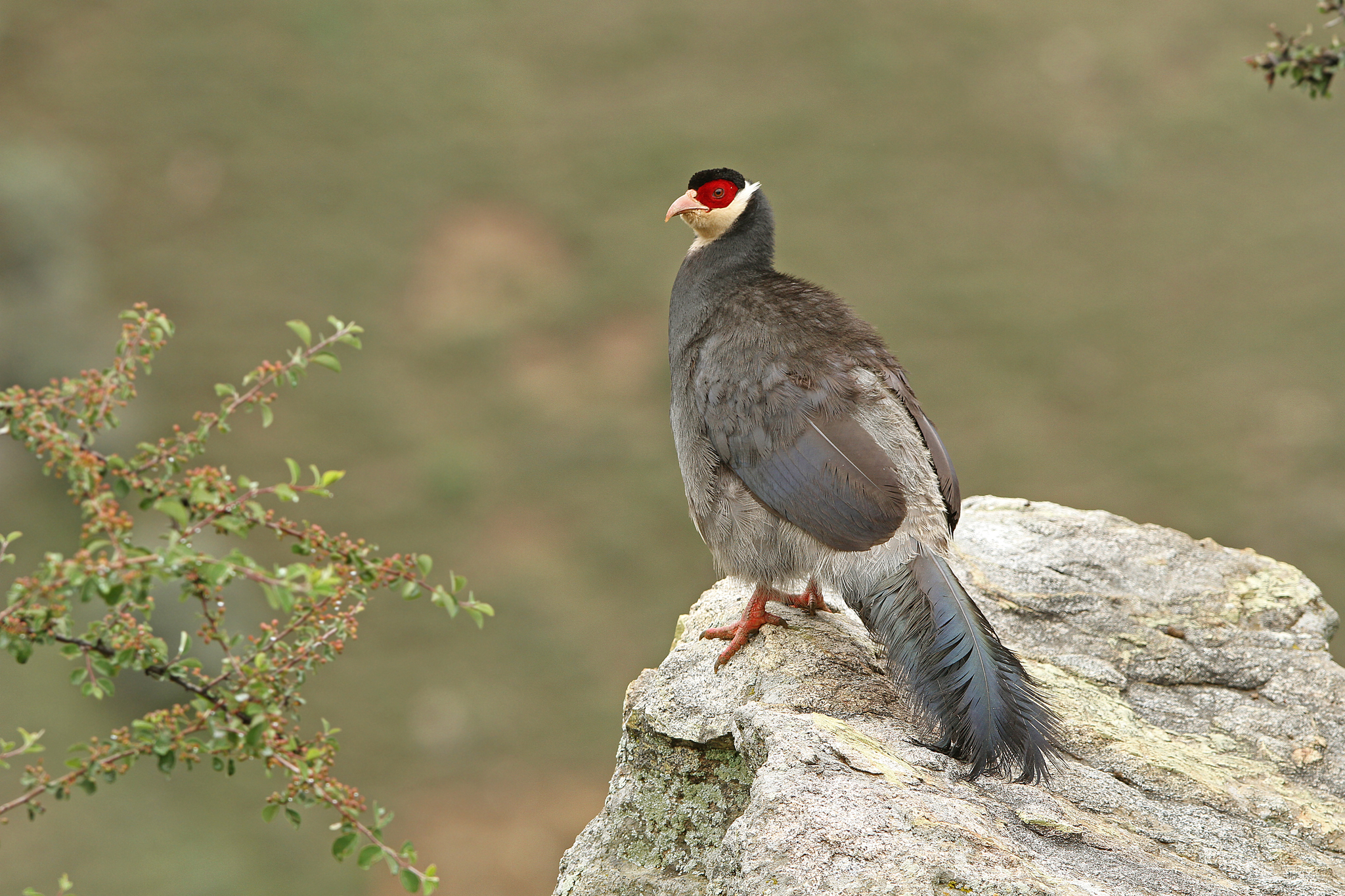
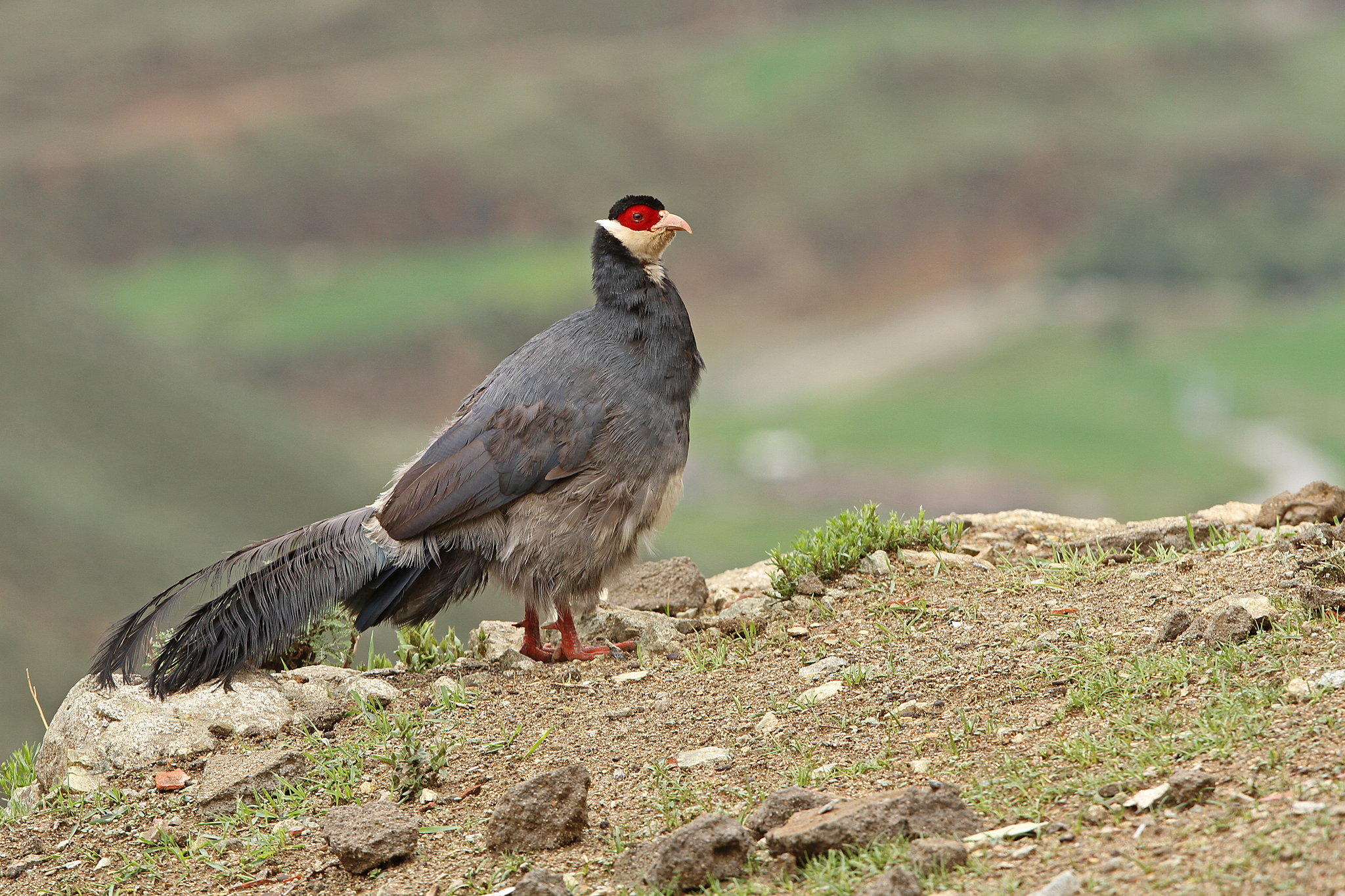
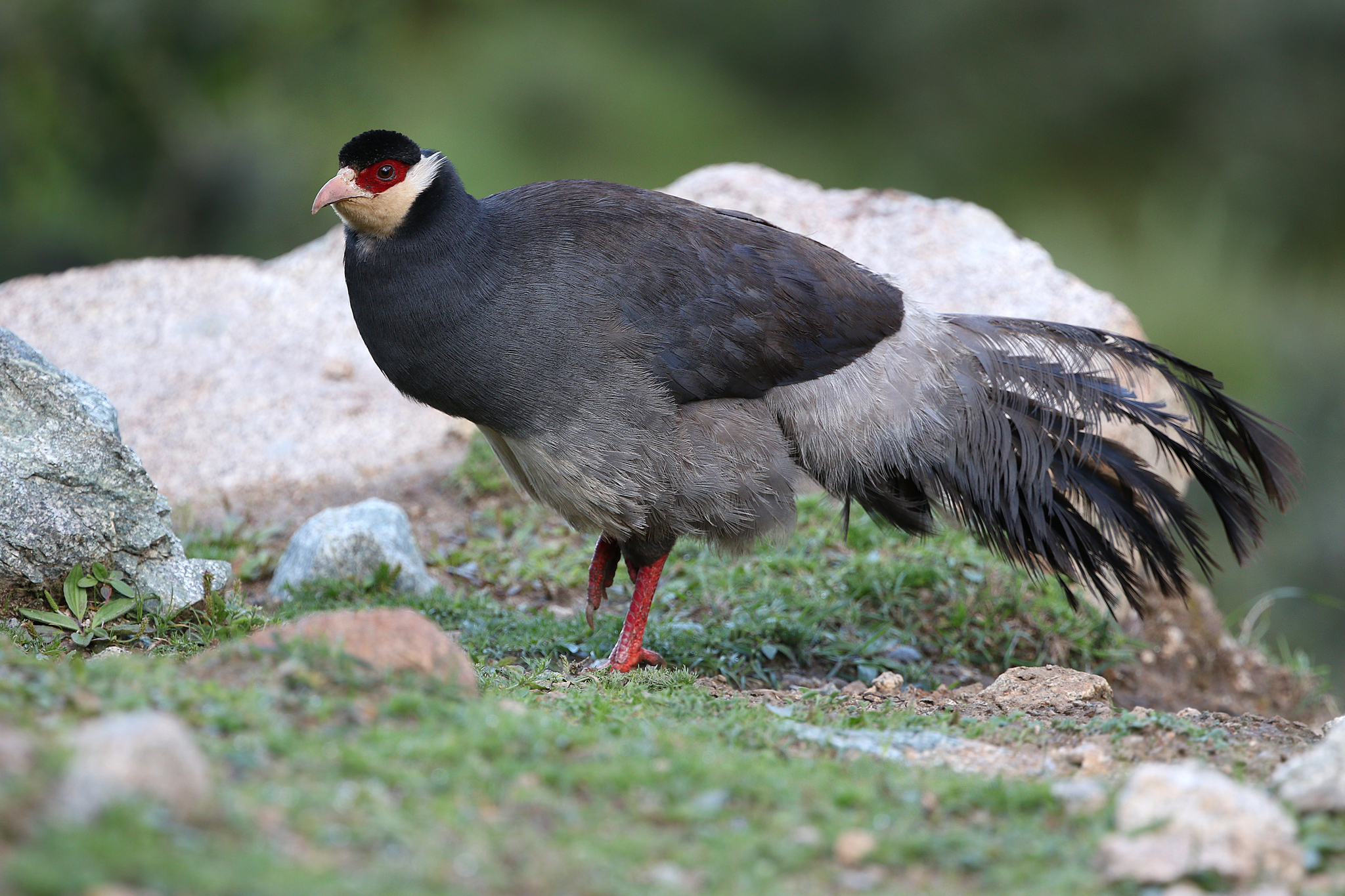
This pheasant reaches 75-85 centimeters in length, with females being slightly smaller than males though the sexes appear similar. The reddish-brown beak contrasts with yellowish-orange irises and bright red facial skin and legs. The head displays a distinctive black crown of dense, short feathers, with short non-projecting ear tufts on either side. The rest of the head, nape, and a thin collar are white. The overall plumage is bluish-grey, with darker shades on the mantle, neck, and breast, while the lower back, rump, upper tail coverts, and belly are paler whitish-grey. The wings are blackish-brown and the tail is bluish-black.
Identification
This species is most easily distinguished from the similar white eared pheasant by its smaller size and the bluish-grey plumage rather than white. Both species share the characteristic short ear tufts and droopy tail structure. The white head and collar combined with the bluish-grey body and red facial skin are key field marks. When observed in the Salworth Valley, hybridization with white eared pheasants can complicate identification.
Distribution & Habitat
This species' range is restricted to the high Himalayas, including southeast Tibet, northern India, and northern Bhutan. It occupies dense scrubby areas in river valleys, grassy hillsides, and the edges of both coniferous and deciduous woodlands. While occasionally found at elevations around 2,400 meters, it is most common between 3,000 and 5,000 meters in remote, undisturbed habitat.
Behavior & Ecology
These pheasants typically form small groups of up to 10 individuals and feed on the ground, foraging through plant debris and grasses near woodland edges and among rhododendron and juniper scrub. They are ground foragers, scratching through leaf litter and vegetation. Where hunted, they are elusive and will retreat into undergrowth or fly downhill when disturbed, but in undisturbed areas they can be quite bold. Breeding occurs between May and July; one documented nest was constructed under a fallen tree trunk using bark, pulp, and a mossy lining. The female alone incubates the eggs, though both parents have been observed feeding the chicks.
Conservation
The IUCN currently assesses this species as Least Concern, with the population believed to be stable. While local threats from hunting and overgrazing exist in some areas, the vast majority of this species' range remains remote and undisturbed. A recent climate modeling study by Li et al. (2023) found that in all scenarios tested, the area of suitable habitat for this species did not contract, suggesting resilience to climate change impacts.
Culture
No specific cultural information available.
Source: Wikipedia · CC BY-SA 3.0
Taxonomy
- Order
- Galliformes
- Family
- Phasianidae
- Genus
- Crossoptilon
- eBird Code
- whieap2
Distribution
rhododendron forest of southern Tibet and adjacent northeastern India
Data Sources
CBR Notes: IUCN红色名录等级由NT降为LC
Species description from Wikipedia, licensed under CC BY-SA 3.0.
Bird images and sounds sourced from GBIF, contributed by citizen scientists worldwide under Creative Commons licenses.
Taxonomy data from AviList 2025.