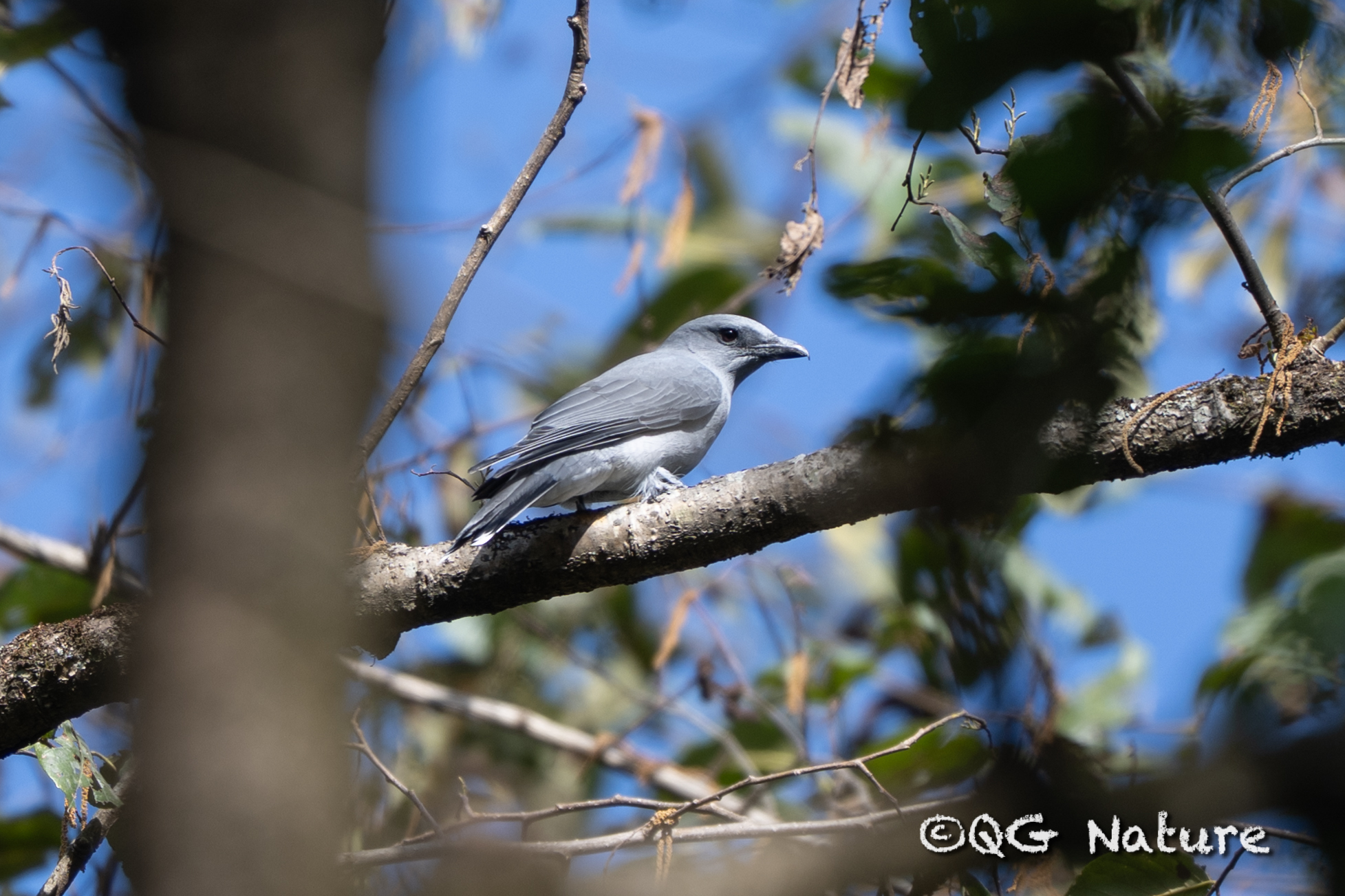
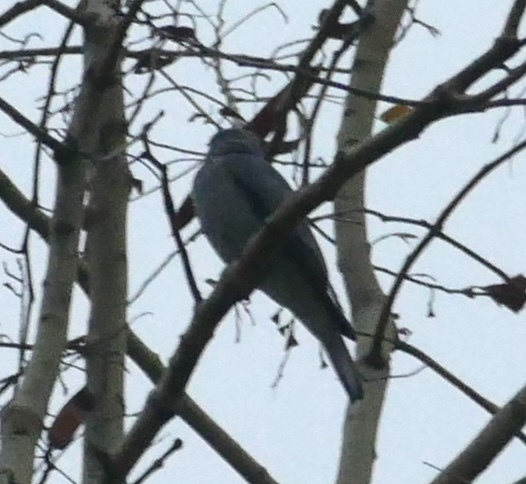
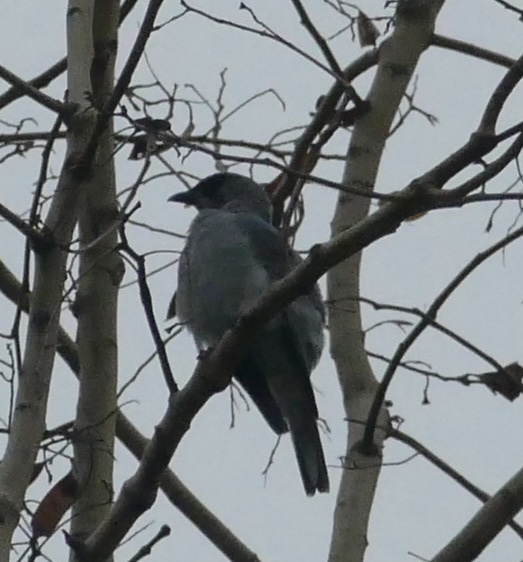
Oriental Cuckooshrike
Coracina javensis
大鹃鵙
Introduction
The Oriental cuckooshrike is a medium-sized bird found across South and Southeast Asia. It inhabits subtropical and tropical moist lowland forests, where it forages for insects in the canopy. Six subspecies are recognized, differing in distribution and plumage tones. Formerly known as the Javan cuckooshrike when considered restricted to Java and Bali, taxonomic revisions expanded its recognized range. The species frequently joins mixed-species feeding flocks and catches insects in flight by making sallies from an upright perch. It occurs in primary forest and can persist in secondary growth where sufficient canopy cover remains.
Description
The Oriental cuckooshrike is a slender, medium-sized bird with a straight, hook-tipped bill typical of the cuckooshrike family. It measures approximately 24-26 centimeters in length. The plumage varies among subspecies but generally shows dark grey to blackish upperparts with a lighter grey or white belly. The tail is relatively long and often shows white outer feathers in flight. The eyes are typically dark, and the legs and feet are dark grey. Sexes may show subtle differences in plumage tone, with females sometimes appearing slightly browner overall.
Identification
Birdwatchers can identify this species by its combination of dark plumage, upright posture, and distinctive hooked bill. It differs from the Large cuckooshrike by its generally smaller size and different tail pattern. The white outer tail feathers are visible during flight and help distinguish it from similar dark-plumaged birds. Its habit of hawk-like sallies from exposed perches, rather than foliage-gleaning, aids identification. The Himalayan subspecies shows slightly paler underparts compared to island populations.
Distribution & Habitat
This species ranges widely across South and Southeast Asia. The nominate subspecies occurs on Java and Bali in Indonesia. The Himalayan subspecies extends from northern Pakistan through northeastern India and Bangladesh. Additional populations occupy the Andaman Islands, southern Myanmar through Thailand and Indochina to southern China's Yunnan Province, Hainan Island, and southeastern China including Taiwan, northern Laos and northern Vietnam. It inhabits subtropical and tropical moist lowland forests throughout this range.
Conservation
The Oriental cuckooshrike remains relatively widespread across its extensive range, though detailed population assessments are lacking. Habitat loss through deforestation poses the primary threat to this forest-dependent species, particularly as lowland forests continue to be converted for agriculture and development across Southeast Asia. Island populations on Java and Bali may face greater pressure given these islands' high human population density and limited remaining forest cover.
Source: Wikipedia · CC BY-SA 3.0
Taxonomy
- Order
- Passeriformes
- Family
- Campephagidae
- Genus
- Coracina
Vocalizations
Subspecies (6)
-
Coracina javensis andamana
Andaman Islands
-
Coracina javensis javensis
Java and Bali
-
Coracina javensis larvivora
Hainan (southern China)
-
Coracina javensis nipalensis
lower Himalayas of India to Nepal, Sikkim, and western Assam
-
Coracina javensis rexpineti
southeastern China (Fujian, Guangdong, and Yunnan) to northern Laos and Taiwan
-
Coracina javensis siamensis
southwestern China (southeastern Yunnan) to Myanmar, peninsular Thailand, and southern Indochina
Data Sources
CBR Notes: 学名由Coracina macei改为Coracina javensis ,英文名由Large Cuckooshrike改为Oriental Cuckooshrike
Species description from Wikipedia, licensed under CC BY-SA 3.0.
Bird images and sounds sourced from GBIF, contributed by citizen scientists worldwide under Creative Commons licenses.
Taxonomy data from AviList 2025.