
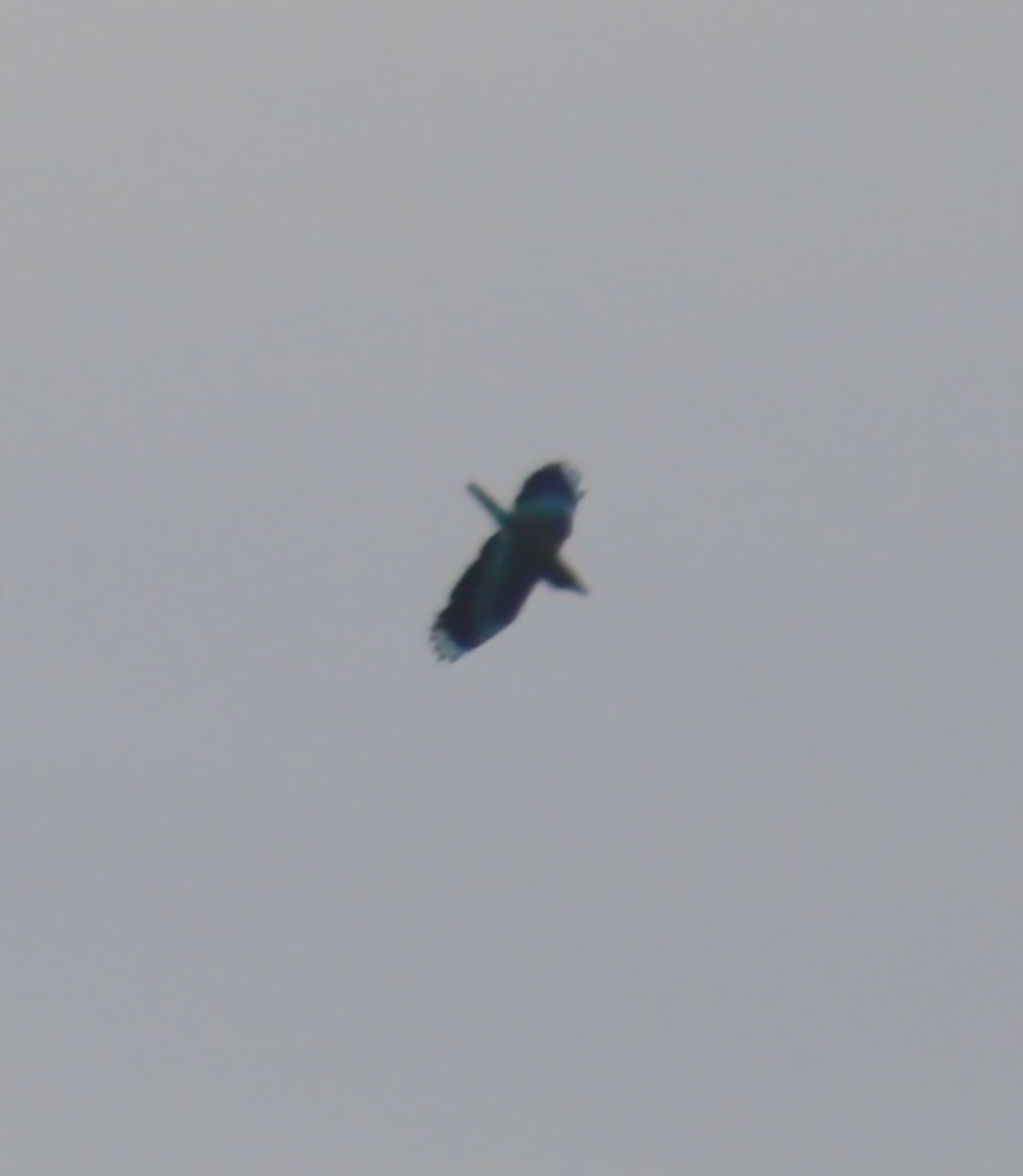
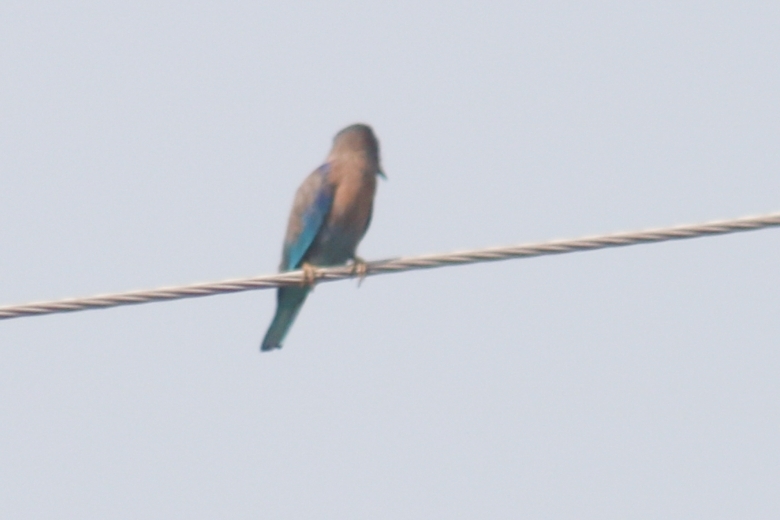
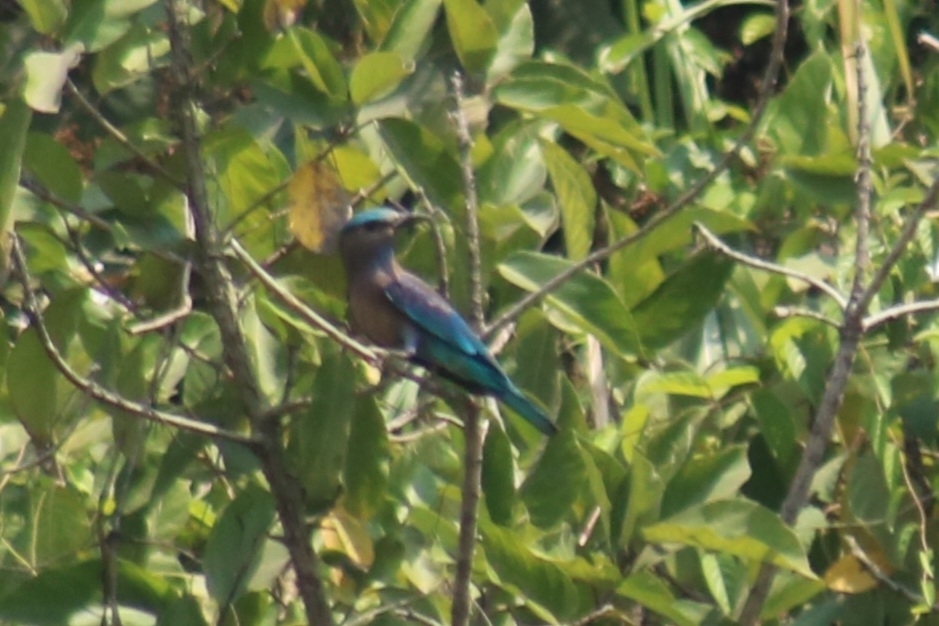
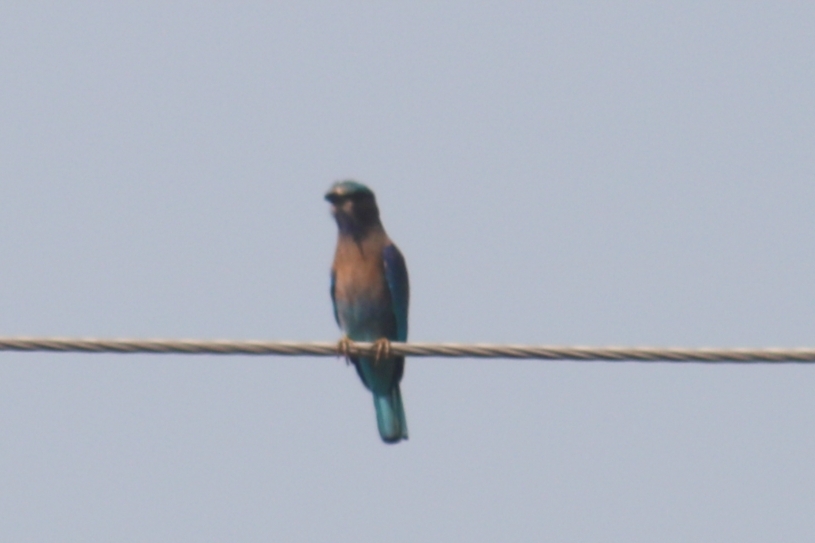
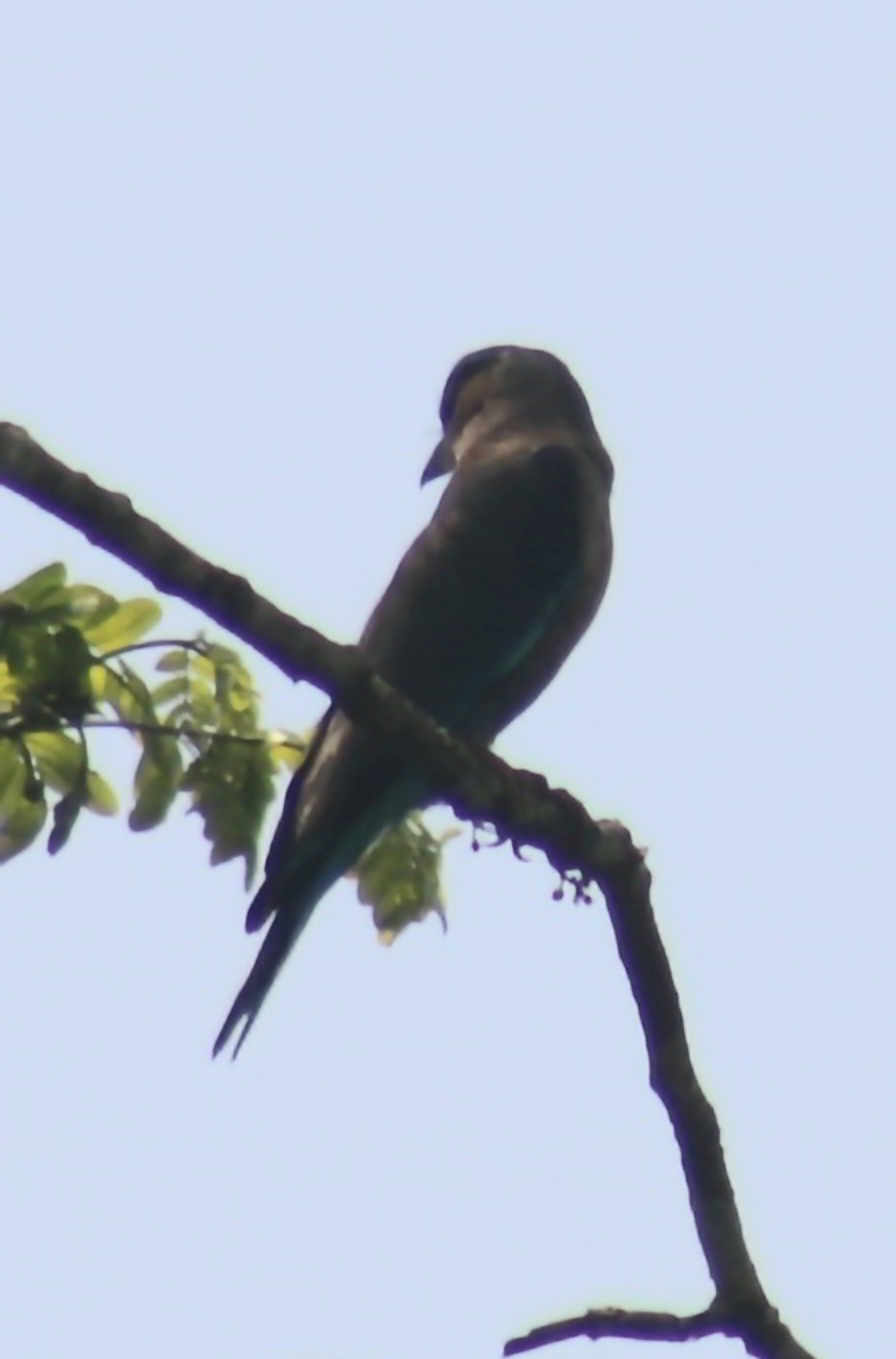


Indochinese Roller
Coracias affinis
棕胸佛法僧
Introduction
A member of the roller family, this medium-sized bird occurs in South and Southeast Asia. Its range extends from the Himalayan foothills through northeastern India into Myanmar and Thailand. It inhabits open woodlands, forest edges, cultivated areas, and clearings with scattered trees. The species typically perches on exposed branches or telegraph wires and launches into characteristic roller flight displays during the breeding season. It is fairly common throughout much of its range and adapts to human-modified landscapes.
Description
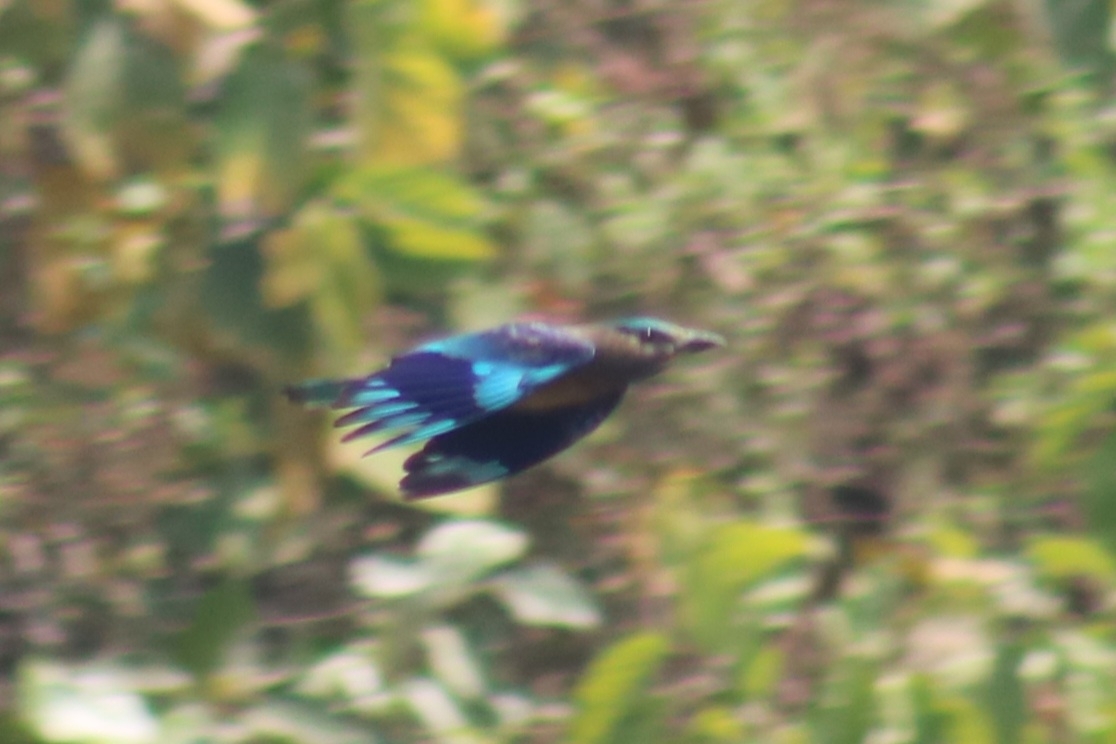
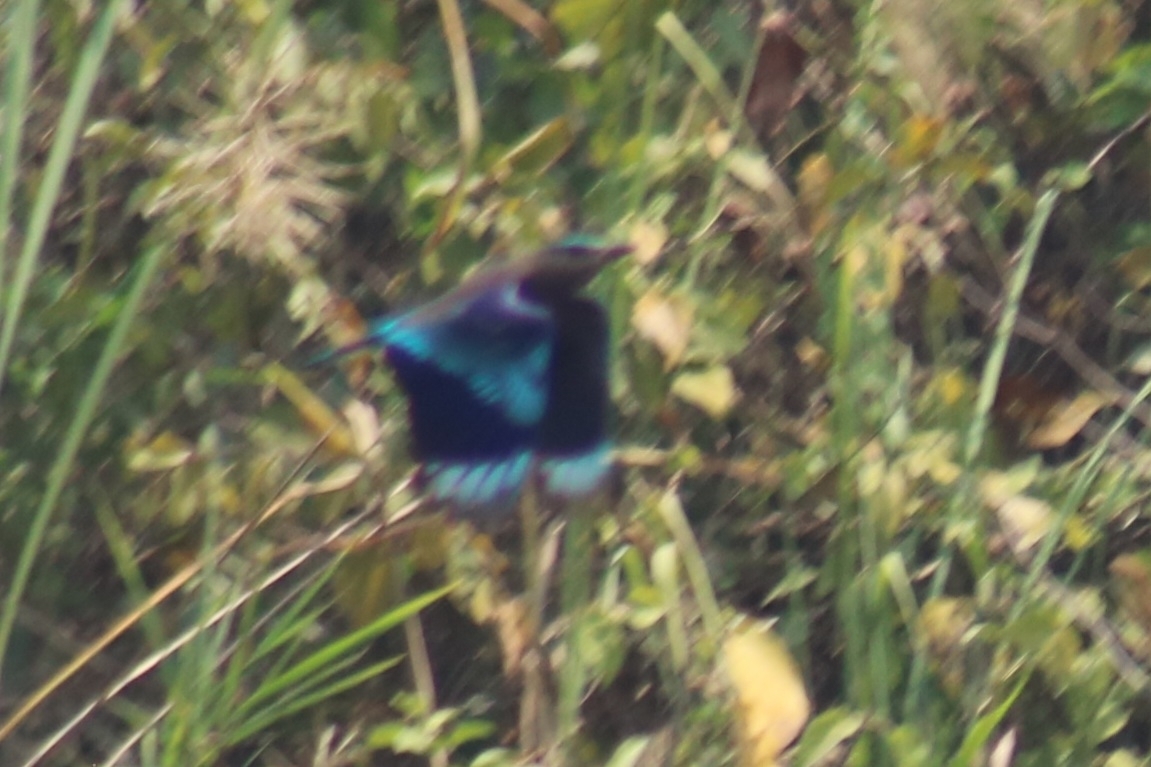
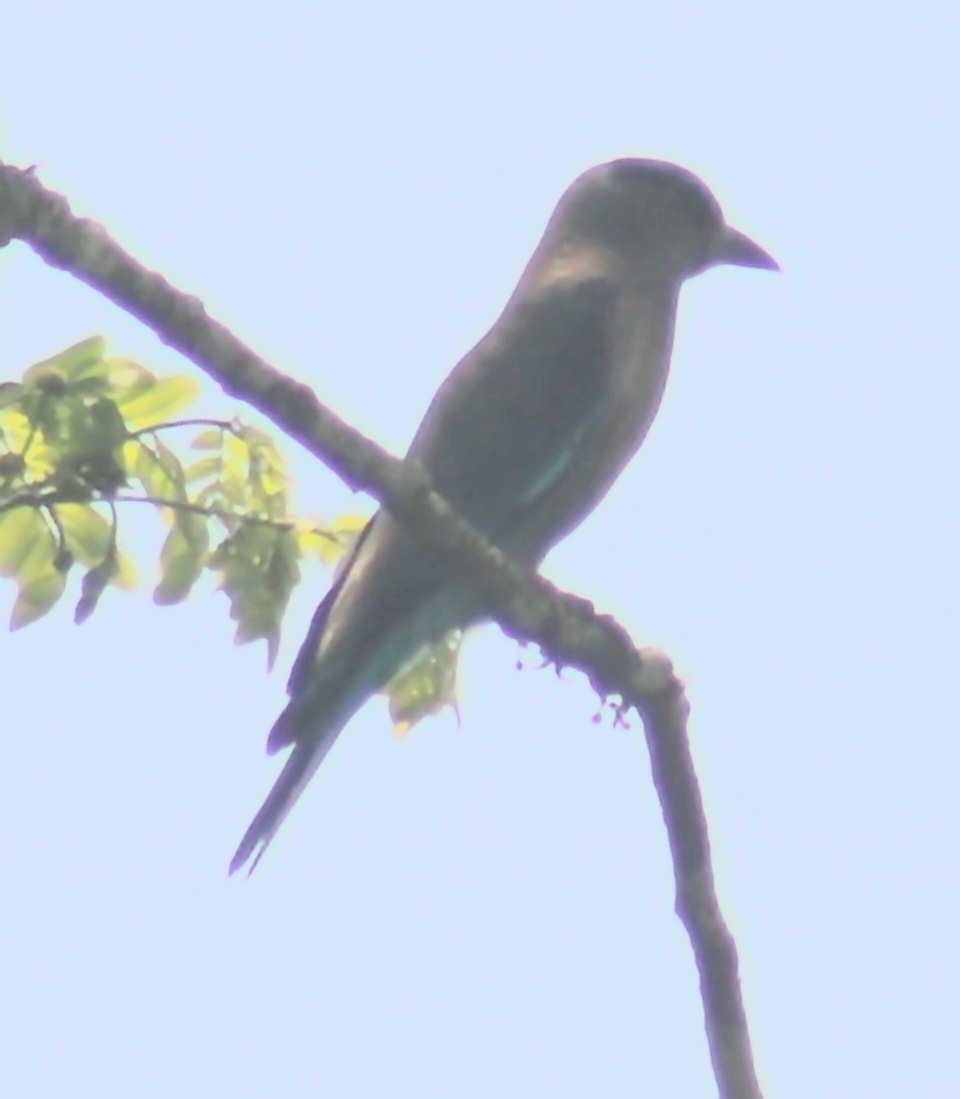
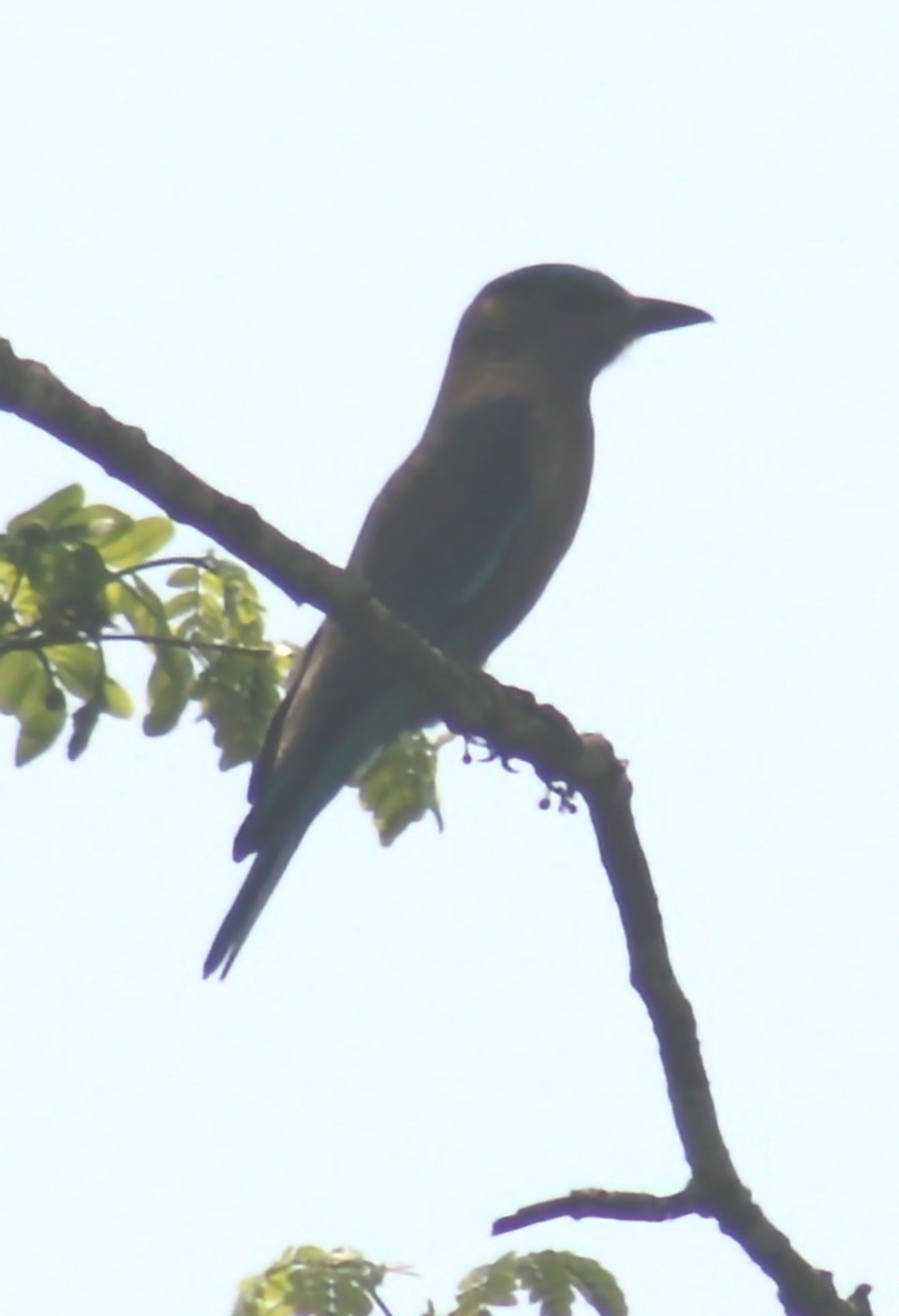
This stocky roller displays a striking combination of blue, purplish, and green tones throughout its plumage. The crown and vent are vivid blue, while the primaries display deep purplish-blue marked by a distinctive band of pale blue. The tail is sky blue with a terminal band of Prussian blue, though the central tail feathers appear dull green. The neck and throat show a purplish lilac hue accented by fine white shaft streaks. The face and breast are purplish brown and lack streaking, while the bare skin surrounding the eye is ochre-colored. The underwing coverts are a deep, rich blue. The feet show the characteristic roller adaptation of three forward toes united at the base. The bill is long and compressed with a curved upper edge and hooked tip, accompanied by a long exposed nostril and prominent rictal bristles at the base.
Distribution & Habitat
This species occupies a broad range across South and Southeast Asia, extending from Nepal and eastern India through Myanmar and into Southeast Asia including Thailand and surrounding countries. It inhabits open woodland, forest edges, and cultivated areas with scattered trees. The species shows some seasonal movements in parts of its range, though these patterns are not fully documented. It typically occurs at low to moderate elevations, though its exact elevational limits vary across different portions of its range.
Conservation
The species is currently listed as Least Concern on the IUCN Red List, indicating that it does not face immediate significant threats to its survival. Its wide distribution and presumably large population size contribute to this assessment. However, detailed population estimates and long-term trend data are limited, and local population declines may occur in areas experiencing significant habitat loss or degradation.
Source: Wikipedia · CC BY-SA 3.0
Taxonomy
- Order
- Coraciiformes
- Family
- Coraciidae
- Genus
- Coracias
- eBird Code
- indrol3
Distribution
northeastern India to south-central China, northern Malay Peninsula, and Indochina
Vocalizations
Data Sources
Species description from Wikipedia, licensed under CC BY-SA 3.0.
Bird images and sounds sourced from GBIF, contributed by citizen scientists worldwide under Creative Commons licenses.
Taxonomy data from AviList 2025.