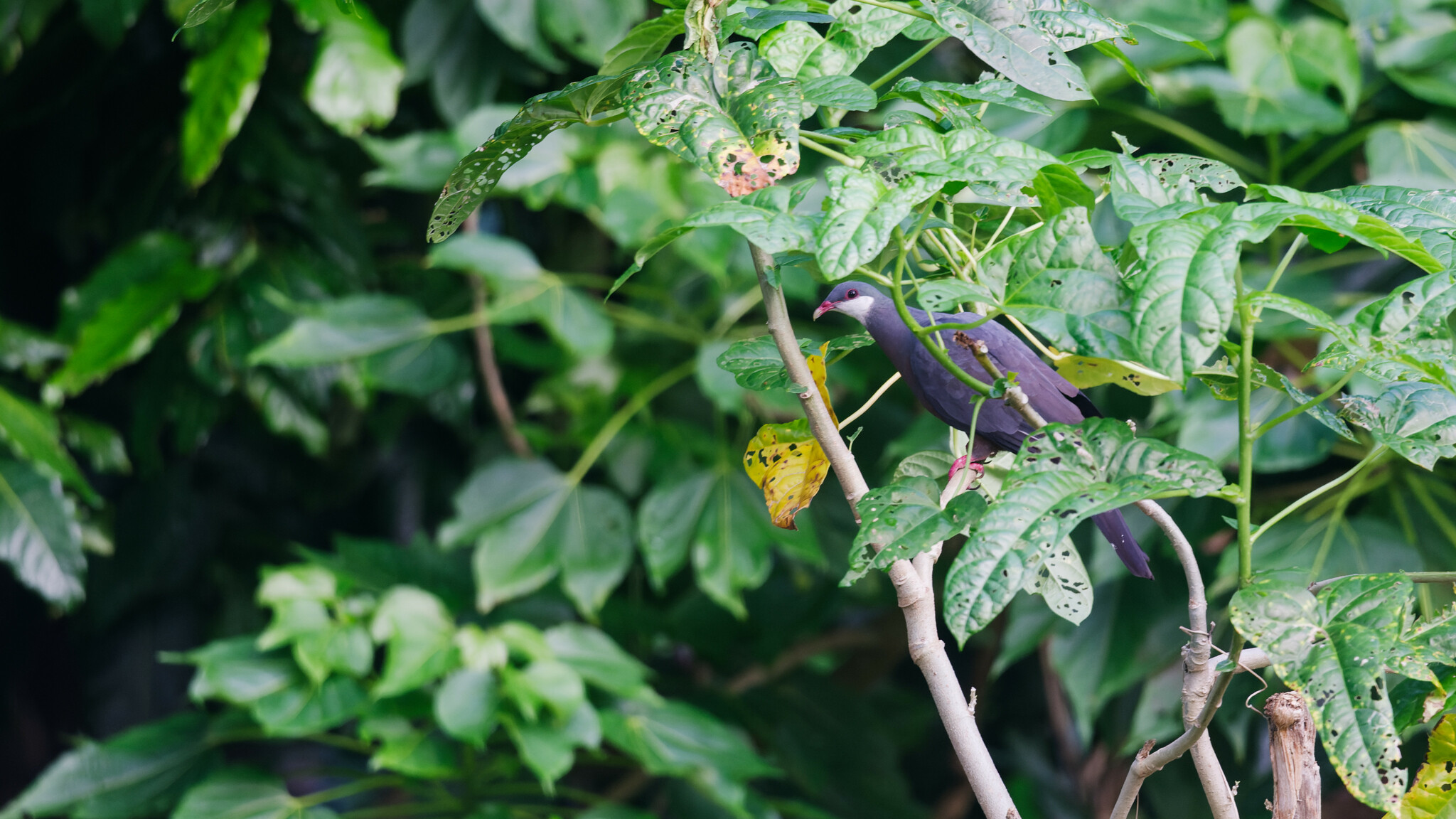
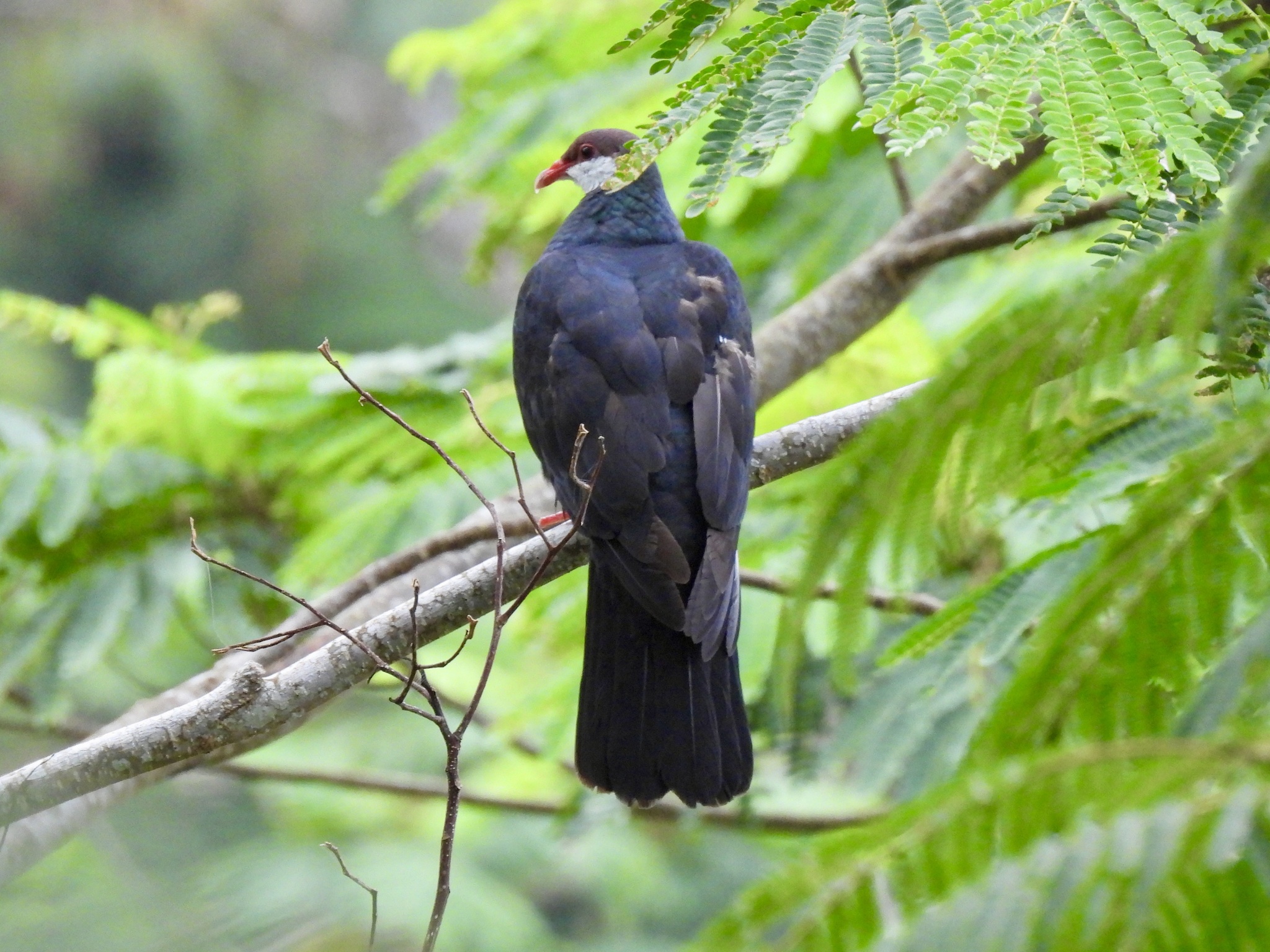
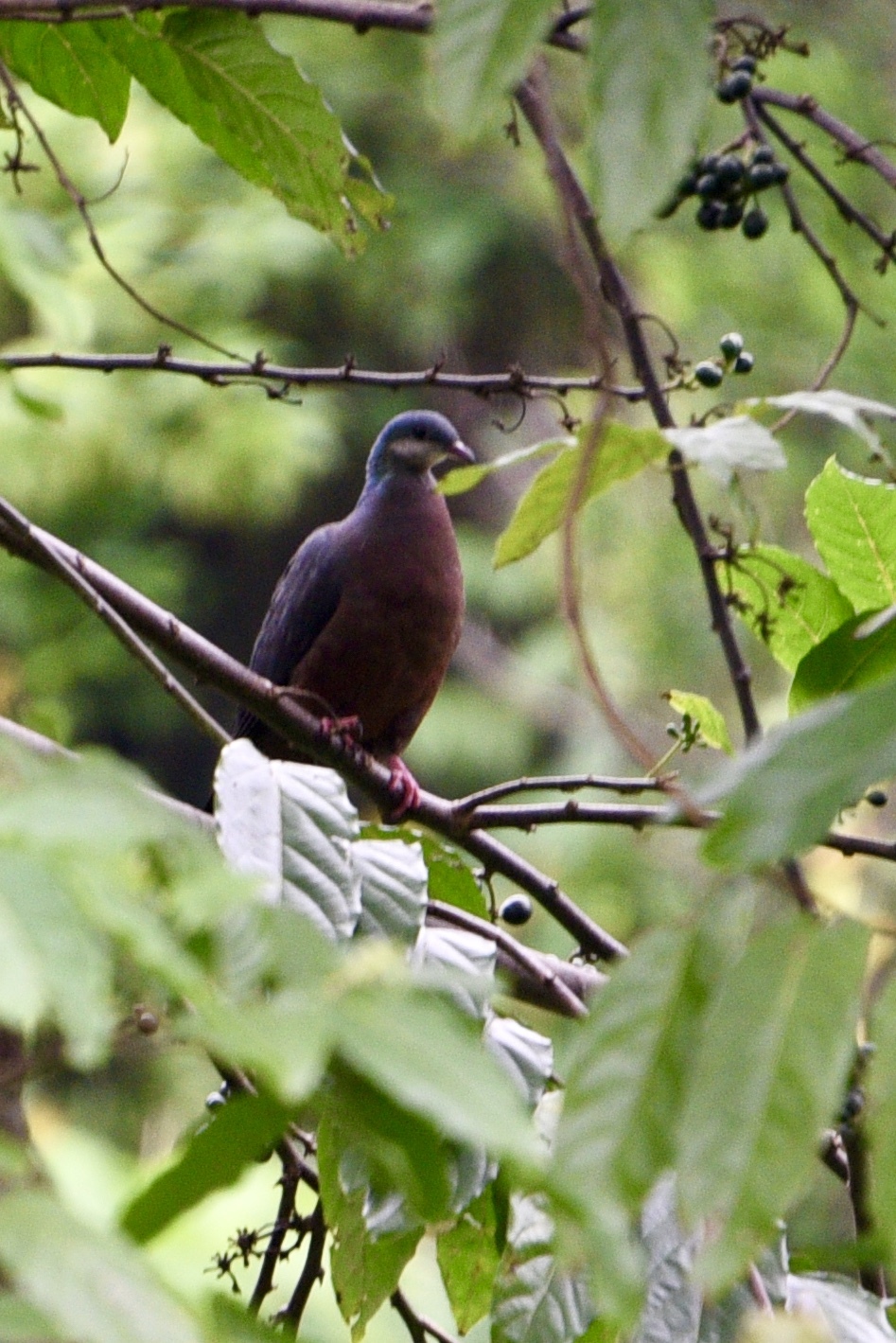
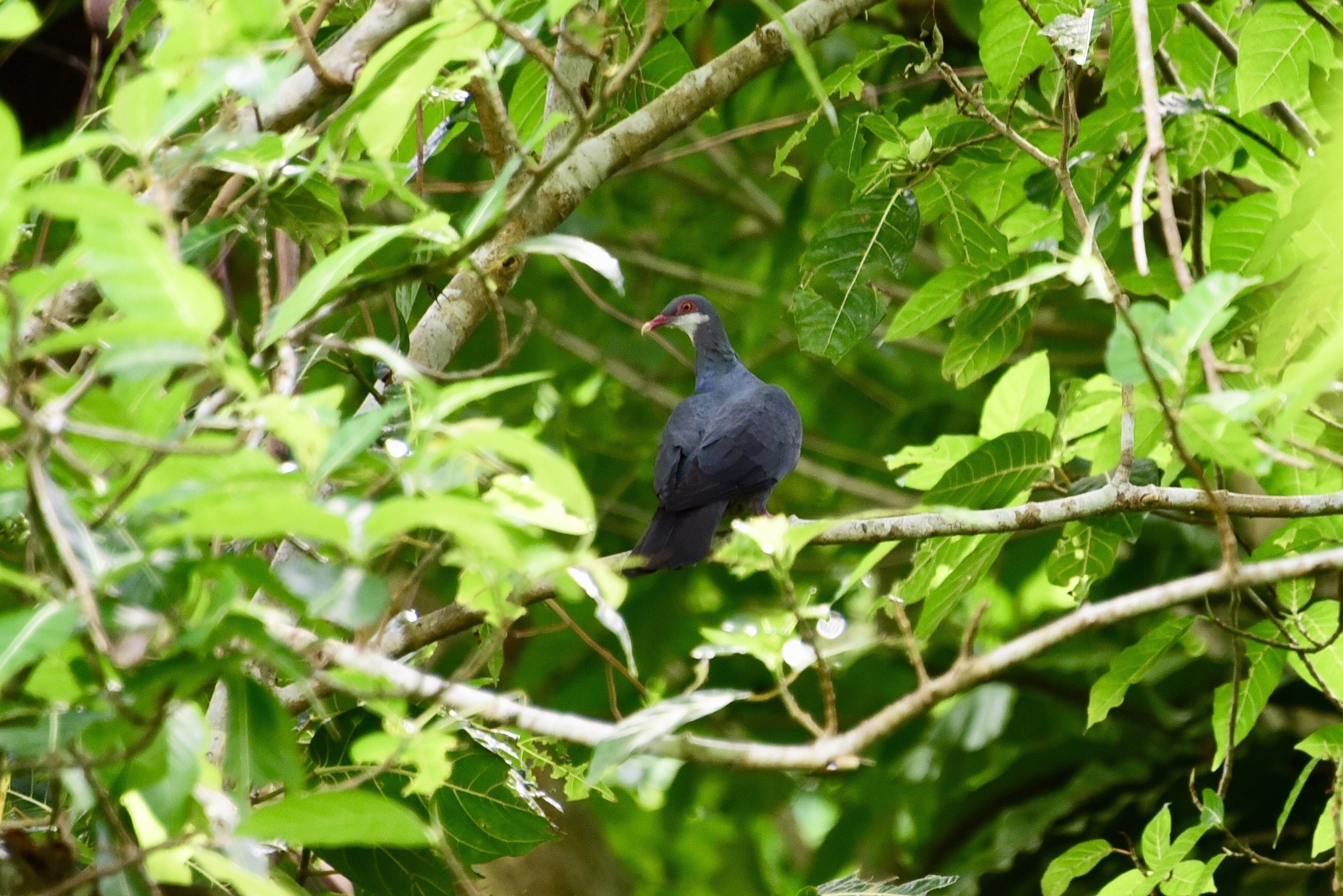
Metallic Pigeon
Columba vitiensis
白喉林鸽
Introduction
A medium-sized pigeon species in the family Columbidae, reaching up to 37 cm in length. Inhabits tropical forests across eastern Indonesia, the Philippines, New Guinea, Solomon Islands, Fiji, New Caledonia, Samoa, and surrounding southwest Pacific islands. Notable for its iridescent crown plumage and adaptability to various forest habitats. Classified as Least Concern on the IUCN Red List due to its widespread distribution and large population.
Description
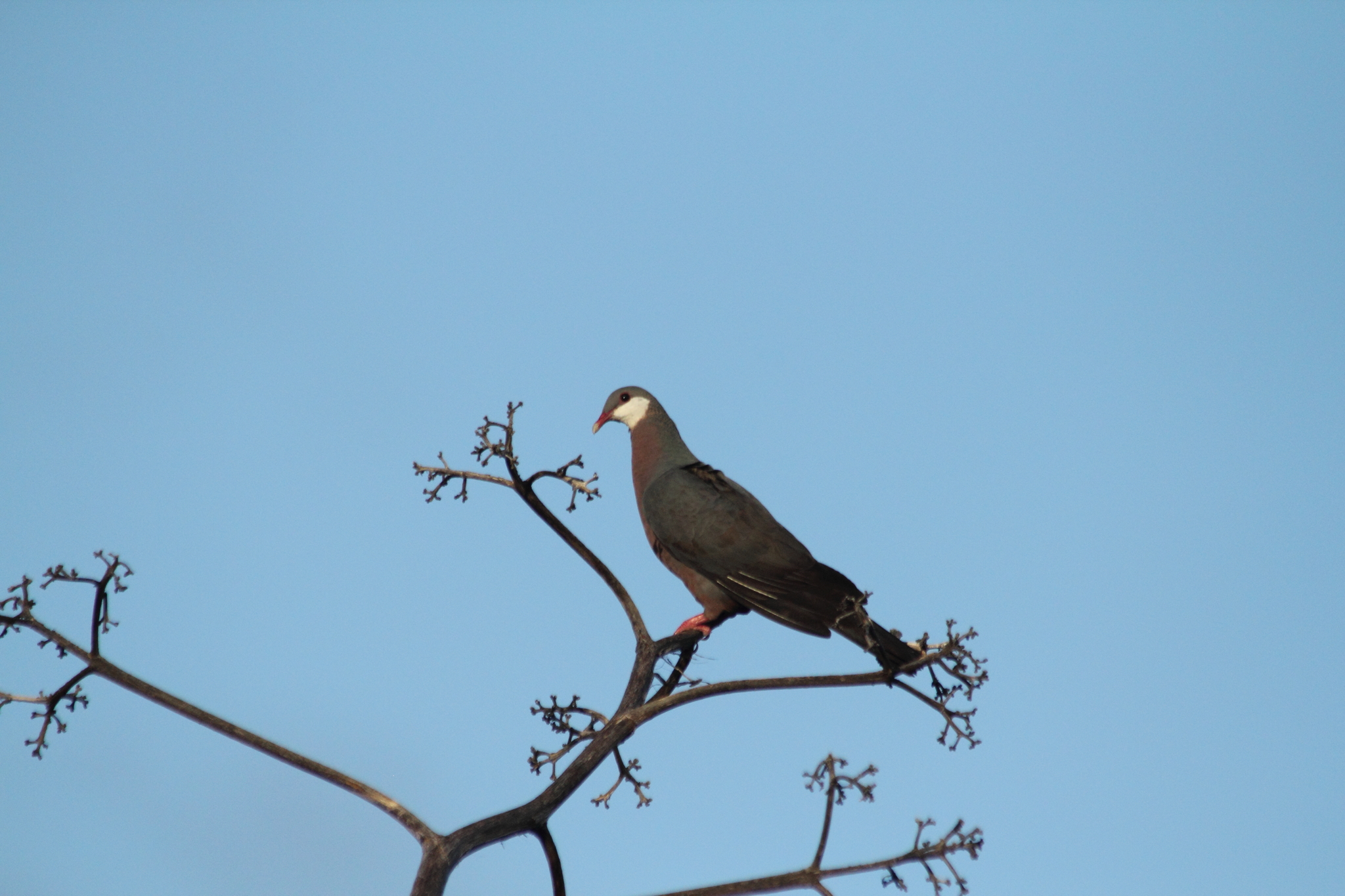
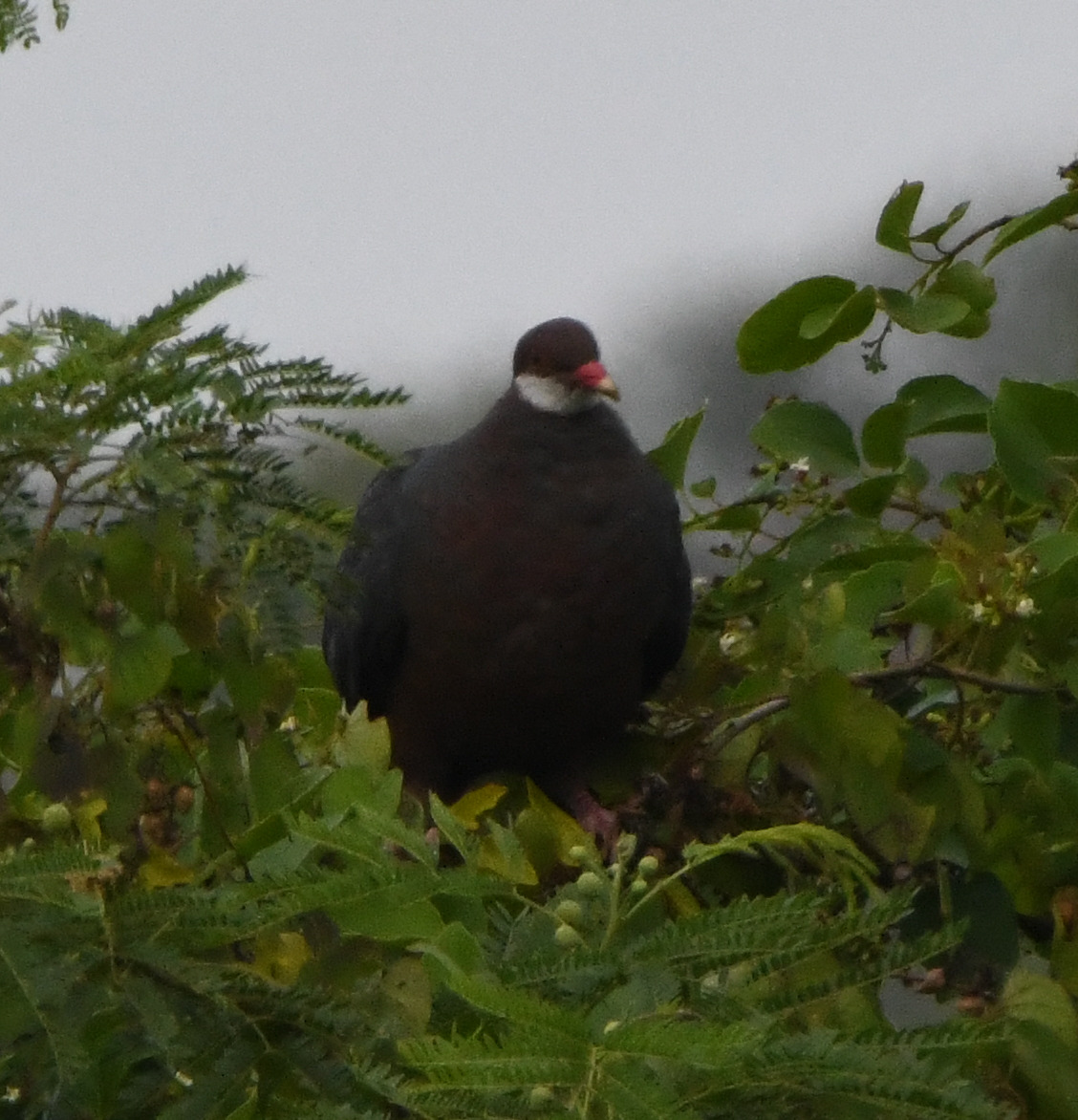
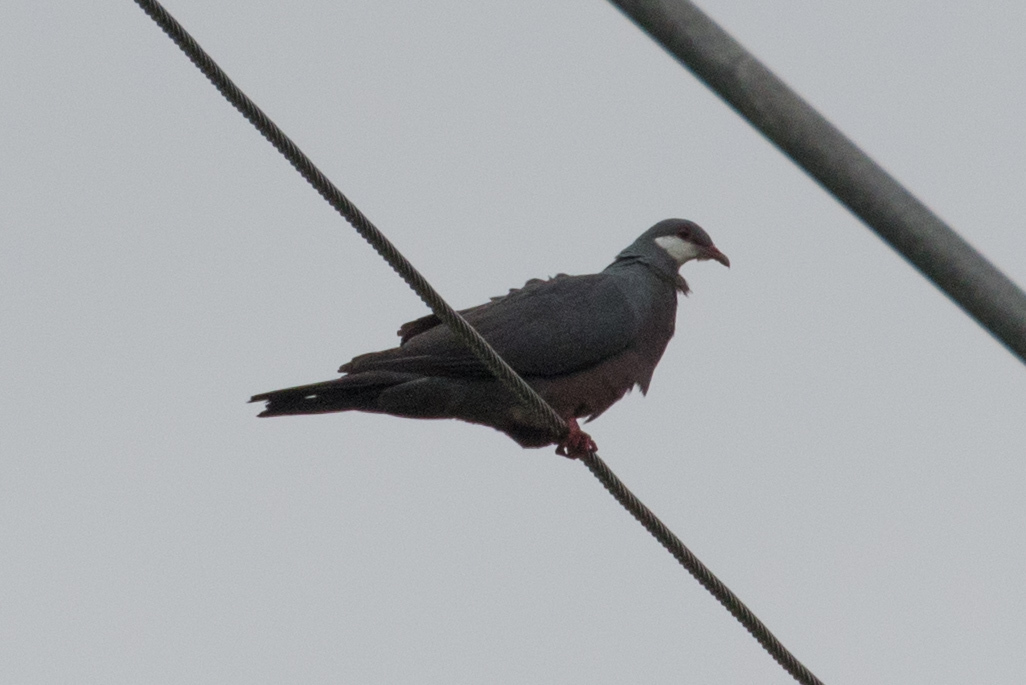
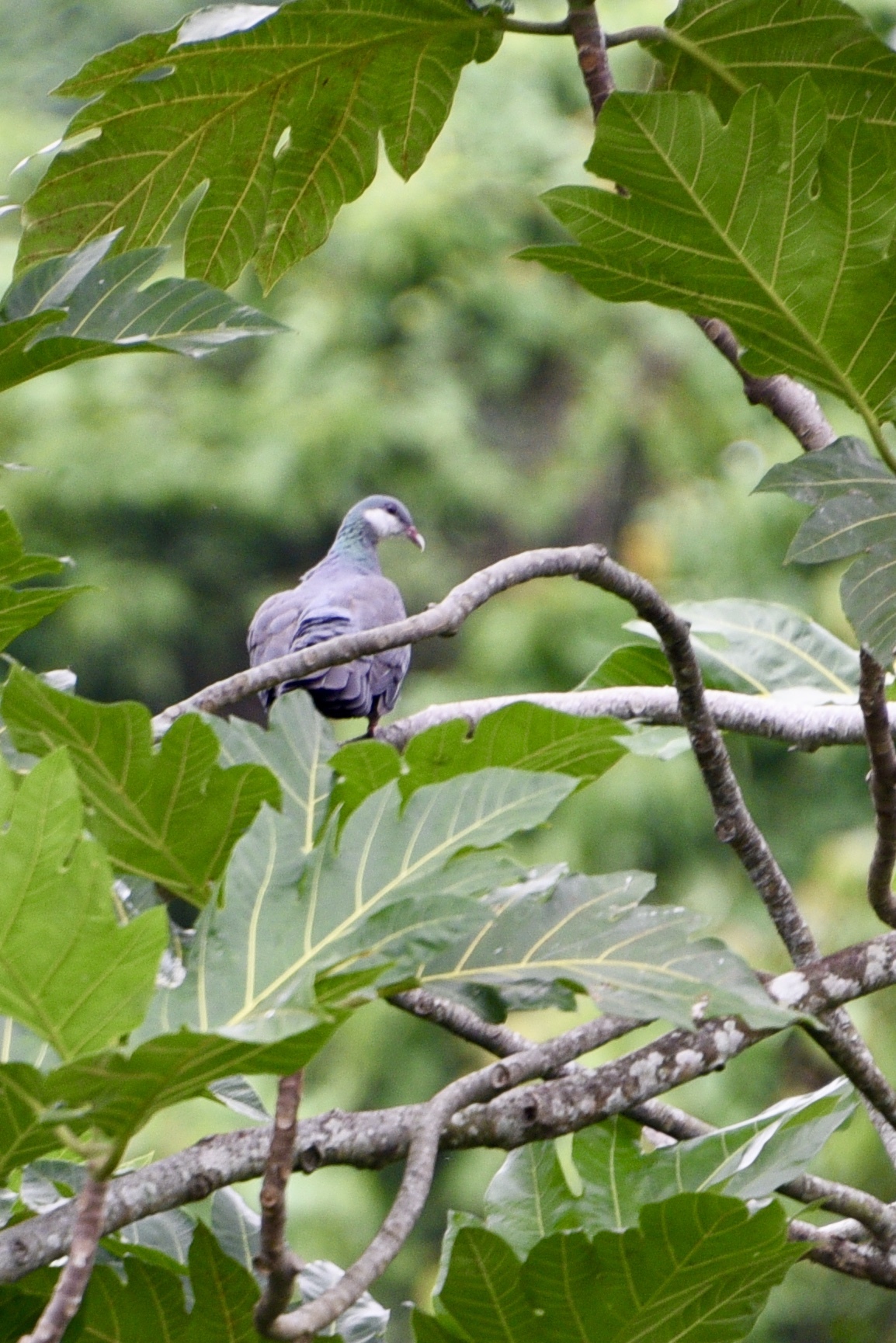
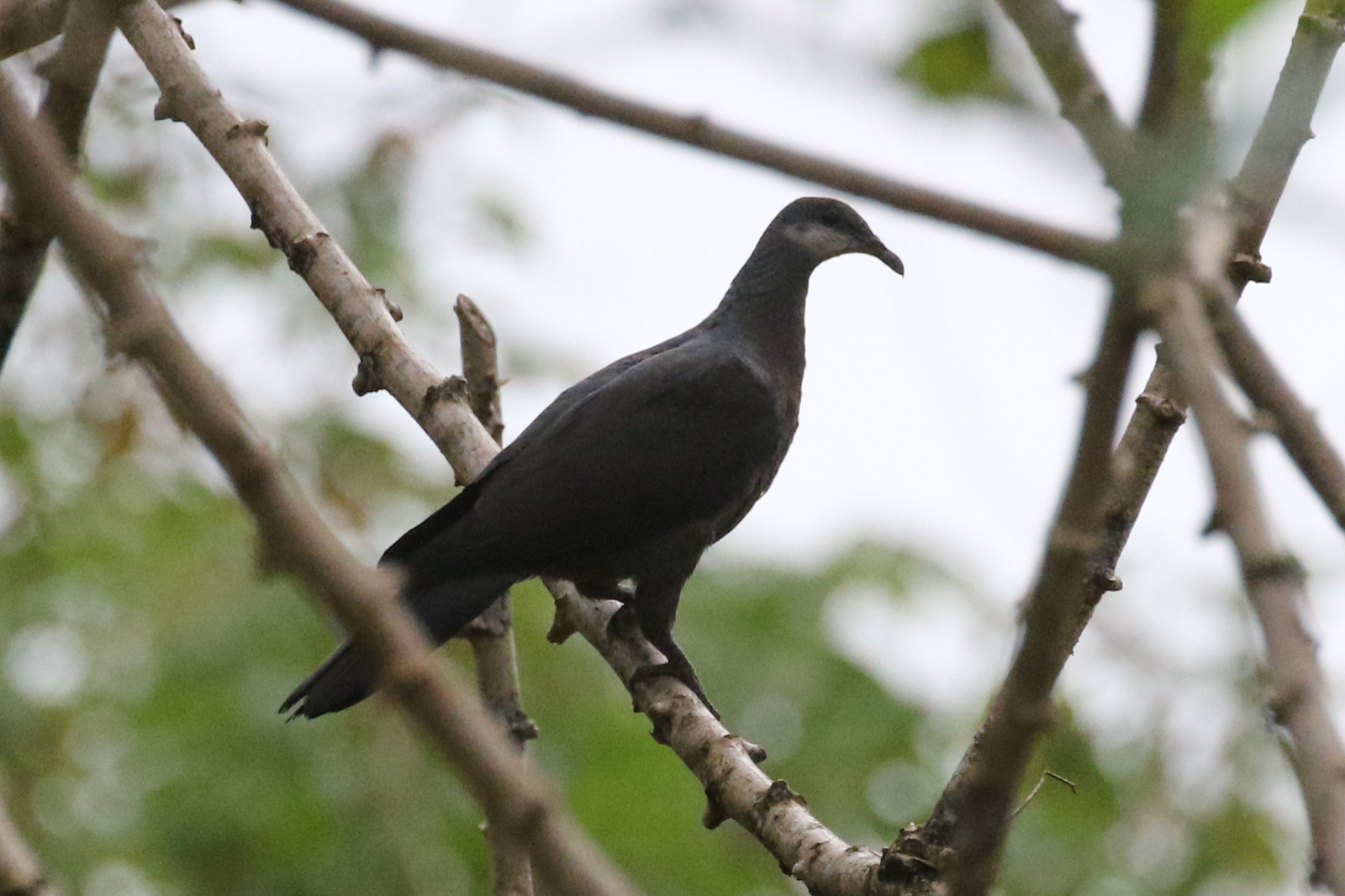
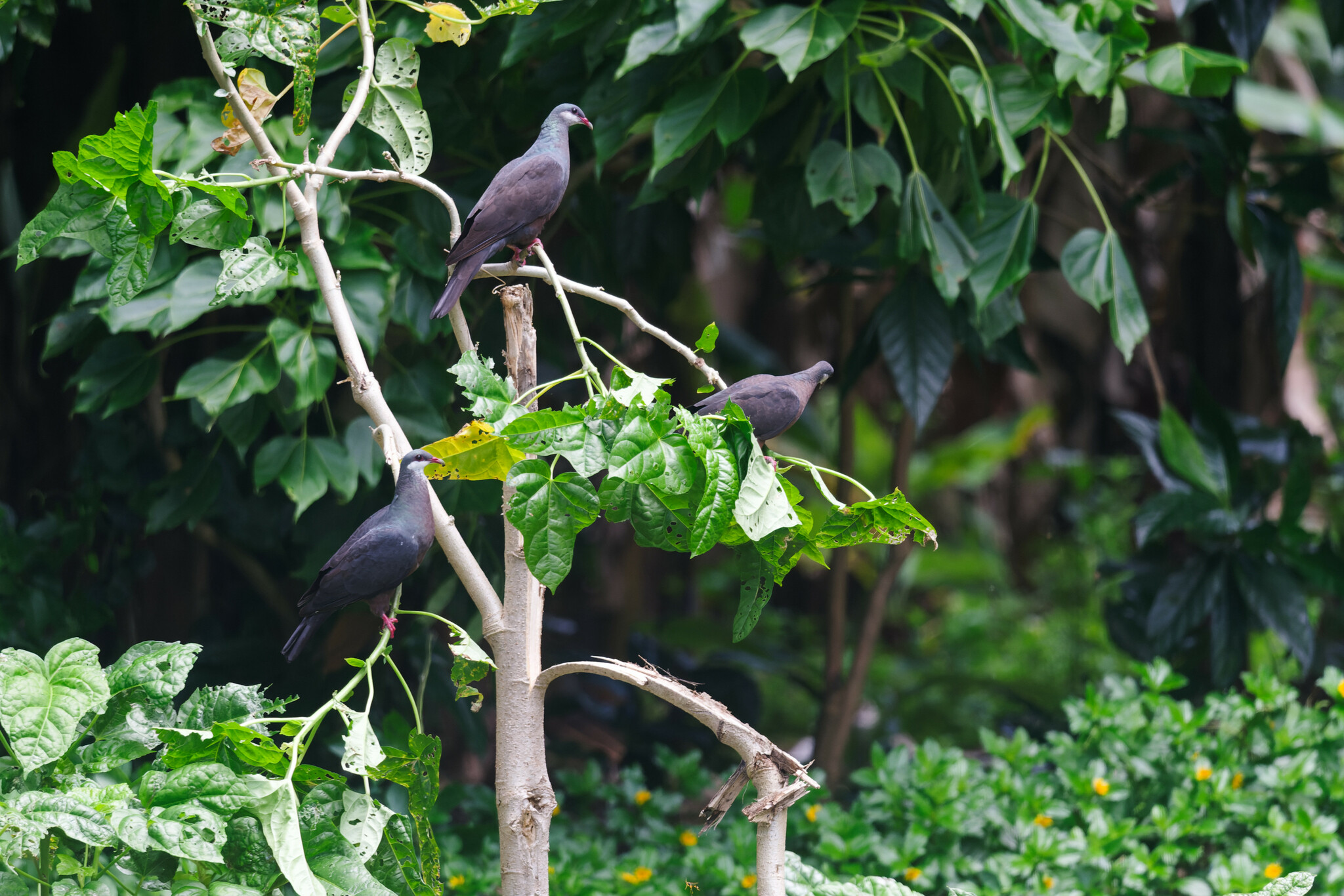
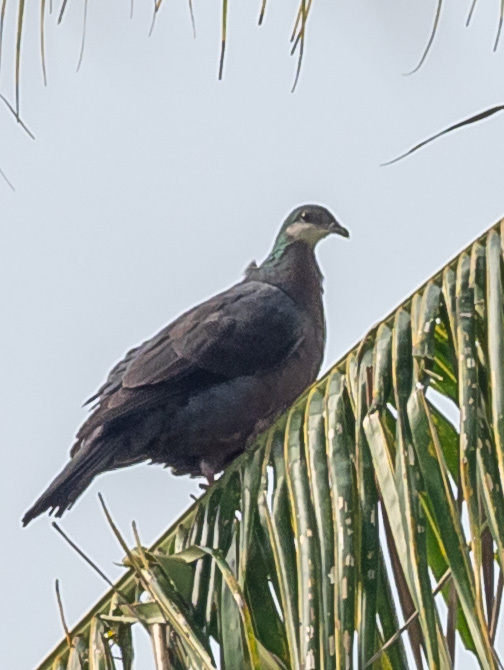
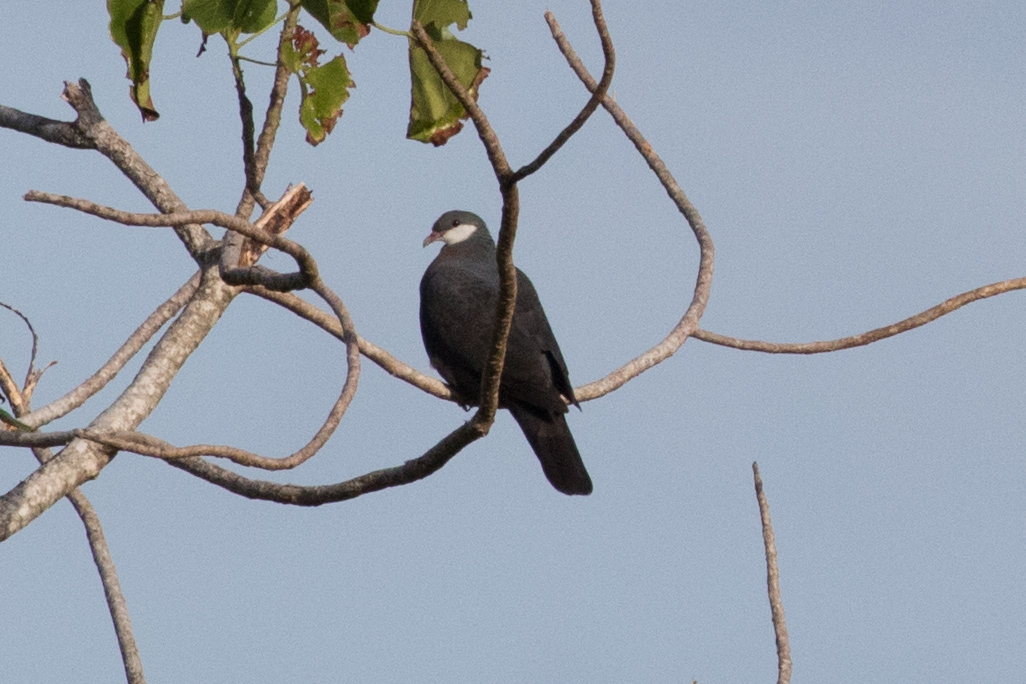
Adult features an iridescent purple and green crown, black wing and uppertail coverts, yellowish-red iris, yellow bill, red orbital skin, and purplish feet. The chin and ear coverts are white or grey. Underparts vary by subspecies from dull chestnut to glossed purple-green. The nominate form C. v. vitiensis from Fiji has dull underparts, while C. v. halmaheira from the Maluku Islands displays the most iridescent plumage. Both sexes appear similar. Juveniles are duller than adults.
Identification
Distinguished by the iridescent purple and green crown combined with black wings and tail coverts. The yellow bill and red orbital skin are distinctive field marks. The white or grey chin and ear coverts help separate it from similar pigeon species. Underpart coloration varies regionally, ranging from dull chestnut to glossy purple-green depending on subspecies. The combination of these features, particularly the colorful crown and orbital region, distinguishes it from other Columba species in its range.
Distribution & Habitat
Occurs across tropical forests of eastern Indonesia, the Philippines, New Guinea, Solomon Islands, Fiji, New Caledonia, Samoa, and adjacent southwest Pacific islands. An extinct subspecies, the Lord Howe pigeon, formerly inhabited Lord Howe Island in Australia until its extermination through hunting around 1853. The species occupies forested habitats throughout its island distribution.
Behavior & Ecology
Feeds primarily on various fruits, grains, seeds, and berries. The breeding season involves the female typically laying one to two eggs. Additional details about social structure, vocalizations, and specific breeding behaviors are not provided in available sources.
Conservation
Evaluated as Least Concern on the IUCN Red List of Threatened Species. The species remains widespread and common throughout its extensive geographic range, which encompasses multiple islands and habitat types across the southwest Pacific region.
Source: Wikipedia · CC BY-SA 3.0
Taxonomy
- Order
- Columbiformes
- Family
- Columbidae
- Genus
- Columba
- eBird Code
- metpig1
Subspecies (9)
-
Columba vitiensis anthracina
Palawan and adjacent islands (Calauit, Comiran, and Lambucan), Philippines
-
Columba vitiensis castaneiceps
western Samoa (Savai'i, Apolima, Manono, and Upolu)
-
Columba vitiensis godmanae
formerly Lord Howe Island (east of Australia); extinct, last recorded 1850s
-
Columba vitiensis griseogularis
Philippines, Sulu Archipelago, and islands off northern Borneo
-
Columba vitiensis halmaheira
Banggai and Sula islands (off eastern Sulawesi), Moluccas including Kai Islands, New Guinea region, Bismarck Archipelago, and Solomon Islands
-
Columba vitiensis hypoenochroa
New Caledonia, Île des Pins, and Loyalty Islands
-
Columba vitiensis leopoldi
Vanuatu
-
Columba vitiensis metallica
Lesser Sundas
-
Columba vitiensis vitiensis
Fiji
Data Sources
Species description from Wikipedia, licensed under CC BY-SA 3.0.
Bird images and sounds sourced from GBIF, contributed by citizen scientists worldwide under Creative Commons licenses.
Taxonomy data from AviList 2025.