

Common Wood Pigeon
Columba palumbus
斑尾林鸽
Introduction
Woodpigeon (Columba palumbus) Range: Europe and western Asia. Resident in temperate regions; northern and eastern populations migrate southward in winter. Habitat: Rural woodlands, urban parks and gardens. Description: One of the largest pigeon species in its range. Adults display distinctive white patches on neck and wings. Diet: Plant material including crops and wild vegetation. Taxonomy: Five subspecies, one extinct. Fossil records indicate presence in Europe since the Middle Pleistocene. Human interaction: Extensively hunted across range; millions shot annually. Considered an agricultural pest in some areas. Population status: Stable despite hunting pressure.
Description
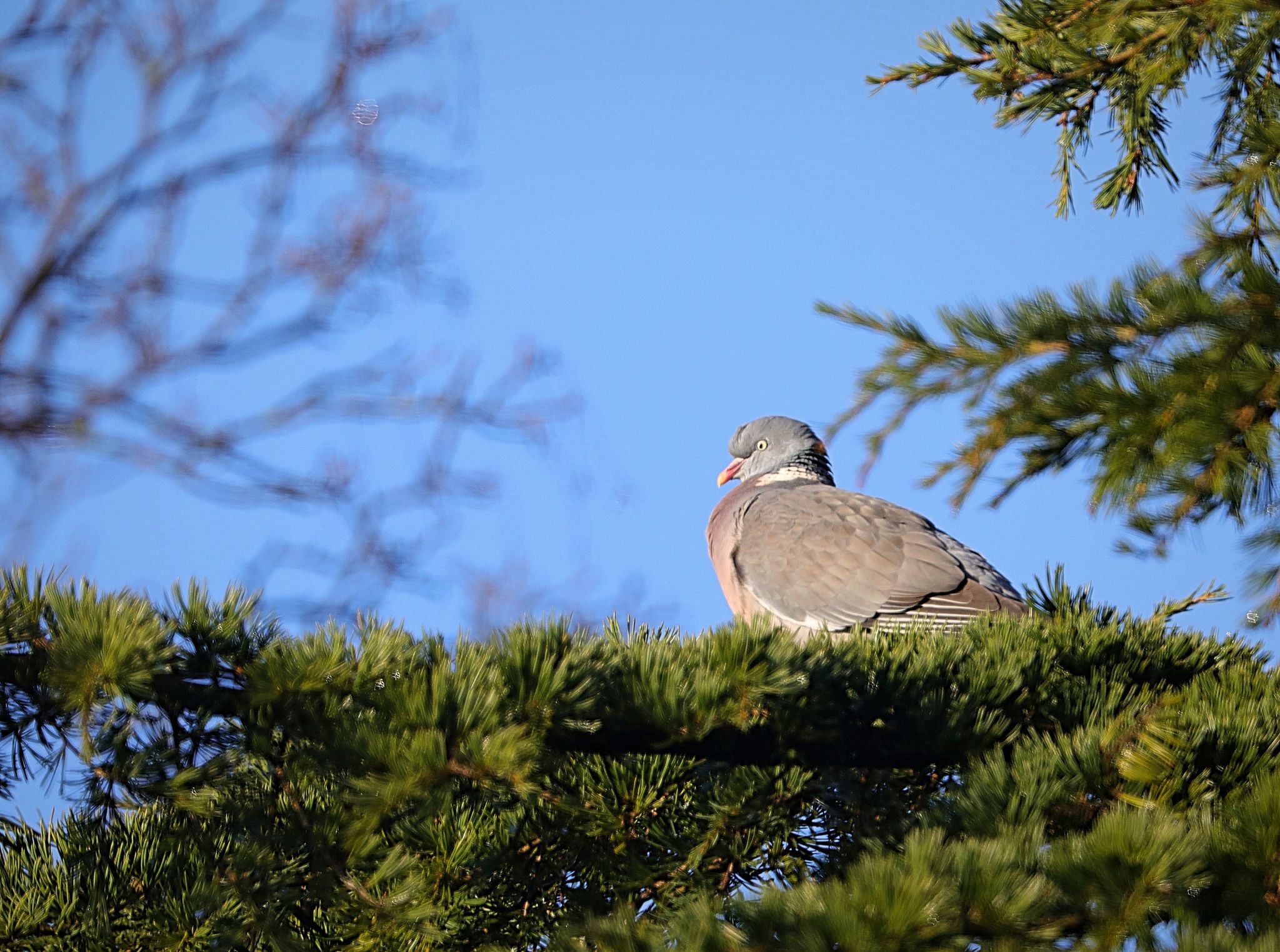
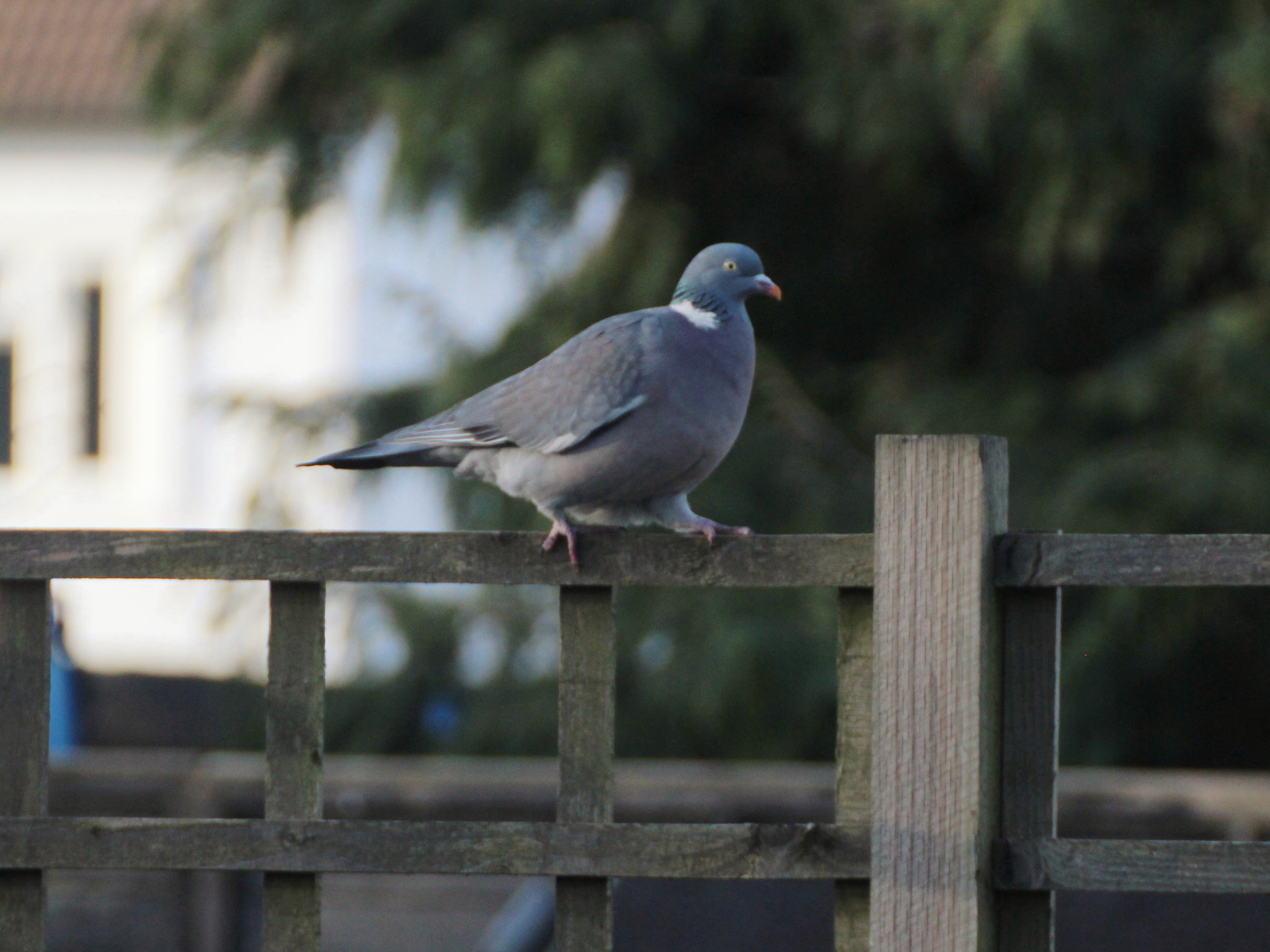
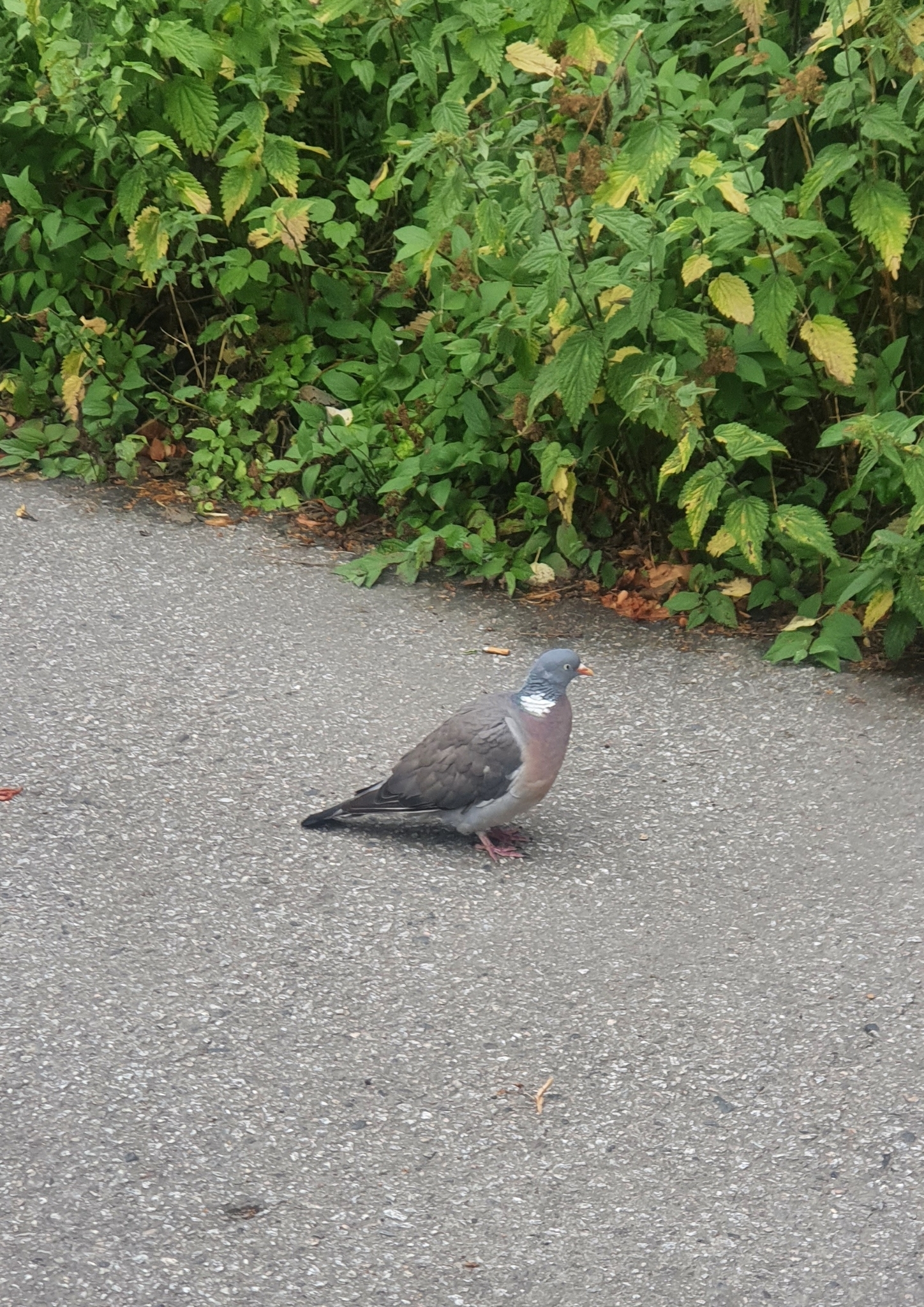
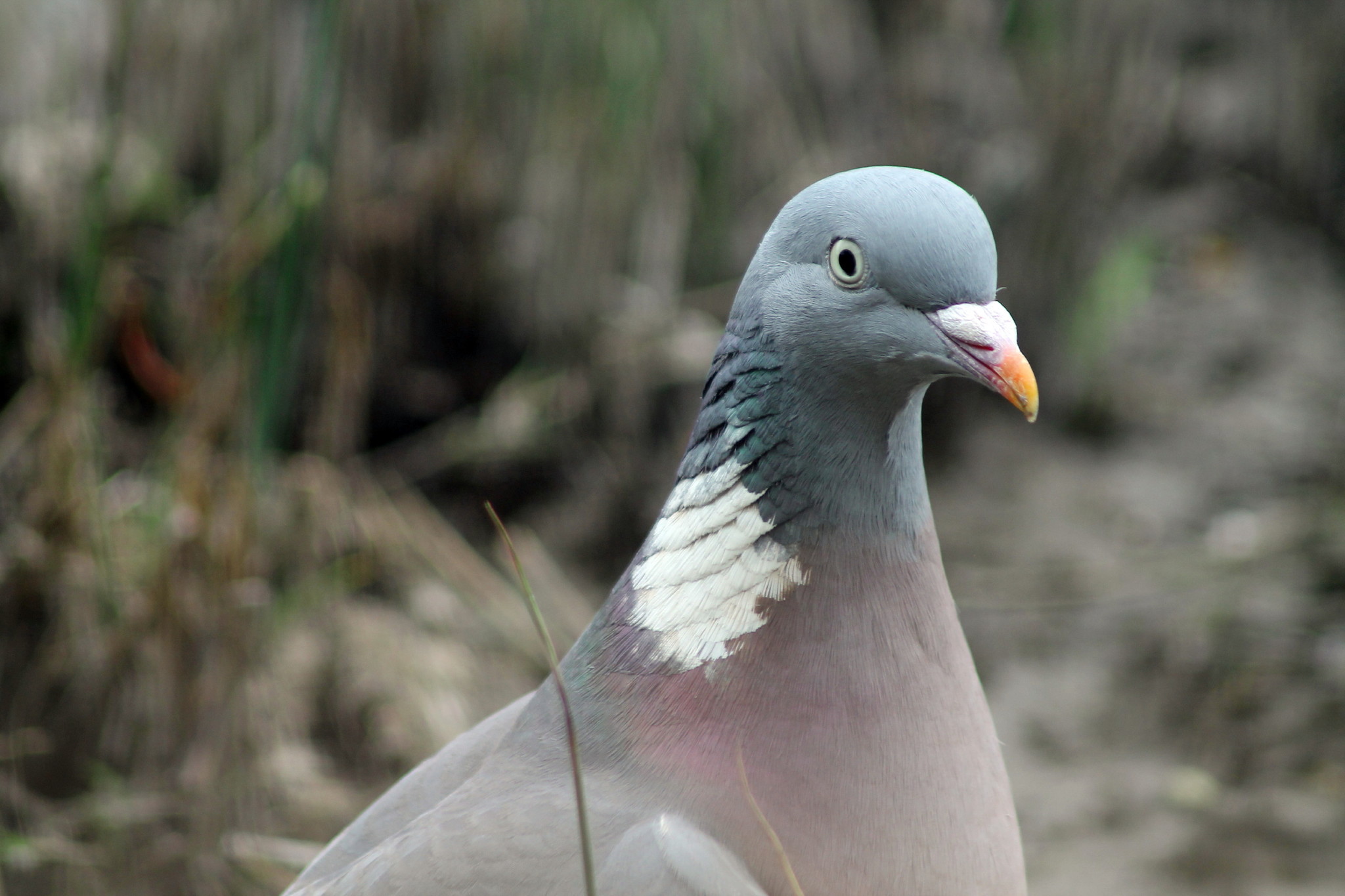
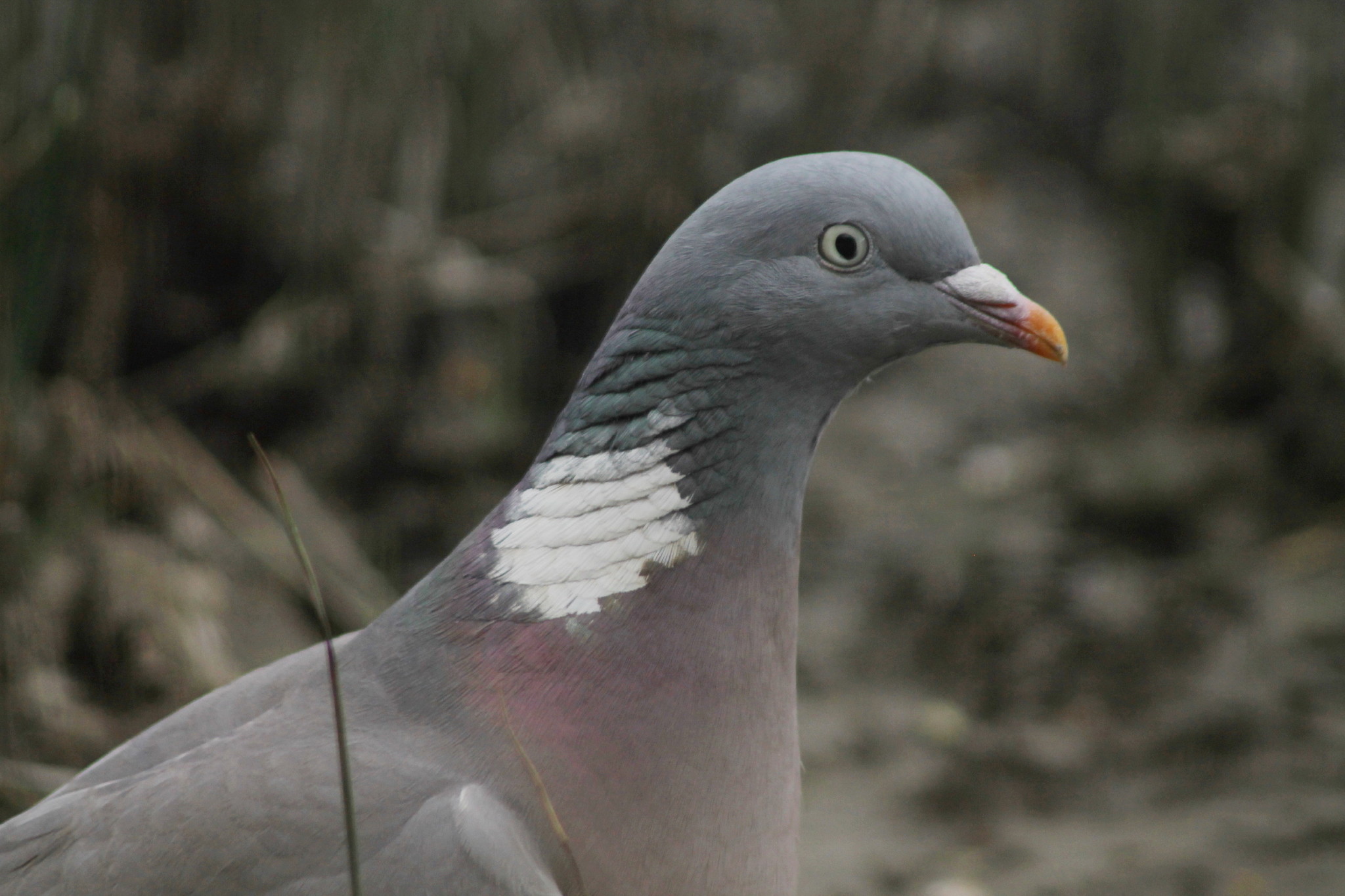
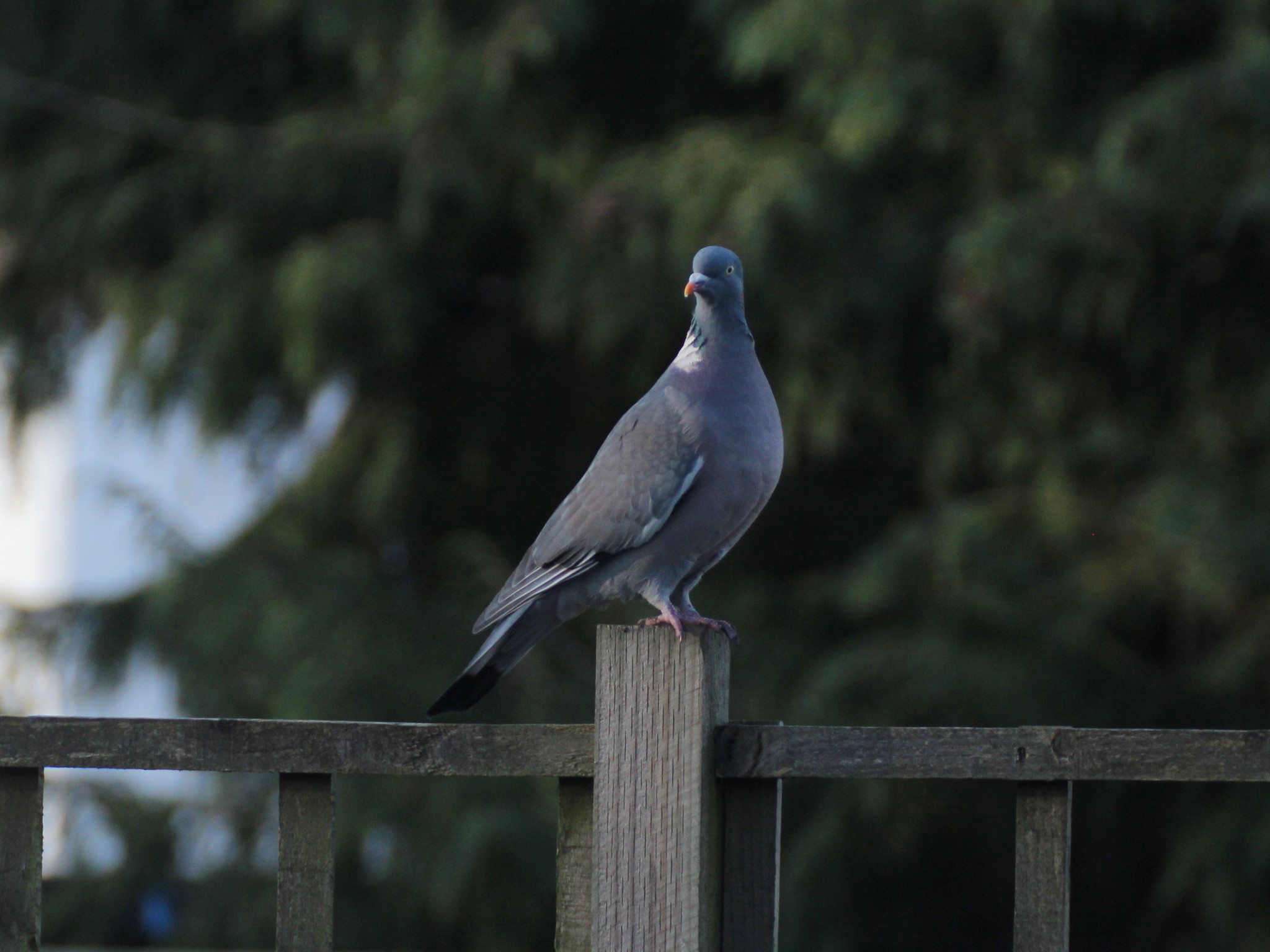
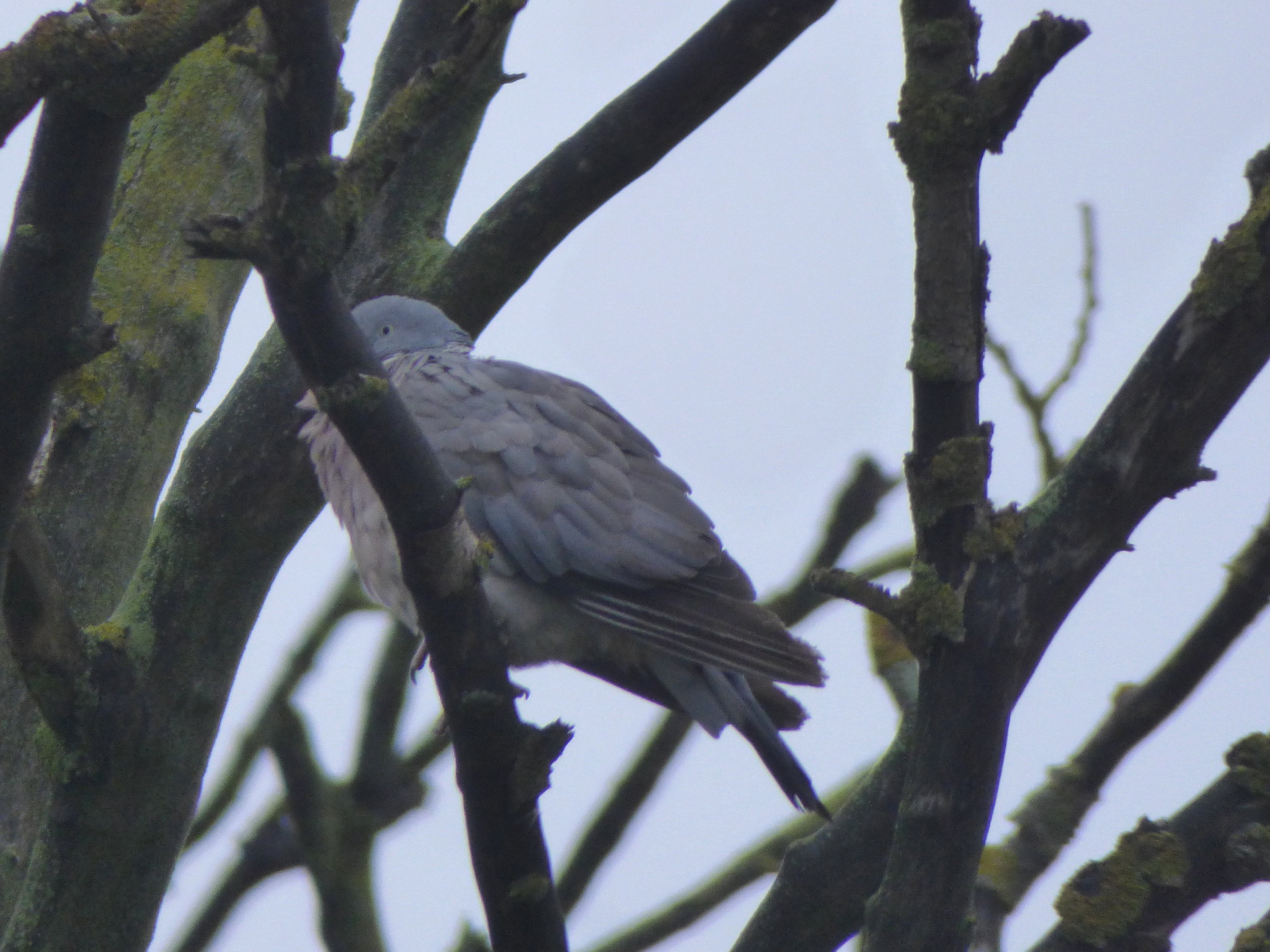
This is a substantially built pigeon measuring 38-44.5 cm in length with a wingspan of 68-80 cm and weighing 300-615 g. The plumage is predominantly grey with a characteristic pinkish wash across the breast. Adults display a series of green and white patches on either side of the neck, along with white markings on the wings visible in flight. The pale yellow eye distinguishes it from similar species. Juveniles appear overall lighter grey with a greyer bill and lack the adult neck patches until they reach 6-8 months of age. The tail measures 13.8-15 cm, the wing chord 24-25.4 cm, and the tarsus 2.5-2.8 cm.
Identification
The most reliable identification features are its large size compared to other European Columba pigeons, combined with the white neck patches and wing markings. It is significantly bigger than both the rock dove and stock dove. The eye color provides a key distinction: pale yellow in this species versus orange-red in rock doves and dark grey-brown to black in stock doves. Juveniles lack the white neck patches, making them more challenging to identify until the patches develop at around six months old. In flight, the white wing bars and overall grey coloration with pink breast are characteristic.
Distribution & Habitat
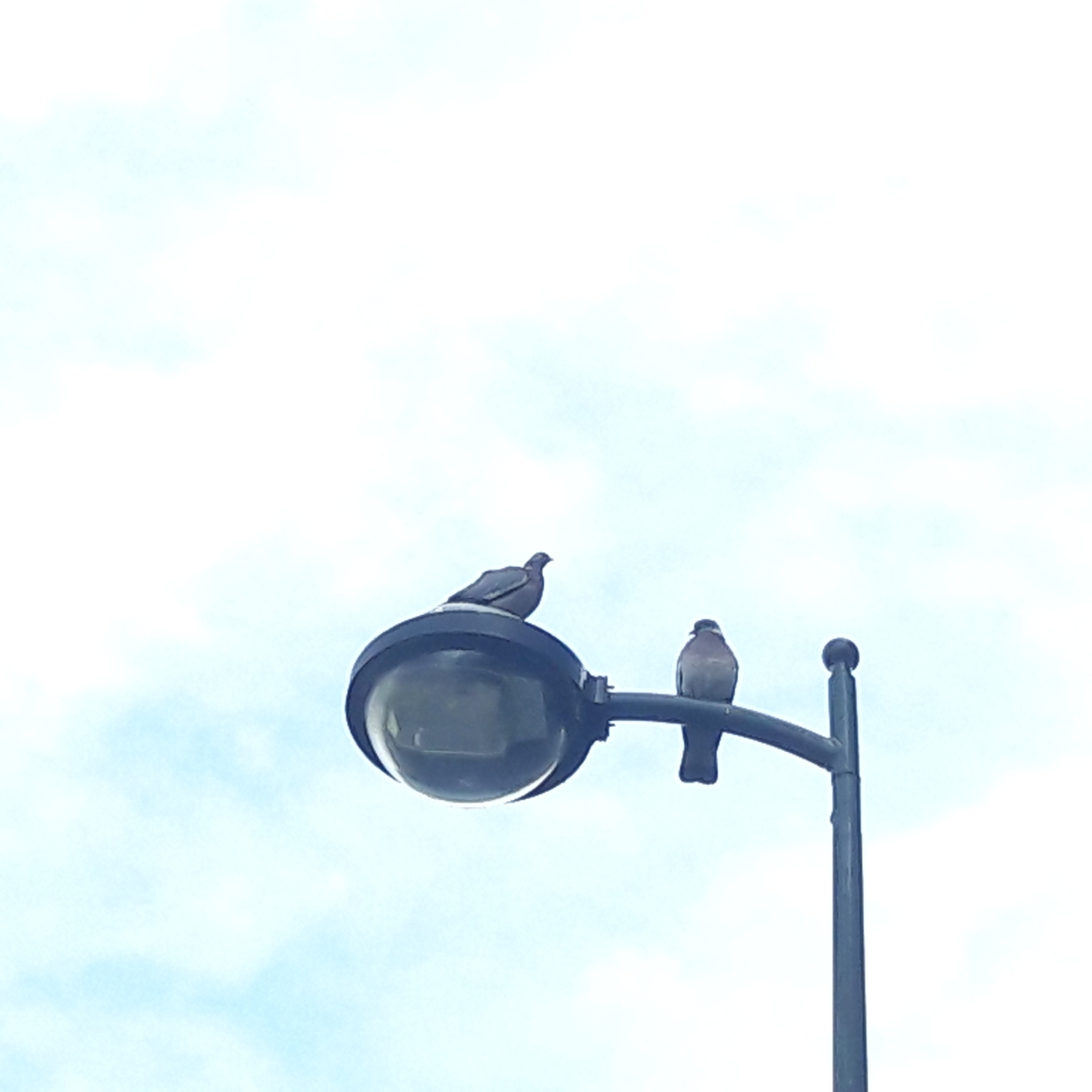
This species occupies most of temperate Europe, ranging east to western Siberia and western Asia. Northern and eastern populations are migratory, moving south for winter, while southern and western European populations are resident year-round. It has colonized urban areas increasingly, becoming common in parks, gardens, and cities throughout Great Britain and western Europe. The species extends into northwest Africa and the Azores, with subspecies occurring in Iran and central Asia. A single vagrant record exists from Quebec, Canada in May 2019. Habitat preference includes woodland edges, parks, gardens, and agricultural areas with nearby trees for roosting and nesting.
Behavior & Ecology
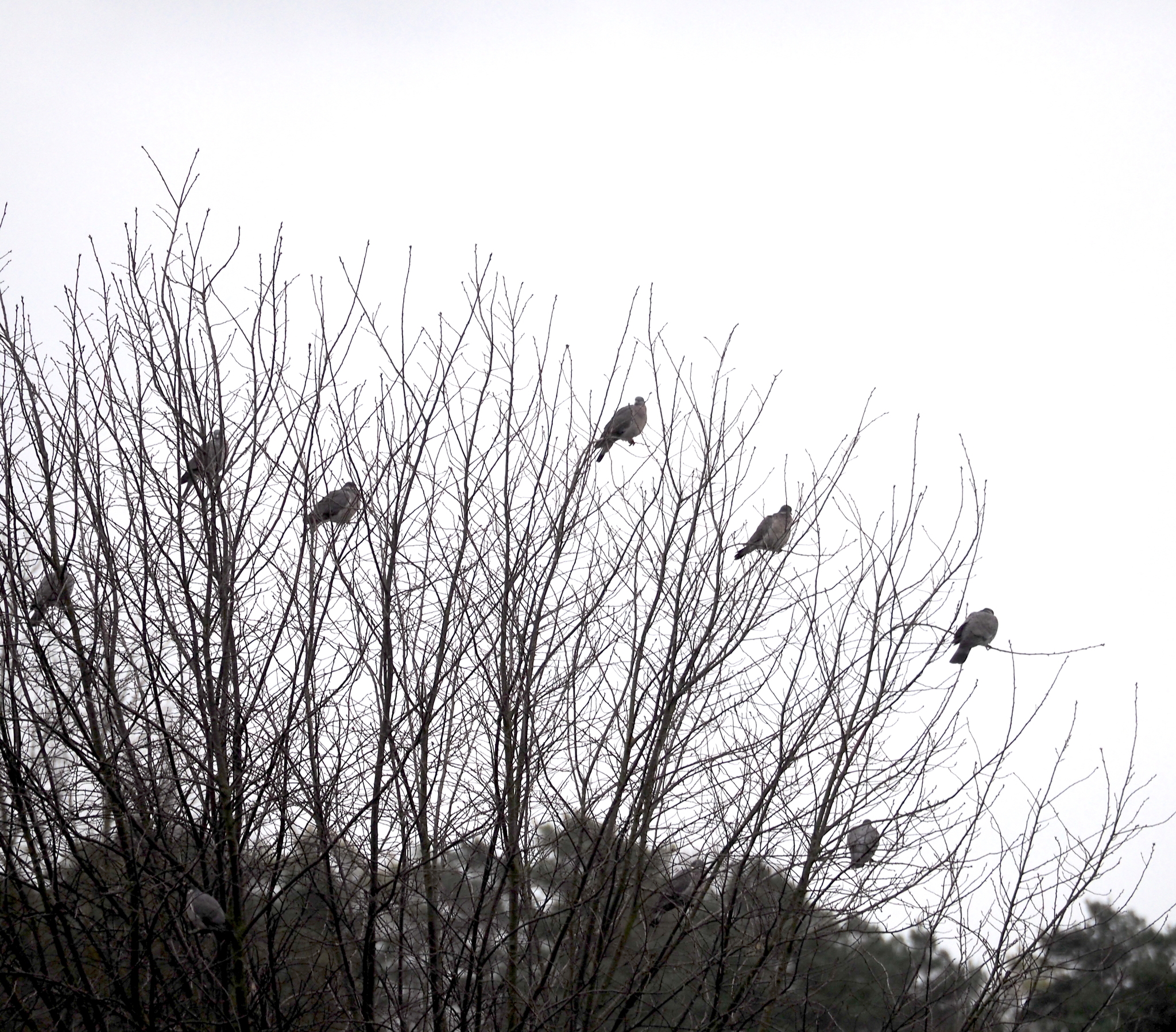
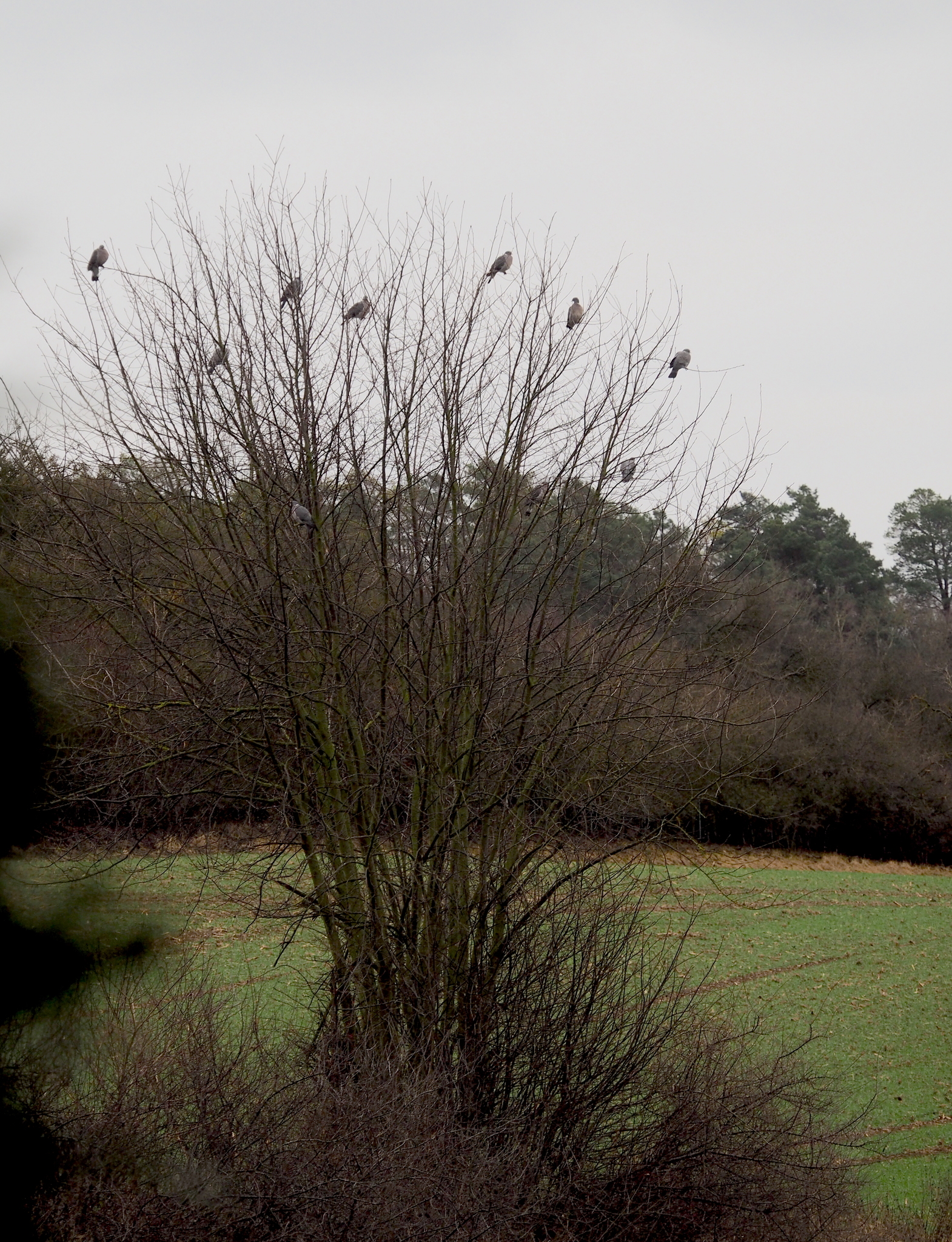
This gregarious species forms large flocks outside the breeding season, though it becomes territorial during nesting. The characteristic five-syllable cooing call, often rendered as 'oooh, oooh, ooh, ooooh, ooh,' announces its presence before birds are seen. The display flight involves a characteristic climb followed by a glide on stiff wings with a sharp wing-crack. On the ground, males perform a display walk with swollen neck, lowered wings, and outstretched tail. Breeding occurs in trees near roads and rivers, with two white eggs hatching after 17-19 days. Young fledge at 33-34 days. The diet consists primarily of plant matter including grains, young shoots, fruits, and occasionally invertebrates. Survival rates are 52% for first-year juveniles and 61% for adults, with maximum recorded age exceeding 19 years.
Conservation
Despite being extensively hunted across its range with millions of birds shot annually, the species maintains healthy population numbers throughout most of its distribution. Its status as an agricultural pest has justified hunting in most European countries, and a cartridge subsidy existed in Britain from 1953 to 1969. The species shows considerable resilience to hunting pressure, benefiting from its flexible habitat preferences and reproductive output. Urban populations have become remarkably tame where persecution is absent, demonstrating the species' capacity to adapt to human-modified environments.
Culture
The ancient Roman poet Virgil referenced this species multiple times in his Eclogues, describing its distinctive husky call. In Eclogue 1, he writes of 'hoarse wood pigeons from the lofty elms' making 'endless moan' alongside turtle doves. The species' characteristic cooing phrase has inspired various traditional mnemonics across Britain and Ireland, with interpretations including 'Take two cows, Teddy' and other folk renderings of the five-syllable call. These cultural associations reflect the species' long-standing presence in the European landscape and its prominence in the rural and suburban consciousness.
Source: Wikipedia · CC BY-SA 3.0
Taxonomy
- Order
- Columbiformes
- Family
- Columbidae
- Genus
- Columba
- eBird Code
- cowpig1
Subspecies (5)
-
Columba palumbus azorica
eastern and central Azores
-
Columba palumbus casiotis
Kazakhstan to northern Afghanistan, northern Pakistan, northwestern India, and Nepal
-
Columba palumbus iranica
southern Transcaspia to Iran
-
Columba palumbus maderensis
formerly mountains of Madeira; probably extinct
-
Columba palumbus palumbus
northwestern Africa; Europe eastward to western Siberia and southward to Iraq; mostly resident in Africa and western Europe, but northern and eastern populations migratory
Data Sources
Species description from Wikipedia, licensed under CC BY-SA 3.0.
Bird images and sounds sourced from GBIF, contributed by citizen scientists worldwide under Creative Commons licenses.
Taxonomy data from AviList 2025.