

Snow Pigeon
Columba leuconota
雪鸽
Introduction
This medium-sized pigeon occurs in Central Asia, from the western Himalayas through Tibet to western China. It inhabits rocky hillsides, alpine meadows, agricultural fields, and mountain valleys up to the snow line. It is diurnal, feeding in fields and roosting on cliff faces. In winter, flocks number 150 or more individuals and may associate with hill pigeons and rock doves. During summer, it descends to lower elevations to breed in colonies, laying two eggs in nests built in cliff crevices.
Description
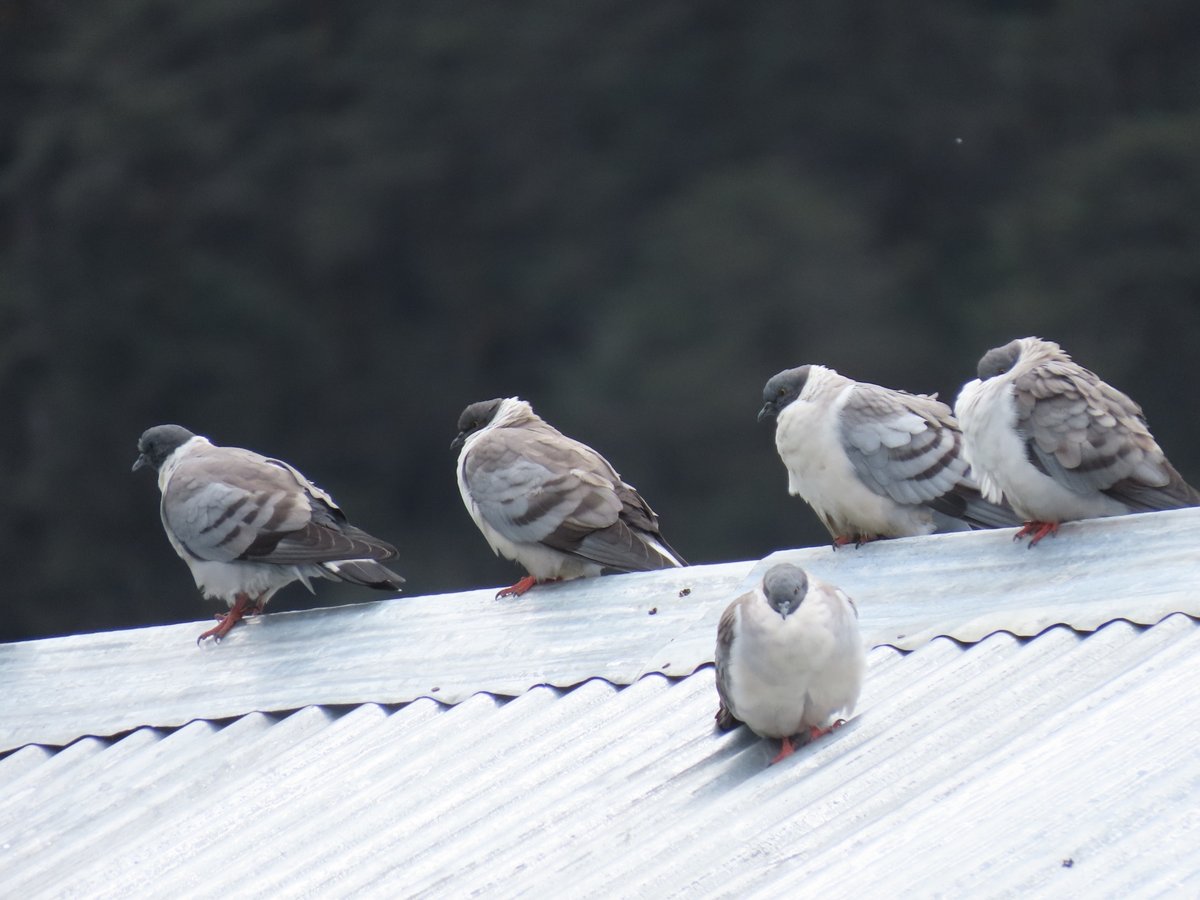
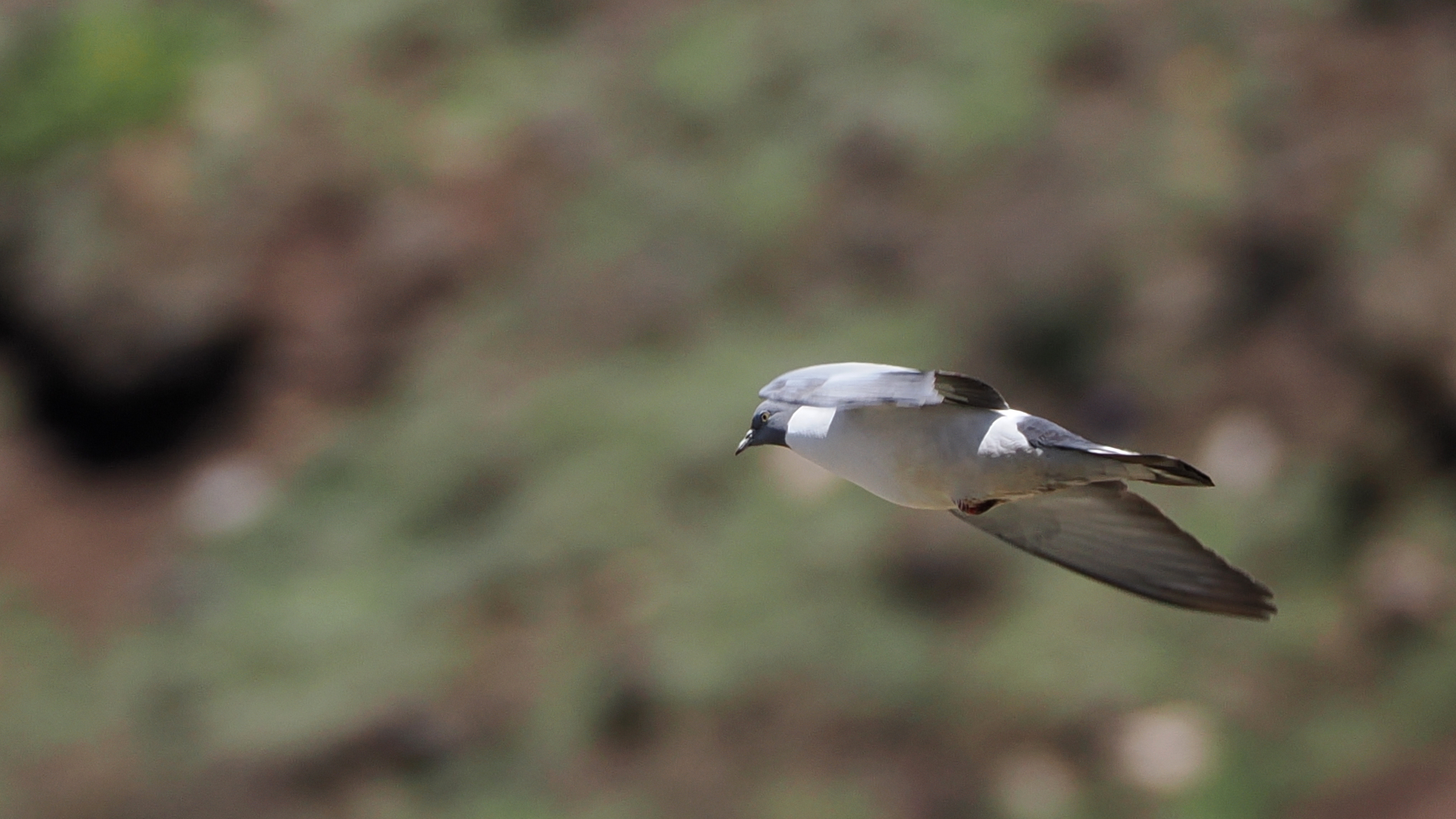
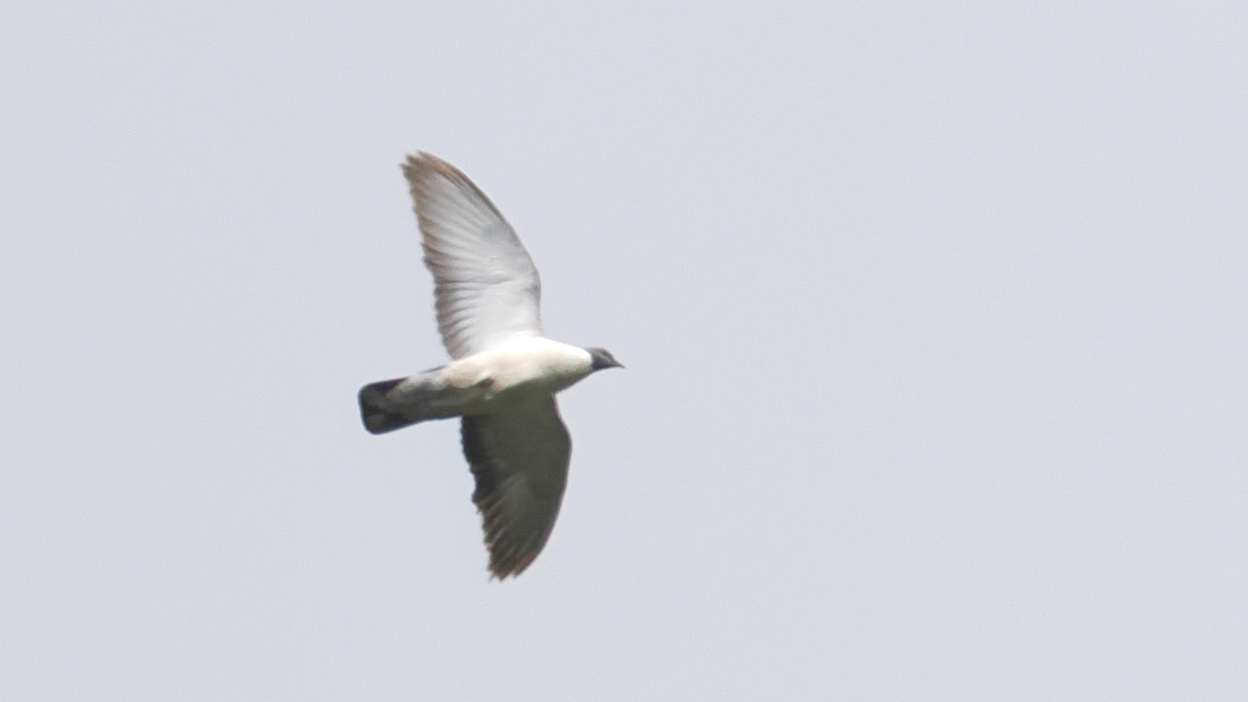
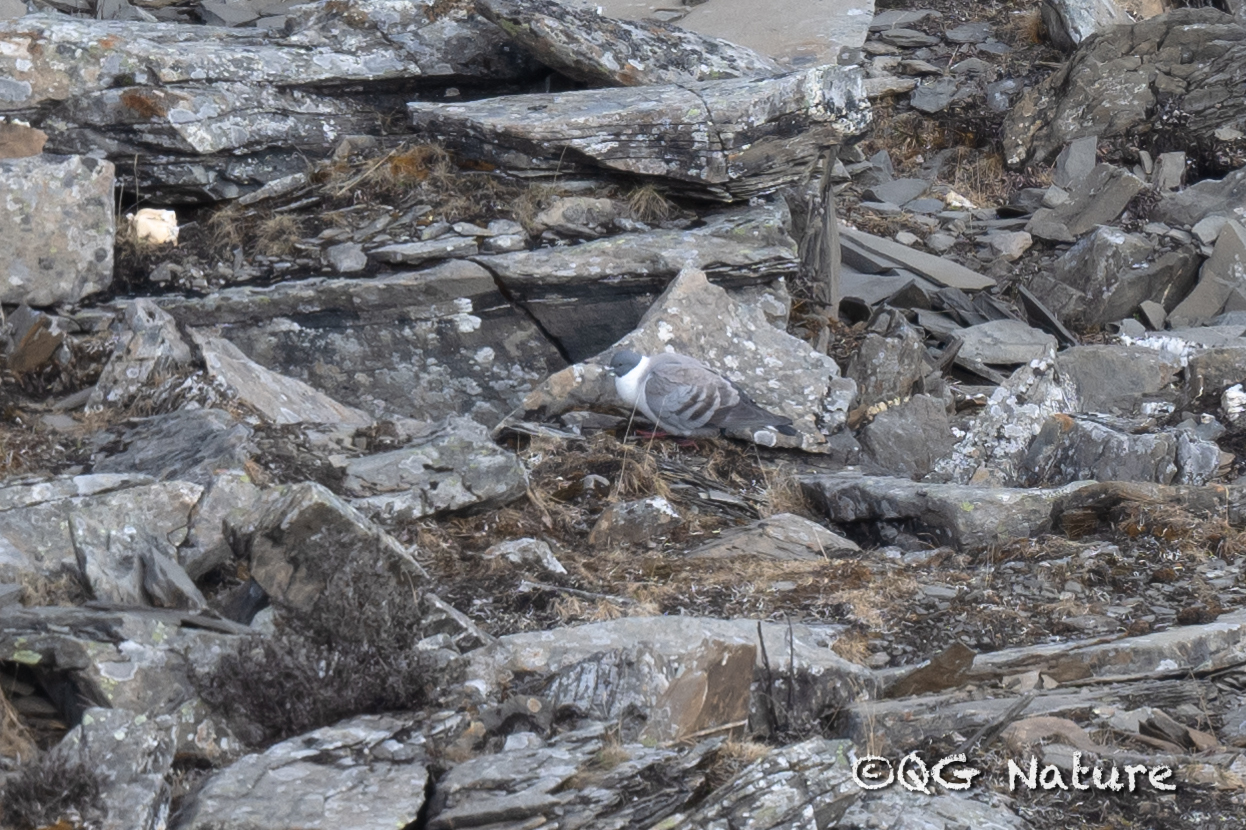
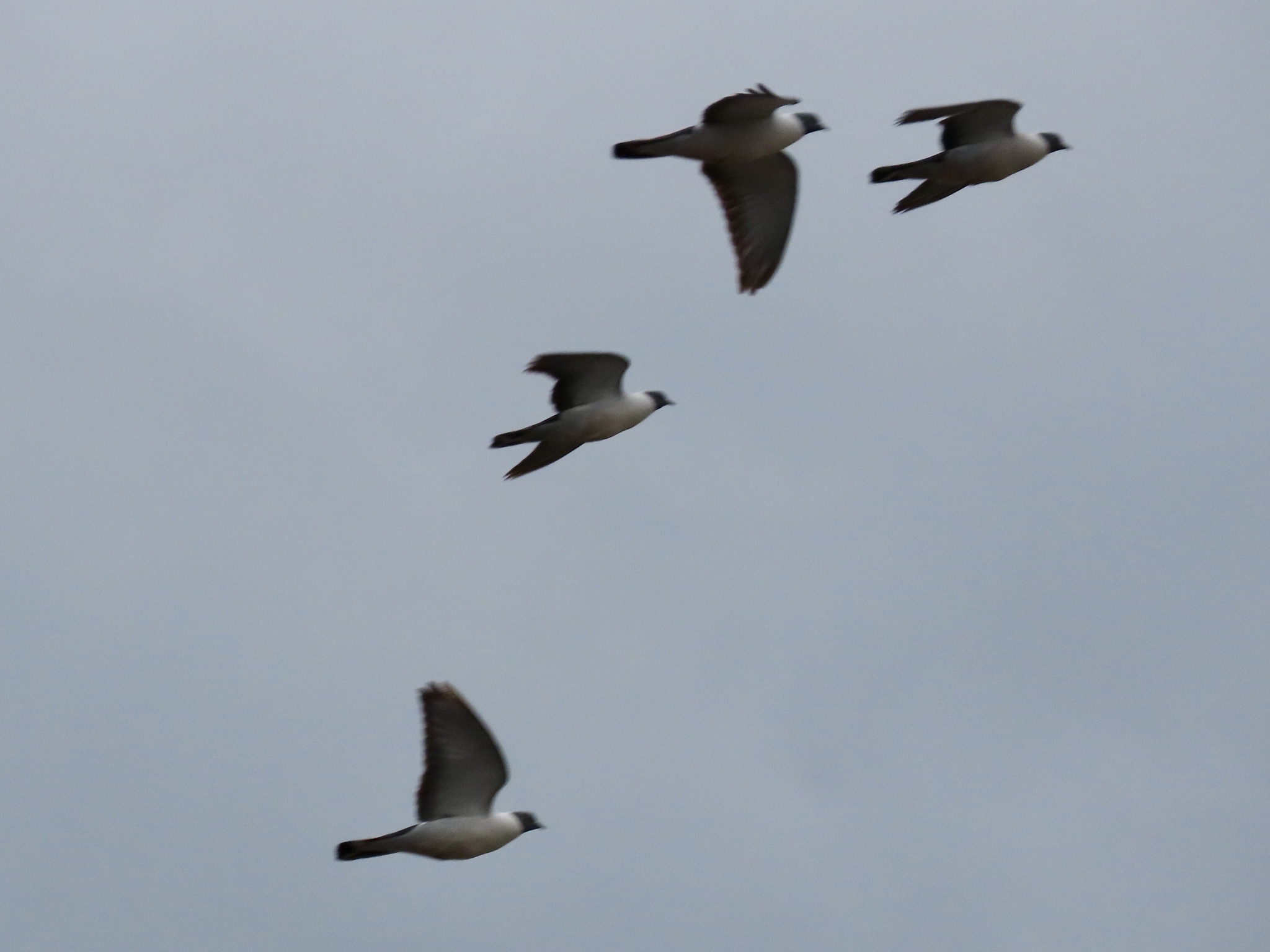
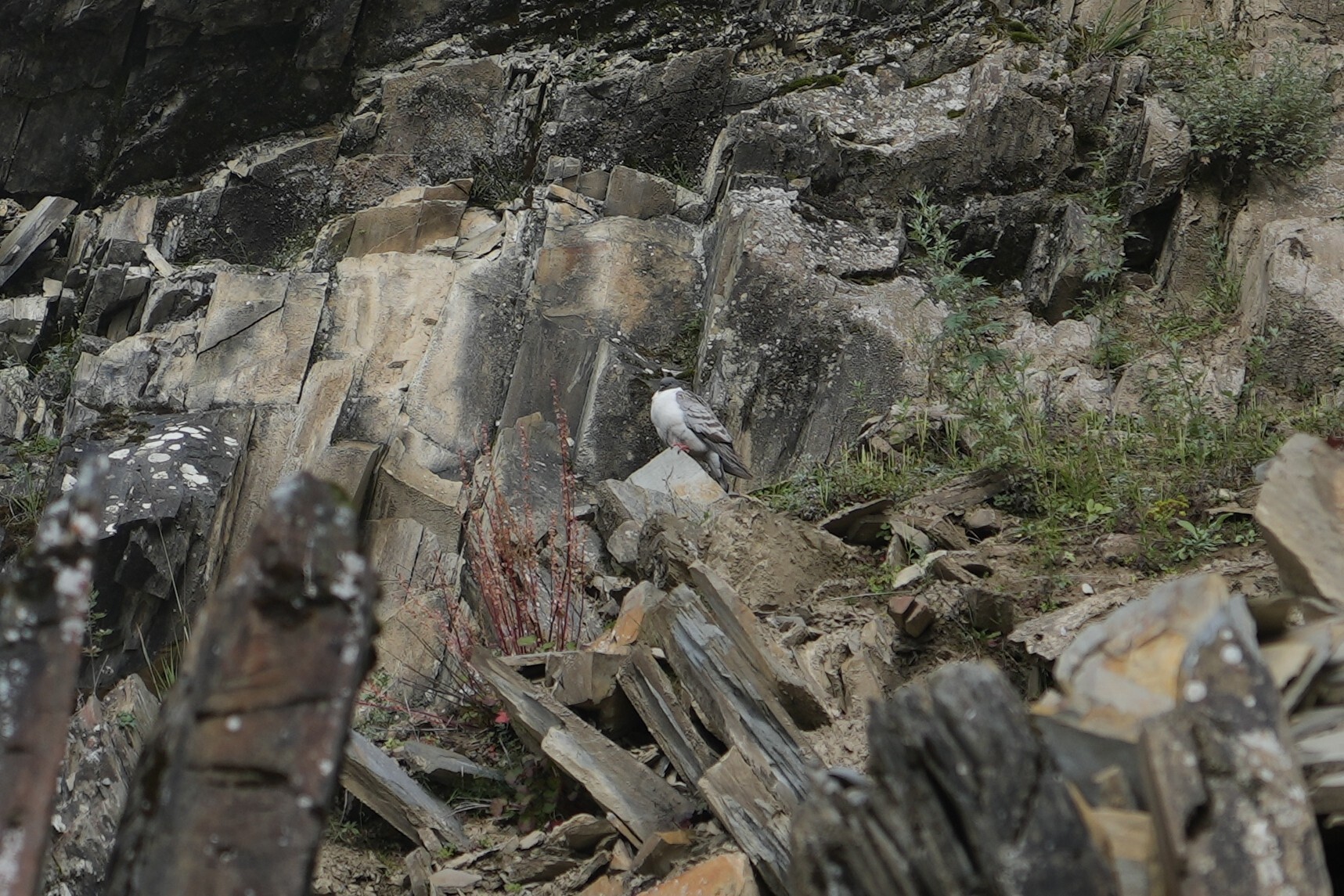
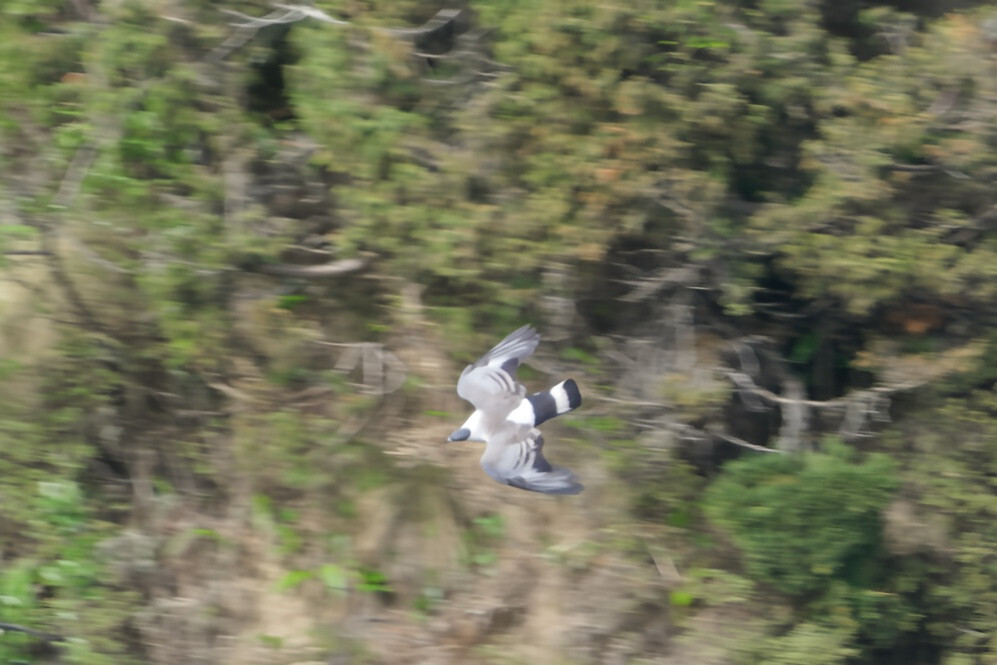
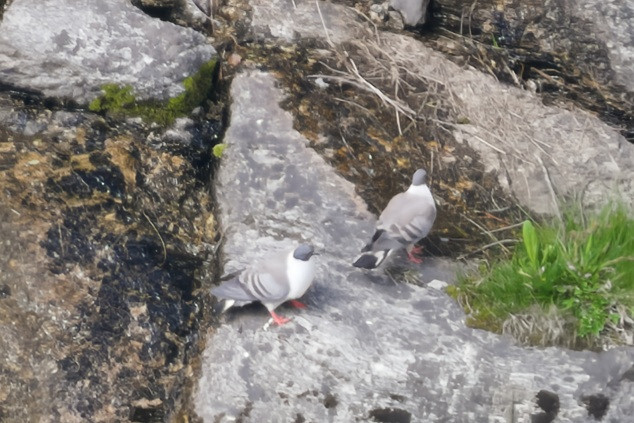
This pigeon presents a striking contrast between its blackish head and bright white collar and underparts. The white of the belly gradually shades into ashy coloration toward the abdomen. Upperparts are brownish-grey, distinguished by a conspicuous white patch on the lower back. Wings are pale grey marked with three distinct brown bars. The tail is black with a clear white band across the middle that narrows and curves forward toward the outer tip. Juveniles display narrow, pale buff margins on their wing and upperpart feathers, with the white underparts tinged buff. The combination of the white collar, white lower back patch, and distinctive tail pattern provides reliable identification marks.
Identification
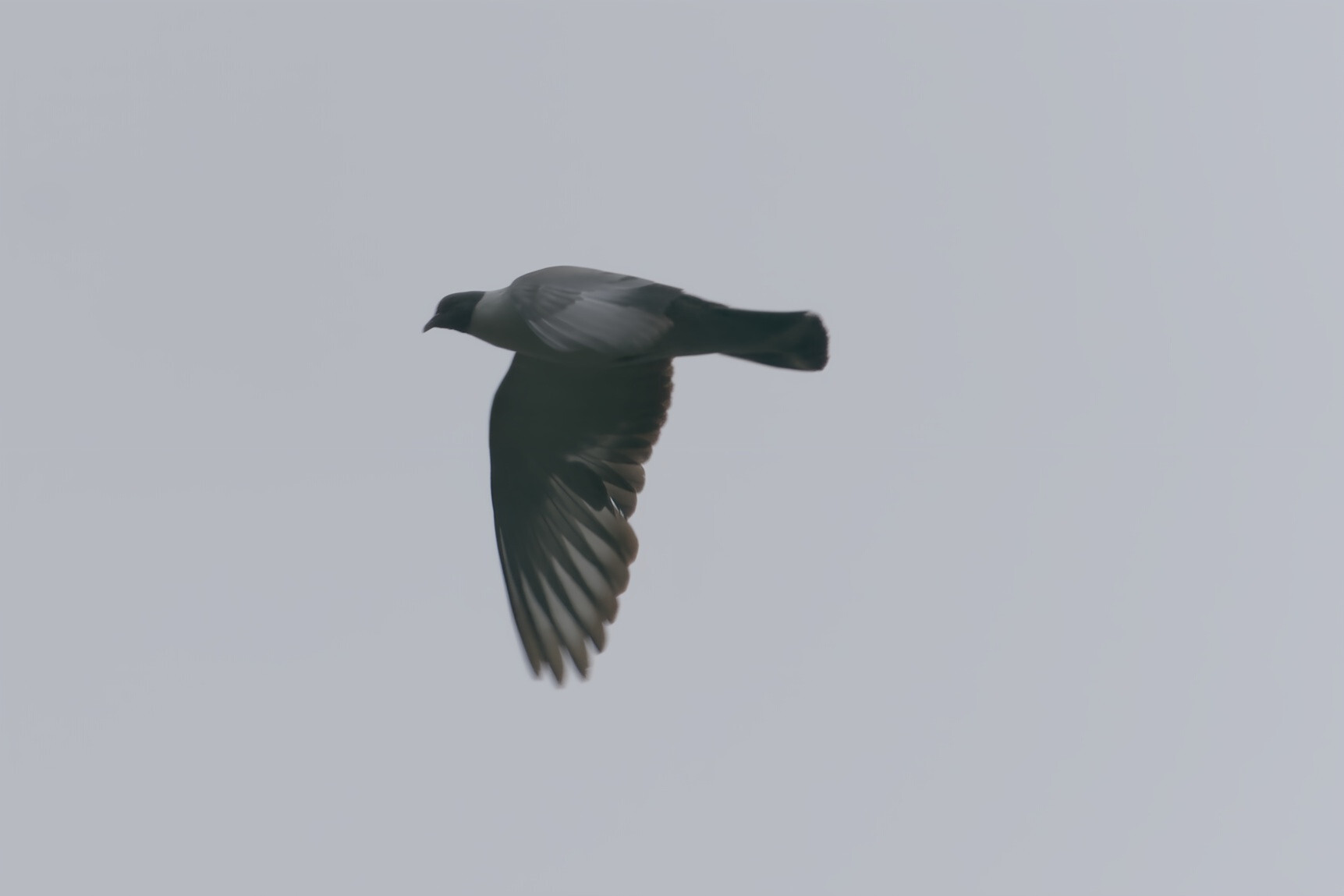
The white neck collar and white lower back patch distinguish this pigeon from similar columbids in its range. When compared to the hill pigeon, this species shows a cleaner white collar and more contrasting head pattern. The rock dove typically lacks the extensive white underparts and shows different tail markings. In flight, the three brown wing bars and white tail band are distinctive features. The blackish head against the white collar creates a notably high-contrast appearance unlike the more uniformly colored hill pigeon.
Distribution & Habitat
This species occupies rocky mountainous terrain across a broad swath of Central Asia, including Afghanistan, Bhutan, China, India, Kazakhstan, Myanmar, Nepal, Pakistan, Tajikistan, and Turkmenistan. Two subspecies are recognized: the western population occurs in the Himalayas from western Afghanistan to Sikkim, while the eastern subspecies inhabits the mountains of eastern Tibet, Nan Shan in Qinghai province, Yunnan, and extreme northern Myanmar. The western population migrates to the Alay Mountains and Pamir during summer. These resident birds occur from valley floors up to the snow line in open rocky country.
Behavior & Ecology
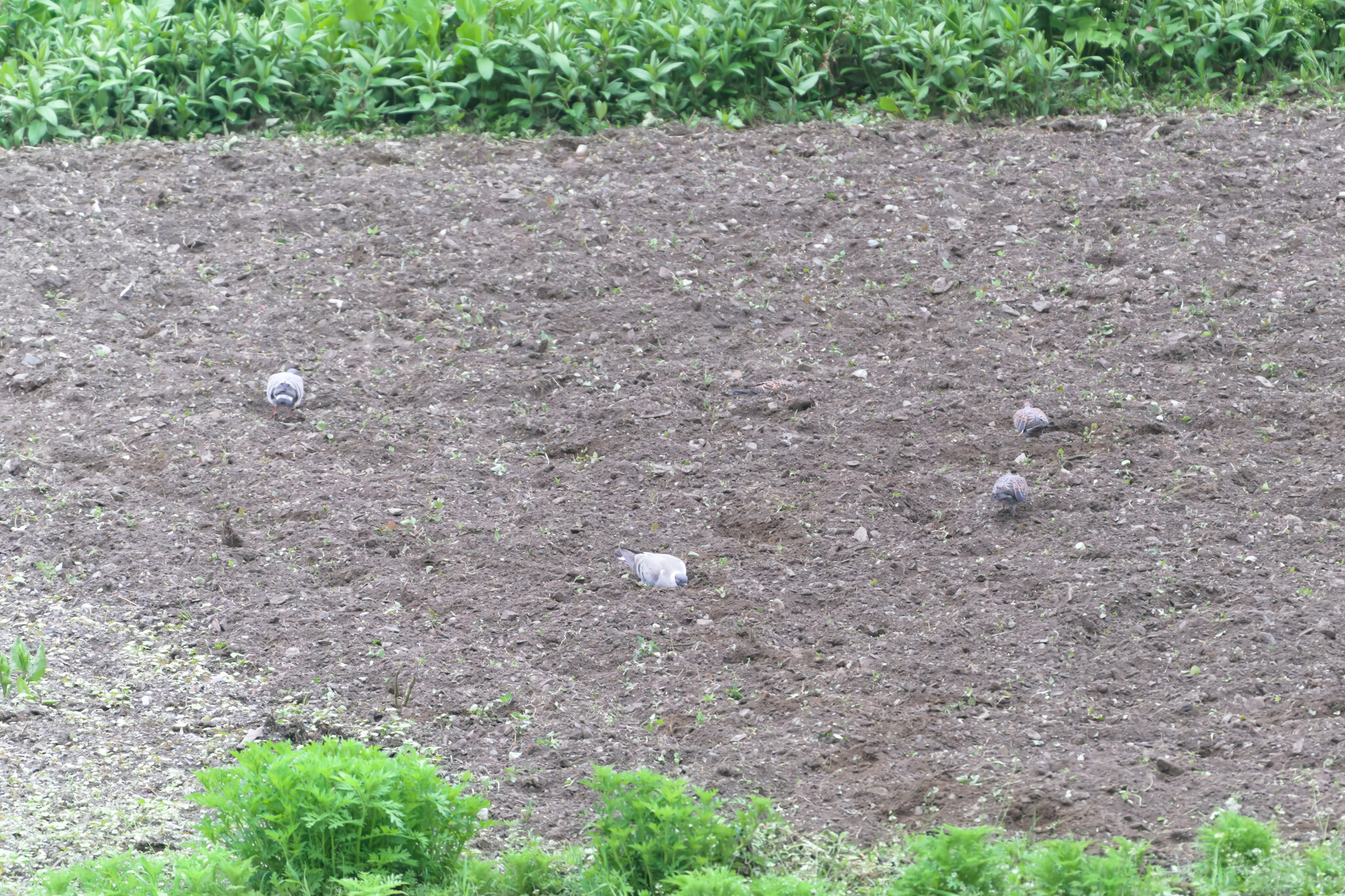
Foraging occurs in open fields and grasslands in pairs or small flocks during the day, with the diet comprising grain, buds, shoots, berries, seeds, and bulbs. At night, birds retreat to cliff faces to roost, and breeding colonies are established in cliff crevices and caves where untidy stick nests are constructed from available vegetation and debris. Nests are typically reused with minor repairs annually. The clutch consists of usually two white eggs. During summer, birds descend to lower elevations and form small flocks or pairs. Winter gatherings can exceed 150 individuals, often mixed with other pigeon species. Vocalizations are described as similar to other doves, though specific details are not provided.
Conservation
The species holds a conservation status of Least Concern according to the International Union for Conservation of Nature. It is described as common and widely distributed with an extremely large geographic range. The population appears stable with no significant decline detected, justifying its secure status. The broad distribution across multiple countries and apparent adaptability to human-modified landscapes likely contribute to its resilient population.
Culture
No specific cultural references, folklore, or mythological associations are documented for this species in available sources.
Source: Wikipedia · CC BY-SA 3.0
Taxonomy
- Order
- Columbiformes
- Family
- Columbidae
- Genus
- Columba
- eBird Code
- snopig1
Subspecies (2)
-
Columba leuconota gradaria
mountains of eastern Tibet to southwestern China (Yunnan) and far northern Myanmar
-
Columba leuconota leuconota
Himalayas from western Afghanistan to Sikkim
Data Sources
Species description from Wikipedia, licensed under CC BY-SA 3.0.
Bird images and sounds sourced from GBIF, contributed by citizen scientists worldwide under Creative Commons licenses.
Taxonomy data from AviList 2025.