
Yellow-eyed Pigeon
Columba eversmanni
中亚鸽
Introduction
This medium-sized pigeon is a Central Asian species. Its breeding range extends across the steppes and semi-arid lowlands of southern Kazakhstan, Uzbekistan, Turkmenistan, Tajikistan, Kyrgyzstan, Afghanistan, northeastern Iran, and extreme northwestern China. In autumn, it migrates southward to winter in Pakistan, Jammu and Kashmir, and parts of Rajasthan, India, where it inhabits agricultural areas, orchards, and open countryside with scattered trees, particularly mulberry trees. The species nests in cliff holes, hollow trees, or ruined buildings, constructing a stick platform on which it lays two white eggs. During the breeding season, it produces a triple "oo-oo-oo" call. It is classified as Vulnerable by the IUCN due to significant population declines from hunting pressure throughout its range.
Description
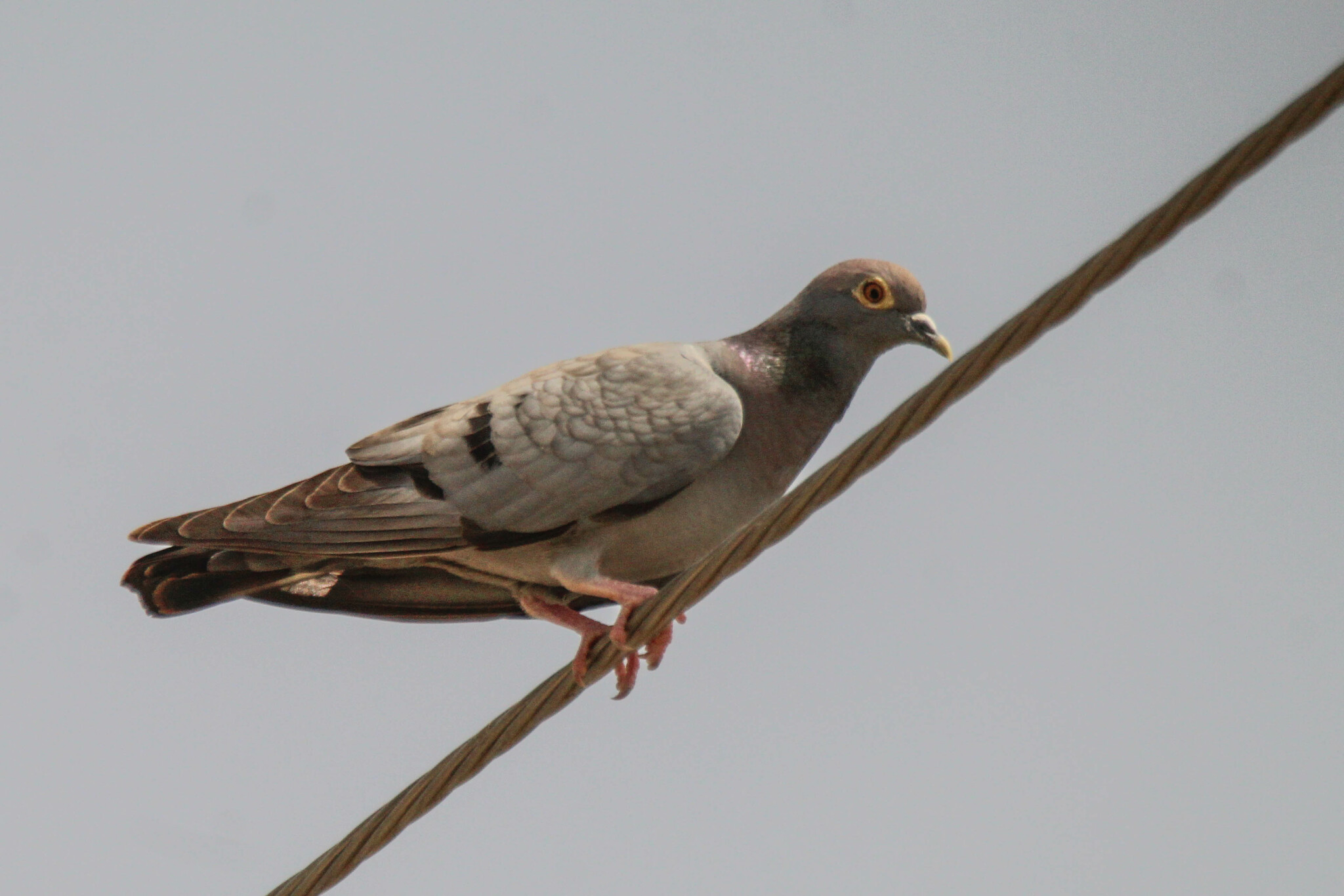
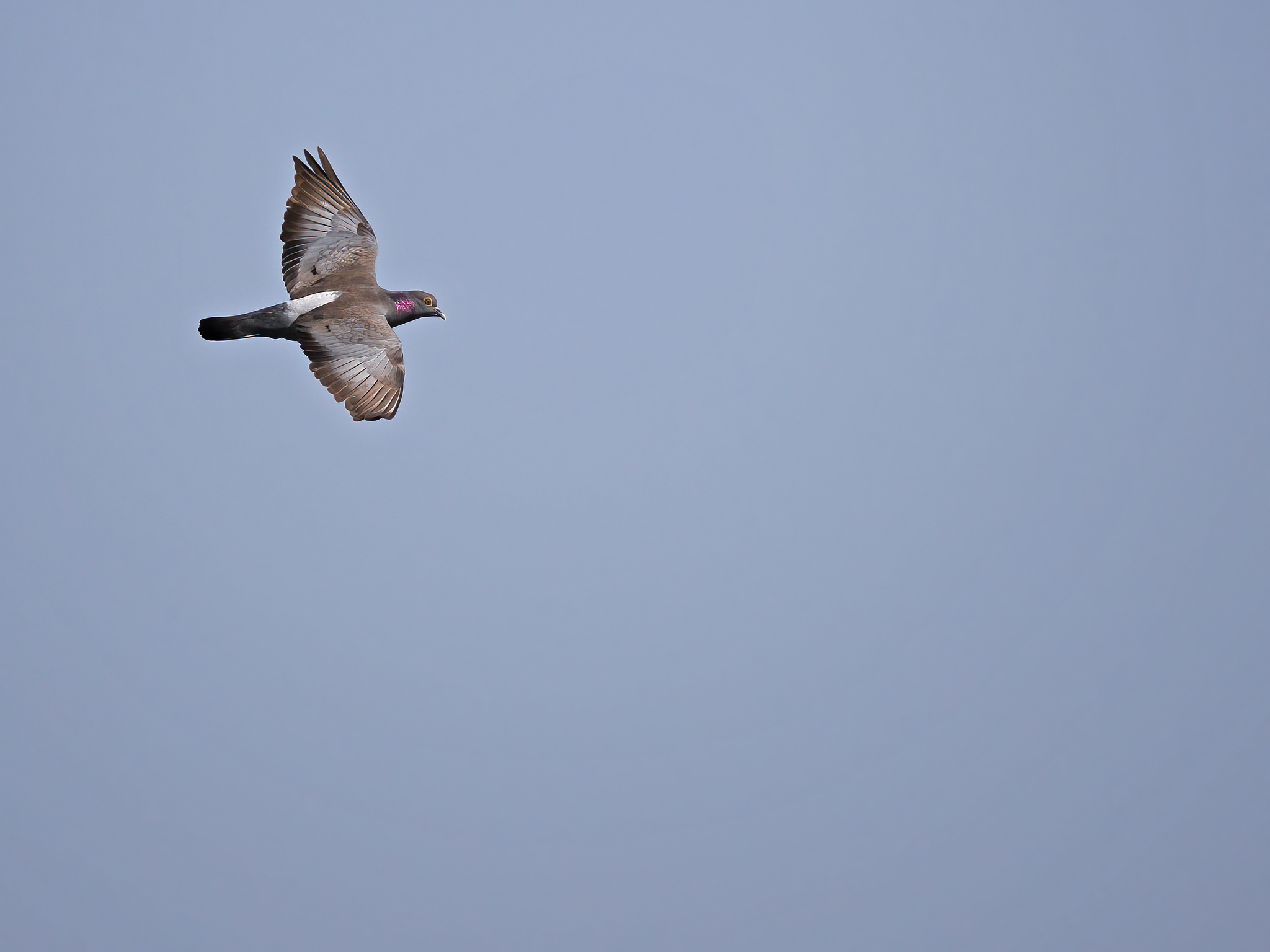
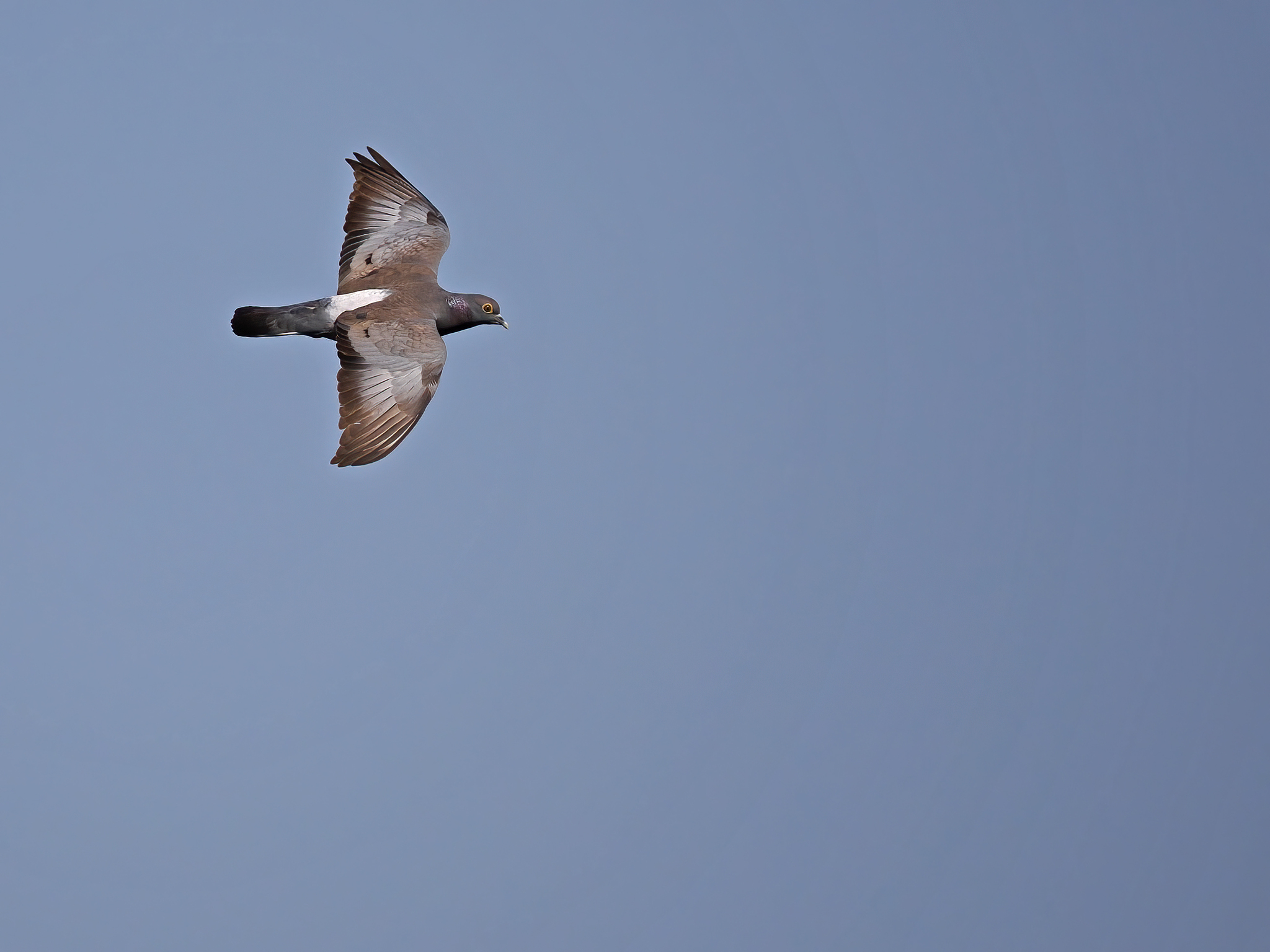
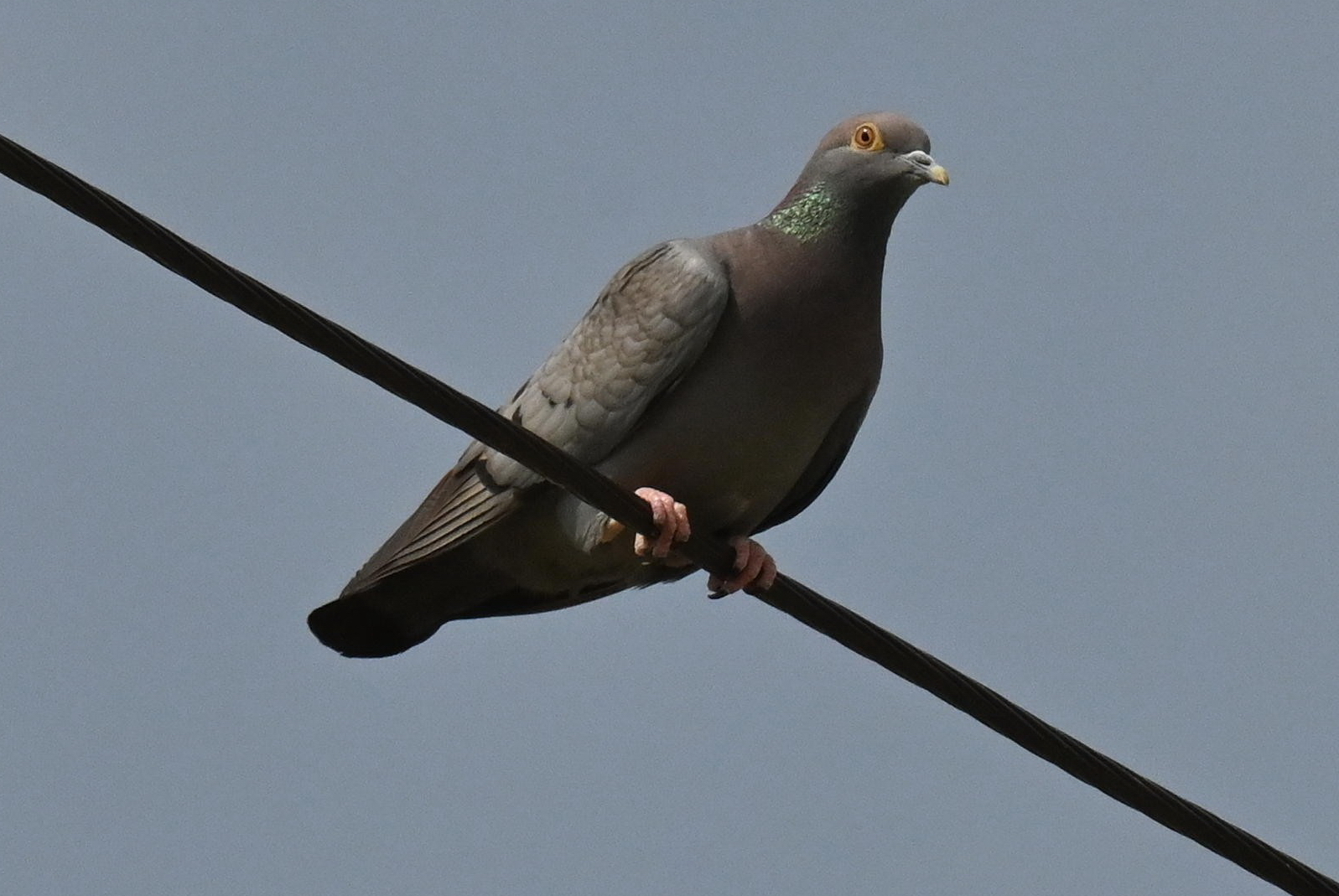
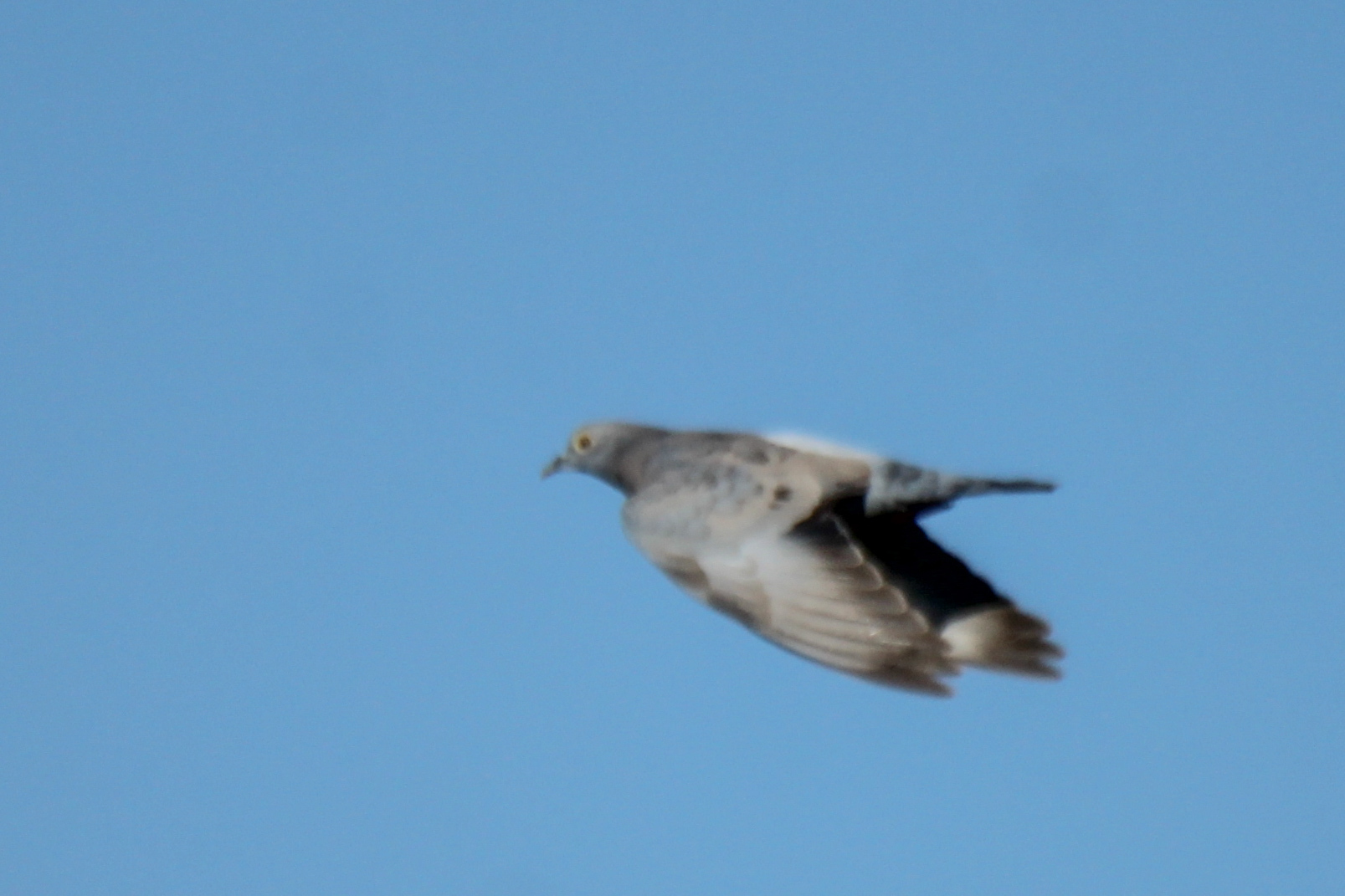
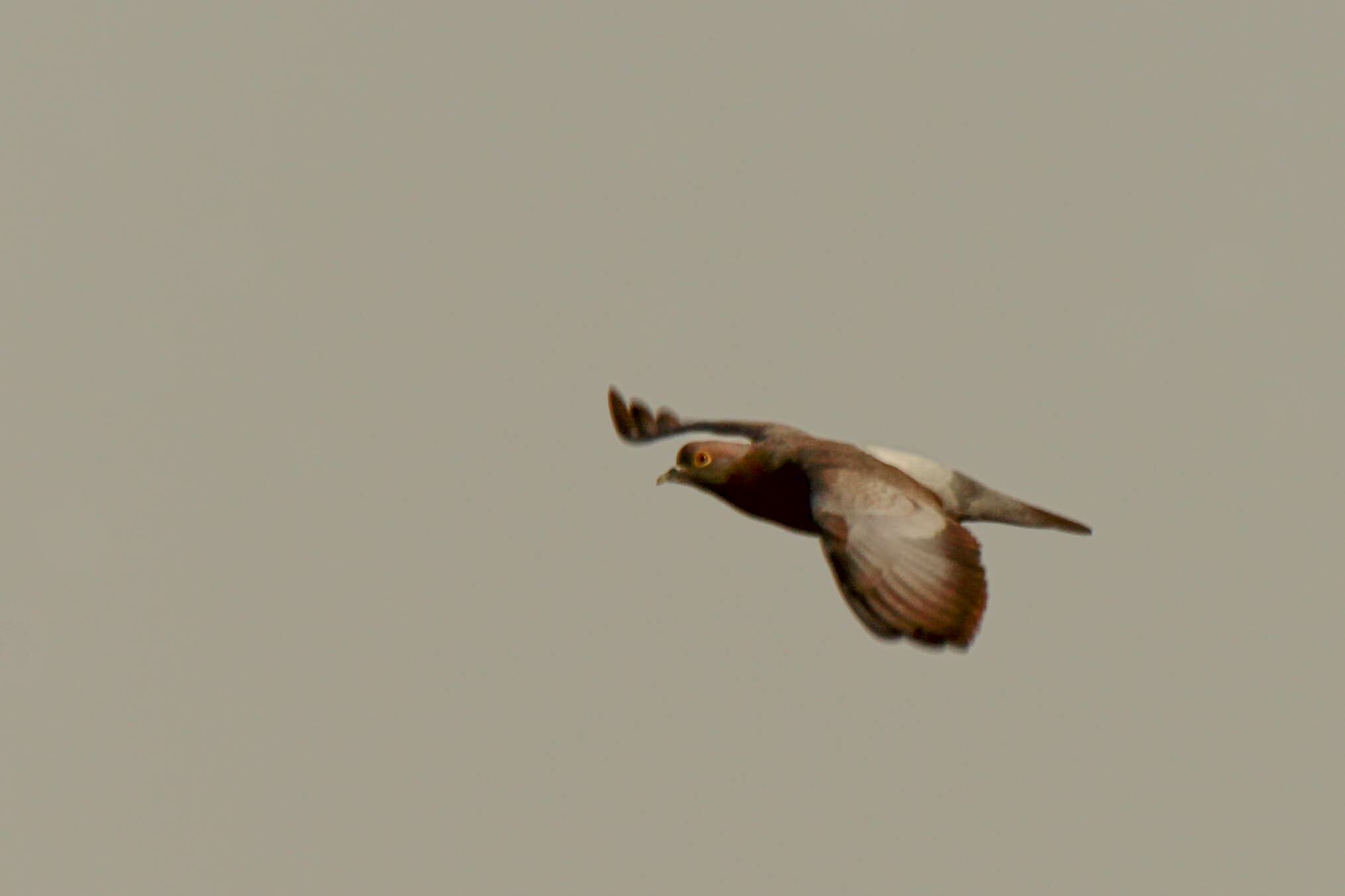
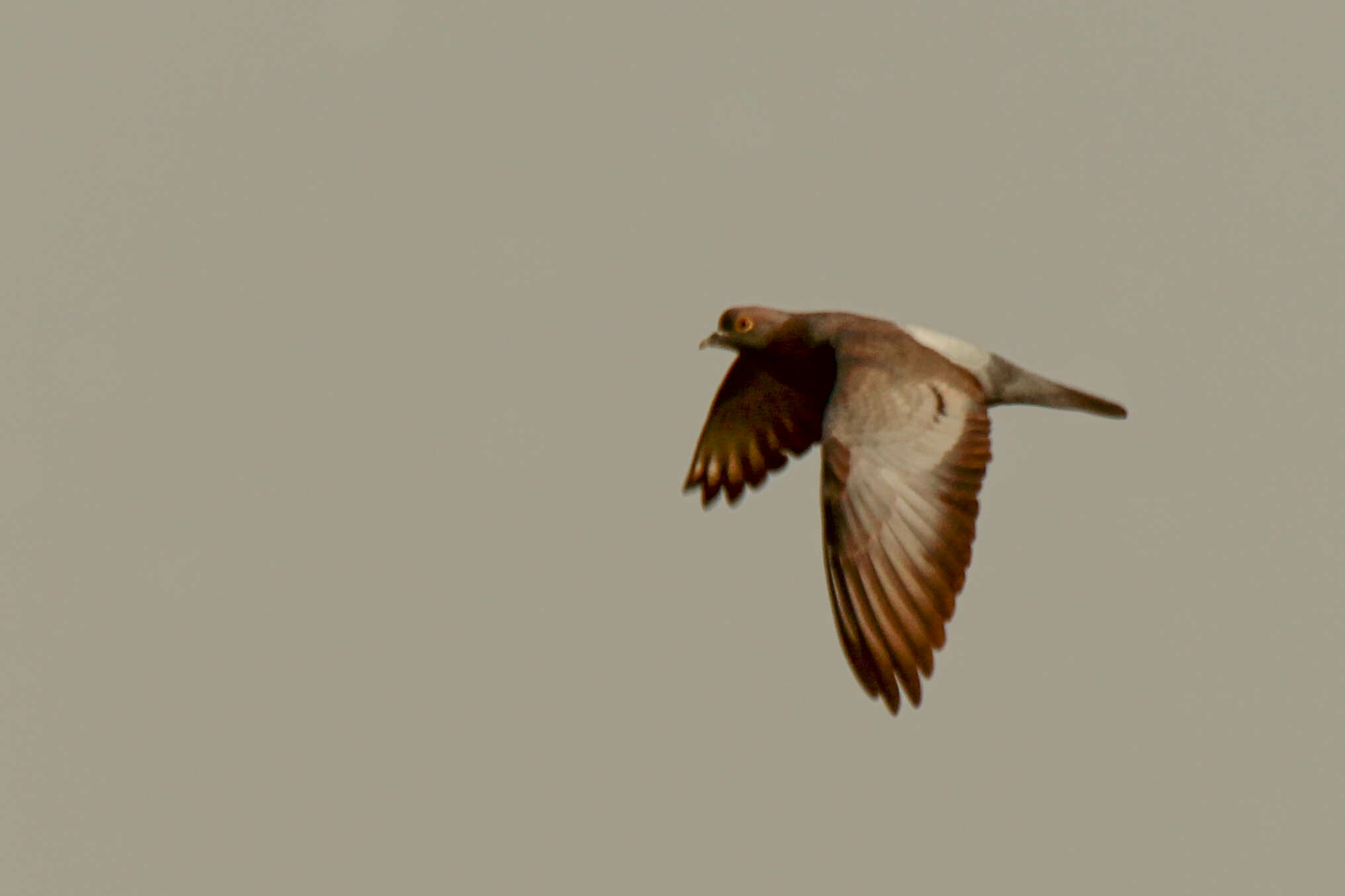
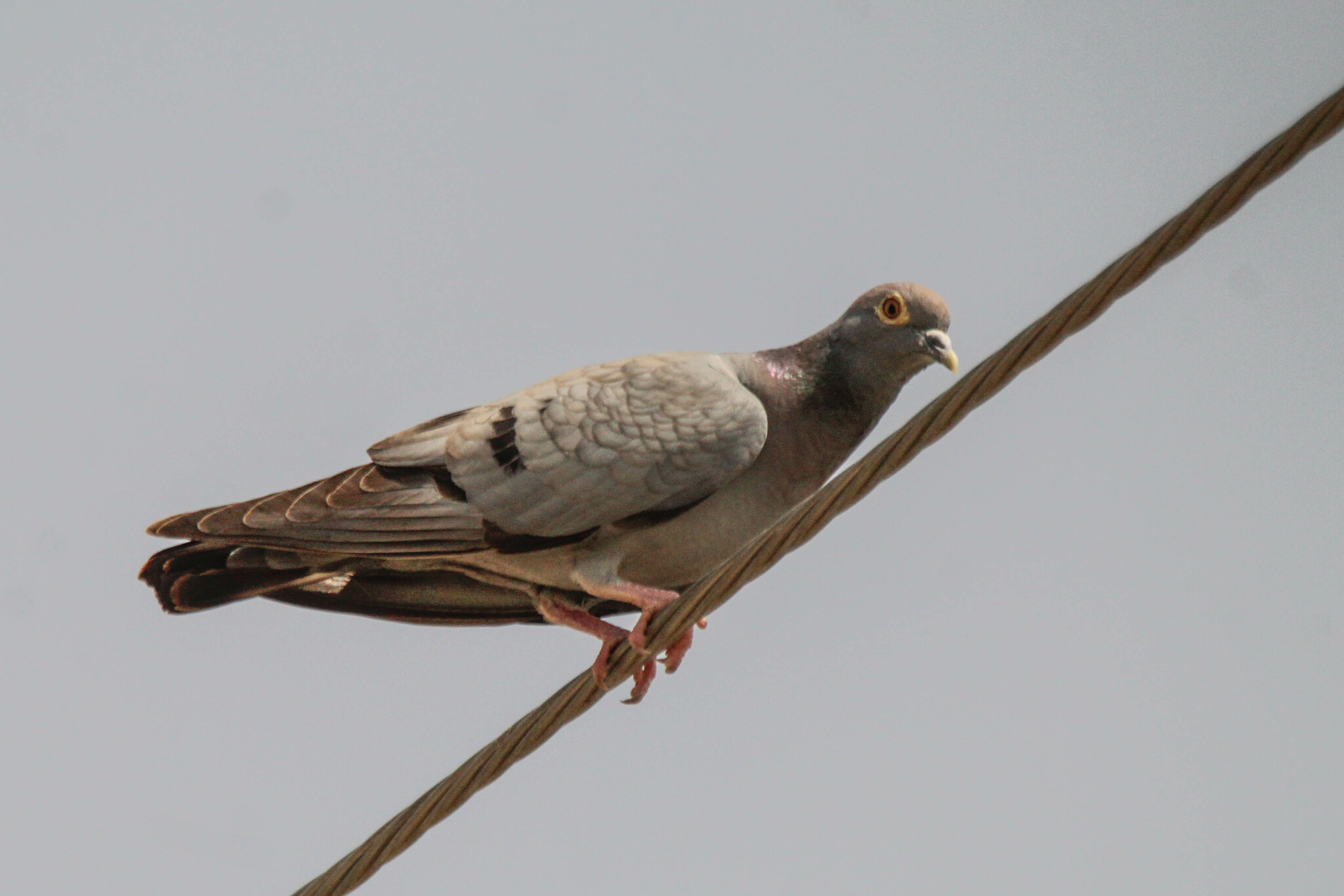
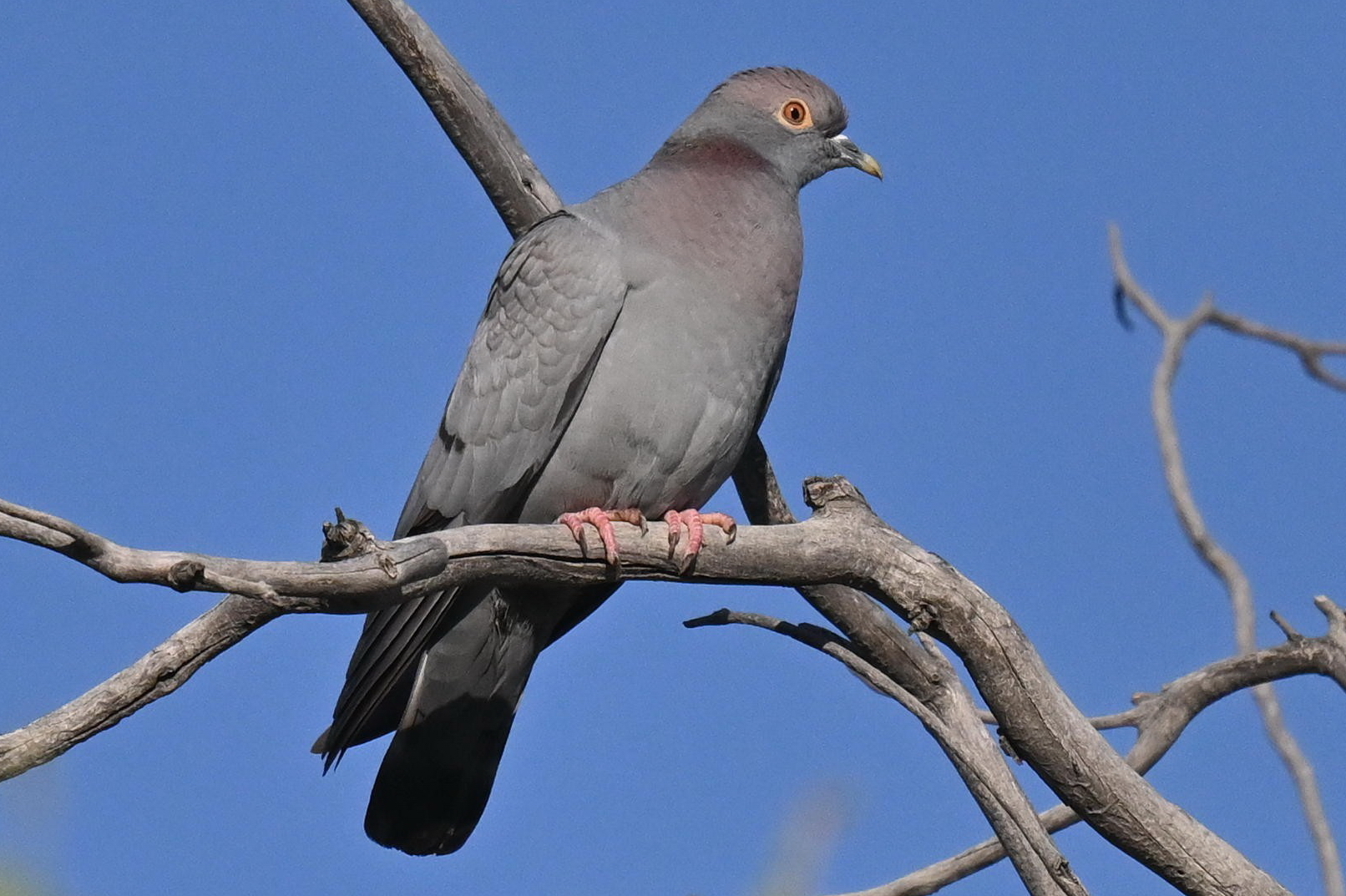
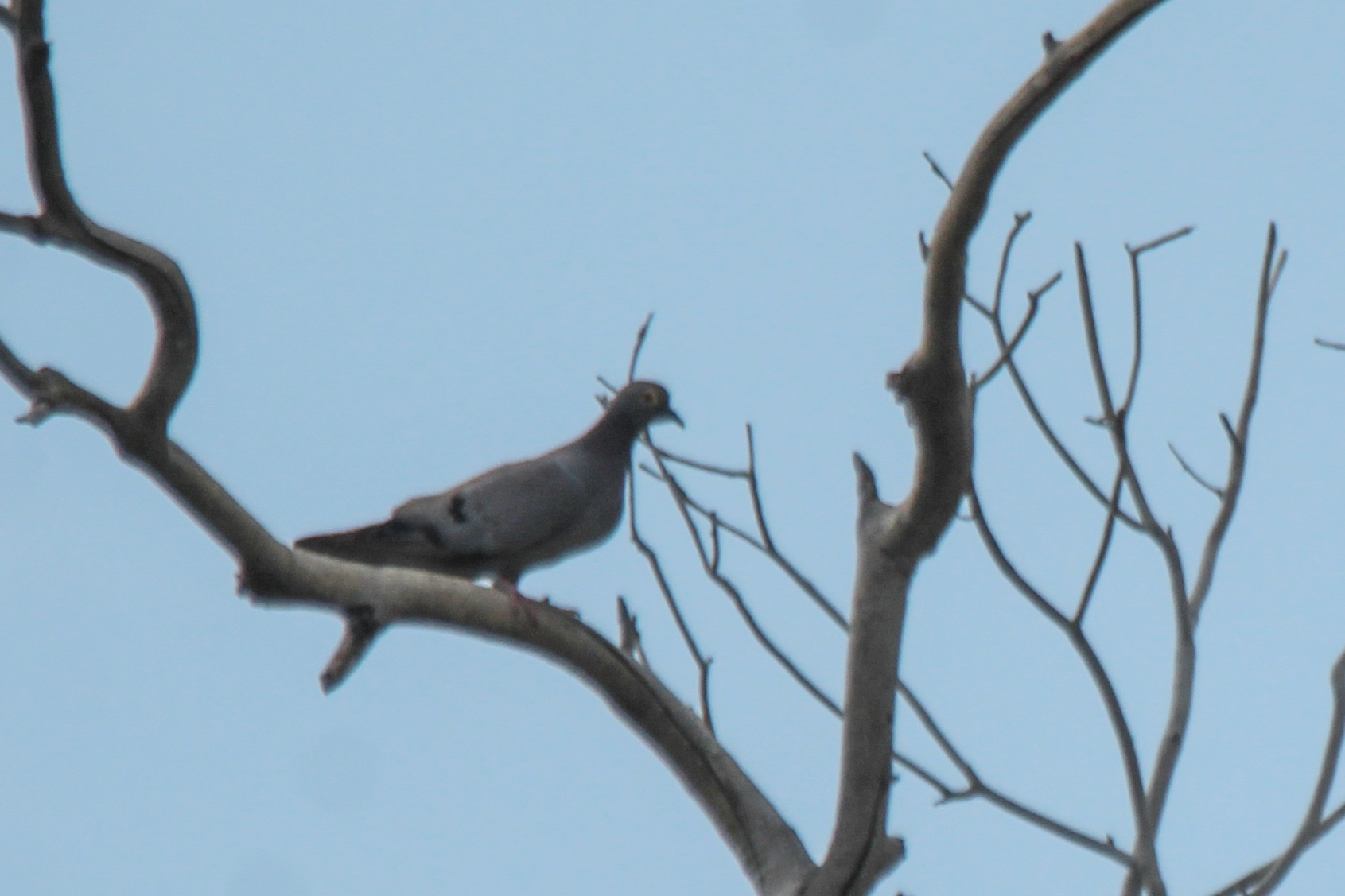
A compact pigeon measuring approximately 30 cm in length and weighing 183-234 g. The plumage is predominantly grey with a subtle brownish tinge on the upperparts. The crown, throat, and breast display a pinkish-purple iridescent sheen. A distinctive black bar crosses the wings, while the tail features a diffuse dark band. The lower back, rump, and underwing coverts are white or pale grey. The eye is surrounded by bare yellowish skin with a striking yellow iris. The beak is yellowish and the legs and feet are pink.
Identification
This species can be confused with the rock dove, which has more prominent wing bars and a more defined tail band. The hill pigeon is also similar but may be distinguished by its white subterminal band on the tail, positioned above the black terminal band. The pale overall coloration and the distinctive yellow eye and surrounding bare skin are helpful field marks.
Distribution & Habitat
Breeds across the steppes and semi-arid lowlands of southern Kazakhstan, Uzbekistan, Turkmenistan, Tajikistan, Kyrgyzstan, Afghanistan, northeastern Iran, and extreme northwestern China. It migrates southward in October and November to winter in Pakistan, Jammu and Kashmir, and Rajasthan, India, including areas such as Tal Chhapar Sanctuary and Jorbeer, Bikaner. In its breeding range, it inhabits natural steppe habitats, while in winter it favors agricultural fields, orchards, and open countryside with scattered trees, showing a particular attraction to mulberry groves.
Behavior & Ecology
Forages on the ground for seeds, grains, and berries, though it also plucks fruits from trees. It is a social bird, forming flocks during migration and winter, though these are now much smaller than historically, typically numbering only a few dozen. It returns to breeding territories in April, with nesting occurring during late spring and summer. The nest is a simple platform of sticks placed in cliff holes, hollow trees, or abandoned buildings, containing two white eggs. While generally quiet, it occasionally utters a faint, repeated "oo-oo-oo" during the breeding season.
Conservation
Classified as Vulnerable by the International Union for Conservation of Nature. Once abundant throughout its range, the species has experienced a severe population decline. The primary threat is hunting, which occurs both in the breeding grounds and wintering areas. While the current population trend is uncertain, the decline is believed to be ongoing. Conservation efforts are complicated by the species' wide distribution across multiple countries.
Source: Wikipedia · CC BY-SA 3.0
Taxonomy
- Order
- Columbiformes
- Family
- Columbidae
- Genus
- Columba
- eBird Code
- pabpig1
Distribution
northeastern Iran to Siberia, northwestern India, and far western China
Data Sources
Species description from Wikipedia, licensed under CC BY-SA 3.0.
Bird images and sounds sourced from GBIF, contributed by citizen scientists worldwide under Creative Commons licenses.
Taxonomy data from AviList 2025.