Western Jackdaw
Coloeus monedula
寒鸦
Introduction
A passerine bird in the crow family. Ranges across Europe, western Asia, and western North Africa; northern and eastern populations migrate south in winter while southern and western populations are mostly resident. Inhabits farmland, open woodland, coastal cliffs, and urban settings. Highly gregarious and vocal, living in small groups with complex social structures. Like other corvids, is intelligent and has been observed using tools. An omnivorous and opportunistic feeder, consuming plant material, invertebrates, and food waste from urban areas. The global population is substantial, with an estimated 15.6 to 45 million individuals in Europe alone.
Description
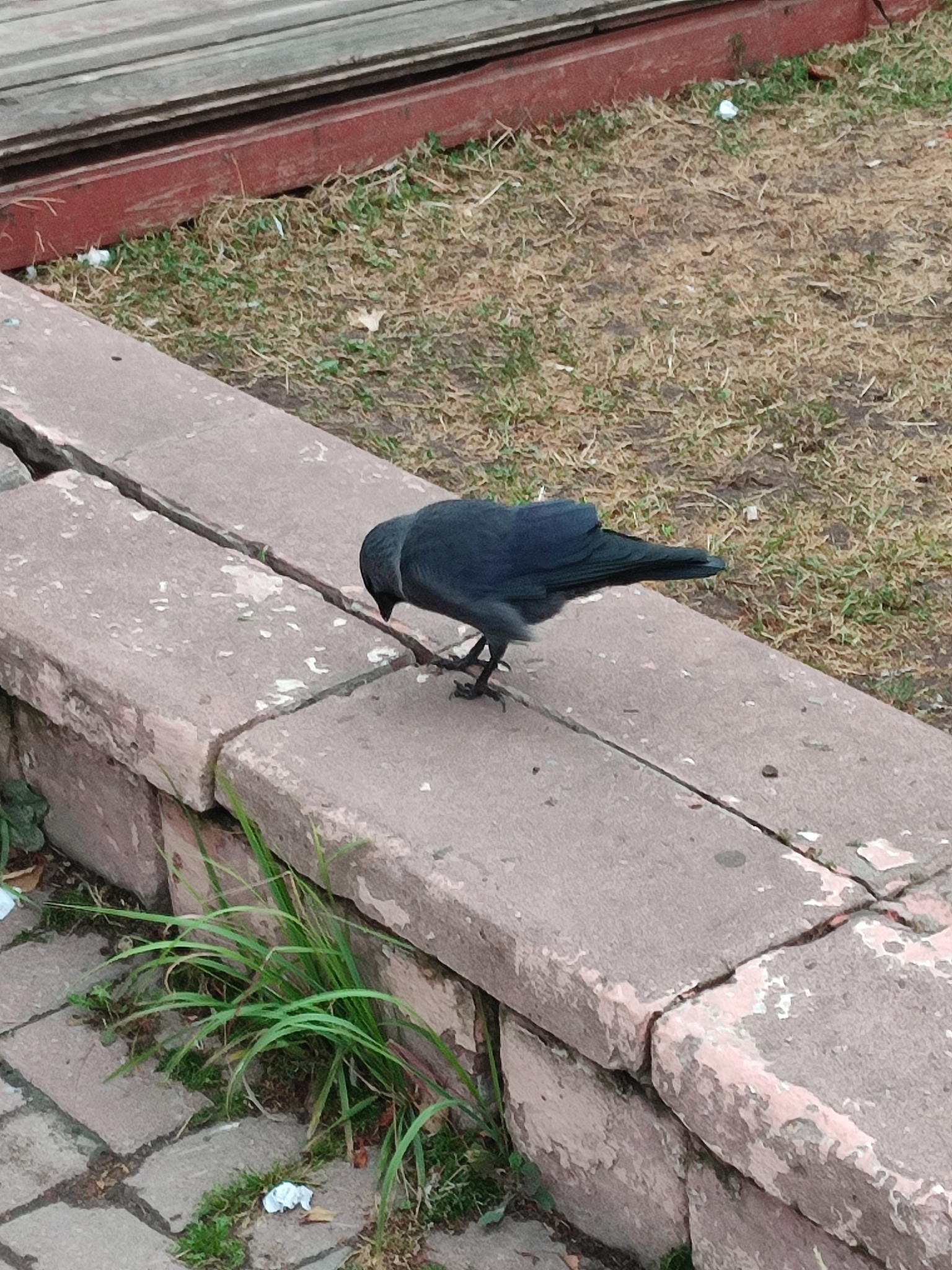
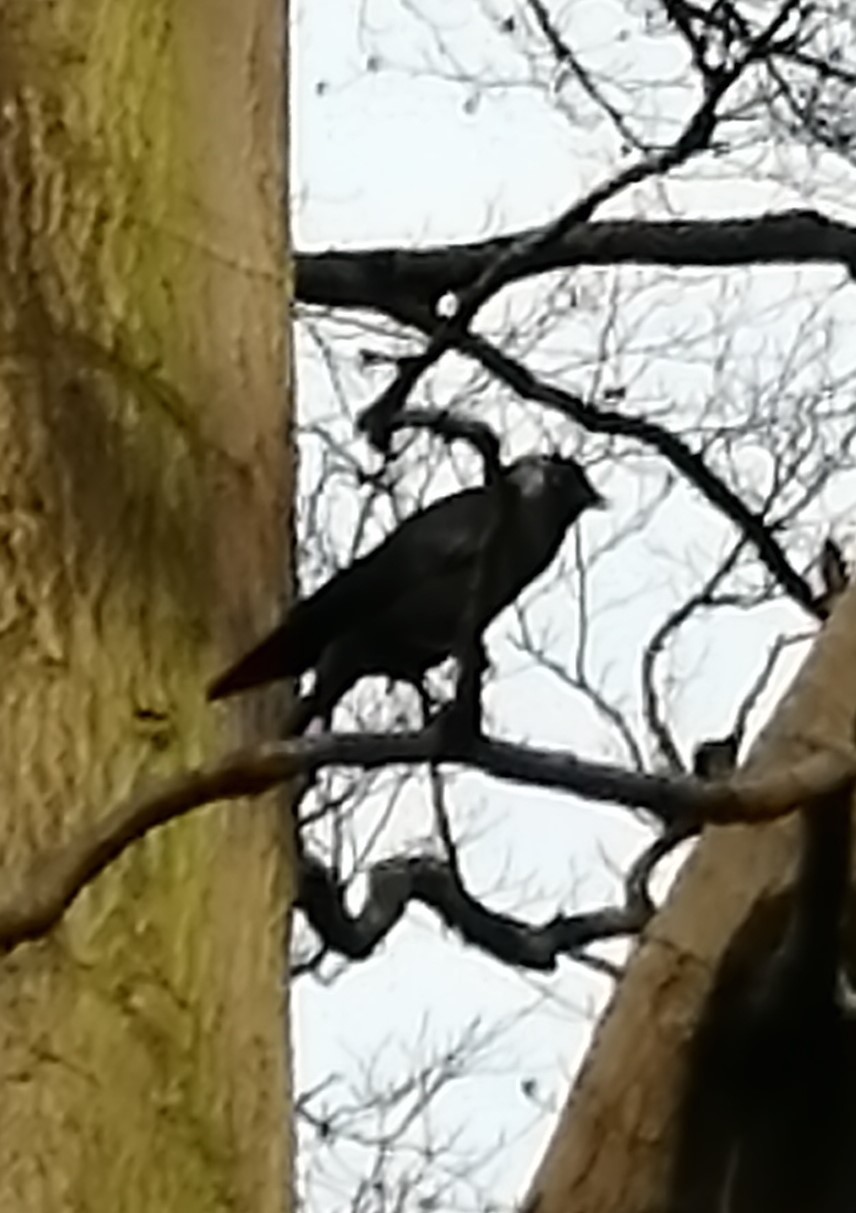
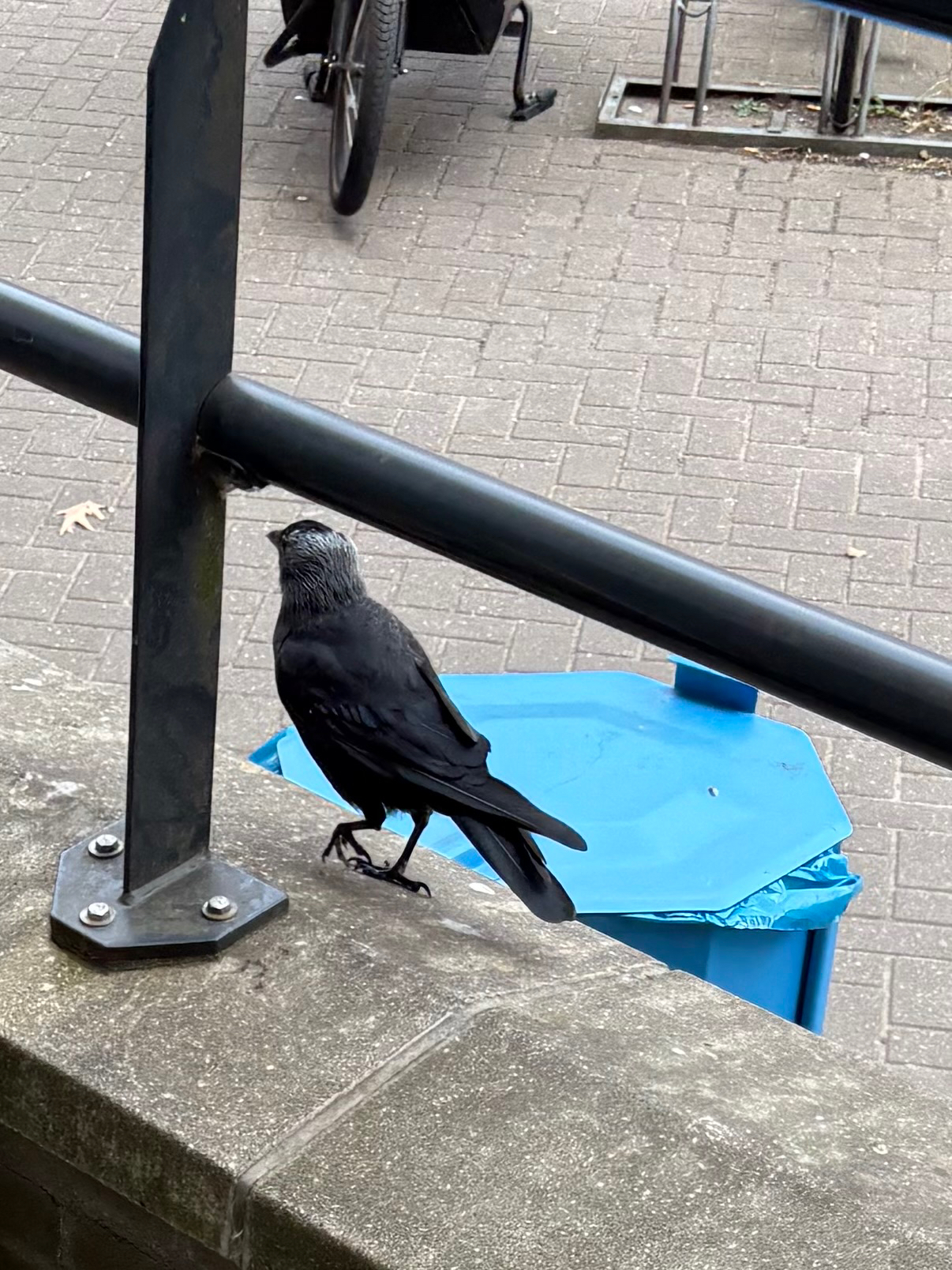
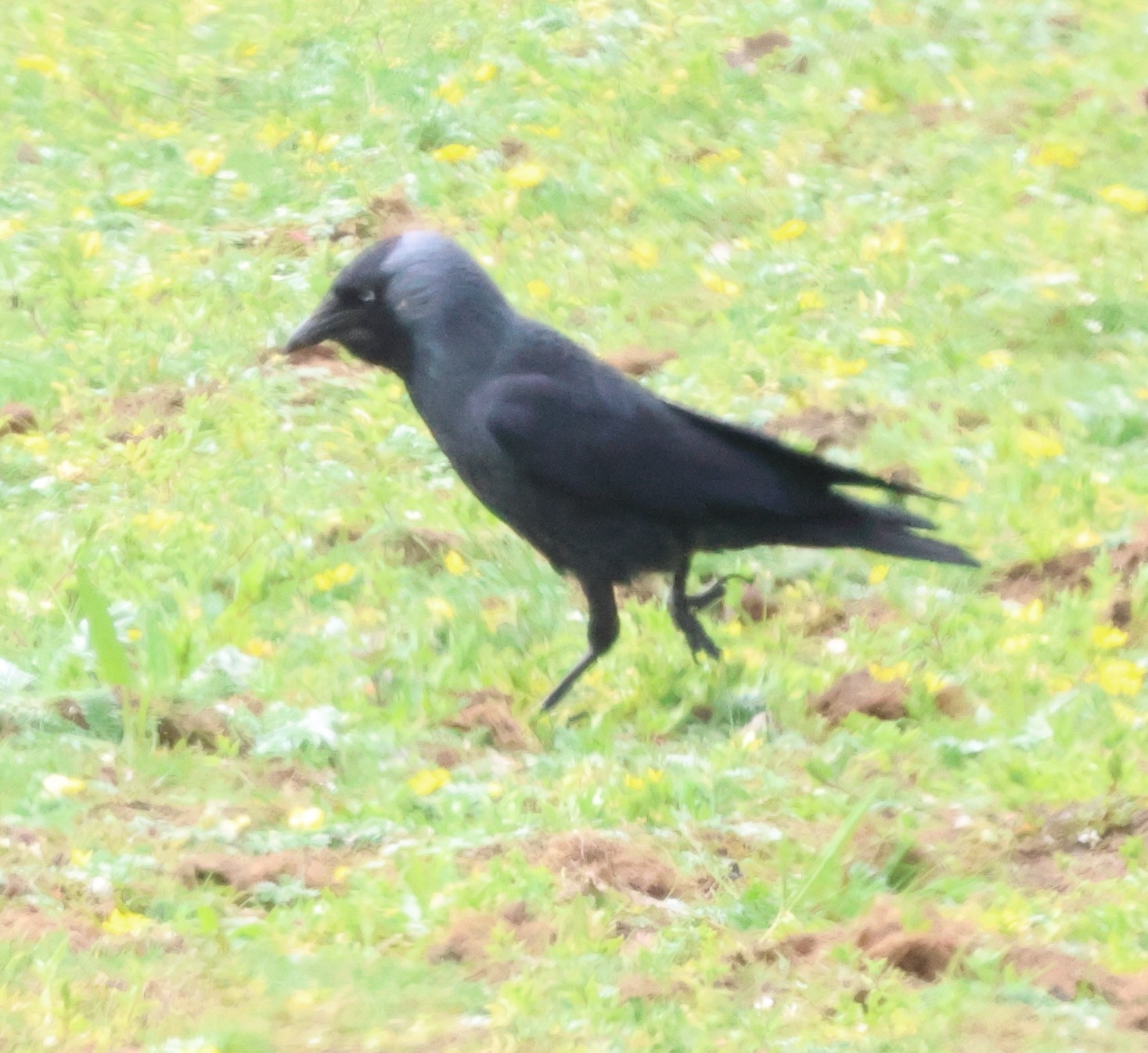
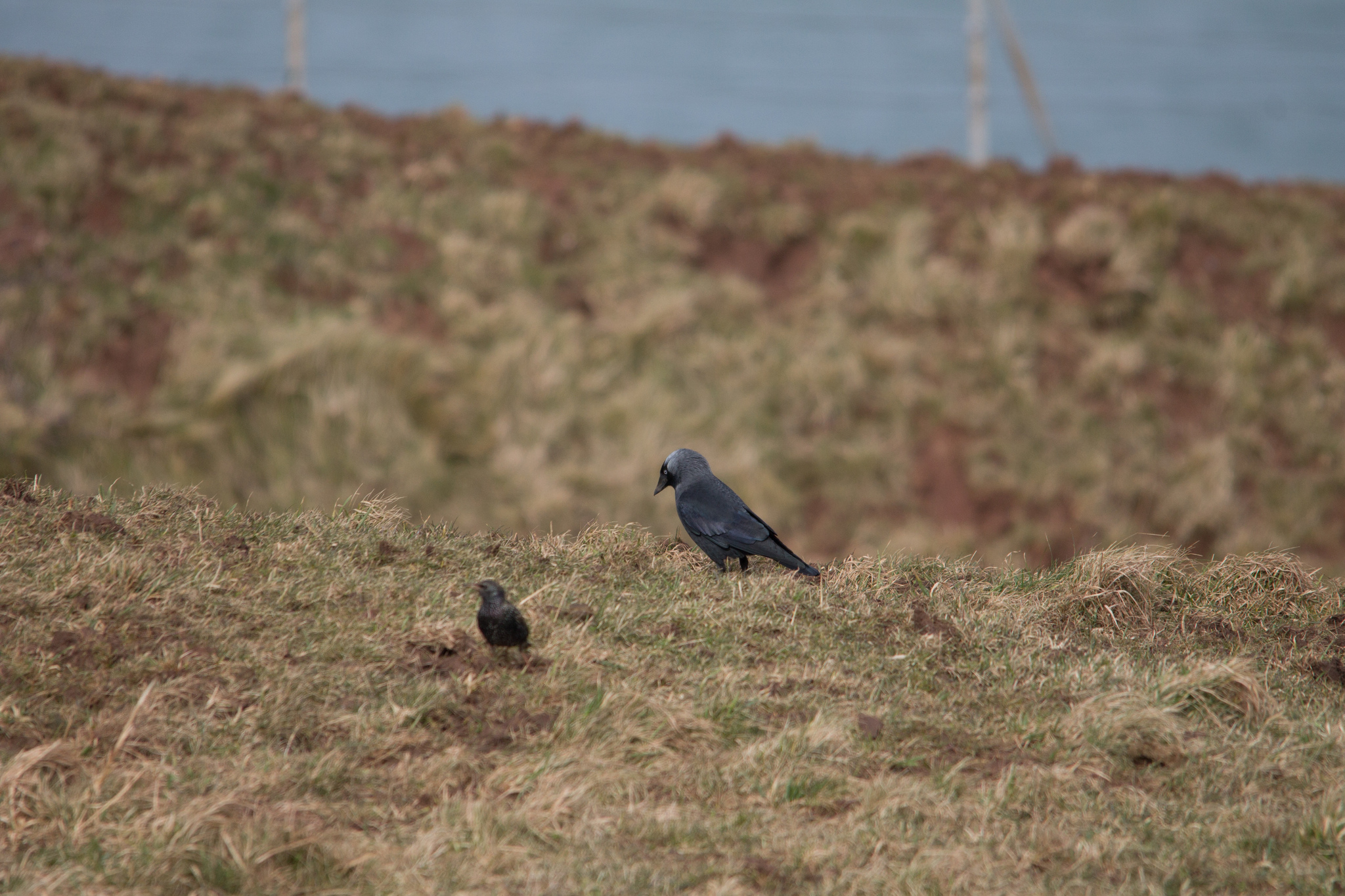
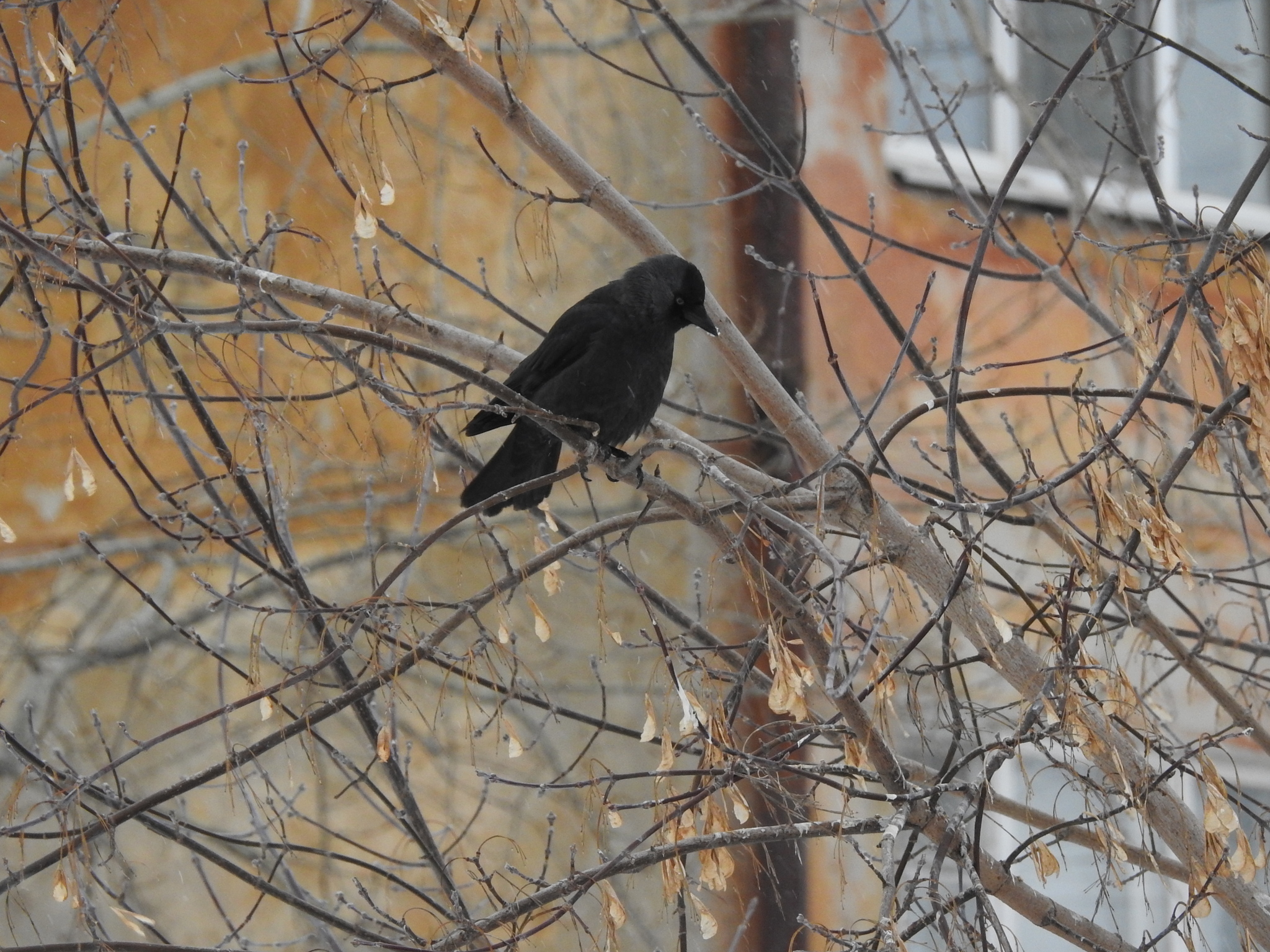
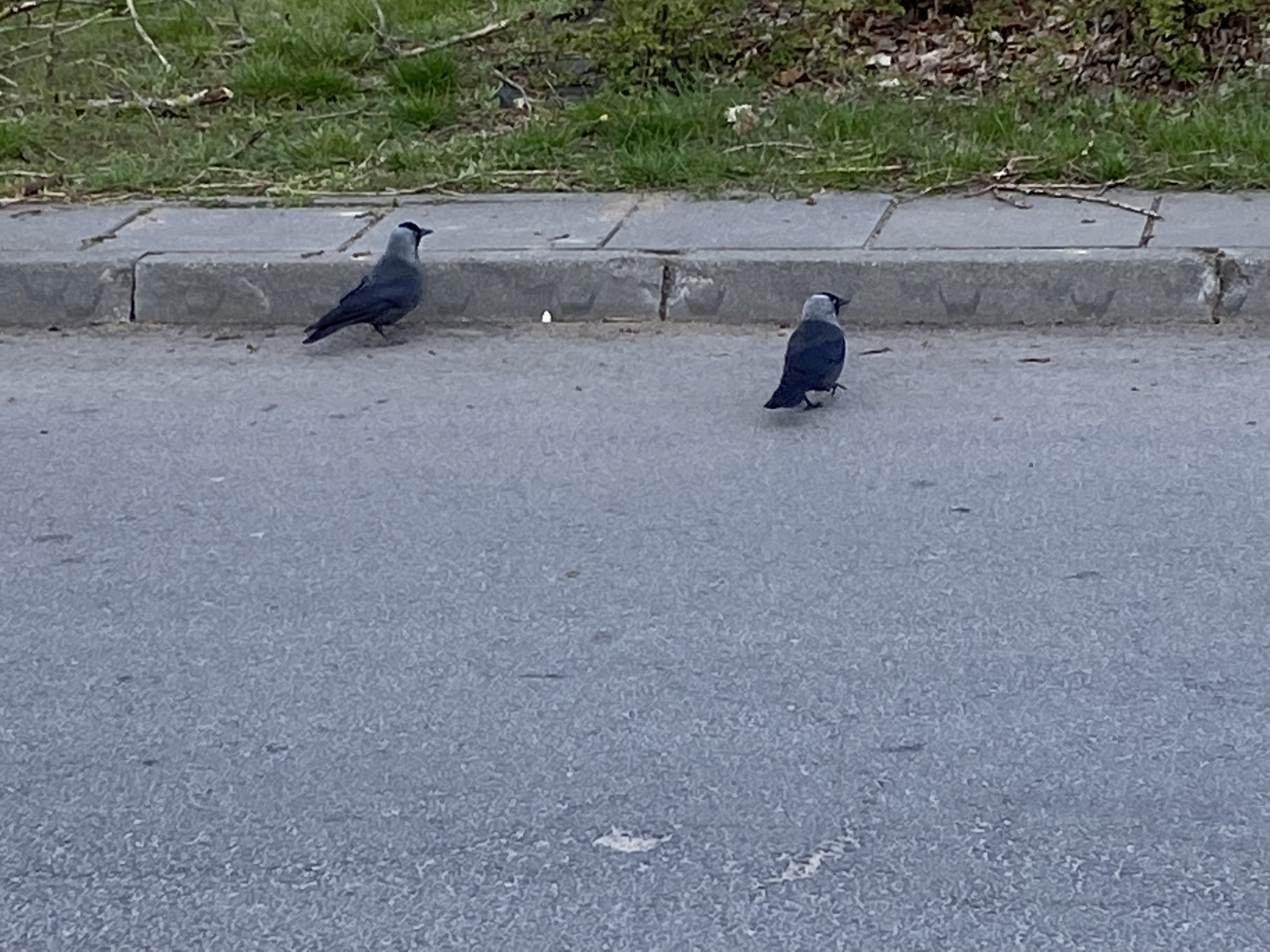
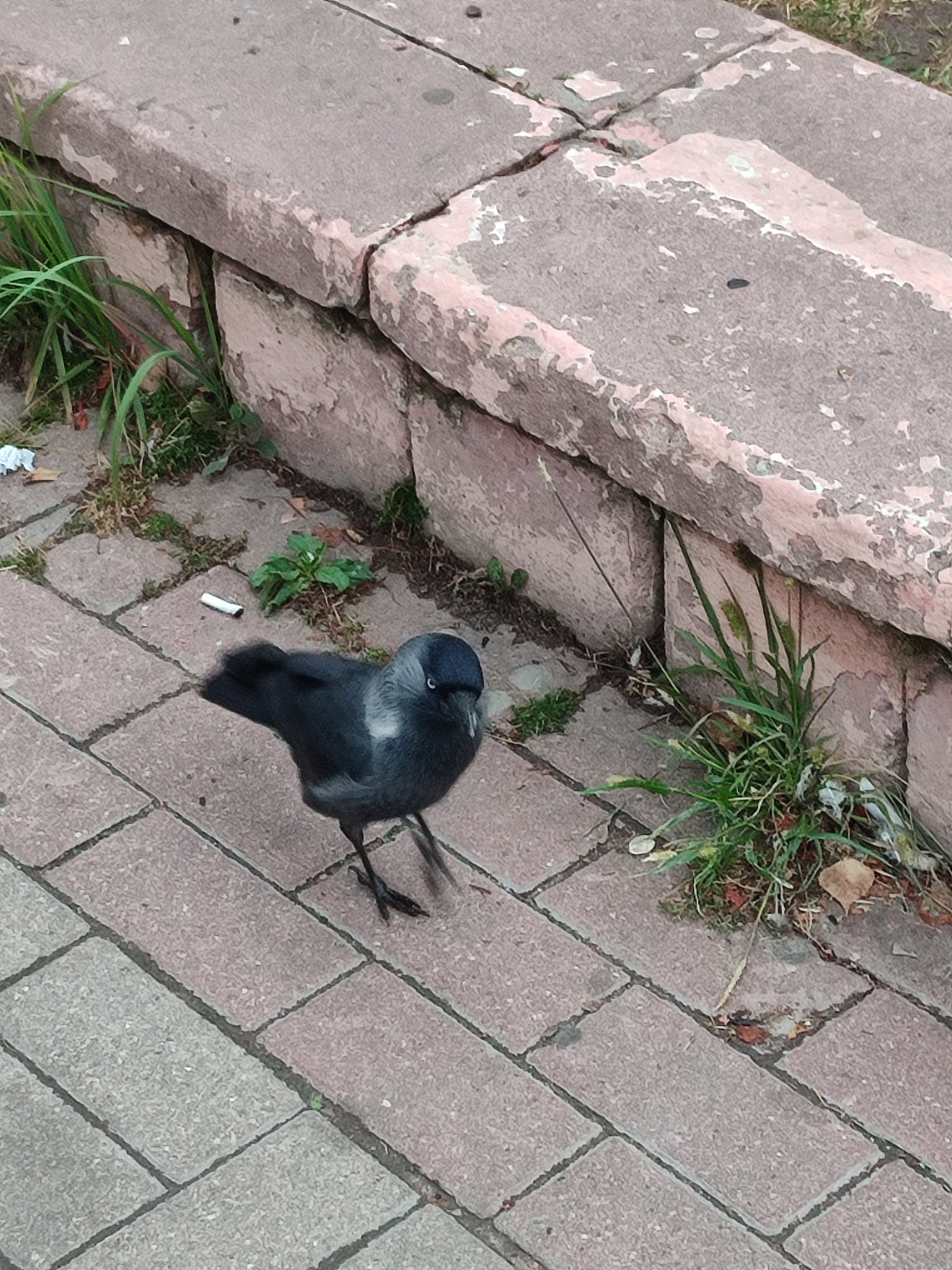
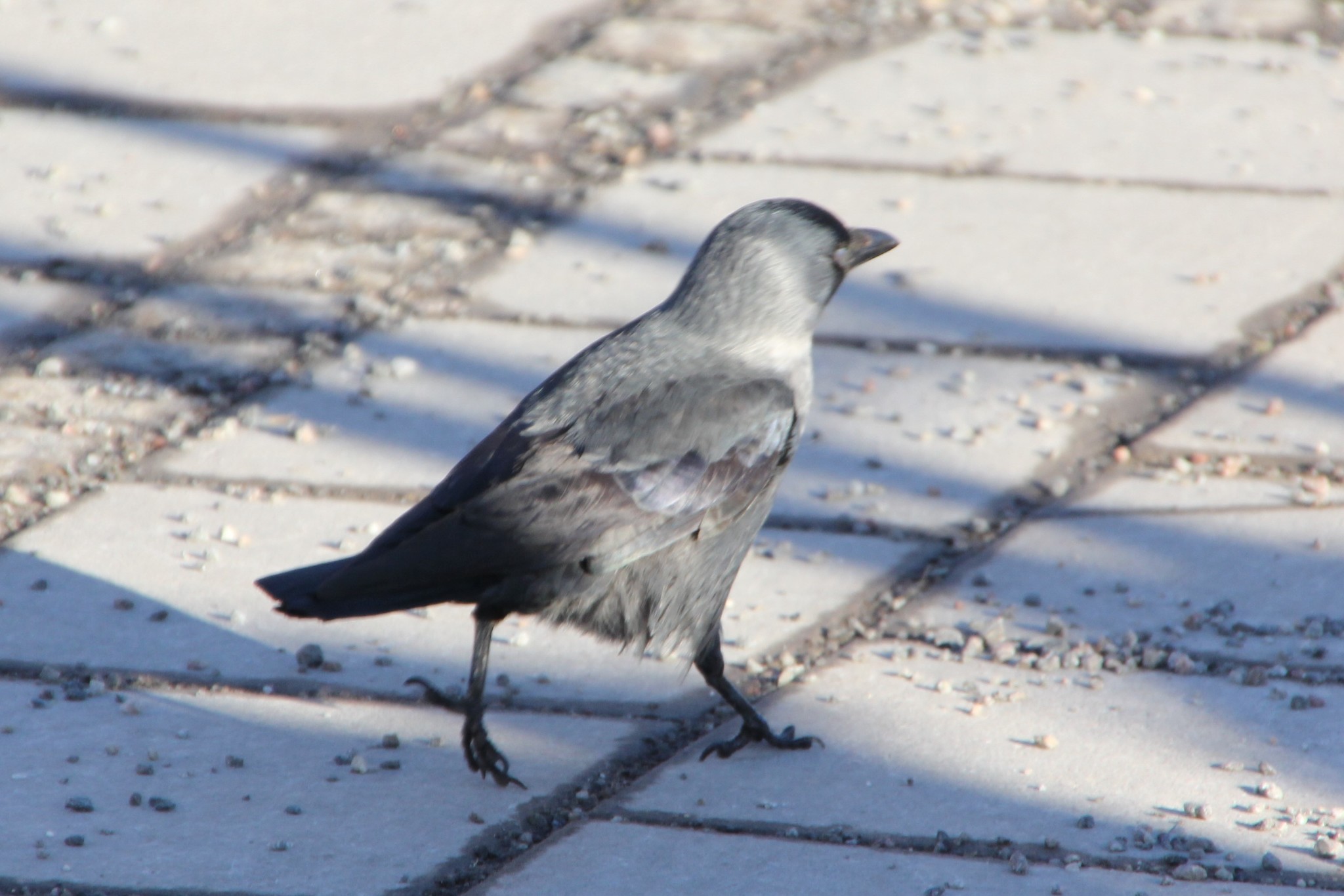
A small corvid measuring 34–39 centimetres in length and weighing approximately 240 grams. Plumage is predominantly shiny black with a purple or blue sheen on the crown, forehead, and secondaries, and a green-blue sheen on the throat, primaries, and tail. The cheeks, nape, and neck are light grey to greyish-silver, while underparts are slate-grey. The legs are black, as is the short stout bill. Adults have greyish or silvery white irises. Sexes appear similar, though male head and neck plumage fades more with age and wear.
Identification
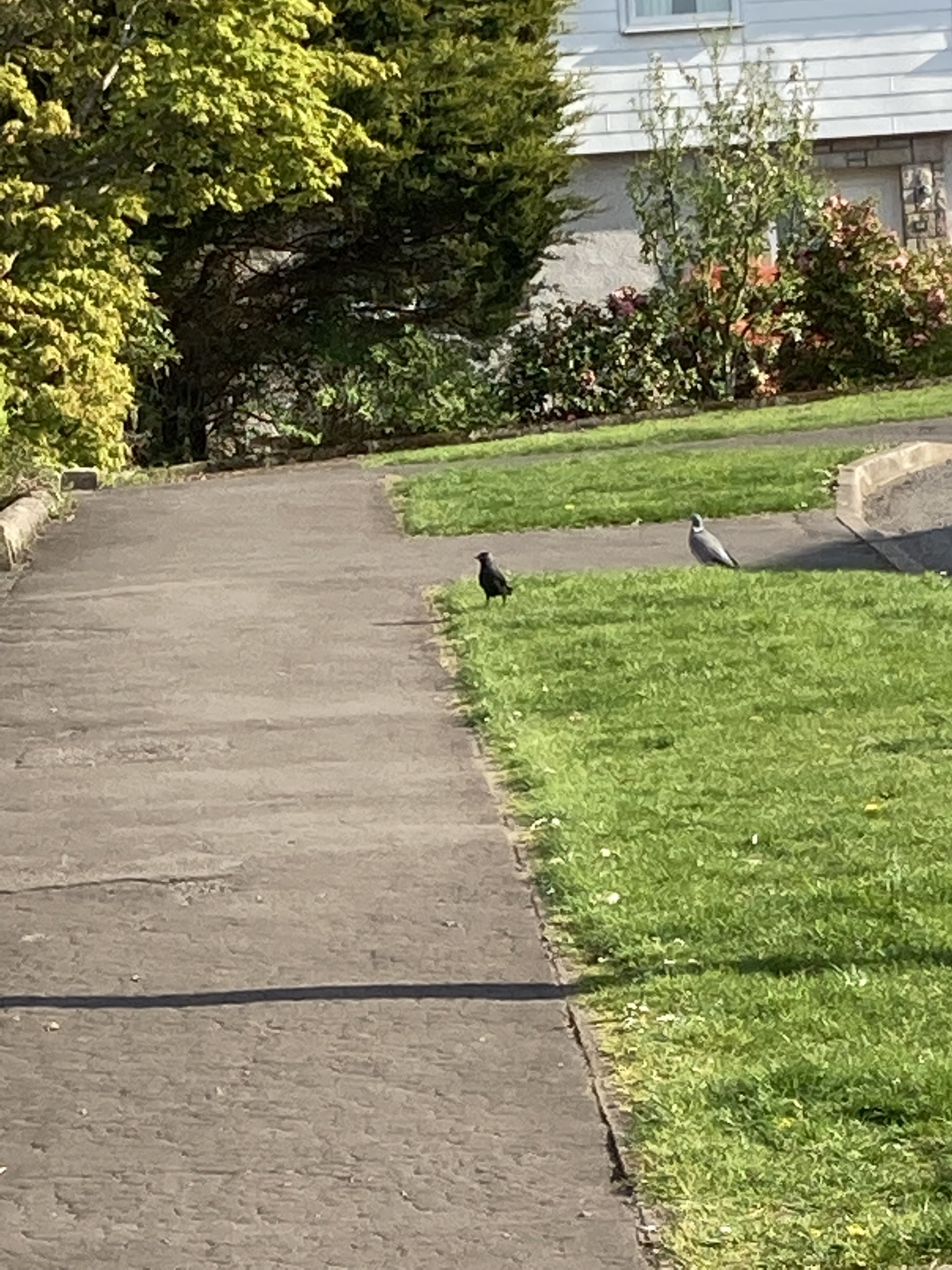
Unmistakable within its range due to its short bill and distinctive grey nape. Can be confused with rooks at a distance or with pigeons and choughs when in flight. Distinguished from other corvids by smaller size, faster and deeper wingbeats, proportionately narrower wing tips, shorter thicker necks, and very short bills. Flies in tighter flocks than related species. Readily distinguished from choughs by uniformly grey underwings and black beaks and legs. Very similar to the Daurian jackdaw in morphology and calls, though adults of that species have pied plumage.
Distribution & Habitat
Ranges from Northwest Africa through all of Europe (except the subarctic north) and eastwards through central Asia to the eastern Himalayas and Lake Baikal. Extends through Turkey, the Caucasus, Iran, Iraq, Afghanistan, Pakistan, and northwestern India. Regionally extinct in Malta and Tunisia. Range covers an estimated 1 to 10 million square kilometres. Northern and eastern populations are migratory, relocating between September and November and returning February to early May. Southern and western populations are largely resident. Vagrant to Faroe Islands, Iceland, and occasionally northeastern North America.
Behavior & Ecology
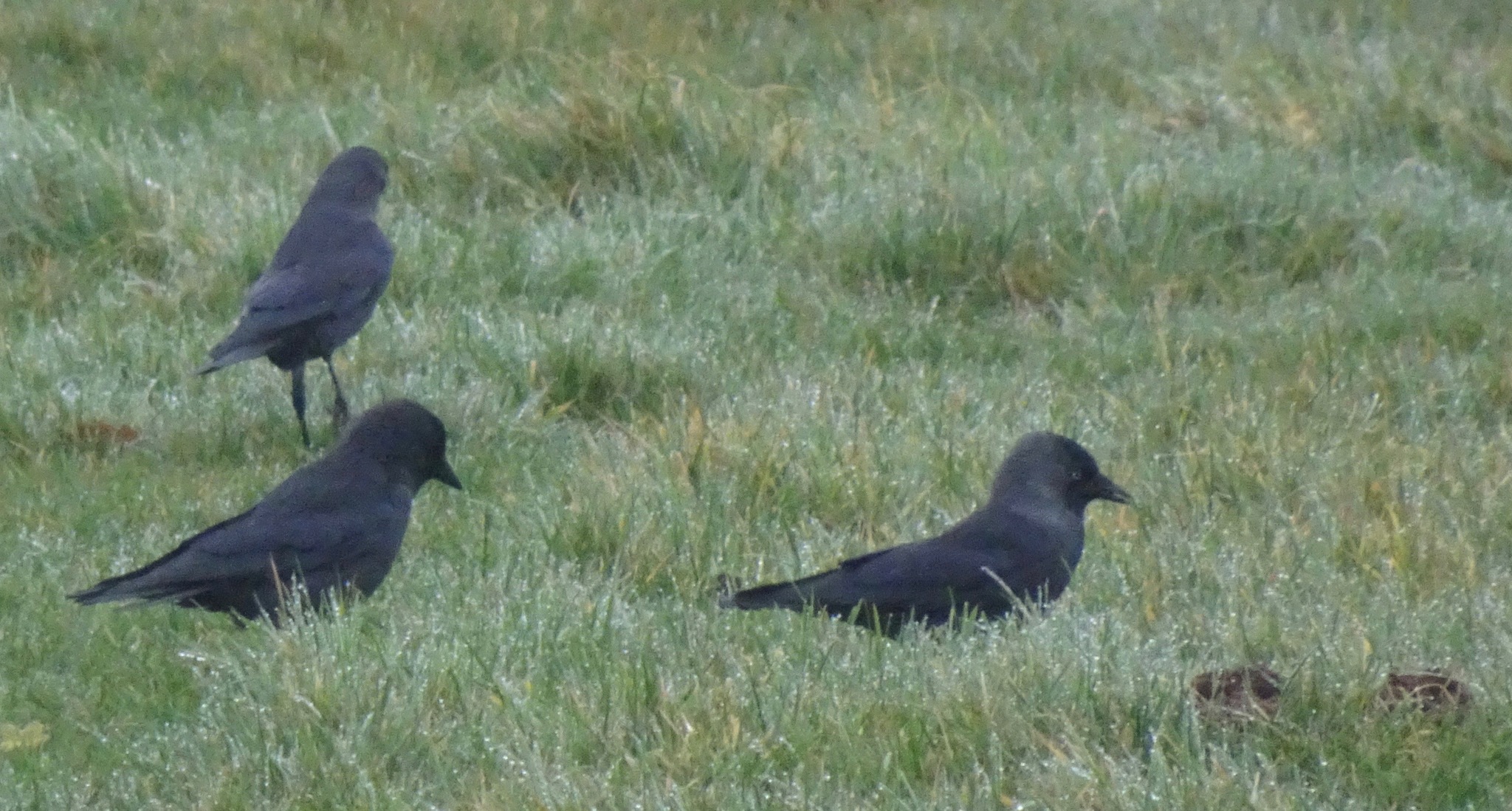
Highly gregarious, occurring in flocks of varying sizes that increase in autumn. Communal roosts contain up to several thousand individuals; one Swedish roost held 40,000 birds. Frequently associates with hooded crows and rooks. Monogamous with lifelong pair bonds; pairs remain together within flocks and share the same social rank. Forages mostly on the ground in open areas, landfill sites, and urban environments. Diet includes invertebrates up to 18 millimetres in length, small rodents, eggs, carrion, grains, seeds, and fruits. Main call is a metallic chyak-chyak or kak-kak. Also produces feeding calls, alarm calls, and chattering before roosting.
Conservation
IUCN conservation status not specified in article. Global population is described as large and the species is not considered globally threatened. UK population increased from 780,000 in 1970 to 2.5 million in 1998. Censuses in Great Britain show significant population increases between the 1970s and 2010. Wintering populations in Warsaw increased four-fold between 1977 and 2003. Historically hunted as a pest in England from the 16th century onward. Currently listed as a potential species for targeted hunting under the EU Birds Directive.
Culture
Featured in Greek and Roman proverbs: 'The swans will sing when the jackdaws are silent' signifies wise people speak only once the foolish are quiet. In Greek folklore, jackdaws are narcissistic creatures that fall into oil while admiring their reflection. Associated with omens of death in various cultures; a jackdaw settling on a roof predicts a new arrival or death. A jackdaw on cathedral vanes foretells rain. Considered sacred in Welsh folklore for nesting in church steeples. Featured on Ukrainian coats of arms including Halych and Ivano-Frankivsk Oblast. Mentioned in Milan Kundera's The Book of Laughter and Forgetting regarding Franz Kafka's father.
Source: Wikipedia · CC BY-SA 3.0
Taxonomy
- Order
- Passeriformes
- Family
- Corvidae
- Genus
- Coloeus
- eBird Code
- eurjac
Subspecies (4)
-
Coloeus monedula cirtensis
northeastern Algeria; formerly also northwestern Tunisia, where now extirpated
-
Coloeus monedula monedula
Scandinavia; occasionally winters to England and France
-
Coloeus monedula soemmerringii
eastern Europe, northern and central Asia; winters to Iran and northwestern India (Kashmir)
-
Coloeus monedula spermologus
western and central Europe, including the British Isles, and Morocco and northwestern Algeria
Data Sources
Species description from Wikipedia, licensed under CC BY-SA 3.0.
Bird images and sounds sourced from GBIF, contributed by citizen scientists worldwide under Creative Commons licenses.
Taxonomy data from AviList 2025.