Jacobin Cuckoo
Clamator jacobinus
斑翅凤头鹃
Introduction
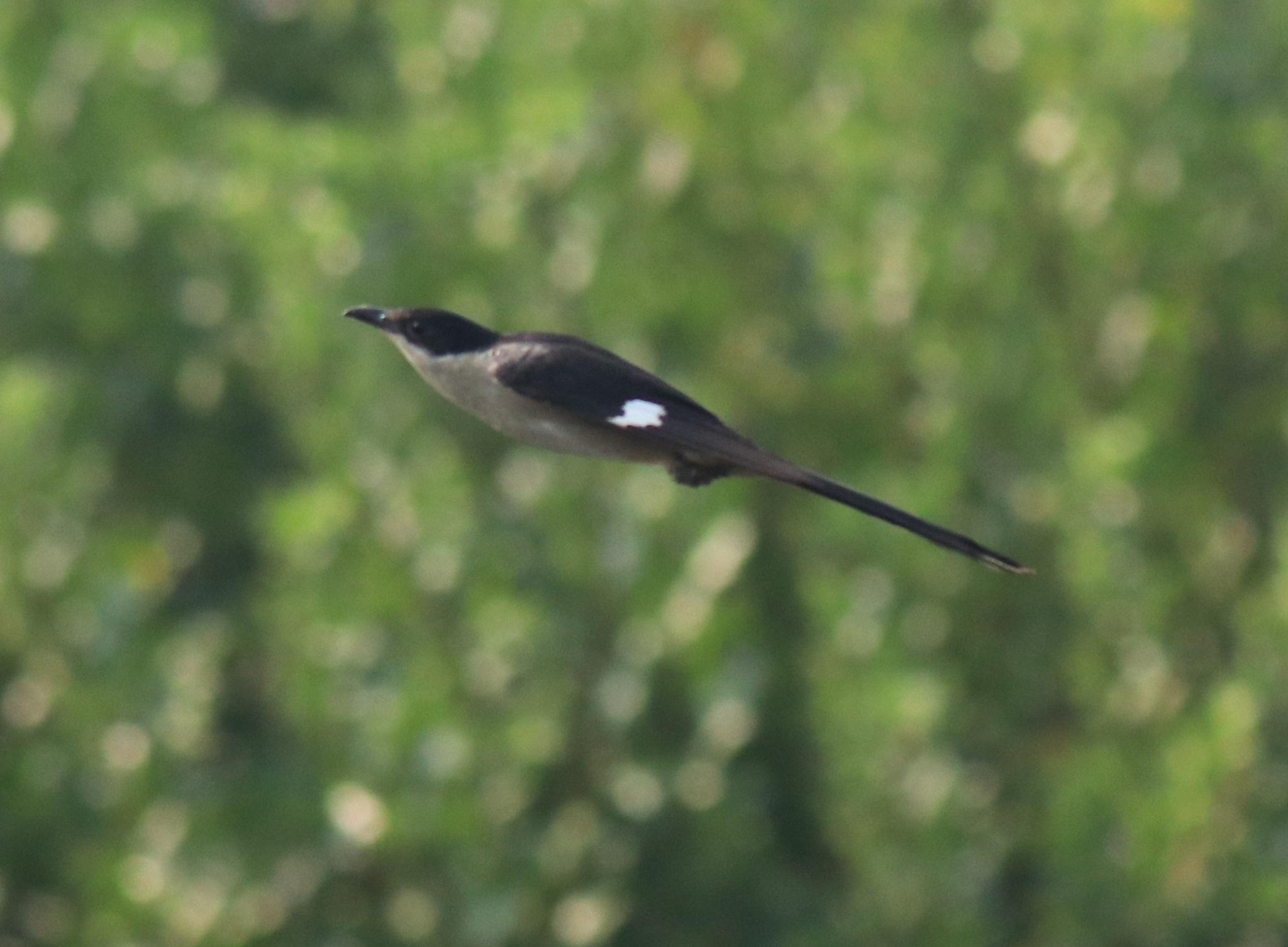
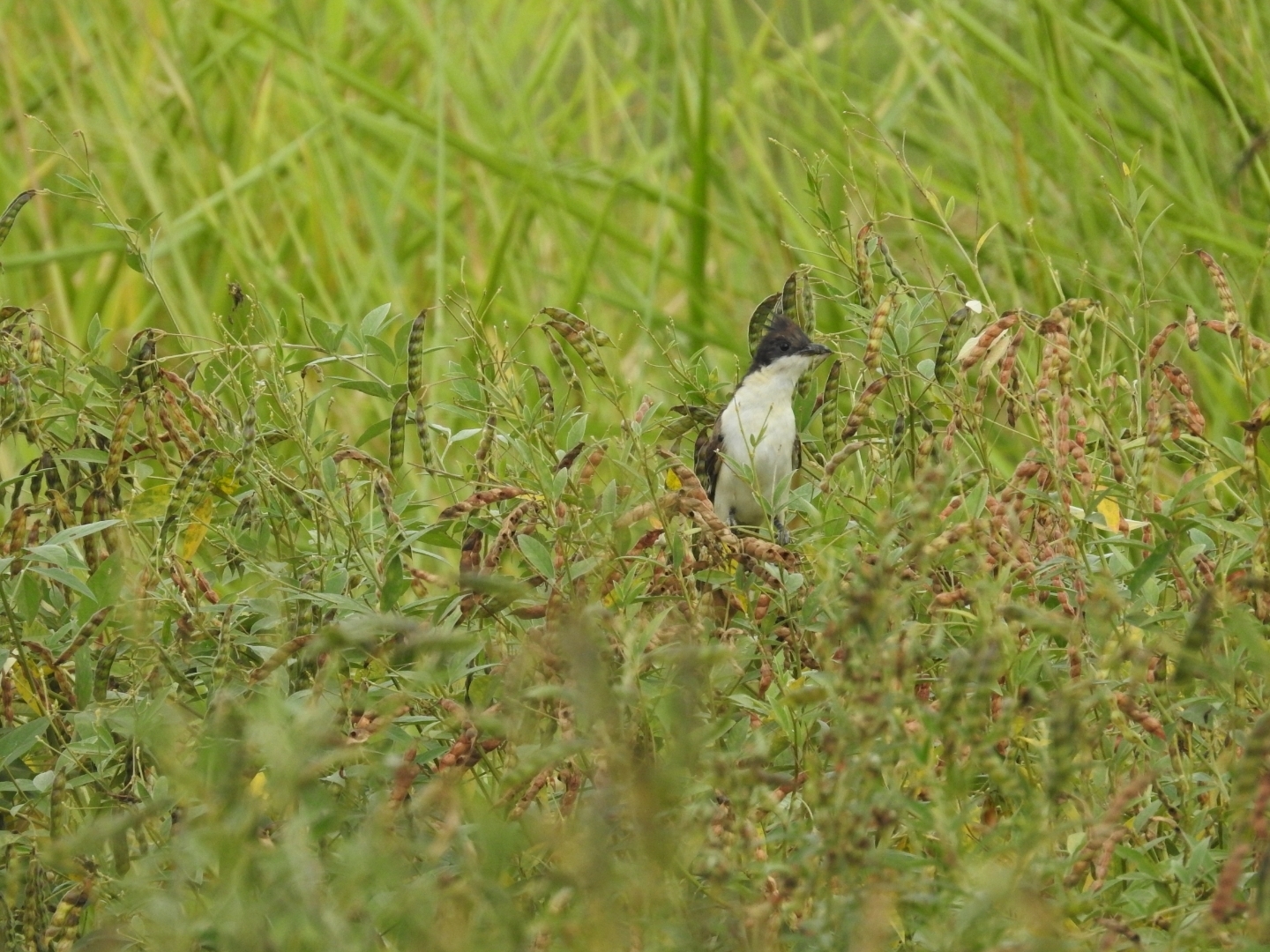
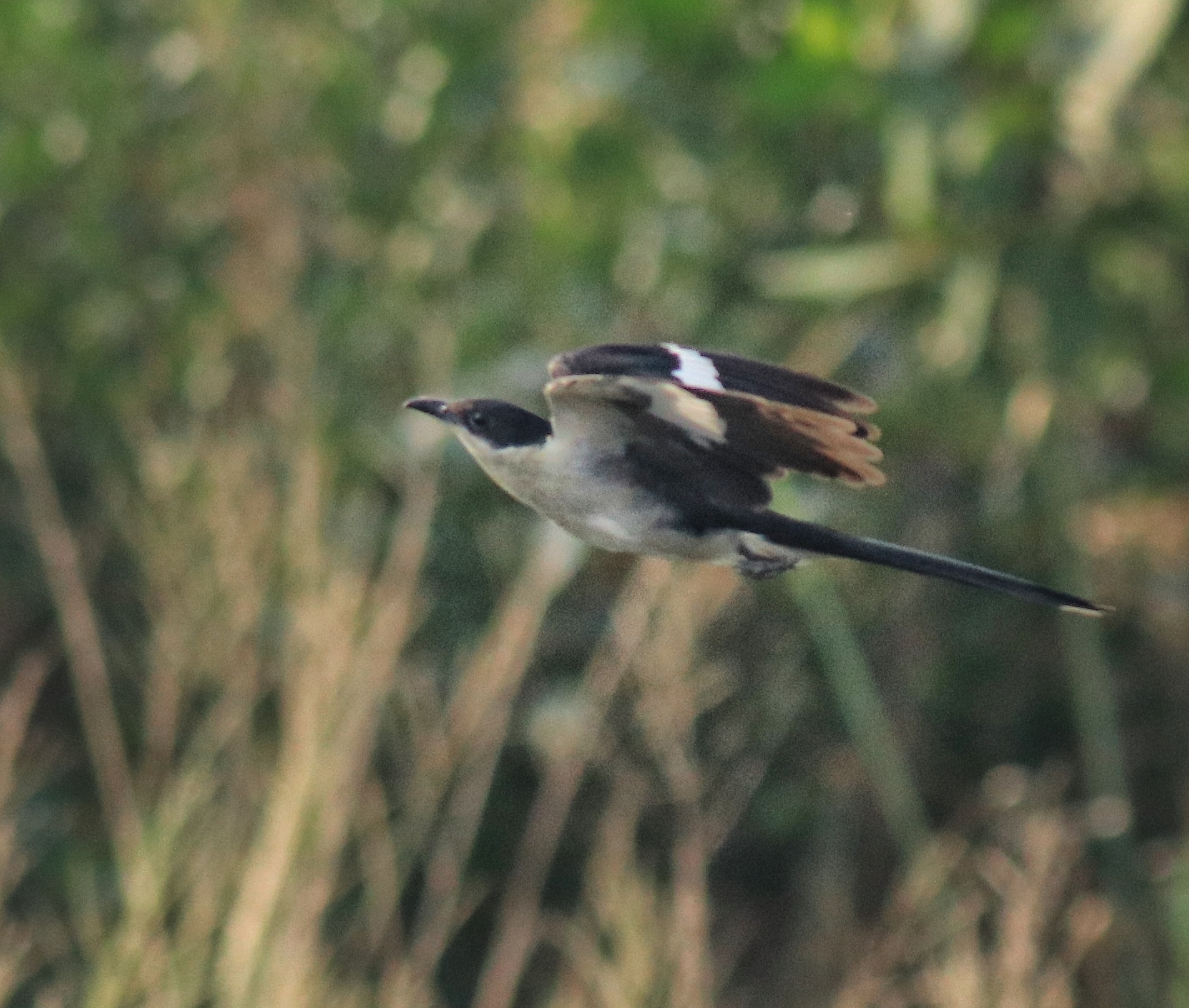
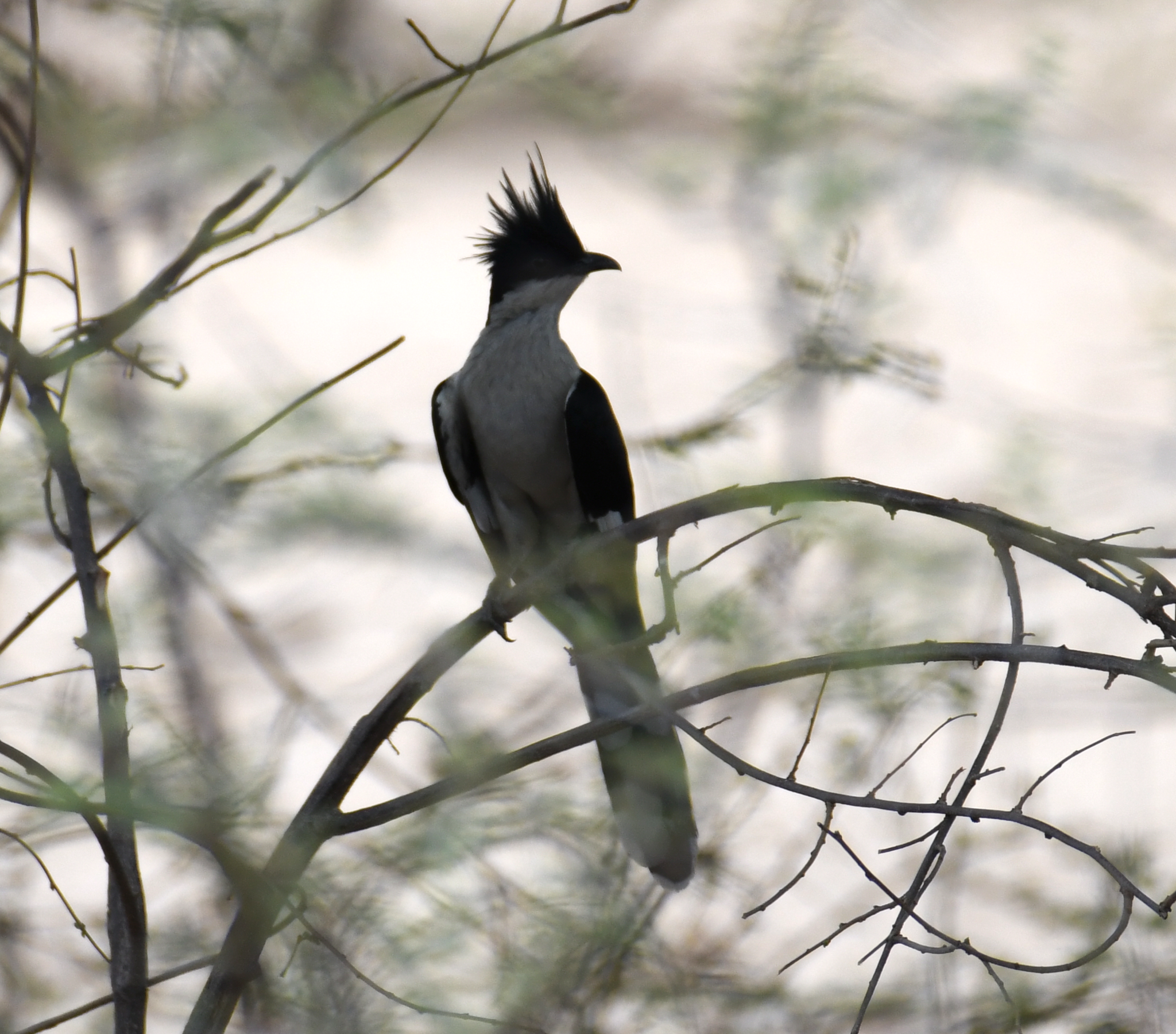
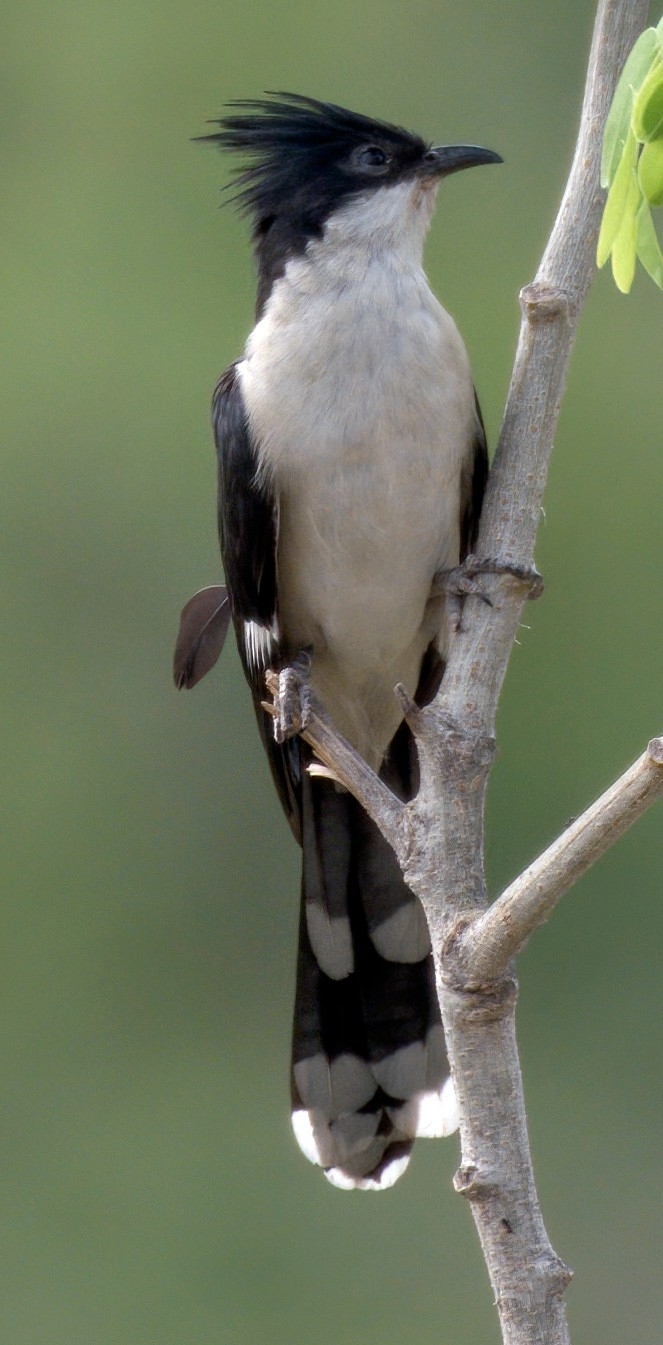
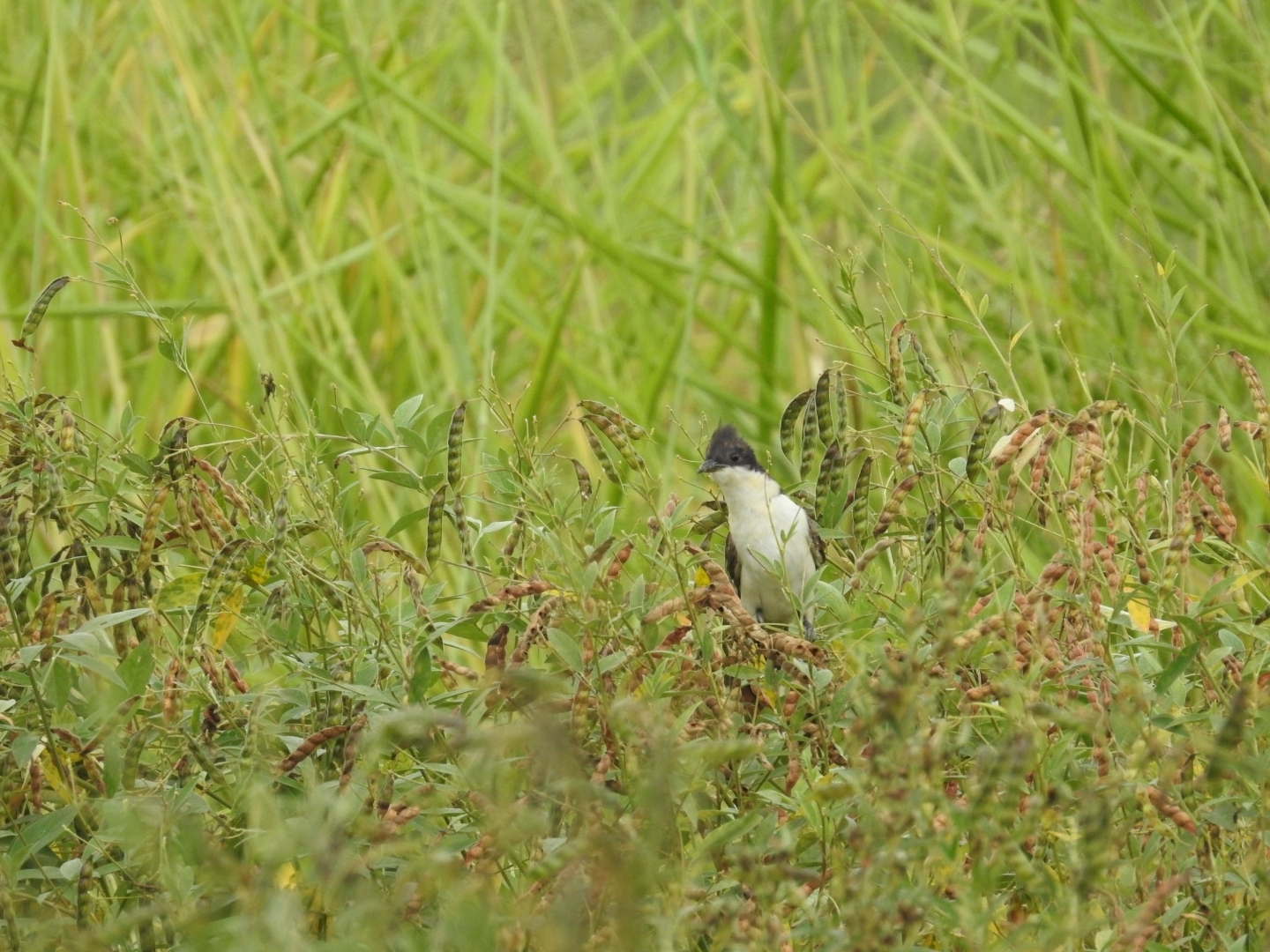
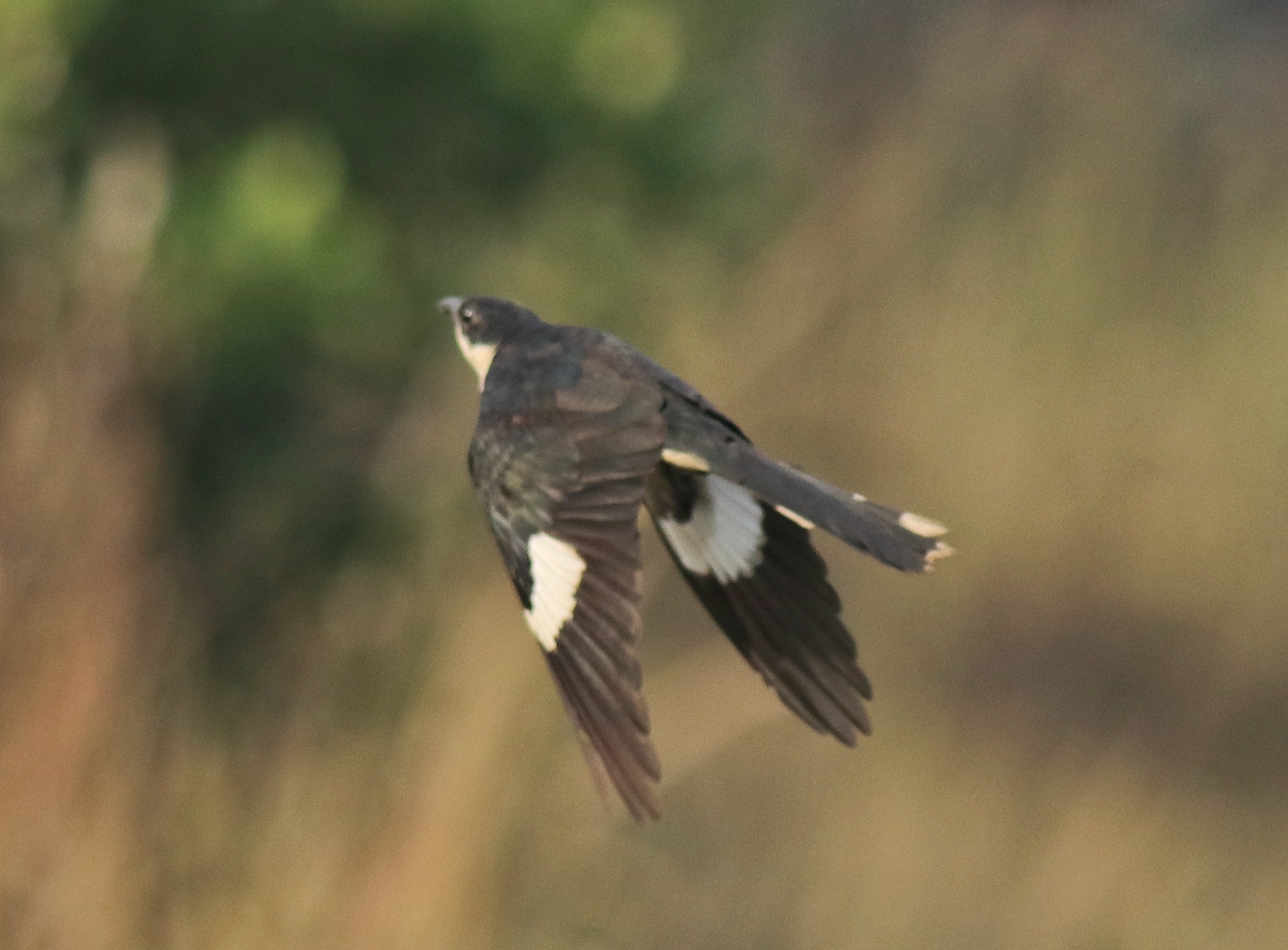
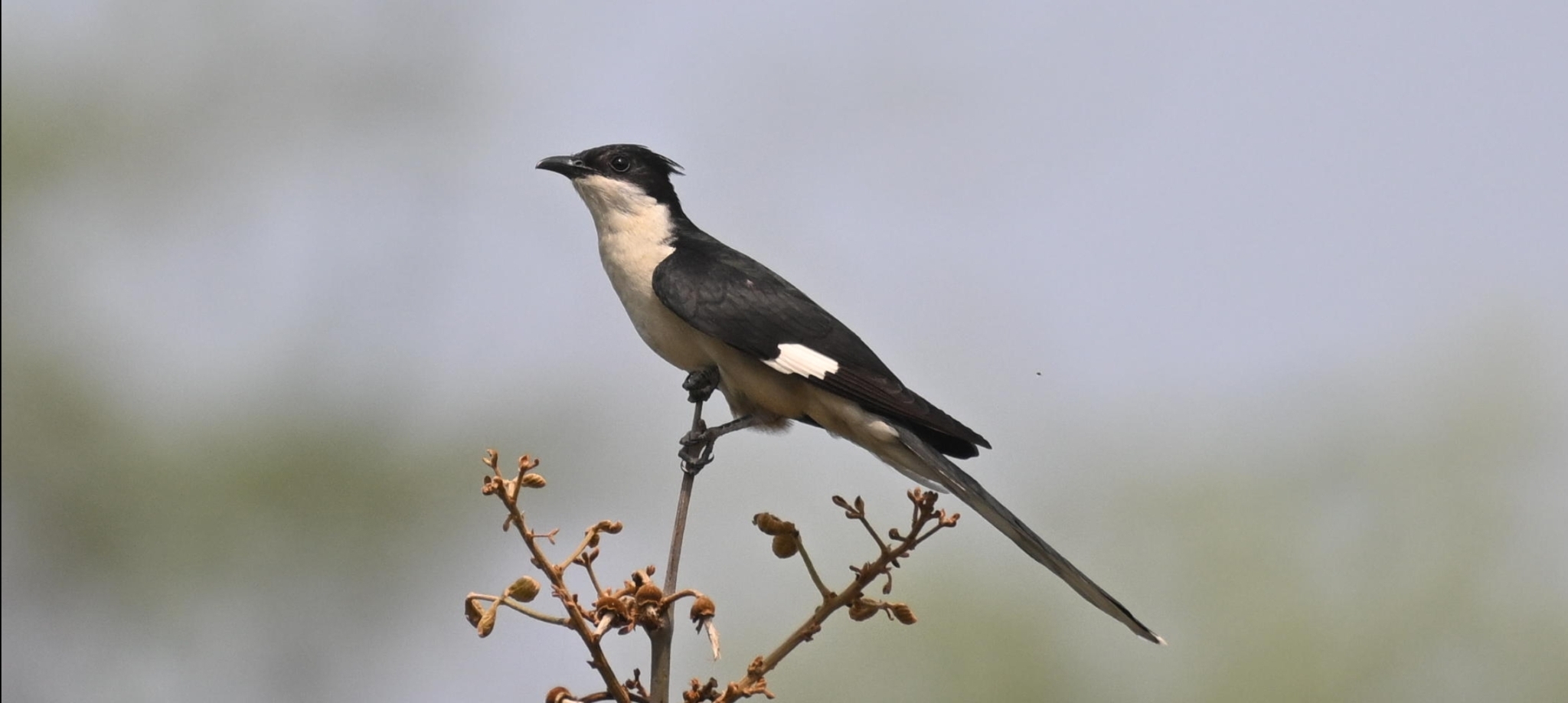
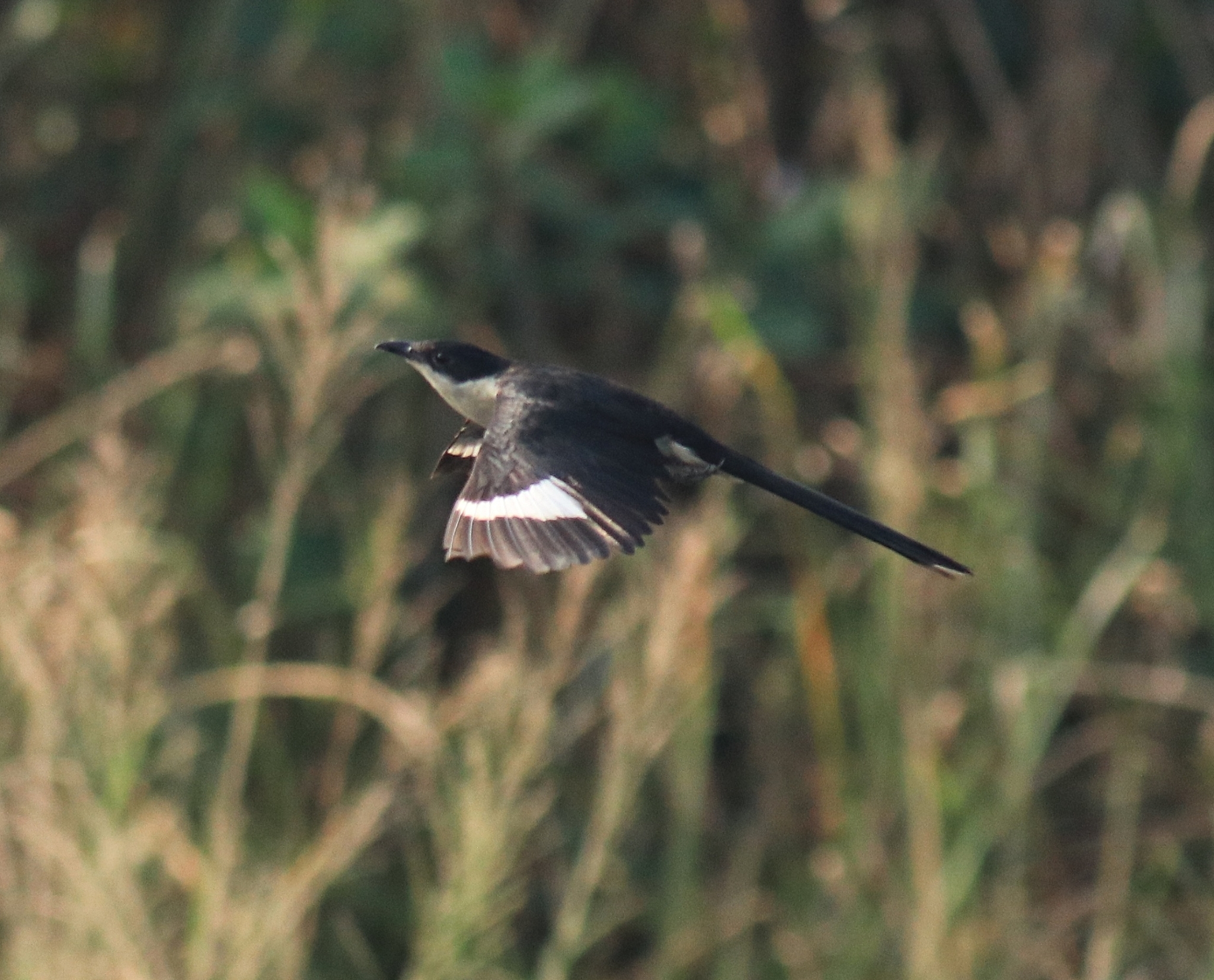
This medium-sized cuckoo has black-and-white plumage and a distinctive crest. A white wing patch contrasts with the dark wings and body, remaining visible in flight. The species occurs across Africa and Asia. Northern Indian populations arrive at the start of the monsoon season. During breeding, it produces a ringing series of whistled notes. It is a brood parasite; Indian populations primarily parasitize babbler species, while African populations use a broader range of host species.
Description
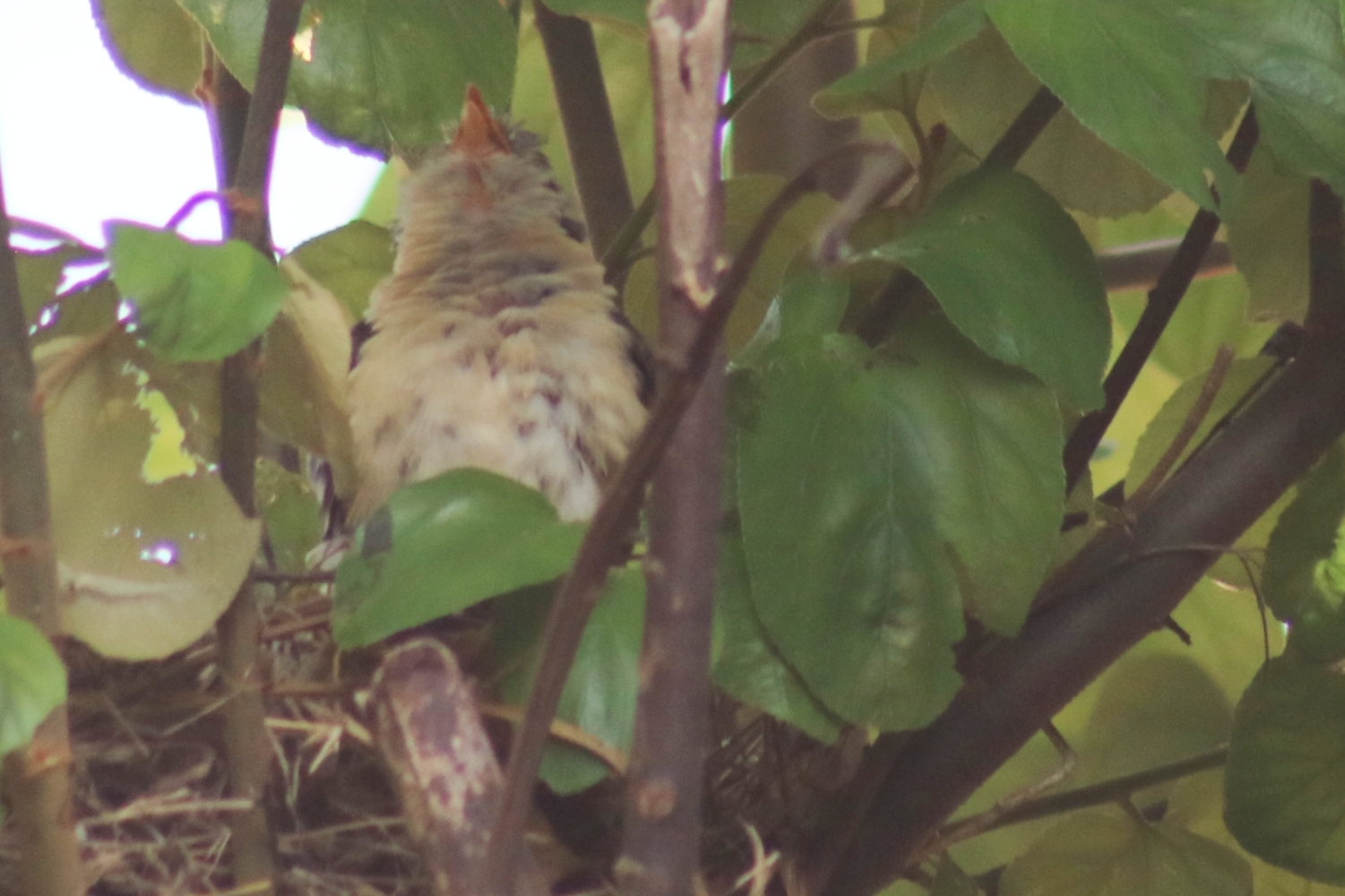
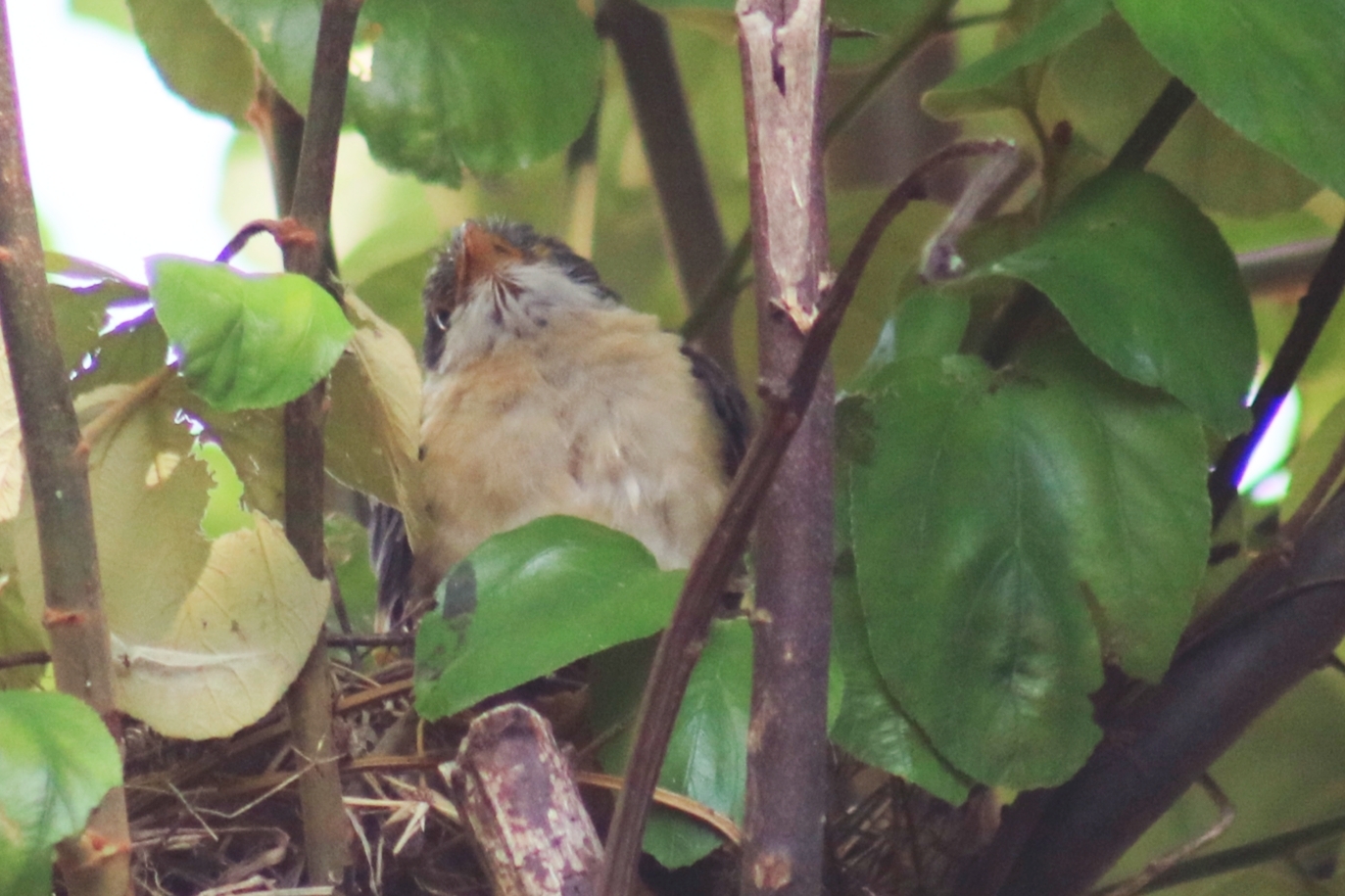
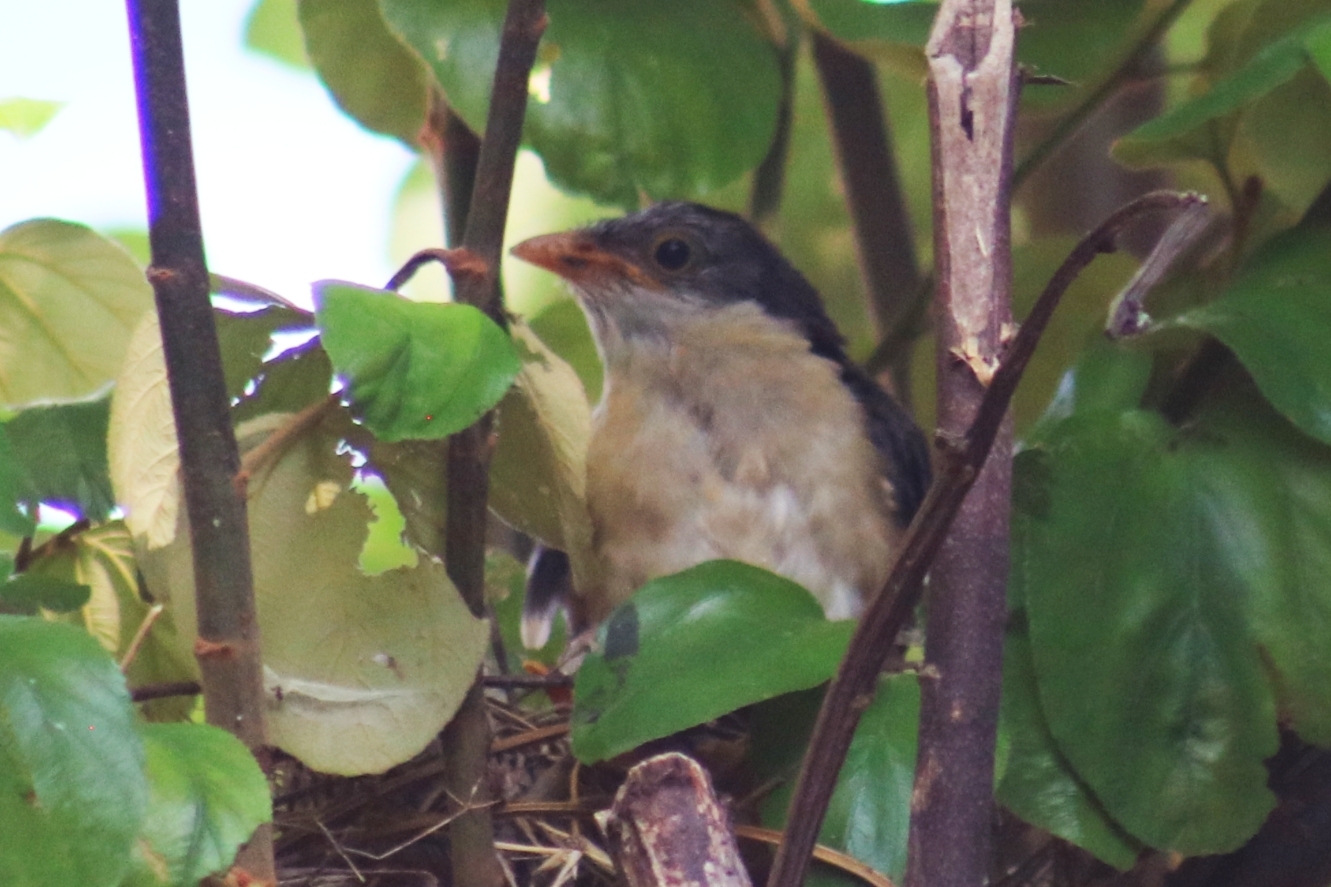
This medium-sized, slim cuckoo bears a prominent crest and exhibits bold black-and-white plumage that makes it unmistakable. The diagnostic feature is the conspicuous white wing patch set against otherwise black wings, creating a striking pattern visible even during flight. African populations show color variation, with a pied phase featuring white or whitish underparts and a black phase where white is restricted to the wing patch alone. An all-rufous phase has also been recorded in Central Africa. The nominate subspecies is smaller with shorter wings than the larger serratus population found in southern Africa. Juveniles have pink skin that darkens to purplish brown within two days of hatching, with red mouth linings and yellow gape flanges.
Identification
The distinctive white wing patch on the black wing combined with the crested head profile makes this species unmistakable throughout its range. Even in flight, the bold wing pattern immediately separates it from any similar-looking species. The contrasting black-and-white plumage pattern is unique among cuckoos in the regions where it occurs, eliminating confusion with other species.
Distribution & Habitat
The species occurs across two main regions. In Africa, it is found south of the Sahara desert, though populations show complex movement patterns with residents in tropical Africa and migrants in eastern regions. The Asian population occurs south of the Himalayas, including the Indian subcontinent, Sri Lanka, and parts of Myanmar. East African populations migrate over southern Arabia into India during April. In Africa, the species inhabits thorny dry scrub and open woodland, carefully avoiding both dense forest and extremely arid environments.
Behavior & Ecology
During breeding season, these cuckoos become highly vocal with a characteristic whistled call. Males perform elaborate courtship displays, calling from prominent perches and pursuing females with slow wing-beats and pigeon-like clapping flight. As brood parasites, they lay eggs in the nests of babblers and other species, with eggs typically matching the host's coloring. In India, turquoise eggs are laid in babbler nests, often resulting in cracked host eggs. African populations utilize numerous host species including bulbuls, babblers, shrikes, and drongos. Nestlings do not evict host eggs but compete aggressively for food, sometimes causing host chicks to starve. The diet consists mainly of insects, particularly hairy caterpillars that are processed to remove gut contents before swallowing.
Conservation
The IUCN Red List status and detailed population trends are not specified in available sources. However, the species' wide distribution across two continents and presence in multiple protected areas suggests a generally stable population. Habitat preferences for thorny scrub and open woodland may provide some resilience against environmental changes.
Culture
This bird holds significant cultural importance in Indian tradition, where it is widely mentioned in ancient poetry as the chātaka. The poet Kalidasa featured it in his classic work Meghadoota as a metaphor for deep yearning, establishing a literary tradition that persists in modern works. According to traditional mythology, the bird possesses a beak atop its head and quenches its thirst only with raindrops. Some scholars have questioned whether classical references to chātaka actually described this species or the common iora, while noting that the term also applies to crested skylarks in Bengal. The bird appears in various literary works discussing themes of longing, purity, and resistance.
Source: Wikipedia · CC BY-SA 3.0
Taxonomy
- Order
- Cuculiformes
- Family
- Cuculidae
- Genus
- Clamator
- eBird Code
- piecuc1
Subspecies (3)
-
Clamator jacobinus jacobinus
breeds southern India, Sri Lanka, and central Myanmar; winters to southeastern Africa
-
Clamator jacobinus pica
breeds sub-Saharan Africa to northern Zambia and Malawi, and northwestern India to Nepal; winters Africa southward to Namibia and Botswana
-
Clamator jacobinus serratus
breeds southern Zambia and South Africa; winters northward to Uganda and Ethiopia
Data Sources
Species description from Wikipedia, licensed under CC BY-SA 3.0.
Bird images and sounds sourced from GBIF, contributed by citizen scientists worldwide under Creative Commons licenses.
Taxonomy data from AviList 2025.