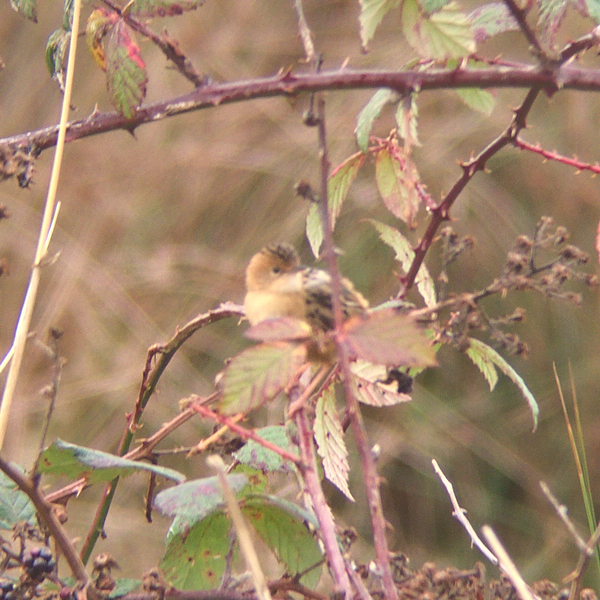
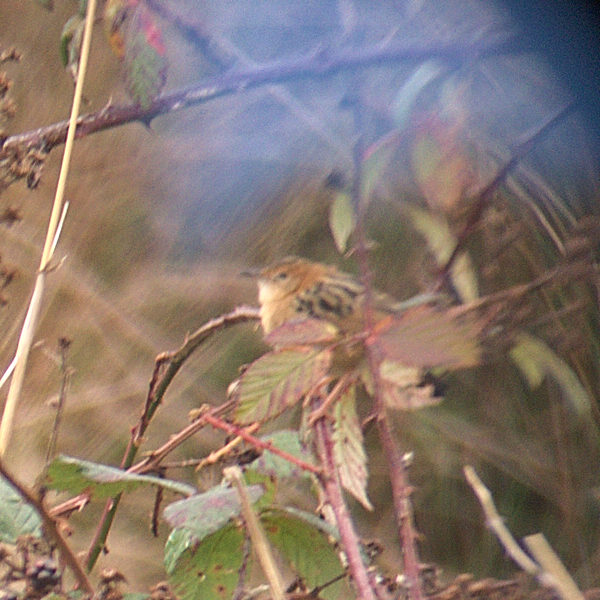
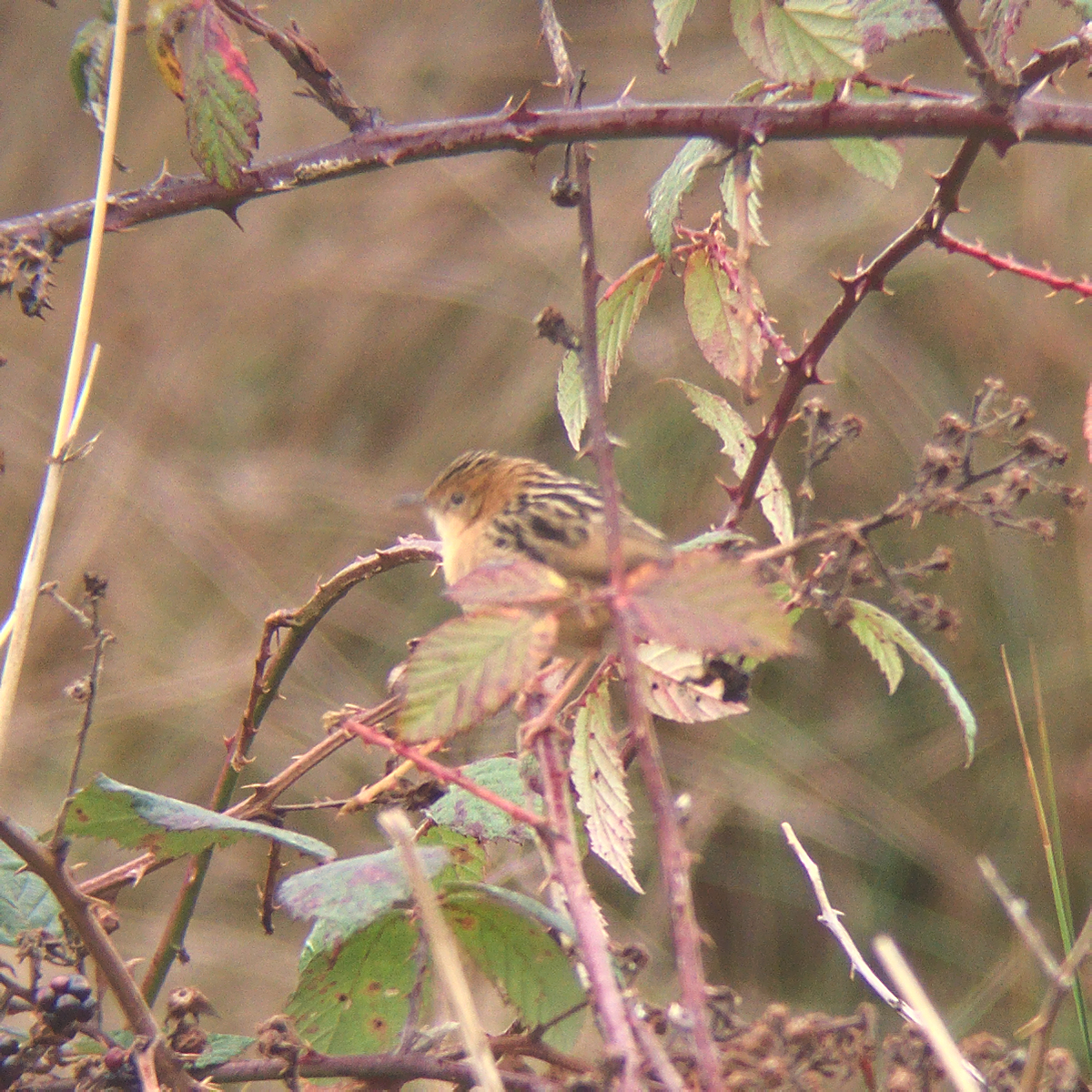
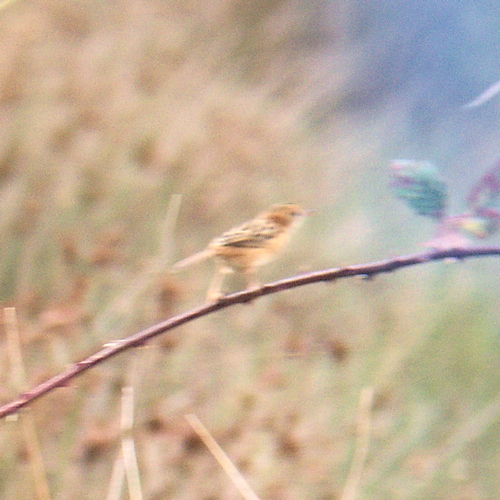
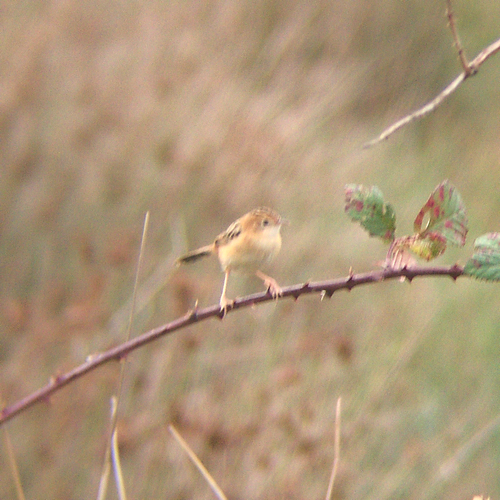
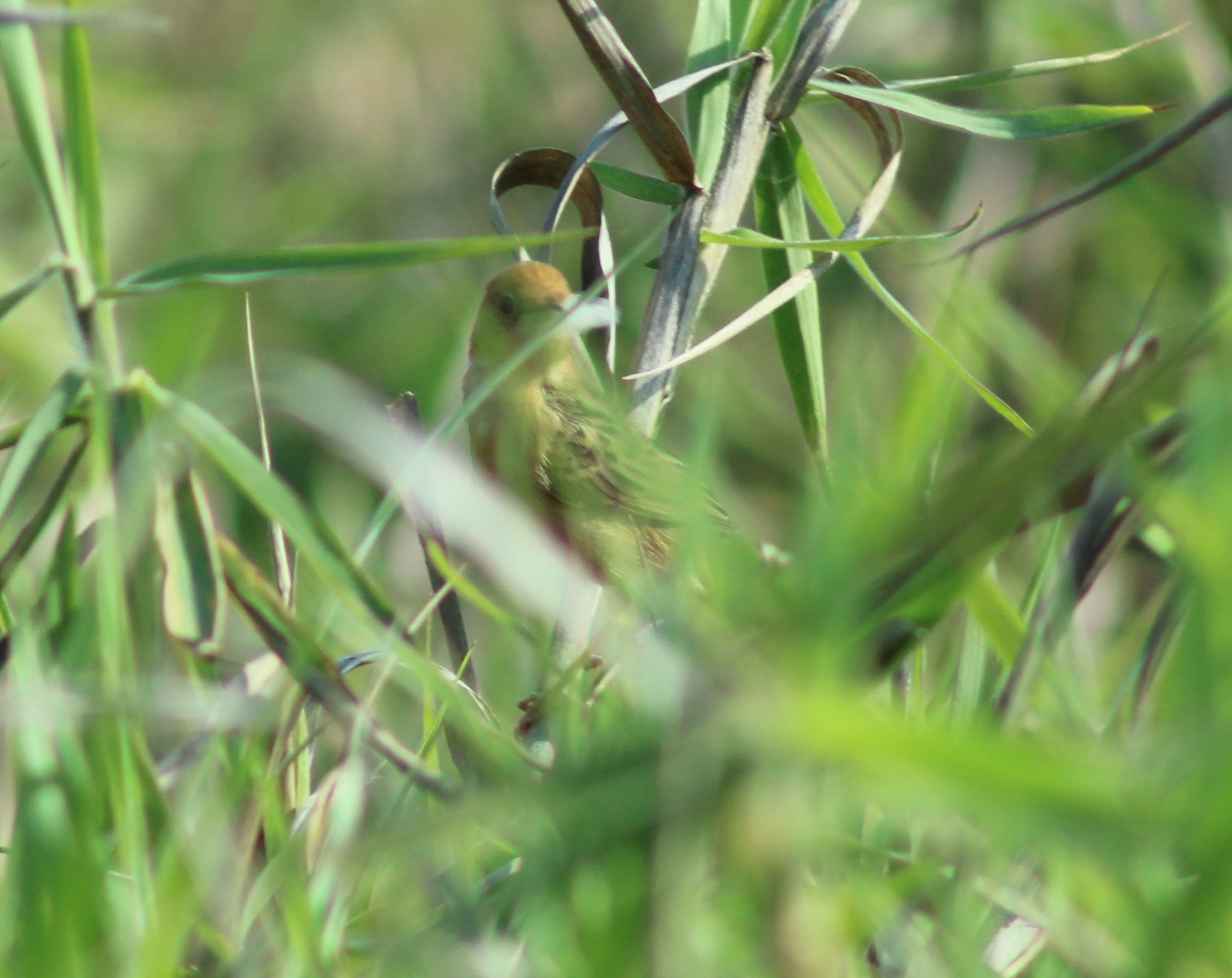
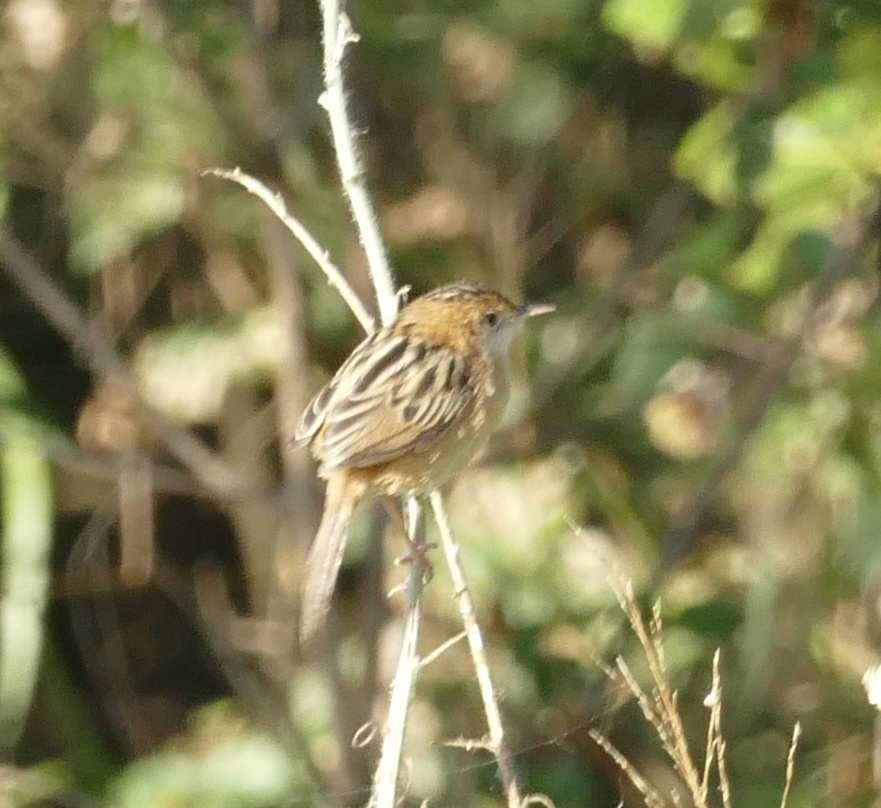
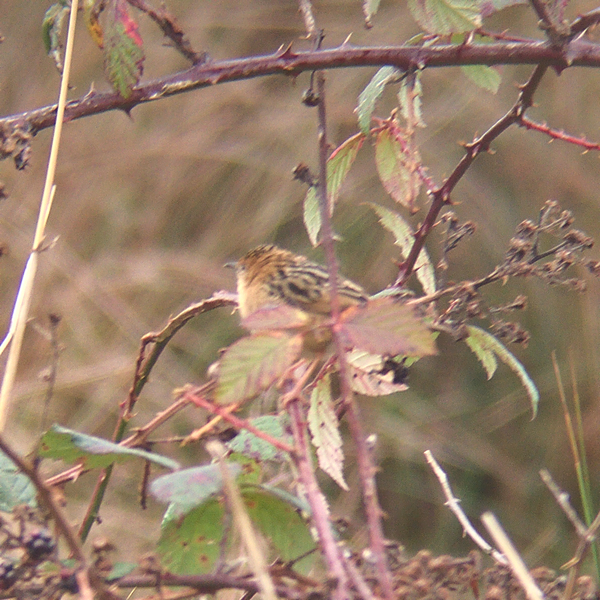
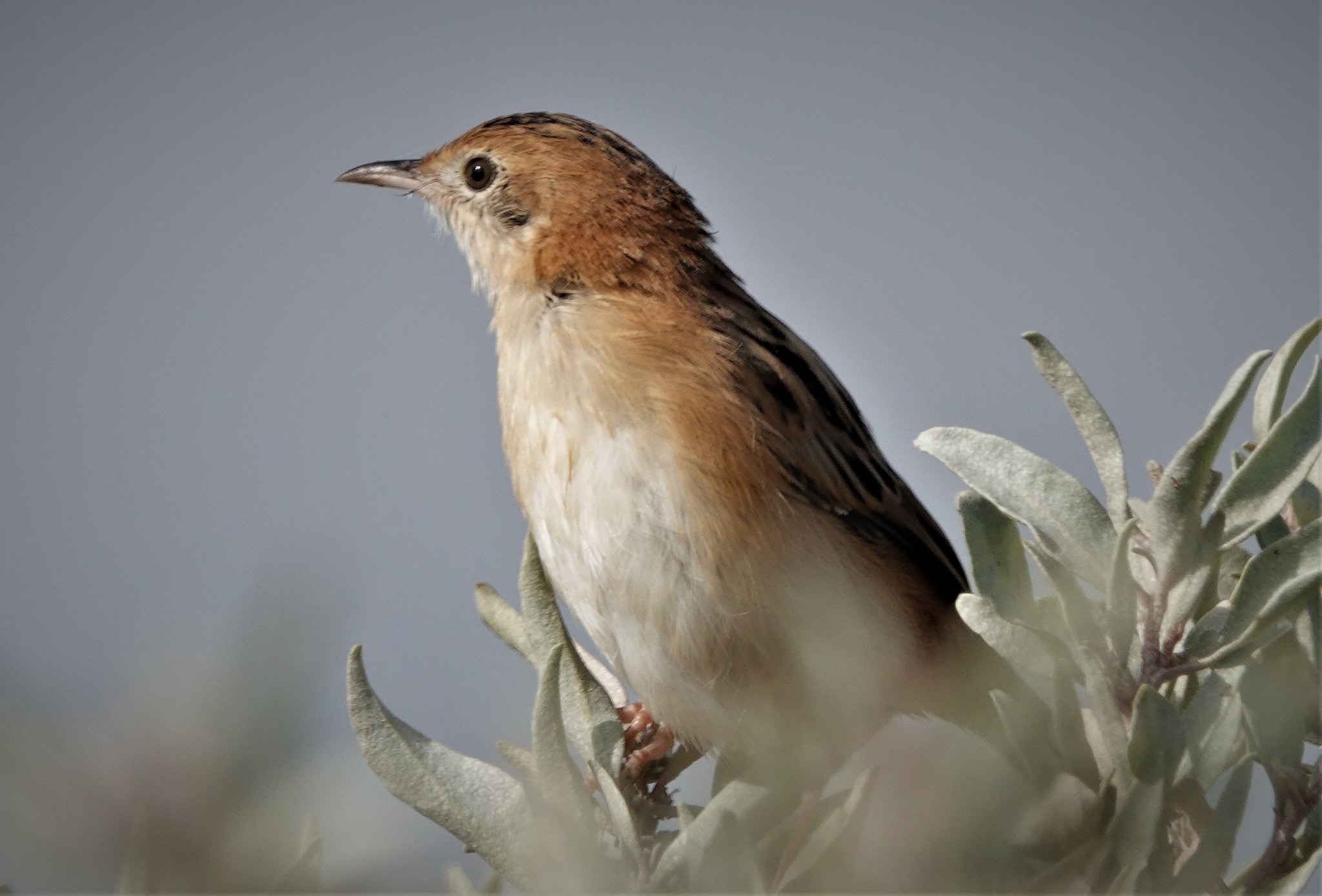
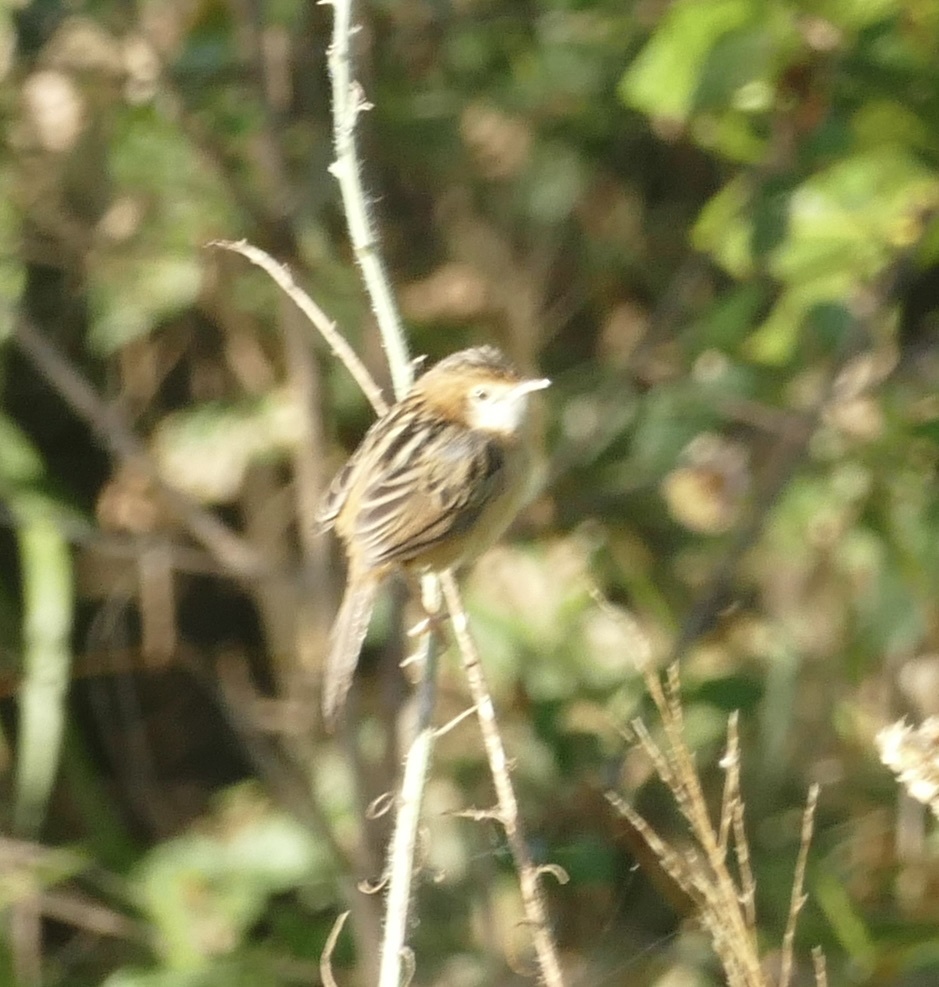
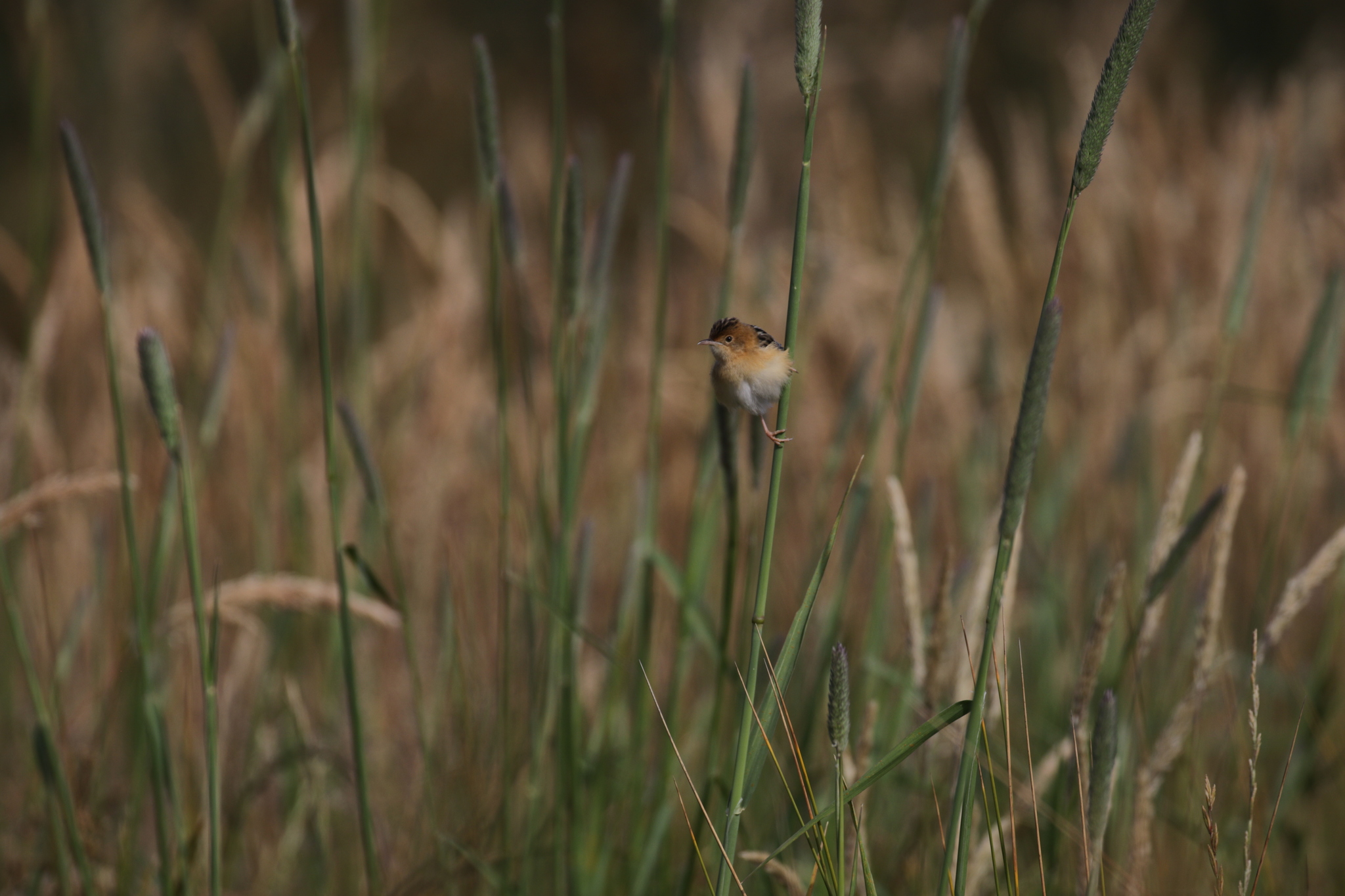
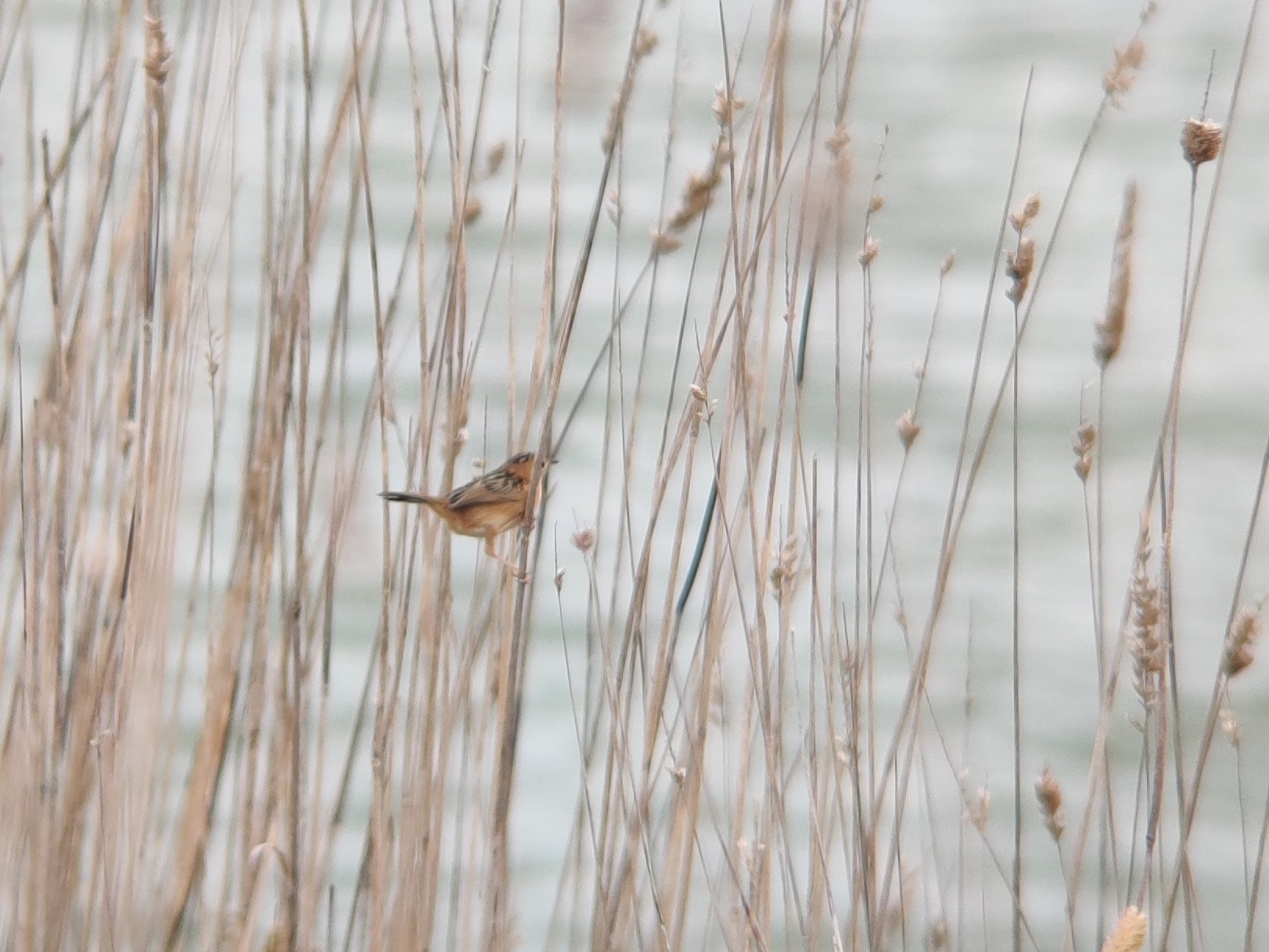
Golden-headed Cisticola
Cisticola exilis
金头扇尾莺
Introduction
Small warbler (family Cisticolidae), native to Australia and thirteen Asian countries including Cambodia, China, India, Indonesia, Laos, Myanmar, Nepal, Papua New Guinea, Philippines, Taiwan, Thailand, Timor-Leste, and Vietnam. Inhabits grassy hills, savannas, woodlands, scrublands, rivers, wetlands, and irrigated farmland with tall, thick grass up to 1,800 m elevation. Two distinctive traits: remarkable nest construction using spider threads, earning it the name 'finest tailor of all birds'; and dramatic seasonal plumage change, with breeding males displaying a golden body and golden-orange head while maintaining a notably shorter tail. Classified as Least Concern with a very large range of 36,800,000 km² and increasing population.
Description
A small warbler measuring 9-11.5 cm (3.5-4.5 in) in length and weighing 6-10 g, with males slightly heavier than females. During breeding season, males acquire golden plumage with a golden-orange head and dull chin, along with a markedly shortened tail. Non-breeding adults and females have cream-colored underparts and brown upperparts streaked with black or dark brown; wings are black edged in buff, head is golden, throat is white, and the neck has a dull gold wash. Juveniles resemble adults but are paler overall. Exhibits a distinctive crest when vocalizing.
Identification
Similar in appearance to the black-backed cisticola but distinguished by its shorter tail during the breeding season. Differs from the zitting cisticola by lacking the 'rich golden' head coloration. The pronounced seasonal plumage variation—golden breeding plumage versus brown non-breeding plumage—is a key identifying feature, as is the dramatic tail length difference between seasons in males.
Distribution & Habitat
Occurs across Australia and thirteen Asian countries throughout an extensive range of 36,800,000 km². The most common cisticola species in Australia and from India to the Philippines. Inhabits grassy hills, savannas, woodlands, scrublands, riverbanks, wetlands, and irrigated farmland where grass is tall and thick. Generally stays near the ground outside breeding season. Found at elevations up to 1,200 m, though recorded up to 1,500 m in China and 1,800 m on Lombok. Records from New Guinea and Tasmania suggest some wandering behavior; possibly undergoes partial migration in China.
Behavior & Ecology
Omnivorous diet consisting primarily of invertebrates (insects, small slugs) and grass seeds. Forages on the ground by hiding among vegetation and moving slowly. Mostly sedentary but may relocate following habitat changes; shows wandering behavior in New Guinea and Tasmania. Found singly or in small flocks outside breeding season. Mates during rainy seasons, which vary regionally. Males perform aerial display flights, climbing vertically to 50 m, circling for up to 5 minutes while singing, then steeply descending. Territories in Queensland measure 0.2-1.4 ha. Constructs spherical nests with side entrances in shrubs or grass tussocks up to 3 m high, using leaves, plant down, and grass stitched together with spider silk. Lays 3-4 eggs incubated by female for 11 days; 32% hatch rate. Fledglings remain in nest 11-13 days.
Conservation
IUCN Red List status: Least Concern. Population is increasing globally according to assessments. Population density varies significantly by region, typically 2-6 birds per hectare, but reaching up to 27 birds per hectare in the Kimberley region of Western Australia. No major threats identified; large range and expanding population support the current classification.
Culture
Known by numerous English names including bright-capped cisticola, bright-headed cisticola, bright-crowned cisticola, gold-capped cisticola, yellow-headed cisticola, exile warbler, fan-tail warbler, and tailorbird. Called the 'finest tailor of all birds' due to its remarkable nest construction technique involving spider threads.
Source: Wikipedia · CC BY-SA 3.0
Taxonomy
- Order
- Passeriformes
- Family
- Cisticolidae
- Genus
- Cisticola
- eBird Code
- gohcis1
Subspecies (12)
-
Cisticola exilis alexandrae
northern Australia (Pilbara region, central Western Australia, eastward to Mackenzie River, central Queensland)
-
Cisticola exilis courtoisi
southeastern China (southeastern Yunnan to southern Hunan, Jiangxi, and Fujian)
-
Cisticola exilis diminutus
New Guinea, northeastern Australia (northwestern Torres Strait islands), and Solomon Islands
-
Cisticola exilis equicaudatus
eastern Myanmar to central Thailand, Cambodia, and southern Vietnam
-
Cisticola exilis erythrocephalus
southern India (southern Mysore, western Tamil Nadu, and Kerala)
-
Cisticola exilis exilis
eastern Australia (central Queensland to eastern Gulf of St. Vincent, South Australia)
-
Cisticola exilis lineocapilla
Java, Bali, Lesser Sundas, and northern Australia (northern Northern Territory)
-
Cisticola exilis polionotus
Bismarck Archipelago
-
Cisticola exilis rusticus
Sulawesi subregion and southern Moluccas
-
Cisticola exilis semirufus
Philippines and Sulu Archipelago
-
Cisticola exilis tytleri
foothills of Nepal to northeastern India, northern Myanmar, and southwestern China (Yunnan)
-
Cisticola exilis volitans
Taiwan
Data Sources
Species description from Wikipedia, licensed under CC BY-SA 3.0.
Bird images and sounds sourced from GBIF, contributed by citizen scientists worldwide under Creative Commons licenses.
Taxonomy data from AviList 2025.