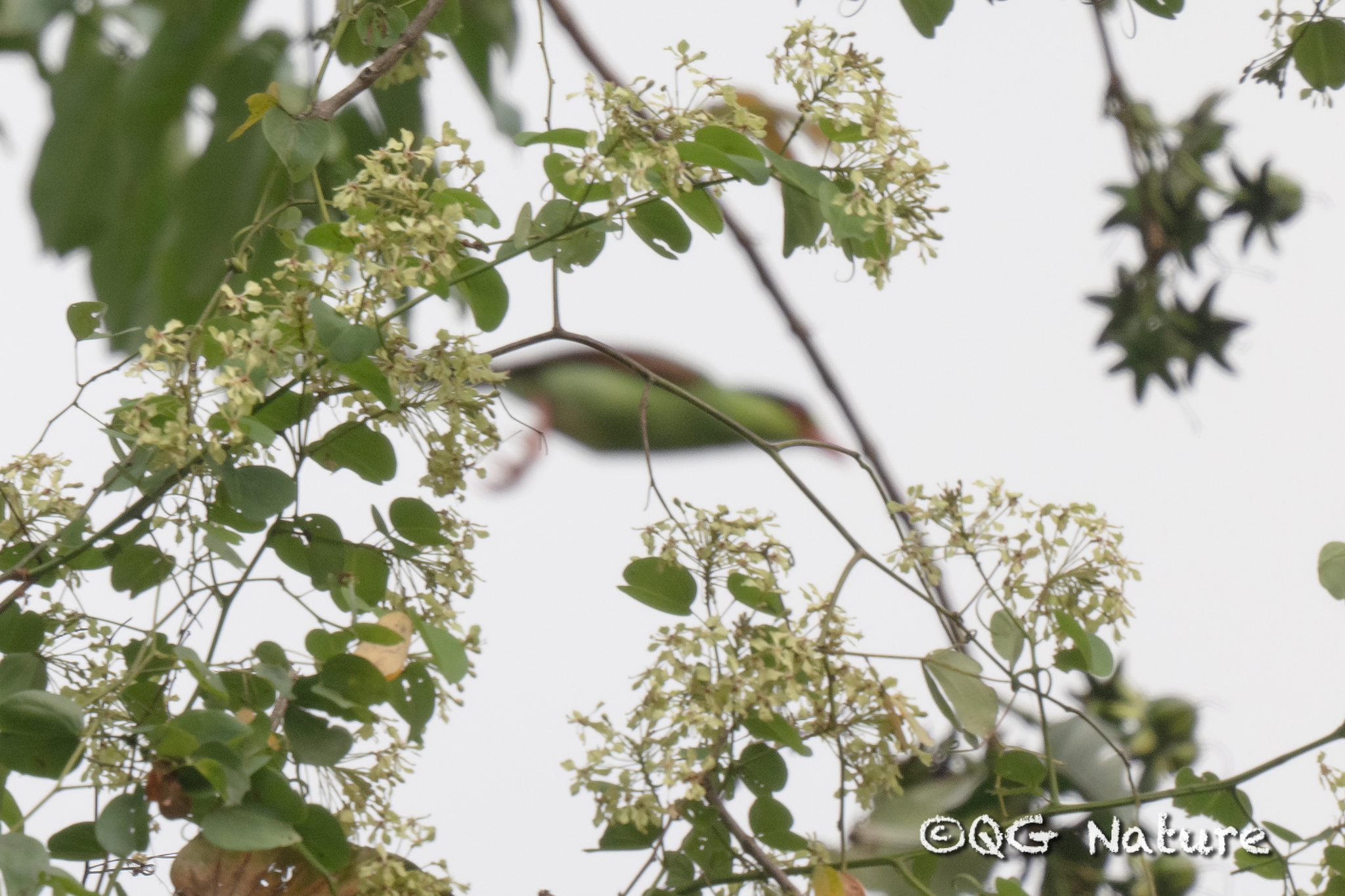
Common Green Magpie
Cissa chinensis
蓝绿鹊
Introduction
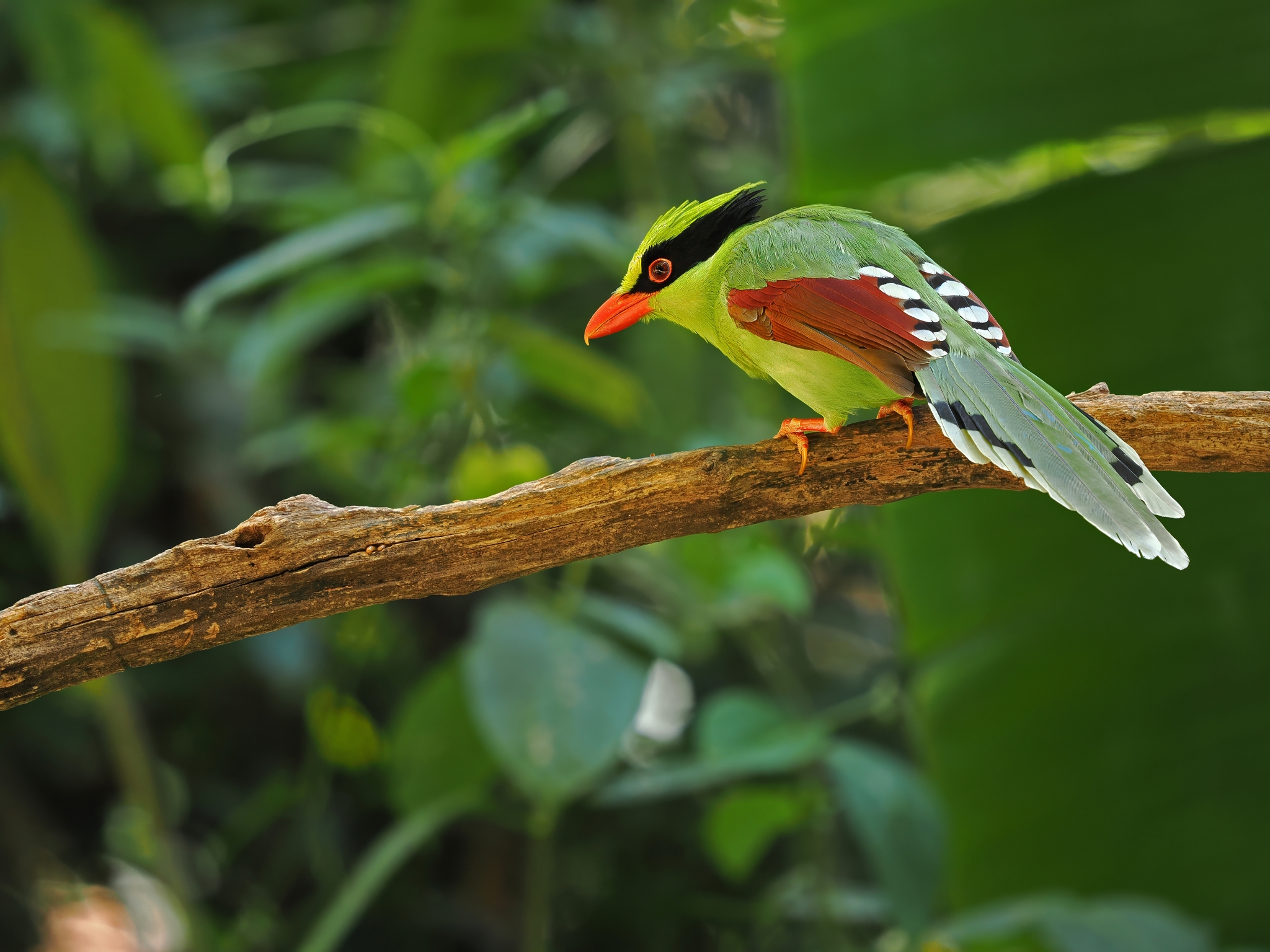
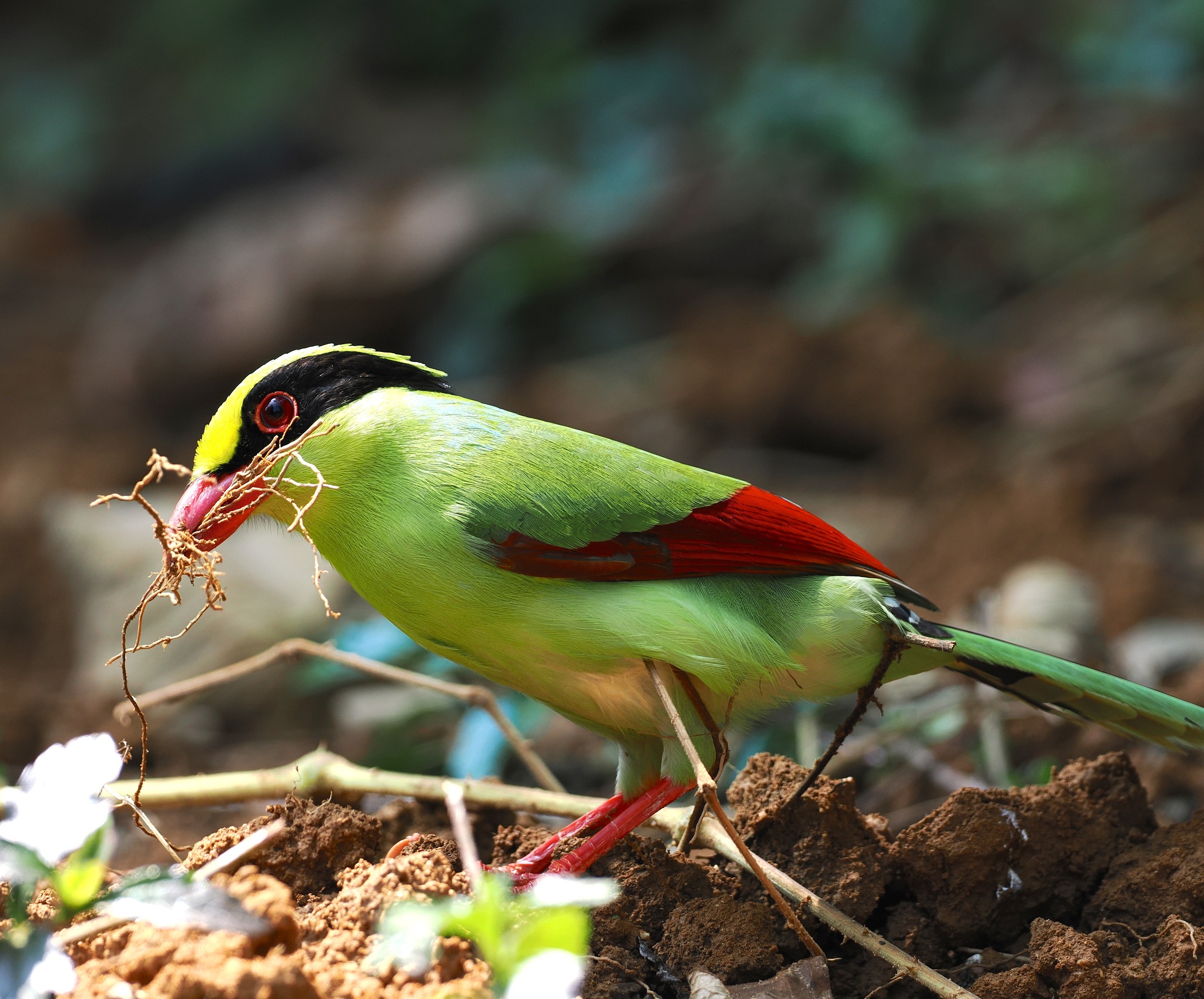
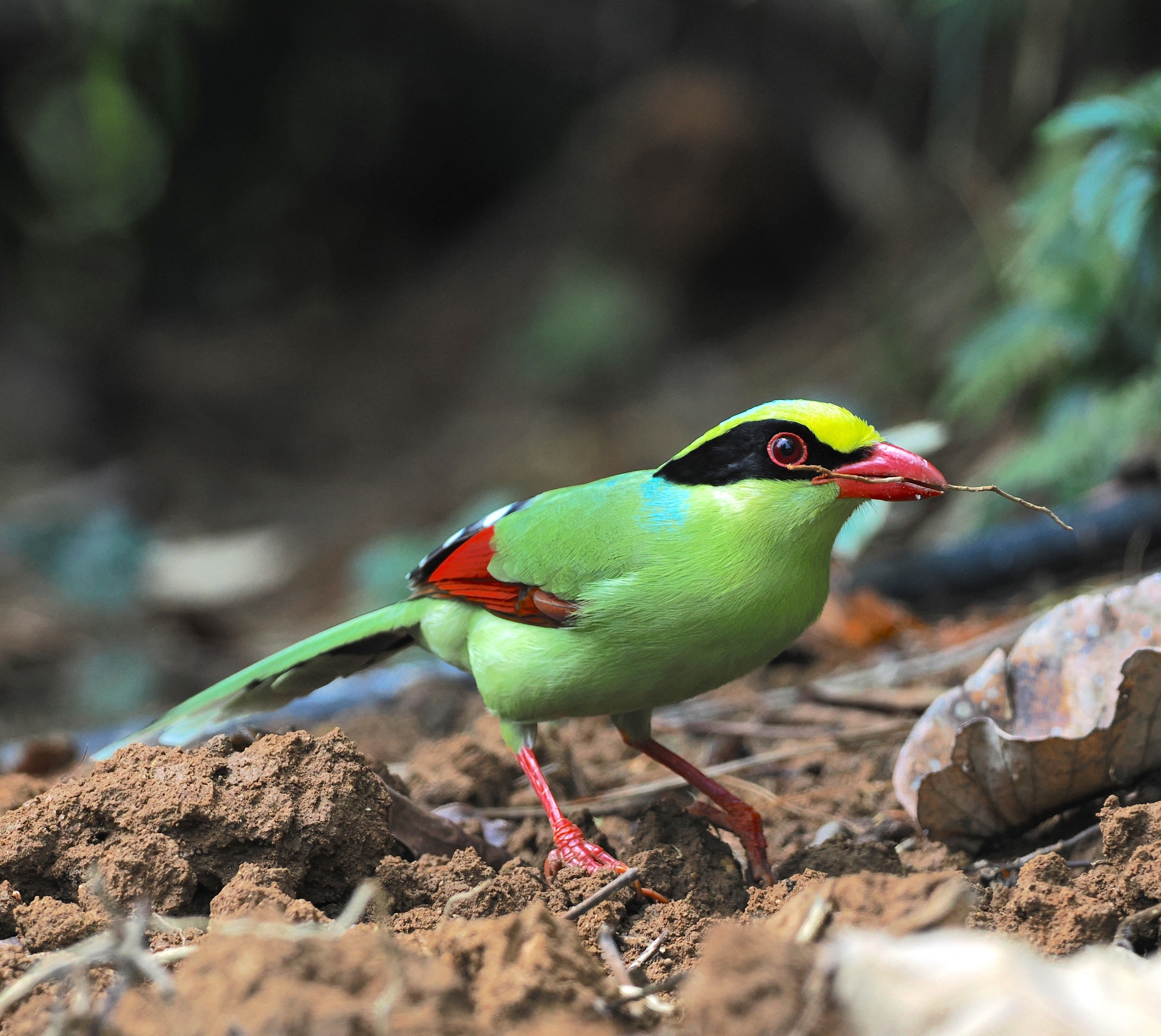
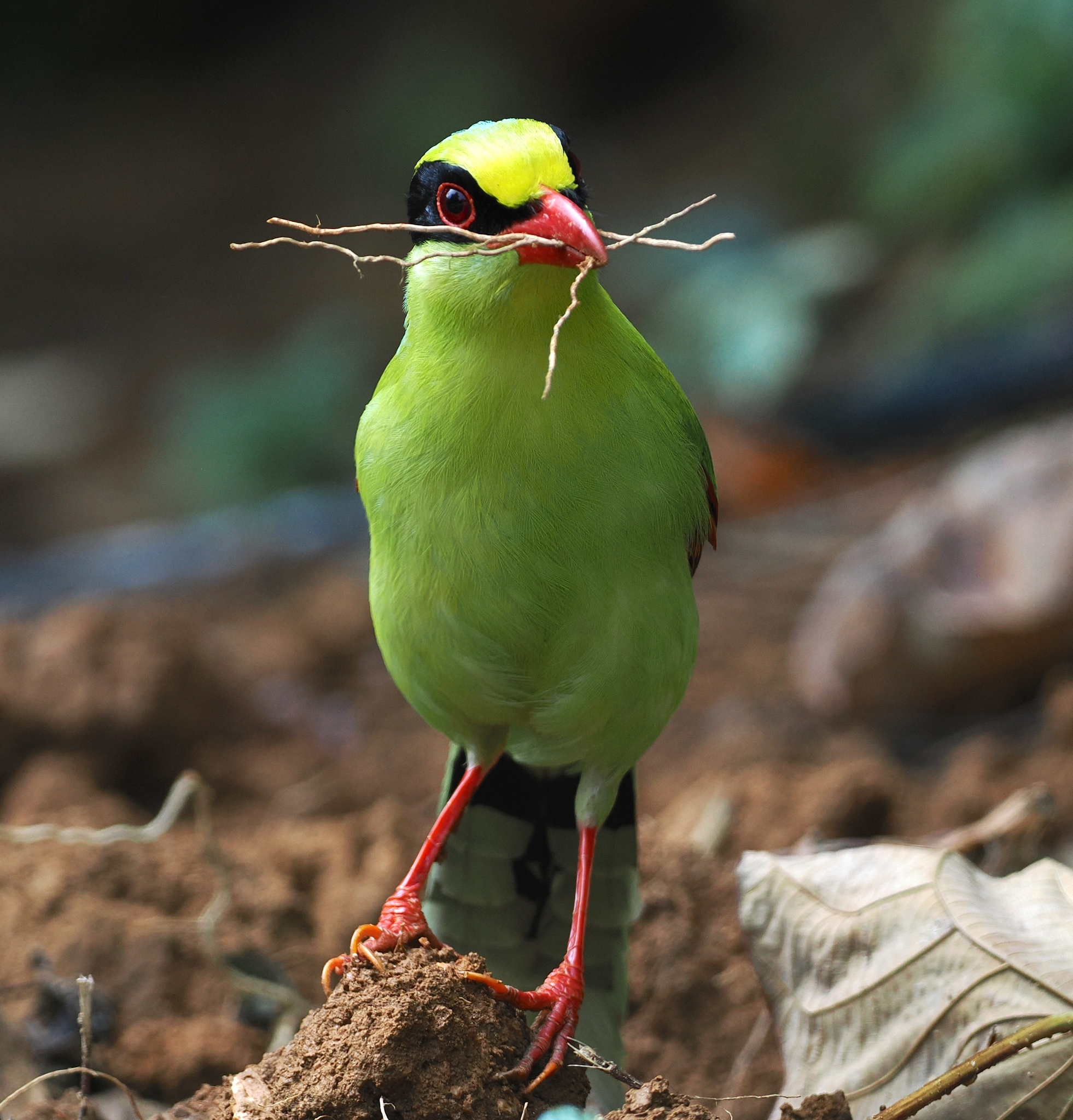
This member of the crow family (Corvidae) inhabits forest environments. The species measures approximately 30-32 cm in length. Adults display emerald-green plumage, thick black eye stripes extending from the bill through the eyes to the nape, red eye rims, bill, and legs, reddish-maroon wings, and a long tail with white tips. The species forages on the ground and in the canopy.
Description
A medium-sized corvid, this species shows predominantly bright green plumage that appears lush and vibrant in wild specimens, fading to turquoise in captive birds or those with poor nutrition due to the carotenoid-based pigmentation. The underside is noticeably lighter than the upperparts. The most striking facial feature is a thick black stripe running from the base of the bill, through the eyes, to the nape. The wings are a contrasting reddish-maroon color. The white-tipped tail is relatively long compared to other members of its genus. The bare eye rims, bill, and legs are all vivid red. The overall impression is one of bold, vivid coloring that sets this bird apart from most other forest corvids.
Identification
This species is most likely to be confused with other green magpies in its range but can be distinguished by its combination of features. The thick black eye stripe is diagnostic, as is the long white-tipped tail. The contrasting reddish-maroon wings separate it from similar species. The vivid red eye rims, bill, and legs provide additional identifying marks. In flight, the combination of green body, red wings, and white-tipped tail creates a distinctive profile. The species' foraging behavior, moving between ground and canopy, can aid in detection.
Distribution & Habitat
This species occupies a broad southeastward range from the lower Himalayas in northeastern India, extending through central Thailand, Malaysia, and into Sumatra and northwestern Borneo. It inhabits evergreen forests, including bamboo stands, as well as forest clearings and scrub areas. The range covers multiple countries in Southeast Asia, with five recognized subspecies occupying different portions of this extensive territory. No specific migration patterns are mentioned, suggesting it is largely resident within its range.
Behavior & Ecology
This omnivorous forager searches for food both on the forest floor and in the tree canopy, demonstrating opportunistic feeding behavior. The diet consists overwhelmingly of animal matter, including numerous invertebrates, small reptiles, mammals, young birds, and eggs. It will also consume flesh from recent carcasses. Vocalizations are varied but frequently include a harsh 'peep-peep' call, along with whistling and chattering sounds. Breeding occurs in trees, large shrubs, and tangled climbing vines, where females lay clutches of 4-6 eggs. Parents display cooperative feeding behavior, with newborns receiving priority at feeding times.
Culture
No cultural information is provided in the source article.
Source: Wikipedia · CC BY-SA 3.0
Taxonomy
- Order
- Passeriformes
- Family
- Corvidae
- Genus
- Cissa
- eBird Code
- gremag1
Vocalizations
Subspecies (5)
-
Cissa chinensis chinensis
eastern Himalayas to southeastern Tibet, Myanmar, northern Laos, and northern Vietnam
-
Cissa chinensis klossi
central Indochina
-
Cissa chinensis margaritae
southern Vietnam (Langbian Mountains)
-
Cissa chinensis minor
Sumatra and northwestern Borneo
-
Cissa chinensis robinsoni
southern Thai-Malay Peninsula
Data Sources
Species description from Wikipedia, licensed under CC BY-SA 3.0.
Bird images and sounds sourced from GBIF, contributed by citizen scientists worldwide under Creative Commons licenses.
Taxonomy data from AviList 2025.