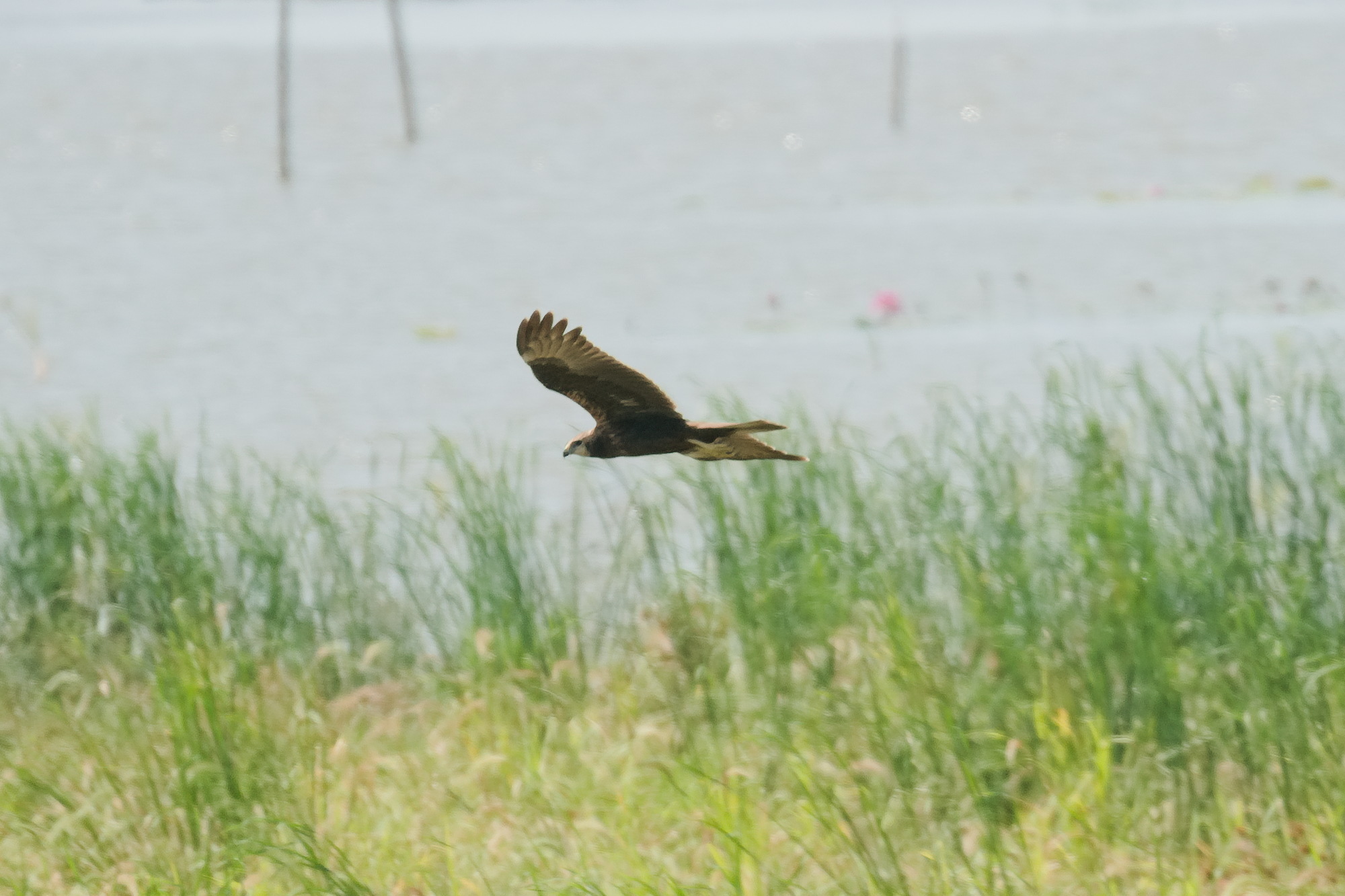
Eastern Marsh Harrier
Circus spilonotus
白腹鹞
Introduction
Medium-sized raptor. Recently recognized as a distinct species separate from the Western Marsh Harrier. Occurs in East Asian wetlands. Breeds and migrates through coastal areas of China. Favors extensive reedbeds and agricultural wetlands. Hunts by gliding low over vegetation with wings held in a shallow V-shape. Sexes show pronounced plumage dimorphism: males have black and grey plumage. Large numbers concentrate at migration bottlenecks such as Beidaihe on the Chinese coast during autumn. Hybrid zones occur where range overlaps with Western Marsh Harrier.
Description
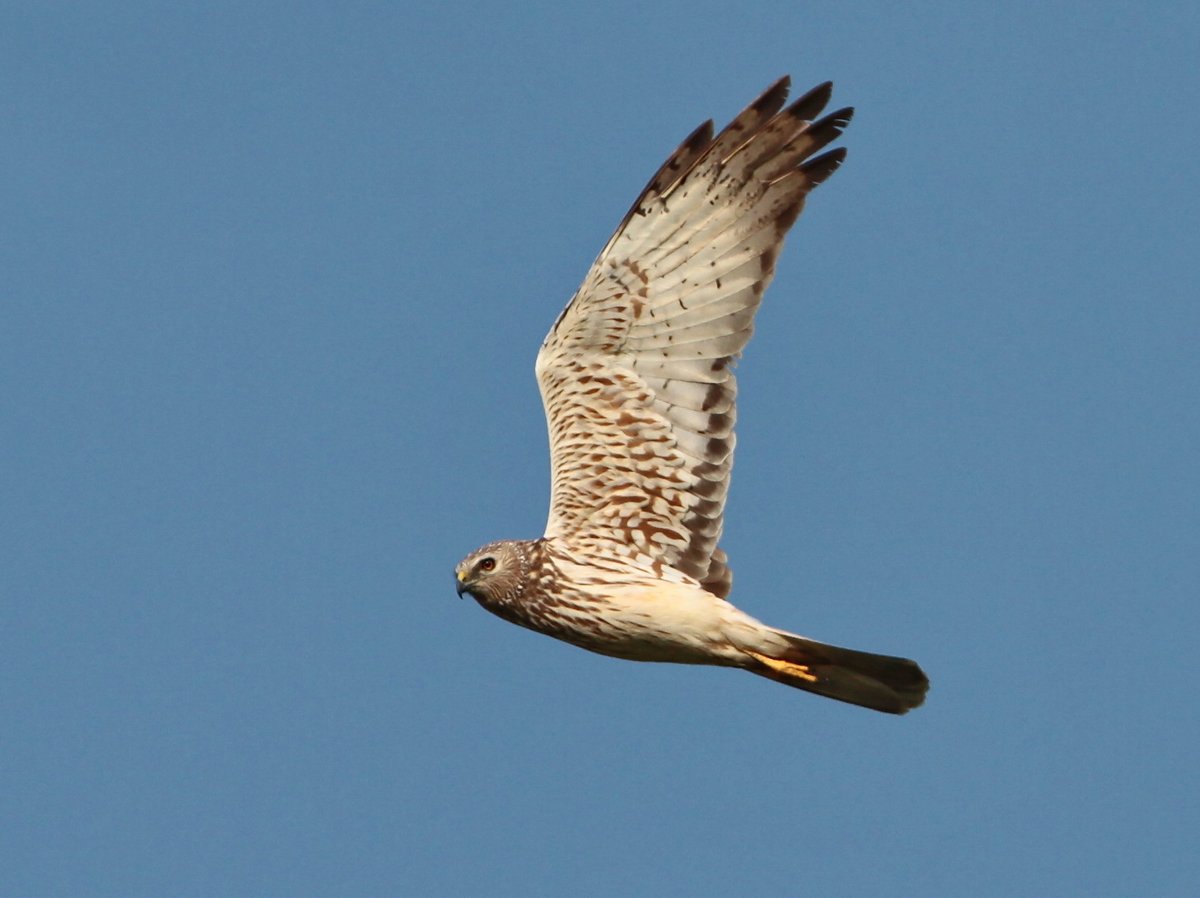
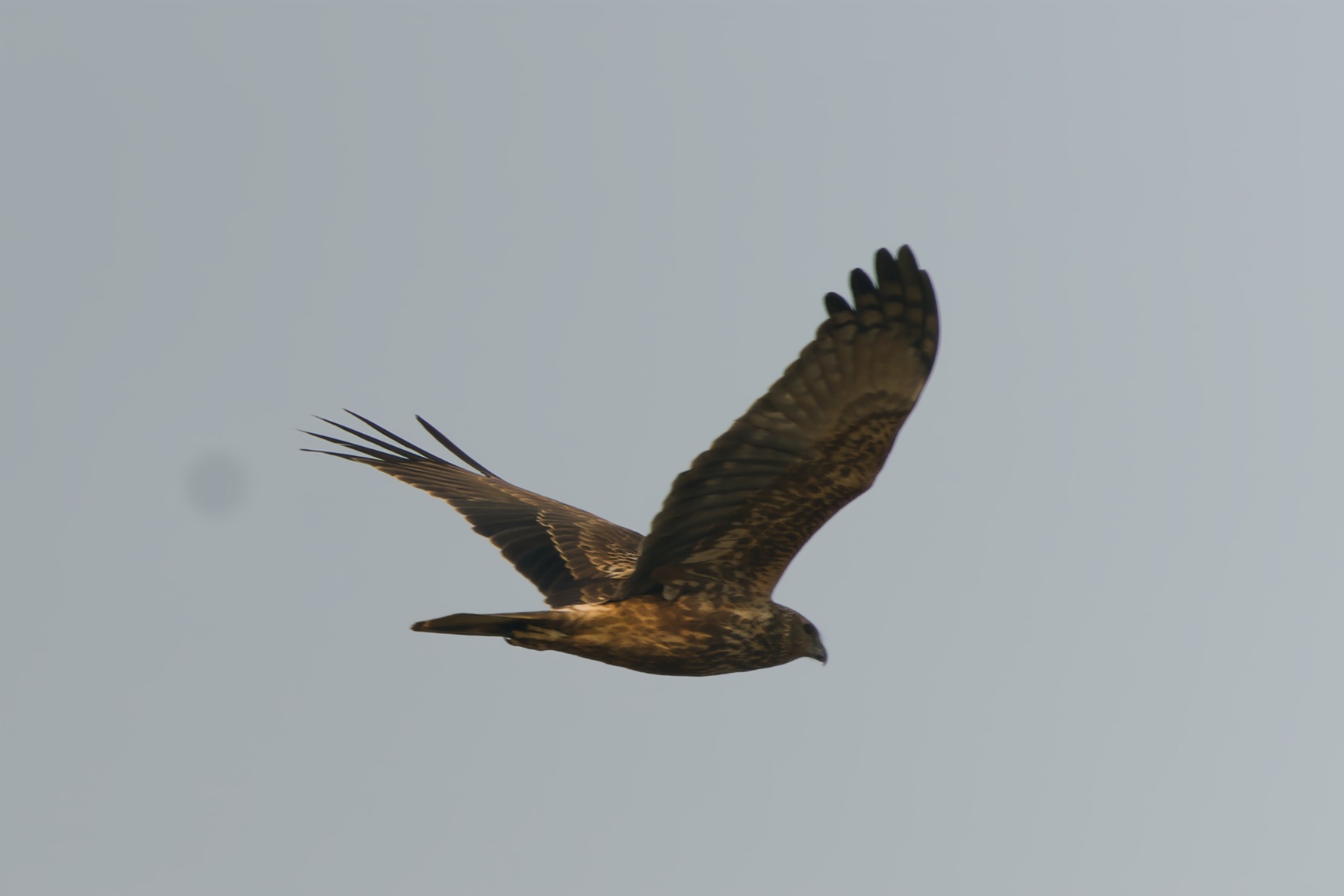
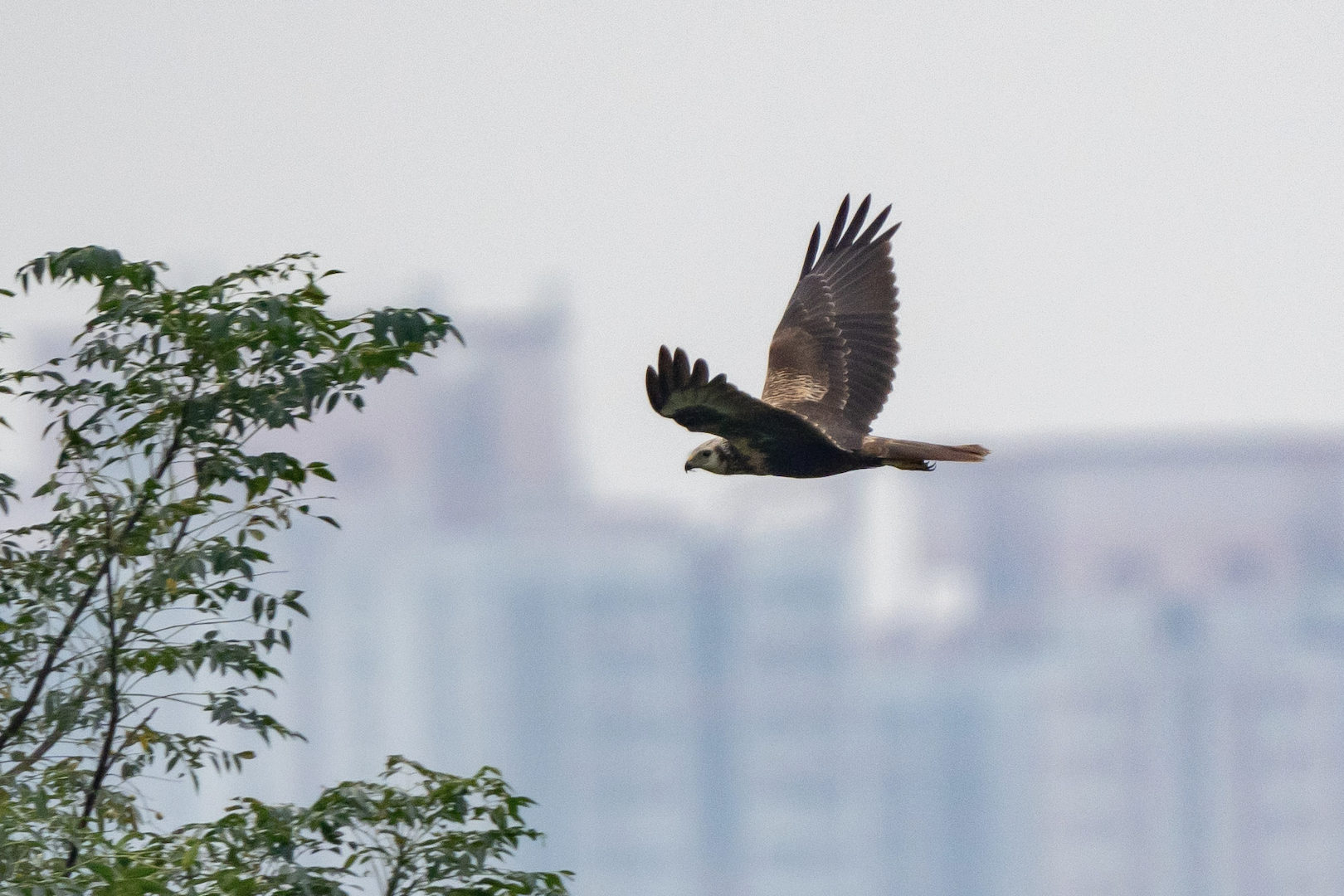
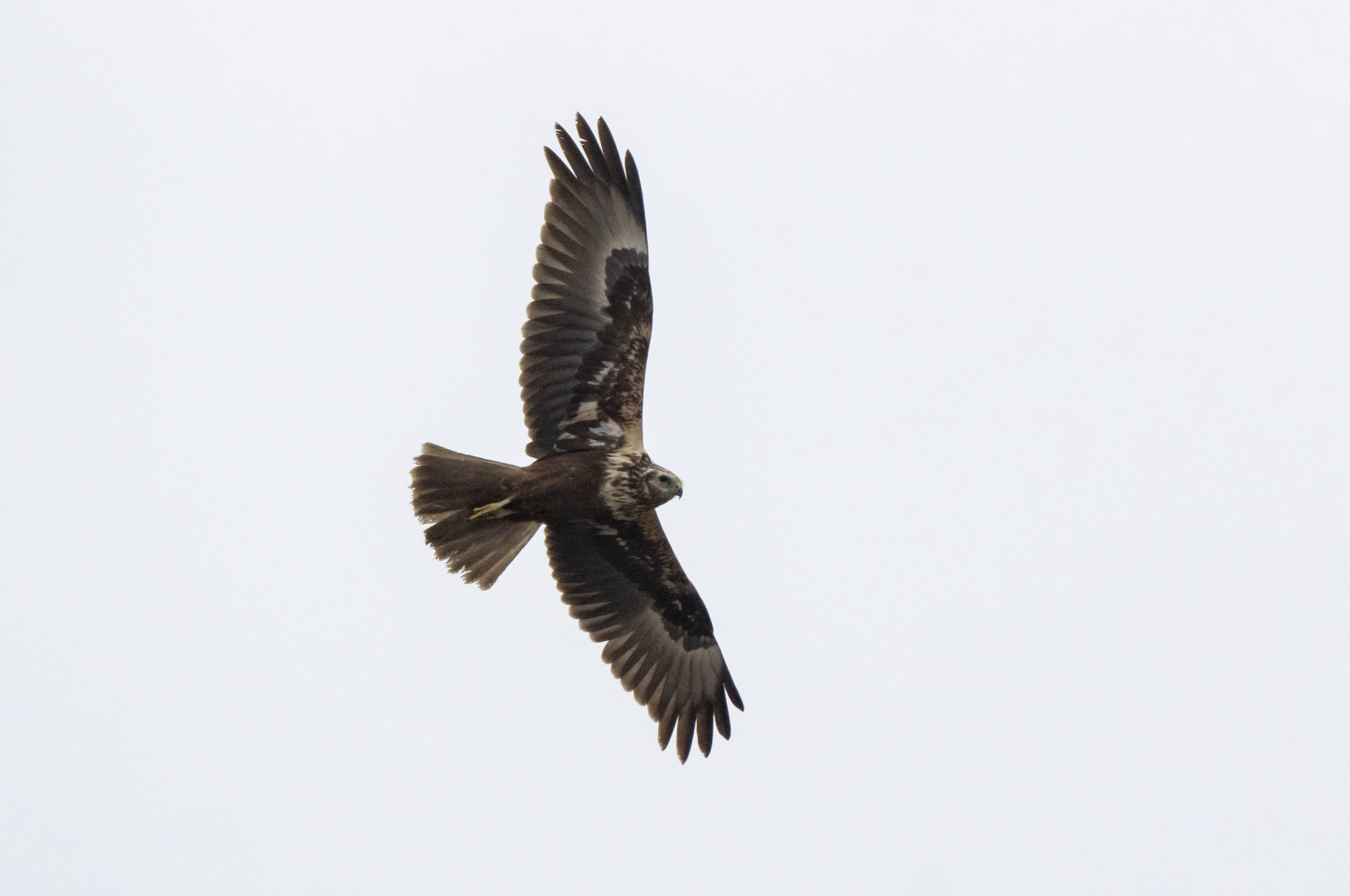
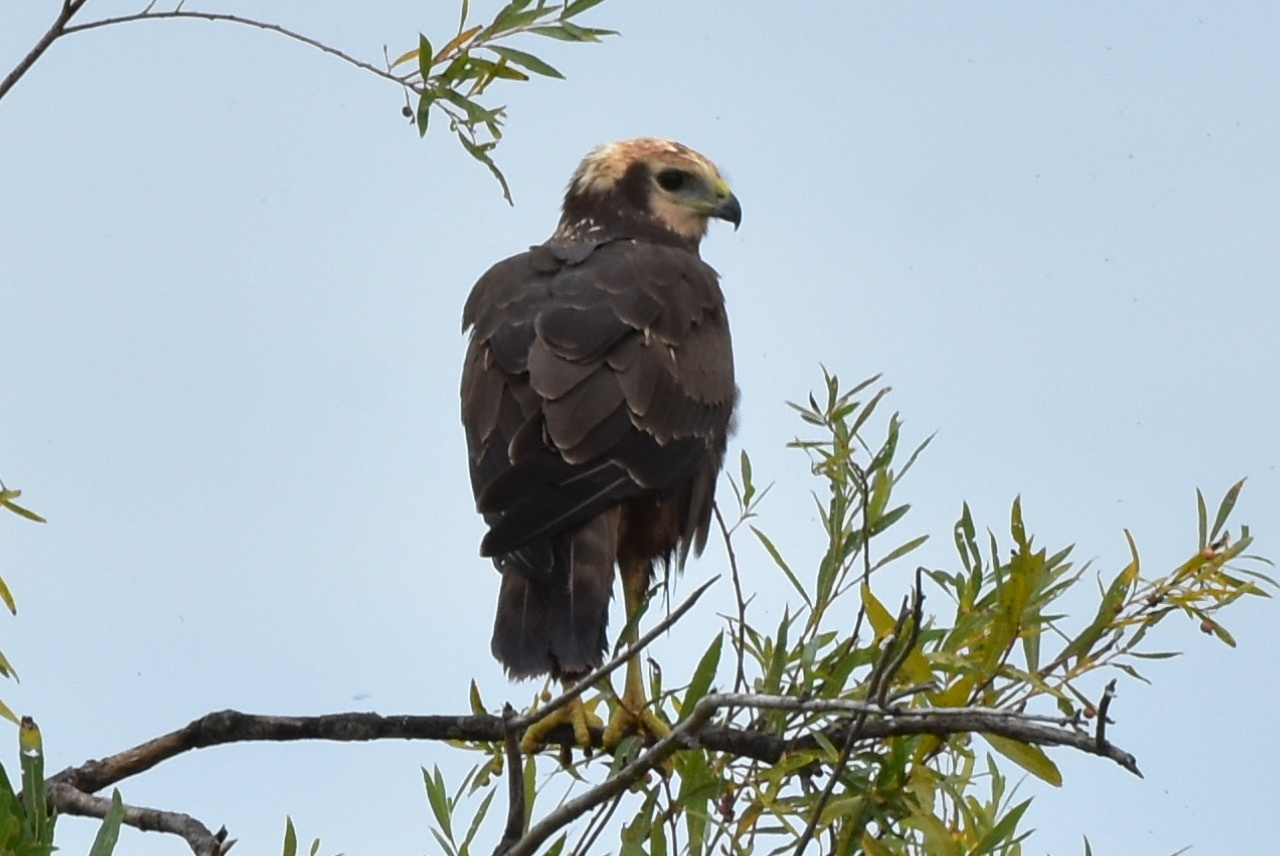
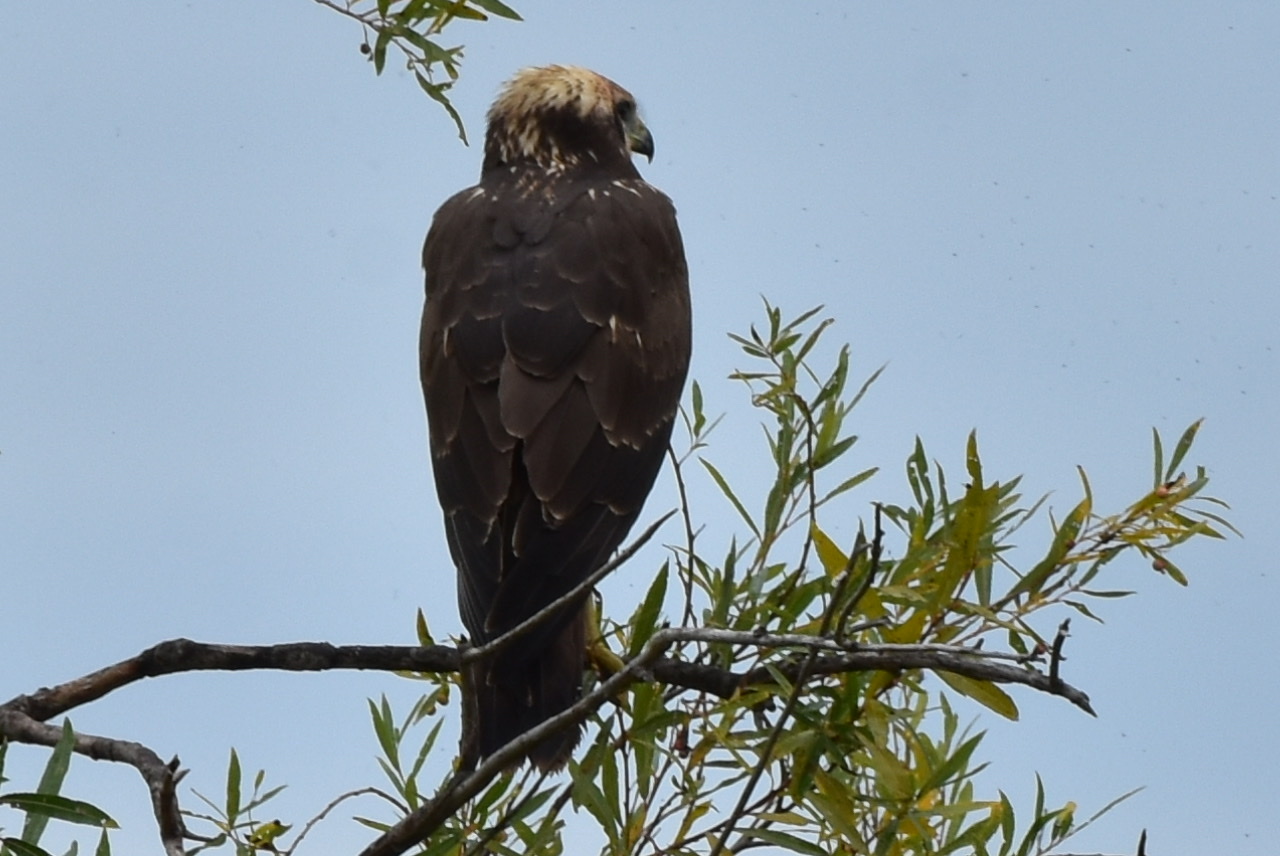
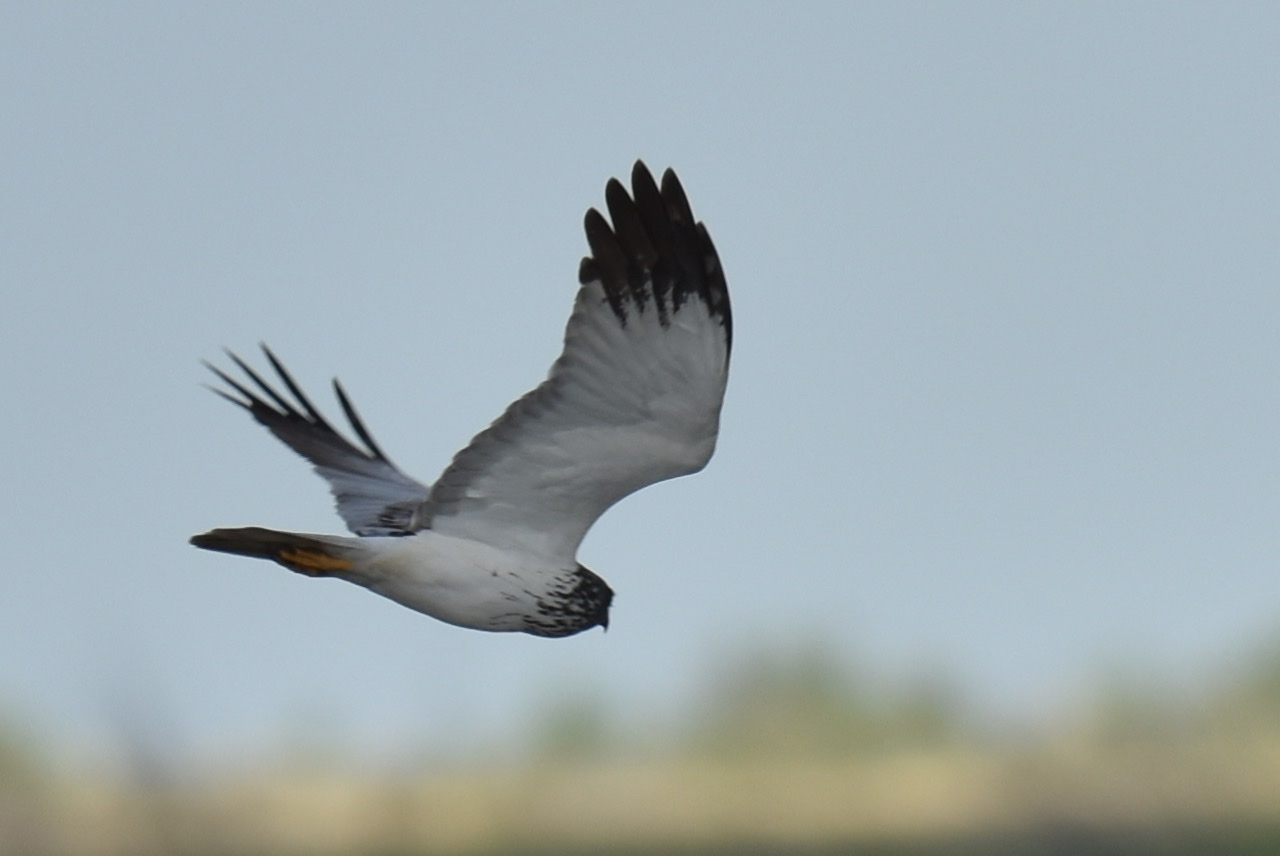
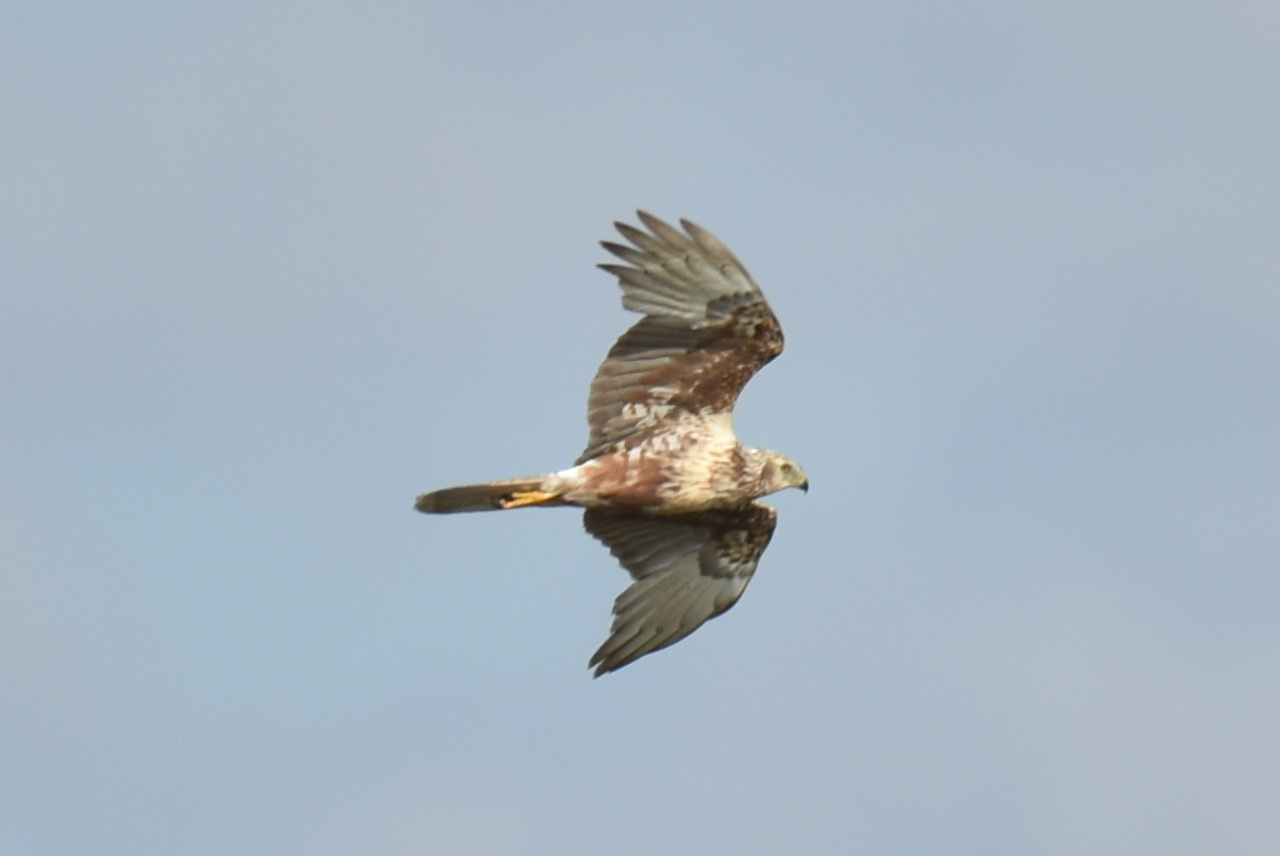
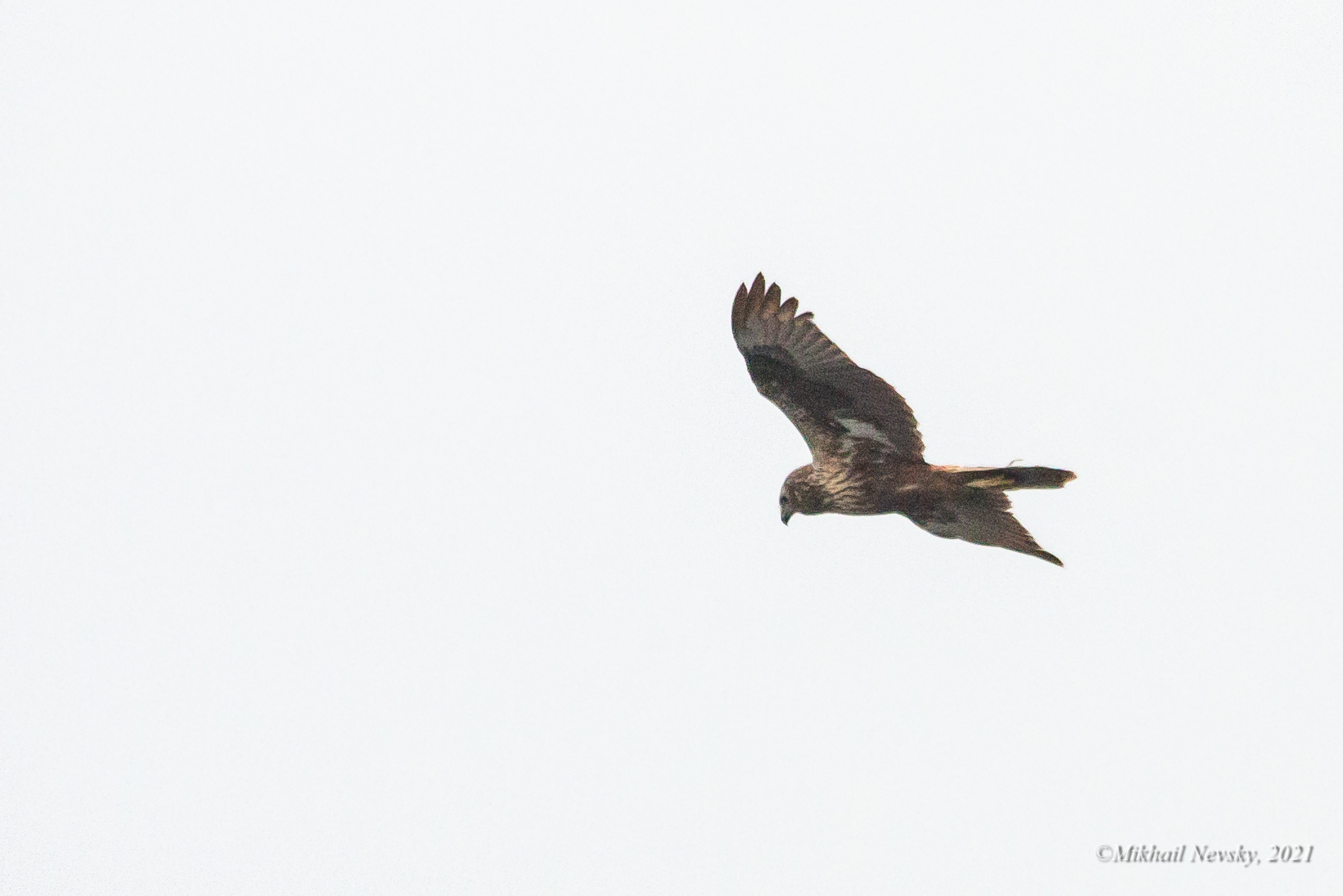
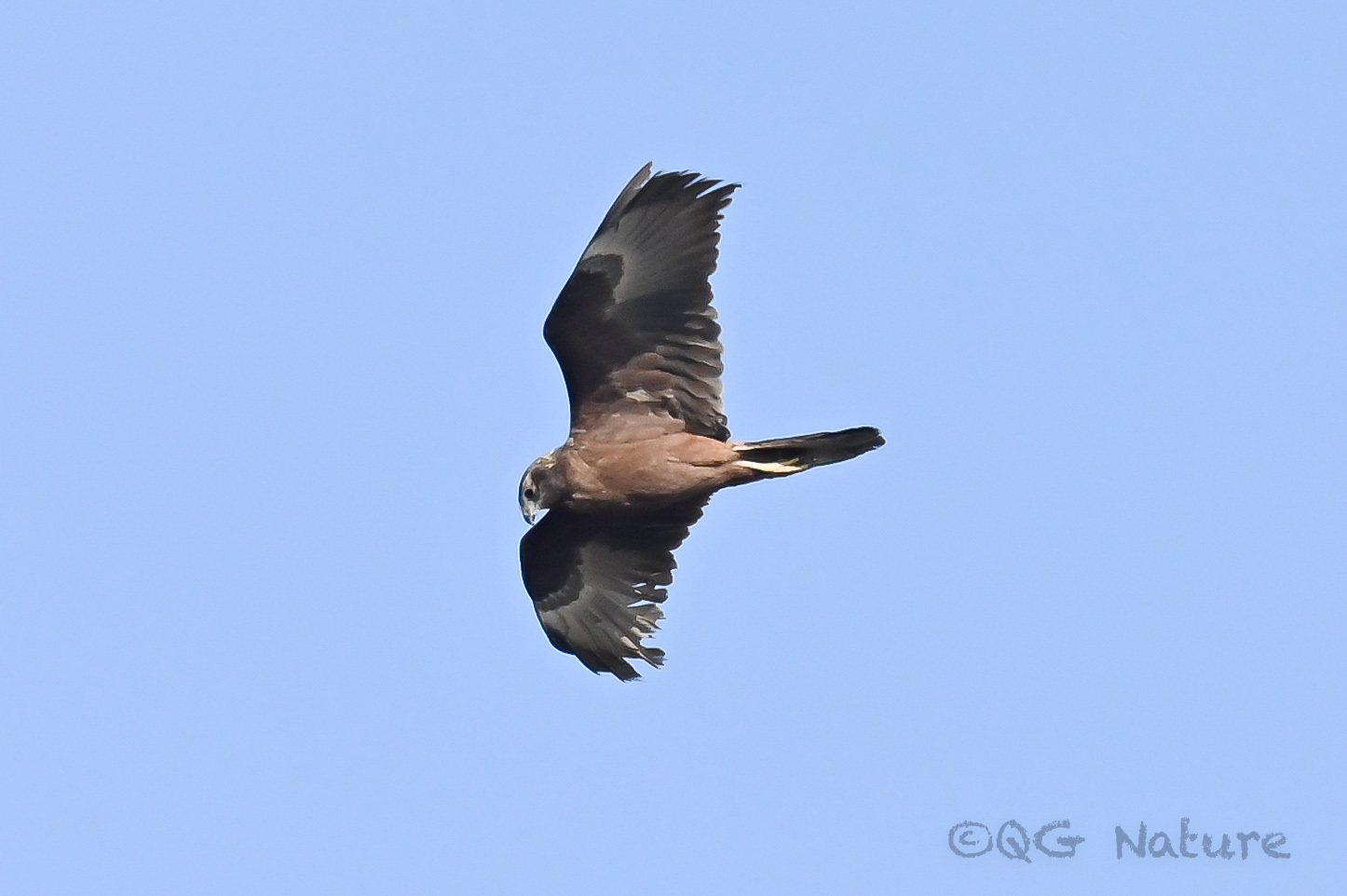
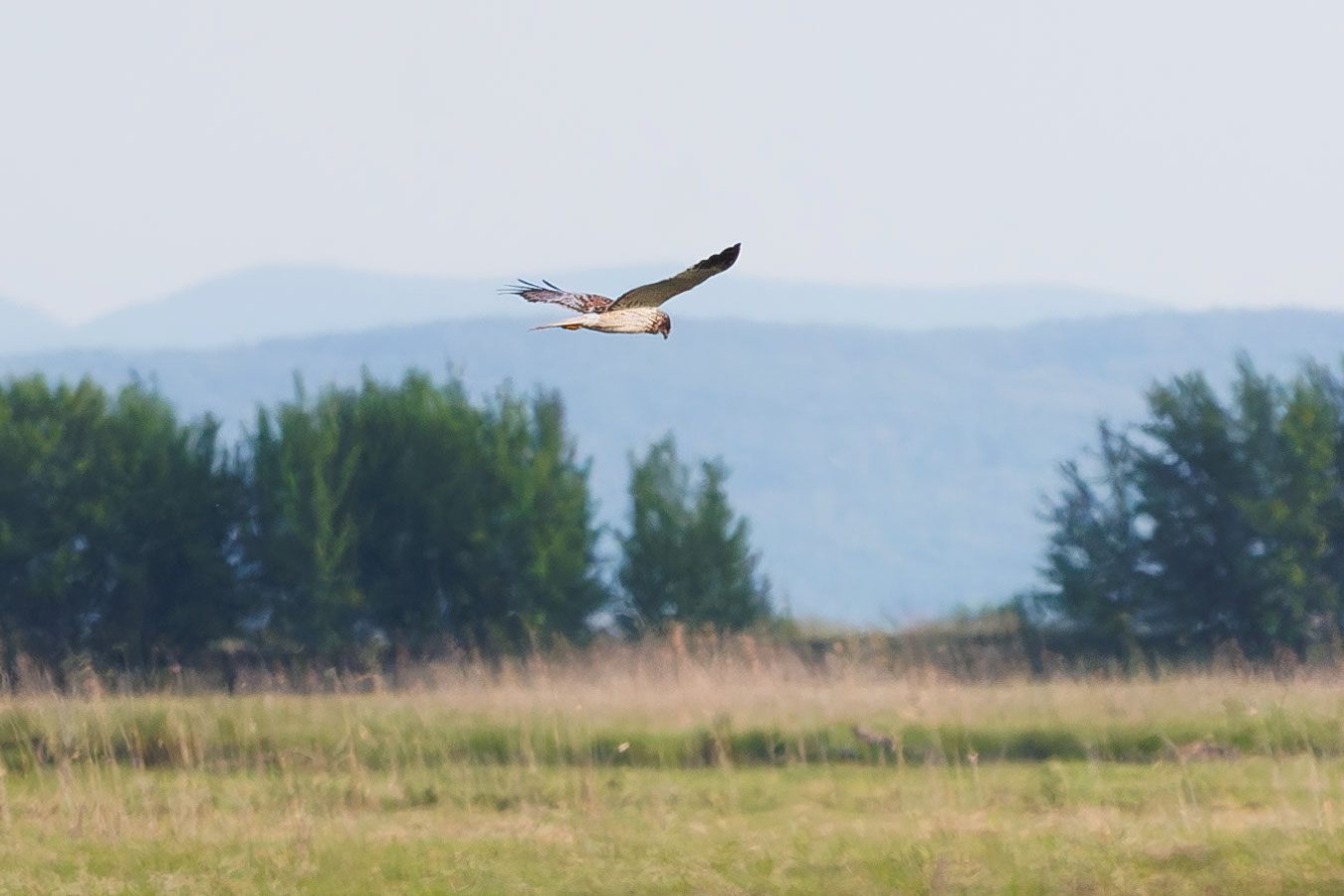
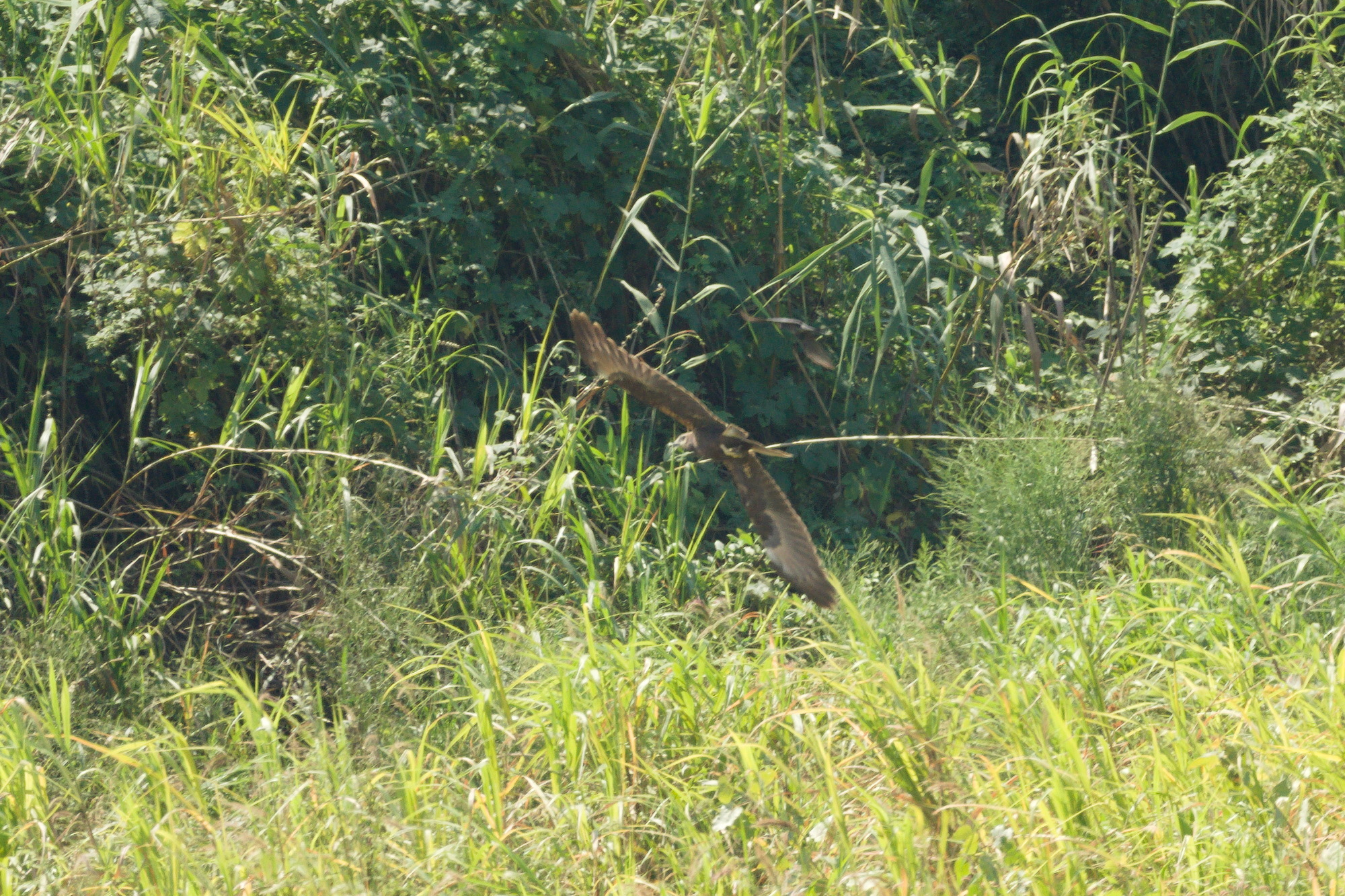
This medium-sized harrier measures 48 to 58 centimeters in length with a wingspan of 113 to 137 centimeters. As typical for birds of prey, females are noticeably larger than males. Adult males have a striking appearance with blackish head, breast, back, and wing-coverts marked by pale streaks. The wings are grey with bold black wingtips and a distinctive white leading edge, while the tail is grey and the underparts are predominantly white. A white rump patch is conspicuous in flight. Adult females are dark brown overall with buff streaking on the head and underparts, often showing a whitish rump and dark-barred tail. Juveniles resemble females but are darker brown with buff restricted to the head and display a pale patch on the underwing visible in flight.
Identification
In the field, this species is best distinguished from the western marsh harrier by range and, where both occur, by wing pattern details. Males show more extensive black on the upperparts and different wing coloration compared to the western species. Females are very similar to western marsh harrier females and can be extremely difficult to separate in areas of overlap around Lake Baikal, where hybridization occurs. The species' low, gliding hunting flight with wings held in a shallow V is characteristic of harriers and helps separate it from other raptors. Young birds can be identified by their very dark brown plumage combined with the distinctive pale head and underwing patch.
Distribution & Habitat
The species breeds across northeastern Asia, with populations in northeastern China, Mongolia, and southeastern Siberia extending west to Lake Baikal. Small numbers also breed in northern Japan, specifically Hokkaido and northern Honshu. Most populations are migratory, moving south for the winter to southern China, Taiwan, Korea, and southern Japan. The wintering range extends through northeast India, Bangladesh, and Southeast Asia, reaching the Philippines, Borneo, and Sumatra. The Papuan harrier subspecies in New Guinea is sedentary rather than migratory. Migration is concentrated along the Chinese coast, with Beidaihe hosting thousands of birds during autumn passage. Preferred habitat consists of open country including marshland, paddy fields, and grassland.
Behavior & Ecology
This harrier hunts by flying low over the ground with wings held in a characteristic shallow V-shape, scanning for prey in the vegetation below. Its diet consists of small mammals, birds, and frogs. The species is generally silent but produces a mewing call most often heard at roost sites. Breeding begins in April, with nests constructed from sticks and built on the ground, typically within reedbeds. Females lay four to seven eggs, which are incubated for 33 to 48 days. The young fledge after 35 to 40 days. Information on social behavior beyond breeding is limited.
Conservation
No conservation assessment was provided in the source article.
Culture
No cultural information was provided in the source article.
Source: Wikipedia · CC BY-SA 3.0
Taxonomy
- Order
- Accipitriformes
- Family
- Accipitridae
- Genus
- Circus
- eBird Code
- easmah1
Distribution
breeds eastern Asia; winters to southeastern Asia, Philippines, and Indonesia
Data Sources
Species description from Wikipedia, licensed under CC BY-SA 3.0.
Bird images and sounds sourced from GBIF, contributed by citizen scientists worldwide under Creative Commons licenses.
Taxonomy data from AviList 2025.